
Reviewed · WALKING TOURS
Stuttgart: Stäffele Guided Walking Tour
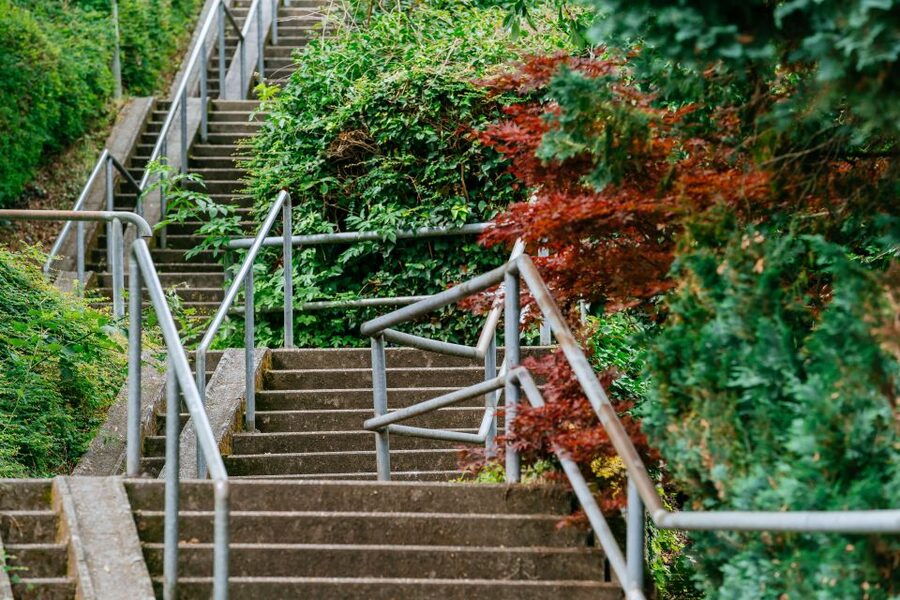
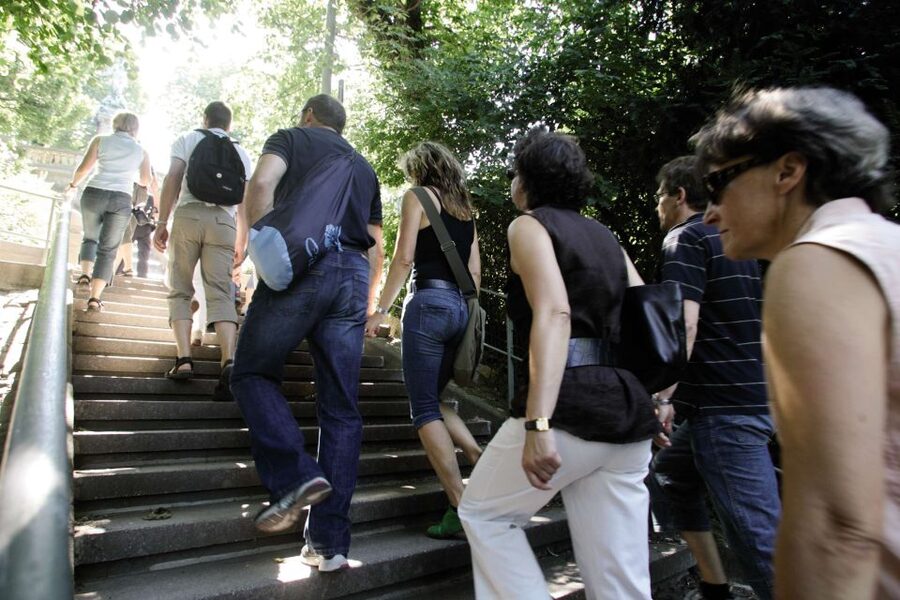
Stuttgart’s Stäffele are more than stairways. They are the shortcuts, viewpoints, and neighborhood lanes that climb the hills around the city. On this walking tour, you may tackle more than a thousand steps while moving through vineyards, residential streets, gardens, and historic corners that are easy to miss from a car or tram.
I like two things right away: you can choose a route that fits your interests, and the tour connects city views with real local places, from the Chinese Garden and Kriegsbergturm in the north to the Lapidarium and vineyards in the south. The main drawback is just as clear: this is a demanding walk, not a gentle city stroll. Bring comfortable shoes, and be ready for repeated climbs.
In This Review
- Key points to know before booking
- Stuttgart’s stairways are the city’s best uphill shortcuts
- Choose the route that matches your interests
- North: Chinese Garden, villas, and a vineyard
- East: opera drama, an observatory, and Uhlandshöhe
- South: Karlshöhe, the Lapidarium, and city vineyards
- West: villas, Kräherwald, and the Zeppelin platform
- Mitte: Eugenstaffel, Eugensplatz, and the Sünderstaffel
- The views are excellent, but they are not free
- Stories give the stairways a reason to matter
- What $25 buys you in Stuttgart
- Who should book this walk?
- Practical preparation for more than a thousand steps
- Should you book the Stuttgart Stäffele Tour?
- FAQ
- How long does the Stäffele Guided Walking Tour last?
- How many routes can I choose from?
- What language is the tour conducted in?
- How much does the tour cost?
- Are food and drinks included?
- What should I bring?
- Is the tour suitable for wheelchair users or pregnant women?
Key points to know before booking
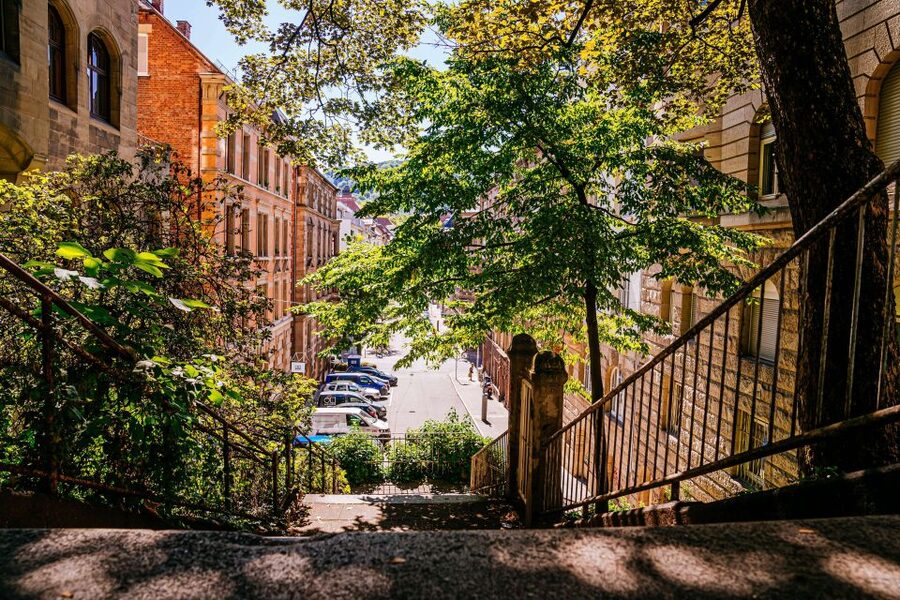
- Five routes cover very different sides of Stuttgart: Choose North, East, South, West, or Mitte, rather than taking one fixed city walk.
- The stairways are the main attraction: Expect frequent climbs and descents, with some routes covering more than a thousand steps.
- Views come with effort: Eugensplatz, Uhlandshöhe, Karlshöhe, and the Zeppelin viewing platform offer strong rewards after the uphill sections.
- The tour is in German: A live German-speaking guide leads the walk, so basic German will help you follow the stories.
- Local details matter: Routes include vineyards, opera history, the John Cranko Ballet School, villas, fountains, tunnels, and unusual statues.
- The price is modest for a guided city walk: At $25 per person, the tour is good value if you want context and company rather than simply following a map.
Stuttgart’s stairways are the city’s best uphill shortcuts
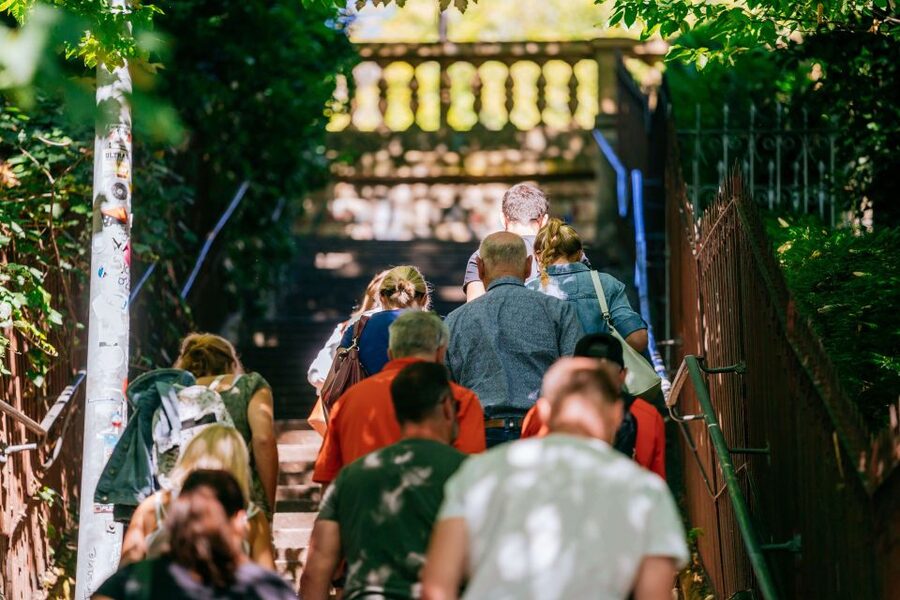
Stuttgart sits in a broad basin surrounded by hills. The Stäffele, or stairways, help connect the lower city with the slopes above it. They were built and expanded over time as the city grew into the hills, and many still function as everyday routes between neighborhoods.
That practical role gives the tour its character. You are not walking through a museum display arranged for visitors. You are climbing public staircases, passing homes, crossing lookout points, and seeing how Stuttgart’s geography shapes daily life.
The walking can be strenuous. The exact number of steps depends on your chosen route, but the tour description warns of more than a thousand steps on the experience. The reward is a changing view of Stuttgart, with the city center below and the surrounding hills opening up as you climb.
I would not book this as your first activity after a long train journey if your legs are tired. It makes more sense when you have enough energy for steady uphill work. Pregnant people and wheelchair users should choose another Stuttgart activity, since the stairways and uneven route structure are not suitable.
A few more Stuttgart trips to weigh up
- Stuttgart: Guided Ghost Walking Tour
★ 4.5 · 662 reviews - Stuttgart: City Highlights – Guided Walking Tour
★ 4.7 · 189 reviews - Stuttgart: Private Guided Circular City Walk
★ 4.7 · 129 reviews
Choose the route that matches your interests
The biggest decision is not the price or duration. It is the route. The five choices have different themes and different parts of the city, so read the descriptions before selecting your time.
The North, East, South, and West options are listed as the main directional tours. A fifth route, Mitte, focuses on the central hills and some of Stuttgart’s best-known stairways. Since the meeting point changes with the selected option, check the exact starting place when booking.
North: Chinese Garden, villas, and a vineyard
The North route begins around the Europaviertel and heads into Stuttgart’s northern half-heights. This side of the city combines modern urban development with older hillside neighborhoods and open views.
You pass through Postdörfle and Hexenwäldle, names that add a little local flavor to the climb. The route also includes the Chinese Garden, a compact viewpoint and resting place with a distinct architectural style.
Kriegsbergturm provides another visual marker along the way. You then pass houses linked with important city figures and continue through Mönchhalde, including a vineyard. That mixture is what makes the North route appealing: you get architecture, local personalities, greenery, and wine country without leaving Stuttgart.
Pick this option if you want the broadest mix of subjects. It is less about one single landmark and more about seeing how the northern hills shift from city streets to residential slopes and cultivated land.
East: opera drama, an observatory, and Uhlandshöhe
The East route follows less familiar paths through Stuttgart’s eastern districts. One stop is connected with opera singer Anna Sutter, who lived there and met a dramatic death. The guide uses this setting to add a personal story to the streets around you.
The route also passes the Stuttgart Observatory before climbing several stairways toward Uhlandshöhe. This is one of the key viewpoints on the tour, with a broad look across the city. As with the other routes, the view is earned rather than handed to you.
From Uhlandshöhe, the walk continues toward the John Cranko Ballet School in its striking new building. The descent uses the Sängerstaffel, described as one of the city’s most beautiful staircases.
The East route suits you if you like a mix of arts, architecture, local drama, and viewpoints. It also has a clear uphill and downhill rhythm, so you should expect the climb to Uhlandshöhe to be one of the harder stretches.
Same city, a completely different kind of day:
- Stuttgart 24-Hour Hop-On Hop-Off Sightseeing Bus Tour
★ 4.4 · 1,647 reviews - Stuttgart: Mercedes-Benz Museum Entry Ticket
★ 4.8 · 1,400 reviews - Tickets SWR Fernsehturm Stuttgart
★ 4.5 · 674 reviews - Stuttgart: Museum of Illusions Entry Ticket
★ 4.2 · 507 reviews
South: Karlshöhe, the Lapidarium, and city vineyards
The South route moves through residential areas surrounded by greenery. It begins along Stuttgart’s longest relay, or staircase route, toward Karlshöhe.
On the way, you pass the Lapidarium, a collection of architectural stone pieces and historic fragments. The stop adds a different kind of interest to the walk. Instead of only looking at streets and views, you encounter preserved pieces of the city’s built past.
The route also reaches one of the vineyards belonging to the city winery. Stuttgart’s wine-growing tradition is easy to miss if you stay in the center, so this is a strong choice if you want to see how close the vines are to ordinary neighborhoods.
At Karlshöhe, you get views toward the west and south. The route then descends along several panoramic stretches and passes the Schwabtunnel. At the time it was built, this was the widest road tunnel in Europe, giving the walk one more piece of engineering history.
I would choose the South route for a calmer residential setting and a good balance between views, vineyards, and historic features. The long initial climb is the key physical challenge.
West: villas, Kräherwald, and the Zeppelin platform
The West route climbs a series of open-air staircases toward the edge of the Kräherwald forest. It shows off Stuttgart’s western districts, especially the grand villas and leafy streets that line the hillside.
The route’s main viewpoint is the Zeppelin viewing platform. From there, you can look across the western part of Stuttgart and toward the city center. The platform gives the tour a clear payoff, though you need to work through numerous staircases first.
The guide also adds historical stories and amusing facts along the way. That matters on a route where the pleasure comes from details: a villa facade, a turn in a staircase, or a view that changes after only a few minutes of climbing.
Choose West if you enjoy architecture and residential neighborhoods more than formal sights. It is also a good match for anyone who wants a route with a forest edge and a strong city panorama.
Mitte: Eugenstaffel, Eugensplatz, and the Sünderstaffel
The Mitte route concentrates on central Stuttgart and begins or ends around the Stadtpalais, depending on the exact arrangement. Its best-known staircase is the Eugenstaffel, which leads to Eugensplatz.
Eugensplatz is valued for its view over the city center. It also has two curious details that give the stop personality: the Galatea and a pug statue. The guide explains the stories behind both, so you get more than a quick photo stop.
The route includes the Sünderstaffel, another legendary staircase, before returning to the Kessel, the basin where Stuttgart’s central districts sit. It ends at the Stadtpalais.
Mitte is probably the easiest route to pair with a short stay in Stuttgart because it keeps the focus close to the center. It still requires fitness, but its central setting may make it simpler to fit around other sightseeing.
The views are excellent, but they are not free
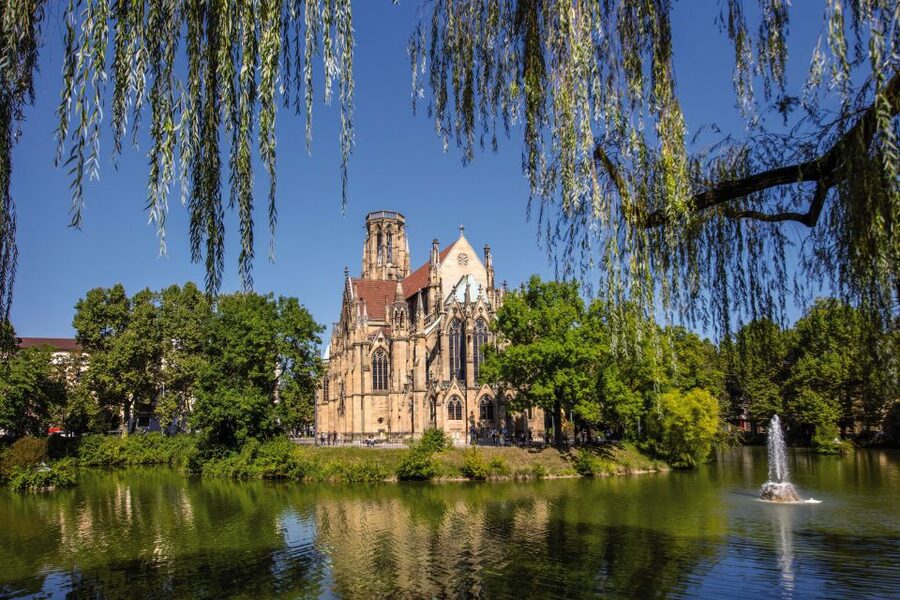
Every route uses elevation as its main reward. You climb through one neighborhood, reach a higher street or terrace, then see more of Stuttgart than you could from the ground below.
The best viewpoints vary by route. Uhlandshöhe serves the East tour, Karlshöhe covers the West and South, Eugensplatz looks over the center, and the Zeppelin platform provides a view from Stuttgart West. The North route adds viewpoints near the Chinese Garden and Kriegsbergturm.
The constant movement also helps you understand Stuttgart’s shape. A normal central walking tour can show you landmarks, but it may not explain why the city’s streets rise so sharply. Here, the geography is under your feet.
Still, do not treat the views as an excuse to underestimate the walk. The tour includes many flights of stairs in both directions. If you have knee trouble, limited stamina, or difficulty on steep paths, the experience may be more tiring than the one to two-hour duration suggests.
Stories give the stairways a reason to matter
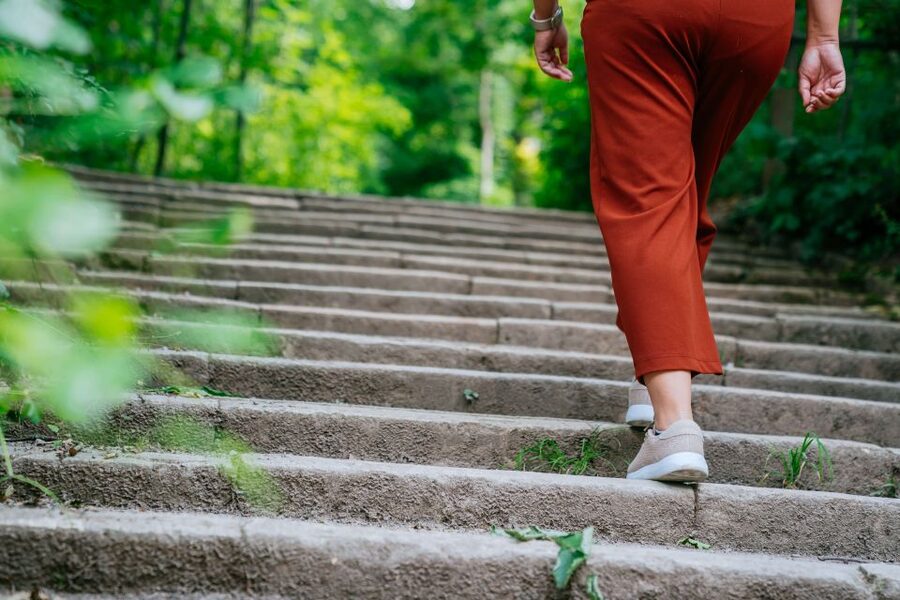
Without a guide, you might see the Stäffele as attractive staircases and overlooks. With a German-speaking guide, the route adds names, incidents, and local background.
The East route’s connection with Anna Sutter gives one residential stop a dramatic human story. The South route’s Schwabtunnel puts a local road feature into a wider historical setting. In Mitte, the Galatea and pug statue turn Eugensplatz into a place with questions attached to it.
You also hear about Stuttgart’s major figures through the homes in the North route. The guide points out buildings and places that would otherwise pass without explanation. That is the tour’s main value: not simply showing you where to walk, but telling you why a staircase, house, square, or tunnel matters.
The quality of the experience depends partly on the guide and on your ability to follow German. One recent score of the tour was 4.8 out of 5 from 61 ratings, and the strongest praise focused on guides who tell many stories and clearly enjoy their work. One booking specifically described a very pleasant guide with plenty of stories along the way. Another German participant appreciated finding places in a familiar city that had not been visited before, along with historical background and amusing anecdotes.
There is also a useful caution in the feedback. One four-star assessment wanted more insider information. That suggests the tour is strong for general local history and stories, but you should not assume every guide will provide a long list of highly specialized secrets.
What $25 buys you in Stuttgart

At $25 per person, this is a reasonable price for a live guided walk lasting one to two hours. You are paying for a German-speaking guide, a planned route, and the local context that turns a workout into a city experience.
The value is best if you would otherwise wander the stairways without knowing what you are seeing. The guide can connect the route to Stuttgart’s opera world, vineyards, architecture, public art, city planning, and past engineering projects.
The value is lower if you only want photographs from the viewpoints or if you dislike fixed routes. You could reach some of the lookouts independently, though you would need to plan the stairways yourself and would miss the guided stories.
Food, drinks, and transportation back to the starting point are not included. The lack of return transport matters because the routes are not presented as simple out-and-back walks. Ask yourself where you want to finish and check the meeting details for your chosen route before setting off.
The reserve-now, pay-later option and free cancellation up to 24 hours in advance make the booking less rigid. Those policies are useful if your Stuttgart plans may shift, but the physical demands of the tour do not change.
Who should book this walk?
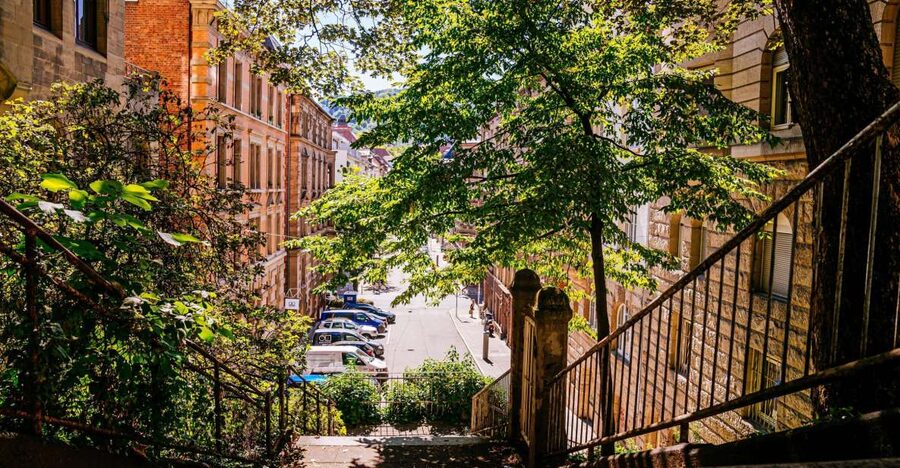
I would recommend the tour to you if you like seeing cities on foot and want a side of Stuttgart beyond the main central sights. It suits people who enjoy local stories, viewpoints, residential streets, and the small details that do not usually appear in a short guidebook entry.
It is especially useful for repeat visitors and people who already know Stuttgart’s center. The routes show you places that even residents may not have visited recently, including unusual stairways, viewpoints, and hillside corners.
You should also be comfortable joining a tour in German. The listed language is German, and no other language option is provided. If you understand German well enough to follow spoken stories, you will get much more from the experience.
This is not the right choice for a relaxed stroll, a wheelchair-friendly outing, or a route suitable during pregnancy. It also may not suit young children or anyone who tires quickly, though the supplied information does not set a specific age limit.
Practical preparation for more than a thousand steps
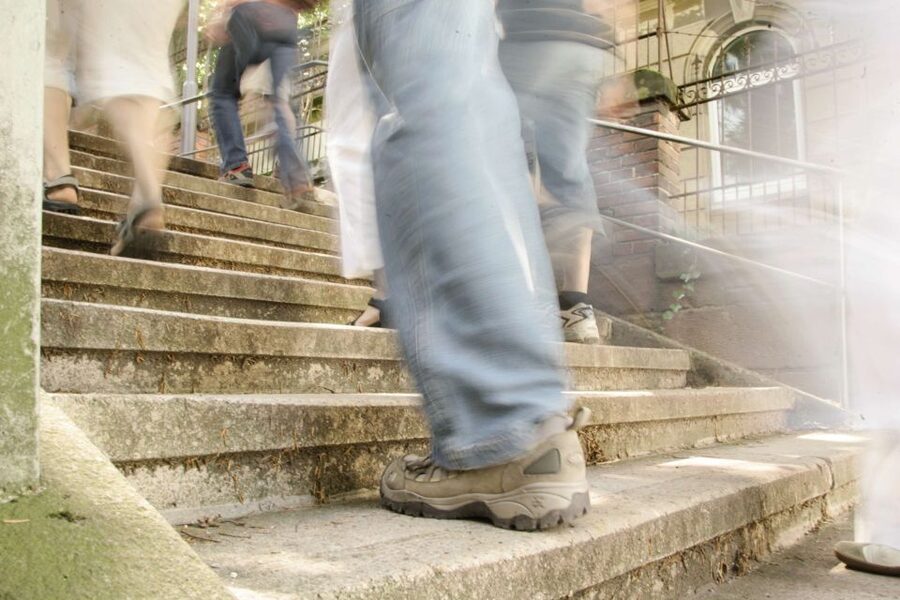
Wear proper walking shoes. This is not a suggestion to ignore. The tour requires repeated stair climbs, descents, and general physical fitness.
Bring water since food and drinks are not included. The tour is short enough that you may not need a full day pack, but you should be ready for a sustained uphill walk.
Check the exact route before you book. North, East, South, West, and Mitte are different experiences, and the meeting point can change with the option. If you want the central city, select Mitte. For vineyards, consider North or South. For arts and city views, East has Anna Sutter, the observatory, Uhlandshöhe, and the ballet school. For villas and a forest edge, choose West.
Allow a little flexibility around the one to two-hour duration. The stated time gives you a useful planning range, but the terrain, stops, and guide’s storytelling can affect the pace.
Should you book the Stuttgart Stäffele Tour?
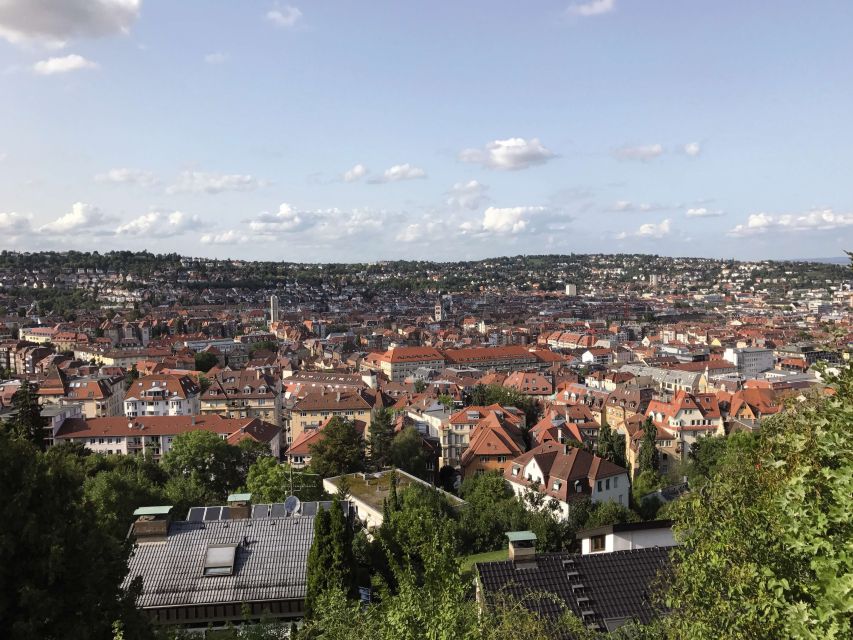
Book it if you want Stuttgart’s hills to become part of the story rather than an obstacle between sights. For $25, you get a focused local walk with five route choices, strong viewpoints, and details about places such as Eugensplatz, Karlshöhe, the Chinese Garden, and the Schwabtunnel.
My first choice would depend on your interests. Choose Mitte for central access and famous stairways, South for vineyards and Karlshöhe, East for arts and personal history, West for villas and the Zeppelin platform, or North for a varied route through gardens, architecture, and a vineyard.
Skip it if steep stairs are a serious problem or if you need a tour in a language other than German. For fit walkers who want a more local view of Stuttgart, this is an inexpensive way to see how the city’s hills, homes, vineyards, and stories fit together.
FAQ
How long does the Stäffele Guided Walking Tour last?
The tour lasts between one and two hours. Starting times depend on availability and the route you select.
How many routes can I choose from?
You can choose from five routes: North, East, South, West, and Mitte.
What language is the tour conducted in?
A live German-speaking guide leads the tour. German is the listed language.
How much does the tour cost?
The listed price is $25 per person.
Are food and drinks included?
No. Food and drinks are not included, so plan to bring or purchase anything you need separately.
What should I bring?
Comfortable shoes are required. You should also have enough physical fitness for repeated stair climbs and descents.
Is the tour suitable for wheelchair users or pregnant women?
No. The experience is not suitable for wheelchair users or pregnant women because of the stair-heavy route and physical demands.
Just added around Stuttgart
- Stuttgart: Landesmuseum Württemberg Old Castle Entry Ticket★ 4.5 · 15 reviews
- Stuttgart: Exklusive Floßboote Finne & Fischle★ 4.5 · 23 reviews
- SUP Yoga with Guide★ 4.1 · 4 reviews
- Stuttgart: Wine Tour with wines of the best winemakers★ 4.0 · 7 reviews
- Stuttgart: Wilhelma Zoological-Botanical Garden Ticket★ 4.7 · 121 reviews
- Stuttgart: Stand Up Paddling Rental★ 4.6 · 55 reviews
- Stuttgart: Walking Custom Tour with a Local Guide★ 3.8 · 4 reviews
- Stuttgart: Stuttgart Wine Museum Wine Tasting★ 4.7 · 55 reviews
Walking Tours, compared.





Berlin’s Best: 2 Hour Walking Tour Third Reich and the Cold War
Read our review →


Third Reich Berlin: Hitler and WWII Walking Tour
Read our review →Browse the lists this tour appears in