

Reviewed · FACTORY & PRODUCTION TOURS
Tickets to the Meissen Porcelain Factory
The most fascinating part of the Meissen factory is watching a delicate object take shape through many separate hand-worked stages. You can see cups formed, figurines assembled piece by piece, and decorations added both before and after firing. The audio-guided workshop visit keeps the process clear without requiring a live guide.
I like the hands-on look at production and the museum’s orderly display of porcelain from 1710 to today. I also like the simple pleasure of having a snack served on genuine Meissen porcelain, then browsing the boutique and outlet center for a souvenir with a real connection to the place.
The main drawback is timing. To join the audio-guided workshop tour, you should arrive before 3 PM, and the factory is not a quick stop if you want to see both the production rooms and the museum. The audio guide is useful, but this is not a personal, guide-led tour.
In This Review
- Key points at a glance
- Why the Meissen factory is more than a porcelain showroom
- The demonstration workshops: molding, throwing, and fine repair
- Underglaze and overglaze decoration
- The Museum of Meissen Art from 1710 to today
- A porcelain-served snack and time to shop
- Is the $18 admission good value?
- Planning your day at Talstrasse 9
- Who should book this Meissen experience?
- Should you book the Meissen factory ticket?
- FAQ
- Where is the Meissen porcelain factory experience located?
- What does the ticket include?
- Is food included in the admission price?
- Is an audio guide included?
- Which languages are available for the audio guide?
- What time should I arrive for the workshop?
- Is the attraction open every day?
- Can I cancel the booking?
Key points at a glance
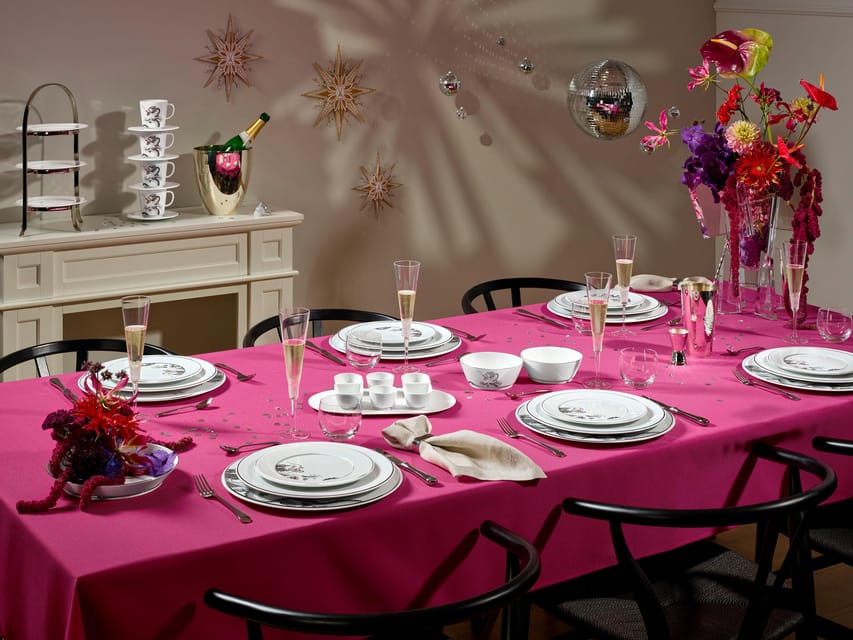
- Watch cups and figurines take shape: See molding, throwing, figurine repair, and underglaze and overglaze painting.
- Follow 300 years of design: The Museum of Meissen Art presents pieces from 1710 to the present in chronological order.
- Hear the process in 15 languages: Audio guide options include English, German, Spanish, Chinese, French, Italian, Japanese, and more.
- Leave time for the cafe and shops: A snack served on Meissen porcelain adds a small but memorable touch, while the boutique and outlet center offer shopping.
- Pay about $18 per person: The price covers the demonstration workshop and museum, making it a reasonable choice for anyone interested in ceramics, craft, or design.
- Plan around the afternoon cutoff: Arrive before 3 PM for the audio-guided workshop, even though the attraction stays open later on most days.
Why the Meissen factory is more than a porcelain showroom

Meissen porcelain is often associated with fine tableware and ornate figurines, but the factory visit explains the work behind those finished pieces. You are not simply looking at polished objects in glass cases. You see how much handwork goes into making something that may appear perfectly simple.
The production process is the heart of the experience. Porcelain passes through several stages, and each one calls for a different skill. Molding and throwing shape the basic forms. Figurine makers repair and assemble small parts. Decorators apply color at different points in the process, using both underglaze and overglaze techniques.
That division of labor gives you a better eye for the finished pieces. A figurine that looks like one solid object may actually be made from many individual parts. A cup may look plain, but its shape still depends on careful forming before decoration and firing.
The human hand remains central here. That matters because modern factory language can make porcelain sound like a fully automated product. At Meissen, the workshops show you where hand control, correction, and judgment still matter.
More factory & production tours in Germany:
- Dresden: Tour of VW’s Transparent Factory
★ 4.5 · 4,058 reviews - Stuttgart: Mercedes-Benz Museum Entry Ticket
★ 4.8 · 1,400 reviews - Leipzig: Exclusive BMW & MINI Behind-the-Scenes Factory Tour
★ 4.6 · 289 reviews
The demonstration workshops: molding, throwing, and fine repair
Your visit begins with the demonstration workshop, where the audio guide leads you through the key steps. The presentation is arranged around the main parts of production, so you can follow the path from raw form to decorated object.
Molding is one of the first stages to watch. This is where porcelain takes a basic shape, setting up the proportions and details that later workers will refine. The process helps explain why a small change in a mold can affect the whole finished piece.
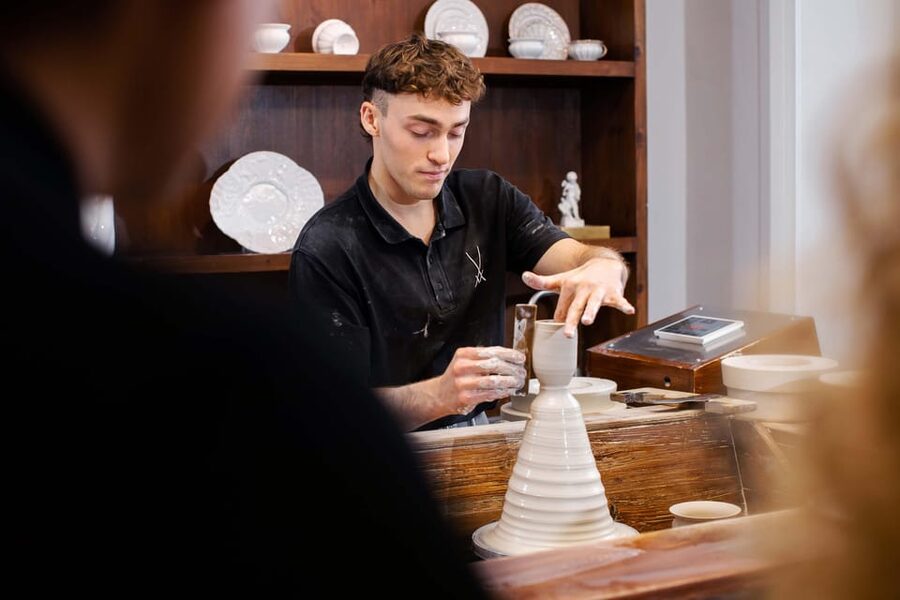
Throwing shows another side of porcelain work. Cups are made in a way that lets you see the importance of even walls and a balanced form. If you enjoy watching skilled handwork, this may be one of the most satisfying stops because a simple vessel develops in front of you rather than appearing fully formed.
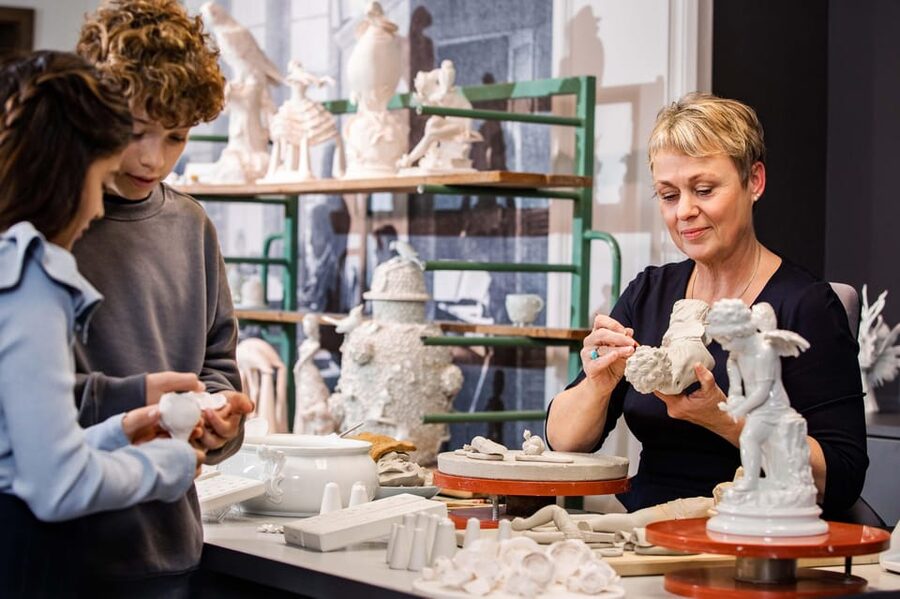
The section on figurines is especially useful. Meissen is well known for decorative figures, and the workshop explains how many separate pieces can make up one typical figurine. The craft of repairing, or assembling and refining these parts, requires careful attention to tiny details.
You might find this part more interesting than the final display because it reveals the hidden labor. Arms, hands, clothing details, flowers, and other small elements must be placed and corrected before the object is ready for decoration and firing.
The audio guide gives structure to what you see. It is available in Spanish, Chinese, Czech, Danish, Dutch, English, Finnish, German, Italian, Polish, Russian, Japanese, Swedish, and French. You can focus on the demonstrations instead of trying to read every sign, though you should not expect the give-and-take of a live guide.
Underglaze and overglaze decoration

Decoration is not one single step. The visit shows both underglaze and overglaze work, which helps you understand why porcelain colors and patterns can look so different.
Underglaze decoration is applied before the final firing process. Overglaze decoration comes later. The distinction may sound technical, but seeing the two methods side by side gives you a practical way to read Meissen pieces in the museum.
This is also where the factory’s precision becomes clear. A painted detail has to work with the shape of the object, and a design must survive the heat of firing. Small choices in brushwork, color, and placement can change the character of a plate, cup, or figurine.
If you have ever admired porcelain mainly for its finished appearance, this section gives you a better sense of the work beneath the surface. It also makes the museum displays easier to understand because you can connect a pattern or painted detail with the method used to create it.
The Museum of Meissen Art from 1710 to today
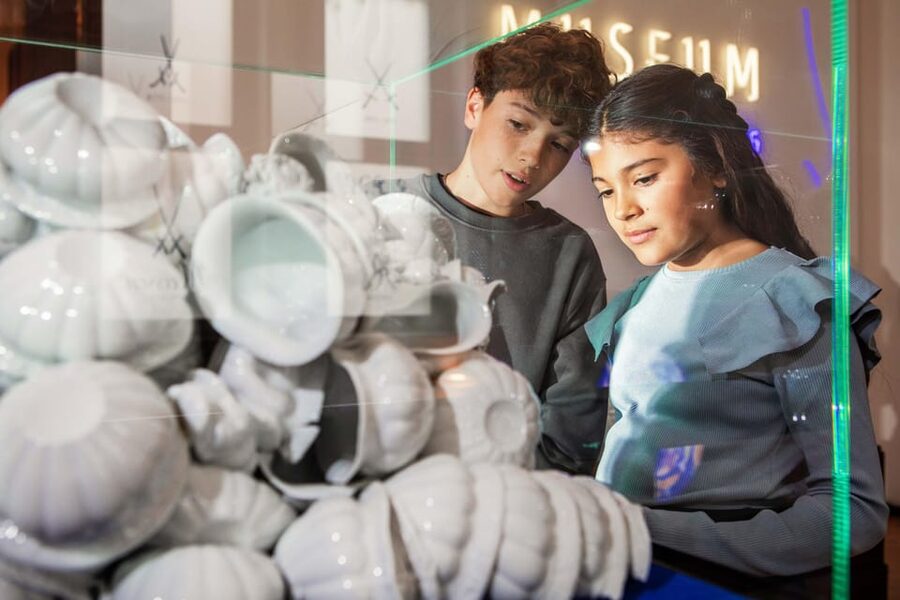
After the workshop, allow time for the Museum of Meissen Art. Its collection covers roughly 300 years, beginning in 1710 and continuing to the present. The pieces are arranged chronologically, so you can track changes in design rather than viewing unrelated objects one after another.
This order is helpful for a first visit. You can see how forms, decoration, and taste changed across different periods. The museum draws on the manufactory’s broad holdings, giving you a wider picture than a small display of current products could provide.
Look for the connection between the objects and the workshop stages. After watching a figurine assembled from many parts, you can study finished figures with more patience. After seeing cups formed by hand, you may pay more attention to their proportions and surface decoration.
The museum is a good reason to avoid rushing through the factory. If you spend only enough time for the workshop, you will miss much of the design story. On the other hand, visitors who are mainly interested in making techniques may find that the museum requires a slower pace than expected.
The collection can appeal to different kinds of visitors. Art and design fans will find plenty to study. People interested in German manufacturing will gain useful context. Families may prefer the visible handwork in the demonstration rooms, while collectors may want extra time with the chronological displays and shop offerings.
A few more Germany trips to weigh up
- Dresden: Semperoper Tickets and Guided Tour
★ 4.7 · 12,102 reviews - Berlin: Jewish Museum Berlin Entrance Ticket
★ 4.5 · 8,393 reviews - Berlin: Berlin Story Bunker Entry Ticket
★ 4.6 · 6,759 reviews - Hamburg: Hamburg Dungeon Admission Ticket
★ 4.7 · 5,745 reviews
A porcelain-served snack and time to shop
The cafe gives you a chance to pause with a snack served on Meissen porcelain. Food and drinks are not included in the admission price, but this small detail fits the setting. You are not just looking at the tableware behind glass. You can see how it feels in ordinary use.
I would treat the cafe as part of the experience rather than the main reason to visit. The information provided does not promise a full meal or a large menu, so plan it as a snack stop. If you have a busy day in Meissen, it can provide a pleasant break between the workshop and museum.
The boutique and outlet center add another choice at the end. The boutique is suited to people looking for Meissen merchandise, while the outlet center may be more appealing if you want to compare prices or browse without committing to the most expensive pieces.
Shopping can easily take longer than planned, especially after you have seen how much labor goes into each object. Set a spending limit before you enter. A small item may be a sensible souvenir, but the visit can also make elaborate pieces look tempting.
One useful detail from the available information is that visitors may be able to paint porcelain themselves and create a Meissen item of their own. The exact availability and cost of this activity are not provided, so ask on arrival rather than assuming it is always offered. If available, it could be a memorable option for families and anyone who wants more than a standard shop purchase.
Is the $18 admission good value?

At about $18 per person, admission covers the demonstration workshop and the Museum of Meissen Art. That is fair value if you plan to use the full day and take time with both parts.
The price is less compelling if you only want a quick look at the shop. Food, drinks, transportation, and any purchases are extra, so the total cost depends on how much time you spend at the cafe and outlet center.
I think the admission works best for visitors who enjoy seeing how things are made. You receive both a live look at craft production and a long chronological display of finished work. Those are two different experiences in one ticket.
The value also improves for people who want an indoor activity. Opening hours give you flexibility, and the audio guide lets you move at your own pace. You do not need to arrange a separate guide, though you should reach the workshop before 3 PM.
Planning your day at Talstrasse 9

The meeting point is the Museum Ticket Office for Groups at Talstrasse 9, 01662 Meissen. The supplied details do not include pickup or drop-off, so you need to arrange your own transportation to the factory.
The ticket is valid for one day. That matters because you can plan the factory as a main stop rather than squeezing it into a short opening. I would begin with the demonstration workshop, since the audio-guided portion has the 3 PM arrival cutoff.
Afterward, visit the museum while the production process is fresh in your mind. Finish with the cafe, boutique, and outlet center. This order keeps the practical manufacturing explanation ahead of the historical and design displays.
Opening hours change by season:
- Until December 21, 2025, the attraction is open daily from 9 AM to 6 PM.
- From December 22 to 30, 2025, it is open daily from 9 AM to 5 PM.
- On December 31 and January 1, hours are 10 AM to 4 PM.
- It is closed December 24, 25, and 26.
- From January through March 2026, it is open daily from 10 AM to 5 PM.
- From April 2026 onward, it is open daily from 9 AM to 6 PM.
- On January 14, 2026, the Meissen Theme World closes at 3 PM.
For most dates, you can spend the later afternoon in the museum or shops, but do not confuse the closing time with the workshop arrival deadline. Reach the site before 3 PM if the demonstration is a priority.
The attraction does not allow pets. Keep that in mind if you are planning a day out with an animal.
Who should book this Meissen experience?
I would recommend it to anyone curious about ceramics, decorative arts, industrial craft, or German design. It is also a strong choice for a rainy day because much of the experience is indoors and organized around visual demonstrations and museum displays.
Families may enjoy seeing objects made by hand, especially the figurine section. The possibility of painting porcelain, if available on the day, adds another reason to ask about family participation at the ticket office.
It also suits collectors and design-minded visitors who want more context before shopping. Seeing production first can help you decide if a souvenir feels worth its price.
You may want to skip it if you have little interest in porcelain or only a short amount of time in Meissen. The visit rewards patience. The museum is not something to race through, and the workshop should be reached before 3 PM.
The audio guide is a good fit if you prefer independent sightseeing or need one of the many listed languages. If you want a personal conversation with a guide, this format may feel limited.
Should you book the Meissen factory ticket?

Book it if you want to understand the work behind Meissen porcelain, not just admire finished pieces. The strongest part is the combination of hands-on demonstrations and a chronological museum covering 1710 to today.
For the best value, arrive well before 3 PM, see the workshop first, then give the museum enough time to connect the techniques with the finished objects. Add the cafe and shops if your schedule and budget allow.
At roughly $18, this is a sensible cultural stop for craft fans, families, collectors, and anyone who enjoys seeing skilled work up close. Skip it only if your Meissen visit is rushed or porcelain does not interest you.
FAQ
Where is the Meissen porcelain factory experience located?
The meeting point is the Museum Ticket Office for Groups at Talstrasse 9, 01662 Meissen, Germany.
What does the ticket include?
The ticket includes entry to the demonstration workshop and the Museum of Meissen Art.
Is food included in the admission price?
No. Food and drinks are not included, though the cafe serves snacks on Meissen porcelain.
Is an audio guide included?
Yes. An audio guide is included for the demonstration workshop.
Which languages are available for the audio guide?
The listed languages are Spanish, Chinese, Czech, Danish, Dutch, English, Finnish, German, Italian, Polish, Russian, Japanese, Swedish, and French.
What time should I arrive for the workshop?
You should arrive before 3 PM to take part in the audio-guided demonstration workshop.
Is the attraction open every day?
The attraction is open daily during the listed operating periods, with special holiday closures and seasonal hours. It is closed December 24, 25, and 26.
Can I cancel the booking?
Yes. You can cancel up to 24 hours in advance for a full refund. You can also reserve now and pay later, according to the booking terms.
Just added around Germany
- Aachen old town tour – GERMAN (public)★ 5.0 · 24 reviews
- Aachen Private Walking Tour With A Professional Guide★ 5.0 · 11 reviews
- Cologne Highlights: Exclusive Private Tour★ 5.0 · 5 reviews
- Bremen Private Walking Tour With A Professional Guide★ 5.0 · 7 reviews
- Private Walking Tour through the Fascinating Bremen’s City Center★ 5.0 · 5 reviews
- Explore Cologne’s best Street Art Quarter★ 4.5 · 4 reviews
- Bremen Exploration Private Game and City Tour on your Phone★ 4.5 · 7 reviews
- e-Scavenger hunt Bremen: Explore the city at your own pace★ 4.0 · 24 reviews
Factory & Production Tours, compared.



Exclusive BMW & MINI Behind-the-Scenes Factory Tour
Read our review →

Stralsund: Factory Tour with Fermented and Organic Tastings
Read our review →
Munich Private Walking Tour with the BMW Museum and BMW Welt
Read our review →Browse the lists this tour appears in