
Reviewed · CONCENTRATION CAMP MEMORIAL TOURS
Sachsenhausen Memorial: Walking Tour from Berlin
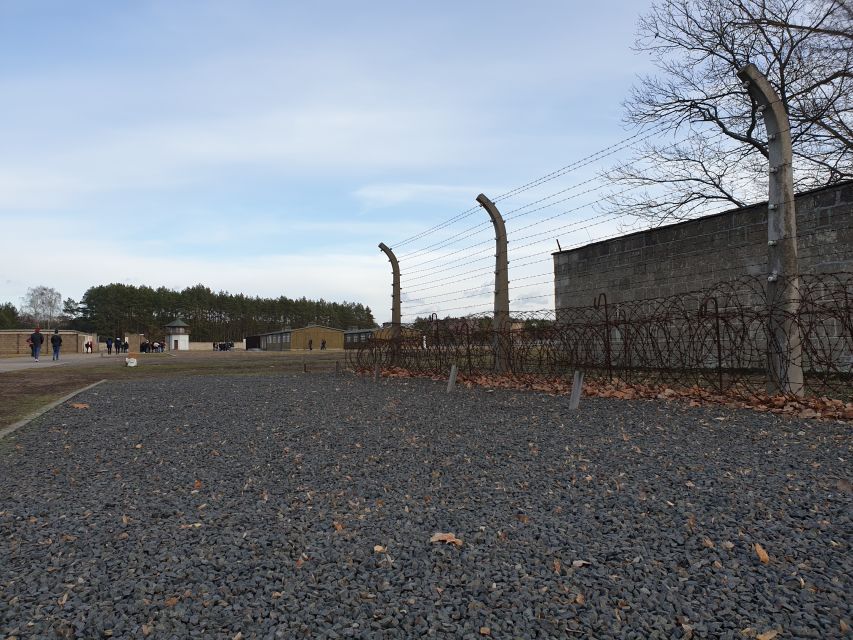
Sachsenhausen is not a casual sightseeing stop. Built in 1936 just north of Berlin, it was designed as a model concentration camp and training ground for SS guards. The camp’s careful geometry, empty roll-call square, prison buildings, and Station Z make the machinery of Nazi terror painfully clear.
I like the three-hour guided walk, which gives you time to connect the buildings with survivor testimony and the wider Nazi camp system. I also like the practical train journey from Berlin, since it puts the memorial in its real setting rather than treating it as a quick exhibit downtown. The drawback is the amount of walking, combined with an all-weather schedule and no meal stop.
In This Review
- Key points to know before booking
- Why Sachsenhausen matters beyond a day trip
- From Berlin to Oranienburg by S-Bahn
- Tower A and the roll-call square
- Forced labor, punishment, and daily life
- Prison barracks and medical rooms
- The former kitchen and museum displays
- Station Z and the hardest part of the visit
- Three hours on site, six hours door to door
- Group size, languages, and guide quality
- What to bring and what to expect on the day
- Who should book this Sachsenhausen tour
- Should you book it?
- FAQ
- Where is Sachsenhausen Memorial?
- How long does the activity last?
- How long is the guided visit inside Sachsenhausen?
- How do I travel from Berlin to the memorial?
- Is public transport included?
- Do I need to pay anything at the memorial?
- What languages are available?
- Can I stay at the memorial after the guided tour?
- Can I eat at Sachsenhausen Memorial?
- What should I wear and bring?
Key points to know before booking
- Sachsenhausen was a model SS concentration camp: Its layout was created to enforce control and later influenced the wider camp system.
- The memorial is about 35 kilometers north of Berlin: You travel by S-Bahn to Oranienburg, then continue on foot.
- The main visit lasts about three hours: Expect Tower A, the roll-call square, prison areas, the former kitchen, medical rooms, and Station Z.
- Guides are praised for empathy and detail: Fabio, Soleil, Lorenzo, Andrea, and Sueli are among the guides named in the feedback, though your guide depends on the date and language booked.
- Bring an ABC transport ticket and food: Public transport is not included, and eating is not allowed at the memorial.
- The price is $511 for up to six people: That can be fair for a private group, but it is a serious cost if your party is small.
Why Sachsenhausen matters beyond a day trip
Sachsenhausen was built in 1936, when the Nazi regime was turning political repression into a vast, organized system. Its location near Berlin mattered. The camp was close enough to the capital for the SS to use it as an administrative center, a training site, and a model for other camps.
That design is one of the most important parts of the visit. The camp was not built randomly. Its layout helped the SS control prisoners through sightlines, forced movement, surveillance, and constant exposure to authority. You see how architecture became part of the punishment.
The first prisoners were political opponents of the Nazi government. Later, the camp held Sinti and Roma, Jews, prisoners of war, and Jehovah’s Witnesses. More than 40,000 people died here under starvation, disease, forced labor, violence, executions, and other brutal conditions.
A guide helps you connect individual locations to that larger system. Without context, a barracks foundation or an empty square can seem like a silent piece of history. With explanation, the site shows how a dictatorship used paperwork, uniforms, buildings, companies, guards, propaganda, and terror together.
The visit also covers Sachsenhausen after the war. Under Soviet occupation, the site became a special camp where former Nazis, political opponents, and civilians were detained. Thousands died from hunger and disease. That second chapter matters because it prevents a simplified reading of the site. Sachsenhausen carries more than one history of imprisonment.
More Concentration Camp Memorial Tours in Berlin
- Berlin: Sachsenhausen Concentration Camp Tour in English
★ 5.0 · 5,711 reviews - Berlin: Sachsenhausen Concentration Camp Memorial Tour
★ 4.7 · 3,716 reviews - Sachsenhausen Concentration Camp Bus Tour in English from Berlin
★ 5.0 · 1,962 reviews
From Berlin to Oranienburg by S-Bahn
The tour begins in Berlin, though the exact meeting point depends on the option you book. Arrive at least 15 minutes early. The group will most likely take a train about five minutes after the official start, and late arrivals cannot be held up.
The train ride takes about 40 minutes. You need an ABC public transport ticket, and this cost is not included. A 24-hour ABC ticket is recommended, so buy it before meeting the guide and keep it ready for the journey home.
This part is simple, but it is not throwaway time. Traveling from Berlin to Oranienburg gives you a sense of the camp’s physical relationship to the capital. The memorial was not an isolated prison in a remote wilderness. It operated close to the center of Nazi power.
The trip can also help you prepare mentally. This is a serious historical visit, and the quiet shift from city streets to the memorial site gives you time to move into a more focused frame of mind. Bring water and a packed meal for the train. Food is not permitted at the memorial, and there is no lunch stop during the activity.
After arriving in Oranienburg, allow about 20 minutes for the guided walk toward Sachsenhausen. The route is part of the six-hour schedule, so wear shoes that can handle a long day on foot.
Tower A and the roll-call square
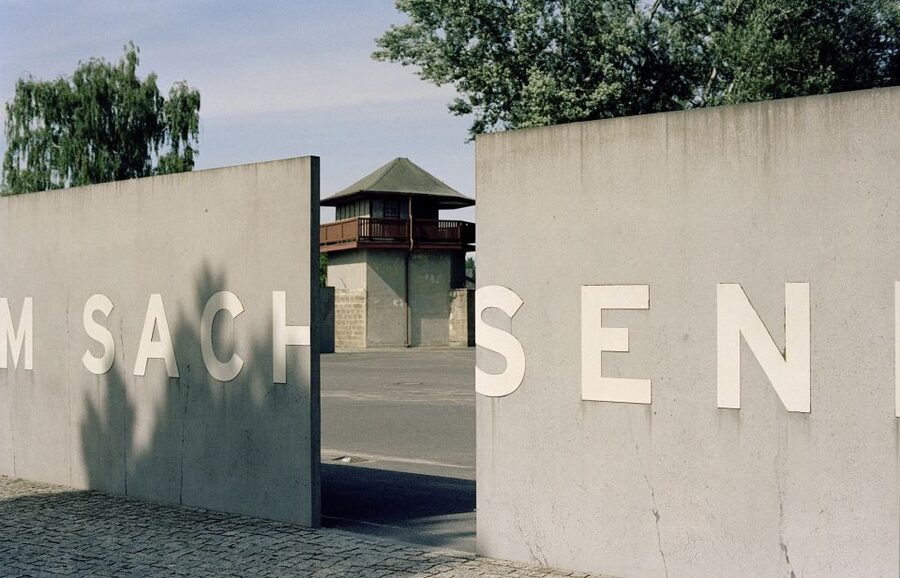
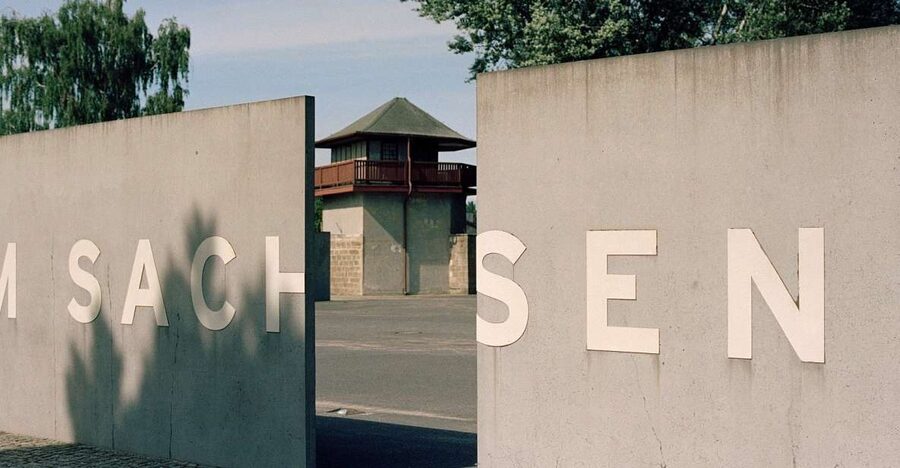
Tower A is one of the first major points inside the memorial. From here, the SS controlled the entrance and the movement into the camp. The roll-call square nearby was used for the repeated counting and lining up of prisoners.
This is where the camp’s system of discipline becomes easier to understand. Roll call could last for long periods, even in harsh weather, and it was part of the daily routine imposed on prisoners. The open space was not just functional. It made people wait, stand, and remain visible under guard control.
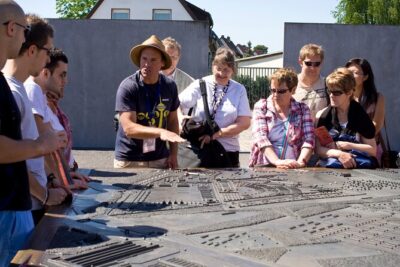
Your guide should help you read the layout rather than simply point out structures. The value is in seeing how the entrance, square, barracks, guard positions, and movement routes worked together.
The site can feel stark. Much of what you see is made up of foundations, reconstructed elements, or preserved buildings rather than a complete camp filled with original objects. That sparseness is worth expecting. Sachsenhausen is not arranged like a conventional museum, and the empty areas can be as meaningful as the indoor displays.
Forced labor, punishment, and daily life
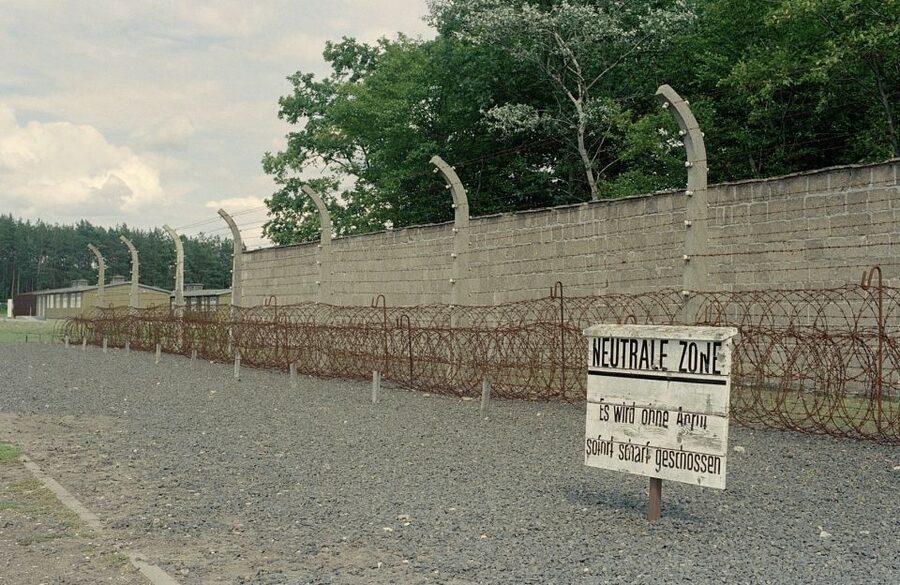
The tour explains the forced labor system and the punishments used to break prisoners physically and mentally. Sachsenhausen also played a role in the wider economic system, with private industry connected to the exploitation of prisoners.
That point gives the visit a wider reach. Nazi persecution was not carried out only by uniformed guards inside the fences. Companies and institutions benefited from forced labor, and the camp system helped turn human beings into a controlled workforce.
You will also hear about daily life, resistance, and the ways prisoners tried to survive. Survivor testimony is especially important here because it keeps the story from becoming a list of dates and structures. The strongest guides use personal accounts to show how rules affected ordinary moments: work, food, sleep, medical care, punishment, and contact with other prisoners.
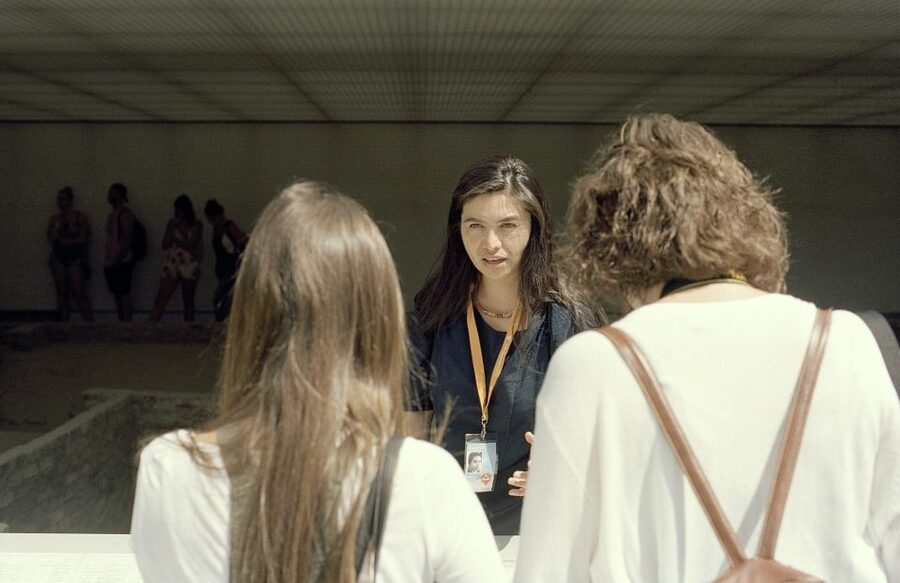
This is also where the guide’s style matters. Feedback on the guides Fabio, Soleil, Lorenzo, Andrea, and Sueli repeatedly points to preparation, warmth, empathy, and the ability to explain a painful subject without treating it as spectacle. Lorenzo was praised for linking dates and details to the wider picture, while Fabio was singled out for making the camp’s history feel immediate. Names and guide assignments can change, so do not book based on one particular person.
Same city, a completely different kind of day:
- Berlin: Reichstag, Dome and Government District Guided Tour
★ 4.7 · 18,288 reviews - Berlin: 1-Hour City Tour by Boat with Guaranteed Seating
★ 4.3 · 16,993 reviews - Berlin: Boat Tour Along the River Spree
★ 4.4 · 11,252 reviews - Discover Berlin Half-Day Walking Tour
★ 5.0 · 9,624 reviews
Prison barracks and medical rooms
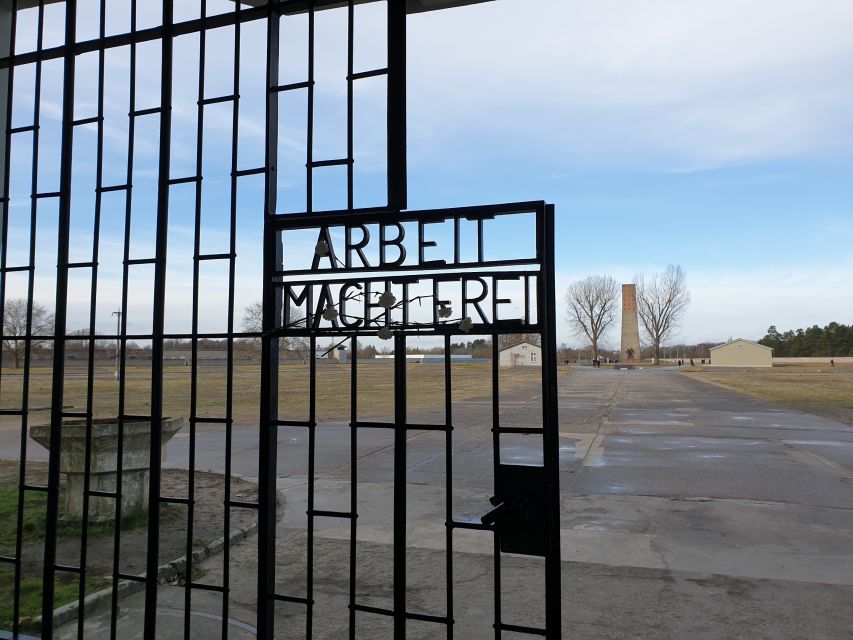
The former prison area and medical experimentation rooms show another side of the camp. The site was not only a place of forced labor. It was also a place where the SS imposed isolation, punishment, and medical abuse.
These rooms can be difficult to visit. You may find that the most powerful moments are quiet ones, with little visual drama. Give yourself permission to pause and take in the information at your own pace.
The guide’s role here is to explain what happened without sensational detail. A thoughtful tour should make the system understandable while respecting the people who suffered there. The high rating of 4.7 from 132 ratings reflects how strongly the guide quality shapes the experience, especially for a subject that requires restraint.
This is not the right tour if you want a light morning activity between Berlin cafés and shopping. It asks for attention, patience, and emotional readiness. It is well suited to adults and older children who can engage seriously with Nazi persecution, though the supplied information does not set a specific minimum age.
The former kitchen and museum displays
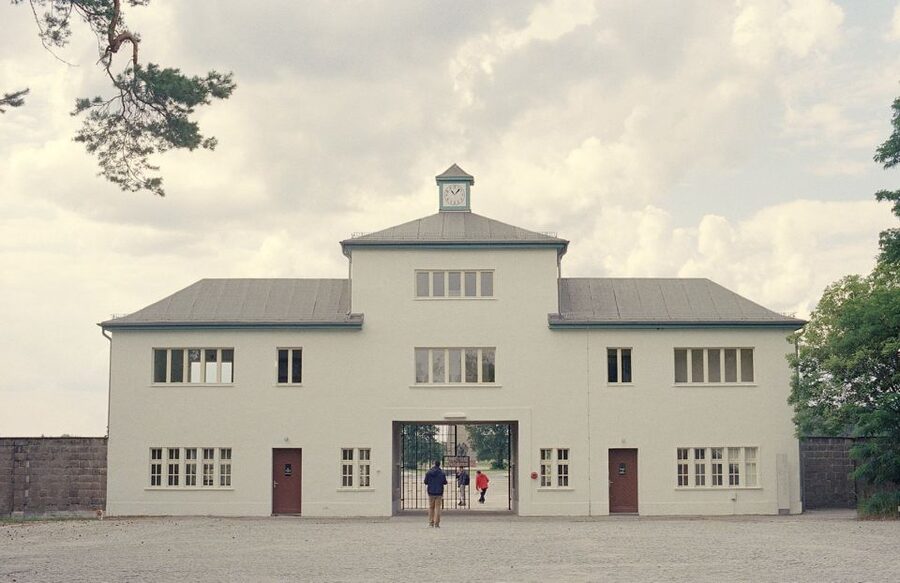
The former kitchen now houses a museum. It offers a more traditional indoor setting after the open grounds and helps place the camp’s routines in a material context.
A kitchen might sound less immediately dramatic than Station Z or the prison, but it helps explain the basic structure of camp life. Food, labor, supply, and control were all part of the system. Museum displays can also provide dates, documents, and photographs that make the outdoor buildings easier to interpret.
I like having both formats in one visit. The outdoor walk gives you scale and place. The museum gives you concentrated evidence and background. You should not expect to absorb every display in detail during the guided portion, but the guide can direct your attention to the parts that matter most.
If you want more time inside the museum, you can remain at the memorial after the guided tour and explore independently. The group returns to Berlin together, but staying longer is allowed. Confirm the practical return arrangements with your guide if you choose to remain.
Station Z and the hardest part of the visit
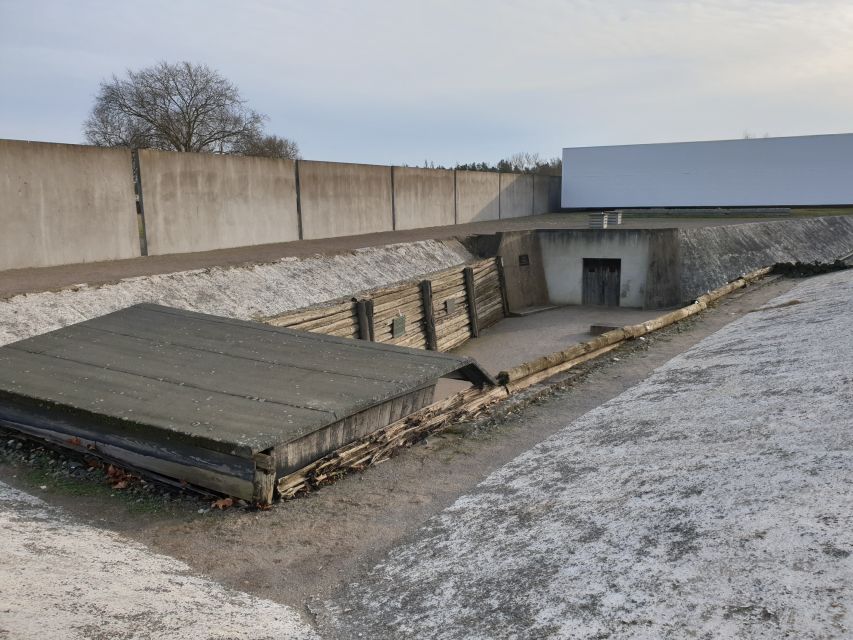
Station Z is the former execution area, where the crematoriums and gas chamber once stood. It is among the most difficult places on the tour and one of the clearest reminders that Sachsenhausen was part of a system of murder as well as imprisonment and forced labor.
The name itself was grimly ironic. Tower A marked the entrance, while Station Z represented the end. The tour explains how this area fit into the camp’s machinery and how the site was later treated as a memorial.
You should expect a sober visit here. This is not a place for photographs that treat the remains as scenery. The memorial’s purpose is remembrance and education, and a respectful attitude matters throughout.
The guide also discusses the death marches at the end of World War II. As the Soviet army approached, prisoners were forced out of camps and marched west under deadly conditions. That final phase shows that liberation did not arrive as a simple, clean ending for everyone held at Sachsenhausen.
Three hours on site, six hours door to door
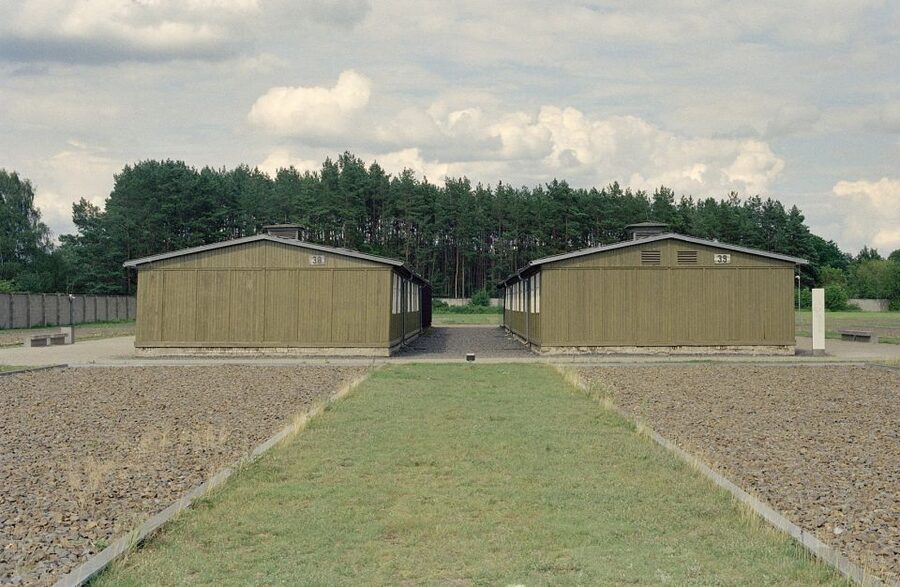
The full activity lasts about six hours. The stated schedule includes roughly 10 minutes of guidance in Berlin, 40 minutes by train, about 20 minutes in Oranienburg, around three and a half hours at Sachsenhausen, another 20 minutes on foot, and 40 minutes by train back to Berlin.
The memorial walk itself is listed as about three hours in the main description and three and a half hours in the itinerary. Either way, plan for a substantial visit rather than a quick circuit.
The return drop-off points are Potsdamer Platz 10 and Friedrichstraße 141, depending on the arrangement. The precise meeting and drop-off details can vary by booking option, so check them before you set other plans.
This schedule works well if you want transport, orientation, and a guided route handled together. It is less suitable if you prefer to spend a full day reading every display at your own pace. You can stay longer, but the tour’s return structure is built around a group journey back to Berlin.
Group size, languages, and guide quality
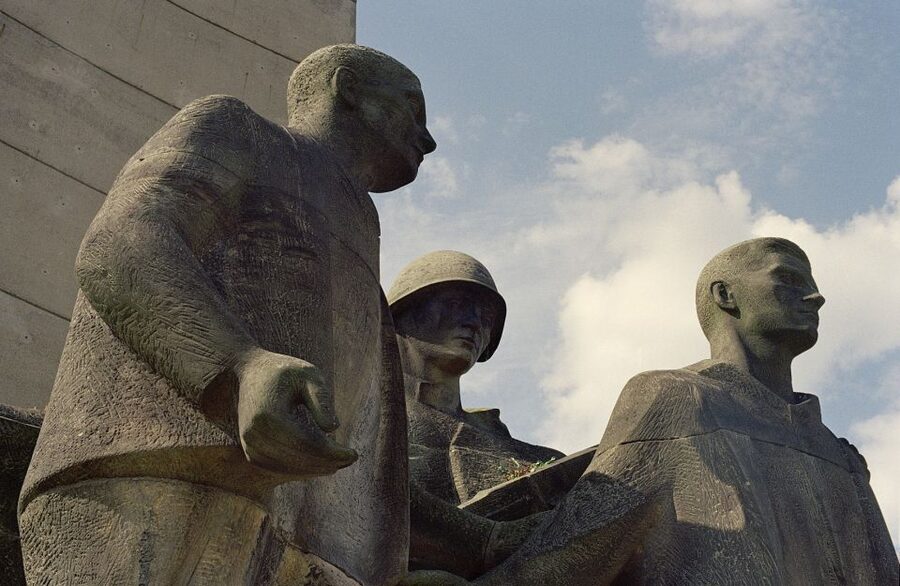
The experience is offered in small groups, with groups of up to 25 people, and a private group option is available. The advertised private price is $511 for up to six people. For six people, that works out to roughly $85 per person before transport tickets and the memorial donation. For two people, the effective cost is much higher.
That price can make sense for a family or group of friends who want a dedicated booking and a guide for the entire Berlin to memorial journey. If you are alone or traveling as a couple, compare it with any shared-group option available for your date.
Language availability needs careful attention. The activity information lists French, Italian, and English, while the included details refer to an Italian or Spanish-speaking guide and the description names a French-speaking guide. Treat the language as option-specific and confirm it at booking rather than assuming every departure offers the same choice.
The strongest praise is aimed at the guides’ human approach. They are described as friendly, prepared, professional, and empathetic. That matters more here than theatrical storytelling. You need someone who can explain dates, institutions, and personal testimony clearly while giving the subject the respect it demands.
What to bring and what to expect on the day
Wear comfortable shoes. The tour includes station transfers, a long memorial walk, and time standing outdoors.
Dress for changing weather because the visit runs in all conditions. The memorial has outdoor areas, and rain or cold can make the long walk harder than expected.
Bring food and drinks for the train journey. You cannot eat at the memorial, and there is no lunch break during the activity. A packed lunch is especially useful if you stay longer after the guided walk.
Bring your ABC public transport ticket. You also need €3 in cash at the meeting point for the required memorial donation. The full donation goes to the Sachsenhausen Memorial.
Smoking, alcohol, and drugs are not allowed. The site calls for quiet, respectful conduct, so plan your behavior accordingly.
Free cancellation is available up to 24 hours before the activity, and a reserve-now, pay-later option is offered. Those policies are useful if your Berlin schedule is still moving, but they do not remove the need to arrive early for the train.
Who should book this Sachsenhausen tour
I would choose this tour if you want a serious history visit with transport from Berlin and a guide to explain the site in context. It suits first-time visitors to Sachsenhausen, people studying Nazi history, and anyone who prefers a guided route through a large and emotionally demanding memorial.
It is also a good fit for a group of up to six that wants a private experience. The cost becomes easier to justify when divided among several people, particularly if you value a dedicated guide and do not want to manage the S-Bahn route alone.
I would think twice if you dislike fixed schedules, long walks, or emotionally difficult historical sites. You might prefer to travel independently and spend longer with the museum displays, though you would need to arrange your own transport and interpretation.
Should you book it?
Book this Sachsenhausen tour if you want more than a quick look at a former camp. The three-hour site visit, train journey from Berlin, and focus on architecture, forced labor, resistance, Nazi propaganda, private industry, and postwar detention give you a serious picture of the place.
The main cautions are clear: the price is high for a small party, transport tickets and the €3 donation are extra, lunch takes planning, and the day involves a lot of walking. For a group that can share the $511 cost, the organized journey and careful guide support offer solid value. For a solo visitor or couple, compare prices before booking.
FAQ
Where is Sachsenhausen Memorial?
Sachsenhausen Memorial is located near Oranienburg, about 35 kilometers north of Berlin in northern Germany.
How long does the activity last?
The full activity lasts about six hours, including the train journeys, walking between Oranienburg and the memorial, and the guided visit.
How long is the guided visit inside Sachsenhausen?
The guided walking tour lasts about three to three and a half hours, depending on how the schedule is described.
How do I travel from Berlin to the memorial?
The group travels by S-Bahn from Berlin to Oranienburg. The train journey takes about 40 minutes each way, followed by a walk of about 20 minutes.
Is public transport included?
No. You need to buy your own public transport ticket. A 24-hour ABC ticket for Berlin and the surrounding zones is recommended.
Do I need to pay anything at the memorial?
Yes. Every participant must pay a required €3 donation in cash at the meeting point. The money is donated to the Sachsenhausen Memorial.
What languages are available?
The activity lists French, Italian, and English. Other supplied details refer to Italian or Spanish and to a French-speaking guide, so confirm the language for your selected option before booking.
Can I stay at the memorial after the guided tour?
Yes. You may remain longer to explore independently, although the group returns to Berlin together after the guided portion.
Can I eat at Sachsenhausen Memorial?
No. Eating is not permitted on the memorial site, and there is no lunch stop during the activity. Bring your own food for the train journey.
What should I wear and bring?
Wear comfortable shoes and dress for all weather conditions. Bring food, drinks, your ABC public transport ticket, and €3 in cash for the memorial donation.
More Walking Tours in Berlin
- Berlin: Third Reich and Cold War 2 Hour Walking Tour
★ 4.9 · 6,830 reviews - Berlin: Discover Berlin Walking Tour
★ 4.9 · 5,998 reviews - Berlin’s Best: 2 Hour Walking Tour Third Reich and the Cold War
★ 5.0 · 5,486 reviews - Berlin: Hidden Backyards Guided Walking Tour
★ 4.8 · 5,360 reviews
Just added around Berlin
- Love and War in Berlin: Self-Guided Story Puzzle Walk★ 5.0 · 7 reviews
- Rickshaw Tours Berlin – Groups of up to 16 people with several rickshaws★ 4.0 · 97 reviews
- Walking on the Wall: 3-Hour Tour in Berlin★ 4.5 · 34 reviews
- eSIM for Germany and 34 European Countries★ 4.5 · 16 reviews
- Warnemuende Shore Excursion: Berlin Private Sightseeing Tour from Rostock★ 5.0 · 4 reviews
- Your ticket to The Wall Museum Berlin★ 3.0 · 60 reviews
- Warnemuende Shore Excursion: Private Berlin Tour★ 4.5 · 27 reviews
- Karl-Marx-Allee Tour: Life and Architecture in East Berlin★ 5.0 · 19 reviews
Concentration Camp Memorial Tours, compared.
Sachsenhausen Concentration Camp Tour in English
Read our review →
Dachau Concentration Camp Memorial Site Tour from Munich by Train
Read our review →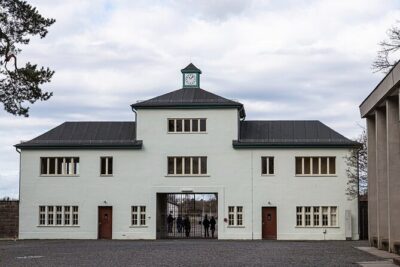
Sachsenhausen Concentration Camp Memorial Tour
Read our review →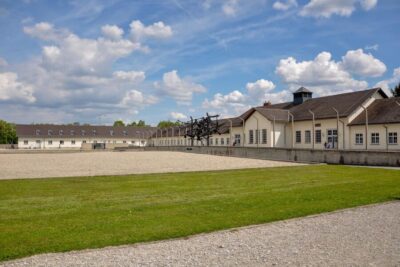
Sachsenhausen Concentration Camp Bus Tour in English from Berlin
Read our review →Sachsenhausen Concentration Camp Tour in English
Read our review →
Sachsenhausen Concentration Camp Memorial Tour (Max. 15 Guests)
Read our review →Browse the lists this tour appears in