
Reviewed · CONCENTRATION CAMP MEMORIAL TOURS
Sachsenhausen Concentration Camp Bus Tour in English from Berlin
Sachsenhausen is not an easy place to visit, and that is precisely why the setting matters. This former concentration camp gives you a direct look at Nazi Germany’s camp system, followed by the lesser-known story of its use as a Soviet special camp after 1945. The visit is sobering, serious, and likely to stay with you.
I like the air-conditioned coach from central Berlin, which saves you the train connection to Oranienburg. I also like the use of licensed guides trained by the memorial authority. Guides such as Hannah, Rebecca, Maria, Ariel, and Irish Paul have been praised for clear explanations and a careful tone.
The main drawback is time. Four hours sounds generous, but after the drive and walking, you may have little time to read every personal account inside the memorial displays. If you want a slow, document-heavy visit, going independently could suit you better.
In This Review
- Key points to know before booking
- Why Sachsenhausen deserves a place in your Berlin plans
- Meeting at Friedrichstrasse and riding to Oranienburg
- Walking through Tower A and the main camp grounds
- Barracks, infirmary, and the human cost of the camp
- Understanding the Soviet special camp from 1945 to 1950
- What the guides add to the experience
- Is $68.77 a fair price?
- Preparing for a difficult four hours
- Who should book this Sachsenhausen tour?
- Should you book it?
- FAQ
- Where does the Sachsenhausen tour begin?
- What time should I arrive?
- Does the tour include hotel pickup?
- How do I reach Sachsenhausen?
- How long does the experience last?
- Is admission to Sachsenhausen included?
- Is the tour conducted in English?
- How large is the group?
- Is the tour suitable for people with limited mobility?
- Should I bring food or drinks?
- Can I cancel for a full refund?
Key points to know before booking
- The visit covers both Nazi and Soviet camp history, including the period from 1936 to 1945 and the Soviet special camp from 1945 to 1950.
- Your guide provides the wider Berlin context, explaining how the Nazi system developed before you reach Sachsenhausen.
- Transport is simple, with a return coach from the Friedrichstrasse area rather than a train trip to Oranienburg.
- The memorial is a walking experience, with uneven outdoor sections and a moderate physical demand.
- The group can reach 28 people, so the guide may not be able to give every person long one-to-one attention.
- Bring water and a snack, since food and drinks are not included and the four-hour schedule gives you little time to stop.
Why Sachsenhausen deserves a place in your Berlin plans
Berlin has no shortage of museums about the Nazi period. Sachsenhausen gives you something different: physical space. You walk through an actual camp site, see the gate in Tower A, and stand inside the remains of buildings connected to imprisonment, forced labor, illness, punishment, and death.
The memorial is about 22 miles north of Berlin in Oranienburg. It was built in 1936 as a model concentration camp under Heinrich Himmler’s direction. Its layout was intended to be modern, orderly, and expandable. That cold efficiency is part of what makes the site so disturbing.
The Nazi camp operated from 1936 to 1945. Around 35,000 people died during those years. After the war, the Soviet authorities reused the site as a special camp from 1945 to 1950. An additional 12,500 people died there. A good visit must explain both periods, and this tour does.
I especially value the historical introduction before arrival. The guide points out places in Oranienburg where prisoners worked and discusses what local people knew about the camp system. That helps you see Sachsenhausen as part of a town and society, not as an isolated site with no connection to ordinary life.
More Concentration Camp Memorial Tours in Berlin
- Berlin: Sachsenhausen Concentration Camp Tour in English
★ 5.0 · 5,711 reviews - Berlin: Sachsenhausen Concentration Camp Memorial Tour
★ 4.7 · 3,716 reviews - Berlin: Sachsenhausen Concentration Camp Tour in English
★ 4.8 · 1,889 reviews
Meeting at Friedrichstrasse and riding to Oranienburg
The tour begins at Reichstagufer 17, near Friedrichstrasse station, at 10:00 in the morning. You should arrive by 9:45. The activity does not include hotel pickup, so build in extra time if you are staying outside central Berlin.
The coach is one of the strongest practical reasons to choose this tour. You avoid working out the train journey, finding the memorial from Oranienburg, and keeping track of the return route after an emotionally heavy visit. The vehicle is air-conditioned, and the ride gives the guide time to establish the subject before you arrive.
This part of the tour is not filler. The guide introduces the camp system, explains the rise of Nazi rule, and places Sachsenhausen in the story of Berlin and Germany during the 1930s. Joseph, Campbell, and other guides have been praised for making this background clear, while Hannah has been noted for adding personal family connections to the period.
The trip back to Berlin also has a useful feature. Guides often walk through the coach to answer questions and offer suggestions for food and other places to visit. Rebecca, in particular, has been praised for taking time to speak with people individually on the return journey. It is a small touch, but useful if you want practical Berlin advice from someone who has just spent the morning with you.
Walking through Tower A and the main camp grounds
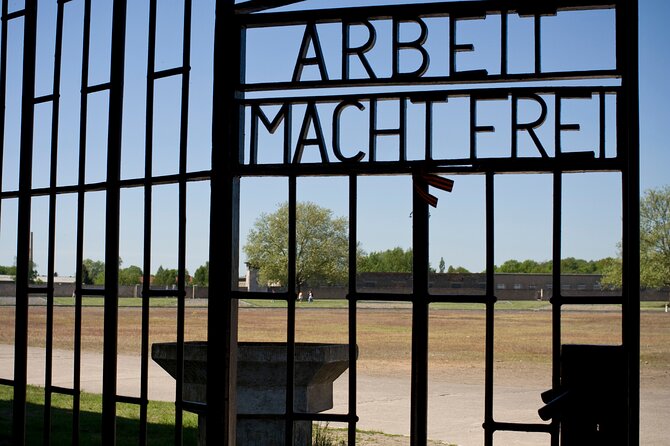
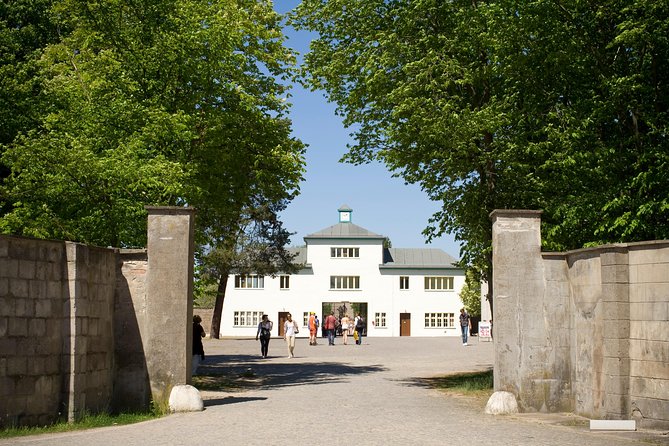
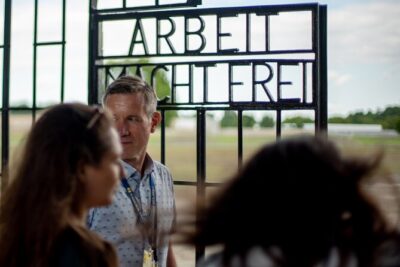
The first powerful moment comes at Tower A, the main entrance. The words ARBEIT MACHT FREI remain on the gate. Your guide explains the meaning and purpose of the entrance before leading you into the camp grounds.
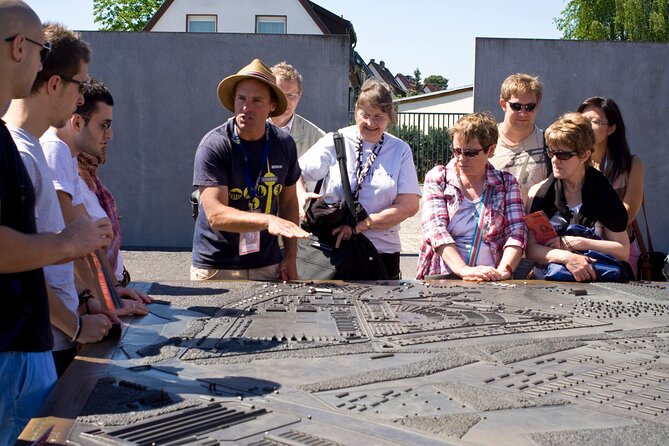
The tour then moves through the former camp interior. You visit the commandant’s house and see the basic arrangement of the site. The physical remains do not tell the whole story by themselves, so the guide’s explanation matters. This is where a strong guide can connect buildings, regulations, labor, punishment, and daily survival.
The outdoor portions require steady walking. You may be standing in open weather for much of the visit, and cold conditions can make the experience feel even harsher. One visitor described a snowy visit with Ariel and found the weather added to the emotional weight. That does not mean you need winter conditions to understand Sachsenhausen, but it does mean you should dress for the forecast and wear practical shoes.
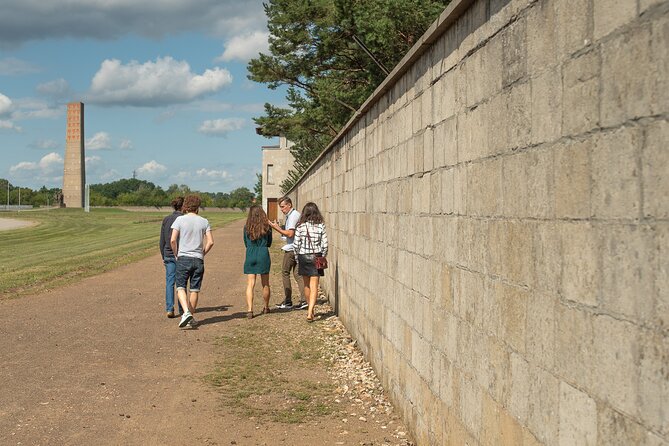
The tour is not designed for people who want to wander freely at their own pace. You follow the guide from one point to the next. That keeps the visit organized and helps you cover the key areas within four hours, but it can also feel brisk when you want to stop at a display or read a name and personal account.
Barracks, infirmary, and the human cost of the camp
The infirmary barracks are among the most difficult parts of the visit. The guide explains that experimentation took place there during the war. You also learn about the treatment of prisoners and the conditions that led to illness, suffering, and death.
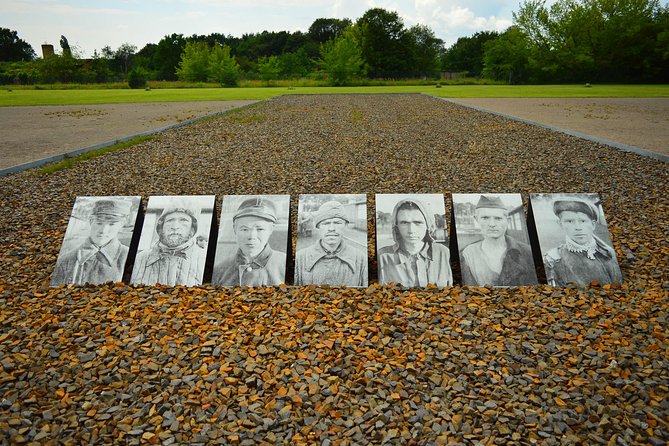
This is where the tour moves beyond military dates and political events. The camp becomes a place of individual lives. The memorial includes personal stories and written accounts, but the schedule may not give you time to read all of them closely. Two separate pieces of feedback point to the same issue: the guide can explain the main history well, but the four-hour format limits quiet reading.
I think this is the key choice you need to make before booking. If you want a clear guided introduction to Sachsenhausen, the tour works well. If you want to study every testimony, photograph, and museum panel, you may feel hurried. You could still note the displays you want to revisit and return independently, but the tour itself is a focused visit rather than a full-day research trip.
The guide’s tone is important here. The best guides do not turn the site into a dramatic performance. Rebecca has been praised for handling the subject with respect and clarity. Irish Paul has also been singled out for presenting difficult material in a sensitive way. That approach suits Sachsenhausen. You need facts, context, and space to think, not theatrical storytelling.
Same city, a completely different kind of day:
- Berlin: Reichstag, Dome and Government District Guided Tour
★ 4.7 · 18,288 reviews - Berlin: 1-Hour City Tour by Boat with Guaranteed Seating
★ 4.3 · 16,993 reviews - Berlin: Boat Tour Along the River Spree
★ 4.4 · 11,252 reviews - Discover Berlin Half-Day Walking Tour
★ 5.0 · 9,624 reviews
Understanding the Soviet special camp from 1945 to 1950
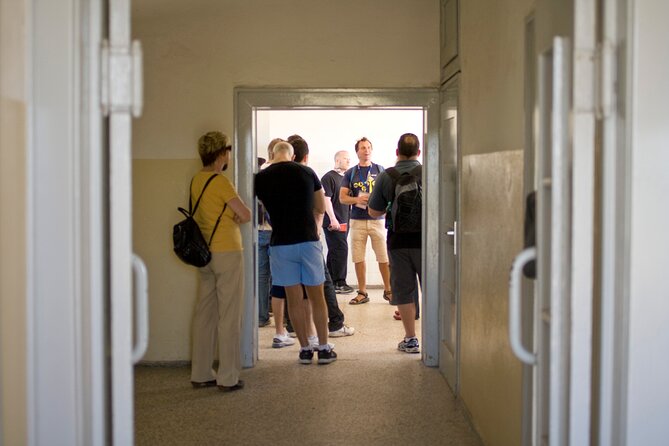
One valuable feature is the explanation of what happened after Nazi Germany’s defeat. Sachsenhausen did not simply become a museum in 1945. The Soviet authorities used part of the site as a special camp from 1945 to 1950.
The tour explains the conditions in that later period and the deaths of another 12,500 people. This section prevents a common misunderstanding: liberation did not erase the site’s function overnight, and the postwar story also deserves attention.
The tour’s broad time span gives you a better grasp of how political systems reused places of detention. It also shows why Sachsenhausen is not only a memorial to Nazi crimes. It is a site with several layers of suffering, each requiring careful explanation.
You may find this part shorter than the Nazi period because the site’s main focus and surviving displays are arranged around the concentration camp years. Still, including the Soviet special camp makes the visit more complete than a tour that stops in 1945.
What the guides add to the experience
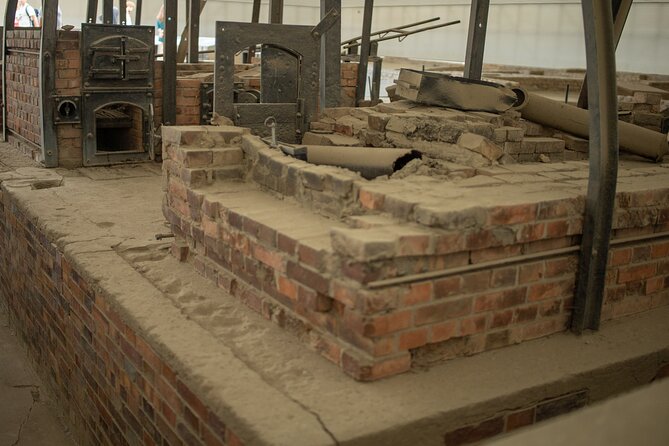
Guide quality is the tour’s most important variable. The company assigns different English-speaking guides, so you cannot assume you will have a particular person. Names praised for their approach include Hannah, Rebecca, Maria, Ariel, Joseph, Jamie S., Mikhail, Michal, Klaus, Georgia, Campbell, and Irish Paul.
The common strength is clear explanation. Maria has been praised for giving more background than some visitors had received at Auschwitz. Ariel has been noted for answering questions and allowing enough time to cover the main areas. Mikhail and Michal have been praised for thorough historical detail.
Some guides also add personal links to the subject. Hannah has shared a family story involving her grandparents’ escape from Nazi Germany. Personal connection can make the past feel immediate, but it should support the evidence rather than replace it. The strongest version of this tour combines both.
There is one caution. A small number of people have felt that the guide moved too quickly and talked too often about the limited schedule. That criticism is worth taking seriously. A memorial visit needs pace, but it also needs pauses. The experience is best for you if you accept a structured route and understand that not every display can receive a long explanation.
Is $68.77 a fair price?
At $68.77 per person, you are paying for more than entry. The price includes the coach from central Berlin to Oranienburg and back, a driver, admission to the memorial, a licensed guide trained by the memorial authority, and a $3 donation to Sachsenhausen.
That is fair value if convenience matters to you. The coach removes the need to plan public transport, and the guide gives you context during the journey and at the site. For a first visit, that structure can make the memorial easier to understand.
The value is less clear if you are comfortable traveling alone and want several hours inside the museum displays. You would give up the guide’s live explanations, but you would gain control over your pace. The express nature of this tour is the main tradeoff, not the price.
The group limit is listed as a maximum of 28 people. That is still manageable for a guided outing, though it is not a private tour. Stay close enough to hear, especially outdoors, and ask questions during natural pauses rather than waiting until the end.
Preparing for a difficult four hours
This is a serious visit. You may feel sadness, anger, shock, or simply a need for quiet afterward. One person described still processing the experience later, while another found the site especially harrowing in cold and snow. You should not schedule something demanding immediately afterward if you know you need time to recover.
Wear comfortable shoes and expect a moderate amount of walking. The tour is not recommended for people with limited mobility or walking impairments. There is no food or drink included, so bring a snack and water.
A few simple choices will improve the visit:
- Arrive 15 minutes early at the Friedrichstrasse meeting point.
- Check the weather and wear suitable outdoor clothing.
- Bring water and a small snack.
- Keep your phone on silent while the guide is speaking.
- Allow yourself quiet time after returning to Berlin.
- Ask questions on the coach ride back if you want more context.
The tour is offered in English and uses a mobile ticket. Confirmation is normally issued at booking, though bookings made within one day of departure are subject to availability and may be confirmed later.
Who should book this Sachsenhausen tour?
I would choose this experience if you are in Berlin for a short stay, want a guided introduction, or prefer not to manage the train and local transport yourself. It also suits families and small groups who want one person to explain the site from start to finish.
It is a good match for you if you want the wider story: the Nazi rise to power, the camp’s operation, the local setting, and the Soviet period after the war. Guides such as Joseph and Maria have been praised for placing Sachsenhausen within its political and social setting rather than presenting disconnected facts.
I would hesitate if your main goal is reading every personal testimony at length. The four-hour schedule includes transport, an organized walk, and a return journey. You will see the main areas, but you may not have enough time for a slow museum visit.
Free cancellation is available up to 24 hours before the start time for a full refund. Changes or cancellations made less than 24 hours before departure are not accepted for a refund. Most important, arrive on time. The coach leaves from the meeting point, and missing it can mean missing the entire experience.
Should you book it?
Book this Sachsenhausen bus tour if you want a well-organized, English-language introduction to one of the most important memorial sites near Berlin. The strongest reasons are the coach transfer, the memorial-trained guide, the clear historical framing, and the inclusion of both Nazi and Soviet camp history.
Do not book it expecting a leisurely museum day. This is a focused four-hour visit with a lot of walking and heavy subject matter. For most first-time visitors, the convenience and guidance are worth the $68.77 cost. If you want to read every personal story at your own pace, plan an independent return visit instead.
FAQ
Where does the Sachsenhausen tour begin?
The tour begins at Reichstagufer 17, 10117 Berlin, near Friedrichstrasse station.
What time should I arrive?
The tour starts at 10:00 am. You should arrive at the meeting point 15 minutes before departure, by 9:45 am.
Does the tour include hotel pickup?
No. Hotel pickup and drop-off are not included. You must make your own way to the central Berlin meeting point.
How do I reach Sachsenhausen?
You travel from central Berlin to Oranienburg by hired, air-conditioned coach. The coach also returns you to the Friedrichstrasse meeting point.
How long does the experience last?
The tour lasts approximately four hours, including the journey to and from Sachsenhausen.
Is admission to Sachsenhausen included?
Yes. Entry to the Sachsenhausen Memorial is included, along with a $3 donation per person to the memorial.
Is the tour conducted in English?
Yes. The tour is offered in English and includes a licensed guide trained by the memorial authority.
How large is the group?
The maximum group size is 28 people. The tour is a shared group experience, not a private tour.
Is the tour suitable for people with limited mobility?
No. The tour is not recommended for people with limited mobility or walking impairments. You should have a moderate level of physical fitness.
Should I bring food or drinks?
Yes. Food and drinks are not included, so bring your own snack and a drink for the four-hour experience.
Can I cancel for a full refund?
Yes. You can cancel at least 24 hours before the local start time for a full refund. Cancellations or changes made less than 24 hours before departure are not accepted for a refund.
Just added around Berlin
- Love and War in Berlin: Self-Guided Story Puzzle Walk★ 5.0 · 7 reviews
- Rickshaw Tours Berlin – Groups of up to 16 people with several rickshaws★ 4.0 · 97 reviews
- eSIM for Germany and 34 European Countries★ 4.5 · 16 reviews
- Walking on the Wall: 3-Hour Tour in Berlin★ 4.5 · 34 reviews
- Warnemuende Shore Excursion: Berlin Private Sightseeing Tour from Rostock★ 5.0 · 4 reviews
- Your ticket to The Wall Museum Berlin★ 3.0 · 60 reviews
- Warnemuende Shore Excursion: Private Berlin Tour★ 4.5 · 27 reviews
- Berlin’s Gay, Lesbian, and Queer Scene Small-Group Walking Tour★ 4.5 · 66 reviews
Concentration Camp Memorial Tours, compared.
Sachsenhausen Concentration Camp Tour in English
Read our review →
Dachau Concentration Camp Memorial Site Tour from Munich by Train
Read our review →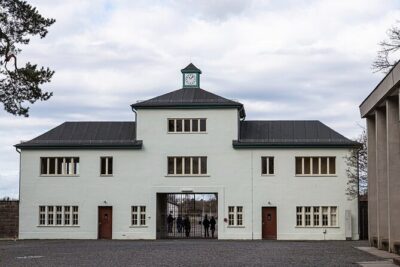
Sachsenhausen Concentration Camp Memorial Tour
Read our review →
Sachsenhausen Concentration Camp Tour in English
Read our review →
Sachsenhausen Concentration Camp Memorial Tour (Max. 15 Guests)
Read our review →
Browse the lists this tour appears in