
Reviewed · CONCENTRATION CAMP MEMORIAL TOURS
Berlin: Sachsenhausen Concentration Camp Tour in English
Sachsenhausen is not a sightseeing stop in the usual sense. It is a place where the straight lines, empty barracks, watchtowers, and killing site force you to face how a camp was planned and operated. The tour also explains what happened after 1945, when the Soviets reused part of the site.
I like the human stories, from Jewish prisoners’ revolt to sabotage by Soviet and Polish prisoners, and I like having a guide explain the site in plain English rather than trying to piece it together alone. The low $22 price is another strong point, though you must add the ABC public transport ticket and be ready for several hours of walking outdoors.
In This Review
- Key points to know before booking
- Why Sachsenhausen belongs on a Berlin itinerary
- Meeting at Friedrichstraße and taking the train
- The walk from Oranienburg to the memorial
- The Camp Administration Center sets the frame
- Barracks and the daily life of prisoners
- Station Z, the gas chamber site, and the gallows
- Punishment cells and medical experimentation
- The Soviet Special Camp after 1945
- Group size, pacing, and the role of the guide
- Is $22 good value?
- Who should book this Sachsenhausen tour?
- Should you book it?
- FAQ
- How long does the Sachsenhausen tour take?
- Where do I meet the guide in Berlin?
- How do I reach Sachsenhausen?
- Is public transport included in the price?
- What does the guided visit include?
- Is the tour available in English?
- Is the tour wheelchair accessible?
- What should I bring?
Key points to know before booking
- Station Z and the gallows: See the killing site, gas chamber location, and gallows area with historical explanation from your guide.
- A full half-day away from Berlin: Allow 5.5 to 6 hours, including train travel, walking, and about three hours at the memorial.
- Public transport is part of the experience: Your guide leads you by train from Berlin to Oranienburg, then walks with you to the site.
- Guides make the difference: Daniel, Xavier, Lucia, Gregor, Tina, Mikhail, Rebecca, and Irish Paul are among the guides praised for clear, thoughtful presentations.
- Bring food and proper clothing: There is no included meal, much of the tour is outside, and the trip runs in all weather.
- Not suitable for limited mobility: The walk from Oranienburg station takes about 20 minutes, followed by moderate walking around a large memorial site.
Why Sachsenhausen belongs on a Berlin itinerary
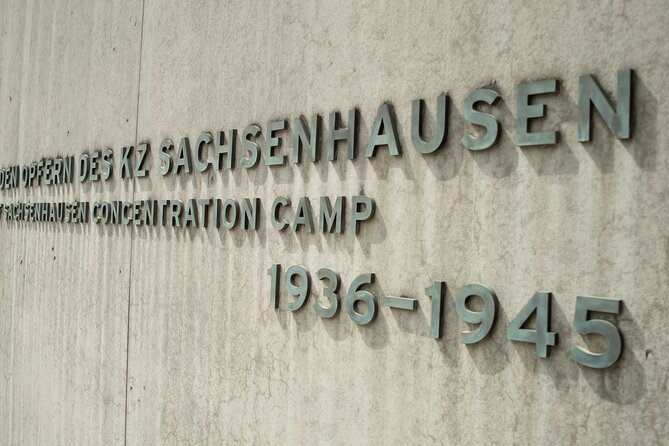
Berlin tells the story of Nazi Germany in many places, but Sachsenhausen shows how persecution worked beyond the city center. The SS built the camp in 1936, first to hold political opponents, then expanded its use to anyone the Nazi regime considered a threat.
The camp was also the administrative center for the Third Reich’s concentration camp system. Its former headquarters oversaw 32 main camps and more than 1,000 satellite camps. That fact gives the first stop, the Camp Administration Center, unusual weight. You are not simply looking at one prison. You are learning how a much wider system was managed.
I would not call this an easy outing. The subject includes starvation, forced labor, torture, executions, medical experiments, and mass murder. Yet the site matters because its physical layout helps you understand the machinery behind those crimes, while the stories of prisoners keep the visit focused on individual people rather than only numbers.
The tour also covers the camp’s final months, including the Death March before liberation in 1945. You then hear how the Soviet authorities used Sachsenhausen after World War II. That later chapter is often missed on a standard Nazi-era history tour, so it adds useful context.
More Concentration Camp Memorial Tours in Berlin
- Berlin: Sachsenhausen Concentration Camp Tour in English
★ 5.0 · 5,711 reviews - Berlin: Sachsenhausen Concentration Camp Memorial Tour
★ 4.7 · 3,716 reviews - Sachsenhausen Concentration Camp Bus Tour in English from Berlin
★ 5.0 · 1,962 reviews
Meeting at Friedrichstraße and taking the train
The meeting point is outside Friedrichstraße train station, on the square beside the Tränenpalast, also called the Palace of Tears. Look for guides with yellow umbrellas. This is a central and easy place to reach, but give yourself time to find the correct side of the station and the square.
Your guide handles the group from the start, including the trip on public transport. The train ride to Oranienburg takes roughly 25 to 35 minutes, depending on the exact service and timing. A return journey is also part of the day, with the total travel time helping bring the outing to about six hours.
You need an ABC public transport ticket for the journey to Sachsenhausen and back to Berlin. It is not included in the tour price, but staff can help you buy it at the meeting point. This is an important cost and planning detail. The advertised $22 is excellent value for the guided visit, but it is not the final transport-inclusive price.
One benefit of traveling by train is that the tour feels connected to modern Berlin rather than sealed inside a private coach. The guide can set the historical scene on the way. Guides such as Ariel, Georgia, Paul, and Daniel have also been praised for answering questions and offering Berlin suggestions during the journey.
The tradeoff is simple: public transport takes more time and requires you to stay with the group. If you want a private vehicle and door-to-door comfort, this is not that kind of tour. Even private bookings use public transport, although a private guide can meet you five minutes before the start at your hotel or chosen location.
The walk from Oranienburg to the memorial
From Oranienburg station, you walk for about 20 minutes to Sachsenhausen. This is a modest distance on paper, but it matters because the full day includes more walking once you reach the memorial.
The route also gives your guide a chance to explain the camp’s setting and the path prisoners took toward the site. One practical point deserves attention: comfortable shoes are essential. A December visit can mean cold wind, wet weather, or dark afternoons, while summer brings its own need for water and sun protection.
The memorial runs in all weather. Bring water, snacks, and clothing suited to the forecast. There is no included food or drink, and the timing may leave you eating a late lunch after returning to Berlin.
The Camp Administration Center sets the frame
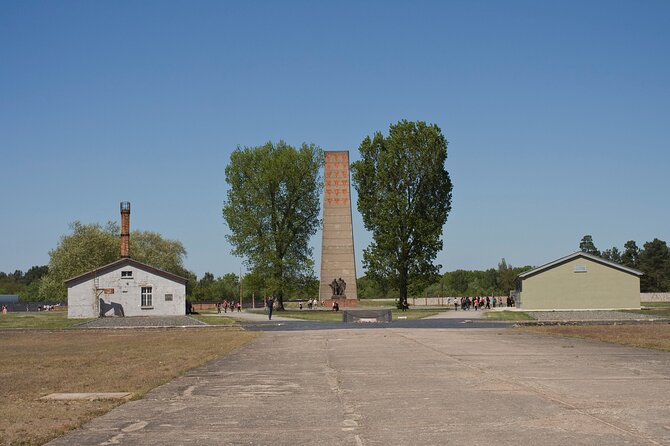
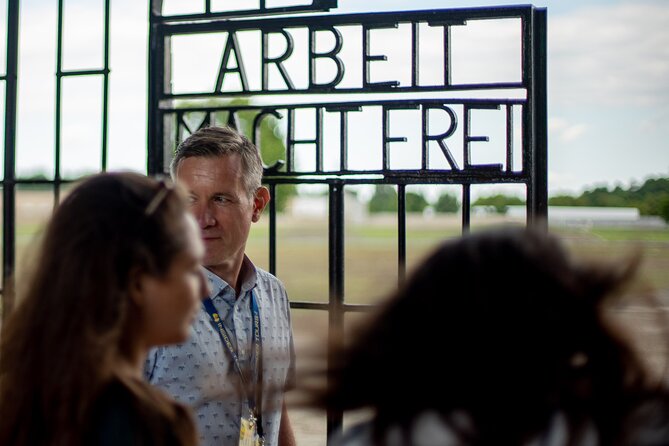
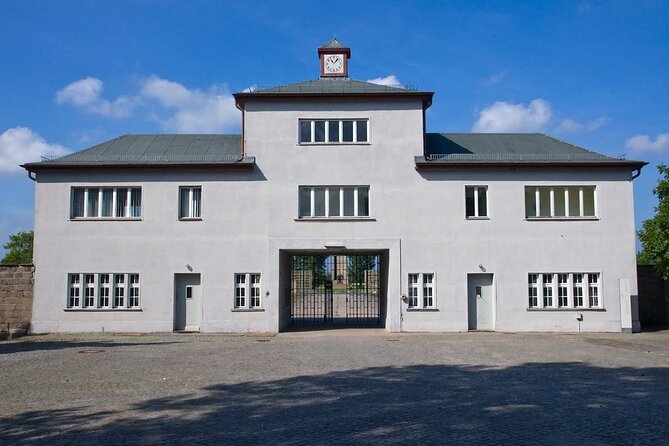
The guided visit begins at the Camp Administration Center, now an on-site museum. This building formerly housed the Concentration Camps Inspectorate, the office that supervised the main concentration camps and their satellite camps.
Starting here is useful because it explains the system before you encounter its remains. You learn how decisions made in offices became rules enforced in barracks, punishment areas, work details, and killing facilities.
A strong guide will keep the presentation clear without turning the site into a dry lecture. Daniel has been singled out for using photographs while telling stories, which can help you connect names and faces to the place. Other guides, including Xavier, Mikhail, Emma, and Rebecca, have been praised for making complex material understandable and treating the victims with care.
The quality of the day depends heavily on this human interpretation. The buildings alone cannot explain who was imprisoned, how the camp changed, or how the Nazi system worked. If you are new to the subject, the guide’s structure is especially valuable.
Same city, a completely different kind of day:
- Berlin: Reichstag, Dome and Government District Guided Tour
★ 4.7 · 18,288 reviews - Berlin: 1-Hour City Tour by Boat with Guaranteed Seating
★ 4.3 · 16,993 reviews - Berlin: Boat Tour Along the River Spree
★ 4.4 · 11,252 reviews - Discover Berlin Half-Day Walking Tour
★ 5.0 · 9,624 reviews
Barracks and the daily life of prisoners
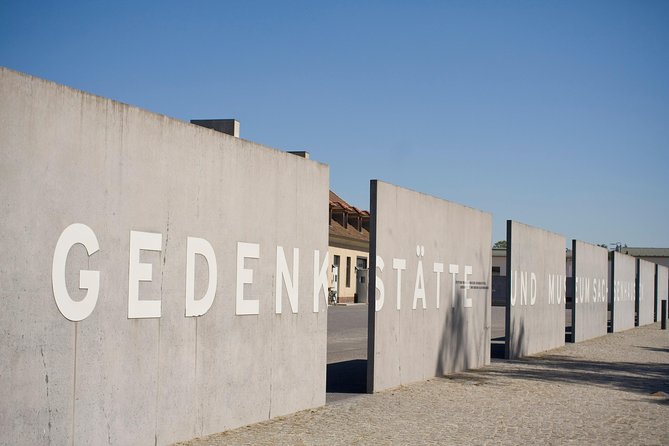
The surviving barracks and reconstructed sections show the cramped, controlled world of the inmates. Your guide explains the daily routine, the harsh conditions, and the different groups targeted by the regime.
You hear about political prisoners, Jewish prisoners, Soviet prisoners of war, British POWs, Polish prisoners, and others. Their experiences were not identical, and the tour helps separate those stories instead of presenting all prisoners as one undifferentiated group.
The Jewish Barracks is one of the most important stops. The tour places it within the wider history of persecution and also discusses the Jewish prisoners’ revolt in 1942. British prisoners resisted in their own way, while Soviet and Polish prisoners carried out acts of sabotage. These examples matter because they show that prisoners were not simply passive victims. They were trapped in a brutal system, but many still found ways to resist.
You also hear about notable prisoners, including Stalin’s son. That detail can draw people into the story, but the better guides use it as one thread among many rather than letting a famous name overshadow the thousands of ordinary people held at Sachsenhausen.
Station Z, the gas chamber site, and the gallows
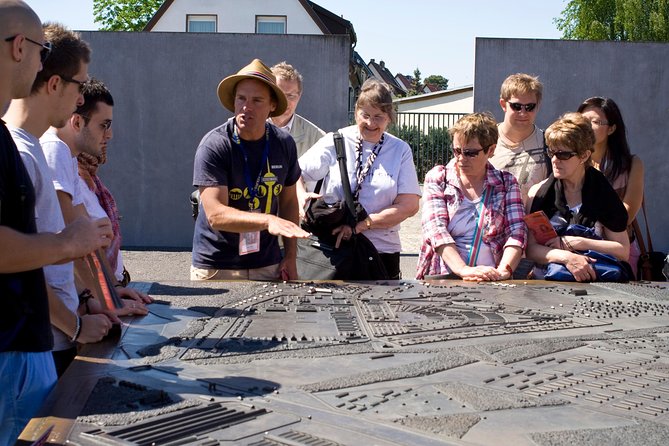
Station Z is the site of mass murder and one of the most difficult points on the tour. The name is chillingly bureaucratic, matching the camp’s system of numbered facilities and controlled language. Here, your guide explains the executions and the location of the gas chamber.
The remains do not offer a neat historical picture. Much was destroyed, and what survives can feel stark and incomplete. That is precisely why the guide’s explanation matters. You need help understanding what stood here and how the site functioned.
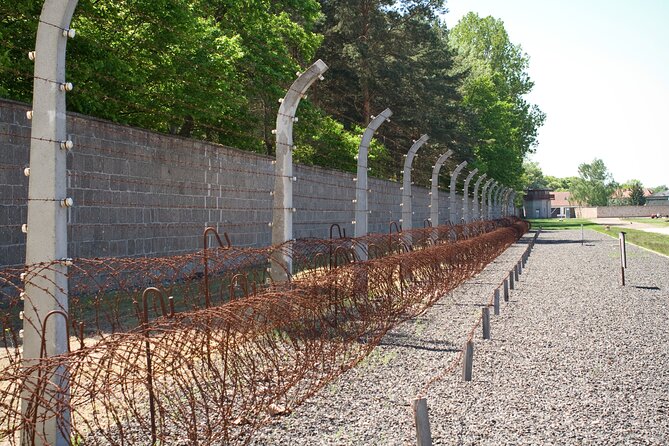
The gallows area adds another layer of horror. These are not theatrical displays. You are looking at places used to intimidate, punish, and kill. A respectful guide will allow the group to absorb the setting without filling every moment with talk.
This portion may be emotionally heavy, particularly for children or anyone with a close personal connection to wartime history. I would prepare yourself before booking. The tour is educational, but it does not soften the crimes.
Punishment cells and medical experimentation
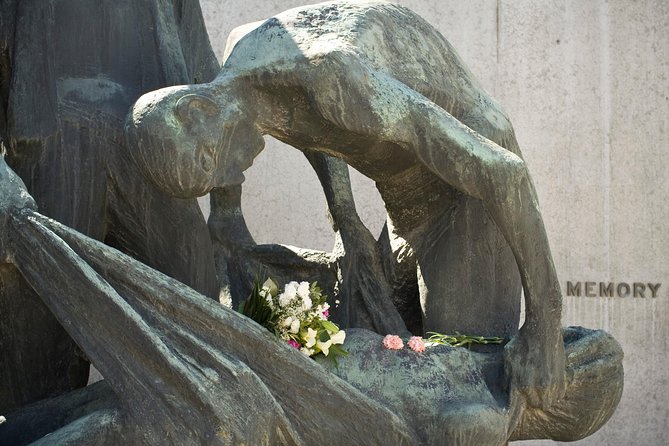
The Punishment Cells reveal how discipline worked inside the camp. Your guide describes the treatment of prisoners and the role of punishment in maintaining control.
The Pathology Laboratory and Infirmary introduce another grim part of the story: medical experimentation and the handling of prisoners’ bodies. These stops can feel less immediately dramatic than Station Z, but they show how violence reached into ordinary camp administration and medical spaces.
This is where a good guide keeps the pace measured. You have several emotionally difficult subjects in one day. Guides such as Georgia, Gregor, and Tina have been praised for using a careful tone, making space for questions, and adjusting the group’s position during cold or windy conditions.
The Soviet Special Camp after 1945
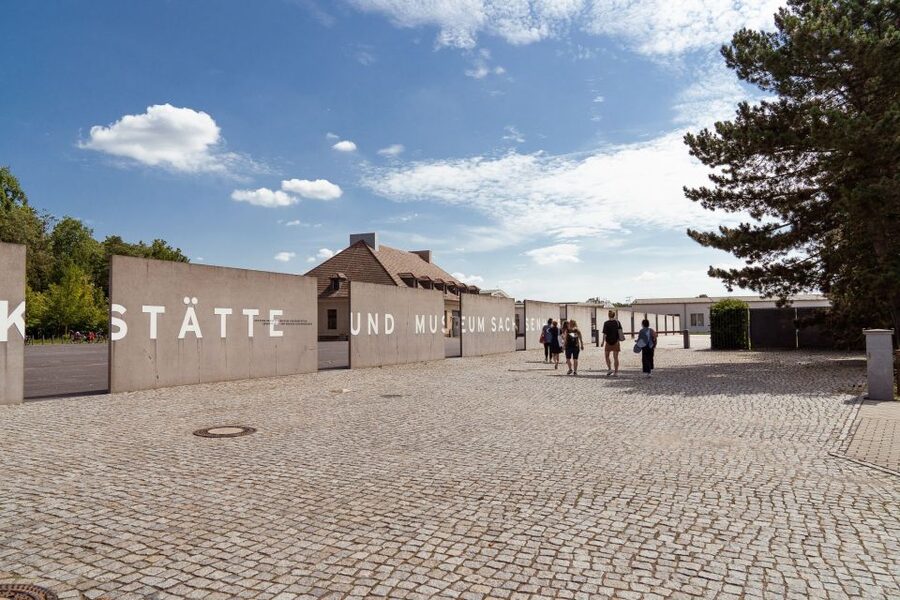
Sachsenhausen’s story did not end when the Nazi camp was liberated. The tour visits Special Camp 1/7 and explains how the Soviets reused the site after World War II.
This second chapter is valuable because memorial sites can otherwise be treated as if history stopped in 1945. You see how the location continued to serve as a place of imprisonment under a different regime and for different political purposes.
The postwar section also helps you place the camp within the wider history of divided Germany and Soviet control in the region. If your interest is limited strictly to the Holocaust, this may feel like an added subject. I consider it worthwhile, especially since the visit already takes you far from central Berlin.
Group size, pacing, and the role of the guide

Small-group and private options are available, but the exact group size depends on the booking option. A very busy departure can begin with a large number of people before the company divides everyone into smaller groups. That arrangement allows the main transport to be shared while the on-site explanation remains more manageable.
The guides are the clearest strength of this experience. Names repeatedly associated with warm, clear presentations include Daniel, Irish Paul, Xavier, Lucia, Pete F, Gregor, Georgia, Rebecca, Ariel, Mikhail, Tina, Chris, and Emma. You cannot choose a particular guide unless the booking system allows it, but the range of strong feedback suggests a consistent guiding team.
The best qualities to expect are patience, clear organization, and sensitivity. Irish Paul has been praised for caring for the group in freezing weather and helping with the return journey. Will was noted for taking extra care with a participant who had walking difficulties. These details matter on a long day away from the city.
Do not expect cheerful entertainment in the normal sightseeing sense. Some guides use light conversation on the train or offer Berlin tips, but the memorial itself demands restraint. The right guide makes the subject accessible without making the crimes feel casual.
Is $22 good value?
At $22 per person, this is one of the more affordable ways to visit Sachsenhausen with a live guide. You receive an English-speaking licensed guide, the guided camp visit, and a €3 donation to the memorial. You still pay for the ABC transport ticket and your own food and drink.
The real value comes from the explanation. You can visit the memorial independently, but you would need to research the camp’s development, prisoner groups, resistance efforts, killing facilities, Death March, and Soviet use of the site. A guide gives the day shape and makes it easier to ask questions as they arise.
Private tours cost more than the basic small-group option, but they may suit you if you want a guide to meet you at your hotel or if your group prefers a more personal format. Remember that private does not mean private car. Public transport remains part of the experience.
Free cancellation up to 24 hours before departure and reserve-now, pay-later booking make the tour easier to fit into a changing Berlin schedule. Still, check the start time carefully. The day consumes most of a morning and afternoon.
Who should book this Sachsenhausen tour?
I recommend it most to first-time visitors who want historical context, students and families with older children who can handle the subject, and anyone who prefers discussion to an audio guide. It also suits you if you want to understand Nazi Germany beyond the memorials in central Berlin.
You should think twice if you dislike organized groups, cannot manage moderate walking, or want a short visit. The tour is not wheelchair accessible and is not recommended for people with mobility impairments. The station walk, large site, outdoor explanations, and train travel all add physical demands.
Wear comfortable shoes, carry water and snacks, and dress for wind and rain. Keep your schedule flexible after returning to Berlin, since the advertised duration is 5.5 to 6 hours.
Should you book it?
Book this tour if you want a serious, well-organized visit with a guide who can explain both the Nazi camp and its Soviet successor. The modest price, central meeting point, included memorial donation, and strong guiding team make it a practical choice for many Berlin itineraries.
Skip it for now if you are not ready for graphic and upsetting history, or if the walking and public transport would make the day stressful. For everyone else, Sachsenhausen offers an important lesson in how persecution was organized, how prisoners resisted, and why remembering this place still matters.
FAQ
How long does the Sachsenhausen tour take?
The activity lasts about 5.5 to 6 hours. This includes the train journeys, the walk from Oranienburg station, and approximately three hours at the memorial.
Where do I meet the guide in Berlin?
Meet outside Friedrichstraße train station on the square beside the Tränenpalast, also known as the Palace of Tears. Look for guides holding yellow umbrellas.
How do I reach Sachsenhausen?
You travel by public train from Berlin to Oranienburg, then walk about 20 minutes to the memorial site. Your guide accompanies you on the outward and return journeys.
Is public transport included in the price?
No. You need an ABC public transport ticket for the trip to Sachsenhausen and back to Berlin. The ticket can be purchased on the day with help from staff at the meeting point.
What does the guided visit include?
The tour covers the Camp Administration Center, Station Z, a watchtower, the Commandant’s House, Jewish Barracks, Punishment Cells, Pathology Laboratory, Infirmary, Special Camp 1/7, SS Training Camp, and the gallows.
Is the tour available in English?
Yes. Live guiding is available in English and German. The activity information specifies a licensed English-speaking guide for the English tour.
Is the tour wheelchair accessible?
No. The tour is not wheelchair accessible and is not recommended for people with mobility impairments. It includes a walk from the station and moderate walking around the memorial.
What should I bring?
Bring comfortable shoes, water, snacks, comfortable clothing, and your public transport ticket. Dress for all weather because the tour operates in rain, cold, and other outdoor conditions.
Just added around Berlin
- Love and War in Berlin: Self-Guided Story Puzzle Walk★ 5.0 · 7 reviews
- Rickshaw Tours Berlin – Groups of up to 16 people with several rickshaws★ 4.0 · 97 reviews
- Walking on the Wall: 3-Hour Tour in Berlin★ 4.5 · 34 reviews
- eSIM for Germany and 34 European Countries★ 4.5 · 16 reviews
- Warnemuende Shore Excursion: Berlin Private Sightseeing Tour from Rostock★ 5.0 · 4 reviews
- Your ticket to The Wall Museum Berlin★ 3.0 · 60 reviews
- Warnemuende Shore Excursion: Private Berlin Tour★ 4.5 · 27 reviews
- Berlin’s Gay, Lesbian, and Queer Scene Small-Group Walking Tour★ 4.5 · 66 reviews
Concentration Camp Memorial Tours, compared.
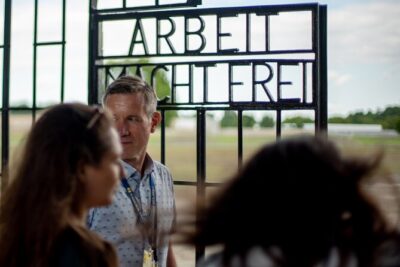
Sachsenhausen Concentration Camp Tour in English
Read our review →
Dachau Concentration Camp Memorial Site Tour from Munich by Train
Read our review →
Sachsenhausen Concentration Camp Memorial Tour
Read our review →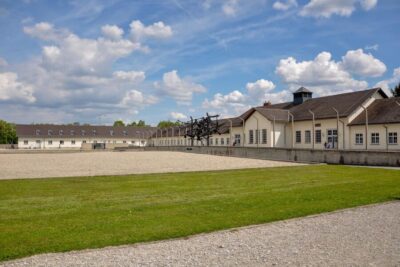
Sachsenhausen Concentration Camp Bus Tour in English from Berlin
Read our review →
Sachsenhausen Concentration Camp Memorial Tour (Max. 15 Guests)
Read our review →
Browse the lists this tour appears in