
Reviewed · CONCENTRATION CAMP MEMORIAL TOURS
Berlin: Sachsenhausen Concentration Camp Memorial Tour
Sachsenhausen is not a sightseeing stop in the usual sense. It is a former concentration camp and memorial where the buildings, monuments, and empty spaces force you to face how Nazi persecution worked. I like that this tour gives the site proper weight while making the journey from central Berlin simple. I also like that guides such as Peter, Walid, Richard, and Felipe explain the history during the train ride, so you arrive with useful context rather than a blank map.
The main drawback is the subject matter. This is a difficult, emotional visit, and you spend a good part of five hours walking and standing outdoors. Buy the ABC train ticket before meeting the guide, wear sturdy shoes, and bring a snack. The $21 price is low for a guided half-day, but your train ticket is extra.
In This Review
- Key points to know before you book
- Why Sachsenhausen belongs on a Berlin itinerary
- Meeting at Alexanderplatz and getting to the memorial
- Tower A and the first view of Sachsenhausen
- Barracks 38 and 39: cramped lives behind museum walls
- Punishment cells and the mechanics of control
- The infirmary, morgue, and medical crimes
- The former kitchen and the camp’s wider story
- Station Z and the weight of the visit
- The Soviet memorial from 1961
- Five hours, walking, and your choice at the end
- What the $21 price really gives you
- Guides, languages, and the human side of the tour
- Who should choose this Sachsenhausen tour
- Should you book the Sachsenhausen Memorial Tour?
- FAQ
- Where does the Sachsenhausen tour meet?
- How long does the activity last?
- Is the entrance fee included?
- Is the train ticket included?
- Does the guide travel with the group from Berlin?
- What languages are available?
- What places are visited at Sachsenhausen?
- Can I stay at the memorial after the guided visit?
- What should I bring?
- Is the tour suitable for wheelchair users?
Key points to know before you book
- Train journey from Alexanderplatz: Meet beside the World Time Clock, then travel with the guide to Sachsenhausen rather than finding the memorial alone.
- A serious, carefully handled subject: The tour covers imprisonment, forced labor, medical experiments, executions, and the camp’s later Soviet use.
- Important original locations: You visit Tower A, Barracks 38 and 39, punishment cells, the former kitchen, the infirmary and morgue area, and Station Z.
- Time to continue on your own: At the end, you can return to Berlin with the guide or stay longer at the memorial.
- Several languages available: Tours are offered in Spanish, English, German, French, and Italian.
- Plan for walking: The experience is not suitable for wheelchair users or people with mobility impairments.
Why Sachsenhausen belongs on a Berlin itinerary
Berlin has museums and memorials all over town, but Sachsenhausen gives you a different kind of historical lesson. You are not only looking at photographs or reading dates. You are moving through a former camp site, seeing where prisoners entered, slept, were punished, treated, and killed.
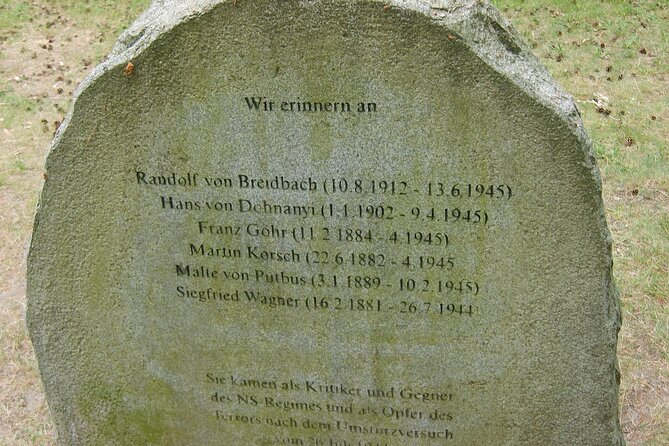
That physical setting matters. The memorial is not presented as one single story with one single monument. Different memorials were placed there at different times and under different political systems. Your guide helps you understand those layers, including how Sachsenhausen was presented after the war during the Soviet period.
I would not describe this as an easy half-day. I would describe it as a necessary one for anyone who wants to understand Nazi Germany beyond the central Berlin monuments. You should set aside the rest of the day for something quieter afterward.
More Concentration Camp Memorial Tours in Berlin
- Berlin: Sachsenhausen Concentration Camp Tour in English
★ 5.0 · 5,711 reviews - Sachsenhausen Concentration Camp Bus Tour in English from Berlin
★ 5.0 · 1,962 reviews - Berlin: Sachsenhausen Concentration Camp Tour in English
★ 4.8 · 1,889 reviews
Meeting at Alexanderplatz and getting to the memorial
The tour begins beside the World Time Clock at Alexanderplatz. Look for the guide wearing Buendía accreditation. This is a useful meeting point, but Alexanderplatz can be busy, so arrive with enough time to locate the clock and identify the guide.
You need an ABC zone train ticket before the activity starts. It is not included in the $21 price. You can buy the ticket at a station machine or online through the Berliner Verkehrsbetriebe website. This is the one practical detail I would handle before breakfast, since sorting out tickets while a group is gathering adds needless stress.
The guide accompanies you from Berlin by train. This is one of the strongest parts of the arrangement. You do not have to work out the route, stops, and memorial entrance by yourself, and the ride becomes part of the lesson. Guides explain the camp’s origins, its purpose, and its role as a model camp within the Nazi concentration camp system before you arrive.
Several people have found this transport help especially useful when trains were delayed or changed. Felipe, Peter, and Walid were praised for keeping groups together and helping with the return journey. That practical care matters here, because a solemn visit becomes much harder if you are also worrying about missing the correct train.
Tower A and the first view of Sachsenhausen
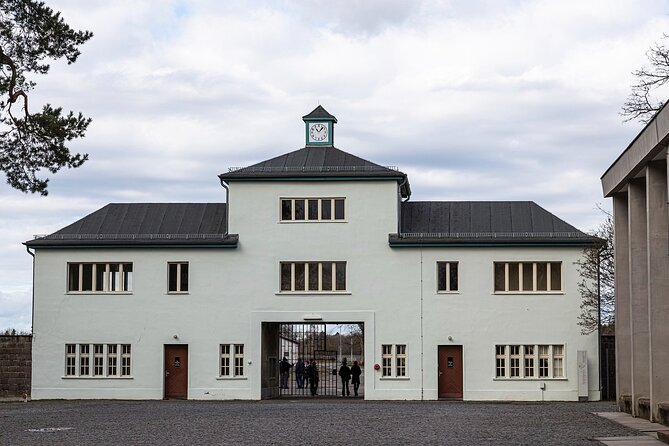
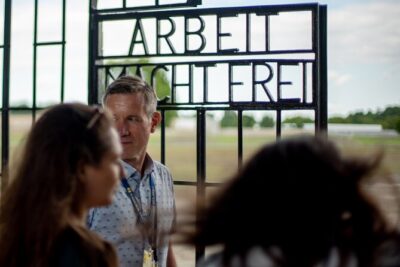
At Sachsenhausen, the guided visit begins at Tower A, the main entrance. The gate carries the infamous Arbeit macht Frei slogan, a phrase used by the Nazis to disguise the reality of imprisonment and forced labor.
Your guide sets the tone here. This is not a place for casual jokes or rushed photographs, and the best guides treat the entrance as a moment to pause and understand what prisoners encountered. Peter, Richard, Walid, and Amelia were repeatedly praised for combining clear explanations with respect for the victims.
The first impression can be powerful because the camp’s layout is so deliberate. Instead of giving you a long list of facts, the guide connects the entrance to the system behind it: control, registration, punishment, deprivation, and the removal of human dignity. I find this approach more useful than simply walking from building to building.
Barracks 38 and 39: cramped lives behind museum walls
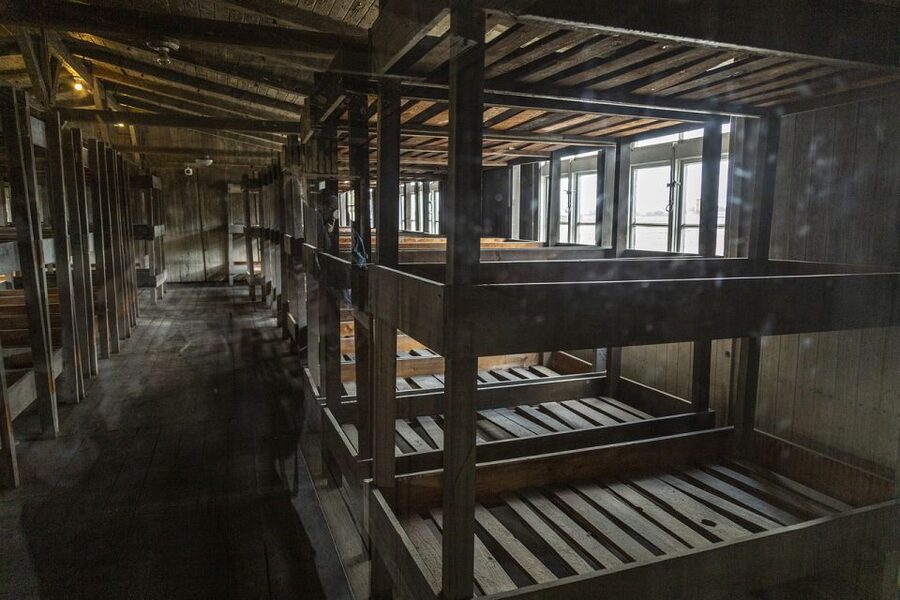
Barracks 38 and 39 were used to hold Jewish prisoners. Their cramped conditions help you understand the daily reality of overcrowding, limited privacy, and constant control.
Barracks 38 now serves as a museum about Jewish prisoners and their everyday lives. The museum setting gives you a chance to move from the broad story of Nazi persecution to the details of individual existence. A person still had to sleep, eat, wash, wait, work, and endure each day, even inside a system designed to strip away identity.
This is a good point to listen closely to the guide. The displays can give you information, but the guide provides the connections between the rooms, the camp structure, and the wider history of German persecution. Richard was especially praised for explaining facts clearly and correcting misunderstandings about this period.
The buildings also make the scale of the suffering easier to grasp. A statistic can feel distant. A cramped barracks room is harder to keep at arm’s length.
Same city, a completely different kind of day:
- Berlin: Reichstag, Dome and Government District Guided Tour
★ 4.7 · 18,288 reviews - Berlin: 1-Hour City Tour by Boat with Guaranteed Seating
★ 4.3 · 16,993 reviews - Berlin: Boat Tour Along the River Spree
★ 4.4 · 11,252 reviews - Discover Berlin Half-Day Walking Tour
★ 5.0 · 9,624 reviews
Punishment cells and the mechanics of control
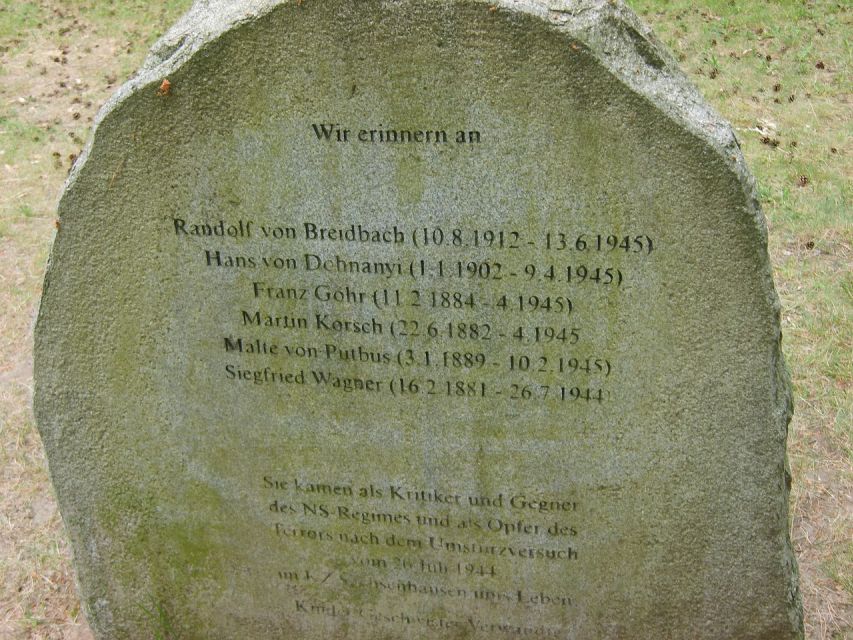
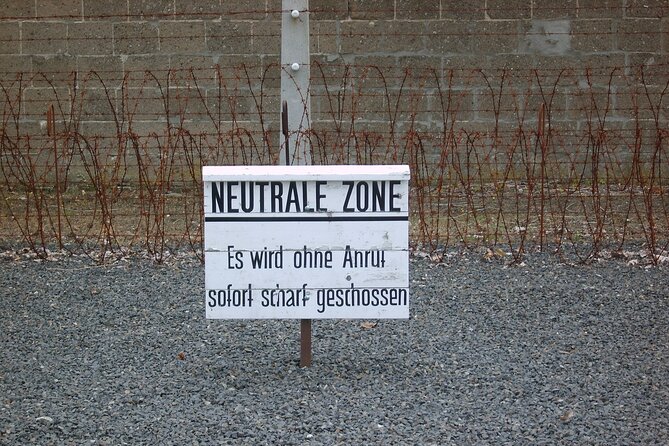
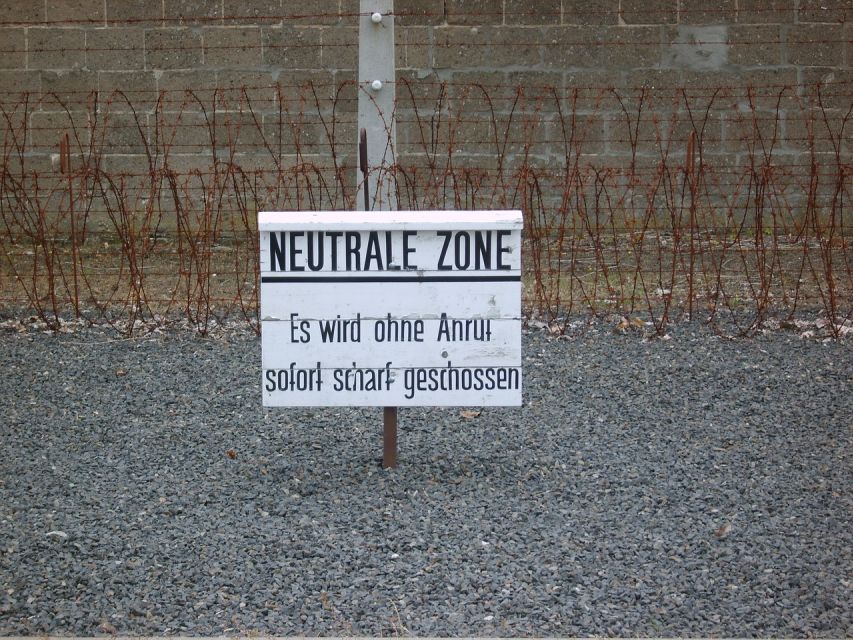
The original punishment cells show how minor offenses could lead to detention. This stop is important because it exposes the camp’s system of discipline, not only its most extreme crimes.
You hear about how punishment was built into daily life. The point is not simply that prisoners could be locked away. It is that the camp operated through rules, fear, surveillance, and arbitrary power. The punishment cells help your guide explain how control worked at ground level.
This section may feel less dramatic than Station Z, but I think it is just as important. It shows how cruelty was made routine. Guides such as Paul and Richard were praised for explaining this kind of material in a calm and balanced way, without turning the visit into a performance.
You should ask questions if you need clarification. The guides are used to handling difficult subjects, and several have been praised for taking time to answer questions rather than rushing the group along.
The infirmary, morgue, and medical crimes
The tour also covers the infirmary and morgue, including the cruel medical experiments carried out there. This is among the most upsetting material on the route, so prepare yourself for a direct account of how prisoners were abused under the cover of medical authority.
Your guide provides the historical frame needed to understand why these rooms matter. They were not simply places associated with illness and death. They were connected to a system in which prisoners were treated as disposable subjects.
The value of having a guide is especially clear here. A self-guided visit may leave you with fragments of information, while a good explanation can show how the infirmary fitted into the camp’s wider machinery. Amelia was praised for adding context and historical accuracy when discussing terrible facts, and that combination is exactly what this part requires.
If you are visiting with teenagers or students, consider how much detail they are ready to hear. The tour is educational, but it does not soften the reality of what happened.
The former kitchen and the camp’s wider story
The former prisoner kitchen is now a museum. It adds another layer to the visit by showing how the camp’s history has been preserved and interpreted.
A kitchen may sound less immediately significant than an execution site, yet food and deprivation were central to prisoner life. The museum uses the building to present key moments in the camp’s history, helping you connect daily survival with the larger timeline.
I like this stop because it broadens the visit. Sachsenhausen was not only a collection of isolated horrors. It was an organized institution with buildings, schedules, supplies, punishments, records, and staff. The kitchen helps you see the administrative side of the camp without losing sight of the people trapped inside it.
The guide’s explanations also help you read the memorial itself. This site includes original remains, reconstructed or adapted spaces, museums, and later monuments. Understanding what you are looking at is essential.
Station Z and the weight of the visit
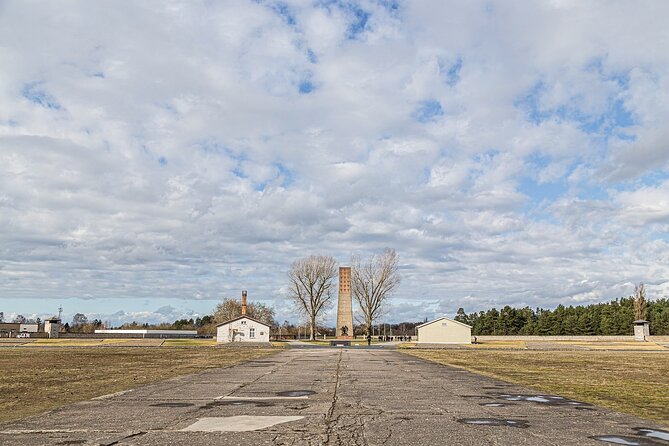
Station Z is the remains of the area where many executions took place. This is one of the most emotionally heavy stops on the tour.
The name itself reflects the brutal logic of the camp system, moving from the entrance at Tower A to the final destination at Station Z. Your guide explains the significance of the site and the crimes connected to it. The remains do not need theatrical treatment. Their starkness is enough.
You may find this is the point where the visit becomes quiet. Give yourself room to process it. You do not need to force a reaction or keep pace with someone else’s emotions.
Guides including Walid, Richard, Peter, and Felipe have been praised for handling the site with care. That matters because a guide must provide facts without making suffering feel like a spectacle. The strongest approach is clear, restrained, and human.
The Soviet memorial from 1961
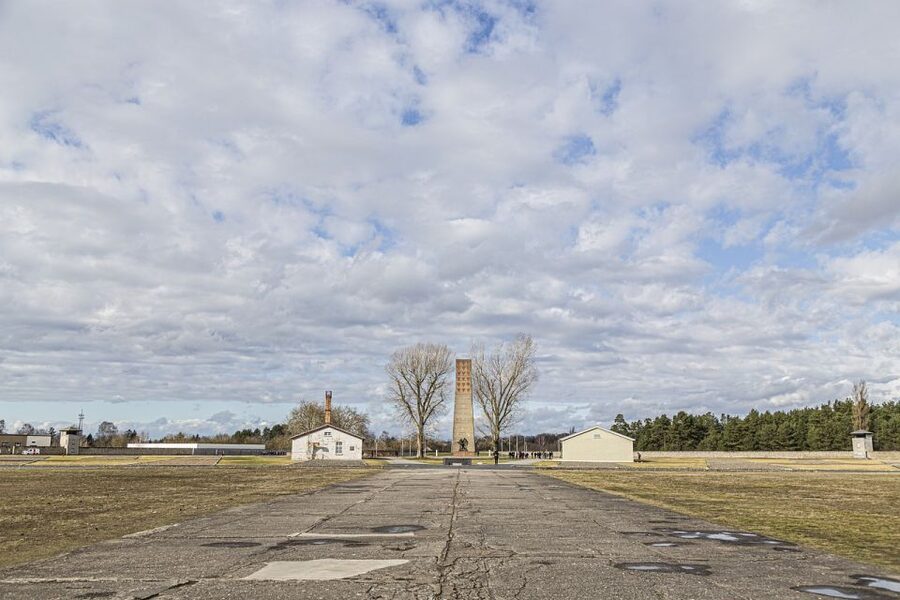
The final major stop is the Soviet memorial built in 1961. It reflects the camp’s history after World War II and adds a political layer to the memorial site.
This is where the tour moves beyond the Nazi period. Sachsenhausen was not frozen in 1945. The memorial created during the Soviet era tells you how the site was later understood and presented. Your guide explains how different ideologies and different periods placed their own monuments and interpretations here.
That contrast is valuable. You learn not only what happened at the camp, but also how societies remember difficult events. The memorial is therefore part of the history, not just a marker beside it.
I would pay close attention during this section, especially if you assume every monument at Sachsenhausen was created at the same time. The later Soviet memorial helps correct that impression.
Five hours, walking, and your choice at the end
The full activity lasts about five hours. A large portion of that time is spent traveling between Berlin and the memorial, with the guided visit at Sachsenhausen taking roughly three hours according to the practical timing described for the experience.
You will walk between buildings and outdoor areas, often on open ground. Comfortable shoes are essential. Bring a snack, since the schedule is long and food is not listed among the inclusions. Winter can be especially demanding. One December visit was described as very cold, while another guide shortened outdoor explanations because the group was freezing.
At the end, you can return to Berlin by train with the guide’s help. Or you can stay longer and explore the memorial independently. I like having that choice. A group tour provides structure, but you may want extra time in a museum or at a particular memorial without feeling that you have missed your return transport.
The return journey is also a practical test of the tour. Guides have helped groups navigate train delays, cancellations, and the correct stops. If you stay behind, you will need to manage your own return, so pay attention to the route before separating from the group.
What the $21 price really gives you
At $21 per person, this is good value if you want historical guidance and transport support without booking a private tour. The entrance fee of $3 is included, and a professional guide accompanies you from Alexanderplatz through the memorial visit.
The train ticket costs extra, so the true price is slightly higher. Even so, you are paying mainly for the guide’s time, site interpretation, and help with the journey. A five-hour activity gives you far more structure than simply taking public transport to Sachsenhausen and reading the displays alone.
The value depends on your expectations. If you want a short visit with a few quick facts, this is too long and too serious. If you want to understand how the camp functioned and how the memorial developed, the guided format earns its price.
The group can be sizable. One guide was described as looking after 28 people, so do not expect a private conversation at every stop. The upside is a clear route and a guide who keeps the group moving. The downside is that you may occasionally need to stand back to hear or wait for others.
Guides, languages, and the human side of the tour
The tour is offered in English, Spanish, German, French, and Italian. English-language guides named in visitor feedback include Peter, Walid or Waleed, Richard, Felipe or Phillipe, Paul, Amelia, Hugo, Mathis, and Roshana.
Names matter here because the guide shapes the entire experience. Peter was praised for careful explanations and help with trains. Richard was noted for strong historical understanding and organized group management. Walid was described as engaging, warm, and able to use humor carefully without losing respect for the subject.
That last point needs a little judgment. A small amount of appropriate humor can help a group stay focused during a long, heavy day. But this is not a tour where entertainment should lead. The best guides use personality to keep you listening while allowing the subject to remain serious.
You should also feel free to ask about other Berlin sites. Some guides have helped with directions to the Berlin Wall and other places after the tour. That extra help is not the main reason to book, but it can be useful if you are building a history-focused day in the city.
Who should choose this Sachsenhausen tour
I would choose this tour if you are visiting Berlin for the first time and want a clear introduction to Sachsenhausen. It suits history students, families with older children who are ready for difficult material, and anyone who prefers not to manage regional train travel alone.
It is also a strong choice if you want a guide who can connect separate parts of German history. The route covers Nazi persecution, the camp system, Jewish imprisonment, medical crimes, executions, and Soviet remembrance. That range gives you a fuller picture than a visit focused on only one building.
You should think twice if you have limited walking ability. The experience is not suitable for people with mobility impairments or wheelchair users. You should also reconsider if you are looking for a light break from Berlin’s museums. This visit can stay with you long after you leave.
The free cancellation window is 24 hours before the activity, and you can reserve now and pay later. Those terms help if your Berlin schedule is still changing, but they do not make the subject matter any lighter.
Should you book the Sachsenhausen Memorial Tour?
Book it if you want a serious, well-organized visit with a guide from Alexanderplatz to the memorial and back. The strongest reasons are the train support, the historical explanations before arrival, the access to key areas such as Barracks 38 and 39 and Station Z, and the chance to continue exploring after the guided route.
Bring warm layers in cold weather, comfortable shoes, a snack, and your ABC ticket. Expect a long, emotional half-day rather than a casual excursion.
I would recommend this tour to anyone who wants help making sense of Sachsenhausen. I would not recommend it to anyone who is unprepared for the subject or unable to manage the walking. For the right visitor, the $21 fee is a small cost for a carefully guided encounter with an essential part of Berlin’s past.
FAQ
Where does the Sachsenhausen tour meet?
Meet next to the World Time Clock at Alexanderplatz. The guide will be wearing Buendía accreditation.
How long does the activity last?
The tour lasts about five hours, including the journey from Berlin and the guided visit at the memorial.
Is the entrance fee included?
Yes. The $3 entrance fee to the Sachsenhausen Concentration Camp Memorial is included.
Is the train ticket included?
No. You must buy an ABC zone train ticket before the activity. You can purchase it at a station ticket machine or online through the Berliner Verkehrsbetriebe website.
Does the guide travel with the group from Berlin?
Yes. A professional guide accompanies the group by train from Alexanderplatz to Sachsenhausen and provides historical background during the journey.
What languages are available?
The tour is available in Spanish, English, German, French, and Italian.
What places are visited at Sachsenhausen?
The route includes Tower A, Barracks 38 and 39, the punishment cells, the infirmary and morgue area, the former prisoner kitchen, Station Z, and the Soviet memorial built in 1961.
Can I stay at the memorial after the guided visit?
Yes. You can either return to Berlin with help from the guide or stay longer and explore the memorial at your own pace.
What should I bring?
Bring comfortable shoes and snacks. Warm clothing is also sensible during cold weather because part of the visit takes place outdoors.
Is the tour suitable for wheelchair users?
No. The activity is not suitable for wheelchair users or people with mobility impairments.
Just added around Berlin
- Love and War in Berlin: Self-Guided Story Puzzle Walk★ 5.0 · 7 reviews
- Rickshaw Tours Berlin – Groups of up to 16 people with several rickshaws★ 4.0 · 97 reviews
- eSIM for Germany and 34 European Countries★ 4.5 · 16 reviews
- Walking on the Wall: 3-Hour Tour in Berlin★ 4.5 · 34 reviews
- Warnemuende Shore Excursion: Berlin Private Sightseeing Tour from Rostock★ 5.0 · 4 reviews
- Your ticket to The Wall Museum Berlin★ 3.0 · 60 reviews
- Warnemuende Shore Excursion: Private Berlin Tour★ 4.5 · 27 reviews
- Berlin’s Gay, Lesbian, and Queer Scene Small-Group Walking Tour★ 4.5 · 66 reviews
Concentration Camp Memorial Tours, compared.
Sachsenhausen Concentration Camp Tour in English
Read our review →
Dachau Concentration Camp Memorial Site Tour from Munich by Train
Read our review →
Sachsenhausen Concentration Camp Bus Tour in English from Berlin
Read our review →Sachsenhausen Concentration Camp Tour in English
Read our review →
Sachsenhausen Concentration Camp Memorial Tour (Max. 15 Guests)
Read our review →
Browse the lists this tour appears in