
Reviewed · THIRD REICH & COLD WAR TOURS
Private Cold War Berlin: Espionage, Berlin Wall, a Divided City
Berlin’s Cold War story feels most powerful when you leave the famous photo spots and see how division shaped ordinary streets, families, prisons, and border crossings. This private tour links Bernauer Strasse, the Tränenpalast, Checkpoint Charlie, Stasi sites, and the East Side Gallery into one clear story.
I like the personal format, since your guide can adjust the pace and explain difficult subjects in plain terms. I also like the mix of human stories and major events, from Tunnel 29, which helped 29 people escape in 1962, to the half-million-person protest at Alexanderplatz in November 1989. The main drawback is that seven stops in three to four hours makes this a brisk overview, not a slow museum visit.
- Tunnel 29 and Tunnel 57: Hear how East Berliners used underground escape routes to reach the West.
- A private guide: Your group travels alone, with the chance to ask questions and request a gentler pace.
- Two sides of the Wall’s legacy: Compare memorials and prisons with the art of the East Side Gallery.
- Tina and Toni: Guides praised for clear storytelling, calm delivery, and personal Cold War insight.
- Hotel pickup and drop-off: Useful when your day is tight or you prefer not to arrange city transport.
- A walking-heavy history lesson: Wear practical shoes and prepare for all-weather conditions.
In This Review
- Why this private Cold War tour works
- Bernauer Strasse and the escape tunnels
- The Tränenpalast and the cost of saying goodbye
- East Side Gallery and a new use for the Wall
- Stasi surveillance at the former headquarters
- Checkpoint Charlie beyond the famous sign
- Prenzlauer Berg’s prisons and political repression
- Alexanderplatz and the protest that changed Berlin
- Walking, weather, and the pace of the day
- Who will get the most from this experience
- Is $191.44 per person a fair price?
- Should you book the private Cold War Berlin tour?
- FAQ
- How long does the private Cold War Berlin tour last?
- What language is the tour offered in?
- Is hotel pickup included?
- Is this a private tour?
- How much does the tour cost?
- Which Berlin Wall sites are included?
- Are the escape tunnels part of the tour?
- Does the tour visit the Stasi Museum?
- Are food and drinks included?
- Does the tour operate in bad weather?
- Can I cancel for a full refund?
Why this private Cold War tour works
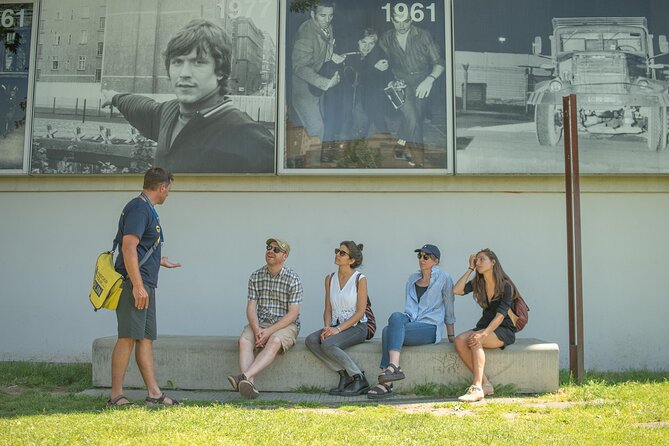
This is not a tour built around one monument. It is a three to four hour route through the political and personal story of divided Berlin. You move from escape attempts and family separations to surveillance, protest, reunification, and the way Berlin now remembers its past.
The private setup matters. You are not tied to the questions or walking speed of a large group. One guide can spend more time on a subject that catches your interest, or accommodate physical limits. One guide did exactly that for a guest with mobility concerns, while Tina was praised for her natural storytelling and ability to explain life in East and West Germany.
The price is $191.44 per person. That is a serious cost for a short tour, especially if you are booking for several people. Still, it includes a private professional guide plus hotel pickup and drop-off, and you are paying for a tailored history lesson rather than a basic route between landmarks.
Bernauer Strasse and the escape tunnels
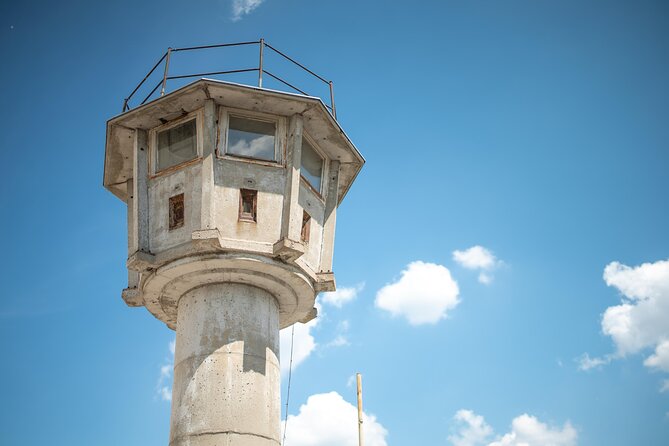
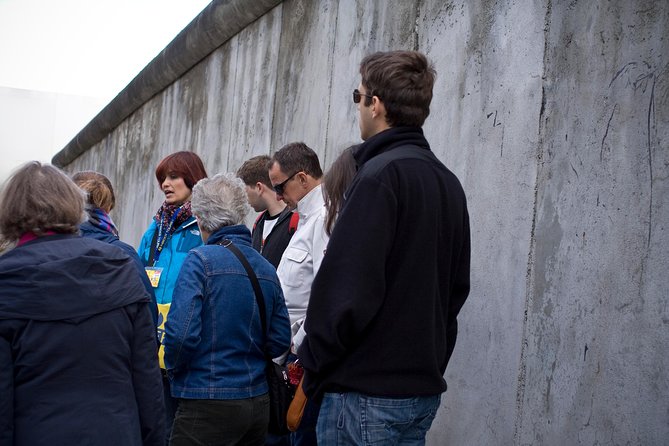
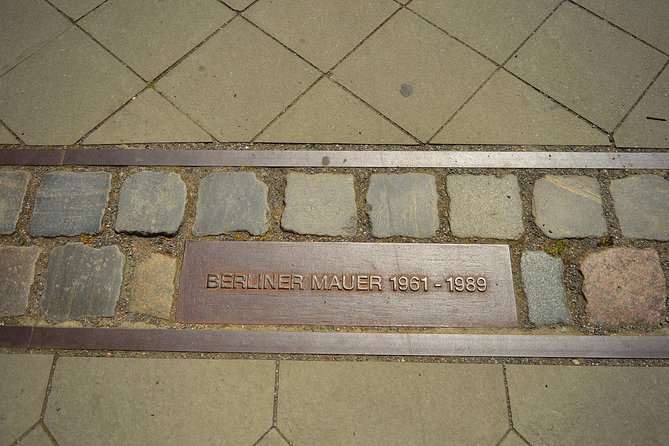
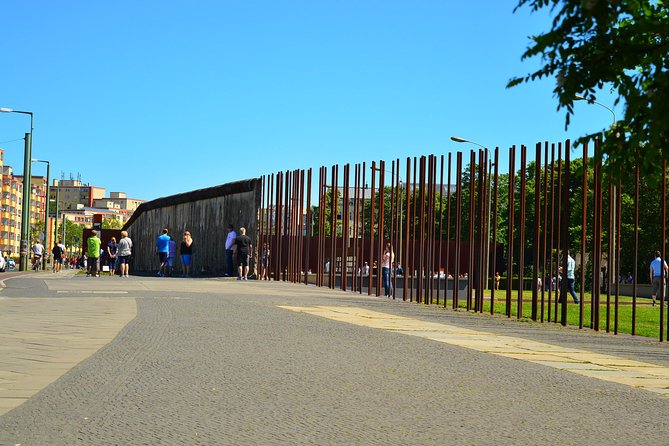
Start at the Memorial of the Berlin Wall on Bernauer Strasse, one of the best places in Berlin to understand how the Wall cut through a living neighborhood. A preserved section of the barrier remains beside the Chapel of Reconciliation, creating a quiet setting for a story that was anything but quiet.
Your guide explains how the Wall affected families, homes, and daily movement. This is where the subject becomes personal. The division was not simply a line on a map. It split streets and communities, separated relatives, and turned an ordinary trip across town into a dangerous act.
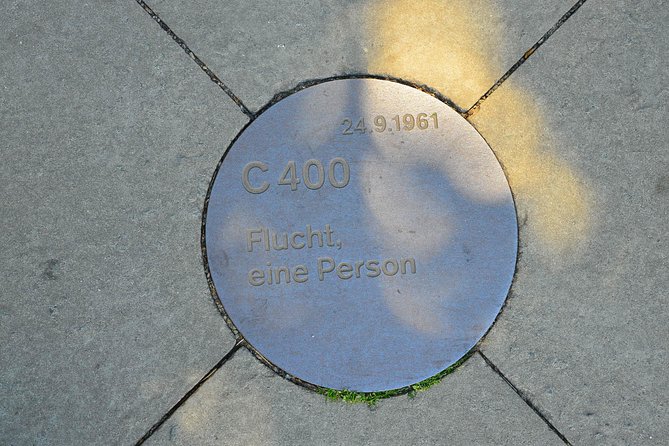
The escape tunnels add a tense human layer. Tunnel 57 and Tunnel 29 were underground routes built to help East Berliners flee to the West. Tunnel 29 gained its name because 29 people reached freedom through it in 1962. You will hear about the courage and planning behind these efforts, along with the risks faced by those who tried to escape.
The stop is listed at about 40 minutes, so expect a focused visit rather than time to study every part of the memorial at length. I would pay close attention here, since the guide’s explanation gives meaning to the remaining Wall structure and chapel.
More Third Reich & Cold War Tours in Berlin
- Berlin: Third Reich and Cold War 2 Hour Walking Tour
★ 4.9 · 6,830 reviews - Berlin’s Best: 2 Hour Walking Tour Third Reich and the Cold War
★ 5.0 · 5,486 reviews - Third Reich Berlin: Hitler and WWII Walking Tour
★ 5.0 · 3,301 reviews
The Tränenpalast and the cost of saying goodbye
At Friedrichstrasse, the Tränenpalast, or Palace of Tears, shows the emotional side of border control. East Berliners said goodbye to relatives and friends here as they crossed into West Berlin. The name comes from the farewells that took place inside.
The site also connects the border to espionage. People crossing between East and West could include spies, informants, and others trying to avoid detection. The museum covers border controls, the Berlin Wall, and spy networks on both sides.
You have about 20 minutes at this stop. That is enough for a guide to frame the building and point out why it mattered, but it may feel short if you want to read every exhibit. Think of this as a sharp, moving introduction to the human cost of the border, not a full museum afternoon.
East Side Gallery and a new use for the Wall
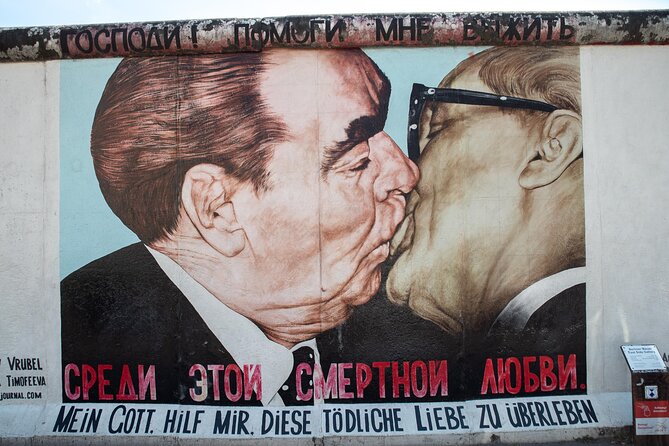
The East Side Gallery offers a very different mood. This 1.3 kilometer section of the Berlin Wall was painted by artists from around the world after the Wall fell in 1989. Murals replaced the barrier’s old role with messages of hope, freedom, and unity.
I like having this stop in the same tour as Bernauer Strasse. At the memorial, the Wall represents fear and forced separation. At the East Side Gallery, it becomes public art and a reminder of reunification. Seeing both helps you understand that Berlin’s relationship with the Wall is not fixed. The city remembers the damage while also showing how the structure was reclaimed.
The listed visit lasts about 20 minutes. That means you will see part of the gallery and hear about the meaning behind the artwork, but you will not have time to examine all 1.3 kilometers in detail. If the murals are your main reason for booking, you may want to return on your own later.
Stasi surveillance at the former headquarters
The Stasimuseum takes you into the machinery of East German state control. The former Stasi headquarters now explains how the secret police used informants, hidden cameras, wiretapping, and other methods to monitor people and suppress opposition.
The important point is that surveillance did not depend only on official agents. Ordinary citizens could be used as informants, placing pressure on families, friendships, and workplaces. Your guide can connect the tools of surveillance to the people who were questioned, watched, or harassed.
The stop is planned for about 25 minutes. That is a useful amount of time for the main ideas, but the subject is large and troubling. You may leave with more questions than answers, which is one reason the private format helps. You can ask your guide to explain how the system affected daily life rather than focusing only on spy equipment.
One guide, Toni, was praised for a calm and informative manner, with an extra perspective from having been a child during the Cold War. A personal connection like that can make the period easier to picture without turning the tour into a personal memoir.
Same city, a completely different kind of day:
- Berlin: Reichstag, Dome and Government District Guided Tour
★ 4.7 · 18,288 reviews - Berlin: 1-Hour City Tour by Boat with Guaranteed Seating
★ 4.3 · 16,993 reviews - Berlin: Boat Tour Along the River Spree
★ 4.4 · 11,252 reviews - Discover Berlin Half-Day Walking Tour
★ 5.0 · 9,624 reviews
Checkpoint Charlie beyond the famous sign
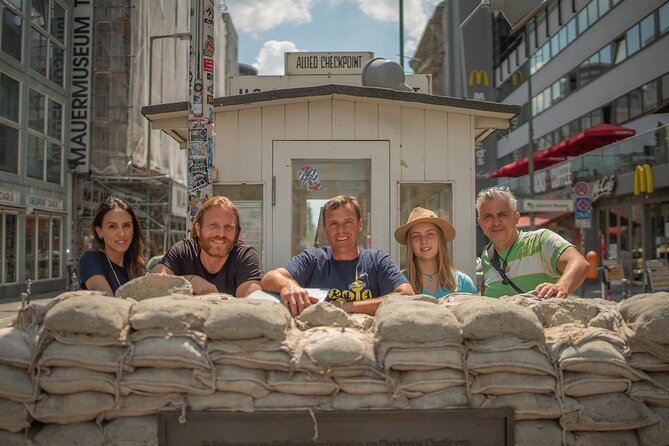
Checkpoint Charlie is Berlin’s best-known Cold War crossing point, but the familiar guardhouse and photo opportunity tell only a small part of the story. This was a crossing between East and West Berlin, and it became a symbol of the wider conflict between the United States and the Soviet Union.
Your guide covers the Berlin Crisis of 1961, when American and Soviet forces faced one another after the Wall was built. You also hear about escapes, spy exchanges, and the ordinary people whose movement depended on this border.
The stop lasts about 15 minutes. That is enough to place the crossing in context, but the surrounding area can feel more like a busy city attraction than a preserved historical site. The tour helps correct that problem by explaining what happened here instead of leaving you with only a photo.
A museum at the site covers espionage, escapes, and Cold War events. Since the experience information does not list a separate museum admission charge, check the current details if you hope to spend extra time inside.
Prenzlauer Berg’s prisons and political repression
At Fröbelstrasse in Prenzlauer Berg, the tour turns toward detention. The former NKVD prison was first used by Soviet authorities after the Second World War for political prisoners, suspected spies, and people considered enemies of the state. After the German Democratic Republic was formed, the Stasi took over the prison.
This stop is brief, about 15 minutes, but it adds something that the major Wall sites cannot. You learn how control worked away from the border, through detention, interrogation, and fear. The guide also discusses resistance and the people who refused to accept the system around them.
Do not expect a large museum visit here. The value is in the explanation of the place and its role in Berlin’s divided past. If prison history is especially important to you, ask questions during the stop, since the schedule leaves little room for a long examination.
Alexanderplatz and the protest that changed Berlin
Alexanderplatz brings the tour to the final stages of East Germany’s political collapse. The square was a major gathering place for the November 4, 1989 protest, when more than half a million East Berliners called for change.
That protest matters because it shows how peaceful public resistance helped push the country toward the end of the Wall. Your guide also points out the Television Tower, a major symbol of East German power, and the Red City Hall, linked to GDR leadership.
The area also connects to Stasi surveillance. Alexanderplatz was both a place where the state watched people and a place where people gathered to challenge it. The stop lasts about 15 minutes, so the guide’s explanation is essential. Without context, the square can look like a normal city center. With context, it becomes a key scene in the final chapter of division.
Walking, weather, and the pace of the day
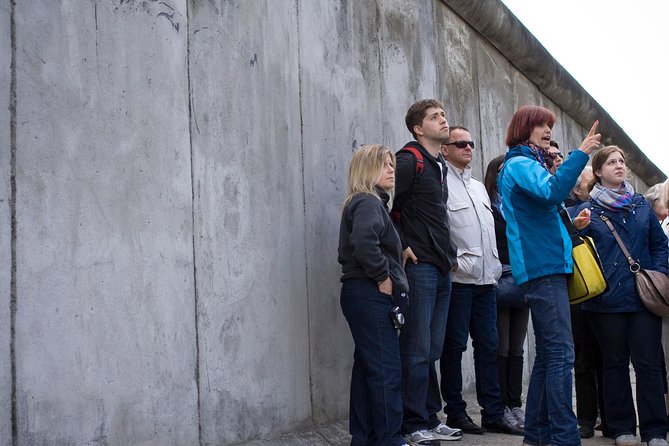
This is an active walking tour, even with hotel pickup and drop-off. The seven stops are spread across Berlin, and the total time includes movement between places. Wear comfortable shoes, bring weather protection, and dress for conditions that can change. The tour operates in all weather.
The private format may help if you have physical limitations, since the guide can adjust the pace. Still, you should state your needs when booking rather than assume every part of the route will be easy. Most people can participate, but this is not a seated sightseeing ride.
Food and drinks are not included. Plan a meal before or after the tour, since the schedule is built around historical stops rather than a restaurant break.
Who will get the most from this experience
I would recommend this tour to a first-time Berlin visitor who wants a firm Cold War framework without spending several days sorting out the sites alone. It also works well for repeat visitors who have seen the main sights but want to understand how they connect.
History fans will appreciate the range. You get escape tunnels, border procedures, spy networks, secret police, political prisons, public protest, and post-1989 art in one outing. Families may find the subject heavy, but the focus on personal stories can help younger visitors grasp what division meant in real life.
The tour is less suitable if you want long, unhurried museum visits. The Tränenpalast and Stasimuseum stops are short, and East Side Gallery is far too long to cover fully in 20 minutes. You are buying explanation, access to a private guide, and a carefully linked route, not extensive free time at each site.
Is $191.44 per person a fair price?
Value depends on your group. For one person, the cost is high for three to four hours. For a family or small group, the private arrangement can make more sense, especially when hotel pickup and drop-off are useful and everyone can ask questions freely.
The strongest value is the guide. Tina is described as a passionate storyteller who explains lived experience in East and West Germany, while Toni brings a calm style and childhood memories of the Cold War period. Those qualities matter because the subject can become a list of dates and political labels without a clear human voice.
The tour is also recommended by all 20 recorded ratings, with a five-star average. That is a small sample, so I would not treat it as proof that every departure will be perfect. It does support the idea that clear storytelling, friendly service, and flexible pacing are central strengths.
You can cancel for a full refund if you do so at least 24 hours before the start time. Cancellations or changes made later are not refunded or accepted.
Should you book the private Cold War Berlin tour?
Book it if you want Berlin’s divided past explained as one connected story, and if you value a private guide over long visits at individual museums. The mix of Bernauer Strasse, escape tunnels, the Tränenpalast, Stasi sites, Checkpoint Charlie, Alexanderplatz, and the East Side Gallery gives you a useful view of both repression and resistance.
Skip it if you mainly want to wander through the East Side Gallery or spend hours inside Cold War museums. For everyone else, this is a strong choice for a focused introduction, especially when Tina, Toni, or another guide brings the calm storytelling and personal context that the subject demands.
FAQ
How long does the private Cold War Berlin tour last?
The experience lasts approximately three to four hours.
What language is the tour offered in?
The tour is offered in English.
Is hotel pickup included?
Yes. Hotel pickup and hotel drop-off are included.
Is this a private tour?
Yes. Only your group participates in the private activity.
How much does the tour cost?
The listed price is $191.44 per person.
Which Berlin Wall sites are included?
The route includes the Memorial of the Berlin Wall at Bernauer Strasse, the East Side Gallery, and Checkpoint Charlie.
Are the escape tunnels part of the tour?
Yes. Your guide discusses Tunnel 57 and Tunnel 29 at the Memorial of the Berlin Wall.
Does the tour visit the Stasi Museum?
Yes. The route includes the Stasimuseum at the former Stasi headquarters.
Are food and drinks included?
No. Food and drinks are not included.
Does the tour operate in bad weather?
Yes. The tour operates in all weather conditions, so dress appropriately.
Can I cancel for a full refund?
Yes, if you cancel at least 24 hours before the experience start time. Cancellations made less than 24 hours in advance are not refunded.
Just added around Berlin
- Love and War in Berlin: Self-Guided Story Puzzle Walk★ 5.0 · 7 reviews
- Rickshaw Tours Berlin – Groups of up to 16 people with several rickshaws★ 4.0 · 97 reviews
- Walking on the Wall: 3-Hour Tour in Berlin★ 4.5 · 34 reviews
- eSIM for Germany and 34 European Countries★ 4.5 · 16 reviews
- Warnemuende Shore Excursion: Berlin Private Sightseeing Tour from Rostock★ 5.0 · 4 reviews
- Your ticket to The Wall Museum Berlin★ 3.0 · 60 reviews
- Warnemuende Shore Excursion: Private Berlin Tour★ 4.5 · 27 reviews
- Berlin’s Gay, Lesbian, and Queer Scene Small-Group Walking Tour★ 4.5 · 66 reviews
Third Reich & Cold War Tours, compared.



Berlin’s Best: 2 Hour Walking Tour Third Reich and the Cold War
Read our review →

Third Reich Berlin: Hitler and WWII Walking Tour
Read our review →
Skip-the-Line: Berlin Wall Museum at Checkpoint Charlie
Read our review →

Cold War, Berlin Wall, Spies and the East Side Gallery
Read our review →Browse the lists this tour appears in