
Reviewed · THIRD REICH & COLD WAR TOURS
Hitler’s Germany: Berlin During the Third Reich & WWII
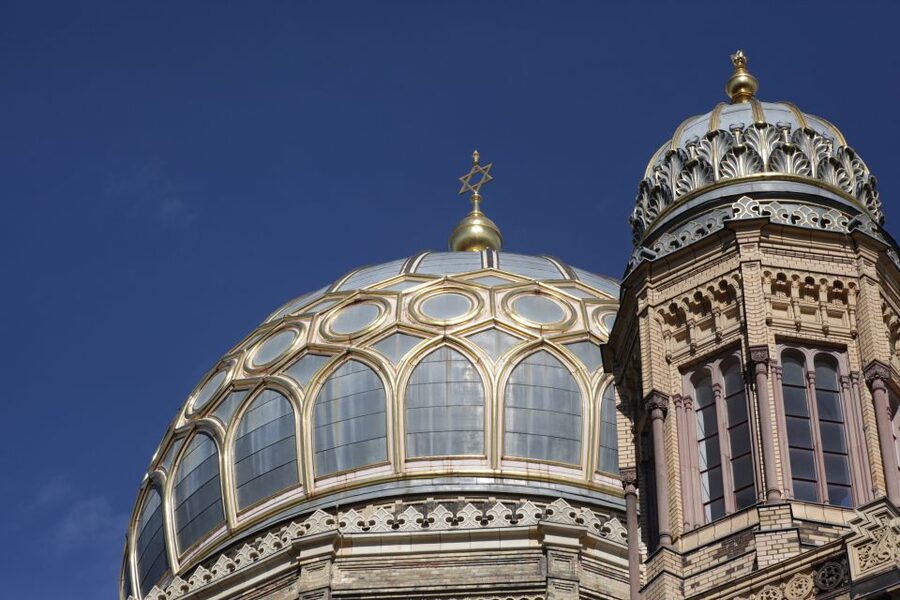
Berlin’s Nazi past is not tucked away in one museum. It is spread across ordinary streets, office buildings, empty lots, memorials, and grand government facades. This four-hour tour connects those places into one clear story, from the persecution of Berlin’s Jewish population to the final battle around the Reichstag and Hitler’s suicide in the bunker nearby.
I like the route for two reasons: it includes less obvious places, such as the former Gestapo and SS headquarters, and it gives the city’s memorials a human and political context. I also like the guide-led approach. Guides including Glen, Jimmy, Jonathan N, Artie, Rohan, and Amelie have been praised for strong storytelling and a calm, respectful manner. The main drawback is simple: you walk outdoors in all weather, and you do not enter the buildings along the way.
In This Review
- Key points to know before booking
- Why this route matters in modern Berlin
- Starting in the Jewish Quarter
- Anhalter Bahnhof and the damage of war
- The former Luftwaffe headquarters
- Gestapo and SS headquarters at Topography of Terror
- Propaganda, T4, and the Holocaust
- Memorials beside the Tiergarten
- The Holocaust Memorial and the Hitler bunker site
- The Reichstag and the last days of Nazi Berlin
- What the guides add to the experience
- Is four hours and $23 good value?
- Practical advice for a serious walking tour
- Who should book this Berlin history tour?
- FAQ
- How long does the tour last?
- What languages are available?
- Does the tour include entry to buildings?
- Do I need a public transport ticket?
- Does the tour run in bad weather?
- Can I book a private group?
Key points to know before booking
- Four hours on foot: The tour covers a large central Berlin route, with a short metro ride between sections.
- Hitler’s bunker site: You see the location where Hitler died, now marked without a grand monument.
- Nazi power in plain sight: The former Luftwaffe headquarters and Propaganda Ministry reveal how much Nazi architecture still shapes the city.
- A serious memorial route: The Holocaust Memorial, Sinti and Roma memorial, and the memorial to 96 arrested politicians add different layers to the story.
- Strong guide focus: English and German tours use guides praised for clear explanations, humor, care with groups, and deep subject knowledge.
- Bring an AB transport ticket: Public transport is part of the route, but the single AB ticket is not included.
Why this route matters in modern Berlin
I find Berlin’s Third Reich history most useful when it is tied to physical space. A date in a textbook can feel remote. A guide pointing out where a ministry once operated, where political opponents were arrested, or where a massive station was destroyed gives the subject scale.
This tour also avoids treating Nazi Berlin as a collection of military curiosities. The focus includes Jewish life and persecution, propaganda, forced murder, political repression, and the way Germany remembers these crimes today. That broader frame matters. You are not simply following Hitler’s movements. You are looking at how an entire dictatorship took control of a capital and used it to carry out violence.
The tone is serious, but it does not need to be grim every second. Several guides are praised for being warm, funny, and approachable while still treating the subject with care. That balance is useful during four hours of difficult material. A good guide can keep you listening without turning tragedy into entertainment.
More Third Reich & Cold War Tours in Berlin
- Berlin: Third Reich and Cold War 2 Hour Walking Tour
★ 4.9 · 6,830 reviews - Berlin’s Best: 2 Hour Walking Tour Third Reich and the Cold War
★ 5.0 · 5,486 reviews - Third Reich Berlin: Hitler and WWII Walking Tour
★ 5.0 · 3,301 reviews
Starting in the Jewish Quarter
The tour begins in central Berlin with an introduction to the nearby Jewish district and the Nazi destruction of Jewish life in the city. This opening gives you an important base for the rest of the afternoon.
You learn about Jewish life before the Holocaust, then follow the process of persecution and removal. The value here is the human setting. Berlin’s Jewish history was not created by the Nazis, and it did not begin with deportations. Starting with the community helps you understand what was destroyed.
The exact meeting point can change with the option you book, so check your confirmation carefully. From the beginning, ask questions if you need the historical timeline clarified. The guides are used to taking questions, and several have been praised for keeping a group involved rather than delivering a fixed speech.
This part can feel dense if you know little about Berlin. That is not a flaw, but it means you should expect a history lesson from the first minutes. If you prefer a light introduction to the city, take this tour on a day when you have the energy for serious subject matter.
Anhalter Bahnhof and the damage of war
A short metro ride takes you to Anhalter Bahnhof, once a huge railway station. The station was destroyed during World War II, and its remains help explain the physical damage suffered by Berlin.
This is a good early stop because it shifts the story from Nazi government power to the war that power unleashed. Berlin is full of grand plans and fragments. Anhalter Bahnhof shows how the conflict affected transport, buildings, and daily life, not just battle maps.
You will need a public transport ticket for the route. The activity price does not include a single AB ticket, so arrange that before setting out. It is a small extra cost, but an easy detail to miss.
The metro ride also breaks up the walking. Still, four hours is a long time on your feet. Wear practical shoes and bring water. The tour operates in rain, cold, and on public holidays, so a weatherproof jacket is a sensible choice.
The former Luftwaffe headquarters
The route continues through what was once the Nazi government district. One major stop is the former headquarters of the Luftwaffe, the German air force under Hermann Göring.
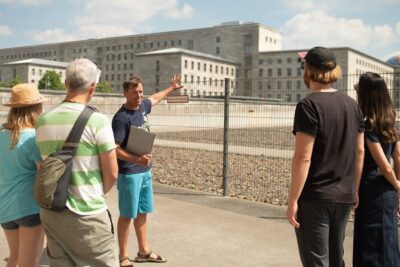
The building is one of the best surviving examples of Nazi architecture. Its scale and severe style show how the regime used government buildings to project authority. You do not need an interest in architecture to see the point. The building was designed to make the state feel massive, organized, and intimidating.
A guide can explain how this part of Berlin functioned as a center of power. That context is more useful than simply photographing the facade. You begin to see how ministries, police offices, propaganda departments, and military command worked together.
The building is viewed from outside. This is a key expectation to set: the tour does not include entry into buildings. If you want museum interiors, plan a separate visit to Berlin’s museums around this walk.
Same city, a completely different kind of day:
- Berlin: Reichstag, Dome and Government District Guided Tour
★ 4.7 · 18,288 reviews - Berlin: 1-Hour City Tour by Boat with Guaranteed Seating
★ 4.3 · 16,993 reviews - Berlin: Boat Tour Along the River Spree
★ 4.4 · 11,252 reviews - Discover Berlin Half-Day Walking Tour
★ 5.0 · 9,624 reviews
Gestapo and SS headquarters at Topography of Terror
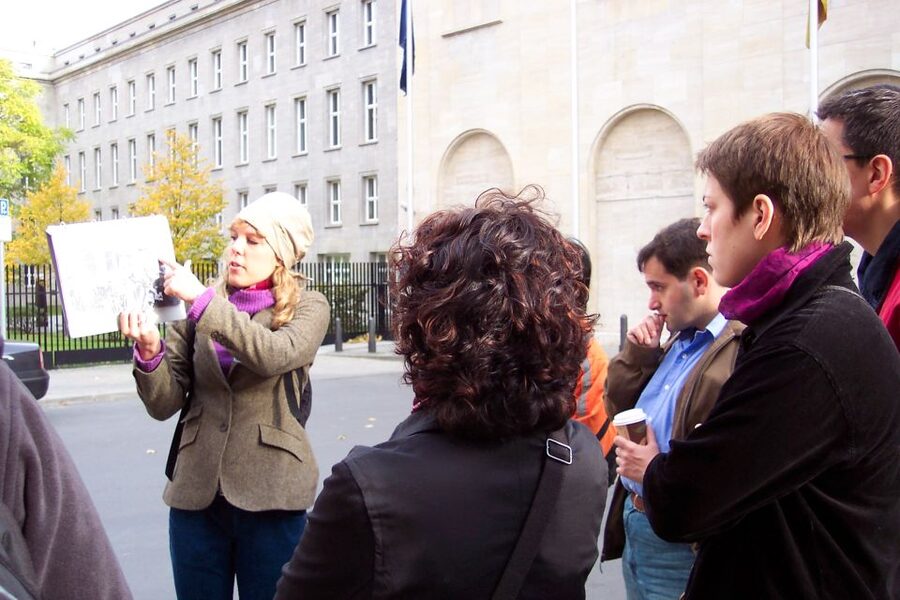
The next major section covers the former Gestapo and SS headquarters, now home to the Topography of Terror Museum. The site is one of the most important places on the route because it links Nazi policy to the agencies that carried out repression.
The Gestapo was the secret police. The SS became central to terror, persecution, and mass murder. Here, the subject moves from broad political ideas to the machinery that enforced them.
There is a museum break at this point in the itinerary. The supplied details do not specify the length of that break, so do not assume you will have enough time for a full museum visit. The tour itself does not enter buildings, but the stop gives you a chance to pause before the guide continues.
This section can be emotionally heavy. I appreciate that the route does not rush from one shocking fact to another. A short pause helps you process what you have heard. If you are traveling with teenagers, the subject is difficult, but the experience can still work well for older children who are prepared for an honest discussion of persecution and mass murder.
Propaganda, T4, and the Holocaust
After the museum stop, the guide explains some of the Nazi regime’s most sinister policies. The subjects include Joseph Goebbels and propaganda, the T4 euthanasia program, and the Holocaust.
Goebbels’ role is important because propaganda was not just a wartime tool. It helped shape public opinion, normalize hatred, and present state violence as necessary or acceptable. A guide can connect the political language to the places where the regime operated.
The T4 program brings another uncomfortable truth into view: Nazi mass murder did not begin with the extermination camps. The program targeted people with disabilities and others the regime considered unworthy of life. Including T4 makes the tour’s story wider and more accurate.
The Holocaust section returns attention to Jewish victims and the scale of the crime. This is where the earlier walk through the Jewish Quarter becomes especially important. You are not hearing about an abstract population. You have already considered the community that lived in Berlin before the Nazi assault.
I would not book this walk expecting a cheerful sightseeing outing. The guides use humor at times to keep the group engaged, but the core subject remains painful. That is appropriate. The best moments are often the quiet explanations that let you think rather than the dramatic ones.
Memorials beside the Tiergarten
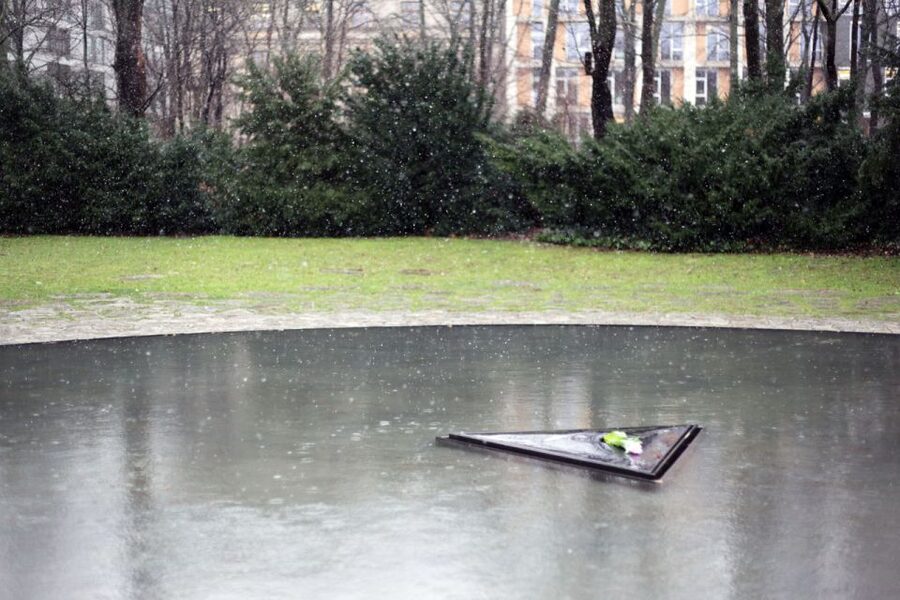
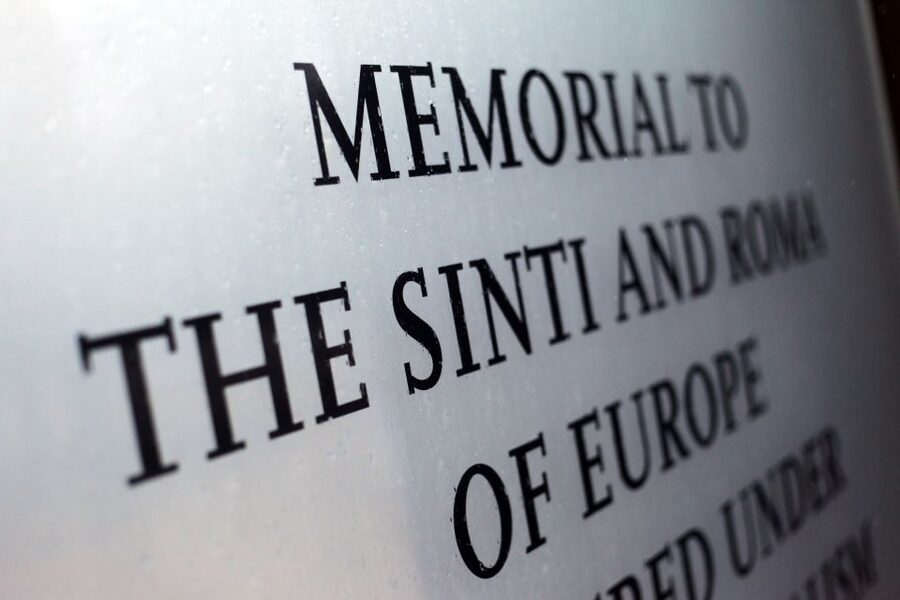
As the route heads toward the Tiergarten, Berlin’s largest park, you visit the Memorial to the Sinti and Roma Victims of National Socialism. This stop broadens the story beyond the Jewish Holocaust and recognizes another group persecuted and murdered by the Nazi regime.
The memorial is valuable because it is easy to miss when you are moving between Berlin’s better-known sights. A guide helps you understand why it is there and how it fits into the city’s pattern of remembrance.
You also visit the memorial for 96 politicians arrested by the Nazis as they seized power in 1933. This stop focuses on the destruction of democratic politics. It shows that the dictatorship did not appear fully formed. It took power through pressure, arrests, intimidation, and the removal of opposition.
Together, these memorials make the tour more than a Hitler biography. You see the effect of Nazi rule on ethnic minorities, disabled people, Jewish families, and elected politicians. That range is one of the strongest reasons to choose this route over a simpler list of famous Nazi sites.
The Holocaust Memorial and the Hitler bunker site
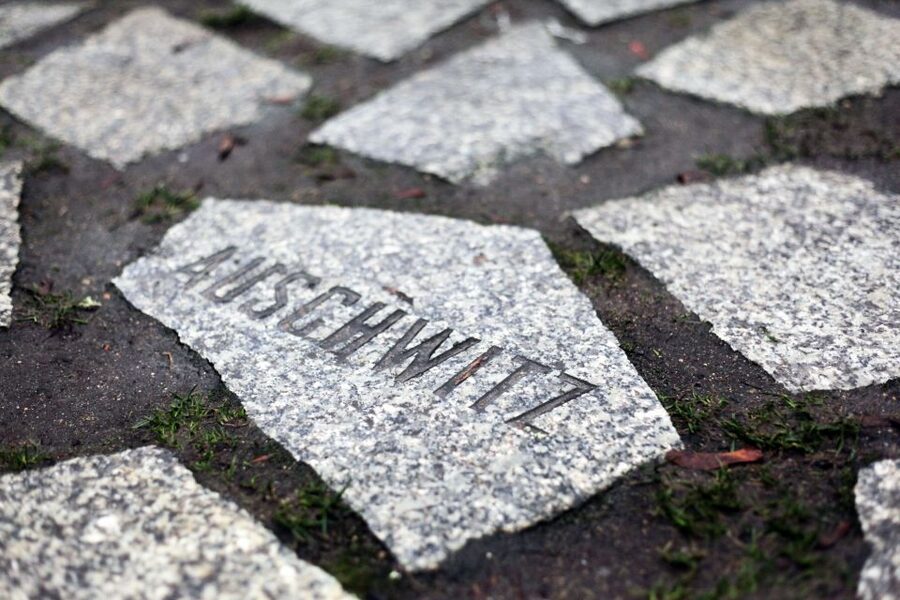
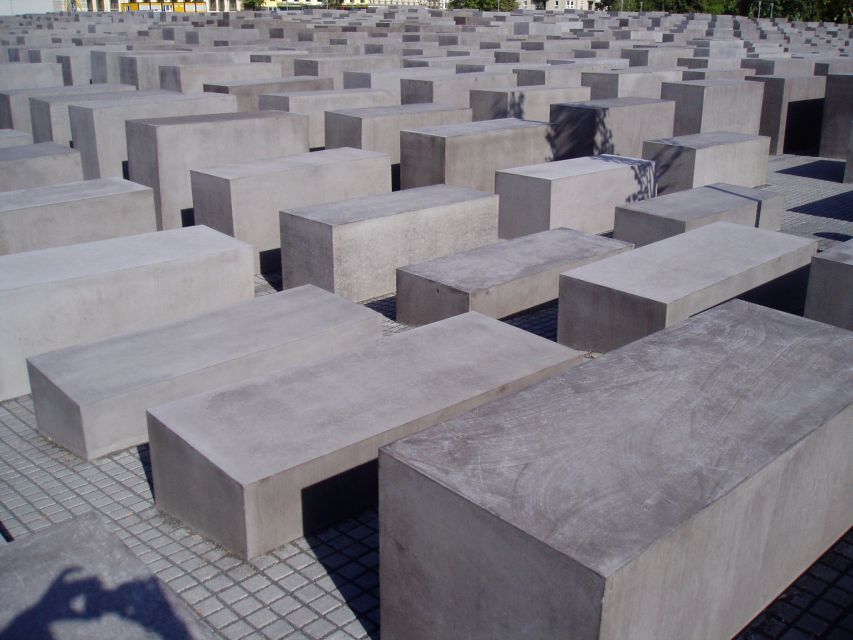
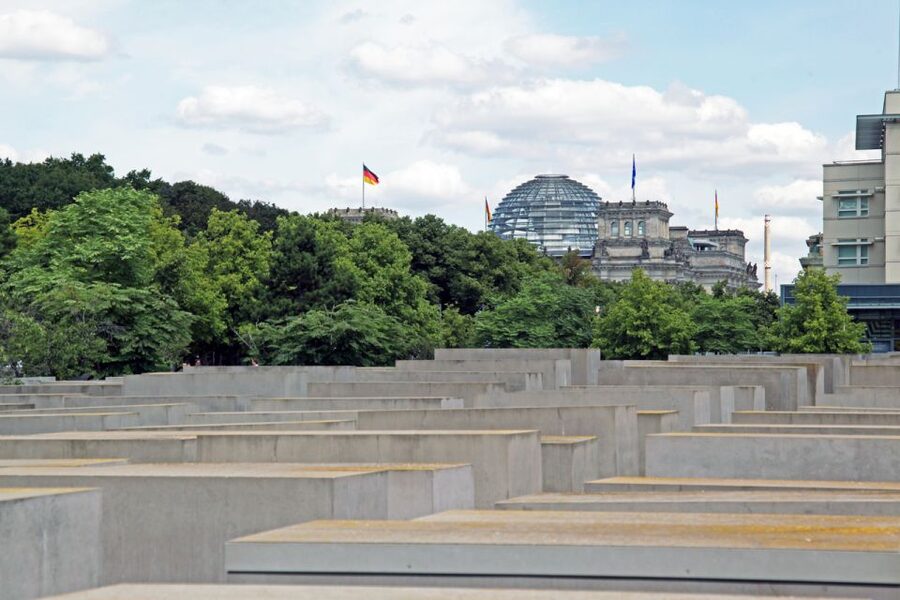
The tour includes Berlin’s Memorial to the Murdered Jews of Europe, commonly called the Holocaust Memorial. Its field of concrete blocks is one of the city’s most recognizable places, but the guide’s explanation adds meaning that you may miss while walking through it alone.
The memorial is not a museum of Nazi history. It is a place for reflection. Your guide can explain its role in Berlin’s memory culture and connect it to the persecution discussed earlier.
Nearby, you see the site of Hitler’s bunker. The bunker itself is not open as a tourist attraction, and there is no grand structure inviting admiration. The location is marked in a restrained way, which is deliberate. The absence of spectacle is part of the point.
This can be one of the most striking stops for visitors who have read about the final days of the Third Reich. The real value is not standing over a dramatic ruin. It is understanding how close the bunker was to the government district, the Reichstag, and the city’s final battle.
The Reichstag and the last days of Nazi Berlin
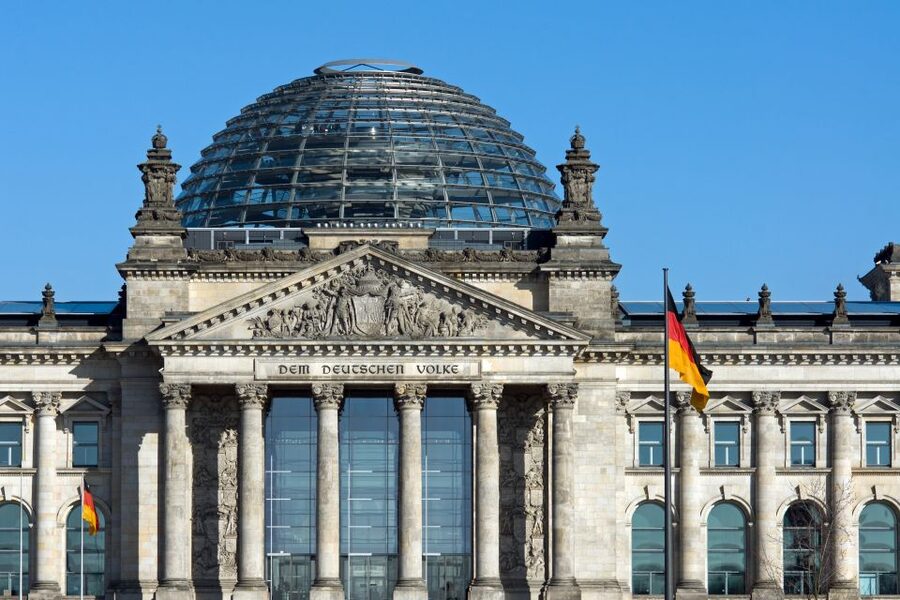
The tour ends outside the Reichstag, Germany’s parliament building. Here, the guide explains Hitler and Albert Speer’s plan to rebuild Berlin as Germania, a capital designed for a world empire.
That plan reveals the gap between Nazi fantasy and reality. The regime imagined a monumental city that would project permanent power. Instead, Berlin became a ruined battlefield by the spring of 1945.
The final discussion covers the Battle of Berlin. Soviet soldiers assaulted the Reichstag under anti-aircraft fire while Hitler was in the bunker less than a mile away, preparing to kill himself. The ending brings the route back to the physical city. The grand buildings, planned avenues, bunker site, and damaged stations are pieces of one collapsing system.
You finish outside the Reichstag rather than inside it. That is still a strong final point because the building carries such symbolic weight, but you should not confuse this tour with a Reichstag visit. If you want to see the dome or enter the parliament building, make a separate reservation and plan it for another time.
What the guides add to the experience
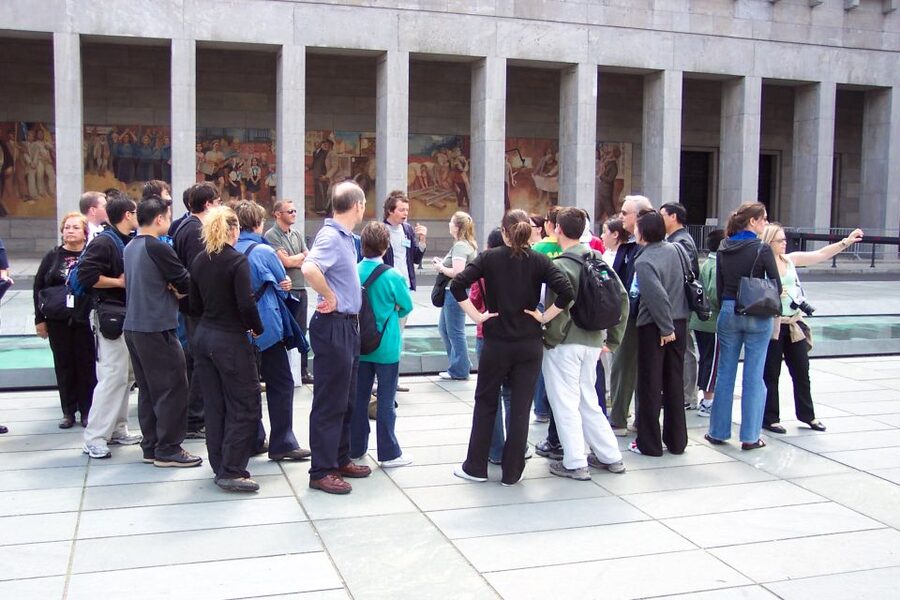
The strongest part of this tour is the guide. Four hours is a long time for any subject, and the guide determines whether the route feels clear or overloaded.
Several guide names appear repeatedly in the praise for this experience, including Glen, Jimmy, Jonathan N, Artie, Rohan, Jasper, Quincy, and Amelie. Their styles differ, but the common pattern is clear: strong command of the subject, lively storytelling, and an ability to answer questions.
Amelie is a historian by profession and uses maps, photographs, and other documents to show how Berlin looked and functioned. A guide who brings visual material can be especially helpful when much of the Nazi government district has changed.
A West Berlin guide has also brought personal knowledge of the divided city into the discussion. That kind of lived perspective can help you understand that Berlin’s story did not end in 1945. The city continued to change through division, reunification, and the creation of new memorials.
Group size can vary. One especially positive account describes a small group of nine, where the guide had time to speak with everyone and make sure the group stayed together. Private groups are available if you want a more personal pace or have a family or party with specific interests.
Is four hours and $23 good value?
At $23 per person, this is a strong-value tour if you want an organized introduction to Nazi Berlin. The fee covers four hours with an English or German-speaking guide, and the route links sites that would be hard to connect on your own.
The price is especially fair because the tour is not limited to the famous Holocaust Memorial and Reichstag. You also reach Anhalter Bahnhof, the former Luftwaffe headquarters, the Gestapo and SS site, the Jewish Quarter, the Sinti and Roma memorial, and the memorial to the 96 politicians.
You will need to add the cost of a single AB public transport ticket. That is the main extra expense listed. The tour does not include building entry, so budget separately if you want to visit the Topography of Terror Museum or other indoor sites at greater length.
I see the tour as a good first or second day activity for a history-minded visit to Berlin. It gives you a map of the subject. You can then return to the museums and memorials that interest you most.
Practical advice for a serious walking tour
Plan for four hours outside, with a short metro journey. Wear comfortable shoes, bring water, and dress for the forecast. The route runs in all weather and on public holidays.
The meeting point depends on the option you book. Check the exact location before leaving your hotel, and allow enough time to find the guide in central Berlin.
The subject is not suitable for everyone at every moment. If you are visiting with children, use your judgment about their age and readiness. Teenagers with an interest in World War II may find it engaging, but the tour discusses persecution, euthanasia, and genocide in direct terms.
You can choose a shared group or private group. A shared group should suit most people who want value and the chance to hear questions from others. A private group is worth considering if you want to slow down at memorials, focus on a particular family interest, or keep the discussion within your own party.
Free cancellation is available up to 24 hours before the tour for a full refund, and you can reserve now and pay later. Those terms help if your Berlin schedule is still moving around, but the practical essentials remain the same: bring a transport ticket, expect no interior visits, and prepare for a long outdoor walk.
Who should book this Berlin history tour?
I would book this tour if you want the Nazi period explained through Berlin’s streets rather than through a museum alone. It is a particularly good fit for first-time visitors who do not know how the key sites relate to one another.
It also suits people who already know the major wartime events but want lesser-known memorials and government buildings added to the picture. The route gives you details you could easily miss while walking from the Reichstag to the Holocaust Memorial on your own.
I would choose something else if you want to spend most of your time indoors, avoid difficult historical subjects, or explore each museum at your own pace. The tour is also not a good substitute for a Reichstag dome visit or a full visit to the Topography of Terror.
For $23, though, this is an effective way to make sense of central Berlin’s most important Nazi-era sites. Book it if you want a serious, well-paced walk led by a guide who can connect architecture, politics, persecution, war, and memory without losing sight of the people affected.
FAQ
How long does the tour last?
The tour lasts four hours.
What languages are available?
The tour is available with a live guide in English or German.
Does the tour include entry to buildings?
No. The tour takes place outdoors and does not include entry into buildings.
Do I need a public transport ticket?
Yes. A public transport ticket is needed, and a single AB ticket is not included in the tour price.
Does the tour run in bad weather?
Yes. The tour runs in all weather and on public holidays.
Can I book a private group?
Yes. A private group option is available, in addition to shared group tours.
Just added around Berlin
- Love and War in Berlin: Self-Guided Story Puzzle Walk★ 5.0 · 7 reviews
- Rickshaw Tours Berlin – Groups of up to 16 people with several rickshaws★ 4.0 · 97 reviews
- Walking on the Wall: 3-Hour Tour in Berlin★ 4.5 · 34 reviews
- eSIM for Germany and 34 European Countries★ 4.5 · 16 reviews
- Warnemuende Shore Excursion: Berlin Private Sightseeing Tour from Rostock★ 5.0 · 4 reviews
- Your ticket to The Wall Museum Berlin★ 3.0 · 60 reviews
- Warnemuende Shore Excursion: Private Berlin Tour★ 4.5 · 27 reviews
- Berlin’s Gay, Lesbian, and Queer Scene Small-Group Walking Tour★ 4.5 · 66 reviews
Third Reich & Cold War Tours, compared.
Berlin’s Best: 2 Hour Walking Tour Third Reich and the Cold War
Read our review →
Third Reich Berlin: Hitler and WWII Walking Tour
Read our review →
Skip-the-Line: Berlin Wall Museum at Checkpoint Charlie
Read our review →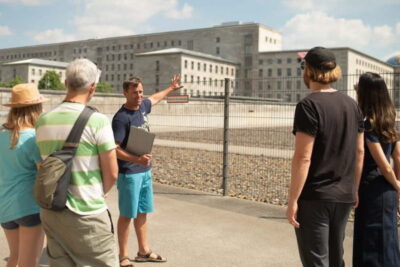
Cold War, Berlin Wall, Spies and the East Side Gallery
Read our review →Browse the lists this tour appears in