
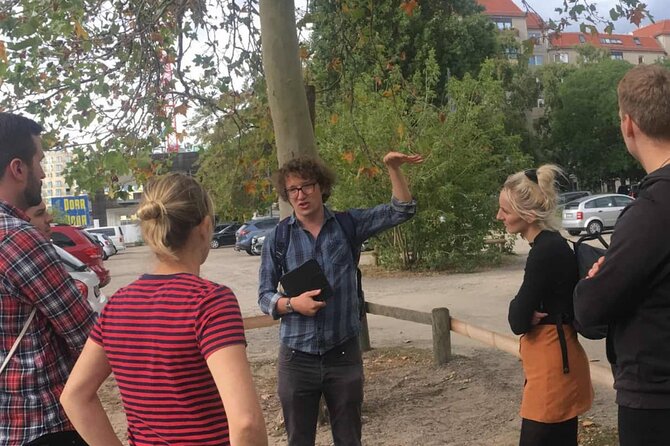
Reviewed · THIRD REICH & COLD WAR TOURS
Hitler to Stalin – WWII & Cold War Tour (Small Group)
Berlin’s story is written across ordinary streets, government buildings, memorials, and empty spaces. This 2.5-hour walking tour connects the Nazi era to the Cold War, helping you see how one city moved from dictatorship and war to division and reunification.
I like the broad sweep of the route, especially the way it brings together Hitler’s bunker, the Berlin Wall, Checkpoint Charlie, the Reichstag, and the Holocaust Memorial. I also like the small-group format, plus the use of maps and then-and-now photographs to make changes in the city easier to understand.
The main consideration is pace. You cover a lot of ground on foot in a short time, and Berlin weather can be unpredictable. Wear good shoes, bring water, and remember that the tour runs rain or shine.
In This Review
- Key points at a glance
- Starting at Brandenburg Gate, where Berlin changed hands
- The Reichstag and the politics behind the buildings
- Hitler’s bunker site and the problem of difficult places
- Gestapo headquarters and the machinery of Nazi rule
- The Holocaust Memorial and the human cost of the Nazi era
- Berlin Wall and Checkpoint Charlie, the city divided
- The guide makes the difference
- What the $34 price really buys you
- Who should book this walk?
- Practical advice for a rain-or-shine walk
- Should you book Hitler to Stalin?
- FAQ
- Where does the tour start?
- Where does the tour end?
- How long does the tour last?
- What language is the tour conducted in?
- What locations are included?
- Is the tour wheelchair accessible?
- What should I bring?
- Does the tour operate in bad weather?
- Can I cancel for a refund?
Key points at a glance
- A rare one-tour overview: The route links World War II, the Nazi regime, the Cold War, Berlin’s division, and reunification.
- Important sites without museum admissions: You see the exterior locations and public memorials connected with Hitler’s bunker, Gestapo headquarters, the Reichstag, the Berlin Wall, and Checkpoint Charlie.
- A guide-led walk: The English-speaking guide explains the politics and human cost behind each stop, rather than leaving you with a list of dates.
- Small-group setting: A smaller group makes it easier to follow the guide and ask questions during the walk.
- Useful visual aids: Maps and then-and-now photographs help you compare wartime Berlin with the city you see today.
- Good value at $34: For two and a half hours of guided sightseeing, the price is fair, especially if this is your first serious look at Berlin’s 20th-century past.
Starting at Brandenburg Gate, where Berlin changed hands
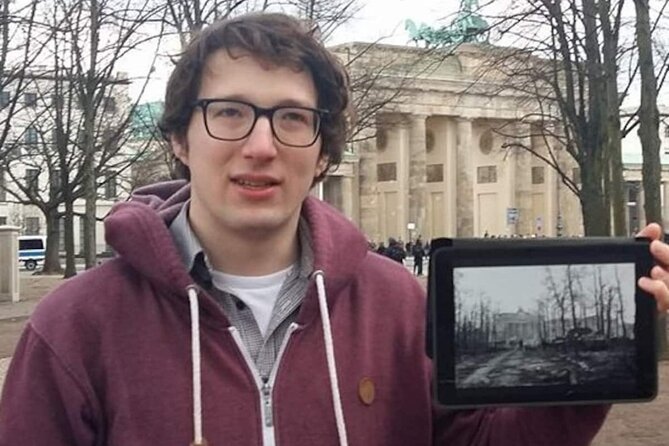
The meeting point is the Tourist Center at Brandenburg Gate. Look for the blue umbrella. This is a sensible place to begin because the gate is more than a handsome landmark for photographs. It has witnessed the city’s political shifts and now serves as a public symbol of unity.
Your guide uses the area to frame the walk. Berlin’s wartime scars are not always obvious at first glance. The city has been rebuilt, repaired, and redesigned, so a guide helps you connect the present-day streets with the events that took place here.
That opening context matters. Without it, you can see Brandenburg Gate as a grand neoclassical entrance and move on. With the right explanation, you begin to understand how the same city center could become a Nazi power base, a ruined capital, a divided frontier, and finally a reunified capital.
The tour ends back at this meeting point, which makes the route easy to fit into a day of sightseeing. You do not need to arrange transport back from an unfamiliar neighborhood.
More Third Reich & Cold War Tours in Berlin
- Berlin: Third Reich and Cold War 2 Hour Walking Tour
★ 4.9 · 6,830 reviews - Berlin’s Best: 2 Hour Walking Tour Third Reich and the Cold War
★ 5.0 · 5,486 reviews - Third Reich Berlin: Hitler and WWII Walking Tour
★ 5.0 · 3,301 reviews
The Reichstag and the politics behind the buildings
The Reichstag is one of Berlin’s most recognizable buildings, but the important part of this stop is the political story attached to it. The tour explains the building’s place in the years before and during World War II, then links that past to the later division of Berlin.
You will not simply be told that a major government building is nearby. The guide puts the Reichstag into the larger story of power, ideology, war, and the rebuilding of German public life.
This is where the tour’s focus on politics becomes useful. The Nazi period was not only a military story. It was also a story about government, propaganda, persecution, and the destruction of democratic institutions. A good explanation at the Reichstag can help you understand how the city became the center of a regime that reshaped Europe.
Because the tour is conducted outdoors, you should not expect an extended interior visit to the Reichstag. The value here is the location and the explanation around it. If you want to visit the building inside, treat that as a separate activity.
Hitler’s bunker site and the problem of difficult places
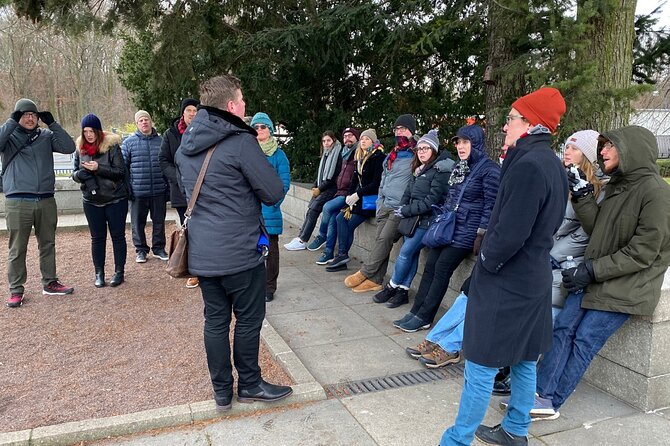
The site associated with Hitler’s bunker is one of the most important and most easily misunderstood places on the route. Much of the original structure is gone, and the location does not offer a dramatic underground attraction. That is part of the point.
Your guide helps you understand what happened at this site without turning it into a shrine. The focus is on the final days of the Nazi regime, the destruction around the bunker, and the way the location exists today within an ordinary part of Berlin.
This stop is especially valuable because it shows how historical places can disappear physically while remaining important in public memory. You may find that the plain setting feels more unsettling than a preserved room would. The lack of spectacle forces attention onto the facts and the human consequences.
The stop can also help separate serious historical study from the sensational treatment that Nazi sites sometimes receive. Expect context and explanation, not a theatrical presentation.
Gestapo headquarters and the machinery of Nazi rule
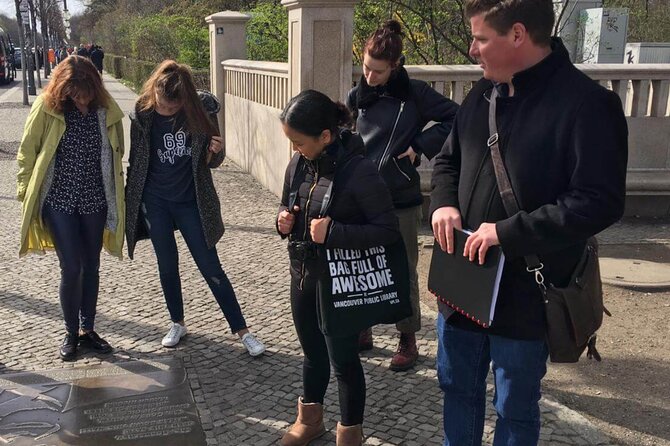
The former Gestapo headquarters is another place where the city’s present appearance can hide its past. The site connects the tour to the secret police and to the system of fear used by the Nazi state.
Here, the guide explains the role of political repression and the way the regime targeted people who opposed it or were marked as enemies. This broadens the tour beyond military events and battlefield dates. You get a clearer picture of how control worked inside Germany.
The stop is also a reminder that persecution did not happen only in distant camps or on battlefronts. It was organized through offices, laws, police forces, and decisions made in the capital. Seeing the location in the city helps make that process more concrete.
The exact condition of former wartime sites varies across Berlin. Some have extensive memorial treatment, while others require a guide to explain what once occupied the space. This is one reason the small-group format matters. You can ask for clarification instead of trying to piece together the site from a small sign.
Same city, a completely different kind of day:
- Berlin: Reichstag, Dome and Government District Guided Tour
★ 4.7 · 18,288 reviews - Berlin: 1-Hour City Tour by Boat with Guaranteed Seating
★ 4.3 · 16,993 reviews - Berlin: Boat Tour Along the River Spree
★ 4.4 · 11,252 reviews - Discover Berlin Half-Day Walking Tour
★ 5.0 · 9,624 reviews
The Holocaust Memorial and the human cost of the Nazi era
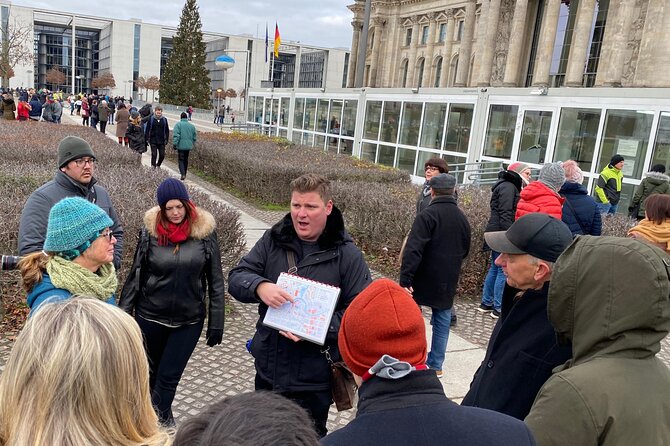
The Memorial to the Murdered Jews of Europe, commonly called the Holocaust Memorial, gives the walk a quieter and more reflective center. Its field of concrete blocks is open to the public, and the experience changes as you move through it.
The tour places the memorial within the wider story of Nazi persecution and the Holocaust. You are encouraged to consider the scale of the loss and the lessons that Berlin continues to confront.
This stop needs time and care. A guided visit cannot explain every aspect of the memorial’s design in a few minutes, but it can prevent the site from becoming just another photograph. You will get more from it if you slow down, listen, and treat the space with respect.
The memorial is also a useful counterpoint to the political buildings and military sites on the route. It turns the focus from leaders and institutions to the people who were murdered. That balance is one of the tour’s strengths.
Berlin Wall and Checkpoint Charlie, the city divided
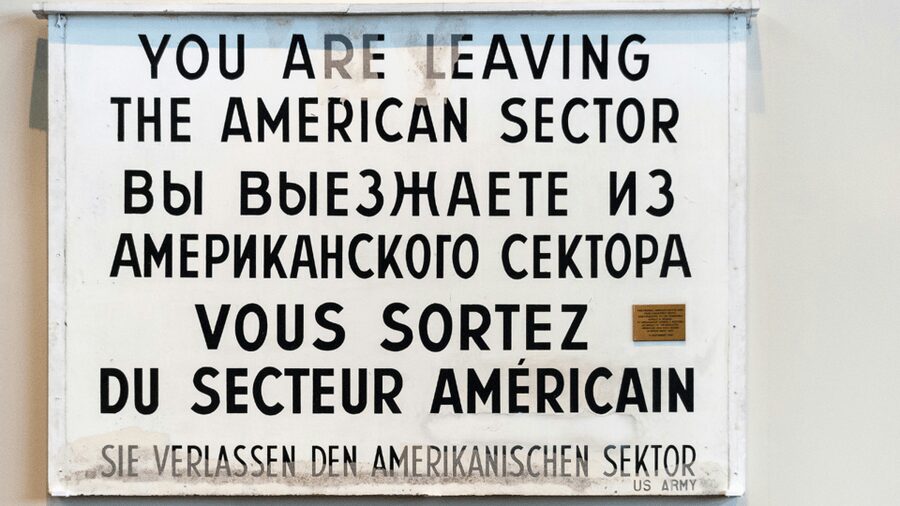
The Cold War section shows how the end of World War II did not bring a simple return to normal life. Berlin became a divided city, and its division reflected the larger conflict between competing political systems.
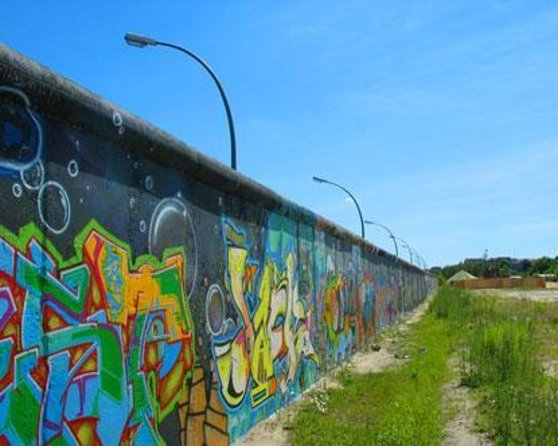
At the Berlin Wall, the guide explains how the partition developed and what the Wall meant for Berliners. You learn how the city was split, how movement was controlled, and why the border became such a powerful symbol around the world.
Seeing a remaining section or marked part of the Wall is useful, but the physical barrier alone cannot tell the whole story. The guide’s maps help explain where the border ran and how it altered daily life. Then-and-now photographs add another layer, showing how the same streets and spaces looked during the Cold War.
Checkpoint Charlie brings the division into sharper focus. It is one of Berlin’s best-known Cold War locations and can feel busy with sightseeing activity. The historical explanation is what gives the place weight. You learn why this crossing mattered and how it represented the tense separation between East and West.
One caution: the tour presents a wide period in only two and a half hours. You will gain a clear framework, but not every detail of the Berlin Wall, the airlift, the postwar occupation, or the reunification process. If the Cold War is your main interest, you may want to follow this walk with a museum visit.
The guide makes the difference
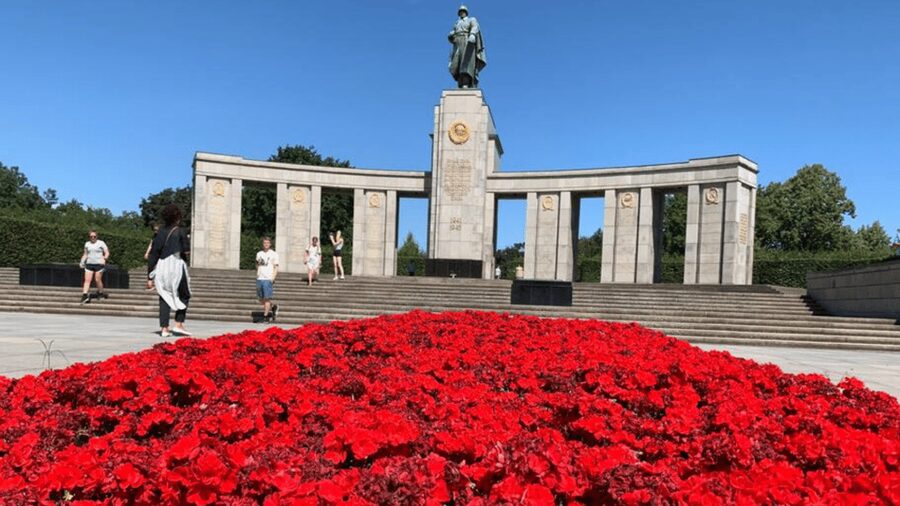
The experience is led in English by a live guide, and the company describes its guides as specialists in World War II tours. That focus is important for a subject that can quickly become a jumble of names, dates, and military movements.
Tom received especially strong praise for being interesting, appropriate, and engaged with everyone in the group. That combination is worth noting. A guide on this subject must handle mass suffering and political violence with respect while still keeping the walk clear and approachable.
The best part of a live tour is the chance to ask questions. You can ask how a location changed, why a memorial was placed where it is, or how Berlin’s division affected the surrounding streets. A guide can also adjust the amount of detail based on the group’s interests.
The small-group format should make it easier to hear the explanation and stay connected to the guide. The exact group size is not provided, so do not assume an intimate private tour. It is better to think of this as a more focused alternative to a large walking group.
What the $34 price really buys you
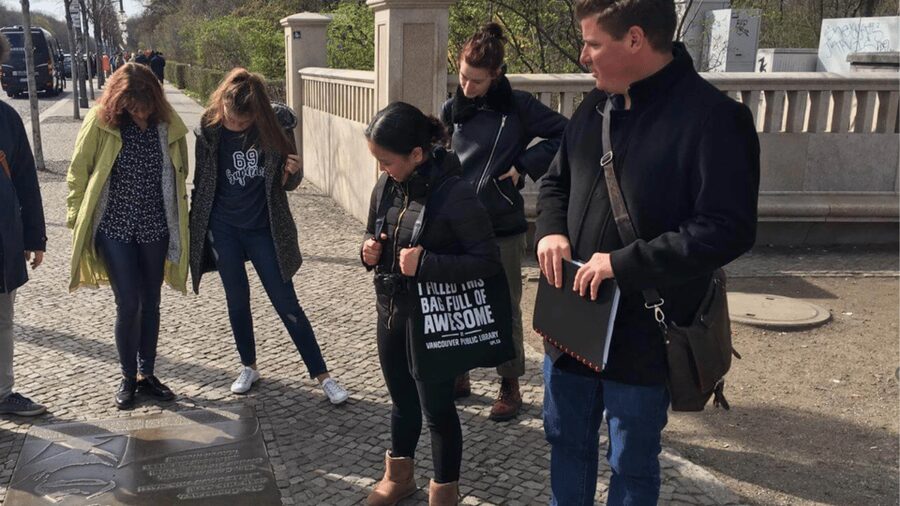
At $34 per person, this is a reasonably priced introduction to Berlin’s 20th-century story. You are paying for two and a half hours of guided walking, a specialist English-speaking guide, a small-group setting, maps, and then-and-now photographs.
The value is strongest if you want a connected explanation rather than a collection of separate sights. You can visit Brandenburg Gate, the Wall, and Checkpoint Charlie on your own, but you may miss how the locations fit together. The guide supplies that thread.
The price does not include a museum admission or an indoor tour of the Reichstag. That is not a problem if you see the walk as an orientation. It is a limitation if you want detailed exhibitions, original objects, or long visits inside buildings.
For a first day or two in Berlin, I think the cost is easy to justify. The tour gives you a working map of the city’s main Nazi and Cold War sites. You can then return to the places that interest you most, with a much better sense of what you are seeing.
Who should book this walk?
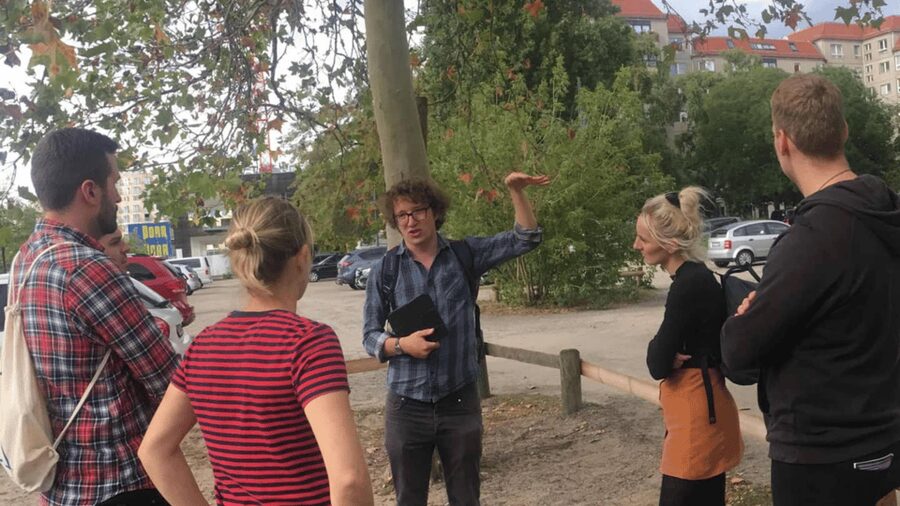
I would recommend it to first-time visitors who want a serious introduction to Berlin’s recent past. It also suits anyone who finds dates and political events easier to understand when they are tied to real streets and buildings.
Families with older children or teenagers may find the route useful, though the subject is difficult. The tour deals with Nazi persecution, the Holocaust, war, and political repression. Parents should decide if that material is suitable for their children.
It is also a good choice if you have limited time. The tour brings together several major sites in one outing, and the return to Brandenburg Gate keeps the rest of your day flexible.
You may prefer a different activity if you dislike walking, want a slow museum visit, or are mainly interested in one period. The tour moves from World War II to the Cold War and reunification, so its strength is range rather than exhaustive detail.
The walk is listed as wheelchair accessible, but the route remains an outdoor city walk. If you use a wheelchair, it is sensible to confirm current route conditions when booking, especially in poor weather.
Practical advice for a rain-or-shine walk
Wear comfortable walking shoes. Bring water and light snacks, since the tour lasts two and a half hours and is conducted outdoors.
Berlin weather can turn quickly. An umbrella or raincoat is useful because the walk goes ahead in unfavorable weather. Dress for standing and walking rather than just for sightseeing photographs.
Arrive at the Tourist Center by Brandenburg Gate and look for the blue umbrella. The guide will lead the group from there, and the activity finishes at the same meeting point.
You can cancel up to 24 hours before the start for a full refund. The reserve-now, pay-later option also helps if your schedule is still changing.
Should you book Hitler to Stalin?
Book it if you want Berlin’s major Nazi and Cold War sites explained as one connected story. The strongest features are the broad route, the serious subject matter, the small-group setting, and the use of maps and old photographs. Tom’s praised guiding style also suggests the experience can be both respectful and engaging.
Skip it if you want extensive time inside museums, a private guide, or a narrowly focused study of only the Wall or only the Nazi period. For $34, though, this is a strong-value starting point. It gives you the context to see Berlin with sharper eyes for the rest of your visit.
FAQ
Where does the tour start?
The tour starts at the Tourist Center at Brandenburg Gate. Look for the blue umbrella.
Where does the tour end?
The activity ends back at the meeting point by Brandenburg Gate.
How long does the tour last?
The tour lasts 2.5 hours. Starting times depend on availability.
What language is the tour conducted in?
The tour is conducted in English with a live tour guide.
What locations are included?
The route includes Brandenburg Gate, the Reichstag, the site of Hitler’s bunker, the former Gestapo headquarters, the Holocaust Memorial, the Berlin Wall, and Checkpoint Charlie.
Is the tour wheelchair accessible?
Yes, the tour is listed as wheelchair accessible.
What should I bring?
Bring comfortable walking shoes, water, and light snacks. An umbrella or raincoat is useful in unfavorable weather.
Does the tour operate in bad weather?
Yes. The tour takes place rain or shine.
Can I cancel for a refund?
Yes. You can cancel up to 24 hours in advance for a full refund. You can also reserve now and pay later.
Just added around Berlin
- Love and War in Berlin: Self-Guided Story Puzzle Walk★ 5.0 · 7 reviews
- Rickshaw Tours Berlin – Groups of up to 16 people with several rickshaws★ 4.0 · 97 reviews
- Walking on the Wall: 3-Hour Tour in Berlin★ 4.5 · 34 reviews
- eSIM for Germany and 34 European Countries★ 4.5 · 16 reviews
- Warnemuende Shore Excursion: Berlin Private Sightseeing Tour from Rostock★ 5.0 · 4 reviews
- Your ticket to The Wall Museum Berlin★ 3.0 · 60 reviews
- Warnemuende Shore Excursion: Private Berlin Tour★ 4.5 · 27 reviews
- Berlin’s Gay, Lesbian, and Queer Scene Small-Group Walking Tour★ 4.5 · 66 reviews
Third Reich & Cold War Tours, compared.



Berlin’s Best: 2 Hour Walking Tour Third Reich and the Cold War
Read our review →

Third Reich Berlin: Hitler and WWII Walking Tour
Read our review →
Skip-the-Line: Berlin Wall Museum at Checkpoint Charlie
Read our review →

Cold War, Berlin Wall, Spies and the East Side Gallery
Read our review →Browse the lists this tour appears in