
Reviewed · THIRD REICH & COLD WAR TOURS
Berlin: Third Reich and World War II Private Guided Tour
Berlin’s World War II story is written across ordinary city streets, and this three-hour private walk connects the major sites with the political choices and human cost behind them. You begin at the Brandenburg Gate, pass the Reichstag and Soviet War Memorial, then move through the Holocaust Memorial and the former bunker site before ending near Checkpoint Charlie.
I like the private format, since you can ask direct questions and request more time on subjects that matter to you. I also like the multilingual guide choice, with English, German, Russian, French, Spanish, and Italian available. The main caution is the price, $224 per person, especially since entrance fees, food, drinks, and transportation are not included.
In This Review
- Key points to know before you book
- Berlin’s wartime story begins at the Brandenburg Gate
- The Reichstag and the machinery of government
- The Soviet War Memorial in Tiergarten
- The Holocaust Memorial asks for quiet attention
- Hitler’s Bunker site and the limits of what remains
- Topography of Terror and the Nazi police state
- Finishing at Checkpoint Charlie
- Is $224 per person good value?
- Timing, comfort, and practical concerns
- Who should book this Berlin history walk?
- Should you book it?
- FAQ
- Where does the tour meet?
- Where does the tour finish?
- How long does the tour last?
- What places are included on the route?
- Is the tour private?
- Which languages are available?
- Are entrance fees included?
- What should I bring?
- Is the tour suitable for wheelchair users?
Key points to know before you book
- A concentrated route through central Berlin: The walk links the Reichstag, Soviet War Memorial, Holocaust Memorial, former Hitler bunker site, and Topography of Terror.
- A private guide for your group: You receive a more personal history lesson than on a large group walk, with room for questions and discussion.
- A serious, often sobering subject: This is best for adults and older children who can engage with Nazi rule, war, persecution, and genocide.
- A walking tour with several stops: Comfortable shoes, water, and weather-ready clothing matter more than a polished outfit.
- Sven is one named guide: A verified booking from Mexico praised Sven for being punctual and professional.
- Check the mobility details carefully: The activity is described as wheelchair accessible in one section, but elsewhere it says it is not suitable for wheelchair users or people with mobility impairments.
Berlin’s wartime story begins at the Brandenburg Gate
Meeting beside the Hotel Adlon Kempinski puts you close to the Brandenburg Gate, one of Berlin’s most recognizable sights. The gate is more than a handsome neoclassical entrance. It frames the political heart of the city and gives your guide a useful place to explain how Berlin became the center of Nazi power, wartime destruction, and postwar division.
I like starting here because you get your bearings before the history becomes dense. The route is not simply a string of monuments. It is meant to show how government, military power, memorial culture, and the modern city overlap in a fairly compact part of Berlin.
Your guide supplies the connecting story. The supplied languages are English, German, Russian, French, Spanish, and Italian, which is useful if you want complex subjects explained in your strongest language. One Spanish-language booking praised the guide’s clear explanations and pleasant manner, while another named Sven as punctual and professional.
Do not expect a light sightseeing stroll. The subject includes dictatorship, war, mass murder, destruction, and political repression. I would choose this walk early in a Berlin visit if you want historical context for later museum visits, but I would avoid scheduling it when you are tired or rushing to another appointment.
More Third Reich & Cold War Tours in Berlin
- Berlin: Third Reich and Cold War 2 Hour Walking Tour
★ 4.9 · 6,830 reviews - Berlin’s Best: 2 Hour Walking Tour Third Reich and the Cold War
★ 5.0 · 5,486 reviews - Third Reich Berlin: Hitler and WWII Walking Tour
★ 5.0 · 3,301 reviews
The Reichstag and the machinery of government
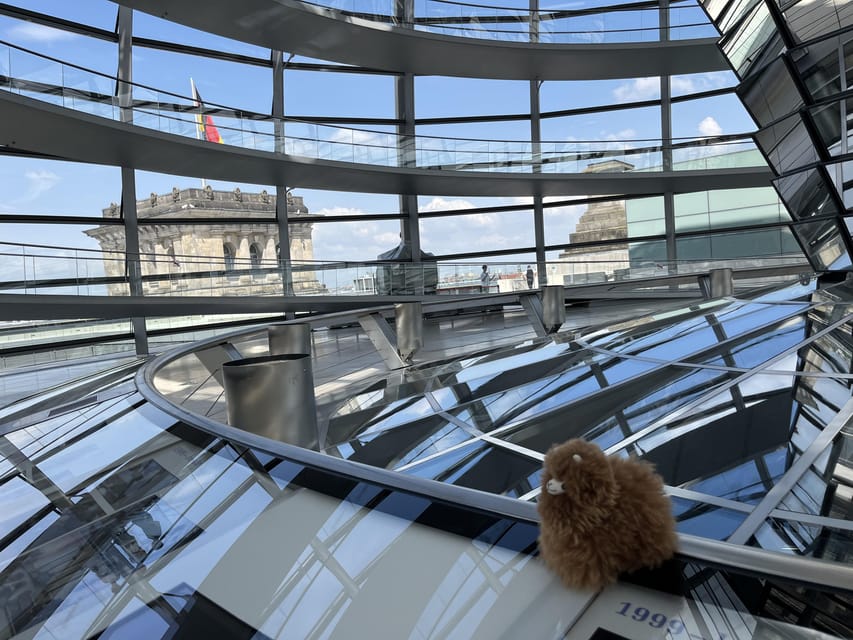
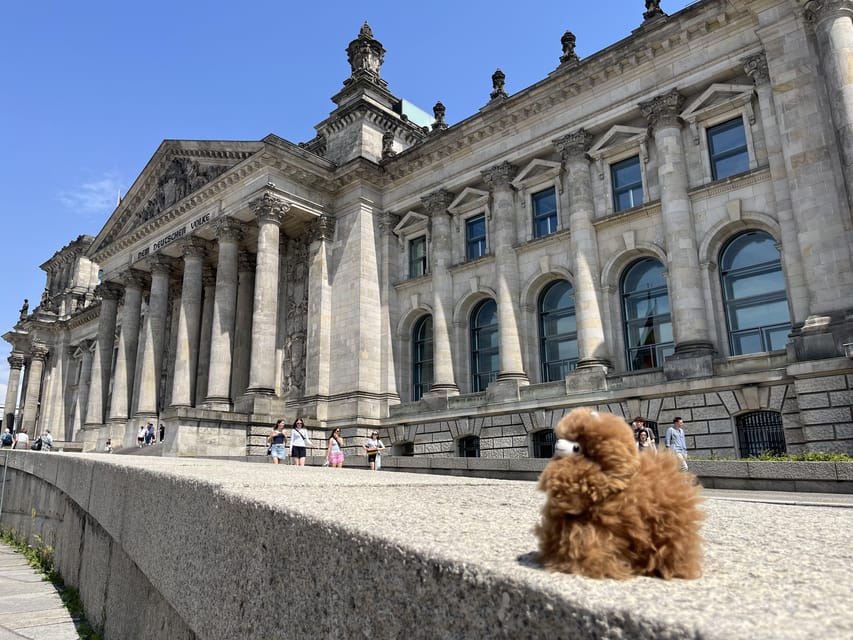
The Reichstag is the first major stop after the Brandenburg Gate. Your guide uses the building to discuss Germany’s political system and the way the Third Reich changed the country’s government. The site helps place Nazi rule within Berlin’s civic center rather than treating it as an isolated military episode.
The description includes a guided tour at the Reichstag, but entrance fees are not part of the package. That distinction matters. You should confirm before booking exactly what access is planned, since a guided explanation outside the building is different from going inside.
Even if the visit remains exterior, the Reichstag is an important stop because it gives shape to the story of power. You can look at the building while hearing how political authority, propaganda, and state control affected everyday life. The guide’s role is especially useful here, since a photograph alone tells you little about the building’s place in twentieth-century events.
Bring your camera, but do not use flash photography inside places where it is restricted. Also remember that the tour is built around walking, not long indoor visits. If you want an extensive Reichstag interior experience, treat that as a separate planning question rather than assuming it is covered by the $224 price.
The Soviet War Memorial in Tiergarten
The route continues to the Soviet War Memorial in Tiergarten. This stop adds an important second viewpoint to the end of the war in Berlin. It is not just another monument. It reflects the Soviet military role in defeating Nazi Germany and the political order that followed.
I value this part of the route because it keeps the story from becoming too narrowly focused on German buildings and Nazi leaders. The memorial helps you think about the final battles, the cost of the war, and the presence of Soviet power in postwar Berlin.
Your guide can also connect the memorial to the wider changes in the city. Berlin did not move directly from war to normal life. It became a divided city shaped by competing political systems, and this stop gives that transition a physical marker.
The memorial is outdoors, so weather matters. A rainy day will not make the history less important, but it can make a three-hour walk feel much longer. Wear shoes with solid support and bring water. The activity advises weather-appropriate clothing, and that is practical advice rather than a formality.
The Holocaust Memorial asks for quiet attention
The Memorial to the Murdered Jews of Europe is one of the tour’s most serious stops. Its field of concrete slabs creates a physical setting for discussing the persecution and murder of Europe’s Jews under Nazi rule.
Your guide’s explanation is the main value here. Walking through the memorial without context can leave you with an impression of scale and unease, but not necessarily a clear understanding of the history. The tour is designed to connect the place to the policies, decisions, and human consequences behind it.
I recommend giving this stop your full attention. Take photographs only with care and respect, and follow any rules in nearby memorial spaces. Flash photography is not permitted inside certain landmarks, and food and drinks are not allowed during the tour.
This is also where the private format can help. You can ask a sensitive question quietly, request clarification, or pause over a point that needs more thought. A large group may move on quickly. With a private group, the pace can be more responsive, although the three-hour schedule still limits how long you can spend at each site.
Same city, a completely different kind of day:
- Berlin: Reichstag, Dome and Government District Guided Tour
★ 4.7 · 18,288 reviews - Berlin: 1-Hour City Tour by Boat with Guaranteed Seating
★ 4.3 · 16,993 reviews - Berlin: Boat Tour Along the River Spree
★ 4.4 · 11,252 reviews - Discover Berlin Half-Day Walking Tour
★ 5.0 · 9,624 reviews
Hitler’s Bunker site and the limits of what remains
The former site of Hitler’s Bunker is one of the most frequently sought locations on this route. The important practical point is that you are visiting a historical site in the modern city, not a preserved dramatic interior. The tour uses the location to explain the final days of the Nazi regime and the collapse of Hitler’s government.
This stop is valuable partly because it strips away the mythology that can surround famous dictators. The bunker site is tied to the end of a destructive regime, but the place itself does not offer a grand museum-style spectacle. Your guide’s account gives the location meaning.
I would approach this stop as a lesson in context, not as a photo opportunity. The activity encourages photography, but the subject calls for restraint. The goal is to understand how Berlin’s war ended and how the city dealt with the physical and political remains afterward.
The exact sites can vary according to weather, time of year, and your group’s preferences. That flexibility may be useful, but it also means you should not assume every stop will receive identical treatment on every departure.
Topography of Terror and the Nazi police state
The Topography of Terror is the tour’s strongest link to the institutions that enforced Nazi rule. The site focuses attention on the machinery of persecution and repression, rather than only on the most famous leaders or battle scenes.
Your guide can use this stop to broaden the story. World War II did not come from military decisions alone. It depended on government offices, police power, ideology, and systems that targeted people on a massive scale. That makes this a particularly useful stop if your previous knowledge is centered mainly on battles and dates.
Entrance fees are not included, so ask what portion of the visit is guided and whether you will have time to enter independently. Three hours is enough for a structured overview, but not enough for an exhaustive museum visit if you also want to read every display.
The stop also helps explain why Berlin’s memorials can feel so different from one another. Some mark the dead. Others document institutions, decisions, and perpetrators. Together, they make the city’s treatment of its past more complicated than a simple list of monuments.
Finishing at Checkpoint Charlie
The walk ends at the Wall Museum near Checkpoint Charlie. This brings the story forward from Nazi Germany and World War II to the divided city that followed. It is a logical finish because the postwar settlement shaped Berlin for decades.
Checkpoint Charlie is highly recognizable, but the surrounding area can feel more commercial than the solemn memorials earlier in the route. That contrast is worth noticing. You can finish the tour thinking not only about the war itself, but also about how difficult history is presented in a living city.
The ending is convenient if you want to continue exploring central Berlin afterward. The tour does not include transportation to or from the activity, so you should arrange your own way to the meeting point and onward plans. Since the tour finishes at the Wall Museum area, check your next destination before setting a tight appointment.
Is $224 per person good value?
At $224 per person, this is a costly walking tour. The price makes the most sense for a private group that values personal attention, a chosen language, and the ability to ask questions throughout the route.
The package includes a professional multilingual guide, historical explanations, and a private group. It does not include entrance fees, meals, drinks, or transportation. If the tour remains largely outdoors, you are paying mainly for the guide’s time and interpretation rather than admission to a series of attractions.
For one person or a very small group, the cost may be hard to justify beside a public walking tour. For a family group or several friends sharing a private booking, the value improves because the cost is connected to the group experience, though the stated rate is still per person.
I would book it when you want a focused introduction and do not want to manage a complex route yourself. I would skip it if you prefer to spend hours inside museums, need a low-cost option, or already know Berlin’s twentieth-century history well.
Timing, comfort, and practical concerns
Three hours sounds manageable, but the route includes several outdoor stops and significant walking. Comfortable shoes are essential. Bring water, dress for the forecast, and avoid carrying large bags or luggage that will become tiring as the walk continues.
Children under 10 are not considered suitable for this activity. That age limit makes sense given the serious subject and the amount of walking. Older children may enjoy it if they already have enough background to follow the discussion, but you know your child’s attention span and comfort level best.
There is conflicting information about accessibility. One section describes the activity as wheelchair accessible, while another says it is not suitable for wheelchair users or people with mobility impairments. Contact the provider before paying if this affects your decision, and ask about the exact route, surfaces, and access at each stop.
The tour allows photography, with no flash inside certain locations. Food and drinks are not allowed during the walk. Free cancellation is available up to 24 hours before the start, and you can reserve now and pay later, which helps if your Berlin schedule is still taking shape.
One serious warning deserves space: a verified booking from Australia dated January 2, 2025 reported that the guide did not arrive and requested a full refund. That is a poor experience, and it prevents me from treating the service record as flawless. Other verified bookings were strongly positive, including the praise for Sven’s punctuality and professionalism and a Spanish-language account describing the tour as dynamic and well explained. Keep the provider’s contact details handy on the day and confirm the meeting point if you have any concern.
Who should book this Berlin history walk?
I would recommend it to adults, older teenagers, and history-focused people who want a clear route through Berlin’s Third Reich and wartime sites. The private setting is particularly useful if your group has specific questions or wants explanations in English, German, Russian, French, Spanish, or Italian.
It is also a good fit if you want to connect famous places that can seem scattered on a city map. The guide turns the Brandenburg Gate, Reichstag, memorials, bunker site, and Checkpoint Charlie into one historical sequence.
I would choose another format if you want a relaxed city stroll, extensive museum time, or a tour aimed at young children. The content is heavy, the walking is real, and the high price requires you to care about the subject.
Should you book it?
Book this private tour if personal guidance, a multilingual guide, and a compact route through central Berlin are worth $224 per person to you. Its best feature is the connection between major sites, especially the way the Holocaust Memorial, former bunker site, Topography of Terror, and Soviet War Memorial broaden the story beyond famous names.
Before booking, confirm which landmarks you will enter, how the accessibility issue applies to your group, and who your guide will be. If the price fits your budget and you want a serious introduction to Berlin’s wartime past, this can be a useful first step. If value matters most, compare it with a public walking tour and visit the major museums separately.
FAQ
Where does the tour meet?
You meet next to the Hotel Adlon Kempinski Berlin, near the Brandenburg Gate.
Where does the tour finish?
The tour finishes at the Wall Museum near Checkpoint Charlie.
How long does the tour last?
The tour lasts three hours.
What places are included on the route?
The planned route includes the Brandenburg Gate, Reichstag, Soviet War Memorial in Tiergarten, Holocaust Memorial, Hitler’s Bunker site, Topography of Terror, and the Wall Museum area at Checkpoint Charlie.
Is the tour private?
Yes. It is arranged for a private group.
Which languages are available?
A live guide may provide the tour in English, German, Russian, French, Spanish, or Italian.
Are entrance fees included?
No. Entrance fees to attractions are not included in the tour price.
What should I bring?
Bring comfortable shoes, water, a camera, and clothing suited to the weather. Flash photography is not allowed inside certain landmarks.
Is the tour suitable for wheelchair users?
The activity information is inconsistent. One section describes it as wheelchair accessible, while another says it is not suitable for wheelchair users or people with mobility impairments. Confirm the route and access with the provider before booking.
Just added around Berlin
- Love and War in Berlin: Self-Guided Story Puzzle Walk★ 5.0 · 7 reviews
- Rickshaw Tours Berlin – Groups of up to 16 people with several rickshaws★ 4.0 · 97 reviews
- Walking on the Wall: 3-Hour Tour in Berlin★ 4.5 · 34 reviews
- eSIM for Germany and 34 European Countries★ 4.5 · 16 reviews
- Warnemuende Shore Excursion: Berlin Private Sightseeing Tour from Rostock★ 5.0 · 4 reviews
- Your ticket to The Wall Museum Berlin★ 3.0 · 60 reviews
- Warnemuende Shore Excursion: Private Berlin Tour★ 4.5 · 27 reviews
- Berlin’s Gay, Lesbian, and Queer Scene Small-Group Walking Tour★ 4.5 · 66 reviews
Third Reich & Cold War Tours, compared.



Berlin’s Best: 2 Hour Walking Tour Third Reich and the Cold War
Read our review →

Third Reich Berlin: Hitler and WWII Walking Tour
Read our review →
Skip-the-Line: Berlin Wall Museum at Checkpoint Charlie
Read our review →

Cold War, Berlin Wall, Spies and the East Side Gallery
Read our review →Browse the lists this tour appears in