
Reviewed · THIRD REICH & COLD WAR TOURS
Berlin: Muro,Guerra Fría y Museo de la Stasi
Berlin’s Cold War story becomes clearest when you leave the postcard center and follow the old border through ordinary streets. This four-hour Spanish-language tour links the Berlin Wall and Death Strip with Bernauer Strasse, Frankfurter Allee, former ghost stations, and the Stasi Museum.
I like the way it combines outdoor sites with a serious indoor museum, and I like that guides such as Constantino and Jordi bring in personal anecdotes rather than reciting dates alone. The main drawback is practical: your $41 price does not include the required Berlin AB transport ticket, and the museum admission is included but a guided museum visit is not clearly promised.
In This Review
- Key points to know before booking
- Starting at Alexanderplatz, where the Cold War still feels close
- Bernauer Strasse and the Wall’s most revealing remains
- Seeing the Wall as a border system, not just a painted slab
- Frankfurter Allee and East Berlin’s planned public face
- Former ghost stations and the strange logic of divided transport
- Inside the Stasi Museum, where surveillance became routine
- What the guides add to a difficult subject
- Is $41 a fair price for four hours?
- Practical details that shape the day
- Who should book this Berlin Cold War tour?
- Should you book it?
- FAQ
- Is the tour conducted in Spanish?
- How long does the tour last?
- Is the Stasi Museum admission included?
- Is the Stasi Museum visit fully guided?
- Do I need to buy public transport tickets?
- Where is the meeting point?
- Is the tour wheelchair accessible?
Key points to know before booking
- Bernauer Strasse shows the Wall as a real border: You see surviving sections, the former Death Strip, and the places where escape attempts unfolded.
- The Stasi Museum adds the human cost: Its displays explain how East Germany’s secret police monitored and controlled daily life.
- Public transport is part of the plan: You must buy a Berlin AB day ticket separately before or during the tour.
- The ghost stations are a historical lesson: Former underground stops reveal how Berlin’s divided transport system affected ordinary movement.
- Spanish is the working language: Guides including Constantino and Jordi have been praised for clear, detailed explanations and lively anecdotes.
- The tour suits history-minded visitors: It gives you a focused Cold War framework rather than a general city sightseeing circuit.
Starting at Alexanderplatz, where the Cold War still feels close
The meeting point is beside the only entrance to the Fernsehturm, Berlin’s television tower, at Alexanderplatz. Look for the green flag marked tours en español, next to Espresso House and between the tower and Alexanderplatz railway station.
That location is easy to reach, but Alexanderplatz can be confusing because of the train station, shopping areas, and tower entrances. Give yourself extra time. The green flag is the useful landmark, not a particular shop sign that could change.
Beginning here makes sense. Alexanderplatz was the showcase center of East Berlin, and the Fernsehturm was built to project the power and modernity of the socialist state. You are not simply starting at a convenient square. You are starting in a place where architecture and politics were tightly linked.
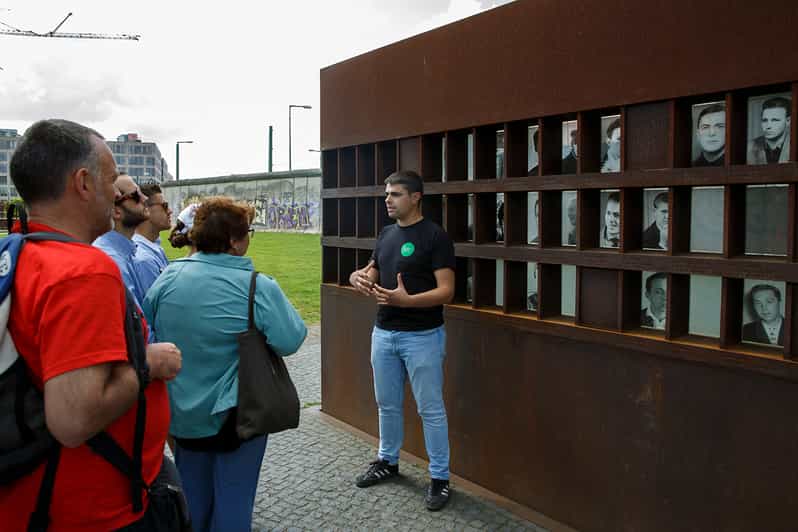
The tour lasts four hours, so expect a brisk half-day with several changes of scene. The guide leads in Spanish, making this a strong choice if you want complex political history explained in your most comfortable language. Reviews praise the guides for being open to questions, detailed, and engaged. Constantino is singled out for his enthusiasm and anecdotes, while Jordi is praised for his competence and commitment.
More Third Reich & Cold War Tours in Berlin
- Berlin: Third Reich and Cold War 2 Hour Walking Tour
★ 4.9 · 6,830 reviews - Berlin’s Best: 2 Hour Walking Tour Third Reich and the Cold War
★ 5.0 · 5,486 reviews - Third Reich Berlin: Hitler and WWII Walking Tour
★ 5.0 · 3,301 reviews
Bernauer Strasse and the Wall’s most revealing remains
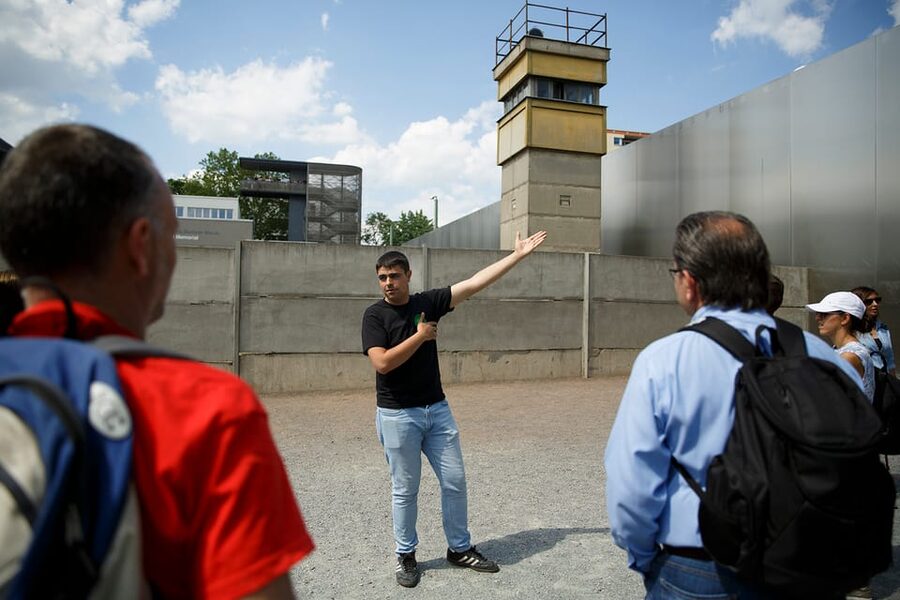
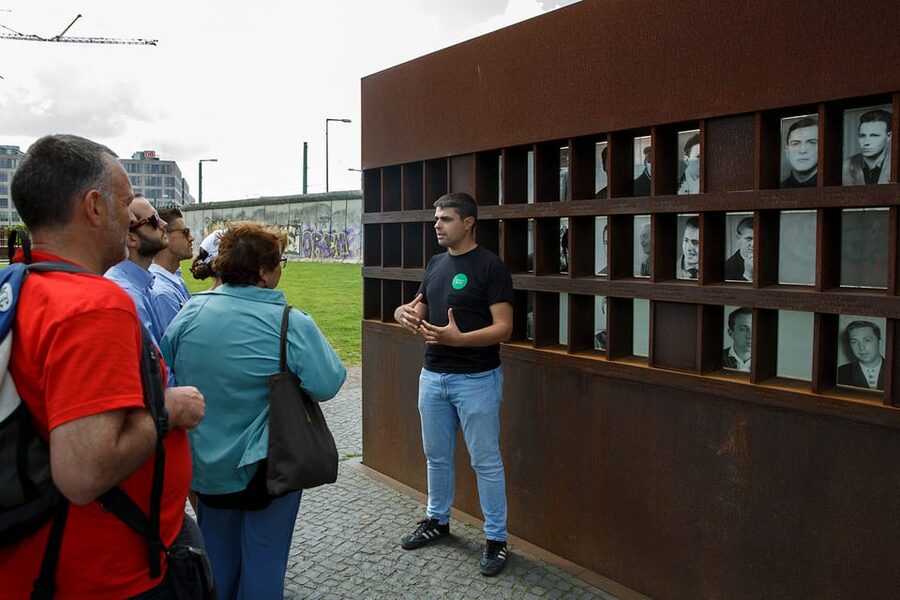
Bernauer Strasse Wall Memorial is the emotional center of the outing. Here, the Wall did not simply run across an empty field. It cut through a lived-in neighborhood, separating homes, families, streets, and sidewalks.
The site helps you understand why the Berlin Wall was so shocking. Some apartment buildings stood on one side of the border while their entrances or windows faced the other. The physical division was reinforced with fences, watchtowers, patrol routes, and the open strip between barriers.
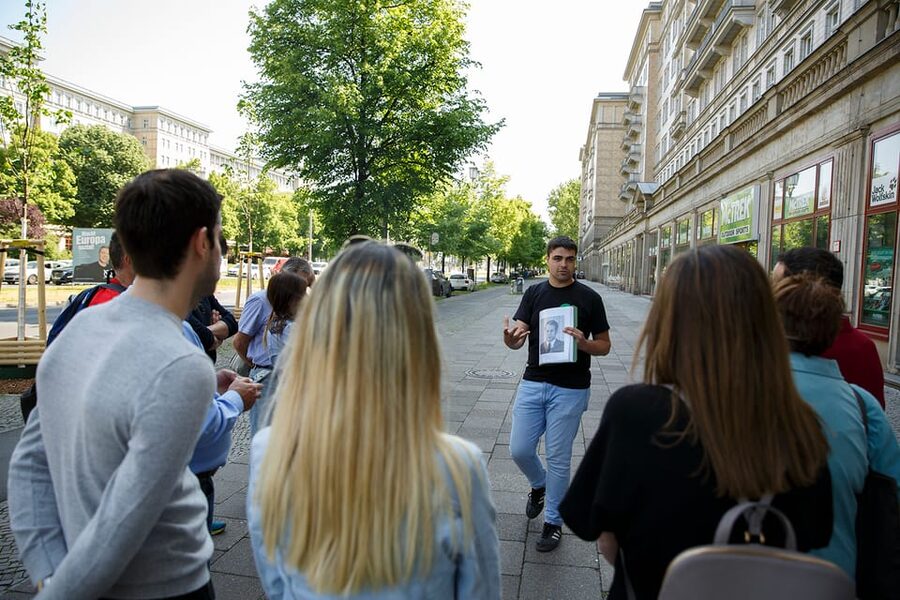
This is where the phrase Death Strip becomes more than a textbook term. The border zone was designed to prevent escape, not to welcome passage. You learn how the system worked and hear about the inventive ways some Berliners tried to cross it. The focus is not just on famous escape stories. It is also on the constant pressure placed on people who lived beside the border.
I value Bernauer Strasse because it gives you space to connect political decisions with individual lives. The Wall was ordered by a government, but its effects were felt by people trying to visit relatives, reach work, attend school, or remain in their own neighborhood.
You should expect an outdoor portion here, so wear shoes suitable for walking and dress for Berlin’s weather. The tour is listed as wheelchair accessible, but the route still includes several historical sites and public transport connections. If mobility is a major concern, it is sensible to confirm the exact route and vehicle arrangements before booking.
Seeing the Wall as a border system, not just a painted slab
Many first-time visitors see the East Side Gallery and think of the Wall mainly as a long stretch of concrete covered with murals. Those paintings are worth seeing, but this tour presents a different side of the border.
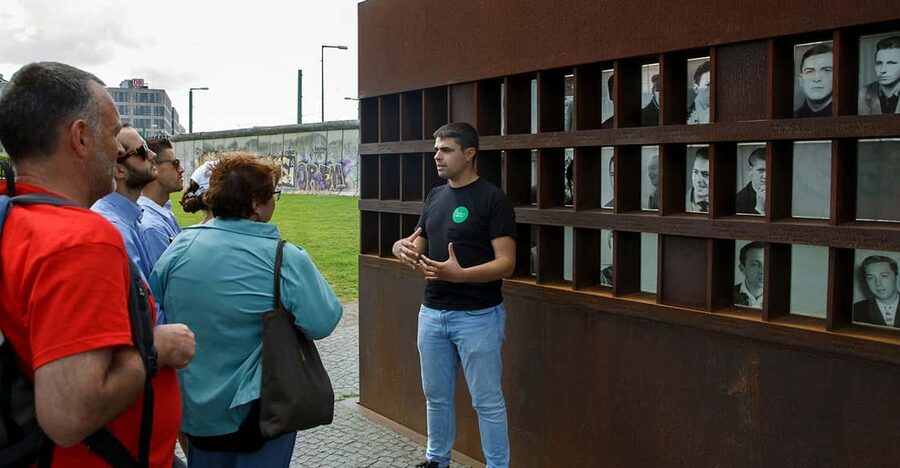
You examine what remains of the Wall and the Death Strip, then place those remains within the larger security system. The guide explains why the Wall was built, how it divided Berlin, and what it took to cross it. That context matters because a surviving section of concrete can otherwise look like a leftover construction barrier.
The most useful part of a guided visit is learning to read the empty spaces. A patch of open ground, a rebuilt street, or a line of preserved foundations can carry more meaning once you know what used to be there. The Spanish explanations help you follow the chain of events without stopping every few minutes to translate a museum panel.
The subject is not light. One French review describes the guide as professional and detailed with a difficult topic. That is exactly the right expectation. This is not a cheerful city walk with a few Cold War anecdotes added for color. It deals with surveillance, restricted movement, escape attempts, fear, and state control.
At the same time, the tour also explains the Wall’s eventual fall and the changes in Berlin afterward. You get a sense of the city as a place that has had to rebuild connections, streets, and everyday life after decades of division.
Frankfurter Allee and East Berlin’s planned public face
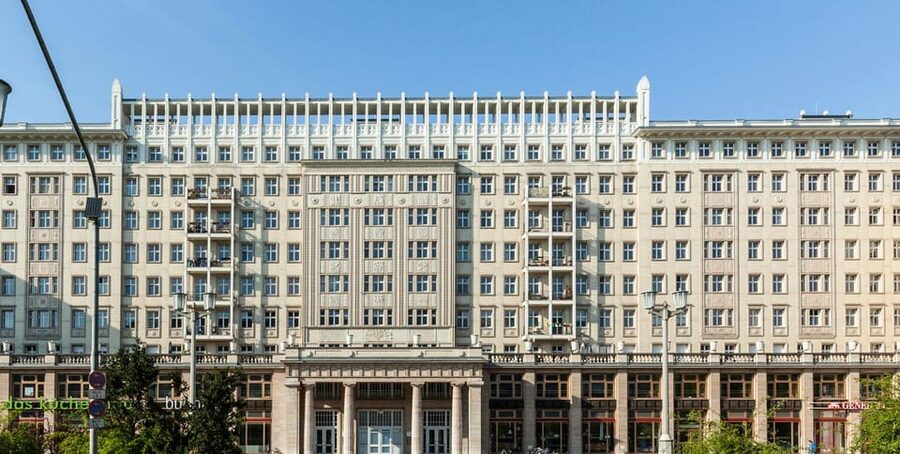
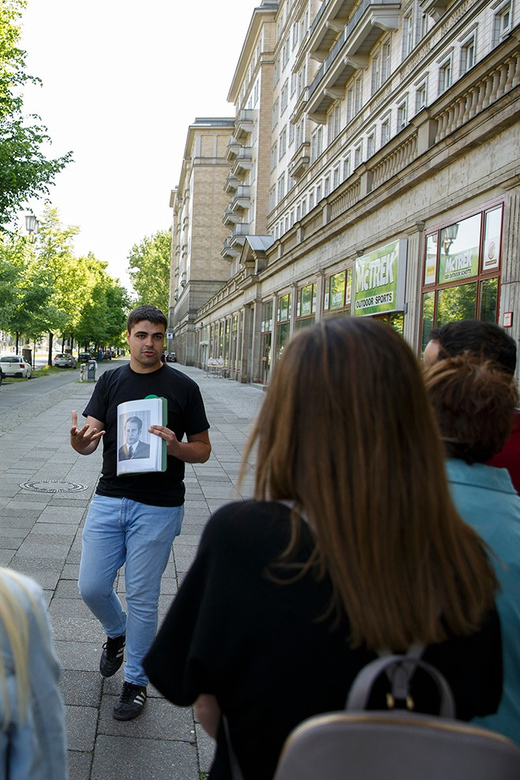
Frankfurter Allee offers a different view of East Berlin. Instead of concentrating only on the border, the tour takes you along a major avenue shaped by socialist planning and official ambition.
This broad urban setting helps you understand how East Germany wanted its capital to look and function. The avenue was not merely a route through the city. It represented the state’s effort to create a monumental public face, with architecture and planning used to express political ideals.
The value of this stop is contrast. At Bernauer Strasse, you see the hard edge of separation. Along Frankfurter Allee, you consider how the government presented its society to residents and the outside world. The two locations reveal different parts of the same system: control at the border and control of the city’s public image.
Your guide may connect these places through stories and historical detail. That is one reason this tour benefits from a specialist Spanish-speaking guide. The locations themselves do not always explain their full meaning. You need the political background to see why an avenue or housing district belongs in a Cold War tour.
Same city, a completely different kind of day:
- Berlin: Reichstag, Dome and Government District Guided Tour
★ 4.7 · 18,288 reviews - Berlin: 1-Hour City Tour by Boat with Guaranteed Seating
★ 4.3 · 16,993 reviews - Berlin: Boat Tour Along the River Spree
★ 4.4 · 11,252 reviews - Discover Berlin Half-Day Walking Tour
★ 5.0 · 9,624 reviews
Former ghost stations and the strange logic of divided transport
One of the more unusual subjects is Berlin’s former ghost stations. During the city’s division, some underground lines passed through East Berlin while serving routes associated with West Berlin. Trains traveled through certain stations without stopping, leaving platforms dark and inaccessible.
You may not enter every former station, and the supplied details do not promise access behind closed doors. Instead, the tour explains the stations and their role in the divided transport network. That is still valuable because it shows how the Wall reached into routine travel.
A border does not only stop people at checkpoints. It changes how they commute, where they can transfer, and which parts of their own city they can see. A train passing through a dark station is an especially clear image of that strange division.
This section also gives the tour some welcome variety. You move from open memorial grounds and visible Wall remains to the underground infrastructure that carried people beneath the city. If you enjoy unusual urban history, this may be one of the tour’s most memorable parts.
The required AB ticket is important here. Berlin’s public transport zones and ticket types can be confusing, but the activity specifically says you need a one-day AB transport card. It is not included in the $41 price. Buy the correct ticket before setting out, and keep it with you for the full route.
Inside the Stasi Museum, where surveillance became routine
The Stasi Museum is the indoor anchor of the tour. It is located in the former headquarters of East Germany’s Ministry for State Security, and its exhibits focus on the methods used to monitor and control the population of East Berlin.
The museum gives the Cold War story a more personal scale. The Wall controlled movement from the outside, while the Stasi worked inside society through surveillance, files, informants, interrogation, and pressure. The point is not simply that a secret police force existed. You learn how its system reached into ordinary relationships and daily decisions.
Admission to the Stasi Museum is included. However, the activity information does not clearly say that the guide provides a full guided tour inside the museum. One past booking comment shows why you should clarify this before you go: a participant expected the museum visit itself to be guided. Treat the included feature as entry to the museum, with the tour guide explaining the surrounding history and the exact arrangement confirmed at booking.
That distinction matters if you want every exhibit interpreted in Spanish. The museum may require time to read and absorb its material, and the amount of independent museum time can affect how the four-hour schedule feels.
Still, pairing the museum with the Wall sites is a strong choice. You first see the physical machinery of division, then examine the state institutions that enforced obedience behind the border. The two parts reinforce each other without being identical.
What the guides add to a difficult subject
The strongest repeated praise is directed at the guides, not at comfort or entertainment. That tells you what you are paying for. Berlin’s Cold War sites are spread across the city, and you can reach many of them on your own, but connecting them into a clear story takes preparation.
Constantino is described as passionate about his work, with anecdotes woven into the explanation. Jordi has been praised for being highly competent and engaged. Another Spanish-speaking guide was described as very familiar with the subject and kind. These comments point to a tour style that is conversational as well as factual.
You should feel free to ask questions. The guide is presented as available for conversation, and the tour covers a subject that often raises practical questions: How did people cross? Why were certain stations closed? What happened to those who resisted? How did the city change after 1989?
The quality of a guide matters especially here because the physical remains are incomplete. The Wall is gone from many streets. The border may now be marked by a line, a memorial, or nothing obvious at all. A guide helps you recognize what you are seeing and what has disappeared.
The 4.9 rating from 18 reviews is a small sample, so I would not treat it as a guarantee. But the comments are consistent in praising detailed, emotional, and professional explanations. The only clear reservation concerns expectations about the Stasi Museum’s guided portion, not the historical content.
Is $41 a fair price for four hours?
At $41 per person, the tour offers a reasonable value if you want a focused history lesson in Spanish. You are paying for a four-hour route, a live guide, and admission to the Stasi Museum. You are not paying for food, drinks, or public transport.
The extra AB day ticket raises the total cost. That ticket is necessary for the route, so include it when comparing this tour with alternatives. Even with that added expense, the value is solid for someone who would otherwise need to plan several locations, research the background, navigate public transport, and pay museum admission separately.
The value is less obvious if you already know Berlin’s Cold War story well or prefer to move at your own pace. Independent visitors can spend longer at the Stasi Museum, pause at the Wall Memorial, or skip sites that interest them less.
I see this as a good purchase for a first or second visit, especially if Spanish is your preferred language for serious historical subjects. It is less suited to anyone seeking a general overview of Berlin’s monuments, a relaxed café-and-neighborhood walk, or a tour centered on famous photo stops.
Practical details that shape the day
The meeting point is at Alexanderplatz beside the green tours en español flag, next to Espresso House and the Fernsehturm entrance. Because the square is large and busy, arrive early enough to find the exact spot without rushing.
The tour is offered in Spanish and lasts four hours. Starting times vary, so check availability for the date you want. Bring your AB day ticket, since public transport is required and the ticket is not included.
Food and drinks are also not included. Four hours is not a full day, but it is long enough that you may want water and a snack before meeting the group. The itinerary moves through several locations, so comfortable footwear is a sensible choice.
The activity is listed as wheelchair accessible. Since the route uses public transport and includes outdoor memorial areas, confirm the precise accessibility arrangements if you need step-free access throughout.
Free cancellation is available up to 24 hours in advance for a full refund, and you can reserve now and pay later. Those terms help if your Berlin schedule is still shifting, but the main booking decision should be based on the subject and language rather than payment flexibility.
Who should book this Berlin Cold War tour?
I would choose this tour if you want the political and human story of divided Berlin, not just a photograph beside a remaining section of Wall. It is particularly well suited to Spanish-speaking visitors who want detailed explanations and the chance to ask questions in Spanish.
History students, families with older children, and repeat visitors who have already seen central Berlin may find the route especially useful. The combination of Bernauer Strasse, Frankfurter Allee, ghost stations, and the Stasi Museum shows how division affected borders, buildings, transport, and private life.
I would hesitate if you dislike walking between historical sites, need a long unhurried museum visit, or expect a fully guided experience inside the Stasi Museum. You should also remember that the AB transport ticket is an added cost.
Should you book it?
Book this tour if you want a well-organized four-hour introduction to Berlin’s Cold War past with a Spanish-speaking guide who can explain both the famous Wall and the less obvious traces left in streets and underground stations. The Stasi Museum admission strengthens the value, while the guides’ detailed, engaged style is the feature I would care about most.
Before booking, confirm how the museum portion works and budget for the separate AB day ticket. If those details suit you, this is a serious, useful tour that gives Berlin’s divided past a human scale.
FAQ
Is the tour conducted in Spanish?
Yes. The tour includes a live Spanish-speaking guide, and Spanish is the listed language for the experience.
How long does the tour last?
The tour lasts four hours. Starting times vary, so you need to check availability for your chosen date.
Is the Stasi Museum admission included?
Yes. Entrance to the Stasi Museum is included in the activity price.
Is the Stasi Museum visit fully guided?
The information confirms museum entry but does not clearly promise a fully guided museum visit. Confirm the exact arrangement before booking if guided interpretation inside the museum is important to you.
Do I need to buy public transport tickets?
Yes. You must buy a Berlin AB transport ticket separately. A one-day AB transport card is necessary for the tour and is not included.
Where is the meeting point?
Meet beside the only entrance to the Fernsehturm at Alexanderplatz, between the television tower and Alexanderplatz railway station. Look for the green flag marked tours en español, next to Espresso House.
Is the tour wheelchair accessible?
Yes. The activity is listed as wheelchair accessible. Since the route includes public transport and several historical locations, confirm the precise arrangements if you require step-free access throughout.
Just added around Berlin
- Love and War in Berlin: Self-Guided Story Puzzle Walk★ 5.0 · 7 reviews
- Rickshaw Tours Berlin – Groups of up to 16 people with several rickshaws★ 4.0 · 97 reviews
- Walking on the Wall: 3-Hour Tour in Berlin★ 4.5 · 34 reviews
- eSIM for Germany and 34 European Countries★ 4.5 · 16 reviews
- Warnemuende Shore Excursion: Berlin Private Sightseeing Tour from Rostock★ 5.0 · 4 reviews
- Your ticket to The Wall Museum Berlin★ 3.0 · 60 reviews
- Warnemuende Shore Excursion: Private Berlin Tour★ 4.5 · 27 reviews
- Karl-Marx-Allee Tour: Life and Architecture in East Berlin★ 5.0 · 19 reviews
Third Reich & Cold War Tours, compared.



Berlin’s Best: 2 Hour Walking Tour Third Reich and the Cold War
Read our review →

Third Reich Berlin: Hitler and WWII Walking Tour
Read our review →
Skip-the-Line: Berlin Wall Museum at Checkpoint Charlie
Read our review →

Cold War, Berlin Wall, Spies and the East Side Gallery
Read our review →Browse the lists this tour appears in