
Reviewed · THIRD REICH & COLD WAR TOURS
Third Reich & WWII Walking Tour
Munich’s Nazi past comes into sharp focus on this walk through the city center. You follow the story from the movement’s early meetings at the Hofbräuhaus to its failed power grab at Feldherrnhalle, then on to the monumental parade grounds at Königsplatz.
I like the way the tour links political events to real city streets, and I like the attention given to the White Rose resistance in the Hofgarten. Guides such as Josh, Michael, Alex, and Ulrich are praised for clear storytelling, thoughtful answers, and a respectful tone.
The main drawback is physical: this is close to three hours of walking and standing, with only a short chance to sit. Cold weather can make it harder, and one guide may be difficult to hear in busy areas, so wear good shoes and stay close.
In This Review
- Key points at a glance
- Why Munich is the right place for this history walk
- Starting at Marienplatz and setting the postwar scene
- Hofbräuhaus and the party’s early public life
- Feldherrnhalle and the failed power grab
- Königsplatz and the machinery of spectacle
- The Hofgarten and the White Rose resistance
- A serious subject handled with care
- Timing, pace, and what to bring
- Group size and the personal feel
- Is $35.09 a fair price?
- Who should book this Munich walking tour?
- Should you book it?
- FAQ
- Where does the Third Reich and WWII Walking Tour start?
- Where does the tour end?
- How long does the walking tour last?
- Which sites are included?
- Is the tour suitable for children?
- Is food or drink included?
- Can I cancel for a refund?
Key points at a glance
- Follow the Nazi movement’s Munich beginnings: Start at Marienplatz and trace the rise of the party through several central landmarks.
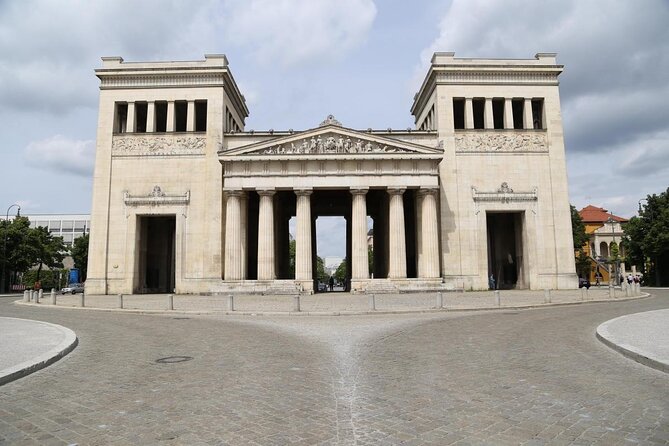
- See the key political sites: The route includes Hofbräuhaus, Feldherrnhalle, Königsplatz, and the Hofgarten.
- Hear more than battle dates: The tour explains the economic and political chaos after World War I and how it helped create an opening for extremism.
- Expect a serious, adult subject: The tour is not recommended for children under 12.
- Plan for nearly three hours outside: Bring water, a small snack, warm clothing, and shoes suited to city walking.
- Check the meeting details carefully: The walk begins at Marienplatz and ends at Königsplatz, but the map pin may not always make the meeting spot obvious.
Why Munich is the right place for this history walk
Munich was not just another German city during the Nazi period. It became the movement’s early home, and many of the places connected with its rise are still part of the modern city.
That contrast gives this tour its force. You may begin among ordinary city life at Marienplatz, then hear how postwar anger, inflation, political violence, and fear shaped Munich after 1918. The tour puts these forces into a local setting instead of treating the period as a string of distant events.
I find that useful because the subject can otherwise feel too large. Names, dates, and military campaigns matter, but this walk concentrates on how the Nazi movement gained a foothold in Bavaria and how Munich became tied to its public image.
The guide does not simply point out old buildings. At each stop, you get the political meaning of the place and the events that took place there. That makes the tour a good first step for you if you know little about the period, while the question-and-answer format gives people with more background room to ask for extra detail.
More Third Reich & Cold War Tours in Munich
- Munich: Third Reich & WWII Walking Tour
★ 4.6 · 6,181 reviews - Third Reich Walking Tour Munich
★ 4.5 · 4,291 reviews - Munich: Birthplace of the Third Reich Guided Walking Tour
★ 4.6 · 771 reviews
Starting at Marienplatz and setting the postwar scene
The meeting point is Marienplatz, Munich’s central square. This is a practical starting point because it is easy to reach by public transportation and puts you directly in the historic center.
The opening section deals with Germany in 1919. The country had lost World War I, public confidence was badly shaken, and Munich was caught in a period of revolution, assassination, and severe inflation. Bavaria’s political uncertainty created fertile conditions for radical groups.
I appreciate this early context. It explains that the Nazi rise was not sudden or inevitable. Your guide connects economic hardship and political fear with the choices made by individuals and institutions. That kind of explanation is more useful than simply labeling Munich the birthplace of Nazism and moving on.
The first part of the walk also sets the tone. This is not a nostalgia tour and not a place for theatrical treatment of the subject. The best guides, including Josh, Michael, and Alex, present the material with energy but also with restraint. Expect a serious discussion of how ordinary hopes and frustrations could be manipulated by a political movement.
Marienplatz can be crowded, especially around the Christmas market season. Stay near the guide and listen for instructions before the group moves. One practical warning: the detailed meeting directions have not always been easy to find, and the map pin may be less useful than the written information. Read your confirmation carefully before setting out.
Hofbräuhaus and the party’s early public life
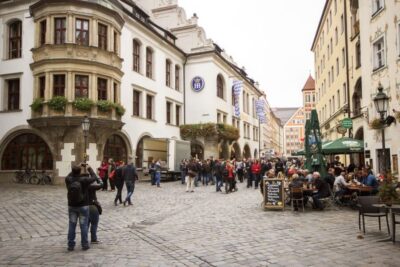
The route continues to the Hofbräuhaus, one of Munich’s best-known beer halls. Here, the tour covers the Nazi movement’s early mass meetings and the way public gatherings helped the party build attention and support.
The value of this stop is not the building alone. You learn how political messages were delivered in places where people already gathered, argued, drank, and searched for answers. The setting helps you picture the movement as a public campaign before it became a dictatorship.
This is also a point where a good guide can make the subject easier to follow. The tour covers a lot in a short time, but guides are encouraged to take questions and explain connections. Alex, in particular, is praised for welcoming discussion while keeping the group moving.
You should not expect a long break at the Hofbräuhaus. Food and drinks are not included, and the walk generally continues without a full meal stop. I would have a bottle of water and a snack in your bag. One hour into a serious walking tour is a poor time to discover that you are hungry.
Feldherrnhalle and the failed power grab
Feldherrnhalle marks one of the tour’s central events: the Nazi attempt to seize power in Munich, which failed. The site gives your guide a chance to explain the movement’s tactics, the role of public spectacle, and what happened when the attempted coup met resistance.
This stop is especially useful because it shows that Hitler’s path to power was not a straight march. The early failure did not end the movement. Instead, the Nazis adjusted their approach and later pursued power through a mixture of elections, propaganda, intimidation, and political deals.
That distinction matters. A short city tour cannot explain every stage of German politics, but this stop gives you a clear example of how a failed attempt could still become part of a larger political strategy.
You will be standing outdoors while the guide speaks, often with other people moving around the site. Several guides are praised for their ability to manage groups in crowded areas, but hearing can still be difficult. If the group is larger than expected, position yourself close to the guide rather than at the back.
Same city, a completely different kind of day:
- From Munich: Neuschwanstein & Linderhof Castle Full-Day Trip
★ 4.5 · 12,494 reviews - Neuschwanstein & Linderhof Castle-Fairytale Day Tour from Munich
★ 4.5 · 7,275 reviews - Dachau Concentration Camp Memorial Site Tour from Munich by Train
★ 4.5 · 5,637 reviews - Neuschwanstein Castle Tour from Munich
★ 4.5 · 5,117 reviews
Königsplatz and the machinery of spectacle
Königsplatz is the final stop and one of the most powerful spaces on the route. The Nazis used this grand setting for mass party rallies, turning architecture and open space into tools of political display.
Your guide explains how the site helped project discipline, unity, and power. The scale is important. A small meeting room can persuade a few people, but a mass rally creates a different feeling, especially when combined with symbols, speeches, uniforms, and carefully planned movement.
The tour ends at Königsplatz 1, near Hitler’s former headquarters. That ending gives the walk a clear shape: you begin in the city center, follow the early movement through its important locations, and finish at the place associated with its later power.
The end point is also useful for the rest of your day. You can continue exploring central Munich from there, and a guide may suggest the nearby documentation museum. Admission is not included, so treat that as a possible follow-up rather than part of the walking tour itself.
The Hofgarten and the White Rose resistance
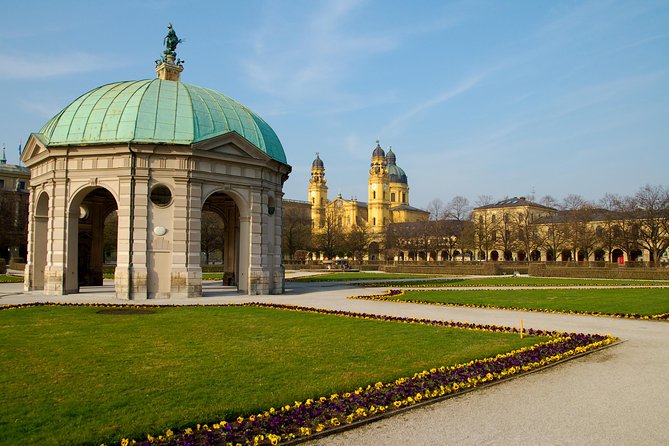
The tour also stops in the Hofgarten to discuss the White Rose resistance movement. This is one of the most important parts of the route because it prevents the story from becoming only an account of Nazi leaders and institutions.
The White Rose group, associated with young Munich students who opposed the regime, offers a different view of life under dictatorship. Here, the focus turns to courage, moral choice, and the risks of speaking against a government that demanded obedience.
I value this section because it adds human scale and moral balance. The tour does not soften the crimes of the Nazi regime, but it also shows that resistance existed. Guides have been praised for allowing quiet moments at difficult sites and then opening the floor for reflection and questions.
This part may be especially meaningful if you have already visited major World War II museums or memorials. It gives you a local example of resistance rather than treating opposition as something that happened only elsewhere.
A serious subject handled with care
The material includes political violence, dictatorship, war, persecution, and the destruction of Munich. It is not light sightseeing, and the operator specifically does not recommend the tour for children under 12.
The presentation depends partly on the individual guide, but the strongest guides use factual storytelling without turning tragedy into entertainment. Josh is repeatedly praised for passion and clear explanations, while Michael is described as approachable and able to answer detailed questions. Alex is noted for balancing information with moments for discussion, and Ulrich is praised for adding useful suggestions for further museum visits.
Guide assignments vary, so you should not book on the assumption that a particular person will lead your walk unless the booking system confirms it. Still, the range of named guides suggests that the experience is built around live interpretation rather than a fixed audio script.
This tour suits you if you want an honest explanation of how authoritarian politics developed in Munich. It may not suit you if you prefer a quick overview with frequent café stops or a lighter sightseeing mood.
Timing, pace, and what to bring
The stated duration is about 2 hours and 45 minutes. Some descriptions call it a 2.5-hour tour, but you should plan for the longer figure and avoid scheduling a tight appointment immediately afterward.
The pace is generally considered manageable, but the route includes substantial walking and standing. One account describes only a short sitting break during a walk lasting about three and a half hours, so allow for variation and prepare for limited rest.
I would bring:
- Comfortable walking shoes
- Water and a small snack
- A warm coat, hat, and gloves in cold weather
- Weather protection for rain
- Your mobile ticket and meeting instructions
Cold conditions have not stopped the guides from delivering the tour, and one guide even allowed the group to warm up briefly. Still, that is not a substitute for dressing properly. Munich weather can make an outdoor history walk feel much longer.
Most people can take part, and service animals are allowed. Hotel pickup and drop-off are not included. The walk uses central Munich locations and is near public transportation, so you will need to make your own way to Marienplatz and continue independently from Königsplatz.
Group size and the personal feel
The tour is advertised as a small-group experience limited to 10 people, which is a real advantage for a subject that benefits from questions and quiet discussion. A small group lets you stay near the guide and makes it easier to hear explanations at crowded sites.
The booking information also gives a maximum of 30 participants. That is worth noticing. Your group may be intimate, but you should not assume that every departure will have only 10 people. The actual size can affect how easily you hear, how quickly the group moves, and how much time the guide has for individual questions.
The guides are generally praised for managing groups well, including in busy periods. If you want the most personal experience, choose a departure that appears to have limited availability, arrive early, and stay close to the guide at each stop.
Is $35.09 a fair price?
At $35.09 per person, this is a reasonable price for nearly three hours with a professional guide in central Munich. You are paying for interpretation, route planning, and the chance to connect several sites that would otherwise look like unrelated city stops.
The value is strongest if you are new to Munich or have only a basic grasp of Germany’s Nazi period. A guide can give you the sequence of events and explain why each location matters, saving you from piecing the story together from plaques and guidebook paragraphs.
The price does not include food, drinks, museum admission, or transportation to and from the walk. That keeps the cost fairly clear, but you should budget separately if you want to visit the documentation museum after the tour.
I would consider it good value for a history-focused morning or afternoon. It is less useful if you already know Munich’s major Nazi-era sites in detail and prefer to explore at your own pace.
Who should book this Munich walking tour?
I would recommend it to:
- First-time visitors who want context for Munich’s modern history
- People interested in the rise of Hitler and the Nazi Party
- Visitors who want to understand local resistance, including the White Rose
- Students and adults who learn better from a person than from a museum label
- Anyone comfortable walking outdoors for nearly three hours
I would think twice if you have mobility limits that make prolonged standing difficult, need regular meal breaks, or are traveling with young children. The operator does not recommend it for children under 12, and the subject matter is heavy even for older children.
You also need to accept that this is a city walk, not a museum tour. Many of the places are open public spaces, and the meaning comes from the guide’s explanation rather than from large indoor displays.
Should you book it?
Book this tour if you want Munich’s Nazi past explained through the actual streets where important events unfolded. The route covers the Hofbräuhaus, Feldherrnhalle, Königsplatz, and Hofgarten, while also connecting them to the political conditions that allowed the Nazi movement to grow.
The strongest reason to go is the quality of the live storytelling. Guides such as Josh, Michael, Alex, and Ulrich are praised for clear delivery, thoughtful answers, and respectful handling of painful events. The main tradeoff is the walking time, outdoor exposure, and possible crowd noise.
For most history-minded visitors, I would book it early in a Munich stay. You will leave with a clearer map of the city and a better sense of which museums or memorial sites deserve more of your time.
FAQ
Where does the Third Reich and WWII Walking Tour start?
The tour starts at Marienplatz in Munich, Germany. Check the written meeting instructions carefully because the map location may not always make the precise meeting point clear.
Where does the tour end?
The tour ends at Königsplatz 1, near Hitler’s former headquarters.
How long does the walking tour last?
The stated duration is approximately 2 hours and 45 minutes. You should allow close to three hours because the route involves several stops and outdoor explanations.
Which sites are included?
The route includes Marienplatz, Hofbräuhaus, Feldherrnhalle, Königsplatz, and the Hofgarten. The tour discusses the White Rose resistance movement and Munich’s role in the rise of Nazism.
Is the tour suitable for children?
The tour is not recommended for children under 12 because of the serious subject matter.
Is food or drink included?
No. Food and drinks are not included, and it is sensible to bring water and a snack because there is little time for a full break.
Can I cancel for a refund?
Yes. You can cancel at least 24 hours before the experience start time for a full refund. Cancellations or changes made less than 24 hours before the start time are not accepted for a refund.
More Walking Tours in Munich
- Munich: Old Town & Viktualienmarkt City Walk in German
★ 4.7 · 2,304 reviews - Munich: Night Watchman Walking Tour
★ 4.7 · 2,092 reviews - Munich Ghosts and Spirits Evening Walking Tour
★ 5.0 · 1,900 reviews - Munich Old Town Walking Tour
★ 4.5 · 1,287 reviews
Just added around Munich
- Pub crawl incl. Oktoberfest museum guided tour with beer tasting (private)★ 5.0 · 5 reviews
- South Tyrolean specialties and wine tasting★ 5.0 · 5 reviews
- Size Matters Beer Tour Munich★ 4.6 · 105 reviews
- Short & sweet: Tasting the Viktualienmarkt★ 4.8 · 37 reviews
- Secret Food Tours Munich★ 4.8 · 5 reviews
- Munich: Romantic Wine Experience for Two at Viktualienmarkt★ 4.2 · 14 reviews
- Munich: Resistance against Hitler – Historical Walking Tour★ 5.0 · 5 reviews
- Residence of Munich private tour with skip the line ticket★ 5.0 · 4 reviews
Third Reich & Cold War Tours, compared.
Berlin’s Best: 2 Hour Walking Tour Third Reich and the Cold War
Read our review →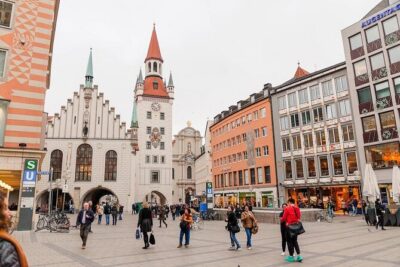
Third Reich Berlin: Hitler and WWII Walking Tour
Read our review →
Skip-the-Line: Berlin Wall Museum at Checkpoint Charlie
Read our review →
Cold War, Berlin Wall, Spies and the East Side Gallery
Read our review →Browse the lists this tour appears in