
Reviewed · WALKING TOURS
Small Group Walking Tour of East Berlin with a French Guide
The most moving part of this tour is the visit to the Berlin Wall Memorial on Bernauerstrasse, where you see an original section of the Wall and the former death strip. This is not just a stroll past painted concrete. Your French-speaking guide explains escape tunnels, failed attempts, and the human cost of a border that split families and a city.
I like the route for two reasons: it connects several major East Berlin sights in one morning, and it uses public transport and walking to show how the city fits together. Guides named Paul and Stéphane have been praised for being both warm and clear. The main consideration is the pace: three hours on foot, plus an S-Bahn ride, calls for comfortable shoes and a moderate level of fitness.
In This Review
- Key points to know before booking
- Why this East Berlin walk is worth your morning
- Starting at Potsdamer Platz and riding to a ghost station
- Bernauerstrasse and the real cost of the Wall
- Alexanderplatz and the protests that changed East Berlin
- East Side Gallery and the Wall after 1989
- What the French guide adds
- The walking pace, timing, and practical tradeoffs
- Who will get the most from this tour
- Final verdict: book it for context, not just photographs
- FAQ
- How long does the East Berlin walking tour last?
- Where does the tour start?
- Where does the tour end?
- Is the tour conducted in French?
- Is public transportation included?
- What sights are included?
- What is the cancellation policy?
Key points to know before booking
- The Berlin Wall Memorial is the emotional center: You’ll see an original section of the Wall, the death strip, and the ground tied to escape attempts.
- The route begins at Potsdamer Platz: You then take the S-Bahn to Nordbahnhof, one of Berlin’s former ghost stations.
- French is the working language: The guide brings political events and everyday life in Communist East Berlin together in clear spoken explanations.
- Alexanderplatz connects protest with change: You’ll learn how peaceful demonstrations challenged the East German state in 1989.
- The finish is the East Side Gallery: Its 104 murals include the famous Brezhnev and Honecker kiss.
- You need an AB public transport day card: Transport is not included, and the tour ends near the East Side Gallery rather than returning to Potsdamer Platz.
Why this East Berlin walk is worth your morning
Berlin’s Cold War story can feel scattered. One section of Wall is here, a former border crossing is there, and a socialist boulevard lies several train stops away. This tour gives those pieces a sensible order.
You begin at Potsdamer Platz, once divided by the Wall and now one of the city’s modern business and entertainment areas. From there, the group takes the S-Bahn to Nordbahnhof. That short ride matters because it places you in the geography of divided Berlin before the serious walking begins.
The tour then moves through the Berlin Wall Memorial, Alexanderplatz, and the East Side Gallery. Each stop covers a different part of the story: the physical border, life under East German rule, the public protests that helped bring down the system, and the artistic afterlife of the Wall.
At $27.91 per person, the price is appealing for a three-hour guided visit in a major European capital. You are paying mainly for the guide’s interpretation and for a route that would take more planning to assemble on your own. You still need to buy the AB day card and cover your own food and drinks, so factor in that modest extra cost.
A few more Berlin trips to weigh up
- Discover Berlin Half-Day Walking Tour
★ 5.0 · 9,624 reviews - Berlin: Third Reich and Cold War 2 Hour Walking Tour
★ 4.9 · 6,830 reviews - Berlin: Discover Berlin Walking Tour
★ 4.9 · 5,998 reviews
Starting at Potsdamer Platz and riding to a ghost station
The meeting point is Potsdamer Platz 10, with a 10:00 a.m. start. Be on time. The group heads to Nordbahnhof by S-Bahn, and the train ride is part of the lesson rather than dead time between attractions.
Nordbahnhof was one of Berlin’s ghost stations. After the Wall went up, certain stations on lines running through West Berlin were closed to East Berlin residents. Trains passed through without stopping, with platforms watched and sealed off. The station remained closed for nearly 30 years.
The stop itself lasts about 10 minutes and admission is free. You will not spend a long period inside a museum here. Instead, the guide uses the station and the journey to explain how division worked in daily life. This is a useful opening because it shows that the Wall was not only a concrete barrier. It affected trains, streets, addresses, workplaces, and simple routines.
You need a public transportation day card for zones AB. That ticket is not included, and transportation to and from the attractions is your responsibility. Since the tour uses the S-Bahn and begins and ends in different parts of Berlin, a day card is more practical than treating the transport as two isolated rides.
Bernauerstrasse and the real cost of the Wall
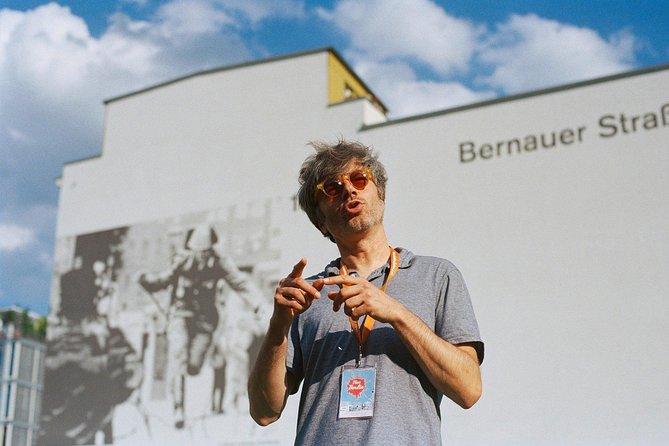
The longest and most serious stop comes at the Berlin Wall Memorial on Bernauerstrasse. Plan on about 50 minutes here. Admission is free, but the value comes from the guide’s explanation and from seeing an original part of the border zone in its proper setting.
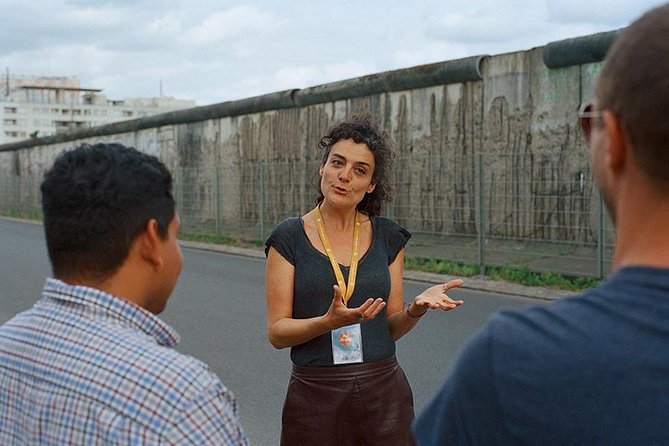
This section preserves part of the former death strip, the open no-man’s land between barriers. Your guide explains the guard system, escape attempts, and tunnels dug beneath the border. The subject is difficult, but the walk gives the facts a human scale.
Bernauerstrasse was especially painful because the Wall ran directly beside homes and along a street where neighbors had once lived close together. Accounts of people trying to flee, and of those who died because of the Wall, make this stop far more serious than a quick photograph at a remaining slab of concrete.
I appreciate that the tour spends most of its time here. The East Side Gallery is more colorful and easier to enjoy, but Bernauerstrasse explains why the Wall mattered. It also keeps the political story tied to ordinary people. You are not only hearing about Cold War leaders. You are learning what their decisions did to people trying to work, visit family, or leave.
The emotional weight may not suit every morning in Berlin. If you want a light sightseeing walk, this section can feel heavy. That is also its purpose. The guide is expected to discuss repression, failed escapes, and deaths plainly, without turning the subject into a postcard.
Alexanderplatz and the protests that changed East Berlin
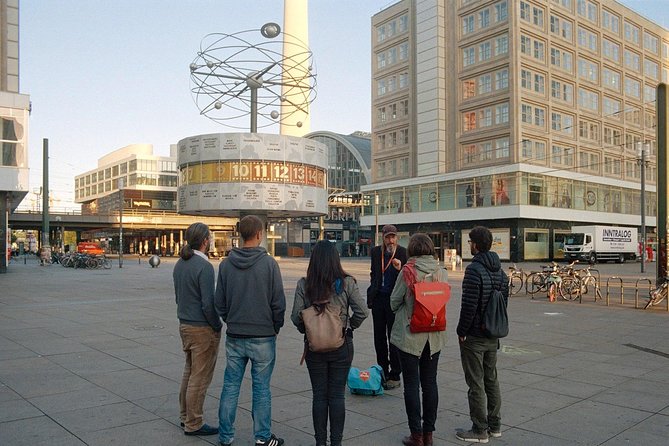
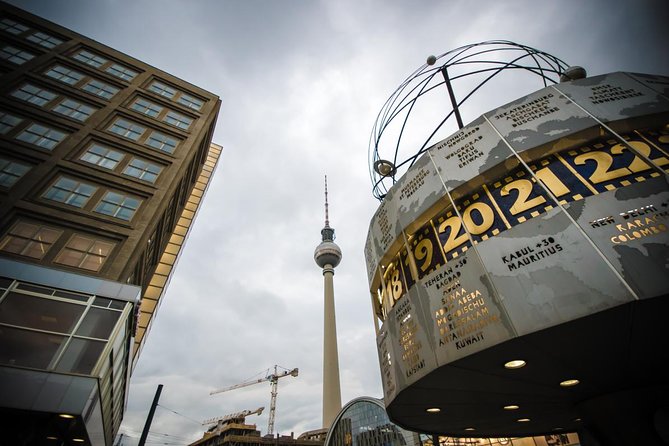
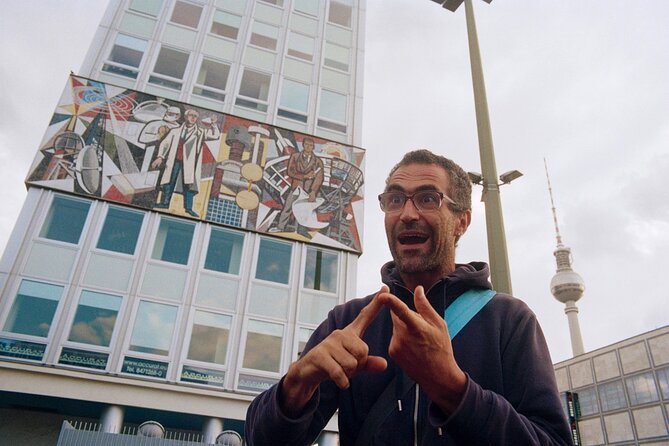
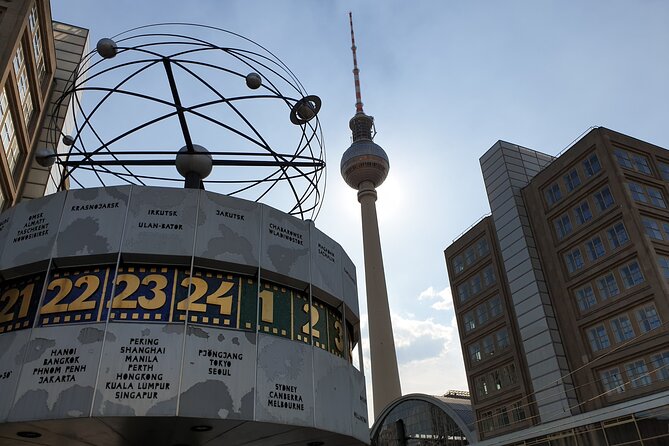
From the Wall Memorial, the route continues to Alexanderplatz, with about 20 minutes in front of some of the best-known buildings of socialist Berlin. The square is large, open, and busy with city life, but the tour asks you to picture it during the last months of East Germany.
Here, the focus shifts from the border itself to political resistance. Your guide explains how peaceful demonstrations challenged the East German government and its secret police, the STASI. Those protests helped set in motion the collapse of the Wall and the breakup of the Soviet-led Eastern European system.
This is one of the tour’s strongest links between place and event. Alexanderplatz was not simply a backdrop for political change. It became a public stage where people gathered and showed that fear of the state was beginning to weaken.
A short stop works well here because the purpose is context, not a full architectural tour. You learn how socialist planning shaped the square and how public protest changed its meaning. If you want a long look at every building, 20 minutes will feel brief. If you want a clear explanation of why Alexanderplatz matters, the time is enough.
The guide’s role is particularly important at this point. Dates and political names can blur together, but a good explanation ties the demonstrations to the streets around you. French-speaking guides Paul and Stéphane have been singled out for clear, lively teaching, and that style suits a stop where the political background could otherwise become a list of facts.
Same city, a completely different kind of day:
- Berlin: Reichstag, Dome and Government District Guided Tour
★ 4.7 · 18,288 reviews - Berlin: 1-Hour City Tour by Boat with Guaranteed Seating
★ 4.3 · 16,993 reviews - Berlin: Boat Tour Along the River Spree
★ 4.4 · 11,252 reviews - Berlin: Hop-on Hop-off Bus Tour with Live Commentary
★ 4.3 · 8,579 reviews
East Side Gallery and the Wall after 1989
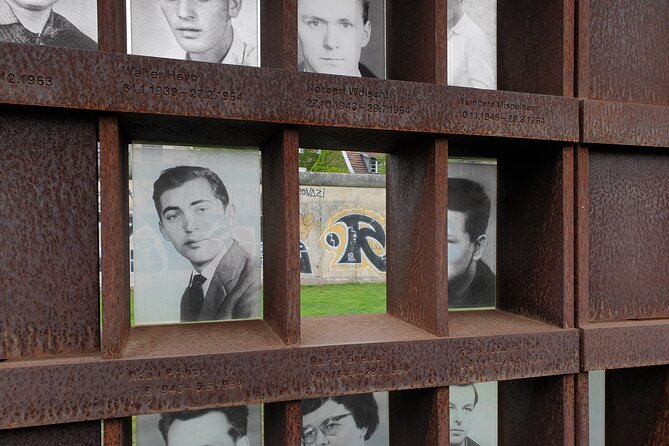
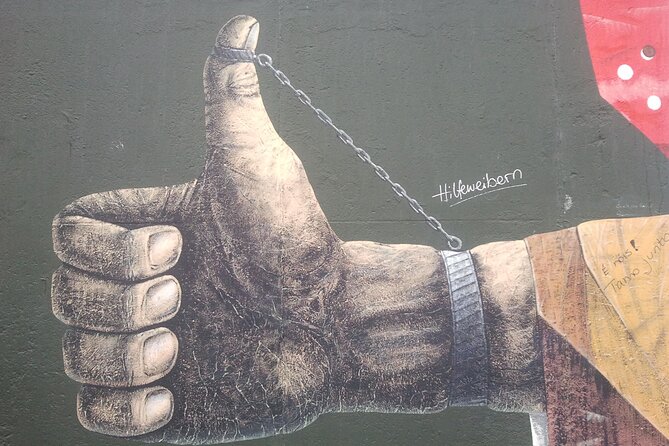
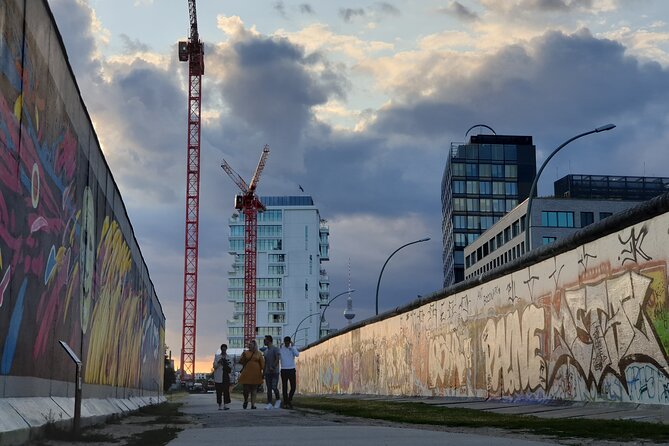
The final stop is the East Side Gallery, the most famous painted stretch of the Berlin Wall. You’ll see 104 murals over a long surviving section, including the well-known image of Leonid Brezhnev kissing Erich Honecker.
This is a sharp change in mood from Bernauerstrasse. At the memorial, the Wall represents control and death. At the East Side Gallery, the same structure became a public canvas and a symbol of the city’s changed identity.
The stop lasts about 15 minutes. That is enough to reach the best-known images and hear why the gallery matters, but it is not a full art walk. If you want to inspect all 104 murals, take photographs, or return for a slower look, plan extra time after the tour.
The ending near Mühlenstrasse and Straße der Pariser Kommune is practical. You finish in the Friedrichshain area, with the Wall already around you, rather than back at the starting point. That makes the tour useful as a first part of a day in eastern Berlin. You can continue exploring independently, though no return transport or hotel drop-off is provided.
What the French guide adds
This is a French-language tour, so it makes the most sense if you want complex political events explained in French rather than simply read from signs. The guide handles the connection between the Cold War, the East German state, the Wall, and daily life under Communist rule.
The strongest praise has focused on clear and interesting historical explanations. One French-language comment describes Paul as both friendly and educational. Another points to the way the route uses three major parts of the city to explain both international conflict and individual lives. Stéphane is also thanked for telling the story with energy and providing a large amount of information.
Those details matter because the tour has only three hours. You need a guide who can choose the useful facts and keep the story moving. A guide who only recites dates would make the walk tiring. A guide who puts every event into a simple political slogan would leave out the people who lived through it.
The group can include up to 25 people. That is still small enough for a walking tour, though it is not a private experience. Your ability to hear the guide may depend on where you walk within the group, so staying reasonably close is wise.
The walking pace, timing, and practical tradeoffs
The advertised duration is about three hours, beginning at 10:00 a.m. The listed stops add up to roughly 95 minutes, with the remaining time used for walking, the S-Bahn ride, and explanations along the route. That is a sensible pace for covering several districts without turning the morning into a race.
You should wear comfortable shoes. The activity requires a moderate level of physical fitness, and you will be walking between major stops rather than riding from door to door. The itinerary does not list long stair climbs or strenuous terrain, but you should still be comfortable standing and walking for most of the morning.
Bring water if you need it. Food and drinks are not included, and the tour does not provide hotel pickup or drop-off. Service animals are allowed, and the route is near public transportation.
The mobile ticket makes arrival simple, but the meeting point still deserves attention. Potsdamer Platz is a large, well-known area, so check the exact address before leaving your hotel. The end point is near the East Side Gallery and is not the same as the start.
Free cancellation is available up to 24 hours before the start time for a full refund. Changes or cancellations inside that 24-hour window are not accepted for a refund. Berlin’s local time controls the deadline.
Who will get the most from this tour
I would choose this walk if you want the political story of Berlin explained in French and prefer seeing places in person to spending a whole morning indoors. It is especially useful for a first visit, since the route links four important stops without requiring you to plan the connections yourself.
It suits adults and older children who can handle a serious subject and several hours of walking. The Bernauerstrasse stop includes deaths, escape attempts, and political repression, so it is not designed as a playful family attraction.
You will also like it if you want more than a photograph of the Wall. The East Side Gallery is the most visually familiar stop, but the memorial and Nordbahnhof give you the harder facts. Together, they show both the machinery of division and the way Berlin later reclaimed the Wall.
I would look elsewhere if you want a private guide, a museum-heavy tour, or a tour conducted in English. A group of up to 25 people may feel less personal than a private walk, and the tour does not include museum admission because the main stops are free outdoor sites.
Final verdict: book it for context, not just photographs
Book this tour if you want a compact, French-language introduction to East Berlin’s Cold War story. At $27.91, it offers good value for a guided three-hour route covering Nordbahnhof, the Berlin Wall Memorial, Alexanderplatz, and the East Side Gallery.
The best reason to book is the balance between places and explanation. You see the Wall, learn how the border shaped daily life, connect Alexanderplatz with the 1989 protests, and finish with the murals that changed the meaning of the Wall. Just budget for an AB public transport day card, wear good shoes, and expect a serious discussion at Bernauerstrasse.
FAQ
How long does the East Berlin walking tour last?
The tour lasts approximately three hours and begins at 10:00 a.m.
Where does the tour start?
It starts at Potsdamer Platz 10, 10785 Berlin, Germany.
Where does the tour end?
The tour ends near Mühlenstraße and Straße der Pariser Kommune, close to the East Side Gallery.
Is the tour conducted in French?
Yes. The experience includes a French-speaking local guide.
Is public transportation included?
No. You need to buy your own public transportation day card for zones AB. The route uses the S-Bahn between Potsdamer Platz and Nordbahnhof.
What sights are included?
The route includes Nordbahnhof, the Berlin Wall Memorial on Bernauerstrasse, Alexanderplatz, and the East Side Gallery.
What is the cancellation policy?
You can cancel at least 24 hours before the start time for a full refund. Cancellations or changes made less than 24 hours before the experience are not accepted for a refund.
Just added around Berlin
- Love and War in Berlin: Self-Guided Story Puzzle Walk★ 5.0 · 7 reviews
- Rickshaw Tours Berlin – Groups of up to 16 people with several rickshaws★ 4.0 · 97 reviews
- Walking on the Wall: 3-Hour Tour in Berlin★ 4.5 · 34 reviews
- eSIM for Germany and 34 European Countries★ 4.5 · 16 reviews
- Warnemuende Shore Excursion: Berlin Private Sightseeing Tour from Rostock★ 5.0 · 4 reviews
- Your ticket to The Wall Museum Berlin★ 3.0 · 60 reviews
- Warnemuende Shore Excursion: Private Berlin Tour★ 4.5 · 27 reviews
- Berlin’s Gay, Lesbian, and Queer Scene Small-Group Walking Tour★ 4.5 · 66 reviews
Walking Tours, compared.





Berlin’s Best: 2 Hour Walking Tour Third Reich and the Cold War
Read our review →

