
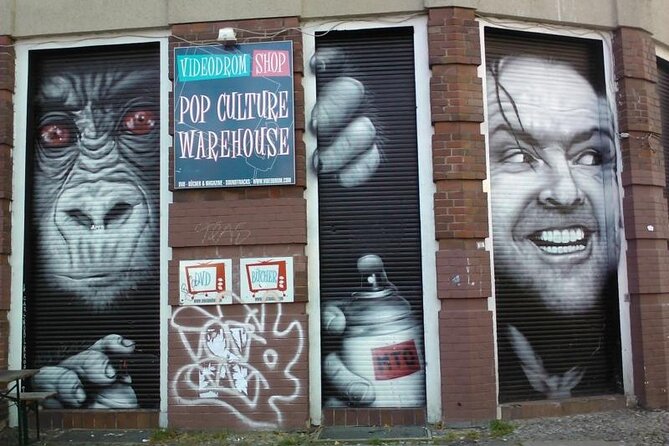
Reviewed · WALKING TOURS
Small-Group 3-Hour Berlin Walking Tour of Kreuzberg ‘s Wild Side
Kreuzberg’s wild side is best understood on foot, where immigrant culture, old courtyards, former squats, clubs, churches, and Berlin Wall stories sit within a few blocks. This three-hour walk traces that change from Kottbusser Tor to Oberbaumbrücke.
I like the small group of up to 12, which gives the guide room to explain local details rather than deliver a speech to a crowd. I also like the planned break at Market Hall Nine, a useful pause in a walk that covers a lot of ground.
The main concern is organization. One booking involved a wait of about 25 minutes for the guide, while another tour was canceled after a BVG strike and the rest of the group failed to appear. Check your meeting details closely and keep some flexibility in your schedule.
In This Review
- Key Details Before You Book
- Why Kreuzberg Makes Such a Good Walking Tour
- Starting at Kottbusser Tor
- SO36 and the Music of Kreuzberg
- Rio-Reiser-Platz and the Courtyard Culture
- Mariannenplatz and Arthouse Bethanien
- Former Squats and the Treehouse Beside the Wall
- The Market Hall Nine Break
- Görlitzer Park and the Final Stretch
- What the $22.45 Price Really Buys
- Who Will Enjoy This Walk Most
- Practical Advice for a Smooth Morning
- Should You Book the Kreuzberg Wild Side Tour?
- FAQ
- How long does the Kreuzberg walking tour last?
- How much does the tour cost?
- Where does the tour start?
- Where does the tour end?
- How many people can join the tour?
- Is food included?
- Is hotel pickup included?
- What happens if the tour does not reach its minimum group size?
Key Details Before You Book
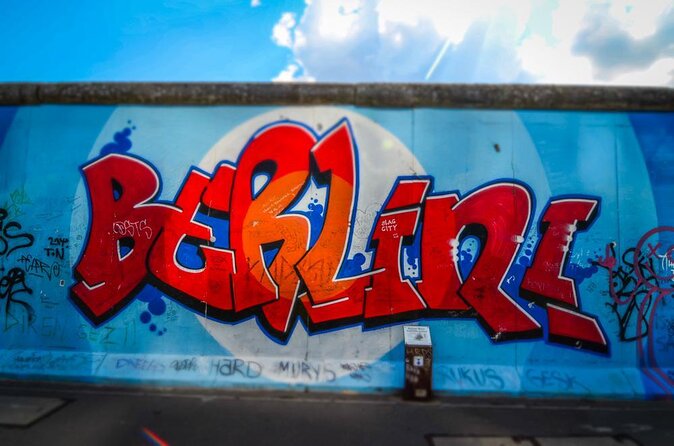
- Kottbusser Tor starting point: You begin at Skalitzer Strasse 137, in one of Kreuzberg’s busiest multicultural areas.
- SO36 and Oranienstrasse: The route focuses on the district’s music, fashion, art, and political past.
- Former squats and Berlin Wall sites: See former house projects, the treehouse beside the Wall, and Arthouse Bethanien.
- Market Hall Nine break: The tour includes a pause at the market hall, though food and drinks cost extra.
- Three-hour walking route: The walk ends at Oberbaumbrücke and does not include hotel pickup.
- Good value at $22.45: The price is modest for a small-group city walk, especially if you want local context rather than only major sights.
Why Kreuzberg Makes Such a Good Walking Tour
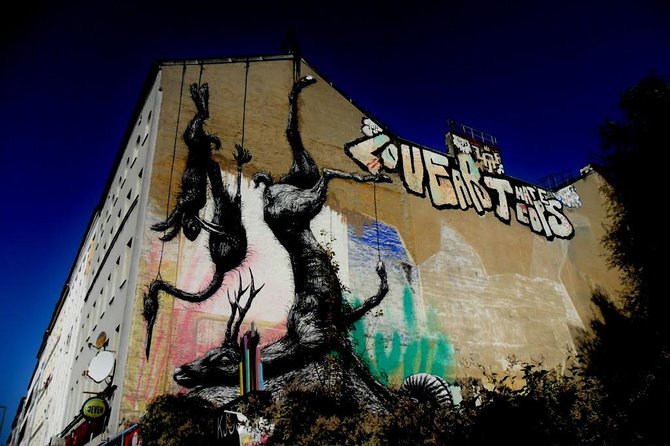
Kreuzberg is not a tidy postcard district. That is exactly why it works so well for a guided walk.
The neighborhood grew from a poor quarter of 19th-century Berlin into one of the city’s most sought-after areas. Along the way, it became home to immigrant communities, alternative artists, musicians, political activists, squatted buildings, independent cafés, clubs, and international restaurants.
A guide helps you read those layers. On your own, you might see a weathered façade, a graffiti-covered wall, or a lively corner café. With context, you begin to understand how housing, migration, music, art, and protest shaped the streets around you.
You should expect an urban walk rather than a parade of grand monuments. The appeal lies in the details: a courtyard hidden behind a street entrance, an old hospital reused as an arts center, or a house project that reflects Berlin’s long struggle over rent and public space.
The route also gives you a useful transition through Kreuzberg. It begins at Kottbusser Tor, moves into the SO36 area, passes Oranienstrasse and Mariannenplatz, reaches Görlitzer Park, and finishes across the Spree at Oberbaumbrücke.
A few more Berlin trips to weigh up
- Discover Berlin Half-Day Walking Tour
★ 5.0 · 9,624 reviews - Berlin: Third Reich and Cold War 2 Hour Walking Tour
★ 4.9 · 6,830 reviews - Berlin: Discover Berlin Walking Tour
★ 4.9 · 5,998 reviews
Starting at Kottbusser Tor
The tour begins at Skalitzer Strasse 137, near Kottbusser Tor. This is a practical place to start because it puts you directly into the part of Kreuzberg known for its mix of cafés, bars, clubs, restaurants, and immigrant businesses.
Kottbusser Tor can feel intense. Traffic, public transport, pedestrians, and commerce all crowd together. That makes it a useful introduction to Kreuzberg, but not the calmest place to meet a guide. Arrive early enough to find the exact address without rushing.
The starting point is near public transportation, though hotel pickup is not included. You’ll need to make your own way there, and you’ll finish somewhere else, at Oberbaumbrücke. That point-to-point format is helpful if you plan to continue sightseeing in eastern Berlin, but less convenient if you need to return to your hotel immediately.
The first part of the walk sets up Kreuzberg’s social story. You’ll hear how the district changed from one of Berlin’s poorer quarters into a popular area with a strong alternative identity. That change is central to the tour, and it also raises an important question: what happens when the people and culture that made a neighborhood attractive can no longer afford to live there?
The tour does not present Kreuzberg as frozen in an old rebellious era. It connects the past to the present, including the district’s current cafés, bars, restaurants, clubs, and creative scene.
SO36 and the Music of Kreuzberg
One of the early stops is Club SO36, with about 10 minutes set aside. The club gives the tour a clear link to Kreuzberg’s music history and the alternative culture that helped shape the area’s public image.
The SO36 district is more than a nightlife label. It reflects the part of Kreuzberg associated with experimental music, political gatherings, immigrant communities, and independent art. A short stop cannot explain every chapter, but it gives you a framework for understanding why the neighborhood became known far beyond Berlin.
This is one of the places where a guide adds value. The building itself may not look like a major sightseeing attraction, and admission is not part of the visit. The point is the story attached to the location and the way it connects to nearby streets.
You’ll also hear about the development of fashion, art, and music in Kreuzberg. These subjects are not treated as separate attractions. They are part of the neighborhood’s wider social change, shaped by inexpensive housing, creative residents, immigrant life, and protest movements.
If you prefer royal palaces, grand museums, and famous viewpoints, this stop may feel modest. If you like understanding how a city’s culture grows from ordinary streets, it should be one of the more useful moments on the route.
Rio-Reiser-Platz and the Courtyard Culture
The route continues to Rio-Reiser-Platz, with a stop of roughly 10 minutes near Heinrichplatz and the Frauenzentrum Schokoladenfabrik.
This section brings together public space, community life, and the district’s alternative institutions. The Frauenzentrum Schokoladenfabrik is part of Kreuzberg’s story of women’s organizing and independent projects. It also helps show how former industrial and residential spaces were given new social uses.
You may also visit typical Berlin courtyards during the walk. These courtyards are easy to miss if you simply follow the main roads. Berlin’s older blocks often hide a series of inner spaces behind their street façades, and these areas reveal how buildings were designed, used, and adapted over time.
The courtyards are particularly useful for understanding the difference between the public and private sides of Kreuzberg. Oranienstrasse can be loud and crowded, while a passage through an inner courtyard may feel enclosed and residential. The guide explains how these spaces developed and what they tell you about housing in the district.
Oranienstrasse is at the heart of the SO36 area. It is lined with the kind of cafés, bars, restaurants, and small businesses that make Kreuzberg attractive today. The street is also a good place to think about the tension between local life and tourism. You are not just looking at a trendy area. You are walking through a neighborhood whose identity has been reshaped many times.
Same city, a completely different kind of day:
- Berlin: Reichstag, Dome and Government District Guided Tour
★ 4.7 · 18,288 reviews - Berlin: 1-Hour City Tour by Boat with Guaranteed Seating
★ 4.3 · 16,993 reviews - Berlin: Boat Tour Along the River Spree
★ 4.4 · 11,252 reviews - Berlin: Hop-on Hop-off Bus Tour with Live Commentary
★ 4.3 · 8,579 reviews
Mariannenplatz and Arthouse Bethanien
The walk heads toward Mariannenplatz and Arthouse Bethanien, a former hospital building beside the Berlin Wall.
Bethanien is a strong example of Kreuzberg’s habit of reusing old buildings for art and community purposes. The building’s original function matters, but the more interesting point is how it became part of the district’s creative life.
The stop also links architecture with Berlin’s divided past. The former Wall was not only a political border. It shaped where people lived, how streets ended, and which parts of the city developed differently. Seeing a historic building next to that former border makes the story more physical and easier to follow.
You’ll also see St. Thomas Protestant Church. Its presence adds another layer to the walk, since Kreuzberg is not only a district of clubs and street art. Religious buildings, housing blocks, community centers, and reused institutions all share the same streets.
This part of the route rewards attention. The tour is not built around long indoor visits, so you should listen for the connections between places. The guide’s explanation is what turns a church, hospital, or former project house into part of a larger story.
Former Squats and the Treehouse Beside the Wall
Kreuzberg’s former squatted houses are among the most distinctive parts of the route. You’ll hear about house projects and see buildings connected to the neighborhood’s history of protest, alternative housing, and collective organization.
Squatting was not simply a quirky Berlin custom. It reflected conflicts over vacant buildings, redevelopment, rent, and who had the right to shape the city. Some projects became lasting institutions, while others disappeared or changed form.
The tour also passes a treehouse built next to the former Berlin Wall. This is the sort of small, unusual site that is easy to miss without local direction. Its location captures the character of Kreuzberg: improvised, political, and closely tied to the city’s division.
You should not expect every former squatted house to look exactly as it did decades ago. The value is in learning how these places fit into Berlin’s changing housing and cultural scene. Kreuzberg’s past remains visible, but it is not untouched.
This section may be especially useful if you want more than a standard Cold War tour. The Wall is present, but the focus is on how ordinary residents, artists, and community groups lived beside it and responded to the city around them.
The Market Hall Nine Break
The tour includes a break at Market Hall Nine. This is a practical feature, not just a stop for sightseeing.
A three-hour walk needs a pause, especially if you are visiting in warm weather or have already spent the morning on your feet. Market Hall Nine also fits the theme of the tour because food and local commerce are part of Kreuzberg’s modern identity.
Food and drinks are not included, so bring money if you want to buy something. The supplied information does not specify how long the break lasts, so do not assume you will have time for a full meal. Think of it as a chance to rest, browse, and pick up a snack if the schedule allows.
The market hall can also help you decide if you want to return later on your own. Since the walk covers several districts and only pauses briefly, you may want to revisit the places that interest you most after the tour.
Görlitzer Park and the Final Stretch
Görlitzer Park is scheduled as a stop of about 15 minutes. It gives you a change of pace after the denser streets and courtyards of SO36.
The park is part of the route’s broader look at Kreuzberg’s public spaces. It is not presented as a formal garden or a major monument. Instead, it helps you see how residents use open space in a dense part of Berlin.
From there, the route continues along Wiener Strasse and toward Oberbaumbrücke. The walk includes much more than the three listed stops, so the schedule is best understood as a moving tour with short points of focus rather than three long visits.
The finish at Oberbaumbrücke is well chosen for orientation. The bridge links Kreuzberg and Friedrichshain and gives you a clear endpoint after the walk through the district. Since there is no hotel drop-off, you can continue from the bridge on your own or use public transportation nearby.
The exact walking pace is not provided. Comfortable shoes are sensible, since the activity lasts about three hours and includes several streets, parks, courtyards, and outdoor sites.
What the $22.45 Price Really Buys
At $22.45 per person, this is a low-cost way to spend half a day in Berlin. You are paying mainly for the guide’s local explanation and the structure of the route, not for admissions or meals.
That distinction matters. The stops at Club SO36, Rio-Reiser-Platz, and Görlitzer Park do not include admission tickets, and food and drinks at Market Hall Nine are extra. If you want a series of paid interiors, this is not the right format.
The value is strongest if you would otherwise wander Kreuzberg without knowing what you were seeing. A guide can point out courtyards, former house projects, cultural institutions, Wall remnants, and social changes that are easy to overlook.
The group limit of 12 is another reason the price works. A small group usually makes it easier to hear the guide and ask questions. It also keeps the experience more personal than a large city tour.
The rating shown for the experience is 4.2 from 11 reviews, so the overall record is positive but based on a small sample. The main weakness in the supplied feedback concerns timing and communication, not the subject matter. One participant found the tour interesting and full of background information but had to wait about 25 minutes for the guide.
There was also a cancellation connected to a BVG strike and the rest of the group not arriving. The provider states that a minimum number of people is required, and if that minimum is not met, you should be offered another date or experience, or a full refund. This is worth keeping in mind when planning a tight Berlin schedule.
Who Will Enjoy This Walk Most
I would recommend this tour to you if you enjoy city neighborhoods more than isolated monuments. It suits visitors interested in migration, housing, street culture, music, art, architecture, and Berlin’s divided past.
It is also useful early in a Berlin stay. The walk can help you get your bearings in Kreuzberg before you return for a meal, evening out, or longer visit to the places that caught your eye.
You may want another type of tour if you have limited mobility, need frequent seating, or prefer indoor attractions. The activity is a walking tour of about three hours, and the information provided does not list a specialized accessible route.
Families and older visitors should consider the group’s pace and the urban setting. The tour states that most people can participate, but it does not give a detailed accessibility assessment.
The small group is ideal if you value questions and conversation. It is less useful if you only want quick photographs of famous landmarks, since the focus is on context and neighborhood change.
Practical Advice for a Smooth Morning
The meeting point is Skalitzer Strasse 137, 10999 Berlin. Use the full address rather than relying only on the name Kottbusser Tor, since the area has several exits and busy streets.
Plan to reach the meeting point early. The reported 25-minute wait is not typical information you should expect on every departure, but it shows why a little extra time is sensible.
The activity uses a mobile ticket, and confirmation is provided when you book. Hotel pickup and drop-off are not included, so you arrange both ends yourself.
You can cancel for a full refund if you do so at least 24 hours before the start time. Cancellations or changes made later are not accepted for a refund. The cut-off is based on local Berlin time.
Book ahead if the date matters to you. The tour is often booked about 12 days in advance, and the group is capped at 12 people.
Should You Book the Kreuzberg Wild Side Tour?
Book it if you want a reasonably priced, small-group walk that explains why Kreuzberg looks and feels different from Berlin’s historic center. The route gives you SO36, Oranienstrasse, courtyards, former squatted houses, Bethanien, Wall sites, Market Hall Nine, Görlitzer Park, Wiener Strasse, and Oberbaumbrücke in one outing.
The tour is less suitable if you need guaranteed punctuality, a relaxed pace, or a schedule built around major indoor sights. Allow some flexibility in case of transport disruption or a minimum-group cancellation.
For most curious first-time visitors, the price is fair. You get the most from it if you listen closely, wear comfortable shoes, and treat the walk as an introduction to Kreuzberg rather than a checklist of attractions.
FAQ
How long does the Kreuzberg walking tour last?
The tour lasts approximately three hours.
How much does the tour cost?
The listed price is $22.45 per person.
Where does the tour start?
The meeting point is Skalitzer Strasse 137, 10999 Berlin, Germany, near Kottbusser Tor.
Where does the tour end?
The tour ends at Oberbaumbrücke, 10243 Berlin, Germany.
How many people can join the tour?
The group has a maximum of 12 travelers.
Is food included?
No. Food and drinks are not included, although the tour includes a break at Market Hall Nine.
Is hotel pickup included?
No. Hotel pickup and drop-off are not included.
What happens if the tour does not reach its minimum group size?
If the tour is canceled because the minimum number of participants is not met, you will be offered another date or experience, or a full refund.
Just added around Berlin
- Love and War in Berlin: Self-Guided Story Puzzle Walk★ 5.0 · 7 reviews
- Rickshaw Tours Berlin – Groups of up to 16 people with several rickshaws★ 4.0 · 97 reviews
- eSIM for Germany and 34 European Countries★ 4.5 · 16 reviews
- Walking on the Wall: 3-Hour Tour in Berlin★ 4.5 · 34 reviews
- Warnemuende Shore Excursion: Berlin Private Sightseeing Tour from Rostock★ 5.0 · 4 reviews
- Your ticket to The Wall Museum Berlin★ 3.0 · 60 reviews
- Warnemuende Shore Excursion: Private Berlin Tour★ 4.5 · 27 reviews
- Berlin’s Gay, Lesbian, and Queer Scene Small-Group Walking Tour★ 4.5 · 66 reviews
Walking Tours, compared.





Berlin’s Best: 2 Hour Walking Tour Third Reich and the Cold War
Read our review →


Third Reich Berlin: Hitler and WWII Walking Tour
Read our review →Browse the lists this tour appears in