
Reviewed · WALKING TOURS
Queer Berlin Walking Tour
Berlin’s queer past comes alive in the streets of Schöneberg, where cabaret stars, artists, activists, and same-sex couples helped shape the city’s public life. This 3.5-hour walk also reaches the Tiergarten, Berlin’s best-known gay meeting place, and connects personal stories to the city’s larger political history.
I like the tour’s mix of serious history and funny anecdotes, and I like that it includes women’s stories as well as gay and transgender history. The main drawback is the amount of walking, often outdoors in changing weather, with public transport and any entrance costs extra.
In This Review
- Key points to know
- Why queer Berlin is best understood on foot
- Schöneberg and the former Eldorado
- Magnus Hirschfeld and the fight for understanding
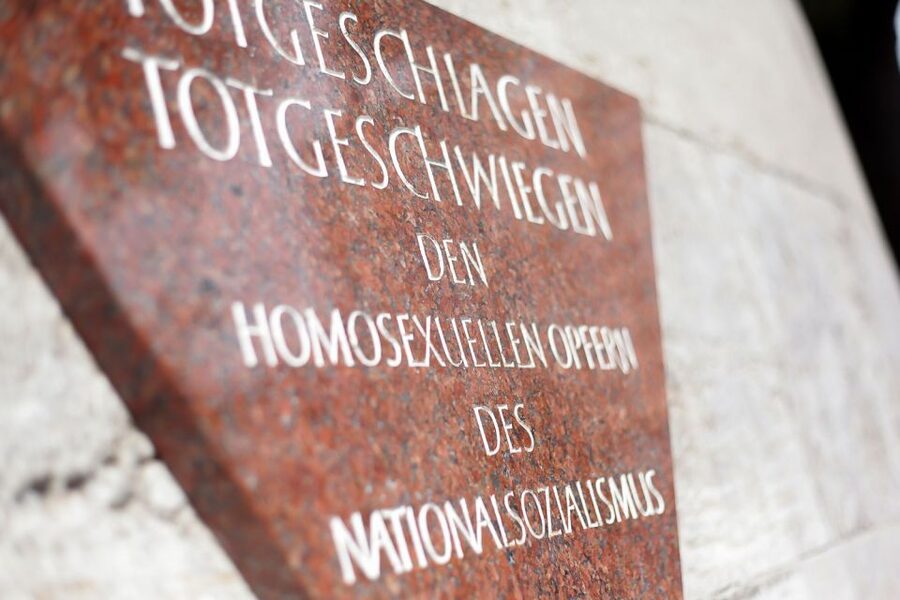
- The memorial to Nazi persecution
- The Tiergarten and Berlin’s changing queer map
- A history told through people, not just laws
- Women’s history and inclusion
- What the three and a half hours feel like
- Price, value, and who should book
- Should you book the Queer Berlin Walking Tour?
- FAQ
- How long is the Queer Berlin Walking Tour?
- How much does the tour cost?
- Which parts of Berlin does the tour cover?
- Is the former Eldorado included?
- Does the tour discuss Magnus Hirschfeld?
- Does the tour cover Nazi persecution?
- Is public transport included?
- Are entrance fees included?
- What languages are available?
- Does the tour run in bad weather?
- How do I identify the guide?
- Can I cancel for a full refund?
- Do I have to pay when I book?
Key points to know
- Schöneberg’s queer landmarks: See the former Eldorado, once a famous gay and trans bar, and learn about the district’s cabaret years.
- Magnus Hirschfeld’s legacy: Hear how his Institute for Sexual Science offered support and research before the Nazis shut it down in 1933.
- History beyond the usual names: The story reaches from Frederick the Great to Klaus Wowereit, Berlin’s openly gay former mayor.
- A sober Nazi-era stop: Visit the memorial to homosexual people persecuted and sent to concentration camps.
- Three and a half hours on foot: Wear sensible shoes, carry water, and plan for all-weather conditions.
- Strong guide-led experience: Past guides have included Tom, Tobi, Finn, Beth, Kyle, and Jared or Gerard, with particular praise for clear explanations, humor, and patience.
Why queer Berlin is best understood on foot
Berlin’s queer story is not confined to one museum or one nightlife street. It is spread across former bars, apartment buildings, parks, memorials, political sites, and neighborhoods that have changed sharply over time.
That makes a walking tour useful. You are not only hearing about people and laws. You are standing in the places where they worked, met, took risks, found support, or were later pushed out. A good guide can connect an ordinary-looking street corner with a much larger story.
This experience focuses on two important areas: Schöneberg and the Tiergarten. Schöneberg is the city’s best-known gay neighborhood, while the Tiergarten has long been associated with queer social life and meeting places. The two areas give the tour a good balance between urban streets and open parkland.
The subject is not treated as a simple story of progress. Berlin had an active queer scene and pioneering researchers long before modern legal protections, yet men could be prosecuted under Section 175 of the German penal code. That law criminalized male homosexuality for decades, including after World War II.
You get the contrast clearly here: Berlin could offer freedom, art, and community in one period, then repression and danger in another. That tension gives the tour more weight than a simple list of former bars and famous names.
A few more Berlin trips to weigh up
- Discover Berlin Half-Day Walking Tour
★ 5.0 · 9,624 reviews - Berlin: Third Reich and Cold War 2 Hour Walking Tour
★ 4.9 · 6,830 reviews - Berlin: Discover Berlin Walking Tour
★ 4.9 · 5,998 reviews
Schöneberg and the former Eldorado
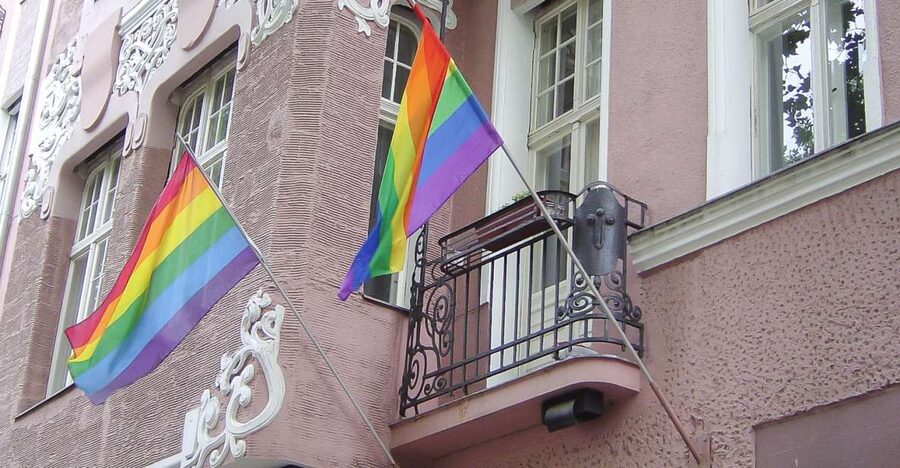
Schöneberg is the natural place to begin understanding Berlin’s queer identity. The district became linked with gay and lesbian life, nightlife, artists, and political change. The streets still function as a living setting for the stories, even when the original businesses are gone.
One key stop is the former Eldorado, described as one of Berlin’s oldest gay and trans bars. The site helps explain the city’s early nightlife culture and the importance of places where queer people could meet openly, at least for a time.
You should not expect the former Eldorado to operate as a preserved attraction. Its value is historical. The guide uses the location to explain how nightlife worked, who gathered there, and how Berlin’s cabaret culture attracted artists and outsiders.
This section also brings in Marlene Dietrich, who lived and worked in the city, along with Christopher Isherwood and Otto Dix. Isherwood chronicled Berlin’s nightlife and cabaret world, while Dix captured its sharper, more provocative side through art.
The tour’s use of these figures is helpful because it places queer life within the wider culture of 1920s and early 1930s Berlin. You are not just hearing about identity in isolation. You are seeing how clubs, theater, literature, art, and politics overlapped.
A practical point: the former homes of famous figures are not necessarily all visited. One person who took the tour expected a stop at Isherwood’s former home and the Institute for Sexual Science site itself, so it is best to view the experience as a guided neighborhood walk rather than a fixed list of house visits.
Magnus Hirschfeld and the fight for understanding
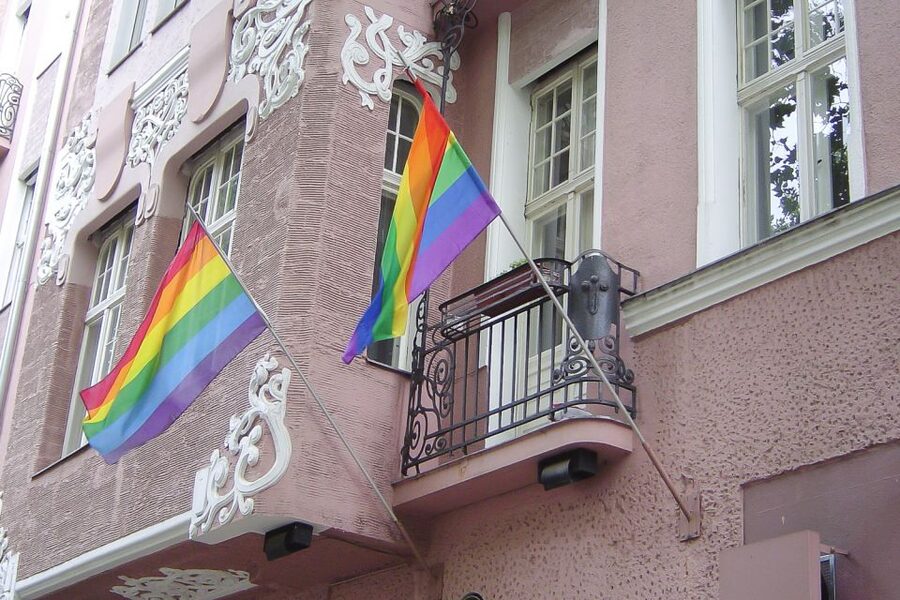
Magnus Hirschfeld is one of the most important figures covered on the tour. A physician and sex researcher, he created the Institute for Sexual Science, which offered research, advice, and support to openly queer and transgender people.
That work was far ahead of its time. The institute treated sexuality and gender as subjects for study and care rather than simple grounds for shame or punishment. Its work also shows that organized support for queer people in Berlin existed long before the modern language of LGBTQIA+ rights became common.
The institute was shut down in 1933, and its library was destroyed during the Nazi book burnings. This is one of the tour’s most painful turns. A center built to help people was attacked not only because of its research, but because its very existence challenged Nazi ideas about society, bodies, and identity.
The site may not function as a standard museum visit, and entrance to attractions is not included. Still, learning about Hirschfeld while walking through the city gives the story a physical setting. You can better grasp how quickly a place of research and support was erased.
I especially like that the tour presents Hirschfeld as more than a historical name. His work connects science, civil rights, medical care, and personal courage. It also gives you a useful warning: Berlin’s reputation as a place of sexual freedom has never meant that queer people were always safe.
The memorial to Nazi persecution
The stop at the memorial to homosexual people persecuted by the Nazis changes the mood of the walk. Earlier stories about cabaret, nightlife, and public figures give way to remembrance.
The memorial honors people who were persecuted and sent to concentration camps. It belongs in this tour because the city’s queer history cannot be separated from the Nazi destruction of communities, institutions, and records.
Your guide provides the context needed to understand why this memory matters. You are not simply passing a monument and taking a photograph. You are being asked to connect the Nazi period with the people and places already discussed in Schöneberg.
This is also where the tour’s balance is important. It does not present queer Berlin only as a story of victimhood, and it does not skip the violence in favor of nightlife anecdotes. The point is to understand both the creativity and the danger that shaped the city.
The subject can be difficult, particularly for anyone with a personal connection to persecution or discrimination. The supplied information does not suggest a formal museum component or a long indoor break, so prepare for a guide-led outdoor discussion at the memorial.
Same city, a completely different kind of day:
- Berlin: Reichstag, Dome and Government District Guided Tour
★ 4.7 · 18,288 reviews - Berlin: 1-Hour City Tour by Boat with Guaranteed Seating
★ 4.3 · 16,993 reviews - Berlin: Boat Tour Along the River Spree
★ 4.4 · 11,252 reviews - Berlin: Hop-on Hop-off Bus Tour with Live Commentary
★ 4.3 · 8,579 reviews
The Tiergarten and Berlin’s changing queer map
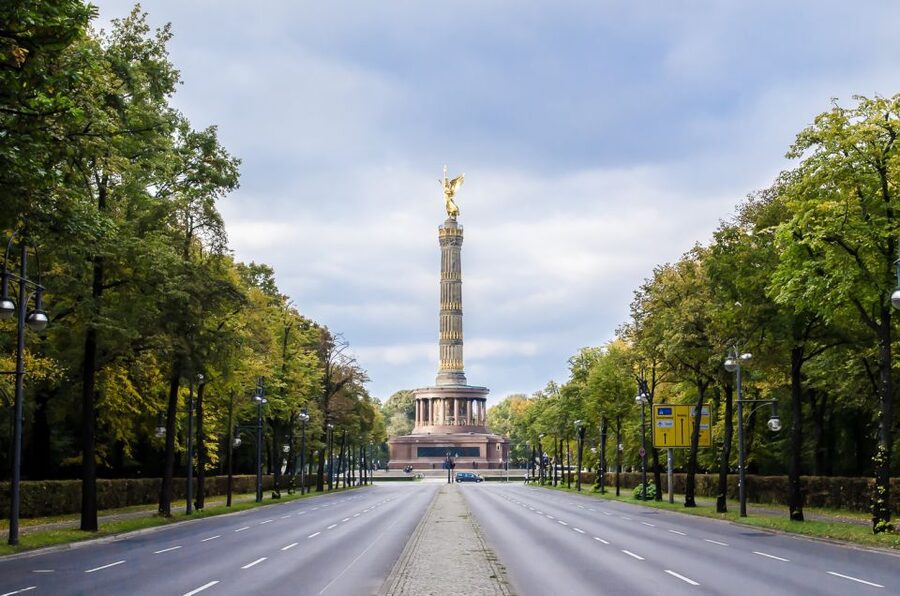
The walk continues through the Tiergarten, Berlin’s best-known gay meeting spot. The park adds a different setting from the streets of Schöneberg. It shows how queer social life also developed in open public spaces, not only in licensed clubs and bars.
The Tiergarten is located in the shadow of the Berlin Wall, which adds another layer to the story. Berlin’s division affected where people lived, met, and went out, while the city’s gay neighborhoods changed again after reunification.
One older account of the tour noted discussion of the former East German gay neighborhood and later gentrification. That is useful context for you because queer Berlin is not frozen in its cabaret-era image. Neighborhoods shift, businesses close, new communities arrive, and rising rents can change who can afford to remain.
The park portion also gives the group a chance to talk about present-day queer culture. The tour links earlier struggles to modern public life, including the career of Klaus Wowereit, Berlin’s openly gay former mayor.
That broad time span is one of the walk’s strongest features. You move from a Prussian king to a medical pioneer, from cabaret performers to Nazi victims, and from postwar legal restrictions to a modern openly gay political leader.
A history told through people, not just laws
The tour covers major laws and institutions, but it works best when those subjects are tied to individuals. Frederick the Great, Marlene Dietrich, Magnus Hirschfeld, Christopher Isherwood, Otto Dix, and Klaus Wowereit each open a different window onto Berlin.
Frederick the Great shows that queer history reaches into Prussian royal life, long before the modern gay rights movement. Dietrich and Isherwood bring in performance, literature, and the freedom associated with Berlin’s cabaret scene. Hirschfeld represents organized research and support.
The Nazi period shows how quickly public life can be crushed by state power. Section 175 then extends the story beyond 1945, reminding you that legal discrimination did not end with the fall of the Nazi regime.
This is also where the guide’s skill matters most. Past guides such as Tom and Tobi were praised for combining facts with humor, while Finn, Beth, Kyle, and Jared or Gerard were also described as personable and able to answer questions. Guide assignments can change, so you should not book solely to meet one particular person.
The strongest guides appear to make room for questions rather than rushing through a speech. That matters on a subject with many competing threads. You may want to ask about lesbian history, transgender lives, East Berlin, current nightlife, or the limits of the sources that survived.
Women’s history and inclusion
A common weakness in queer history tours is an overfocus on gay men, famous male writers, and male political figures. This walk has been praised for giving women’s history a proper place and for keeping the politics of inclusion and resistance in view.
That focus makes the experience more useful for a mixed group. You do not need to arrive with specialist knowledge, and you do not have to be interested only in nightlife. The material reaches into social history, civil rights, gender identity, medical research, art, and urban change.
The tour is also a good choice if you want more than a party guide. It does include bars, cabaret, and tips for a night out, but those details sit beside stories of persecution, activism, and legal change.
If you want a tour devoted mainly to current clubs, drag shows, or nightlife recommendations, this may feel too historical. If you want to understand why Berlin has its modern queer reputation, the wider approach is a better fit.
What the three and a half hours feel like
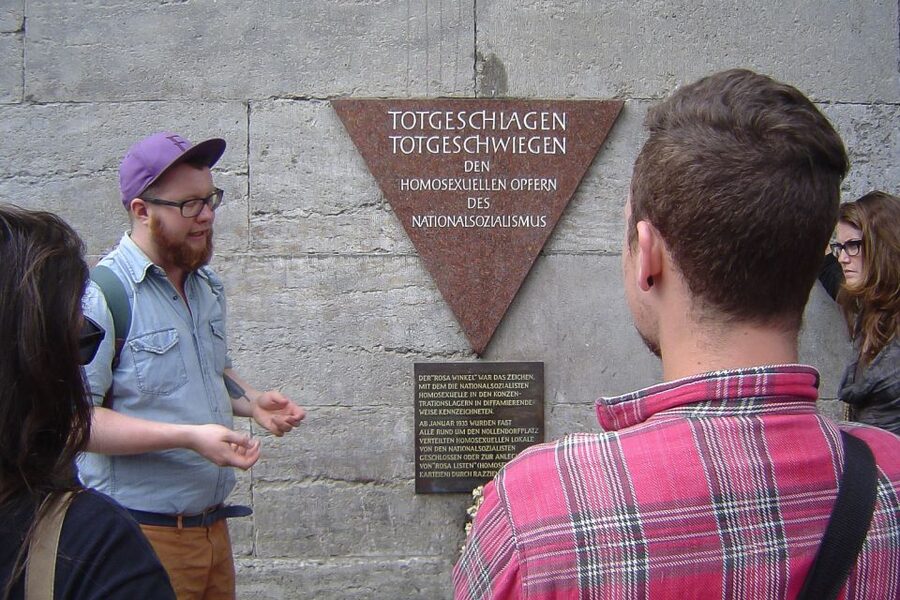
Three and a half hours is long enough to cover a lot of ground, but it also means you need to prepare for a genuine walk. One person specifically advised packing light, carrying snacks, and bringing a cool drink.
That is sensible advice. Public transport may be needed depending on the option booked, and it is not included. Entrance fees are also extra, though the supplied plan emphasizes outdoor sites and guided explanations rather than a standard museum admission.
The tour runs in all weather. Bring clothing suited to the forecast, since the experience is not built around staying indoors. Comfortable shoes matter more here than a polished outfit.
The meeting point can vary by booking option, so check your confirmation carefully. Look for the guide wearing a blue Original Berlin Walks name badge. That small detail helps you identify the group at a busy meeting spot.
Guides speak English or German. The English tours have included several different guides over the years, including Tom and Tobi. The best use of your time is to ask questions as you go, especially if you want recommendations for a night out or more detail on a particular period.
Price, value, and who should book
At $23 per person, this is a fair price for a 3.5-hour guided walk in central Berlin. You are paying mainly for the guide’s research, storytelling, and ability to connect scattered sites into one clear account.
The value is strongest if you would otherwise walk through Schöneberg and the Tiergarten without understanding what happened there. A map can show you the former Eldorado, a memorial, or a park. It cannot easily explain how those places connect to Hirschfeld, Isherwood, Section 175, Nazi persecution, and modern politics.
The price is less attractive if you want a short, photo-focused outing or expect entry to museums and buildings. Public transport and entrance fees are not included, and the walking time is substantial.
I would recommend it to:
- Anyone interested in LGBTQIA+ history and civil rights
- First-time visitors who want a different side of Berlin
- People who enjoy social history, art, literature, and politics together
- Visitors who want practical suggestions for queer nightlife after the walk
- Anyone who prefers a guide who can answer questions rather than a self-guided audio route
I would think twice if you dislike long walks, outdoor tours, or difficult historical subjects. The experience covers Nazi persecution and postwar criminalization, so it is not light entertainment from beginning to end.
Should you book the Queer Berlin Walking Tour?
Book it if you want to understand how Berlin became known for queer freedom, and how fragile that freedom has been. The former Eldorado, Tiergarten, Hirschfeld’s institute, the Nazi persecution memorial, and the stories of cabaret figures create a clear route through a complicated past.
You will get the most from it if you wear comfortable shoes, carry water and a snack, check the meeting point, and arrive ready to ask questions. At $23, it offers strong value for a long, guide-led introduction to Schöneberg and queer Berlin.
Skip it if your main goal is a current nightlife crawl or a museum tour with indoor exhibits. For history, place, and honest context, this is one of Berlin’s more useful specialty walks.
FAQ
How long is the Queer Berlin Walking Tour?
The tour lasts 3.5 hours.
How much does the tour cost?
The listed price is $23 per person.
Which parts of Berlin does the tour cover?
The walk explores Schöneberg and the Tiergarten.
Is the former Eldorado included?
Yes. The tour includes the site of the former Eldorado, one of Berlin’s oldest gay and trans bars.
Does the tour discuss Magnus Hirschfeld?
Yes. You learn about Hirschfeld, his Institute for Sexual Science, its support for queer and transgender people, and its closure in 1933.
Does the tour cover Nazi persecution?
Yes. The route includes a memorial to homosexual people persecuted by the Nazis and sent to concentration camps.
Is public transport included?
No. Public transport may be needed depending on the option booked, and it is not included.
Are entrance fees included?
No. Entrance fees are not included.
What languages are available?
The tour is offered in English and German.
Does the tour run in bad weather?
Yes. The tour runs in all weather, so dress accordingly.
How do I identify the guide?
The guide will be wearing a blue Original Berlin Walks name badge.
Can I cancel for a full refund?
Yes. You can cancel up to 24 hours in advance for a full refund.
Do I have to pay when I book?
No. The reserve-now, pay-later option lets you book without paying anything today.
Just added around Berlin
- Love and War in Berlin: Self-Guided Story Puzzle Walk★ 5.0 · 7 reviews
- Rickshaw Tours Berlin – Groups of up to 16 people with several rickshaws★ 4.0 · 97 reviews
- eSIM for Germany and 34 European Countries★ 4.5 · 16 reviews
- Walking on the Wall: 3-Hour Tour in Berlin★ 4.5 · 34 reviews
- Warnemuende Shore Excursion: Berlin Private Sightseeing Tour from Rostock★ 5.0 · 4 reviews
- Your ticket to The Wall Museum Berlin★ 3.0 · 60 reviews
- Warnemuende Shore Excursion: Private Berlin Tour★ 4.5 · 27 reviews
- Berlin’s Gay, Lesbian, and Queer Scene Small-Group Walking Tour★ 4.5 · 66 reviews
Walking Tours, compared.





Berlin’s Best: 2 Hour Walking Tour Third Reich and the Cold War
Read our review →

