
Reviewed · THIRD REICH & COLD WAR TOURS
Munich: Third Reich and World War II Segway Tour of the City
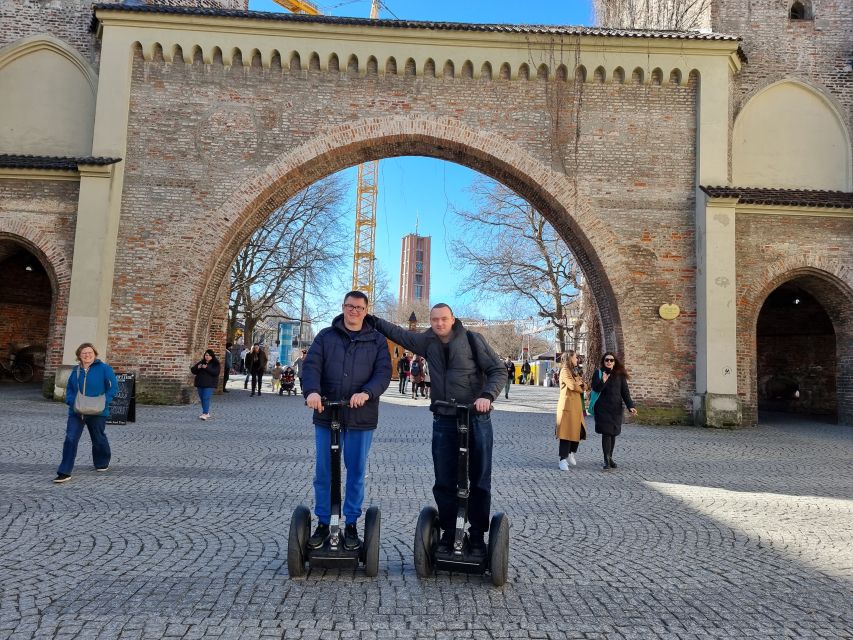
Munich’s difficult 20th-century story comes into sharper focus when you move from site to site on a Segway. In three hours, you cover far more ground than on foot, passing Hitler’s former apartments, the old synagogue site, Königsplatz, Odeonsplatz, and key Nazi-era buildings.
I like the small group of no more than 10 and the patient training before anyone heads into the streets. I also like the way the tour joins Nazi history with Munich’s older royal and city-center sights, rather than treating World War II as an isolated chapter.
The main consideration is riding confidence. One person in a group found the roads scary, while stronger riders wanted more time in the English Garden. This is a history tour on wheels, not a long recreational Segway ride.
In This Review
- Key points at a glance
- Why a Segway works well for Munich’s difficult history
- Training first, then city streets
- Königsplatz and the architecture of power
- Odeonsplatz and the Führer’s building
- Hitler’s Munich apartments
- The Old Synagogue site and wartime Munich
- The Brown House and Schelling-Salon
- More city in less time
- What the ride feels like in different conditions
- Guide quality and language
- Who should book this Munich tour?
- Booking value and final verdict
- FAQ
- How long is the Munich Segway tour?
- What language is the tour offered in?
- Where do I meet the guide?
- Is a Segway provided?
- Do I receive training before the tour?
- How large is the group?
- Can children join the tour?
- Can pregnant women participate?
- Is hotel pickup included?
- Can I cancel for a refund?
Key points at a glance
- Three hours on a Segway: Cover central Munich’s major sights much faster than you could on foot.
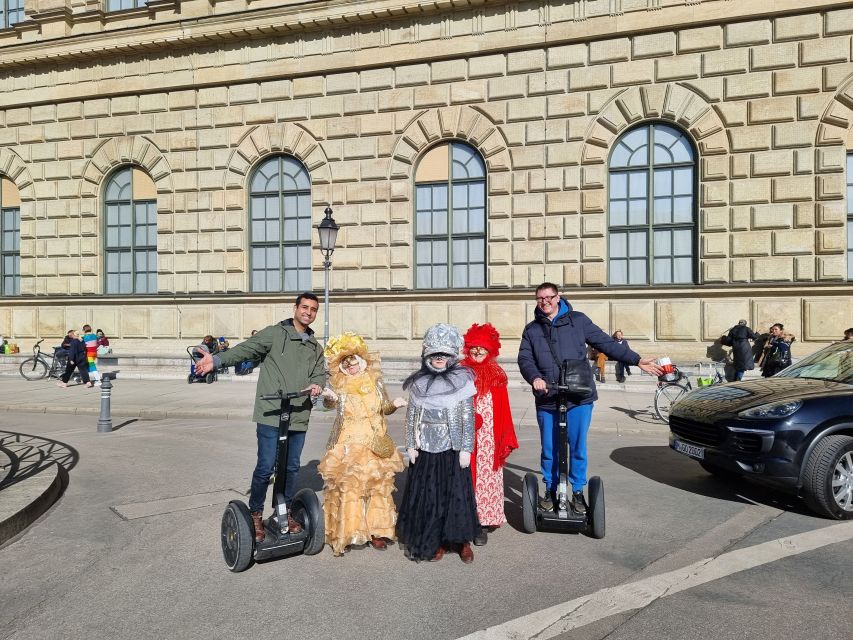
- Careful beginner training: Guides provide instruction and practice before the group sets off.
- Serious history at street level: See Hitler’s former apartments, the Führer’s building, the Brown House, and the old synagogue site.
- Royal Munich included: Hear about Bavarian kings while passing grand squares and historic buildings.
- English or German guidance: The tour operates with a live guide and a maximum group size of 10.
- Best for visitors aged 14 and older: Children under 14 and pregnant women cannot join.
Why a Segway works well for Munich’s difficult history
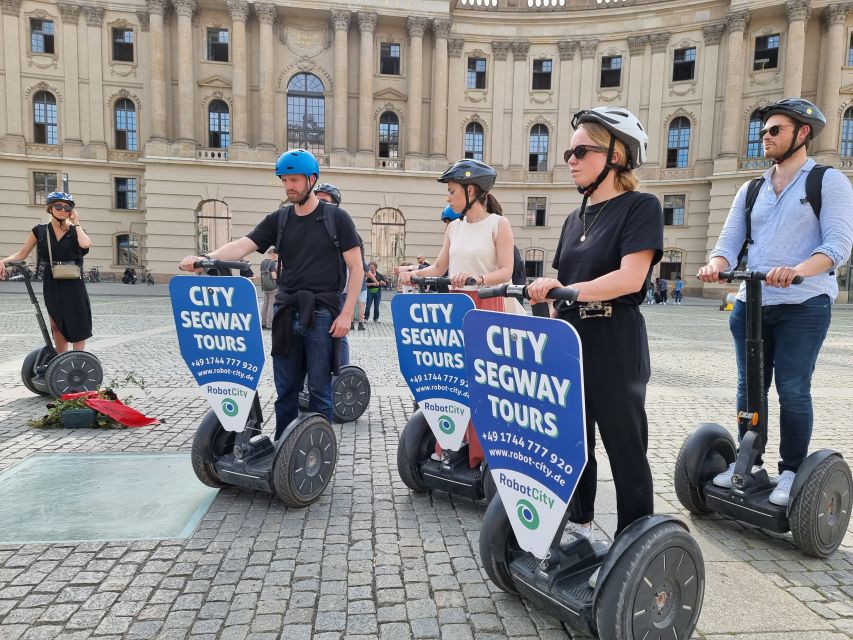
Munich is broad enough that its most important historic places do not all sit in one compact square. A walking tour can explain the center well, but reaching the former Nazi headquarters, royal avenues, old synagogue site, and other stops takes time. A Segway lets you connect these places in one outing.
You are not simply rolling past buildings with a guide talking into the wind. The tour stops outside important locations, giving you time to hear what happened there. That matters in Munich, where ordinary streets and elegant public squares were tied to the rise of National Socialism.
The format also gives you a quick first look at the city. If this is your first day in Munich, you can mark places to revisit later, including Hofbräuhaus am Platzl and Hofbräukeller. The guide points out both historic landmarks and traditional places to eat, which makes the tour useful beyond its three-hour route.
Still, a Segway changes the rhythm. You spend much of the time listening while standing on a moving machine, then stopping for explanations. If you want long visits inside museums or a slow look at memorial details, choose a walking tour or museum visit instead.
More Segway Tours in Munich
- Munich: City Highlights Guided Segway Tour
★ 4.6 · 266 reviews - Munich 3-Hour Segway Tour: Nazi Munich & Royal Architecture
★ 4.9 · 194 reviews - Munich Segway Tour
★ 5.0 · 181 reviews
Training first, then city streets
You meet the guide at Robot City Segway Tour München, the office used by Firewheels Tour GmbH. The tour begins with a safety briefing and instruction on how to control the Segway. A helmet is included.
This initial practice is especially important if you have never ridden one. Several people who were beginners found the machines easy to handle after training, and guides such as Abdel and Jamal were praised for being patient and attentive. That personal attention is one of the strongest reasons to choose a small group.
The controls are simple in principle, but you still need to feel comfortable starting, stopping, turning, and keeping your balance. Do not treat the practice as a formality. Use it to tell the guide if you need another run before entering the city.
Once the group leaves the office, the ride shifts between streets, cycle tracks, and park areas. A past group found road sections intimidating but enjoyed the park and cycle tracks more. That is useful advice: your comfort may depend less on the Segway itself than on traffic, pavement, and how busy the route feels.
Königsplatz and the architecture of power
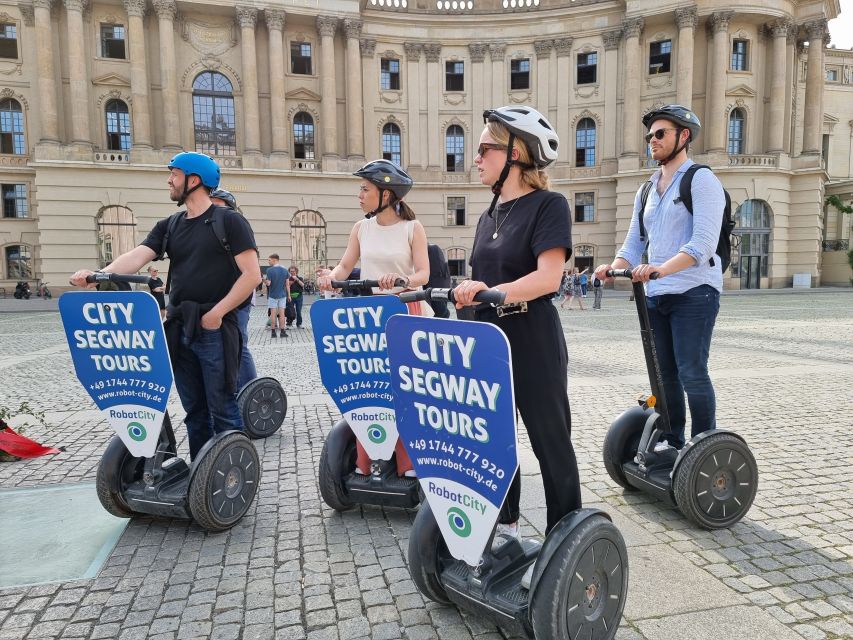
Königsplatz is one of the key early stops because it links Munich’s grand public architecture with the Nazi period. The broad square was used for major political events, and its imposing classical buildings helped create the theatrical setting that Nazi leaders wanted.
You will see the square from outside and hear the guide explain its role. The value here is not only the architecture. It is understanding how a civic space can be used to project authority and stage political power.
The guide also connects this part of the route to Munich’s older story, including the Bavarian kings. That contrast helps you read the city more clearly. Royal Munich favored ceremony and monumental design, while the Nazi regime adopted and manipulated some of the same visual language for its own purposes.
A moving tour cannot provide the same detail as a museum display. If this subject matters greatly to you, take notes and return later for a slower look. The Segway route gives you orientation and context, then leaves room for further study.
Odeonsplatz and the Führer’s building
Odeonsplatz brings you into another grand section of central Munich. The square is tied to the Nazi movement and to the political history of the city, while its elegant buildings show how older Munich was reshaped and used by later leaders.
The route passes the Führer’s building, one of the places connected with Nazi power in Munich. You stop outside rather than touring an interior. That limitation is worth keeping in mind, but seeing the building within its surrounding streets helps you understand how close these sites are to normal city life.
This is where a good guide matters. The tour is not only a list of names. It should explain how Hitler’s time in Munich developed, how the city became central to his political rise, and how these sites fitted together. Abdel received especially strong praise for being friendly, patient, and clear, while another guide was described as engaging and careful with the group.
The quality of the explanation can vary with the individual guide. One person felt the commentary was useful but wanted more information about certain buildings, including an archway at the end of Leopoldstrasse. If you have a particular interest, ask questions as you go.
More Third Reich & Cold War Tours in Munich
- Munich: Third Reich & WWII Walking Tour
★ 4.6 · 6,181 reviews - Third Reich Walking Tour Munich
★ 4.5 · 4,291 reviews - Munich: Birthplace of the Third Reich Guided Walking Tour
★ 4.6 · 771 reviews - Munich City Walking Tour, includes Third Reich & Viktualienmarkt
★ 5.0 · 458 reviews
Hitler’s Munich apartments
The tour stops outside the apartments where Hitler lived in Munich from 1920 to 1929 and at another apartment associated with him in 1933. These are not grand monuments, and that is precisely why they can be striking.
The addresses place his rise within the fabric of the city. Instead of picturing history as something that happened only in official buildings, you see the personal and residential settings tied to his political career. The guide explains his years in Munich and how he moved from political organizer to national leader.
Do not expect a preserved interior or a museum visit at these stops. The importance comes from location, chronology, and explanation. You are looking at the outside of buildings and using the guide’s account to connect them to the wider story.
For anyone focused on World War II or the Nazi period, these apartment stops are among the most distinctive parts of the route. They are also why this tour works best for visitors who want historical context, not just a fast city sightseeing loop.
The Old Synagogue site and wartime Munich
The old synagogue site provides one of the tour’s most important pauses. The guide explains what happened in Munich during the Nazi period and how Jewish life in the city was affected. It is a serious stop, and the subject deserves respectful attention.
Because the tour moves through public streets, the experience is not the same as visiting a dedicated memorial or museum. You receive a guide’s spoken account at the location, then continue. That format can make the story feel connected to the city around you, but it also means you may want to visit a memorial or documentation center separately for fuller detail.
The route’s strength is the way it places several parts of the story next to one another. You see political buildings, public squares, residential addresses, and the site of the old synagogue. Together, they show that the period was not confined to one government quarter.
This balance is important. The tour does not treat Munich only as a postcard city of beer halls and royal avenues. It also does not ask you to spend three hours in a museum-like setting. You move between the city’s beauty and its painful past, with the guide providing the link.
The Brown House and Schelling-Salon
The Brown House was the former headquarters of the Nazi Party in Munich. Passing the site adds another piece to the city’s political geography and helps explain why Munich became so important to the movement.
Again, you should expect an exterior stop and spoken context rather than an indoor exhibition. The value lies in seeing where the organization operated and how that place relates to the surrounding city.
Schelling-Salon offers a different kind of historical detail. This pub remained open throughout both World War I and World War II. Its survival provides a small, human-scale counterpoint to the monumental political sites.
It is the sort of detail I appreciate on a city tour. Grand buildings explain power, but a long-running local establishment reminds you that daily life continued around the upheaval. The guide may recommend it or other traditional places for a later meal, including Hofbräuhaus am Platzl and Hofbräukeller.
More city in less time
A three-hour ride gives you a useful sweep of Munich. You can cover major central sights, hear the basic historical framework, and save your legs for later sightseeing.
Several people chose the tour because they wanted to see more of Munich than they could manage on foot. One group called it a favorite activity because the Segway made it possible to reach much more of the city. Another person said the experience combined sightseeing and information in a way that could save money compared with booking separate activities.
That value depends on how you spend your time in Munich. At $100 per person, this is not a budget sightseeing option. You are paying for the machine, helmet, guide, instruction, and a small-group route. The cost makes the most sense if you value speed, live commentary, and the novelty of riding.
It makes less sense if you are mainly seeking a cheap way to see landmarks from outside. A public walking route costs far less, and Munich’s central sights can often be reached by public transport. The Segway adds value through coverage and fun, not through entry to attractions.
What the ride feels like in different conditions
The tour can be enjoyable in cold or wet weather, but you should dress for exposure. A group completed the ride while it was snowing and very cold, and another continued despite rain. Those accounts show that poor weather does not necessarily end the activity, but they do not replace checking current tour conditions with the operator.
You are outdoors for three hours, often standing rather than sitting. Warm layers, waterproof clothing, and shoes with a firm grip make sense in cooler months. In wet weather, listening can also be harder, so stay close enough to hear the guide.
Summer brings a different issue: crowds. During Oktoberfest, one couple found that busy conditions did not prevent them from getting around, but the ride may feel less relaxed in crowded areas. The small group helps, yet you still need to pay attention to the guide and other road users.
The English Garden is part of the appeal for some riders, especially those who prefer open park paths to city roads. The amount of riding there may feel limited if you are an experienced Segway user hoping for a long recreational run. Ask yourself what you want most: city history with some riding, or riding as the main event.
Guide quality and language
The tour is offered in English and German, with a live guide. The strongest personal praise went to guides who combined clear English with patience and humor. Abdel was singled out repeatedly for helping beginners, explaining the sights, and making people feel safe. Jamal was also praised for detailed training before the group entered central Munich.
That matters because a Segway tour depends heavily on the guide. You need clear instructions for safety, but you also need commentary that works while the group is moving. The best guides keep explanations focused, then expand when everyone has stopped.
Language fit is worth checking at booking. One group experienced a mix-up involving the guide and language, although an interpreter was arranged. The published languages are English and German, but if your group needs a particular language, confirm it before you pay.
The group limit is 10 people. That is small enough for the guide to watch riders and answer questions, while still large enough to create a group outing rather than a private tour. Private guiding is not promised, though one couple happened to have the guide to themselves.
Who should book this Munich tour?
I would choose this for a first or second day in Munich if you want orientation, major sights, and a focused look at the city’s Nazi-era history. It suits adults and older teenagers who can follow riding instructions and are comfortable in public streets.
It is especially useful for:
- First-time visitors with limited time
- People who want to combine sightseeing with a fun activity
- History-minded visitors interested in Hitler’s Munich and World War II
- Riders who do not mind learning a new machine
- Small groups who prefer live explanations to audio guides
I would think twice if you dislike balancing devices, feel anxious around traffic, or want long, quiet time at memorials. Pregnant women and children under 14 cannot join, and hotel pickup and drop-off are not included.
The tour also suits people who want recommendations for the rest of their stay. You can note the guide’s suggestions and return to places such as Hofbräuhaus am Platzl, originally built in 1589, or Hofbräukeller for Bavarian food.
Booking value and final verdict
At $100 per person, this is a mid-to-high-priced Munich sightseeing activity. The price is easier to justify when you count the three-hour duration, small group, equipment, beginner training, and the amount of ground covered.
I would not book it only for the Segway novelty. I would book it because the machine lets you connect places that are spread around the city, while the guide supplies the historical thread. The best value comes when you want both movement and interpretation.
You can cancel up to 24 hours before the activity for a full refund, and you can reserve now while paying later. Starting times vary, so check availability before building the rest of your day around it.
FAQ
How long is the Munich Segway tour?
The tour lasts three hours.
What language is the tour offered in?
The live tour is offered in English and German.
Where do I meet the guide?
You meet the guide at Robot City Segway Tour München, the tour office in Munich.
Is a Segway provided?
Yes. The Segway is included, along with a helmet.
Do I receive training before the tour?
Yes. The guide gives you a safety briefing and instruction on how to use the Segway before the ride begins.
How large is the group?
The tour is a small-group activity limited to 10 participants.
Can children join the tour?
Children under 14 cannot participate.
Can pregnant women participate?
No. The activity is not suitable for pregnant women.
Is hotel pickup included?
No. Hotel pickup and drop-off are not included.
Can I cancel for a refund?
Yes. You can cancel up to 24 hours in advance for a full refund.
Just added around Munich
- Pub crawl incl. Oktoberfest museum guided tour with beer tasting (private)★ 5.0 · 5 reviews
- South Tyrolean specialties and wine tasting★ 5.0 · 5 reviews
- Size Matters Beer Tour Munich★ 4.6 · 105 reviews
- Short & sweet: Tasting the Viktualienmarkt★ 4.8 · 37 reviews
- Secret Food Tours Munich★ 4.8 · 5 reviews
- Munich: Romantic Wine Experience for Two at Viktualienmarkt★ 4.2 · 14 reviews
- Munich: Resistance against Hitler – Historical Walking Tour★ 5.0 · 5 reviews
- Residence of Munich private tour with skip the line ticket★ 5.0 · 4 reviews
Third Reich & Cold War Tours, compared.



Berlin’s Best: 2 Hour Walking Tour Third Reich and the Cold War
Read our review →

Third Reich Berlin: Hitler and WWII Walking Tour
Read our review →
Skip-the-Line: Berlin Wall Museum at Checkpoint Charlie
Read our review →

Cold War, Berlin Wall, Spies and the East Side Gallery
Read our review →Browse the lists this tour appears in