
Reviewed · THIRD REICH & COLD WAR TOURS
Munich: Private or Group Third Reich and WWII Walking Tour
Munich’s Nazi past is not tucked away in a distant museum. It runs through the Old Town, past grand buildings, beer halls, memorials, and squares you might otherwise cross without a second thought. This two-hour walk follows the rise of National Socialism from Munich’s post-World War I unrest to the sites linked with Hitler’s failed coup and later rule.
I like the use of original buildings and locations, because history feels less abstract when you are standing where speeches, arrests, intimidation, and resistance actually took place. I also like the guide’s use of old documents and photographs, which helps you compare Munich as it looks today with the city under the Nazi regime.
The main consideration is the subject matter. This is a serious history tour, not a light city stroll, and two hours can only cover the main story. It is also officially unsuitable for children under 10, even though one past booking included an 8-year-old who was treated patiently.
In This Review
- Key points to know before you book
- Why Munich is the right place for this difficult history
- Meeting at the Mariensäule in Marienplatz
- Marienplatz and the first signs of political power
- Beer halls, Hitler’s early speeches, and the Beer Hall Putsch
- Former Nazi headquarters and the machinery of control
- Königsplatz and the grand stage of the Third Reich
- Persecution, book burning, and the city’s human cost
- Reading wartime scars in modern Munich
- The guides: Karl, Ina, and a personal presentation
- Two hours, group size, and the $259 price
- Practical details for a respectful visit
- Who should book this Munich history walk?
- Should you book it?
- FAQ
- Where does the Munich Third Reich tour meet?
- How long does the walking tour last?
- What languages are available?
- Is the tour private or shared?
- How many people can join one group?
- Is the tour wheelchair accessible?
- What should I bring, and what is not allowed?
Key points to know before you book
- The route links Marienplatz and Königsplatz: You move through Munich’s Old Town toward major Nazi-era sites rather than staying in one museum or exhibit.
- The tour uses historical photographs: Your guide can show documents and images that reveal how familiar buildings looked during the Third Reich.
- Guides add human context: Karl and Ina are among the guides praised for engaging, personal presentations in English or German.
- You see both power and resistance: The walk covers Nazi buildings and propaganda sites, but also memorials to victims and people who opposed Hitler.
- The price favors larger private groups: At $259 for a group of up to 25, the cost is much easier to justify with several people than for one or two guests.
- Comfortable shoes matter: This is a two-hour walking tour with no transportation included, and drinks are recommended.
Why Munich is the right place for this difficult history
Munich is often sold through palaces, churches, beer halls, and handsome squares. That pleasant surface can make its Nazi past easy to miss. Yet this was the city where the Nazi Party began, where Hitler built his first following, and where the failed Beer Hall Putsch took place.
The city was later given the official title Hauptstadt der Bewegung, or Capital of the Movement. It served as the party’s headquarters and an important center for Nazi political activity. General Eisenhower later called Munich the cradle of the Nazi beast, a grim phrase that captures the city’s role in the movement’s early growth.
This tour is useful because it puts those events in the same streets you are already likely to visit. Marienplatz is not only a photogenic center of Munich. The Old Town around it also witnessed political unrest, anti-Semitic violence, public book burnings, and the gradual spread of Nazi power.
I find that setting important. Reading about the party’s rise in a classroom gives you dates and names. Walking from one site to another shows how a political movement occupied public space, used familiar institutions, and turned a city into a stage for propaganda.
More Third Reich & Cold War Tours in Munich
- Munich: Third Reich & WWII Walking Tour
★ 4.6 · 6,181 reviews - Third Reich Walking Tour Munich
★ 4.5 · 4,291 reviews - Munich: Birthplace of the Third Reich Guided Walking Tour
★ 4.6 · 771 reviews
Meeting at the Mariensäule in Marienplatz
The starting point is easy to locate. Go to the Mariensäule, the golden statue set on a tall red marble column in the center of Marienplatz. Look for the guide carrying a blue bag marked Weis(s)er Stadtvogel.
That clear meeting instruction matters in Marienplatz, where the square can be busy and full of tour groups. Arrive with enough time to find the column rather than searching at the last second. The walk begins in the center of Munich, so you can reach the meeting point by public transport or on foot, but transportation is not part of the tour itself.
The guide speaks English or German. The experience is described as a private group tour, with the option to book a private or group format. Because the booking can cover up to 25 people, you should check the exact format and starting time when reserving.
Marienplatz and the first signs of political power
The opening part of the walk sets Munich’s Nazi story against the upheaval that followed World War I. Germany was dealing with political conflict, economic hardship, and anger over the war’s aftermath. Munich became fertile ground for extremist groups, and Hitler began gaining attention here as a forceful beer hall speaker.
Your guide explains how a small circle of extremists grew into a movement that threatened German democracy and eventually much of Europe. The point is not simply that Hitler lived in Munich. It is that the city provided the audience, meeting places, political tension, and public platforms that helped him become known.
The guide’s photographs and documents are especially useful at this stage. Modern Munich has changed, and some buildings are easier to understand when you can see their earlier appearance. A historical image can show you how a square was decorated for propaganda, how a building functioned under Nazi rule, or how a familiar street looked before wartime destruction and postwar repair.
Do not expect every location to look exactly as it did in the 1930s. Much of central Munich was damaged by Allied bombing, and some sites were altered or rebuilt. That contrast is part of the lesson. You are looking at a city where political history and physical destruction overlap.
Beer halls, Hitler’s early speeches, and the Beer Hall Putsch
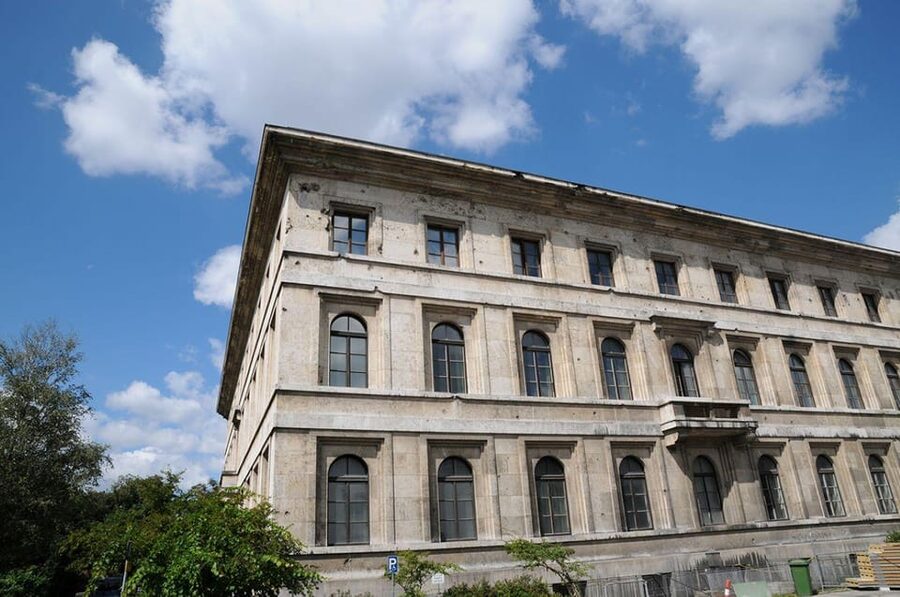
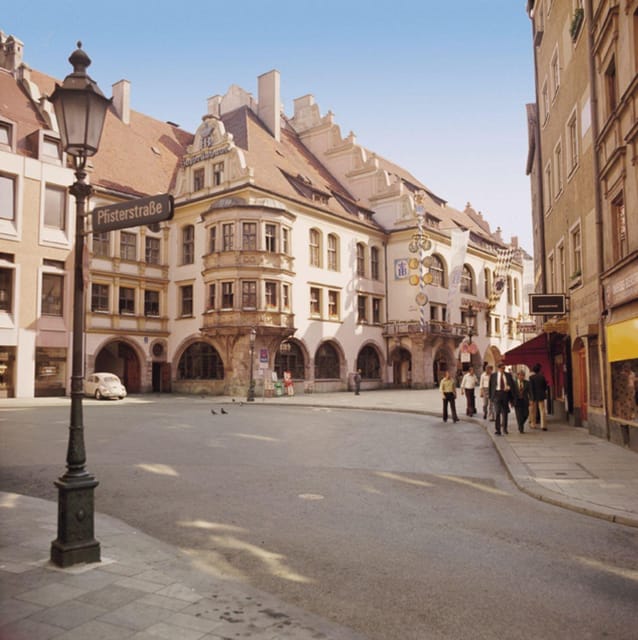
Munich’s beer halls were not just places for food and drink. They were major public meeting spaces, and Hitler used them to reach people directly. The tour points out beer halls and other locations tied to his early speeches and growing public profile.
This part helps explain why Hitler’s rise did not happen only in government offices. He first built a following through speeches, slogans, emotional appeals, and repeated appearances before crowds. In Munich, he became known as a forceful orator before he was known across Germany.
The route also covers the Beer Hall Putsch, Hitler’s first major attempt to seize power. The coup failed, but the event became part of Nazi mythology and helped Hitler gain wider attention. Your guide connects the failed uprising with the later methods used to turn defeat into propaganda.
I appreciate that this story includes failure, not only the later dictatorship. It shows that the Nazi rise was not automatic. There were moments when the movement could have been stopped, and there were people and institutions that resisted it. That context gives you a more accurate picture than a simple story of inevitable Nazi victory.
Same city, a completely different kind of day:
- From Munich: Neuschwanstein & Linderhof Castle Full-Day Trip
★ 4.5 · 12,494 reviews - Neuschwanstein & Linderhof Castle-Fairytale Day Tour from Munich
★ 4.5 · 7,275 reviews - Dachau Concentration Camp Memorial Site Tour from Munich by Train
★ 4.5 · 5,637 reviews - Neuschwanstein Castle Tour from Munich
★ 4.5 · 5,117 reviews
Former Nazi headquarters and the machinery of control
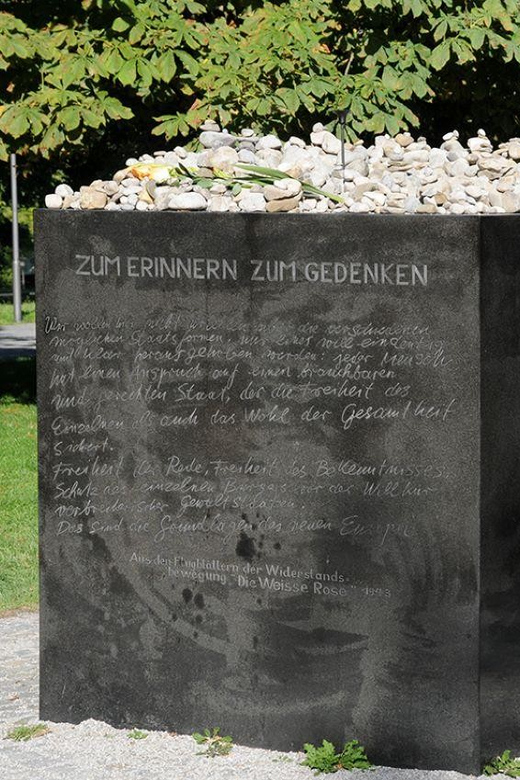
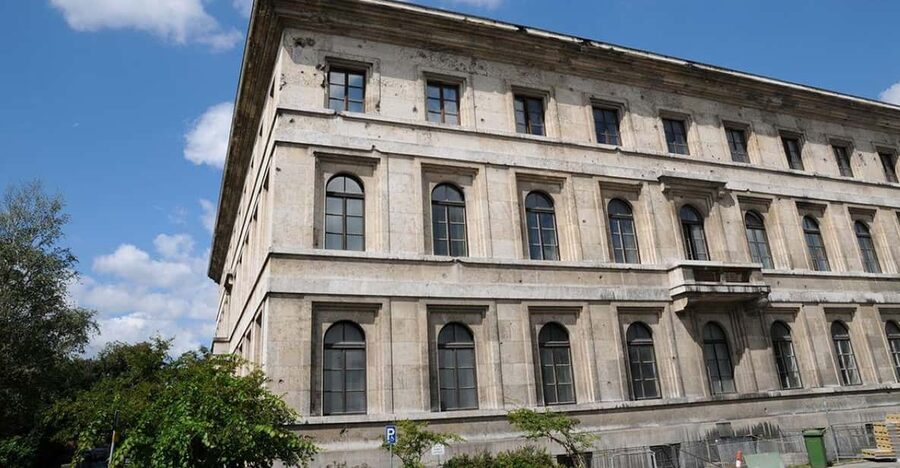
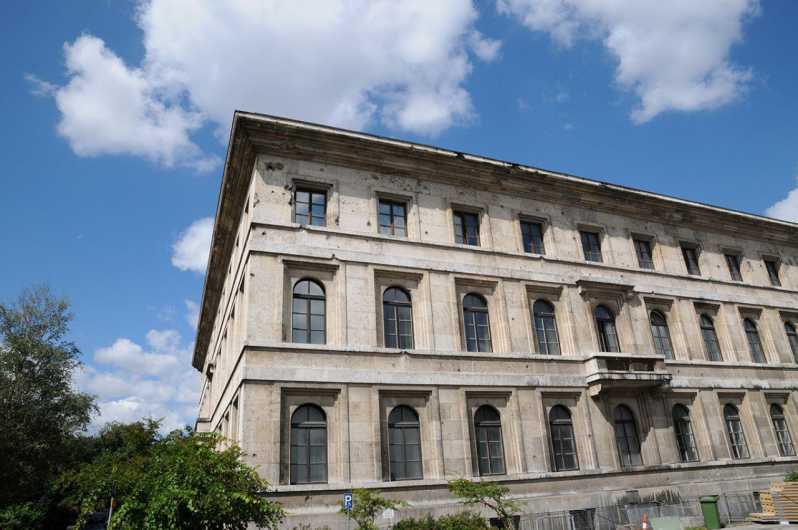
A major stop is the former Nazi headquarters, where Hitler exercised political power. Seeing the building gives you a sense of how the movement shifted from fringe agitation to organized rule.
The tour also examines original structures connected with the Nazi Party and the Brownshirts, the paramilitary force used to intimidate opponents and spread terror. In a city that still contains many grand buildings from the period, the route shows how architecture and political power worked together.
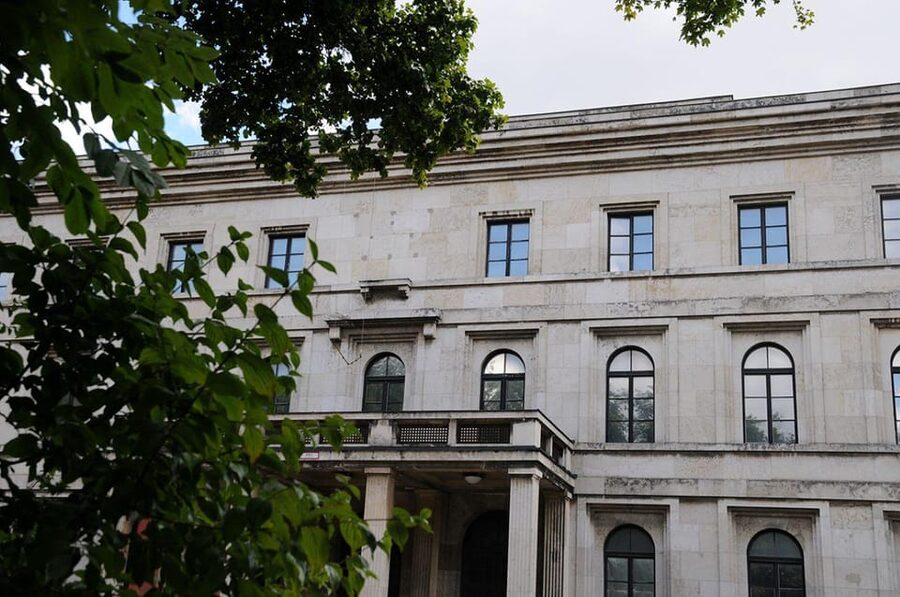
The buildings themselves can be misleading. Several monumental structures ordered or favored by Hitler survived the bombing that destroyed much of the surrounding center. Their size and formal design can make them look impressive if you view them only as architecture. The guide’s job is to explain what they represented, who used them, and how their visual power supported the regime.
This is one of the strongest reasons to take the walk with a certified guide rather than simply follow a map. A building does not explain its own political purpose. The guide provides the documents, photos, and background needed to read the site properly.
Königsplatz and the grand stage of the Third Reich
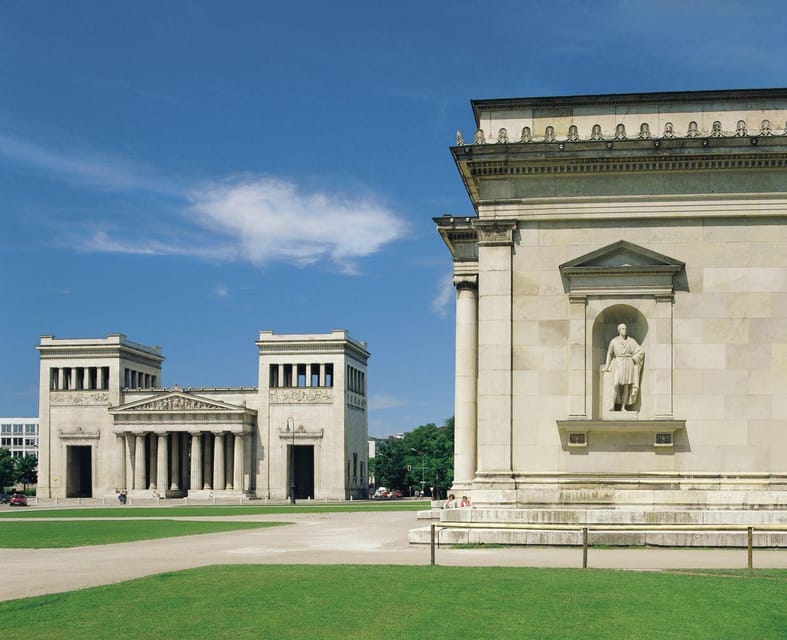
The route continues toward Königsplatz, one of the most important architectural settings in Munich’s Nazi story. The square was used for major political displays, and its grand scale suited the regime’s taste for ceremony and mass spectacle.
At Königsplatz, you can better understand how the Nazis used public space to project order, strength, and national destiny. The buildings and open areas were not neutral scenery. They were arranged and used to make the movement look permanent and powerful.
The setting also reveals the gap between propaganda and reality. Monumental buildings suggested control, but the regime depended on fear, violence, censorship, and the removal of political opposition. The guide connects the physical setting with the human cost behind it.
Because the tour is only two hours, you should expect a focused route rather than an exhaustive study of every Nazi-era building in Munich. That is a fair trade for a walk that keeps moving and links the most important sites into one story.
Persecution, book burning, and the city’s human cost
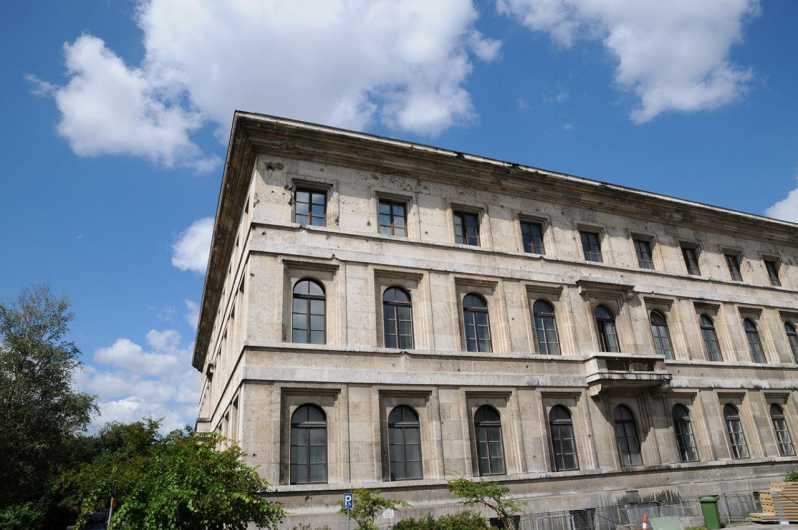
The tour does not stop with party headquarters and political monuments. It also covers anti-Semitic pogroms, the destruction of synagogues, and public book burnings. These events show how persecution moved from hateful words to organized public action.
That progression is central to understanding the period. The regime did not begin with the full scale of wartime murder already in place. It used propaganda, public humiliation, censorship, legal discrimination, violence, and the destruction of community life. The Munich route helps you connect those steps.
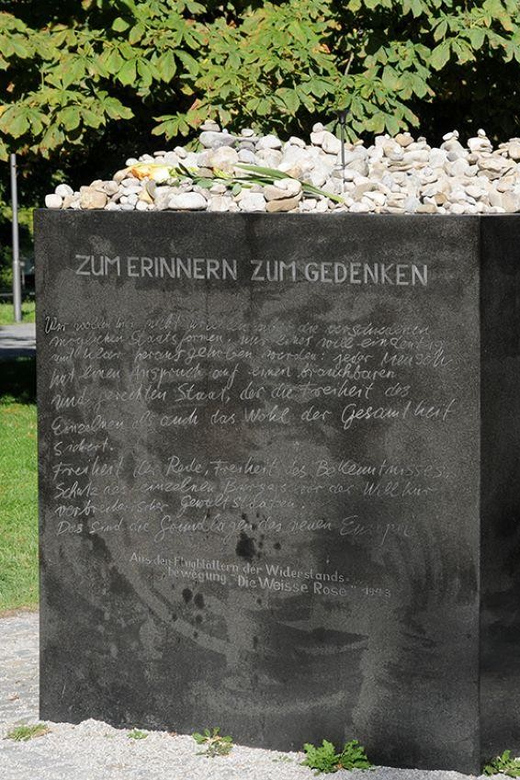
Your guide also addresses the people who resisted Hitler in the name of democracy. Their stories provide an important counterweight to the focus on Nazi power. You see not only where the regime operated, but also memorials dedicated to victims and those who opposed it.
I value this balance. A tour of Nazi Munich can easily become a procession of Hitler sites, which risks giving too much attention to the dictator. This experience places those sites beside reminders of the people harmed by the regime and those who challenged it.
Reading wartime scars in modern Munich
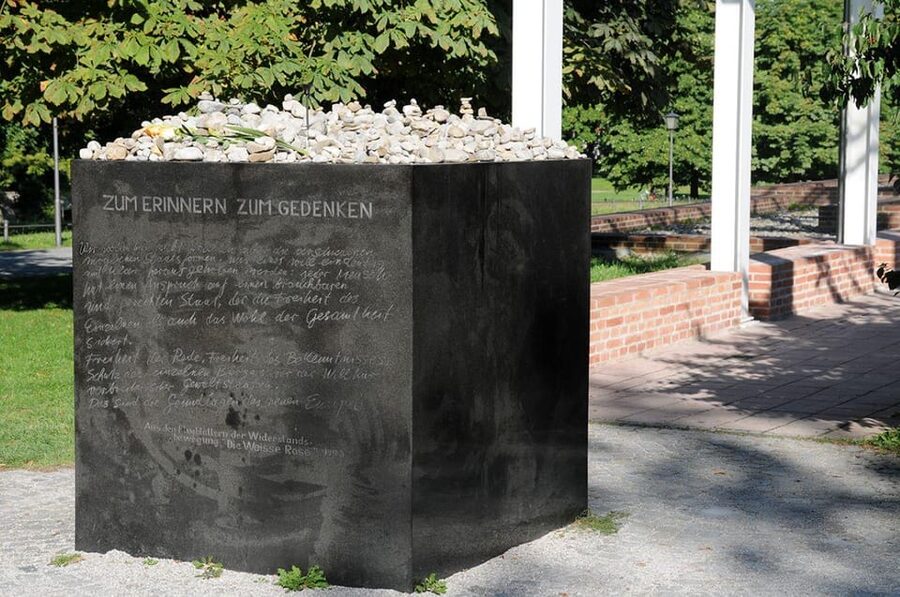
Much of Munich’s center was destroyed during World War II. As you walk, you may see buildings that bear physical scars from the war or have been repaired after heavy damage. The guide uses these details to connect the city’s political past with the conflict Hitler unleashed.
The comparison between surviving Nazi-era monuments and damaged older parts of the city is striking. Some structures built to celebrate the Third Reich remain imposing, while other parts of Munich had to be rebuilt. That uneven survival can make the past feel close, but it can also create confusion if you assume every surviving building is unchanged.
The photographs help here. They give you a visual record of bomb damage, wartime architecture, and Nazi ceremonies. Instead of seeing only polished modern streets, you get a before-and-after view of Munich.
This is also where comfortable shoes and a drink become practical advice rather than fine print. The tour lasts two hours and involves walking between locations, with no vehicle to carry you between stops. Weather can affect the experience, so dress for an outdoor city walk.
The guides: Karl, Ina, and a personal presentation
The guide can make or break a difficult history tour. Here, Karl is described as welcoming, enthusiastic, and able to place the subject in context. Ina is noted for a more personal approach, responding to questions and sharing her own feelings instead of delivering a fixed speech.
That does not mean every tour will feel identical. You may receive Karl, Ina, or another certified guide, and each person will have a different style. Still, the available feedback points to a useful pattern: the guides are not simply reciting dates. They use pictures, answer questions, and adjust the presentation to the group.
One especially practical strength is the ability to make the subject accessible to different ages and backgrounds. A group ranging from 21 to 57 found the presentation engaging, and a solo participant valued the chance to revisit history with context. The official age rule remains important, though: children under 10 are not considered suitable for this activity.
The tone should be respectful rather than theatrical. This is not a place for Nazi memorabilia or sensational storytelling. The best parts of the tour are the careful explanations of how ordinary streets became sites of political violence and how individuals responded.
Two hours, group size, and the $259 price
The listed price is $259 per group of up to 25 people. That makes the value depend heavily on your party size. For a private group of 10, the cost works out to about $26 per person. For 25 people, it is about $10 per person. For one or two people, the price is much harder to justify.
The advantage of a private booking is control and attention. You can ask questions without worrying about holding up a large public group, and the guide may be better able to respond to your interests. The tradeoff is that a small private party pays the same group rate, so the per-person cost rises quickly.
The two-hour length is well suited to a first introduction. You get a clear route through Munich’s Nazi past without giving up an entire day. If you already have a serious background in the subject, you may want more time or a museum visit afterward. If you are new to the history, this walk gives you a strong framework for understanding the city.
At a rating of 4.9 from 13 published ratings, the experience has a very positive record, though the sample is small. I would treat that as encouraging rather than conclusive. The strongest recurring qualities are the guides’ clear explanations, historical images, and ability to make the route feel relevant to the rest of your Munich stay.
Practical details for a respectful visit
The tour is wheelchair accessible, according to the activity information. Since it is a walking route through central Munich, you should still consider your own comfort with a two-hour city walk and ask the provider about the exact route if you have particular mobility needs.
Bring comfortable shoes and drinks. Video recording is not allowed, so plan to listen and take written notes or still photographs only if permitted by the guide and the locations.
English and German tours are available. Free cancellation is offered up to 24 hours before the start for a full refund, and you can reserve now and pay later. Starting times vary, so check availability for your chosen date.
The meeting point is the Mariensäule, not a general address somewhere in the square. That detail is worth saving on your phone before you leave.
Who should book this Munich history walk?
I would recommend it most to adults, older teenagers if accepted by the provider, history-minded visitors, and anyone who wants to understand Munich beyond its churches, markets, and beer halls. It is also a good choice for a private family or school-related group that wants a guided introduction to National Socialism in the places where it took root.
Solo visitors can benefit from the structure and the chance to ask questions. A group of friends or relatives can get good value from the flat group price, especially with eight or more people.
I would hesitate if you want a relaxed sightseeing walk, dislike serious political history, or prefer indoor exhibits. The tour deals with persecution, war, destruction, and murder. It may leave you thoughtful rather than cheerful, which is exactly the right response to its subject.
Should you book it?
Book this tour if you want Munich’s Nazi past explained at the actual sites, with old photographs, documents, and a guide who can connect political events to the streets around you. The route from Marienplatz to Königsplatz gives you a useful two-hour introduction, and the flat $259 rate can be a good deal for a private group.
Skip it if your party includes children under 10, if you are traveling alone and find the group price too high, or if you want a longer academic treatment. For most adults seeking a serious, well-organized look at Munich’s role in the rise of National Socialism, this is a worthwhile use of part of your day.
FAQ
Where does the Munich Third Reich tour meet?
Meet at the Mariensäule in the center of Marienplatz. It is the golden statue on a tall red marble column. Look for a guide carrying a blue bag marked Weis(s)er Stadtvogel.
How long does the walking tour last?
The tour lasts two hours.
What languages are available?
The tour is offered in English and German.
Is the tour private or shared?
The activity information describes a private group, with private or group options available. Check the booking choice for your date.
How many people can join one group?
The price is listed as $259 for a group of up to 25 people.
Is the tour wheelchair accessible?
Yes, the activity is listed as wheelchair accessible.
What should I bring, and what is not allowed?
Bring comfortable shoes and drinks. Video recording is not allowed.
More Walking Tours in Munich
- Munich: Old Town & Viktualienmarkt City Walk in German
★ 4.7 · 2,304 reviews - Munich: Night Watchman Walking Tour
★ 4.7 · 2,092 reviews - Munich Ghosts and Spirits Evening Walking Tour
★ 5.0 · 1,900 reviews - Munich Old Town Walking Tour
★ 4.5 · 1,287 reviews
Just added around Munich
- Pub crawl incl. Oktoberfest museum guided tour with beer tasting (private)★ 5.0 · 5 reviews
- South Tyrolean specialties and wine tasting★ 5.0 · 5 reviews
- Size Matters Beer Tour Munich★ 4.6 · 105 reviews
- Short & sweet: Tasting the Viktualienmarkt★ 4.8 · 37 reviews
- Secret Food Tours Munich★ 4.8 · 5 reviews
- Munich: Romantic Wine Experience for Two at Viktualienmarkt★ 4.2 · 14 reviews
- Munich: Resistance against Hitler – Historical Walking Tour★ 5.0 · 5 reviews
- Residence of Munich private tour with skip the line ticket★ 5.0 · 4 reviews
Third Reich & Cold War Tours, compared.



Berlin’s Best: 2 Hour Walking Tour Third Reich and the Cold War
Read our review →

Third Reich Berlin: Hitler and WWII Walking Tour
Read our review →
Skip-the-Line: Berlin Wall Museum at Checkpoint Charlie
Read our review →

Cold War, Berlin Wall, Spies and the East Side Gallery
Read our review →Browse the lists this tour appears in