
Reviewed · WALKING TOURS
Kreuzberg Walking Tour: Immigrants, Artists & Hipsters
Kreuzberg is where Berlin’s past and future rub shoulders. This three-hour tour follows the district from Cold War outpost to artist quarter and hipster address, with stops for Berlin Wall remains, street art, Turkish markets, and Markthalle 9. Guides Peter and Ronan bring a personal, thoughtful tone to the route.
I like the small group format, which gives you room to ask questions and discuss the politics behind the neighborhood’s changes. I also like the food angle: you can see flowers, spices, and take-away stalls, then try items such as spinach-and-cheese gözleme if you pay separately. The drawback is practical: some distances require public transport, and the price is high once you add food and the optional €10 bike rental.
In This Review
- Key points at a glance
- Why Kreuzberg deserves three hours
- Crossing Oberbaumbrücke into Kreuzberg
- SO36 and the district behind the postcard
- Berlin Wall traces and creative reuse
- Görlitzer Park and a slower look at local life
- Markthalle 9 and the taste of Turkish Kreuzberg
- Riverside plans and Kreuzberg’s next chapter
- Walking or cycling: which version fits you?
- What the $153.85 price means
- Who will get the most from this tour?
- Should you book the Kreuzberg Walking Tour?
- FAQ
- Where does the Kreuzberg tour start?
- Where does the tour end?
- How long does the tour last?
- Is the tour offered in English?
- Is this a walking tour or a bicycle tour?
- How much does the optional bike rental cost?
- Are public transport fares included?
- Is food included?
- How large is the group?
- Can children join the tour?
Key points at a glance
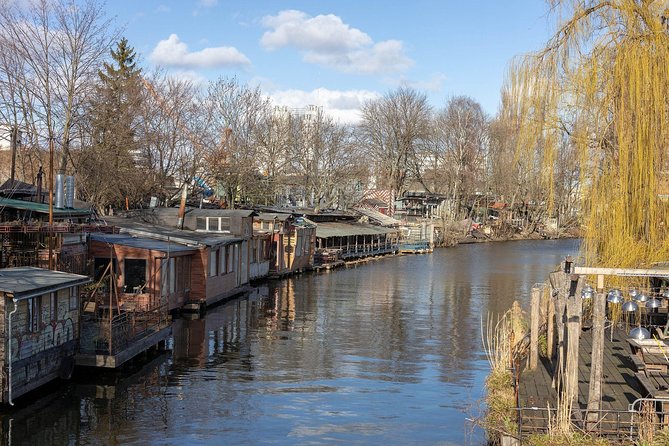
- Oberbaumbrücke sets the scene: Begin on one of Berlin’s most striking bridges, with the Spree and Kreuzberg ahead.
- SO36 explains the old Kreuzberg: Learn how a once-isolated Cold War district became a center of immigrant life, music, protest, and art.
- Street art has a purpose here: Your art historian guide explains why graffiti matters to Kreuzberg, not just where to photograph it.
- Food is part of the route: Turkish shops, colorful markets, and gözleme connect daily life with the district’s immigrant story.
- Choose your pace: Walk the route, or cover more ground by bicycle for an extra €10 per person.
- The final discussion looks forward: Riverside development plans show that Kreuzberg’s story is still being argued over.
Why Kreuzberg deserves three hours
Many first visits to Berlin stay around Museum Island, the Brandenburg Gate, and the remains of the Wall near the city center. Kreuzberg gives you a different Berlin. Here, the story is less about grand national symbols and more about people, rented rooms, abandoned buildings, immigrant businesses, artists, musicians, and the pressure of new development.
That makes this tour a good choice if you want context rather than a quick collection of photo stops. You are not simply shown a mural or a market hall. You are asked to consider why those places look the way they do, who used them before, and what may happen next.
The format is deliberately small. The advertised group size is six, though the booking information also allows up to eight people and lists a maximum of ten for the activity. I would confirm the exact group size when booking, but the main point is clear: this is intended to feel more like a guided conversation than a large walking convoy.
A few more Berlin trips to weigh up
- Discover Berlin Half-Day Walking Tour
★ 5.0 · 9,624 reviews - Berlin: Third Reich and Cold War 2 Hour Walking Tour
★ 4.9 · 6,830 reviews - Berlin: Discover Berlin Walking Tour
★ 4.9 · 5,998 reviews
Crossing Oberbaumbrücke into Kreuzberg
The tour begins at Schlesische Str. 18, close to public transport, and quickly leads you toward Oberbaumbrücke. The bridge is an excellent starting point because it gives you a strong visual sense of Berlin’s divided past and the district’s present-day energy.
From the bridge, the route moves into Kreuzberg rather than keeping you at a distance. You begin to see how the neighborhood works as a lived-in place, not merely as a collection of Berlin attractions. Your guide uses the setting to introduce the district’s political and social changes.
If you take the bicycle version, the bridge also gives you a useful early sense of the pace. A bike lets you cover more ground while staying within Kreuzberg. It does not turn the outing into a long citywide ride, and you still stop to hear the stories and examine key areas.
The bike is optional and costs €10 per person. The walking version may suit you better if you want more time for questions, food stops, and close looks at street art. The bicycle option makes sense if you value range and do not mind adding a separate rental fee.
SO36 and the district behind the postcard
The SO36 area is central to the tour’s story. Kreuzberg’s identity did not appear overnight. During the Cold War, parts of the neighborhood sat near the Wall and were treated as marginal, rough, or easy to overlook. That isolation helped create a particular kind of local culture.
You hear about the people and movements that shaped the area, including the musicians and rock figures who spent time here during the divided years. The point is not celebrity gossip. It is the way music, low rents, political activity, immigration, and urban neglect combined to make Kreuzberg attractive to outsiders while remaining difficult for many residents.
A guide who knows how to handle this history can help you avoid the usual postcard version of Berlin. Peter, one of the named guides, is described as someone who loves the neighborhood and offers useful ideas for the rest of your time in the city. Ronan is noted for patient conversation and for handling questions that lead into broader discussions.
That conversational quality matters here. Kreuzberg has no single simple identity. It has immigrant roots, left-wing traditions, creative communities, new businesses, and rising development pressure. You should expect some discussion rather than a fixed script that rushes from one sight to the next.
Berlin Wall traces and creative reuse
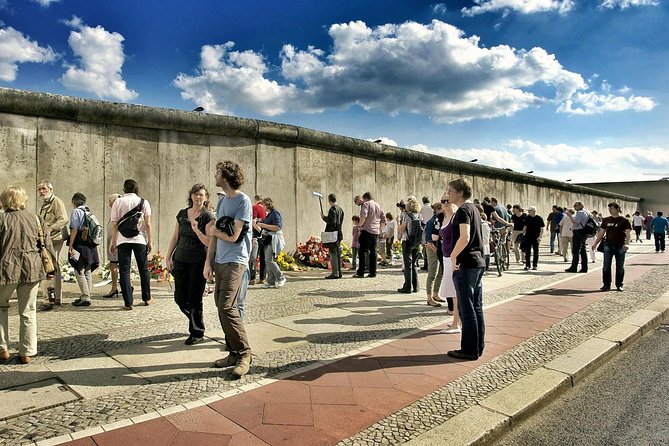
The Wall remains appear as part of the route, but this is not presented as a standard Wall memorial tour. In Kreuzberg, the former border helps explain why certain buildings and empty plots took on new uses.
Your guide points out how abandoned spaces became places for creative work and community activity. That is one of the most useful parts of the experience because it links physical remains to urban behavior. A vacant building is not just an old building. It may reveal how people respond when a city leaves room, by accident or by neglect, for something new.
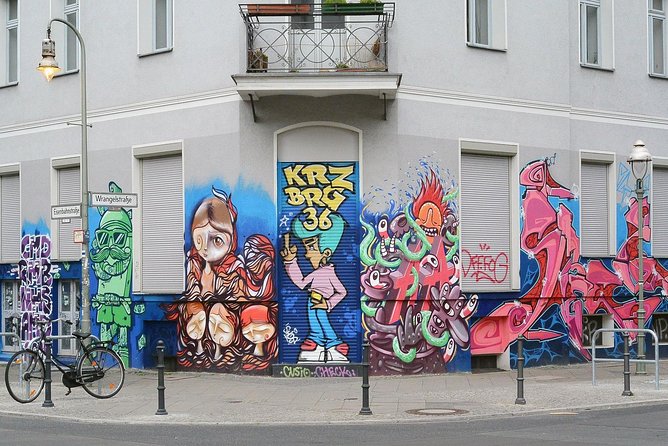
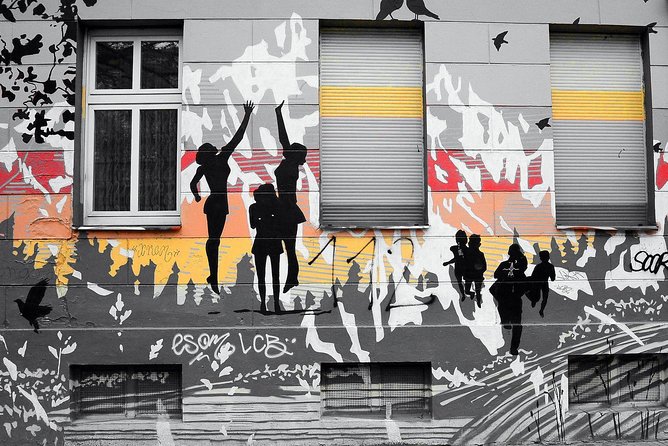
You also learn why graffiti and street art carry such weight in Kreuzberg. They are not merely colorful decoration. They help express ownership, protest, humor, identity, and resistance to change. The tour gives you a way to look at walls with more care, especially if you have previously treated street art as a quick photo opportunity.
The exact works you see can change. Street art is temporary, and the supplied information does not promise a particular mural. That is a strength in one sense, since the route can respond to the neighborhood as it is now. It also means you should not book expecting a fixed gallery of famous pieces.
Same city, a completely different kind of day:
- Berlin: Reichstag, Dome and Government District Guided Tour
★ 4.7 · 18,288 reviews - Berlin: 1-Hour City Tour by Boat with Guaranteed Seating
★ 4.3 · 16,993 reviews - Berlin: Boat Tour Along the River Spree
★ 4.4 · 11,252 reviews - Berlin: Hop-on Hop-off Bus Tour with Live Commentary
★ 4.3 · 8,579 reviews
Görlitzer Park and a slower look at local life

Görlitzer Park provides a change of pace. After the Wall, street art, and stories of political change, the park gives you room to observe how Kreuzberg uses open space.
The tour is not sold as a formal garden visit or a long park walk. Instead, the park helps you understand the district’s everyday rhythm. You can take things at a slower pace and see why Kreuzberg’s way of life appealed to artists, musicians, and people seeking an alternative to Berlin’s more polished center.
This is also where the small-group format proves useful. In a group of six or so, you can ask how the park fits into the district’s present problems and future plans. A larger group would make that kind of exchange harder, especially in an open public space.
Bring comfortable shoes for the walking version. The outing lasts about three hours, includes several key areas, and uses public transport a few times because the distances between stops are too long to walk comfortably. The tour is near public transportation, but it is not a completely self-contained stroll from start to finish.
Markthalle 9 and the taste of Turkish Kreuzberg
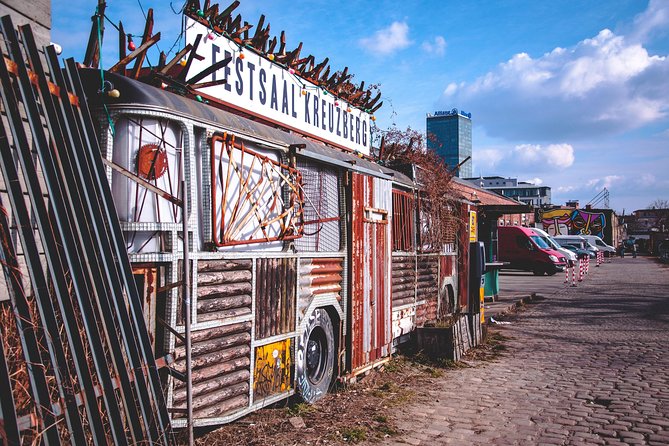
The 120-year-old Markthalle 9 gives the tour a strong food and market stop. Its value is not just architectural. It helps show how markets remain part of neighborhood life, even as Kreuzberg changes around them.
The route also takes you through Turkish shops and colorful markets filled with flowers, spices, and take-away food. This is one of the tour’s best features because the food is tied directly to the district’s immigrant story. You are not simply told that Kreuzberg is diverse. You see the shops, smells, colors, and daily trade that make that diversity visible.
You might sample deep-fried spinach and cheese gözleme along the way. Food and drinks are not included unless specifically stated, so budget separately for anything you want to eat. That arrangement is fair enough because it lets you choose, but the tour price does not cover every snack you may be tempted to try.
I would keep your expectations practical. This is not a dedicated food tour with a long list of tastings. Food is one part of a wider walk about history, art, immigration, and urban change. If you want a full meal, you will need to arrange that separately.
Riverside plans and Kreuzberg’s next chapter
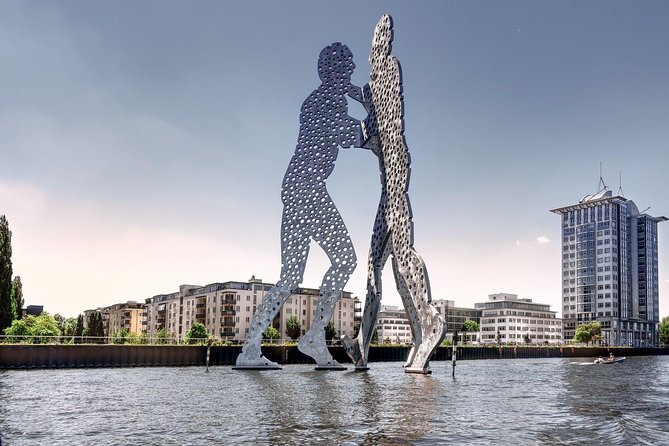
The tour ends with a discussion of controversial riverside development plans. This is a smart final topic because it connects the district’s past to the choices facing Berlin now.
Kreuzberg’s appeal is part of the problem. Places once considered marginal can become desirable after artists, immigrants, musicians, and independent businesses give them character. New investment follows, and the people and uses that made the area attractive may face pressure.
You do not need to agree with every position presented. The value is in seeing that neighborhood change is not automatic or neutral. Development affects housing, public space, businesses, and the look of the riverfront. Ending with this issue leaves you with a more honest view of Kreuzberg than a simple message that the district is cool.
One past version of the tour ended at the Friedrichshain-Kreuzberg Museum, which made a fitting close for the history-focused route. The supplied information does not guarantee that stop on every departure, so treat it as a possible feature rather than a promise.
Walking or cycling: which version fits you?
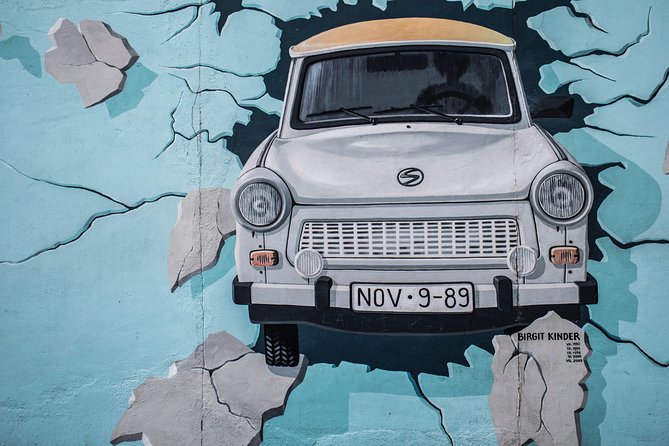
The walking tour is the safer choice if you want to focus on discussion. You can pause at street art, listen carefully in the market areas, and ask questions without thinking about bicycle handling or parking.
The bicycle option covers more ground while remaining within Kreuzberg. It may suit you if you like seeing a district through movement and want to reach sites that would take longer on foot. The optional rental costs €10 per person, and public transport may still be needed a few times.
Neither version is a pure sightseeing sprint. The tour is built around explanation and conversation. If you want to collect as many famous Berlin landmarks as possible, choose another outing. If you want to understand one neighborhood from several angles, three hours is a useful amount of time.
What the $153.85 price means
At $153.85 per person, this is an expensive neighborhood tour. The price makes the most sense when you value a small group and a professional art historian guide who can discuss history, politics, art, immigration, and current development in one connected route.
The group size is the key value point. You are paying for access to a guide rather than for expensive entry tickets or a long list of included attractions. There is no hotel pickup, food, or drink included, and the bike costs extra. Public transport fares are also not included in the stated tour features.
For a solo visitor or a couple who want a thoughtful introduction to Kreuzberg, the cost may be worthwhile. A larger family or group should check the available group discount, since that could improve the per-person value. Children must be accompanied by an adult, and most people can participate.
The tour is offered in English and confirmation is provided at booking. It is free to cancel up to 24 hours before the start time for a full refund. Cancel later, or make changes within that 24-hour window, and the payment is not refunded.
Who will get the most from this tour?
I would recommend it to you if you have already seen Berlin’s central sights and want a neighborhood with more social and political texture. It is also a good choice if you enjoy street art but want to understand its role rather than simply photograph it.
The tour suits adults, older children accompanied by an adult, and Berlin residents who want a fresh view of a familiar district. One strong feature is that it can still offer something to someone who has lived in Berlin for several years, since the guide’s stories and questions can shift your view of places you may already know.
You should think twice if you want a cheap, food-heavy outing or a route with no public transport. You should also confirm the group size if that detail matters to you, since the supplied booking limits differ between six, eight, and ten people.
Should you book the Kreuzberg Walking Tour?
Book this tour if you want insight into how Kreuzberg became Kreuzberg, from Cold War isolation and immigrant life to graffiti, markets, music, and development battles. The strongest reasons are the small group, the art historian guide, and the chance to connect ordinary streets with larger Berlin stories.
Skip it if your priority is a low-cost walk, a formal Wall memorial tour, or included food tastings. For everyone else, the outing offers a useful counterpoint to central Berlin, especially if you choose the walking format, keep some money aside for market food, and arrive ready to ask questions.
FAQ
Where does the Kreuzberg tour start?
The tour starts at Schlesische Str. 18, 10997 Berlin, Germany.
Where does the tour end?
The listed end point is Berlin, Germany. A past version ended at the Friedrichshain-Kreuzberg Museum, but that stop is not guaranteed for every departure.
How long does the tour last?
The tour lasts approximately three hours.
Is the tour offered in English?
Yes. The tour is offered in English.
Is this a walking tour or a bicycle tour?
You can take the experience on foot or choose the bicycle version. The bicycle option covers more ground but remains within Kreuzberg.
How much does the optional bike rental cost?
The optional bike rental costs €10 per person.
Are public transport fares included?
No. You need to use public transport a few times because some distances between key sites are too far to walk. The supplied tour details do not list public transport fares as included.
Is food included?
No. Food and drinks are not included unless specifically stated. You may choose to buy items such as spinach-and-cheese gözleme during the market portion.
How large is the group?
The tour is described as a small-group experience with six people maximum, while other booking information allows up to eight people per booking and lists a maximum of ten travelers for the activity. Confirm the exact limit when booking.
Can children join the tour?
Yes. Children can participate, but they must be accompanied by an adult.
Just added around Berlin
- Love and War in Berlin: Self-Guided Story Puzzle Walk★ 5.0 · 7 reviews
- Rickshaw Tours Berlin – Groups of up to 16 people with several rickshaws★ 4.0 · 97 reviews
- Walking on the Wall: 3-Hour Tour in Berlin★ 4.5 · 34 reviews
- eSIM for Germany and 34 European Countries★ 4.5 · 16 reviews
- Warnemuende Shore Excursion: Berlin Private Sightseeing Tour from Rostock★ 5.0 · 4 reviews
- Your ticket to The Wall Museum Berlin★ 3.0 · 60 reviews
- Warnemuende Shore Excursion: Private Berlin Tour★ 4.5 · 27 reviews
- Berlin’s Gay, Lesbian, and Queer Scene Small-Group Walking Tour★ 4.5 · 66 reviews
Walking Tours, compared.





Berlin’s Best: 2 Hour Walking Tour Third Reich and the Cold War
Read our review →

