
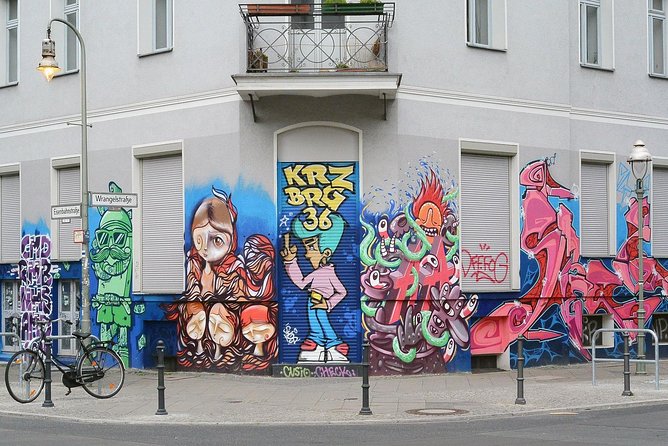
Reviewed · WALKING TOURS
Kreuzberg Private Walking Tour: Immigrants, Artists & Hipsters
Kreuzberg is where Berlin’s rough past and creative present meet. This private walk takes you from Oberbaumbrücke and former Wall territory through SO36, where immigrant businesses, street art, cafes, and political history share the same streets. It is a useful way to see the neighborhood as more than a nightlife district.
I like the private format, which lets the guide adjust the pace and focus. I also like the mix of Turkish culture, old working-class streets, abandoned lots turned art spaces, and Viktoriapark. The main drawback is practical: some distances require public transport, and $450 is a steep price for one or two people.
In This Review
- Key points at a glance
- Why Kreuzberg deserves three hours
- Starting beside the Spree at Oberbaumbrücke
- Reading the Wall through Kreuzberg
- Oranienstrasse and the character of SO36
- Street art, empty buildings, and creative space
- Viktoriapark, a green pause in the city
- A neighborhood deciding what comes next
- What the private format adds
- Is $450 a fair price?
- Timing, meeting point, and cancellation
- Who should book this Kreuzberg walk?
- Should you book it?
- FAQ
- How long is the Kreuzberg private walking tour?
- How many people can join the private tour?
- Where does the tour begin?
- Are morning and afternoon departures available?
- Do I need to pay for admission to the stops?
- Can I cancel for a full refund?
Key points at a glance
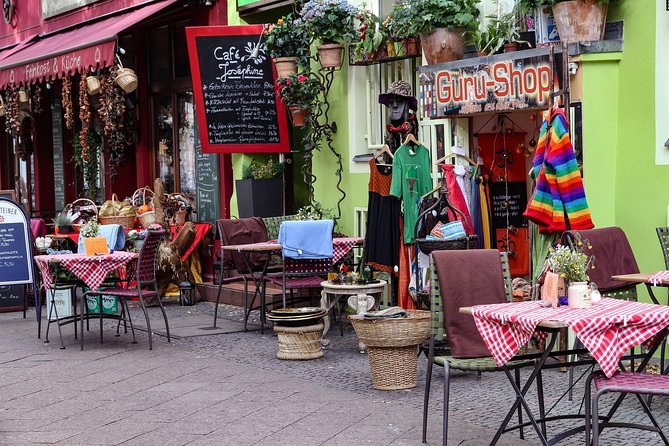
- Oberbaumbrücke sets the scene: Begin beside one of Berlin’s best-known bridges and the Spree River.
- SO36 is the heart of the walk: See the eastern part of Kreuzberg, including Oranienstrasse, cafes, boutiques, and former street-battle sites.
- The Berlin Wall is part of the story: Look for remaining fragments and learn how division shaped the district.
- A historian leads the way: Guides such as Klaus can tailor the walk to your interests and pace.
- Viktoriapark adds breathing room: The tour includes one of Kreuzberg’s best-known green spaces.
- Expect some transit: Public transportation is needed between several key places, and bike rental is an optional $10 per person.
Why Kreuzberg deserves three hours
Kreuzberg is not a single, tidy attraction. It is a district shaped by workers, immigrants, war damage, Cold War pressure, artists, anarchists, landlords, developers, and small businesses. That makes a guided walk useful. Without context, you may see painted walls, cafes, and crowded streets. With a historian, you can connect those sights to the forces that made the neighborhood what it is.
The walk focuses on the eastern part of Kreuzberg, known as SO36, a name inherited from the old postal code. This is the side associated with alternative culture, Turkish shops, nightlife, protest movements, and a long habit of resisting outside control.
You will also hear about change. Kreuzberg has attracted artists and creative workers for decades, and the same qualities that made it affordable and appealing have drawn investors and new development. The tour does not treat gentrification as a simple good-or-bad story. Instead, it looks at what may be lost, what may improve, and who gets to shape the district next.
That balance is one of the strongest reasons to book a private guide. You are not just checking off sights. You are learning how a neighborhood works.
A few more Berlin trips to weigh up
- Discover Berlin Half-Day Walking Tour
★ 5.0 · 9,624 reviews - Berlin: Third Reich and Cold War 2 Hour Walking Tour
★ 4.9 · 6,830 reviews - Berlin: Discover Berlin Walking Tour
★ 4.9 · 5,998 reviews
Starting beside the Spree at Oberbaumbrücke
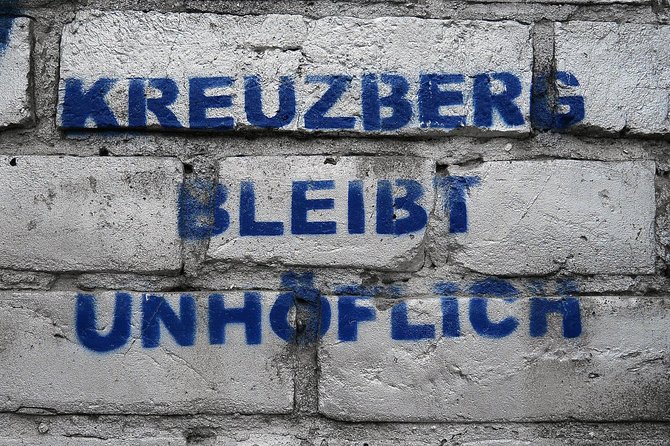
The tour starts at Schlesische Strasse 18, near public transportation, and includes Oberbaumbrücke as its opening point. The bridge crosses the Spree on two levels and is one of Berlin’s most recognizable crossings. Its brick towers and unusual design give the first part of the tour a clear visual marker.
From here, your guide introduces SO36 and explains the connection between the bridge, the river, and the district around it. This is a good beginning because it places you on the edge of the neighborhood rather than dropping you into a random street with no context.
The bridge area also helps explain Kreuzberg’s position in Berlin. It links the district with Friedrichshain, and the riverfront has become a focus for new construction and redevelopment. That makes it an ideal place to discuss the pressure facing Kreuzberg.
You will want comfortable shoes. The experience lasts about three hours, and the route includes several distinct parts of the district. Exact walking distances can vary, and public transportation is needed a few times when sites are too far apart to reach on foot.
Reading the Wall through Kreuzberg
A stop at remnants of the Berlin Wall gives the tour its Cold War backbone. Kreuzberg was formerly part of West Berlin, while the Wall passed through areas that are now filled with art, restaurants, housing, and daily traffic. It is easy to forget how closed and tense this part of the city once felt.
The guide uses remaining Wall fragments and nearby spaces to show how division affected the neighborhood. You will also hear how abandoned buildings and empty plots later offered room for artists and alternative projects. The point is not simply that Berlin has street art. It is that the city’s unusual postwar conditions helped create places where experimental work could take root.
The stop is listed at about 25 minutes. That is enough time for a focused explanation without turning the tour into a long memorial visit. If your main interest is Berlin’s Wall history, this walk gives useful local context, but it is not a dedicated Wall tour. You will see fragments and discuss their meaning as part of a wider Kreuzberg story.
Oranienstrasse and the character of SO36
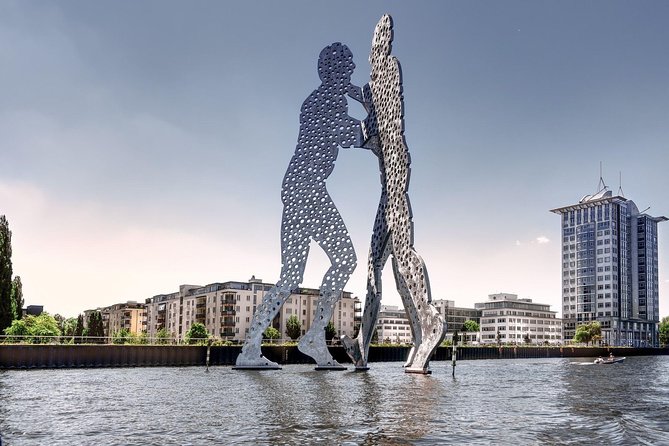
Oranienstrasse is one of the key stops. The street is known for its cafes, boutiques, and eclectic retail mix, but its importance goes deeper than shopping. Its name refers to the Dutch House of Orange, and the street also has a record of conflict between Berlin anarchists and police around the turn of the 20th century.
This is where Kreuzberg’s layered identity becomes easiest to see. Turkish businesses and market goods sit alongside independent shops, bars, and newer retailers. The result is not a staged cultural display. It is a working neighborhood where different communities and generations use the same streets in different ways.
The tour allows about 35 minutes here. That is long enough to pause, look around, and connect present-day street life with earlier political struggles. Your guide may point out details you would otherwise pass without noticing, especially if you explain your interests at the start.
This section will appeal most to people who like cities as living places rather than collections of monuments. You will not get a grand palace or a famous museum interior. You will get shopfronts, walls, side streets, and an explanation of why they matter.
Same city, a completely different kind of day:
- Berlin: Reichstag, Dome and Government District Guided Tour
★ 4.7 · 18,288 reviews - Berlin: 1-Hour City Tour by Boat with Guaranteed Seating
★ 4.3 · 16,993 reviews - Berlin: Boat Tour Along the River Spree
★ 4.4 · 11,252 reviews - Berlin: Hop-on Hop-off Bus Tour with Live Commentary
★ 4.3 · 8,579 reviews
Street art, empty buildings, and creative space
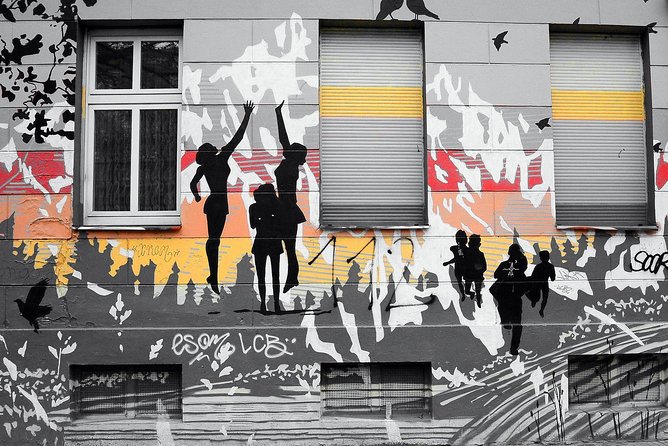
Kreuzberg’s street art culture is one of the major draws, but the tour treats it as part of the neighborhood’s past rather than as a string of photo stops. Your guide explains how vacant buildings and unused plots gave artists room to work during periods when the area was less desirable and less expensive.
That background matters. Street art did not appear in a vacuum, and it was not simply added to make the streets attractive. It grew alongside protest, squatting, music, immigration, and the search for affordable space.
You can expect walls filled with large-scale work, smaller tags, and changing pieces. Since outdoor art changes constantly, the exact examples will depend on the date of your visit. The useful part is the explanation of how art became tied to the neighborhood’s identity and property pressures.
I would not book this tour only for a guaranteed list of murals. The route is more valuable if you want to understand why Kreuzberg became associated with artists in the first place.
Viktoriapark, a green pause in the city
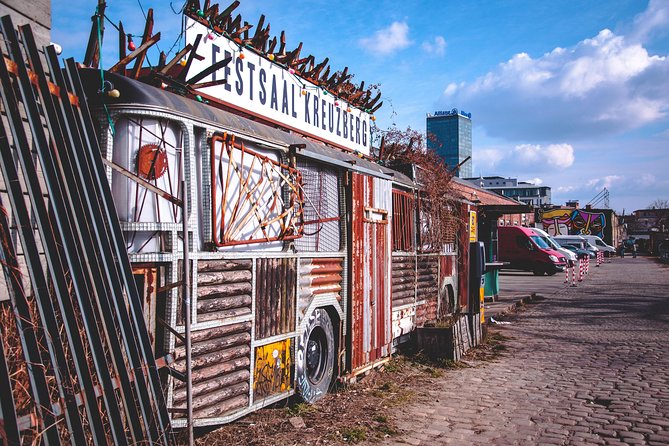
The walk also reaches Viktoriapark, one of Berlin’s popular green spaces. After the dense streets, painted walls, shops, and traffic around SO36, the park offers a change of pace.
The listed stop lasts about 20 minutes. That makes it a short visit rather than a full park tour, but it gives you time to see a quieter side of Kreuzberg and hear how public space fits into city life. The park helps prevent the experience from becoming a nonstop march through urban history.
The contrast is useful. Kreuzberg is often presented through nightlife, cafes, and street art, yet its parks are part of what makes the district livable. If you have children or need a pause during a longer day of sightseeing, this stop adds welcome variety.
Do not expect a long rest break with food or drinks included. Refreshments are not part of the tour, so plan to buy anything you need separately.
A neighborhood deciding what comes next

The closing discussion looks at future plans for Kreuzberg, especially riverside development that may speed up gentrification. This gives the tour a forward-looking finish rather than ending with a postcard view.
The subject can be uncomfortable, which is exactly why it belongs here. Rising investment may bring cleaner public spaces, new shops, and improved buildings. It may also make rents harder to afford for the communities and small businesses that gave Kreuzberg its identity.
A private guide can make this discussion more useful because you can ask direct questions. You might want to know how the old alternative culture fits into today’s property market, how Turkish businesses are affected, or why certain parts of the district attract new development.
The tour does not promise a final answer. Kreuzberg is still changing, and the point is to help you see that change while walking through the places affected by it.
What the private format adds

The group limit is 10 people, but this is a private tour rather than a standard large-group walk. That changes the feel of the experience. You can ask questions without holding up a coachload of people, and the guide can spend more time on subjects that interest you.
Klaus is one named guide associated with the experience. The strongest details connected with him are his friendly style, broad command of the subject, and ability to keep pace with the people he is guiding. He also knows where to find good spaetzle, which could be useful if you want a meal suggestion after the walk.
A parent traveling with a 12-year-old found the neighborhood and history engaging, so the tour can work for families if children are comfortable walking and listening. It is also a good fit for adults who have already seen central Berlin and want a district with fewer standard sightseeing stops.
Tell the guide what you care about early. You may be more interested in architecture, migration, the Wall, art, food, politics, or future development. The private setup has real value only if you use that flexibility.
Is $450 a fair price?
The price is $450 per group for up to 10 people. At the maximum size, that works out to $45 per person, which is reasonable for a three-hour private tour led by a historian. For four people, it becomes $112.50 each. For two people, it is $225 each, and for one person, the cost is hard to justify unless private guiding is your top priority.
This is not a ticket-heavy experience. Admission to the stops is free, but the price pays for the guide’s time, preparation, local interpretation, and the ability to set the pace around your interests.
You should also budget for public transportation because several parts of the route are too far apart to walk. Bike rental is available as an optional add-on for $10 per person, though the core tour remains a walking experience. Food and drinks are not included.
The best value comes when you share the booking with family or friends. A group of six to ten people gets a private three-hour neighborhood tour at a much better per-person rate than a couple booking alone.
Timing, meeting point, and cancellation
Morning and afternoon departures are available, so choose based on the rest of your Berlin plans. An afternoon start may suit you if you want to see Kreuzberg as shops and cafes are active, while a morning walk may feel easier if you prefer a quieter schedule. The available information does not promise a particular street atmosphere at either time.
You meet at Schlesische Strasse 18, 10997 Berlin. The tour ends in Berlin, but no exact final address is specified, so ask the provider if you need to plan a tight connection afterward.
Confirmation arrives within 48 hours, subject to availability. The activity is near public transportation, most people can participate, and the group is capped at 10. You can cancel for a full refund up to 24 hours before the local start time. Changes or cancellations inside that window are not accepted for a refund.
Who should book this Kreuzberg walk?
I would choose this tour if you want Berlin explained through one neighborhood instead of a quick tour of major sights. It suits first-time visitors who want a strong introduction to Kreuzberg and repeat visitors who have already covered Museum Island, the Brandenburg Gate, and the central memorials.
It is especially useful for you if you care about:
- Immigration and Turkish culture in Berlin
- Street art and artist communities
- The Berlin Wall’s effect on everyday neighborhoods
- Urban change and gentrification
- Small businesses, cafes, markets, and local streets
- A guide who can adjust the route and discussion
You may want a different experience if your priority is a long mural tour, a full Berlin Wall route, or a food-focused walk. You should also think twice if you dislike public transportation during tours or if you are booking alone and cannot spread the $450 cost across a group.
Should you book it?
Book this Kreuzberg private walking tour if you want context, conversation, and local streets rather than a parade of famous monuments. The mix of SO36, Wall remnants, Oranienstrasse, Viktoriapark, and future development gives the three hours a clear shape.
The price is sensible for a full private group and less attractive for one or two people. If you can share it with friends or family, and you are curious about how immigration, creativity, politics, and property development have shaped Berlin, this is a strong use of an afternoon.
FAQ
How long is the Kreuzberg private walking tour?
The tour lasts approximately three hours.
How many people can join the private tour?
The maximum group size is 10 travelers.
Where does the tour begin?
The meeting point is Schlesische Strasse 18, 10997 Berlin, Germany.
Are morning and afternoon departures available?
Yes. You can choose a morning or afternoon departure and should advise the provider of your preference when booking.
Do I need to pay for admission to the stops?
No admission fees are listed for the included stops. You will need to pay separately for public transportation, food, drinks, and the optional bike rental.
Can I cancel for a full refund?
Yes. You can cancel at least 24 hours before the experience start time for a full refund. Cancellations or changes made less than 24 hours before the start time are not accepted for a refund.
Just added around Berlin
- Love and War in Berlin: Self-Guided Story Puzzle Walk★ 5.0 · 7 reviews
- Rickshaw Tours Berlin – Groups of up to 16 people with several rickshaws★ 4.0 · 97 reviews
- Walking on the Wall: 3-Hour Tour in Berlin★ 4.5 · 34 reviews
- eSIM for Germany and 34 European Countries★ 4.5 · 16 reviews
- Warnemuende Shore Excursion: Berlin Private Sightseeing Tour from Rostock★ 5.0 · 4 reviews
- Your ticket to The Wall Museum Berlin★ 3.0 · 60 reviews
- Warnemuende Shore Excursion: Private Berlin Tour★ 4.5 · 27 reviews
- Berlin’s Gay, Lesbian, and Queer Scene Small-Group Walking Tour★ 4.5 · 66 reviews
Walking Tours, compared.





Berlin’s Best: 2 Hour Walking Tour Third Reich and the Cold War
Read our review →

