
Reviewed · WALKING TOURS
Jewish Berlin: Walking tour The Old Jewish Quarter (private 3 Hours tour)
Berlin’s Jewish story is not contained in one preserved district. It is spread across ordinary streets, courtyards, memorials, a cemetery, and the surviving dome of the New Synagogue. That makes this three-hour private walk especially useful: it helps you connect scattered places into one human story, from medieval settlement to the Nazi era and beyond.
I like the hotel pickup, which saves you from finding an unfamiliar meeting point, and the small-group format, which allows room for questions. I also like the chronological approach praised by several people who took the tour, along with the way guides such as Nadav, Orr, Sharona, Adi, and Zvi bring personal Jewish and Israeli perspectives to the subject. The main consideration is the price: at $356.62 for up to eight people, it is good value for a full group, but expensive for one or two guests.
In This Review
- Key points at a glance
- Berlin’s Jewish story is spread across the city
- Starting at Berlin’s oldest synagogue site
- Rosenstrasse and the power of a public protest
- Hackesche Höfe and Jewish life before the Nazi era
- Otto Weidt’s workshop and an individual rescue story
- The old Jewish cemetery and a change of pace
- The Missing House and memory through absence
- The New Synagogue and the visible symbol of Jewish Berlin
- What the guides add to the history
- Three hours, hotel pickup, and walking demands
- Who will get the most from this walk
- Is the private price worth it?
- Should you book Jewish Berlin: The Old Jewish Quarter?
- FAQ
- How long is the Jewish Berlin walking tour?
- How much does the private tour cost?
- Is hotel pickup included?
- Is the tour available in English?
- Which places are included?
- Do I need special clothing?
- Can I cancel for a refund?
Key points at a glance
- No single preserved Jewish Quarter: The walk explains Berlin’s Jewish past through a chain of meaningful sites rather than one intact neighborhood.
- Seven thoughtful stops: Expect the Rosenstrasse protest memorial, Hackesche Höfe, Otto Weidt Museum, old Jewish cemetery, Missing House, and New Synagogue.
- Personal guiding matters here: Guides may include Nadav, Orr, Sharona, Adi, or Zvi, and the best part of the experience is the conversation around the sites.
- Private for up to eight people: Your group participates alone, with morning or afternoon departure choices.
- Hotel lobby pickup: The guide meets you at your Berlin hotel, though food, drinks, and transportation to or from attractions are not included.
- Plan for respectful clothing: Men need a head covering for the optional cemetery entrance, and a moderate level of fitness is advised.
Berlin’s Jewish story is spread across the city
The phrase Old Jewish Quarter can give you the wrong picture. Berlin does not offer a single preserved district with clear gates and rows of restored Jewish buildings. Instead, the walk moves through Mitte, where traces of Jewish life sit beside modern shops, offices, apartment courtyards, and busy city streets.
That contrast is part of the lesson. You are not visiting a sealed museum district. You are seeing places where people lived, worshipped, protested, worked, disappeared, and were remembered. A good guide makes those layers readable.
The tour begins with the early Jewish settlement, then moves through immigration, community life, Nazi persecution, individual acts of rescue, and memorial culture. I like that order because it avoids reducing Jewish Berlin to the Holocaust alone. You first learn that Jewish life was present for centuries, with its own institutions, families, businesses, arguments, and hopes.
The private format helps with a subject that can become either too academic or too hurried. With only your own group, you can stop to ask about a name, a memorial, or a detail that needs more explanation. The guide can also adjust the pace, within the three-hour limit.
A few more Berlin trips to weigh up
- Discover Berlin Half-Day Walking Tour
★ 5.0 · 9,624 reviews - Berlin: Third Reich and Cold War 2 Hour Walking Tour
★ 4.9 · 6,830 reviews - Berlin: Discover Berlin Walking Tour
★ 4.9 · 5,998 reviews
Starting at Berlin’s oldest synagogue site
The first stop is the monument marking the site of Berlin’s oldest synagogue. The synagogue itself is no longer there, but the location gives your guide a place to explain the early beginnings of Jewish settlement in Berlin.
This is a quiet start to the tour. There is no grand interior to inspect, so the value comes from the explanation. You begin with the fact that Jewish life in Berlin did not start in the twentieth century or with the famous New Synagogue. It reaches back to the Middle Ages and continued through major changes in the city.
Allow about 15 minutes here. That may sound brief, but it works as an opening chapter rather than a full visit. I would listen for dates, community patterns, and the reasons Jewish residents settled in this part of Berlin. If you prefer monuments with a lot of visible architecture, this stop may feel spare. Its importance is historical rather than visual.
Rosenstrasse and the power of a public protest
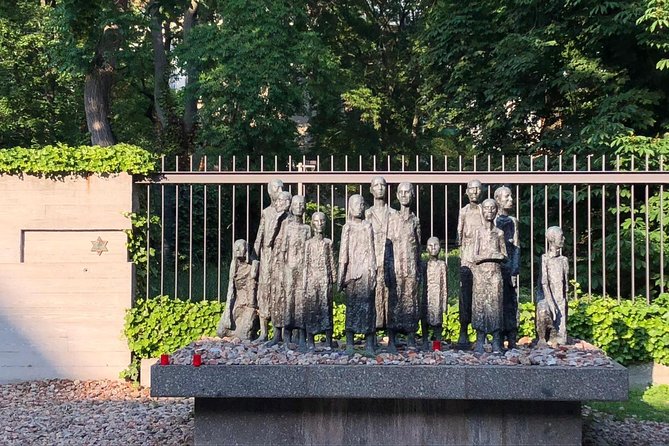
At the Denkmal Rosenstrasse, the guide explains the protest by non-Jewish women who demanded the release of their Jewish husbands. The memorial marks an episode in which personal relationships became a public act of resistance.
The stop lasts about 15 minutes, but the subject can prompt a longer conversation. It gives you a way to think about the Nazi period through individual decisions and family ties, not only through government policy and statistics. The human scale is what makes this place difficult and memorable.
Your guide may also help you place the protest within the wider story of persecution. Do not expect a long museum visit here. This is an outdoor memorial stop, and its impact depends on the story told around it.
Hackesche Höfe and Jewish life before the Nazi era
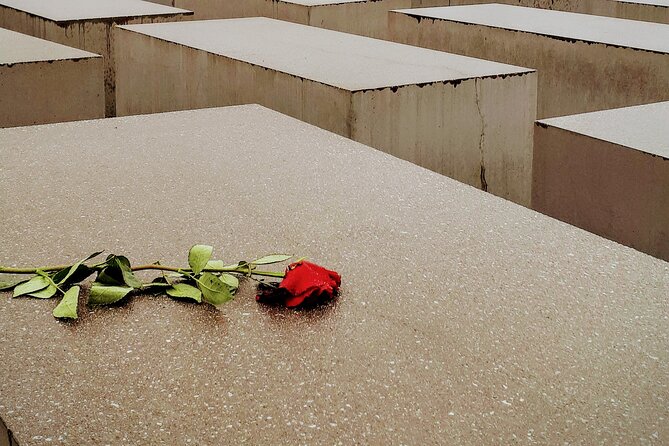
Hackesche Höfe is one of the tour’s more visually appealing stops. The interconnected courtyards are known for their architecture today, but the guide uses them to discuss Eastern European Jews who moved to Berlin around the turn of the twentieth century.
This part adds needed social context. Migration changed the size and character of Berlin’s Jewish population. The courtyards help you picture the city as a place where newcomers lived and worked, often in close quarters, while building new lives.
You spend about 15 minutes here. That is enough for an introduction, though not enough for a full architectural tour of the courtyards. If your interest is Jewish Berlin rather than design, keep your attention on the people who once lived in this setting. The modern shops and restored surfaces can otherwise pull your focus away from the past.
Same city, a completely different kind of day:
- Berlin: Reichstag, Dome and Government District Guided Tour
★ 4.7 · 18,288 reviews - Berlin: 1-Hour City Tour by Boat with Guaranteed Seating
★ 4.3 · 16,993 reviews - Berlin: Boat Tour Along the River Spree
★ 4.4 · 11,252 reviews - Berlin: Hop-on Hop-off Bus Tour with Live Commentary
★ 4.3 · 8,579 reviews
Otto Weidt’s workshop and an individual rescue story

The Museum Blindenwerkstatt Otto Weidt is the most intimate stop on the route. It tells the story of Otto Weidt, a German man who risked his life to protect his Jewish employees.
The museum visit lasts about 20 minutes. That is short, so expect a focused introduction rather than every room and document. Still, this stop brings the era down to the level of a workplace and its employees. You hear about a person making dangerous choices to save people under his care.
I especially value this stop because it complicates the usual picture of the Nazi period without softening its brutality. The story is not presented as a cheerful exception. It shows how courage could appear in a small workshop, and how much danger surrounded even an attempt to help.
Several guides have been praised for making these stories personal and clear. Nadav, described as an Israeli-German guide, has used historical material in a notebook to support his explanations. That kind of visual aid can help when the places themselves provide few obvious clues.
The old Jewish cemetery and a change of pace
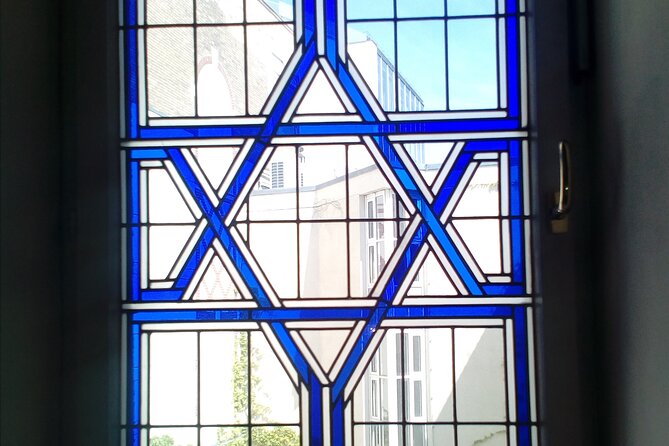
The memorial Jewish cemetery introduces another layer of Berlin’s Jewish past. Among those associated with the cemetery is Moses Mendelssohn, an important figure in Jewish intellectual life.
The stop is listed at about 15 minutes, with an optional entrance. Men should bring or wear a head covering if they enter the cemetery. That is a small practical point, but it is worth knowing before the tour begins.
A cemetery calls for a slower tone than the city streets around it. You may find this part especially meaningful if you want to connect names and individuals with the larger story. At the same time, the optional entrance means the exact experience can depend on what your group chooses and what the guide arranges.
Dress respectfully, and wear shoes suitable for several hours on foot. The tour asks for moderate physical fitness, so it is not designed as a seated history lesson.
The Missing House and memory through absence
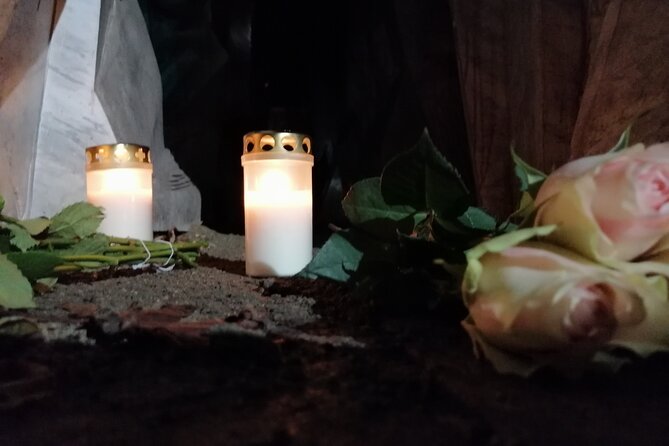
The Missing House is a brief stop, lasting about five minutes, but its small size is part of its effect. Artist Christian Boltanski created the memorial to mark the absence of residents who once lived in a building that no longer exists.
You do not spend long here, and there is no conventional exhibit to tour. Instead, the memorial asks you to think about empty space and missing names. After the more direct historical explanations at Rosenstrasse and Otto Weidt, this piece shifts the focus toward how a city remembers people who were removed from it.
This is a stop where the guide’s explanation matters more than the amount of time spent. If you want a long look at art, five minutes will seem thin. If you appreciate concise memorials that make you pause, it fits well into the route.
The New Synagogue and the visible symbol of Jewish Berlin
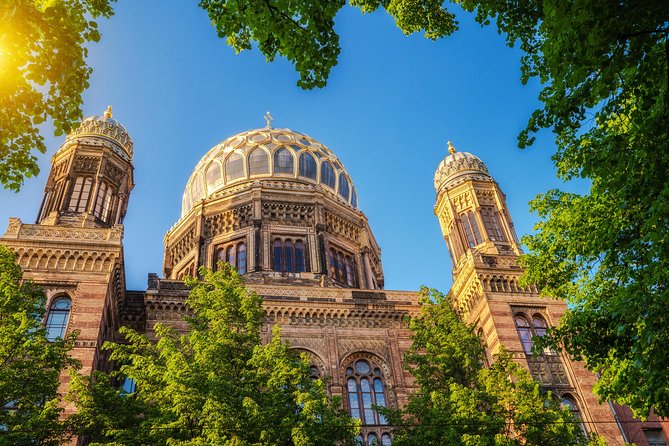
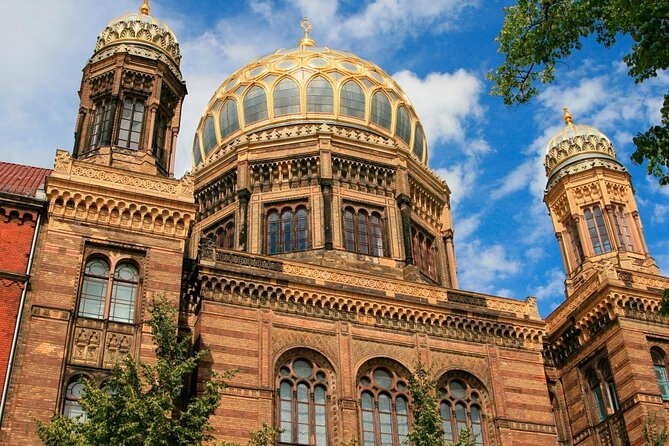
The final listed stop is the Stiftung Neue Synagoge Berlin, also known as the Centrum Judaicum. You see the synagogue and hear its history, including the role it has played in Berlin’s Jewish story.
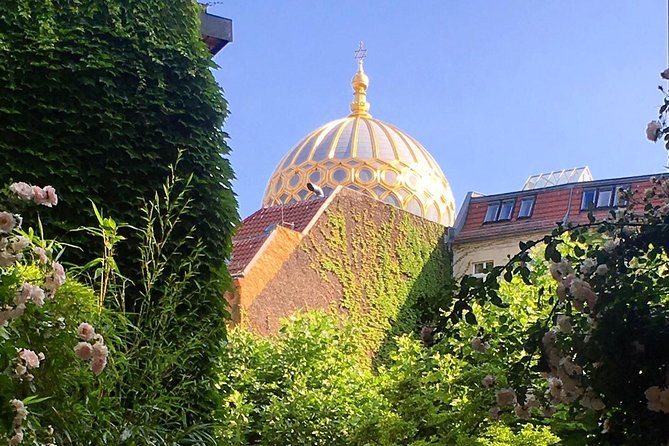
The building’s distinctive dome makes this one of the easiest places on the route to recognize. The visit helps bring together the earlier themes: the growth of Jewish life, the destruction and persecution of the Nazi era, and the continuing presence of Jewish institutions in Berlin.
The stop is planned for about 15 minutes. That means you should expect an exterior-focused explanation unless your guide confirms another arrangement. The provided details do not promise an interior tour, so do not book this experience expecting a full synagogue visit.
Ending here gives the walk a useful sense of continuity. The route does not stop only at places of destruction. It finishes with a living institution and a reminder that Berlin’s Jewish story did not end in 1945.
What the guides add to the history
The guide can make or break a tour like this because several stops are modest memorials rather than large attractions. You need someone who can supply names, dates, context, and a human voice without rushing.
The available guide roster may vary. People who took the tour have specifically mentioned Orr, Sharona, Adi, Zvi, and Nadav. Their backgrounds and styles are not identical. Adi’s personal experience as a Jewish person and Israeli in Berlin added a present-day perspective for one couple, while Nadav’s Israeli-German background and notebook of historical material gave another group extra context.
That does not mean you should expect one particular guide unless the booking confirms the name. The tour may also operate with a multilingual guide and can be offered in English, German, Hebrew, and other languages. English is listed as an available language.
The strongest feature is the chance to ask questions. You can ask how a site fits into the larger timeline, clarify a name, or talk through the difference between a historical site and a later memorial. For a difficult subject, that direct exchange is more useful than a fixed audio script.
Three hours, hotel pickup, and walking demands
The tour lasts about three hours, with a morning or afternoon departure. Hotel pickup is offered from your lobby, which is helpful if you are still learning Berlin’s public transport system or simply want a smooth start.
The details say transportation to and from attractions is not included. Read that as a walking tour with pickup at the beginning, not as a private vehicle carrying you between every stop. The places are in Berlin’s central Jewish-history area, but you should still expect time on your feet and ordinary city walking.
Wear comfortable shoes and bring water. Food and drinks are not included, so plan a snack before or after the tour. Since the schedule gives only short time blocks for most stops, late arrivals could affect how much explanation you receive.
The private setup is limited to your group, with up to eight people. That is a major difference from a large public walk. If eight people share the $356.62 rate, the cost works out to about $44.58 per person. For two people, it is about $178.31 each, which is a much harder value call. Families and groups of friends get the best price advantage.
Who will get the most from this walk
I would recommend it most strongly to readers who want history explained in place, not just a list of buildings. It suits families with older children, couples, private groups, and anyone who wants time for questions.
The chronological structure is helpful if you are new to Berlin’s Jewish history. You start with early settlement, move through migration and community life, then confront persecution, rescue, absence, and the continuing presence of the New Synagogue.
You may want something else if your main goal is museum time, elaborate interiors, or a long architectural tour. Several stops last only five to 15 minutes, and the tour covers a lot of ground in three hours. It gives you a strong framework, but you may want to return independently to the Centrum Judaicum or Otto Weidt Museum if you want a longer visit.
The emotional tone also deserves thought. This is a serious experience. It includes persecution, loss, and memorials, but it also includes community life, protest, courage, and continuity. Adi’s personal perspective, in particular, shows how present-day events can affect the way Jewish history in Berlin is understood. That can make the tour more personal, though it may also lead to difficult conversations.
Is the private price worth it?
At $356.62 per group, the price is not a bargain for a solo visitor or a couple. The calculation changes when you fill several places. A group of four pays about $89.16 per person, and a full group of eight pays about $44.58 per person.
For that fee, you receive a private professional guide and hotel pickup, but not food, drinks, or transport between attractions. The value comes from the guide’s interpretation and the ability to shape the conversation, not from admission tickets. All listed stop entries are free.
I would book this rather than a cheaper group walk if your party values privacy, wants to ask personal questions, or includes several people who already know some European history. If you are traveling alone and mainly want to see the New Synagogue from outside, the price may be difficult to justify.
You can cancel for a full refund up to 24 hours before the local start time. Confirmation is sent within 48 hours, subject to availability, so do not leave this until the last minute if your schedule is tight. The experience is often booked well ahead, with an average lead time of about 33 days.
Should you book Jewish Berlin: The Old Jewish Quarter?
Book it if you want a thoughtful, place-based introduction to Berlin’s Jewish past and your group can share the private rate. The route covers early settlement, immigration, protest, rescue, cemetery history, artistic memorial, and the New Synagogue in a clear three-hour arc.
I would be especially inclined to book when Nadav, Orr, Sharona, Adi, or Zvi is available and the guide’s background matches your interests. Still, confirm the language and pickup details before paying.
Skip it if you need a low-cost tour, a fully accessible ride between sites, or a long interior visit at every stop. For the right group, though, this walk offers something a standard sightseeing circuit cannot: a guide who helps you see Berlin’s Jewish story in the gaps between the buildings.
FAQ
How long is the Jewish Berlin walking tour?
The tour lasts approximately three hours.
How much does the private tour cost?
The listed price is $356.62 per group, with up to eight people participating.
Is hotel pickup included?
Yes. The guide meets your group in the lobby of your Berlin hotel.
Is the tour available in English?
Yes. English is offered. The tour may also be available in German, Hebrew, and other languages.
Which places are included?
The route includes the site of Berlin’s oldest synagogue, Rosenstrasse, Hackesche Höfe, the Otto Weidt Museum, the memorial Jewish cemetery, the Missing House, and the New Synagogue Berlin, Centrum Judaicum.
Do I need special clothing?
Men should wear a head covering for the optional entrance to the cemetery. A moderate level of physical fitness is also advised.
Can I cancel for a refund?
Yes. You can cancel at least 24 hours before the experience begins for a full refund. Cancellations or changes made less than 24 hours before the start time are not accepted for a refund.
Just added around Berlin
- Love and War in Berlin: Self-Guided Story Puzzle Walk★ 5.0 · 7 reviews
- Rickshaw Tours Berlin – Groups of up to 16 people with several rickshaws★ 4.0 · 97 reviews
- Walking on the Wall: 3-Hour Tour in Berlin★ 4.5 · 34 reviews
- eSIM for Germany and 34 European Countries★ 4.5 · 16 reviews
- Warnemuende Shore Excursion: Private Berlin Tour★ 4.5 · 27 reviews
- Warnemuende Shore Excursion: Berlin Private Sightseeing Tour from Rostock★ 5.0 · 4 reviews
- Your ticket to The Wall Museum Berlin★ 3.0 · 60 reviews
- Berlin’s Gay, Lesbian, and Queer Scene Small-Group Walking Tour★ 4.5 · 66 reviews
Walking Tours, compared.





Berlin’s Best: 2 Hour Walking Tour Third Reich and the Cold War
Read our review →


Third Reich Berlin: Hitler and WWII Walking Tour
Read our review →Browse the lists this tour appears in