Reviewed · WALKING TOURS
East Berlin and the Wall: Walking Tour
Berlin’s Cold War story becomes clearest when you walk the places where the Wall cut through ordinary streets. This tour links the Bernauer Strasse Memorial, a former ghost station, Alexanderplatz, and the East Side Gallery into one useful route instead of treating each site as a separate photo stop.
I like the focus on daily life in East Berlin, not just military checkpoints and famous speeches. I also like the personal touch some guides bring: Paolo, Elisa, Claudia, and Catherine are praised for clear explanations, warmth, and engaging stories. The main drawback is that the tour uses public transport, so you must buy your own AB ticket and keep moving between stops.
In This Review
- Key points to know
- Why this tour works as a Cold War introduction
- Starting at Potsdamer Platz
- Riding to Nordbahnhof, Berlin’s former ghost station
- Bernauer Strasse, where the Wall cut through homes
- What East Berlin life looked like beyond the Wall
- Alexanderplatz and the end of the GDR
- The East Side Gallery and 104 murals
- Is $351 a fair price?
- Who should take this walking tour?
- Practical details before you book
- Should you book East Berlin and the Wall?
- FAQ
- How long does the East Berlin and Wall tour last?
- What places are included?
- Is public transportation included?
- What languages are available?
- Can I book a private group?
- Is hotel pickup available?
Key points to know
- Bernauer Strasse gives you the clearest view of the Wall’s death strip, escape tunnels, and the human cost of division.
- Nordbahnhof was a ghost station, closed for nearly 30 years after the Wall went up.
- Alexanderplatz connects socialist city planning with the peaceful protests that helped bring down the GDR.
- The East Side Gallery ends the tour on a more hopeful note, with 104 murals painted on a surviving section of Wall.
- Guiding is the heart of the experience, with Italian, French, Spanish, English, and German available.
- The $351 group price works best for a private party of up to six, but is harder to justify for one or two people.
Why this tour works as a Cold War introduction
Berlin’s division can feel scattered. One site recalls escape attempts, another shows communist architecture, and another is covered in colorful murals. This walking tour gives those places a clear order.
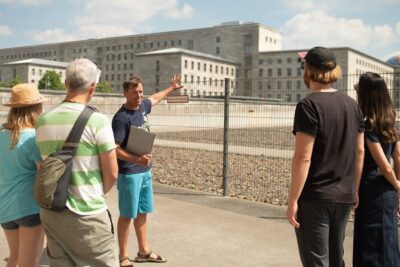
You begin at Potsdamer Platz, travel by S-Bahn to Nordbahnhof, walk through the Bernauer Strasse area, continue to Alexanderplatz, and finish at the East Side Gallery. The route covers roughly three to three and a half hours, with about 15 minutes of guided explanation at the start, 50 minutes at the Wall Memorial, short visits around Alexanderplatz and the TV Tower, and a final 15 minutes at the gallery.
That structure matters. You are not simply looking at pieces of concrete. You are following the story from postwar division, to sealed borders, to public protest, to reunification and memory.
I especially like that the guide discusses how people lived under the German Democratic Republic, or GDR. You hear about the different economic and social systems on the two sides, along with the customs and pressures that shaped East Berlin life. The tour is historical, but it does not treat the city as a museum display with no connection to ordinary people.
A few more Berlin trips to weigh up
- Discover Berlin Half-Day Walking Tour
★ 5.0 · 9,624 reviews - Berlin: Third Reich and Cold War 2 Hour Walking Tour
★ 4.9 · 6,830 reviews - Berlin: Discover Berlin Walking Tour
★ 4.9 · 5,998 reviews
Starting at Potsdamer Platz
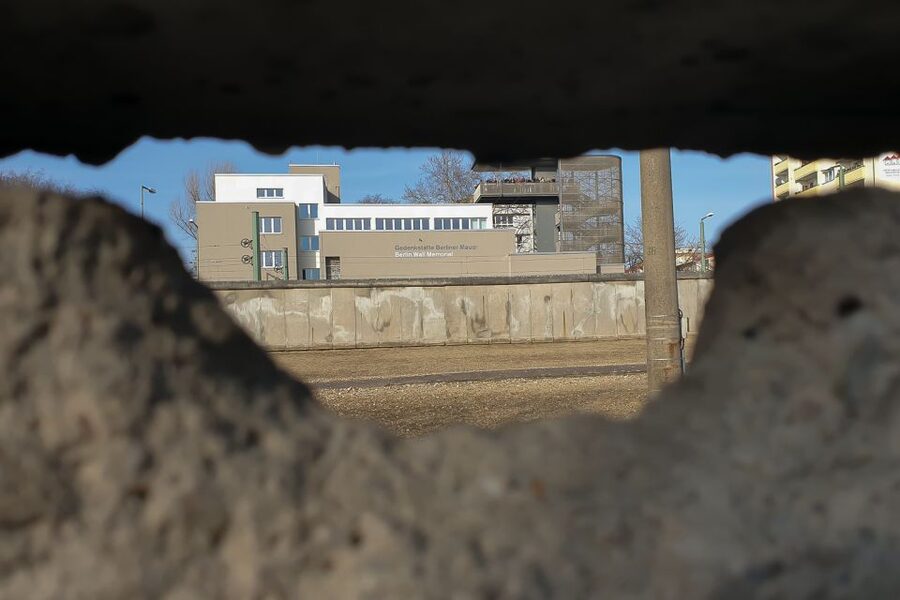
The exact meeting point depends on the option you book. Some versions include hotel pickup, while others use a central starting point, so check the details carefully before you set out.
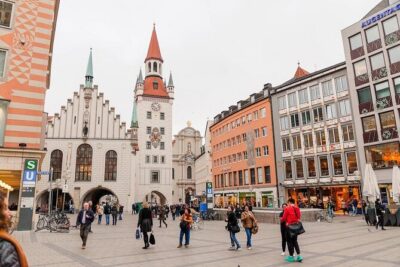
Potsdamer Platz is a useful place to begin because it represents Berlin’s dramatic changes in one location. The tour uses it as a launch point before you board the S-Bahn. Your guide sets up the postwar division and explains why Berlin became such a charged symbol during the Cold War.
This opening is brief, so do not expect a long walking tour of Potsdamer Platz itself. Its purpose is to give you the political frame before the more personal stories begin.
If you choose hotel pickup, you need to provide the hotel name and address when booking. The guide collects you from the lobby, and you should be ready 10 minutes before the agreed time. Private pickup cannot be arranged with less than 72 hours’ notice, so this option requires some advance planning.
Riding to Nordbahnhof, Berlin’s former ghost station
The S-Bahn ride takes about eight minutes. That short trip is part of the story, not just a way to save your feet.
Nordbahnhof was one of Berlin’s ghost stations. After the Wall was built, some stations on lines passing through East Berlin were closed or heavily controlled. Trains continued through without stopping, while platforms sat behind barriers and guards. Nordbahnhof remained closed for nearly three decades.
Your guide explains how the transport system reflected the city’s division. A train map that looks simple today once showed the political border in a very physical way. This is a good example of the tour’s strength: ordinary infrastructure becomes evidence of how separation worked.
You will need a valid public transport ticket for zones AB during the tour. The ticket is not included, and the route uses both the S-Bahn and subway or metro. Buy the correct ticket before departure and keep it with you throughout the outing.
Bernauer Strasse, where the Wall cut through homes
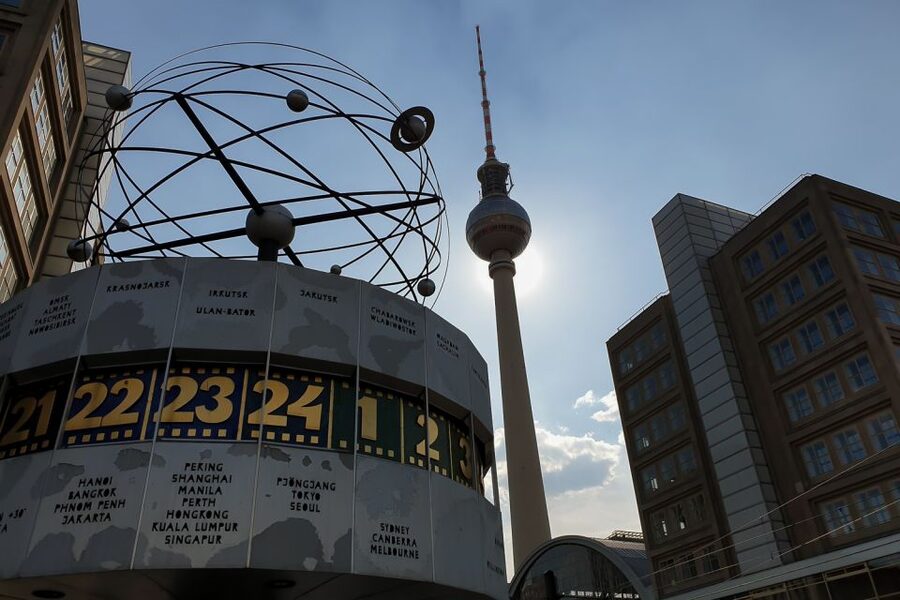
Bernauer Strasse is the emotional center of the tour. You spend about 50 minutes at the Berlin Wall Memorial, the longest stop of the day.
Here, the Wall did not simply run along an empty edge of town. It divided streets, homes, families, and neighbors. Some buildings stood on the eastern side while their entrances opened toward the western side. The guide uses the area to explain how a border could turn a normal apartment block into part of a restricted zone.
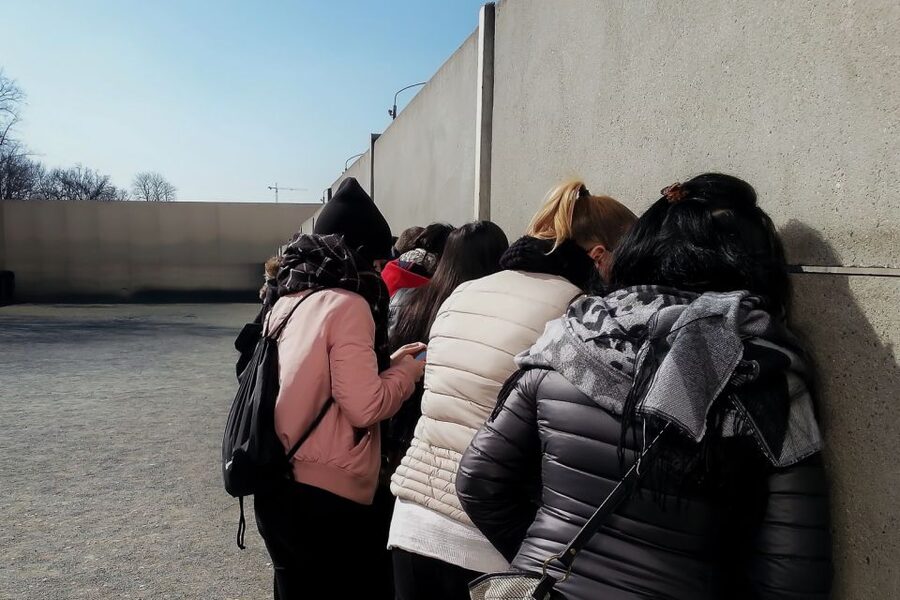
You see original portions of the Wall and sections connected with the former death strip. The remaining structures help you understand that the border was not just one wall. It involved multiple barriers, controlled space, and surveillance. The open area also makes it easier to picture how exposed an escape attempt could be.
The guide covers attempts to flee East Berlin and the people who died trying to cross. These accounts are difficult, but they are essential. Without them, the Wall can become a backdrop for photographs. At Bernauer Strasse, the tour brings the cost of the system back to individual lives.
This is also the place to ask questions. If you want to understand how people planned escapes, what happened to buildings along the border, or how the memorial preserves the site, use the longer stop to do so. The pace is not rushed here, but you will be on your feet for much of the visit. Comfortable shoes are a must.
Some guides add a personal connection to the history. Catherine, for example, is praised for including her own testimony while explaining the site. A personal account can make the larger political story easier to grasp, though guide assignments vary and you should not book on the assumption that one particular person will lead your group.
Same city, a completely different kind of day:
- Berlin: Reichstag, Dome and Government District Guided Tour
★ 4.7 · 18,288 reviews - Berlin: 1-Hour City Tour by Boat with Guaranteed Seating
★ 4.3 · 16,993 reviews - Berlin: Boat Tour Along the River Spree
★ 4.4 · 11,252 reviews - Berlin: Hop-on Hop-off Bus Tour with Live Commentary
★ 4.3 · 8,579 reviews
What East Berlin life looked like beyond the Wall
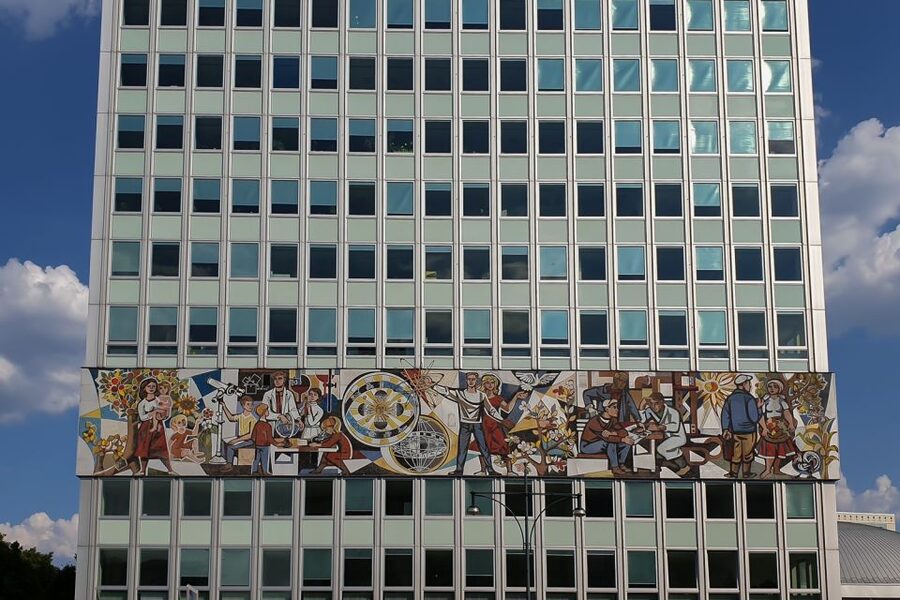
A useful feature of this experience is its attention to the GDR as a society, not merely as a failed government.
Your guide explains how the communist system shaped work, housing, travel, shopping, and public behavior. The supplied details do not promise a separate museum visit or a long series of interior stops, so the value comes mainly from the guide’s interpretation of the places you pass.
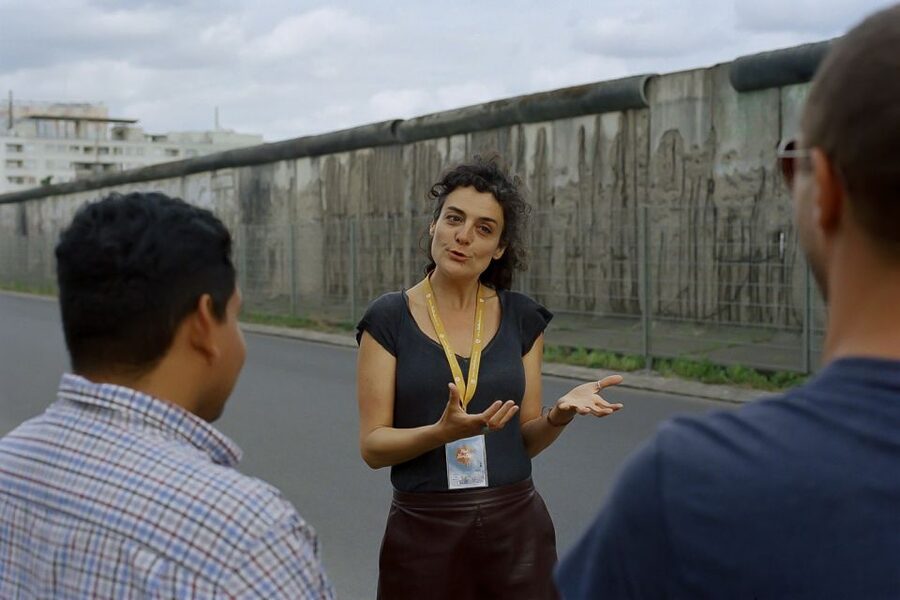
That makes the quality of the guide important. The strongest guides use small anecdotes to explain big ideas. Paolo is described as engaging enough to hold attention for hours, while Elisa is praised for a clear route, strong preparation, and genuine enthusiasm. Claudia is noted for keeping the conversation lively with interesting stories, and another Italian-speaking guide was appreciated for being friendly and well suited to an Italian-speaking group.
These comments point to the main strength of the tour: a good guide turns a difficult political subject into a story you can follow. The guide also helps separate fact from the many simplified versions of East Berlin that circulate in popular culture.
The language choice matters, too. You can request Italian, French, Spanish, English, or German. If your group is more comfortable in French or Italian, the experience may be easier to absorb than a standard English-language tour. Confirm your preferred language when booking, since the available guide affects the final arrangement.
Alexanderplatz and the end of the GDR
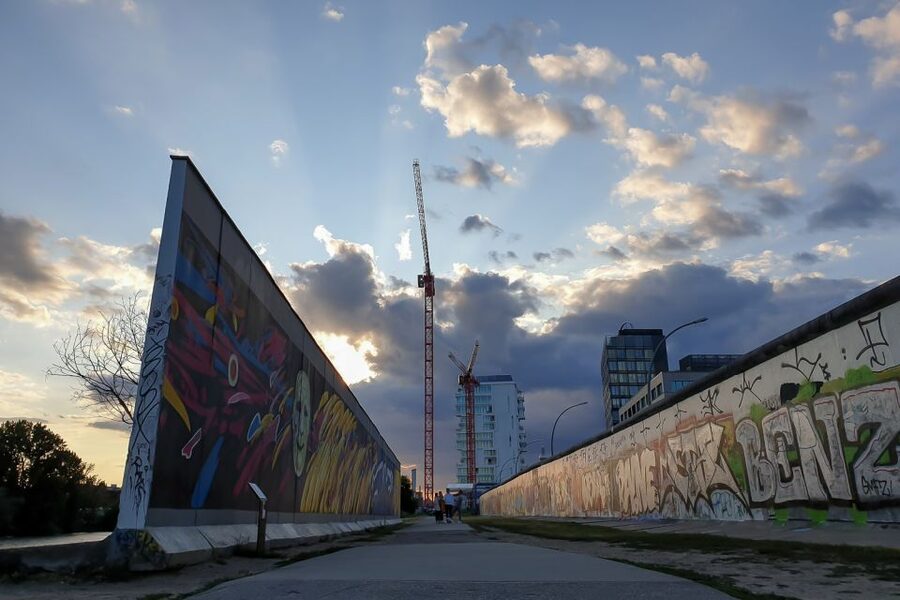
After Bernauer Strasse, the group uses the subway or metro for about 10 minutes to reach Alexanderplatz. The transfer adds another chance to see how Berlin’s public transport ties the city together today, even as the guide explains how divided it once was.
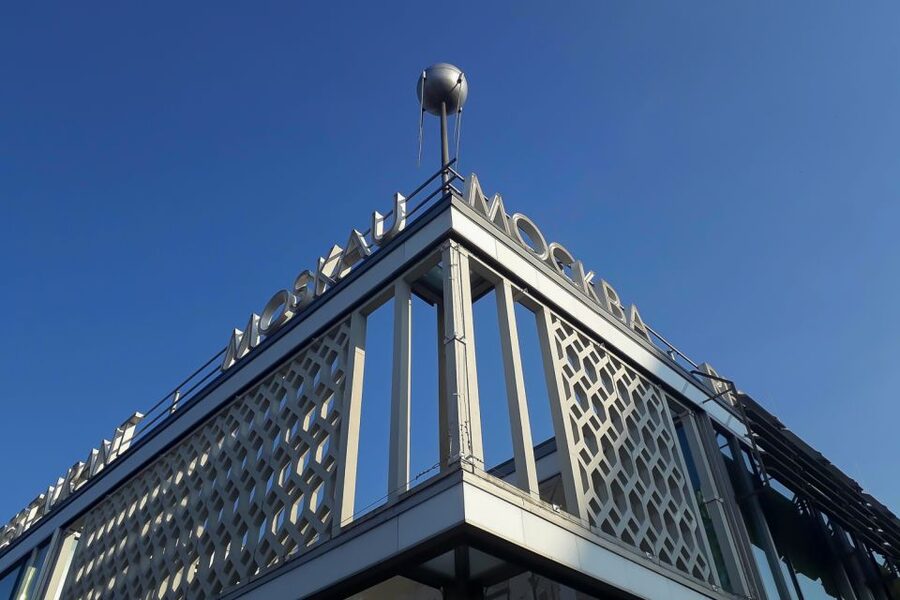
Alexanderplatz is associated with socialist planning and monumental architecture. The square gives you a different view of East Berlin from Bernauer Strasse. At the memorial, you see the border’s physical force. At Alexanderplatz, you see the public face of the GDR: large civic spaces, official design, and architecture meant to express the strength of the state.
The guided stop lasts about 10 minutes, followed by another 10 minutes around the Berlin TV Tower. These are short visits, so expect orientation and explanation rather than an ascent of the tower. The tour does not include admission to a viewing platform or a meal.
Alexanderplatz also played a key role in the peaceful demonstrations that challenged STASI political repression. Your guide explains how public opposition grew in 1989 and how the protests helped lead to the Wall’s collapse, followed by the end of the GDR and the breakup of the Soviet bloc.
This part gives the tour a strong political arc. You start with a city forcibly divided and reach a point where ordinary people helped change the system through public action. The story is not reduced to one night at the Wall. It includes the pressure that came before it.
The East Side Gallery and 104 murals
The final major stop is the East Side Gallery. Another 10-minute subway ride brings you to the longest and most colorful section of the route.
The gallery contains 104 murals painted on a surviving section of the Berlin Wall. The famous Brezhnev-Honecker kiss is the image most people recognize, but the larger point is the contrast between the Wall’s original purpose and its later use as public art.
This is a fitting end because the site changes the emotional tone. Bernauer Strasse asks you to think about fear, control, and loss. The East Side Gallery shows artists reclaiming the structure and turning it into a place for political comment and public memory.
You have about 15 minutes with the guide here. That is enough for an introduction to the best-known paintings, but not enough for a close look at every mural. If you want detailed time with the artwork, plan to return on your own. The tour gives you the context and a starting point, rather than an exhaustive art walk.
The gallery also brings a practical issue into view: the Wall is preserved in different ways across Berlin, and not every surviving section offers the same experience. Here, the art is the focus. At Bernauer Strasse, the physical border and memorial work are more important.
Is $351 a fair price?
The advertised price is $351 for a group of up to six people. That price makes the most sense when you share it with a full private group. Divided among six, it comes to about $58.50 per person before transport tickets, which is reasonable for a private, multilingual, three-hour history tour.
For two people, the cost is about $175.50 each. For one person, it is a large spend compared with a shared walking tour. You are paying for the guide’s time, route planning, language choice, and possible hotel pickup, not for museum admission or transport.
The tour includes the walking guide and a small-group format. It does not include food, drinks, or the AB public transport ticket. The transport cost is a minor extra, but it is still something to arrange before you start.
The value improves if you want to ask questions, need a non-English language, or prefer a private pickup. It is also useful if you want the Wall sites explained in one connected morning instead of visiting them alone and trying to piece the story together afterward.
Who should take this walking tour?
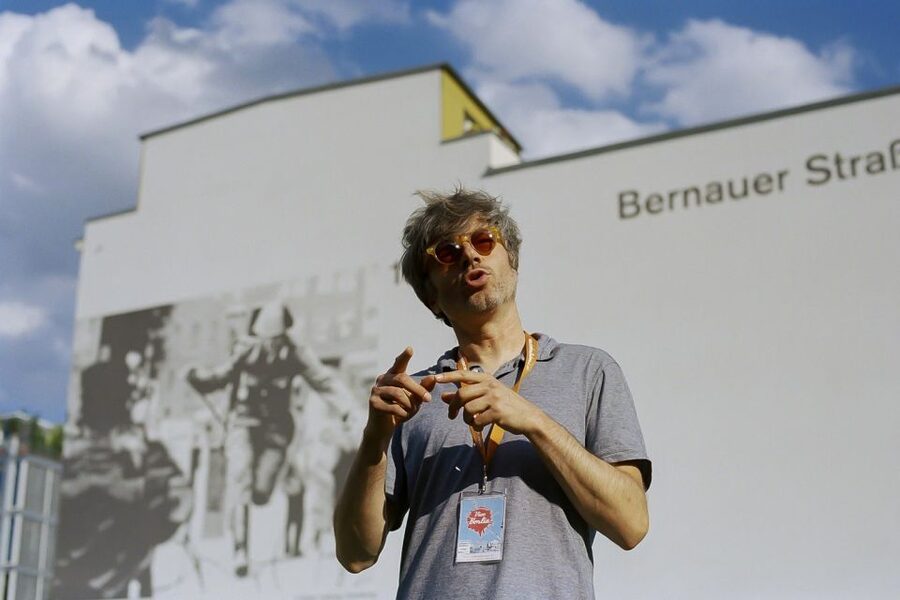
I would choose this tour if you want a clear first look at Berlin’s Cold War past and prefer human stories over a list of dates. It suits adults, families with older children, and small groups with a strong interest in twentieth-century Europe.
It is especially useful for you if:
- You want a guide in Italian, French, Spanish, English, or German.
- You prefer a private group and may use hotel pickup.
- You want Bernauer Strasse, Alexanderplatz, and the East Side Gallery in one route.
- You care about everyday life in the GDR as well as the Wall itself.
- You are comfortable walking, using public transport, and standing at outdoor sites.
I would think twice if you want a slow art tour, a museum-heavy outing, or a day without transfers. The schedule is active, and several stops are brief. You also need to handle your own transport ticket.
The overall rating is 4.9 from 407 reviews, with repeated praise for guides who are prepared, clear, welcoming, and able to keep the subject interesting. That praise is worth taking seriously because this experience depends more on storytelling than on included attractions. A weak guide would make the transfers and short stops feel thin. A good one gives the entire route purpose.
Practical details before you book
The tour lasts three to three and a half hours, and starting times depend on availability. A private group can be arranged, and hotel pickup is optional in some booking choices.
Wear comfortable shoes. The route combines walking with S-Bahn and subway rides, and the Wall Memorial includes outdoor areas. Bring a valid AB public transport ticket for the day. Food and drinks are not included, so plan those separately.
You can cancel up to 24 hours before the tour for a full refund, and you can reserve now while paying later. Those terms help if your Berlin schedule is still changing.
If you want a private guide, allow at least 72 hours for the arrangement. Include your hotel’s full name and address if you request pickup, and confirm the meeting details with the provider before the day.
Should you book East Berlin and the Wall?
Book it if you want Berlin’s division explained as a human story, with the Wall Memorial as the main stop and the East Side Gallery as a fitting finish. The route is well chosen, the language options are useful, and the guides are repeatedly praised for making complex history easy to follow.
The best value comes with four to six people sharing the private price. Solo visitors and couples should compare the cost with shared tours. You should also be ready for public transport, outdoor walking, and short visits at Alexanderplatz and the TV Tower.
For a small group that wants a thoughtful introduction to East Berlin, I would book it. Just buy your AB ticket, wear good shoes, and give the guide room to tell the stories that make these places matter.
FAQ
How long does the East Berlin and Wall tour last?
The tour lasts approximately three to three and a half hours, depending on the selected option and schedule.
What places are included?
The route includes Potsdamer Platz, Nordbahnhof, the Berlin Wall Memorial at Bernauer Strasse, Alexanderplatz, the Berlin TV Tower area, and the East Side Gallery.
Is public transportation included?
No. You need a valid ticket for Berlin’s AB zones during the tour. The route uses the S-Bahn and subway or metro.
What languages are available?
The tour can be arranged with a live guide speaking Italian, French, English, Spanish, or German.
Can I book a private group?
Yes. A private group is available, and the listed price is $351 for a group of up to six people. Private arrangements require at least 72 hours.
Is hotel pickup available?
Pickup is optional with some booking choices. If you select it, provide your hotel name and address, wait in the lobby 10 minutes before the scheduled time, and confirm the pickup details with the provider.
Just added around Berlin
- Love and War in Berlin: Self-Guided Story Puzzle Walk★ 5.0 · 7 reviews
- Rickshaw Tours Berlin – Groups of up to 16 people with several rickshaws★ 4.0 · 97 reviews
- eSIM for Germany and 34 European Countries★ 4.5 · 16 reviews
- Walking on the Wall: 3-Hour Tour in Berlin★ 4.5 · 34 reviews
- Warnemuende Shore Excursion: Berlin Private Sightseeing Tour from Rostock★ 5.0 · 4 reviews
- Your ticket to The Wall Museum Berlin★ 3.0 · 60 reviews
- Warnemuende Shore Excursion: Private Berlin Tour★ 4.5 · 27 reviews
- Berlin’s Gay, Lesbian, and Queer Scene Small-Group Walking Tour★ 4.5 · 66 reviews
Walking Tours, compared.
Berlin’s Best: 2 Hour Walking Tour Third Reich and the Cold War
Read our review →