Reviewed · WALKING TOURS
Berlin Walking Tour
Berlin’s story is written across its streets, and this walk links the big chapters in one long sweep: Prussian power, Nazi terror, the divided city, and modern Germany. You move from the Reichstag and Brandenburg Gate to Checkpoint Charlie, the Berlin Wall Memorial, and the Holocaust Memorial.
I like the wide range of sights and the chance to get your bearings early in a Berlin visit. I also like the human touch: guides such as Ana, Miguel, Katia, Evan, Francesca, and Rosanna have been praised for clear storytelling, humor, and thoughtful answers. The main drawback is uneven operation. Several bookings were affected by guide no-shows or meeting-point changes, and the $2.90 charge can be confusing because the walk is also described as free with an optional tip.
In This Review
- Key points at a glance
- Berlin in one long historical walk
- Starting at Alexanderplatz
- Reichstag Building and the seat of modern Germany
- Berliner Dom and Berlin’s royal past
- Brandenburg Gate, the city’s great symbol
- Checkpoint Charlie and the Cold War city
- Berlin Wall Memorial and the human cost of division
- Holocaust Memorial and the darkest chapter
- Guard towers, memorials, and overlooked Cold War traces
- Stories, legends, and the spaces between monuments
- How much can you really see in three hours?
- The $2.90 price and the free-tour question
- Reliability matters more than the bargain
- Who should book this Berlin walk?
- Should you book it?
- FAQ
- How long does the Berlin walking tour last?
- Where does the tour begin and end?
- Which language is the tour offered in?
- Which main sights are included?
- Is public transportation included?
- What is the cancellation policy?
Key points at a glance
- A three-hour sweep through central Berlin: You see major political, royal, Nazi, and Cold War sites in one outing.
- Strong guides can make the difference: Ana, Miguel, Katia, Evan, Nora, and others have been singled out for warmth, humor, and detailed storytelling.
- Most sights are viewed from outside: The listed stops include free admission, but this is an orientation walk rather than an interior museum tour.
- Expect a serious amount of walking: Some groups finish in three and a half or four hours, so wear comfortable shoes and dress for the weather.
- The price needs checking: The advertised charge is $2.90 per person, but some people were asked for a larger tip or told the walk was free.
- The meeting point is at Generator Berlin Alexanderplatz: The tour begins and ends there, with public transportation nearby.
Berlin in one long historical walk
This is best understood as a moving history lesson with plenty of city orientation along the way. You do not stay in one district. Instead, you cross central Berlin while your guide explains how a small settlement became the capital of Prussia, the center of the German Empire, the seat of Nazi rule, and a city split by the Cold War.
That broad timeline is the tour’s main strength. In a few hours, you can connect buildings and memorials that otherwise seem scattered. The Reichstag is not just a grand government building. Brandenburg Gate is not simply a picture stop. Checkpoint Charlie and the Berlin Wall Memorial become parts of the same story about power, division, and freedom.
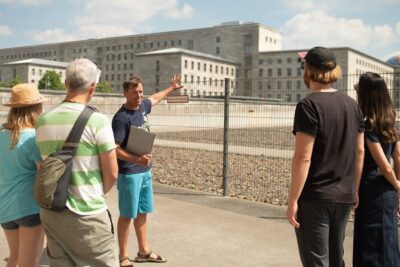
The social format also matters. You are walking with a group of up to 50 people, and the guide is expected to keep people together while answering questions. Guides praised in the feedback include Miguel, who took care to keep the group from getting lost, and Evan, who was noted for balancing facts with anecdotes. That personal style can turn a standard city walk into a memorable introduction.
Still, the experience depends heavily on the individual guide. Some guides have been described as funny, warm, and engaging. One group found its presentation dry and lecture-like, with too little time at certain sights. If you want a polished, identical script every time, this may feel unpredictable. If you enjoy the character of a live guide, that same variation can work in your favor.
A few more Berlin trips to weigh up
- Discover Berlin Half-Day Walking Tour
★ 5.0 · 9,624 reviews - Berlin: Third Reich and Cold War 2 Hour Walking Tour
★ 4.9 · 6,830 reviews - Berlin: Discover Berlin Walking Tour
★ 4.9 · 5,998 reviews
Starting at Alexanderplatz
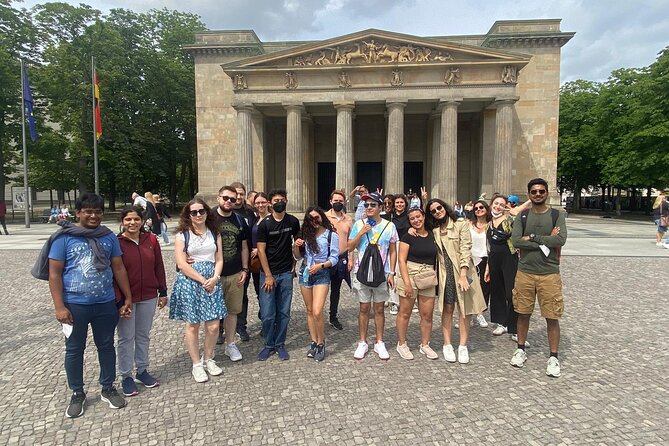
The meeting point is Generator Berlin Alexanderplatz on Otto-Braun-Straße 65. The tour ends back at the same point, which is useful if you want to leave luggage plans and onward transportation simple.
Because the walk covers a large section of central Berlin, arrive ready to move. The group may need to cross busy streets, keep up with the guide, and pause in open spaces. A moderate level of fitness is requested, and that is worth taking seriously. The walk is not described as difficult, but it is long enough to feel tiring, especially in cold, wet, or icy weather.
The weather can shape the experience. One person enjoyed the walk in snow and ice because the paths were safe, while another arrived underdressed in cold weather. Bring a warm layer and weather protection. The route includes memorials and large public spaces where you may spend time standing rather than walking.
At up to 50 people, the group can be large. A bigger crowd gives the tour a social feel, but it can make questions harder to hear and the guide harder to spot. Stay near the front if you want every detail. The meeting point is near public transportation, but transport costs are not included if the guide uses it during the outing.
Reichstag Building and the seat of modern Germany
The first listed stop is the Reichstag Building, home of the Bundestag, Germany’s lower house of parliament. You have about 20 minutes here, enough for an outside look and an explanation of the building’s role.
The Reichstag carries several layers of Berlin’s past. It represents the German state today, yet its story reaches through imperial Germany, war, destruction, and reunification. A good guide can use the building to explain how Berlin’s political center changed over time.
Do not expect a full parliamentary visit from this tour. Admission is listed as free, but that refers to the stop itself, not necessarily a reserved interior visit. The value here is the context, the view, and the connection to the rest of the route.
Berliner Dom and Berlin’s royal past
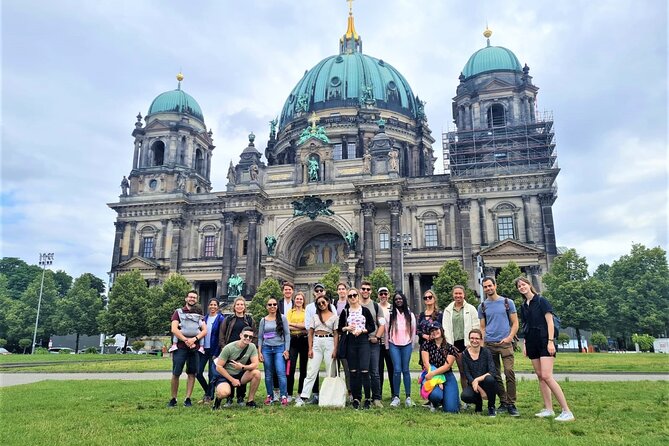
The Berliner Dom offers a change of mood. Its large dome and formal setting point toward the city’s royal and religious past, especially the age when Berlin served as the capital of Prussia.
Your guide uses this stop to introduce the German capital and explain how its architecture reflects political ambition. The visit is scheduled for roughly 20 minutes. That is enough to admire the exterior and hear the main story, but not enough for a slow interior visit.
I like this part of the route because it prevents the walk from becoming only a lesson about the 20th century. Berlin’s older identity matters. The city’s Prussian era helps explain the grand scale of its government buildings, boulevards, and public monuments.
Same city, a completely different kind of day:
- Berlin: Reichstag, Dome and Government District Guided Tour
★ 4.7 · 18,288 reviews - Berlin: 1-Hour City Tour by Boat with Guaranteed Seating
★ 4.3 · 16,993 reviews - Berlin: Boat Tour Along the River Spree
★ 4.4 · 11,252 reviews - Berlin: Hop-on Hop-off Bus Tour with Live Commentary
★ 4.3 · 8,579 reviews
Brandenburg Gate, the city’s great symbol
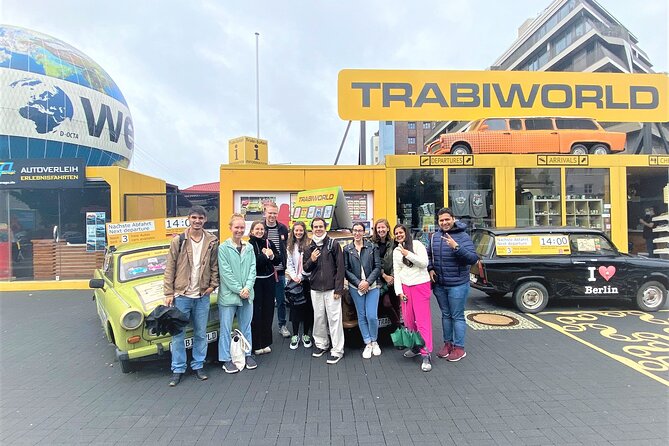
Brandenburg Gate is the classic Berlin stop, but its meaning is more interesting than its postcard appearance. This neoclassical monument was built under Prussian King Frederick William II after the temporary restoration of order during the Batavian Revolution.
In plain terms, it began as a statement of Prussian power. Later, it was linked to empire, war, Nazi spectacle, the division of Berlin, and reunification. That changing role makes it one of the best places for a guide to show how political symbols can be reused by different governments.
The planned 20-minute pause is practical. You have time for photographs and a clear explanation, but not for a long architectural study. If the group is large, move close enough to hear before the guide begins. This is one of the stops where a strong storyteller matters more than a long lecture.
Checkpoint Charlie and the Cold War city
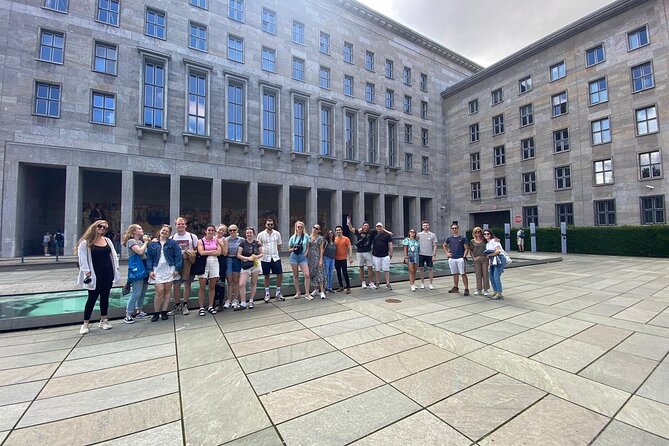
Checkpoint Charlie was the best-known crossing point between East and West Berlin during the Cold War. It is one of the most famous names in the city’s modern story, and the stop helps explain what the wall meant in daily life.
The drawback is time. One account described spending only about two minutes at Checkpoint Charlie before moving on. That may be enough for a quick explanation and photograph, but not enough if you want a detailed account of escape attempts, border controls, or the surrounding history.
Treat this stop as an introduction, not a full visit. You can return later if the subject interests you. The tour’s purpose is to connect many places, so it sacrifices depth at individual points in order to cover more ground.
Berlin Wall Memorial and the human cost of division
The Berlin Wall Memorial is one of the more serious stops. The wall divided the city and affected the freedom of millions under Soviet rule. Here, the guide can explain how the physical barrier worked and why its impact reached far beyond concrete and barbed wire.
This stop is valuable because it moves the story away from famous political names and toward ordinary people. Berlin’s division shaped families, neighborhoods, work, travel, and personal choices. A brief pause cannot cover every part of that experience, but it can give you the framework to understand the memorial properly.
The tour allows about 20 minutes. Listen for the details that help you picture the former border as a lived space, not just a historical object. The group format may mean you cannot examine every display at leisure, so plan a return visit if you want more time.
Holocaust Memorial and the darkest chapter
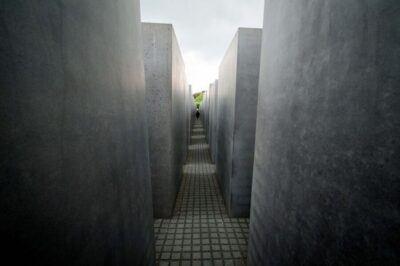
The Memorial to the Murdered Jews of Europe is one of Berlin’s most powerful modern memorials. Its field of concrete blocks creates a changing sense of openness and confinement as you walk through it.
The guide places the memorial within a wider account of Berlin, from its early beginnings as a small fishing village to Prussian strength and the Nazi Third Reich. The subject is difficult, and the best part of this stop is the careful connection between the place and the historical events it represents.
You have around 20 minutes here. Use that time respectfully. This is not a casual photo backdrop, and the memorial deserves quiet attention even when the wider group is social. The tour can introduce the meaning of the site, but it cannot replace the longer visit available at the memorial’s information center.
The guides praised for this kind of tour tend to combine facts with personal delivery. Ana was noted for mixing history, architecture, social history, and small bits of gossip. That sort of range can help you see Berlin as a real city rather than a line of dates.
Guard towers, memorials, and overlooked Cold War traces
The stop identified as Ausstellung Objektschutzregiment der Luftwaffe Friesland is less familiar than the Reichstag or Brandenburg Gate. The description points to guard towers, memorials, and streetlights connected with Stalin’s Soviet empire and the city’s divided past.
This is where a walking guide can earn the low price. You might pass such objects without noticing them, especially in a city where major monuments compete for attention. A guide can point out the small physical traces that remain in ordinary streets.
The information provided about this stop is less precise than for the major landmarks, so expect an explanation rather than a formal museum visit. The scheduled time is about 20 minutes. Ask questions if you want to understand exactly what you are seeing, since the value will depend on how clearly the guide connects the objects to Berlin’s past.
Stories, legends, and the spaces between monuments
The walk is not only a chain of official facts. Guides also bring in stories of wars, urban legends, political triumphs, and personal tragedies. That mix is part of the appeal for people who already know the basic Berlin timeline.
Katia, for example, was praised for sharing intricate and less familiar stories. Other guides were appreciated for answering questions rather than simply reciting a script. Those details can make a familiar place feel new.
The risk is that the tone may vary. One group found the delivery too dry, while another guide kept people laughing throughout the walk. Personal subjects can also enter the conversation. If you prefer a tightly focused historical tour, you may want to ask the guide at the start how the route and commentary will be handled.
How much can you really see in three hours?
The stated duration is about three hours, but several accounts put the actual walk at three and a half or four hours. That difference matters. You should not schedule a tight museum booking or train departure immediately afterward.
A longer finish can be a benefit if you want more stories and questions. It can also be tiring, particularly in poor weather or with children. One family found the route manageable for a child, especially with a park walk and some public transportation included, but transport is not guaranteed and any fare is not included.
The route is useful for a first day because it gives you a map of central Berlin in your head. You can mark the places you want to revisit, rather than trying to choose from a guidebook before you understand the city’s layout.
The $2.90 price and the free-tour question
At $2.90 per person, the listed price is remarkably low for a three-hour guided walk. Even a basic orientation at that cost can be good value, especially when the route includes the Reichstag, Berliner Dom, Brandenburg Gate, Checkpoint Charlie, the Berlin Wall Memorial, and the Holocaust Memorial.
But you need to understand the payment language before booking. Some people were told this was a free walking tour and that a substantial tip was expected, including one report of $20 per person upfront. Another account says the online charge should not be paid because tipping is expected. The operator responded that the walk is free to join and tipping is optional.
That is a real point of confusion. I would check the final booking page, confirmation, and meeting instructions carefully. If a guide asks for money in a way that differs from the written terms, ask for clarification before handing it over. The $2.90 price can be excellent value, but only if you know what it covers.
Reliability matters more than the bargain
The most serious concern is not the walking pace or the depth of the history. It is the risk of an operational problem. Several people waited at the advertised meeting point for 30 minutes or more when no guide appeared. In one case, the meeting location reportedly changed without a message reaching the group. Another booking was canceled because too few people had signed up and moved to a later time.
That can ruin a short Berlin visit. If you have only one day, losing a morning to a missed tour is a genuine cost, even when the booking price is low.
You receive confirmation at booking, and free cancellation is available up to 24 hours before the start time. Changes or cancellations within 24 hours are not accepted for a refund. Keep your confirmation available, arrive early, and check for last-minute messages before leaving for the meeting point.
Who should book this Berlin walk?
I would choose this tour if you want a broad first look at Berlin and prefer learning through a live guide. It suits solo visitors, couples, families with older children, and anyone who wants the major landmarks placed in a clear historical order.
It also works well for people who already know a fair amount about Berlin but want local stories and unexpected details. Guides such as Katia, Ana, Miguel, Evan, and Rosanna have been praised for going beyond basic facts.
I would hesitate if you dislike long walks, large groups, or uneven presentation styles. I would also avoid booking it immediately before an important departure. The tour can run longer than three hours, and the operator’s meeting-point record gives you reason to build in extra time.
Should you book it?
Book it for cheap, broad Berlin orientation, not for deep interior visits or guaranteed polish. The route covers an impressive number of important places, and the best guides turn Prussian, Nazi, and Cold War history into a connected story you can remember.
Before paying, confirm exactly how the $2.90 charge and tipping work. Check the meeting point on the day, keep your phone available for updates, and wear warm, comfortable clothing. If those conditions suit you, this is a sensible first-day walk with strong potential and a few practical risks to manage.
FAQ
How long does the Berlin walking tour last?
The tour is advertised at approximately three hours. Some accounts describe walks lasting three and a half to four hours, so allow extra time afterward.
Where does the tour begin and end?
It starts at Generator Berlin Alexanderplatz, Otto-Braun-Straße 65, 10178 Berlin, Germany, and ends back at the meeting point.
Which language is the tour offered in?
The tour is offered in English.
Which main sights are included?
The route includes the Reichstag Building, Berliner Dom, Brandenburg Gate, Checkpoint Charlie, the Berlin Wall Memorial, the Holocaust Memorial, and the listed Luftwaffe-related exhibition stop.
Is public transportation included?
No. Public transportation is not included if it is used during the activity.
What is the cancellation policy?
You can cancel at least 24 hours before the start time for a full refund. Cancellations or changes made less than 24 hours before the start time are not accepted for a refund.
Just added around Berlin
- Love and War in Berlin: Self-Guided Story Puzzle Walk★ 5.0 · 7 reviews
- Rickshaw Tours Berlin – Groups of up to 16 people with several rickshaws★ 4.0 · 97 reviews
- Walking on the Wall: 3-Hour Tour in Berlin★ 4.5 · 34 reviews
- eSIM for Germany and 34 European Countries★ 4.5 · 16 reviews
- Warnemuende Shore Excursion: Berlin Private Sightseeing Tour from Rostock★ 5.0 · 4 reviews
- Your ticket to The Wall Museum Berlin★ 3.0 · 60 reviews
- Warnemuende Shore Excursion: Private Berlin Tour★ 4.5 · 27 reviews
- Karl-Marx-Allee Tour: Life and Architecture in East Berlin★ 5.0 · 19 reviews
Walking Tours, compared.

Berlin’s Best: 2 Hour Walking Tour Third Reich and the Cold War
Read our review →