Reviewed · WALKING TOURS
Berlin: walking tour about Charité
Berlin’s Charité began as an 18th-century plague house and grew into one of Europe’s major university hospitals. This two-hour walk traces that change through the lives of doctors such as Rudolf Virchow, Robert Koch, Emil von Behring, and Ferdinand Sauerbruch, with plenty of room for both medical achievement and moral failure.
I like the tour’s mix of science and city history, and I especially like that it ends inside the Animal Anatomical Theatre, Berlin’s oldest surviving teaching building. The main drawback is clear: you see the Charité Bed House only from outside, and group tours cannot enter the hospital grounds.
In This Review
- Key points at a glance
- Why Charité makes a strong walking-tour subject
- Meeting at Charité Tower
- The Charité Bed House, seen from outside
- Along Luisenstraße and across the university campus
- Virchow, Koch, Behring, and Sauerbruch
- The Nazi period and Charité’s difficult choices
- Inside the Animal Anatomical Theatre
- What the $27 price gets you
- Who will enjoy this two-hour walk
- Practical advice before you book
- Should you book the Charité tour?
- FAQ
- Where does the Charité walking tour begin?
- Where does the tour end?
- How long does the tour last?
- What language is the tour conducted in?
- Can I enter the Charité Bed House?
- Can group tours enter the Charité Campus Mitte hospital grounds?
- Does the tour include the Animal Anatomical Theatre?
- Is the Animal Anatomical Theatre open on public holidays?
- Can I cancel the booking for a refund?
Key points at a glance

- Three centuries of medicine: Follow Charité from an 18th-century plague house to a major university hospital.
- Famous medical figures: Hear about Virchow, Koch, Behring, Sauerbruch, and Berlin’s Nobel Prize winners.
- A difficult past: The tour addresses doctors who worked with the Nazi regime, not just medical triumphs.
- The Animal Anatomical Theatre: Enter a mysterious former teaching space hidden in a backyard.
- German-language walk: The live guide conducts the tour in German.
- Simple, central route: Meet at Charité Tower, walk along Luisenstraße and the university campus, then return to the starting point.
Why Charité makes a strong walking-tour subject

You do not need to be a doctor or science fan to enjoy this tour. Charité gives the walk a clear human focus: people tried to understand illness, improve treatment, teach new generations, and sometimes made terrible choices.
That range is what makes the experience useful. You hear about medical discoveries and Nobel Prize winners, but you also face the darker side of institutional history. The doctors connected with Charité were not simply presented as famous names on a plaque. Their work sits within the political and social pressures of Berlin, including the years when doctors collaborated with the Nazi regime.
I like this approach because it keeps the tour from becoming a dry roll call of inventions. The stories of life and death give the buildings and streets a purpose. You are not only looking at where medicine happened. You are considering who made decisions, who benefited, and what happens when medical authority serves a destructive government.
The tour is also a good choice if you have already seen Berlin’s major sights. It takes you into a specialized corner of the city, one that many visitors pass without understanding. You get a different view of Berlin through hospitals, teaching spaces, scientists, and public health.
A few more Berlin trips to weigh up
- Discover Berlin Half-Day Walking Tour
★ 5.0 · 9,624 reviews - Berlin: Third Reich and Cold War 2 Hour Walking Tour
★ 4.9 · 6,830 reviews - Berlin: Discover Berlin Walking Tour
★ 4.9 · 5,998 reviews
Meeting at Charité Tower
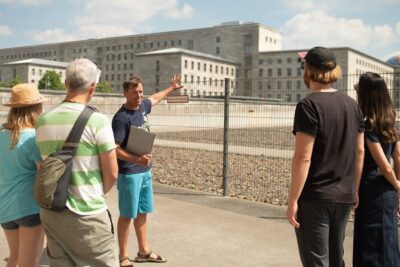
The tour begins in front of the Charité Tower at the crossroads of Schumannstraße, Charitéplatz, and Charitéstraße. Arrive early enough to identify the meeting point, since the tour starts on time.
The starting place puts you right beside the institution being discussed. That matters because the walk begins with orientation rather than a long transfer from another part of Berlin. You can get your bearings at the Charité complex before the guide starts explaining how the hospital developed.
The route ends back at the same meeting point. This makes the outing easy to fit into a day of sightseeing, especially if you are planning another activity nearby. The total duration is two hours, so you get a focused introduction rather than a full-day commitment.
The guide speaks German. If you do not understand German well, this is an important booking decision. The subject depends heavily on spoken explanation, names, dates, and connections between people and institutions. The experience is best suited to German speakers or those comfortable following a detailed German-language tour.
The Charité Bed House, seen from outside

The first major point is the Charité Bed House. You do not enter it, and that limitation is worth knowing before you book.
The building remains a working hospital facility, with the protection and hygiene rules that come with patient care. The hospital grounds at Charité Campus Mitte are also closed to group tours. So this is not an inside look at hospital wards, laboratories, or current medical practice.
Still, viewing the Bed House from outside gives the guide a useful starting point. The building connects the present-day institution with the long story of Charité. You can listen to the explanation while looking at an active hospital rather than a museum display.
I see the outside-only rule as a fair trade-off, but it shapes the experience. If you are hoping for access to dramatic hospital interiors, this tour will disappoint you. If you want the history of the institution explained in its urban setting, the exterior visit works well.
Along Luisenstraße and across the university campus
From the Charité area, the walk continues along Luisenstraße and across the university campus. These stretches provide the setting for stories about Berlin’s medical community and its connection to teaching and research.
The route is not just a transfer between two buildings. The guide uses the city around you to explain how medicine developed in Berlin. The university campus helps show that Charité was part of a wider academic world, not an isolated hospital.
This is also where the walk gains its sense of place. You are moving through ordinary streets and institutional spaces, while the guide points out the people and events connected with them. Berlin often rewards this kind of slow attention. A street that looks like a simple route from one address to another can become part of the city’s scientific past.
Because this is a walking tour, wear comfortable shoes and expect to spend the full two hours on foot. The supplied information does not give a detailed accessibility description, so you should check directly if you have specific mobility needs.
Same city, a completely different kind of day:
- Berlin: Reichstag, Dome and Government District Guided Tour
★ 4.7 · 18,288 reviews - Berlin: 1-Hour City Tour by Boat with Guaranteed Seating
★ 4.3 · 16,993 reviews - Berlin: Boat Tour Along the River Spree
★ 4.4 · 11,252 reviews - Berlin: Hop-on Hop-off Bus Tour with Live Commentary
★ 4.3 · 8,579 reviews
Virchow, Koch, Behring, and Sauerbruch
The central stories focus on Rudolf Virchow, Emil von Behring, Robert Koch, and Ferdinand Sauerbruch. These names represent different parts of Berlin’s medical story, from scientific research to clinical work and public teaching.
Rudolf Virchow is especially important to Charité’s identity, and the tour uses him as one of several ways to understand the institution’s influence. Robert Koch and Emil von Behring connect the walk to the world of medical science and Nobel Prize recognition. Ferdinand Sauerbruch adds another major figure from the history of treatment and surgery.
You should not expect a specialist lecture aimed at medical professionals. Instead, the guide places these physicians within a story about Berlin and Charité. That makes the information more accessible, even when the subject turns technical.
I like this part because famous names become a route through the city. You are not simply told that Berlin produced important scientists. You follow the places and institutions associated with them, then consider how their work changed medicine and how their reputations were formed.
The emphasis on Nobel Prize winners also gives the tour an international angle. Charité’s importance was not limited to Berlin. Its doctors and researchers helped shape medical thought far beyond the city.
The Nazi period and Charité’s difficult choices
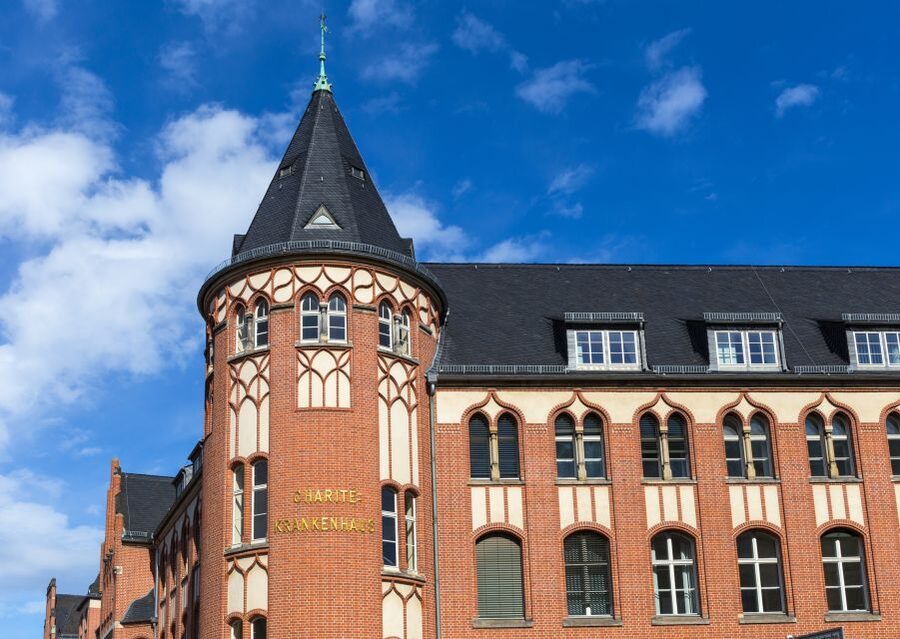
A serious strength of the tour is its attention to the years when doctors collaborated with the Nazi regime. This is not a comfortable subject, but it is essential to understanding the institution honestly.
Hospitals and universities are often presented as places of pure progress. The Charité story shows why that picture is incomplete. Medical skill does not automatically produce ethical behavior, and prestigious institutions can operate within systems that cause great harm.
The guide’s treatment of this period adds weight to the walking route. You are not asked to admire every famous figure simply because he made a scientific contribution. Instead, you hear about the dark times of the institution and the responsibilities that come with medical power.
For me, this is one of the reasons to choose the tour over a lighter sightseeing walk. You get a fuller account of Berlin’s past, including the parts that resist easy celebration. The tone is likely to be serious at this point, so families should consider the age and interests of children before booking.
Inside the Animal Anatomical Theatre
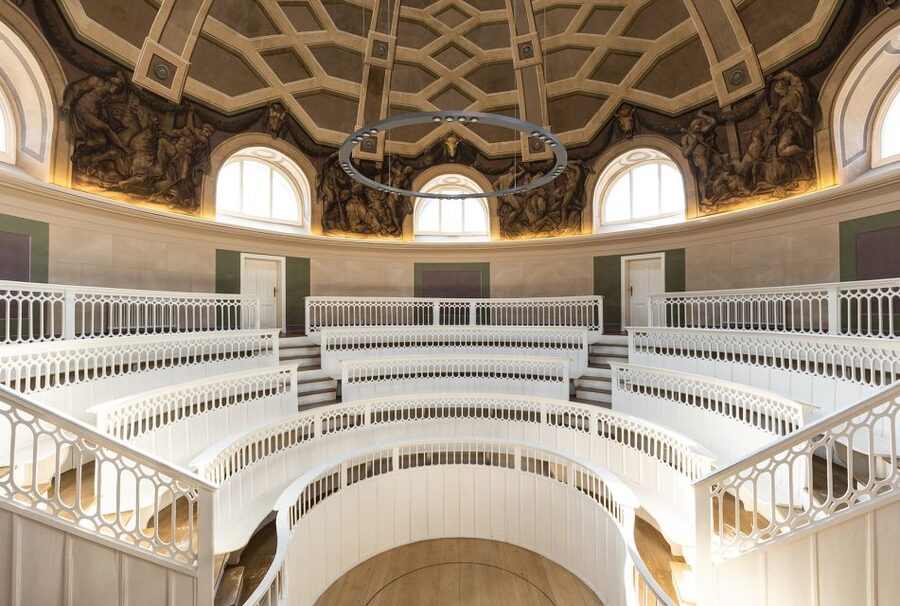
The final major stop is the Animal Anatomical Theatre, also called the TAT. It is described as a mysterious medicine temple and Berlin’s oldest surviving teaching building. The building is hidden in a backyard, and the tour visits it from inside.
This is the part of the experience that gives the route a strong finish. After walking past a modern working hospital and across the university campus, you enter an older teaching space with a very different atmosphere.
The name alone hints at its original purpose. It links medical education with the study of anatomy and shows how teaching once took place in a setting designed for observation and instruction. The building is not simply an old room added to the itinerary. It represents the practical, sometimes unsettling methods behind medical learning.
I would pay close attention here. The TAT gives you something concrete to remember after the names and dates have passed. Its unusual setting also adds a little mystery without turning the subject into a gimmick.
There is one practical warning. The Animal Anatomical Theatre can change its opening hours at short notice for closed events, and it is closed on public holidays. If entering this building is the main reason you want to book, check the date carefully before paying.
What the $27 price gets you
At $27 per person, the tour is reasonably priced for a two-hour guided experience with an interior visit. You are paying for a live German-language guide, a carefully connected route, and access to the Animal Anatomical Theatre when it is open.
The value depends on your interest. If you want a broad introduction to Berlin’s main landmarks, this is not the best use of your money. The route centers on medical history, and the Charité grounds themselves are not open to group tours.
If you are curious about science, hospitals, universities, or the ethical questions surrounding medicine, the price makes more sense. A guide can connect names, buildings, and political events in a way that is difficult to achieve with a quick look at a map.
The published rating is 4.4 from 537 reviews, which suggests a generally strong response, though the score is not perfect. I would read that as a sign that the subject and guide quality matter greatly. A German speaker who enjoys focused history may find excellent value. Someone expecting a standard sightseeing walk or access to hospital interiors should adjust those expectations.
You can reserve now and pay later, which helps if your Berlin schedule is still shifting. Free cancellation is available up to 24 hours in advance for a full refund. The tour is provided by Secret Tours Berlin.
Who will enjoy this two-hour walk
I would recommend this experience to you if you enjoy:
- Medical and scientific history
- Berlin’s lesser-known institutions
- Stories about famous doctors and Nobel Prize winners
- Honest treatment of the Nazi period
- Unusual historic buildings
- Walking tours conducted in German
It suits visitors who have already seen the Brandenburg Gate, Museum Island, and the Berlin Wall sites and want a more specialized subject. It also works for students, medical professionals, and anyone interested in the way universities and hospitals shape a city.
The tour may not suit you if you want to enter the Charité Bed House, walk freely through the hospital campus, or hear the tour in English. The route is also not a good match if you prefer a casual sightseeing outing with little serious discussion.
The two-hour length is a practical advantage. You get enough time for context without giving up an entire day. At the same time, the subject is broad, covering roughly 300 years, so some stories will be presented as a guided overview rather than a full scholarly study.
Practical advice before you book
Check the language first. The live tour guide speaks German, and the value of the experience rests on understanding the stories and explanations.
Check the calendar for public holidays and possible TAT closures. The Animal Anatomical Theatre may also adjust its hours for private or closed events, so the indoor visit is not something to assume blindly.
Arrive at the Charité Tower crossroads before the scheduled start. The tour begins on time, and the meeting point is outdoors in front of the tower.
Plan for an exterior visit to the Bed House, not an indoor hospital tour. The Charité Campus Mitte hospital grounds are not accessible to group tours, and the Bed House has the hygiene and protection rules of a working medical facility.
Finally, wear shoes suited to two hours of walking. The route follows Luisenstraße and the university campus before returning to the starting point, so this is a city walk rather than a seated museum talk.
Should you book the Charité tour?
Book it if you want a focused, German-language look at Berlin through medicine, science, and ethics. The combination of famous physicians, Charité’s 300-year development, the Nazi-era story, and the interior visit to the Animal Anatomical Theatre gives the tour more substance than a simple plaque-and-photo walk.
Skip it if you need English, want to enter the hospital buildings, or prefer a general introduction to Berlin. The $27 price is fair for the subject and the guided access, but only if that subject interests you.
For the right audience, this is a thoughtful two-hour addition to a Berlin itinerary. It shows how the city’s medical achievements and failures are tied to real streets, teaching rooms, and working institutions.
FAQ
Where does the Charité walking tour begin?
It begins in front of the Charité Tower at the crossroads of Schumannstraße, Charitéplatz, and Charitéstraße.
Where does the tour end?
The activity ends back at the meeting point in front of the Charité Tower.
How long does the tour last?
The tour lasts two hours. Starting times depend on availability.
What language is the tour conducted in?
The live tour guide conducts the tour in German.
Can I enter the Charité Bed House?
No. The Charité Bed House is viewed from outside because it is a working hospital facility with protection and hygiene regulations.
Can group tours enter the Charité Campus Mitte hospital grounds?
No. The hospital grounds are not accessible for group tours.
Does the tour include the Animal Anatomical Theatre?
Yes. The tour visits the Animal Anatomical Theatre from inside, provided it is open.
Is the Animal Anatomical Theatre open on public holidays?
No. The Animal Anatomical Theatre is closed on public holidays. Its opening hours can also change at short notice for closed events.
Can I cancel the booking for a refund?
Yes. You can cancel up to 24 hours in advance for a full refund. You can also reserve now and pay later.
Just added around Berlin
- Love and War in Berlin: Self-Guided Story Puzzle Walk★ 5.0 · 7 reviews
- Rickshaw Tours Berlin – Groups of up to 16 people with several rickshaws★ 4.0 · 97 reviews
- Walking on the Wall: 3-Hour Tour in Berlin★ 4.5 · 34 reviews
- eSIM for Germany and 34 European Countries★ 4.5 · 16 reviews
- Warnemuende Shore Excursion: Berlin Private Sightseeing Tour from Rostock★ 5.0 · 4 reviews
- Your ticket to The Wall Museum Berlin★ 3.0 · 60 reviews
- Warnemuende Shore Excursion: Private Berlin Tour★ 4.5 · 27 reviews
- Berlin’s Gay, Lesbian, and Queer Scene Small-Group Walking Tour★ 4.5 · 66 reviews
Walking Tours, compared.



Berlin’s Best: 2 Hour Walking Tour Third Reich and the Cold War
Read our review →