
Reviewed · WALKING TOURS
Berlin: The Time of National Socialism Walking Tour
Berlin’s Nazi-era story is written into the city center, often in places you could pass without a second glance. This two-hour walk connects the Brandenburg Gate, Reichstag, Hitler’s bunker site, and Topography of Terror into one clear route, with a local guide explaining what happened at each location.
I like the small group, limited to 10 people, and I like the way the tour mixes major landmarks with less obvious traces, such as the Johann Georg Elser Memorial and Soviet T-34 tanks. The main drawback is pace: two hours covers a lot, so you get an outdoor overview rather than time for every museum or memorial exhibit. The tour is in German, despite the general mention of multilingual guiding.
In This Review
- Key points to know
- Why this two-hour walk matters in Berlin
- Starting at Pariser Platz and Brandenburg Gate
- The Reichstag and the rise of the NSDAP
- Soviet tanks in Tiergarten
- The Holocaust Memorial and the cost of remembrance
- Finding the bunker site and former Chancellery
- Resistance at the Johann Georg Elser Memorial
- Detlev-Rohwedder-Haus and the old government district
- Topography of Terror: ending at the former SS headquarters
- How much history fits into two hours
- Guide style and language
- Price, group size, and practical value
- Who should book this Berlin history walk?
- Should you book it?
- FAQ
- Where does the tour meet?
- Where does the tour finish?
- How long does the walking tour last?
- What language is the tour in?
- Is the tour wheelchair accessible?
- What happens if the weather is bad?
Key points to know
- Brandenburg Gate begins the story: See how Berlin’s best-known landmark was used for National Socialist propaganda marches.
- The route covers major power sites: Walk past the Reichstag, the former government district, the New Reich Chancellery site, and Hitler’s bunker location.
- World War II traces remain outdoors: Soviet T-34 tanks and artillery are displayed at the Soviet War Memorial in Tiergarten.
- The guide shapes the experience: Carlo and Carlos are named in the feedback, with particular praise for lively explanations and careful attention in poor weather.
- Small groups help with questions: The tour accepts no more than 10 participants, and solo bookings may feel almost private.
- Plan for all weather: Wear proper walking clothes and shoes. The tour runs in rain, cold, and on public holidays.
Why this two-hour walk matters in Berlin
Berlin offers no shortage of history tours, but this one has a tight subject and a useful route. It is not a general introduction to the city. Instead, it follows the physical center of Nazi rule, showing how government buildings, propaganda spaces, military memorials, and sites of resistance fit together.
I like that the tour does not stop at famous monuments. You see grand public places, but you also hear about the structures that have disappeared or changed purpose. The former New Reich Chancellery, the bunker site, and the offices linked to the SS and Secret State Police help you picture a system of power that is no longer visible in full.
The subject is serious, and the tone should be. This is not a tour built around spectacle or dramatic storytelling for its own sake. The value comes from context: why a building mattered, how the government district worked, and how resistance to the dictatorship took shape.
A few more Berlin trips to weigh up
- Discover Berlin Half-Day Walking Tour
★ 5.0 · 9,624 reviews - Berlin: Third Reich and Cold War 2 Hour Walking Tour
★ 4.9 · 6,830 reviews - Berlin: Discover Berlin Walking Tour
★ 4.9 · 5,998 reviews
Starting at Pariser Platz and Brandenburg Gate
Meet the guide at the exit of S+U Brandenburger Tor station, exit B, in the direction of Pariser Platz and Straße des 17. Juni. Look for the Get Your Guide, You in Berlin flag. Starting at the metro station keeps the meeting point easy to reach, though Pariser Platz can be busy and crowded around the Brandenburg Gate.
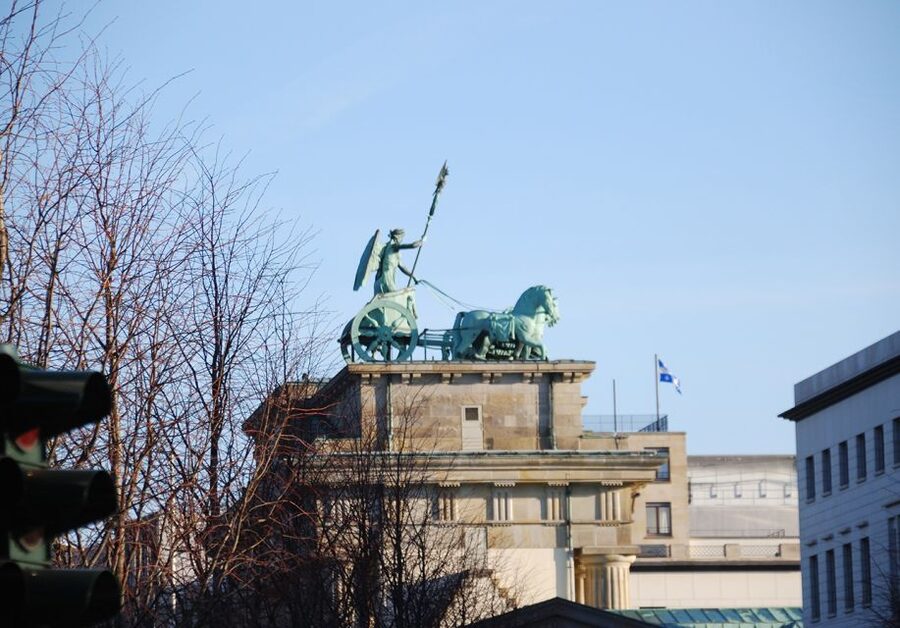
The walk begins at Berlin’s most famous landmark. Today, the gate is a familiar symbol of the city, but during the National Socialist period it was used for propaganda marches. That change in meaning is central to the tour: the same monument can serve as a civic landmark, a political stage, and a reminder of a darker past.
Your guide should help separate the building itself from the political uses imposed on it. That is one reason a live explanation is useful here. A quick photograph tells you very little about the gate’s role in the 1930s and 1940s.
Pariser Platz also gives the tour a clear sense of scale. You are not discussing distant events in a classroom. You are standing in the heart of the capital, close to the spaces where state power was displayed and directed.
The Reichstag and the rise of the NSDAP
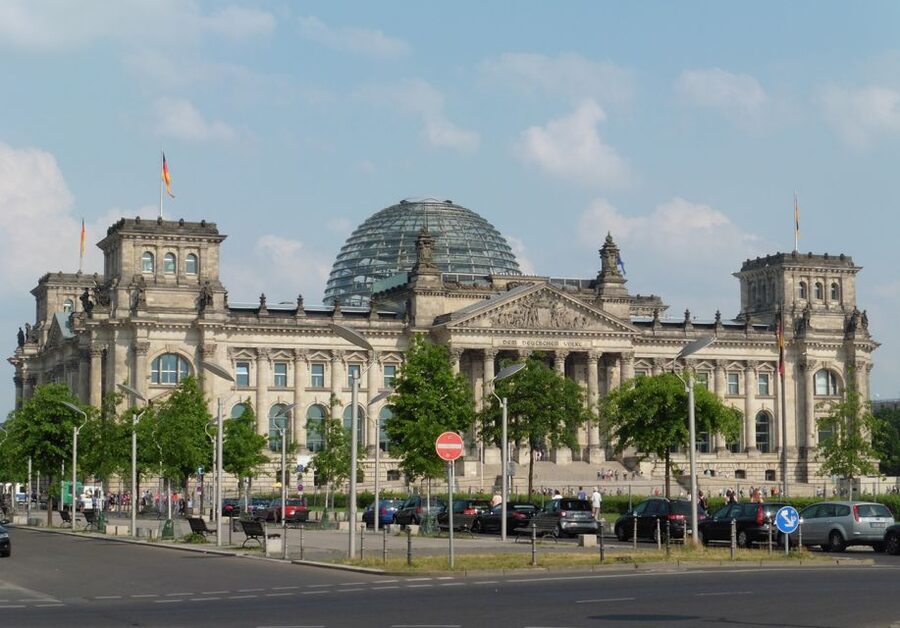
From the Brandenburg Gate, the route continues to the Reichstag, now the seat of Germany’s Parliament. The building provides an important link between modern democratic Germany and the period when the Nazi Party, the NSDAP, and Adolf Hitler came to power in 1933.
The guide’s job here is to explain the political setting without turning the stop into a long lecture. You will see the building from the outside and hear about its importance during the transformation of German government. Because the tour is only two hours, do not expect a visit inside the Reichstag or a discussion of every later chapter in its history.
I find this stop valuable because it places the Nazi rise within the center of German political life. The Reichstag is not just another grand building on the route. It helps you understand the difference between a democratic institution and the dictatorship that took control of the state.
Soviet tanks in Tiergarten
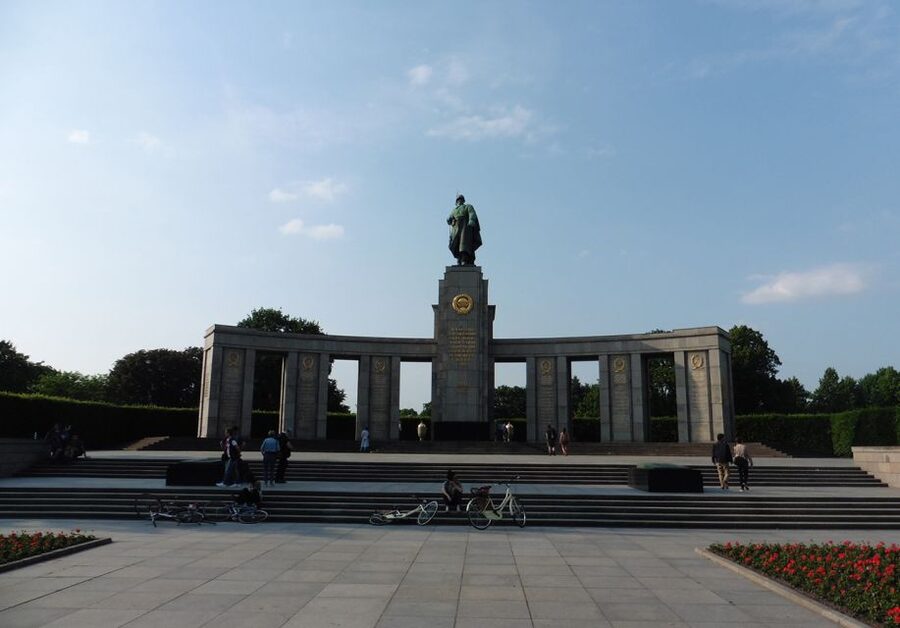
The walk then reaches the Soviet War Memorial in Tiergarten. Here, you can see Soviet T-34 tanks and artillery from World War II. These physical objects make the war feel immediate in a way that photographs sometimes do not.
The memorial also shifts the focus. Earlier stops deal mainly with propaganda and political power. In Tiergarten, the subject becomes the military defeat of Nazi Germany and the Soviet role in the final phase of the war.
This is an outdoor stop, so the weather matters. In cold or wet conditions, you will want a coat that lets you listen without rushing. One winter booking took place in very cold weather with icy streets, and guide Carlo was praised for watching the group carefully and offering extra Berlin tips. That is a small but useful sign of what a good walking guide should do: adjust to the street conditions instead of charging ahead.
The route is described as wheelchair accessible, but outdoor surfaces and weather can still affect comfort. If mobility is an important concern for you, ask about the current route when booking.
Same city, a completely different kind of day:
- Berlin: Reichstag, Dome and Government District Guided Tour
★ 4.7 · 18,288 reviews - Berlin: 1-Hour City Tour by Boat with Guaranteed Seating
★ 4.3 · 16,993 reviews - Berlin: Boat Tour Along the River Spree
★ 4.4 · 11,252 reviews - Berlin: Hop-on Hop-off Bus Tour with Live Commentary
★ 4.3 · 8,579 reviews
The Holocaust Memorial and the cost of remembrance
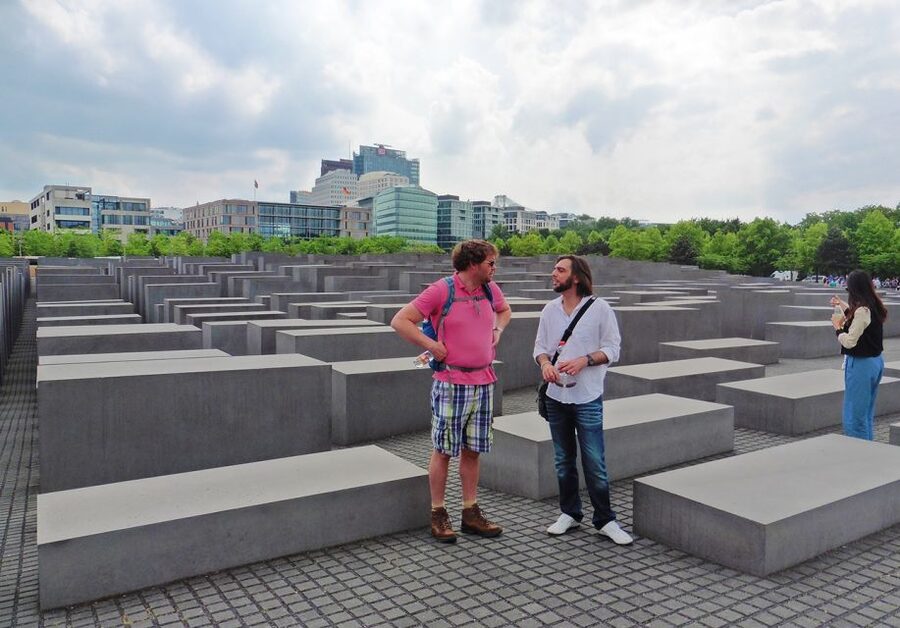
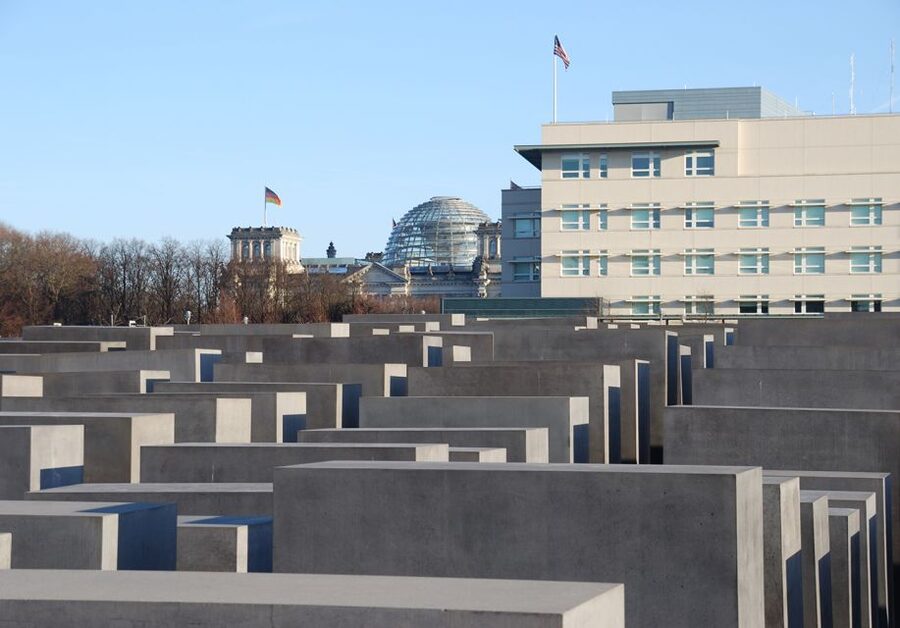
The next major stop is the Memorial to the Murdered Jews of Europe, usually called the Holocaust Memorial. The field of concrete slabs is one of Berlin’s most recognizable places of remembrance, and it carries a different weight from the political buildings earlier in the walk.
A guide adds value here by giving historical and civic context rather than treating the memorial as a photo stop. You can expect an explanation of what the memorial represents and how it fits into Berlin’s effort to confront the crimes of National Socialism.
The stop is outdoors and open to the public, but it is not a place for a quick, lighthearted pause. Give yourself room to listen and reflect. The tour continues afterward, so you may want to return on your own if you wish to spend more time at the memorial or visit its information center.
This is also a point where the guide’s tone matters. The strongest part of the experience, based on the named guides Carlo and Carlos, is the ability to tell difficult history in a clear, engaging way without losing its seriousness.
Finding the bunker site and former Chancellery
The route then moves toward the place where Adolf Hitler’s bunker and the New Reich Chancellery were located. The bunker itself is not presented as a preserved attraction. The importance lies in understanding the site and the government district that once surrounded it.
This is one of the tour’s most useful features. You are asked to imagine a landscape that has been altered, rebuilt, or cleared, rather than simply looking at a surviving monument. Without a guide, it can be hard to know where the wartime buildings stood or why the area mattered.
The former New Reich Chancellery represented the central power of Hitler’s government. The tour uses the site to explain the physical setting of Nazi rule, including the relationship between official buildings, government offices, and the bunker complex.
Do not expect an underground visit or a preserved interior. This is an interpretive stop, and its success depends on the guide’s explanation. Carlo and Carlos receive repeated praise for making the material lively and for answering questions, which is particularly helpful at locations where little remains above ground.
Resistance at the Johann Georg Elser Memorial
The Johann Georg Elser Memorial adds an important human dimension to the route. The tour does not only describe the dictatorship and its institutions. It also discusses German resistance to the regime.
The memorial gives the guide a chance to explain opposition from within Germany and to show that the story was not one of complete public agreement. This matters because a tour focused only on Nazi offices and military sites can make the period seem like an unstoppable machine. Resistance, even when unsuccessful, reveals personal courage and moral choice under dictatorship.
Expect a guided outdoor explanation rather than a long memorial visit. The stop is especially useful for teenagers and young adults who may already know the broad outline of World War II but need a clearer understanding of individual decisions and acts of opposition.
Detlev-Rohwedder-Haus and the old government district
The walk continues to Detlev-Rohwedder-Haus, a major building associated with the former government district. From here, the story returns to institutions and administration: the offices and ministries that helped run the wartime state.
This portion of the route is less instantly familiar than the Brandenburg Gate or Holocaust Memorial. That is a strength if you want to see how power worked beyond the headline sites. The guide can point out buildings that served official functions during World War II and explain how the district operated.
You should keep your expectations realistic. This is a walking and sightseeing stop, not an interior tour of every building. The interest comes from location, explanation, and the way the guide connects the structures to the broader Nazi administration.
Topography of Terror: ending at the former SS headquarters
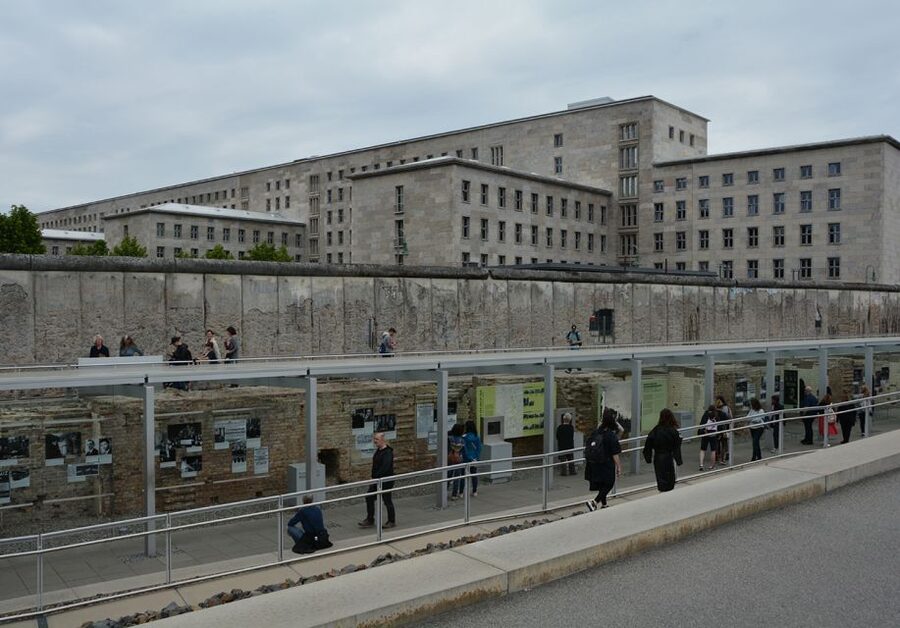
The tour finishes at the Topography of Terror Documentation Center. The center is located at the former site of the headquarters of the SS, the Secret State Police, and the Reich Security Main Office. The nearby Reich Aviation Ministry is also part of the historical setting.
This is a strong place to end because the route closes with the machinery of repression. Earlier stops show propaganda, political control, war, remembrance, and resistance. At Topography of Terror, those themes come together around the offices that directed persecution and state violence.
The tour includes a guided visit to the site area, but the supplied details do not promise an extended indoor museum visit. If you want to study the documentation center carefully, reserve separate time after the walk. Two hours is enough for an informed introduction, not enough for every panel and exhibit.
Ending here also makes practical sense. You finish with a clear place to continue your own study, rather than ending in the middle of another sightseeing district. It is a fitting final stop for anyone who wants more detail after the guide’s overview.
How much history fits into two hours
The route covers nine main stops in roughly two hours, including walking time. That works out to a brisk rhythm, especially if the group pauses for questions or the streets are icy, crowded, or wet.
I would choose this tour as an orientation rather than a complete study of Nazi Berlin. It gives you a connected framework, then helps you decide which locations deserve a longer return visit. The Holocaust Memorial and Topography of Terror are the most obvious places to revisit, but the former government district and bunker site may also make more sense after you have heard the explanation.
A small group of up to 10 people is a real advantage. You are more likely to hear the guide clearly and ask a question without interrupting a large crowd. If you book alone and the group is small, the experience may feel close to a private tour. One solo participant had exactly that kind of setting with Carlos.
Guide style and language
The tour is led by a professional city guide and the available language is German. The general description refers to a certified, multilingual guide, but the specific activity information lists German only. If you need English or another language, confirm this before paying.
The guides named in the feedback are Carlo and Carlos. They are praised for strong subject knowledge, enthusiasm, lively storytelling, answers to questions, and care in poor weather. One guide also offered extra suggestions for seeing Berlin, which can be useful if this is your first day in the city.
That personal element matters on a subject like this. The route includes buildings that have changed, sites where little remains, and facts that can be hard to place. A guide who can explain the setting and respond to questions gives you much more than a list of dates.
Price, group size, and practical value
At $43 per person, the tour is not the cheapest way to walk through central Berlin, but the price is fair if you want a focused subject and a live guide. You are paying for a small group, a carefully linked route, and interpretation at places that are not always easy to understand on your own.
The value is strongest for first-time visitors who want to connect several major sites in one morning or afternoon. It is also useful for anyone who has already seen Berlin’s main landmarks and now wants to understand their political and wartime setting.
The value is weaker if you prefer to spend a long time inside museums or read at your own pace. You may get more from independent visits to Topography of Terror and the Holocaust Memorial, but you would lose the guide’s explanation of how the sites relate to each other.
You can cancel up to 24 hours ahead for a full refund, and you can reserve now and pay later. The tour runs in all weather and on public holidays, so check the starting time and dress for the forecast. Wear suitable walking clothes and shoes, not city shoes chosen only for photographs.
Who should book this Berlin history walk?
I would recommend it to adults and older children who can handle a serious subject and a steady two-hour walk. The material is also suitable for teenagers and young adults, and one recent family booking specifically felt the subject worked well for that age group.
It suits you if you want:
- A clear introduction to Nazi-era Berlin
- A local guide rather than an audio guide
- A small group with room for questions
- Outdoor access to major sites and surviving wartime traces
- A route that includes both Nazi power and German resistance
I would think twice if you need a tour in English or want a slow, museum-heavy experience. I would also avoid booking it without proper clothing, since the walk continues in rain and cold.
Should you book it?
Book this tour if you want Berlin’s best-known landmarks placed into the specific story of National Socialism. The route is efficient, serious, and wide-ranging, with especially good value in the links between the Brandenburg Gate, government district, bunker site, memorials, and Topography of Terror.
The best reason to choose it is the guide. Carlo and Carlos are praised for making complex material clear, keeping the walk engaging, answering questions, and taking care of the group when conditions are poor. Just confirm the German-language format, allow for a brisk outdoor pace, and plan extra time at Topography of Terror if you want to read the exhibits carefully.
FAQ
Where does the tour meet?
Meet the guide at the exit of S+U Bhf. Brandenburger Tor, exit B, in the direction of Pariser Platz and Straße des 17. Juni. Look for the Get Your Guide, You in Berlin flag.
Where does the tour finish?
The tour finishes at the Topography of Terror Documentation Center.
How long does the walking tour last?
The tour lasts two hours. Starting times vary, so check availability when booking.
What language is the tour in?
The specific activity information lists German as the tour language. The guide is described as a certified, multilingual city guide, so confirm language availability if German is not suitable for you.
Is the tour wheelchair accessible?
Yes, the activity is listed as wheelchair accessible. Since the tour takes place outdoors in all weather, ask about current street conditions if accessibility is a major concern.
What happens if the weather is bad?
The tour operates in all weather conditions and on public holidays. Wear suitable clothes and shoes for a two-hour outdoor walk.
Just added around Berlin
- Love and War in Berlin: Self-Guided Story Puzzle Walk★ 5.0 · 7 reviews
- Rickshaw Tours Berlin – Groups of up to 16 people with several rickshaws★ 4.0 · 97 reviews
- Walking on the Wall: 3-Hour Tour in Berlin★ 4.5 · 34 reviews
- eSIM for Germany and 34 European Countries★ 4.5 · 16 reviews
- Warnemuende Shore Excursion: Berlin Private Sightseeing Tour from Rostock★ 5.0 · 4 reviews
- Your ticket to The Wall Museum Berlin★ 3.0 · 60 reviews
- Warnemuende Shore Excursion: Private Berlin Tour★ 4.5 · 27 reviews
- Berlin’s Gay, Lesbian, and Queer Scene Small-Group Walking Tour★ 4.5 · 66 reviews
Walking Tours, compared.





Berlin’s Best: 2 Hour Walking Tour Third Reich and the Cold War
Read our review →

