
Reviewed · WALKING TOURS
Berlin: Sightseeing Walking Tour of the Top 20 Attractions
Berlin’s past is never far away, and this three-hour walking tour puts much of it in front of you at street level. You move from the government district and Reichstag to the Holocaust Memorial, Checkpoint Charlie, the Topography of Terror, and Museum Island, with a guide connecting the sites rather than simply naming them.
I like the route’s strong Nazi and Cold War focus, and I like the personal touch offered by guides such as Carlos, Carlo, Antonella, and Max. Their stories can turn familiar monuments into places with human meaning. The catch is simple: six kilometers in three hours is a brisk outing, and you should expect tired feet by the finish.
In This Review
- Key points to know before you book
- A fast way to understand Berlin
- Starting beside the Paul-Löbe-Haus
- Reichstag, Brandenburg Gate, and the government quarter
- The Holocaust Memorial and Potsdamer Platz
- Checkpoint Charlie and the Berlin Wall story
- Martin-Gropius-Bau and the Topography of Terror
- Gendarmenmarkt and Bebelplatz
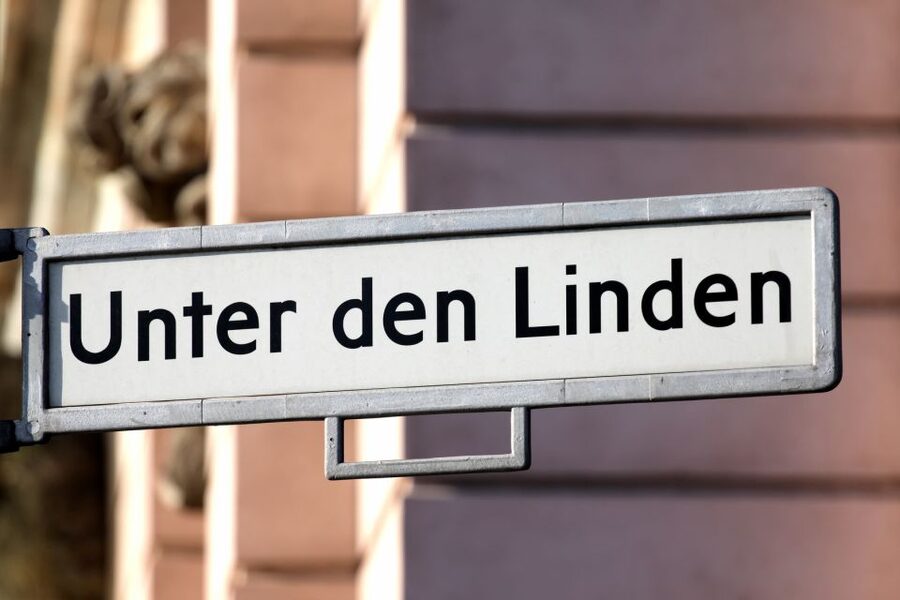
- Unter den Linden and Prussian Berlin
- Lustgarten, Berlin Cathedral, and the New City Palace
- Museum Island and the final walk to Friedrichsbrücke
- What the three-hour pace feels like
- Guide quality and the personal touch
- Is $94 a fair price?
- Who should book this Berlin walk?
- FAQ
- How long does the Berlin sightseeing walking tour last?
- How much walking is involved?
- Where does the tour begin?
- Where does the tour finish?
- What time does the tour start?
- Which languages are available?
- Is this a private tour or a group tour?
- Is the tour wheelchair accessible?
- What happens if the weather is bad?
- Should you book it?
Key points to know before you book
- The route covers more than the usual central highlights: You see government buildings, Prussian landmarks, Nazi-era sites, Cold War locations, and Museum Island in one outing.
- Guides add personal Berlin stories: Carlos has spoken about living through the fall of the Wall, while other named guides include Carlo, Antonella, and Max.
- You walk about six kilometers: This is a sightseeing sweep, not a slow museum-style visit with long breaks.
- The history comes in layers: The route links the Third Reich, the divided city, reunification, Prussian power, and modern Berlin.
- Private and small-group options are available: That matters if you want to ask questions or adjust the pace.
- The $94 price buys orientation and context: It is a fair value if this is your first Berlin visit and you want a strong starting point.
A fast way to understand Berlin
Berlin can feel scattered at first. Its major sights are spread across a wide central area, and the city’s story is not told in one neat order. This tour helps by giving you a clear line through the city, from the modern government quarter to the former front line of the Cold War and then east toward Museum Island.
The route is sold as a Top 20 sightseeing walk, though the advertised schedule names the principal stops rather than treating every point as a formal, separate visit. That is useful to understand before booking. You are getting an extended city walk with many landmarks and explanations, not twenty full sightseeing sessions.
The guide’s role is the real center of the experience. You hear about politics, architecture, war, division, reunification, and daily life while standing where events happened. The style includes Berlin humor, often dry and direct, which can make three hours of serious history easier to absorb.
A few more Berlin trips to weigh up
- Discover Berlin Half-Day Walking Tour
★ 5.0 · 9,624 reviews - Berlin: Third Reich and Cold War 2 Hour Walking Tour
★ 4.9 · 6,830 reviews - Berlin: Discover Berlin Walking Tour
★ 4.9 · 5,998 reviews
Starting beside the Paul-Löbe-Haus
Meet in front of the main entrance of the Paul-Löbe-Haus on Konrad-Adenauer-Straße, opposite the Federal Chancellery. The tour runs daily at 10:00 AM and 2:00 PM.
This is a sensible starting point because you begin in the heart of present-day German government. The Paul-Löbe-Haus and the nearby Chancellery show the confident, modern face of the reunified capital. From here, you walk through an area that once sat near the edge of divided Berlin but now functions as the country’s political center.
Your guide introduces the government district, then leads you toward the Reichstag. This opening gives you a useful contrast right away: contemporary Germany is set against the weight of its twentieth-century past.
Reichstag, Brandenburg Gate, and the government quarter
The Reichstag is one of Berlin’s essential sights. Its history reaches back to the German Empire, while its restored appearance and glass dome represent the modern republic. This tour focuses on the building from the outside and places it within the wider story of Berlin’s changing political role.
The Brandenburg Gate comes next as one of the emotional high points of the walk. Once a royal city gate, it later became a symbol of division because the Berlin Wall ran nearby. After reunification, it became an emblem of a single Berlin again.
I especially like having a guide explain the gate in person. The structure is impressive in photographs, but its meaning shifts depending on the era being discussed. The guide can help you see it as Prussian monument, Cold War symbol, and modern civic icon all at once.
You will have chances to stop for photographs, although the pace means you should not expect unlimited time at every landmark. If taking pictures is a priority, mention it early to your guide.
The Holocaust Memorial and Potsdamer Platz
The Holocaust Memorial is made up of rows of concrete blocks on a broad city site near Brandenburg Gate. The tour includes guided time here as well as some free time, allowing you to look around without the guide speaking every second.
This stop needs a respectful pace. The memorial is not a conventional monument with a single statue or a long inscription. Its effect comes from the physical space and the changing height of the blocks as you walk among them. A guide can provide historical background, but you should also have a quiet moment to form your own response.
From there, the route continues to Potsdamer Platz. This area is a striking example of Berlin’s post-reunification rebuilding. It once sat beside the Wall and became a broad zone of modern architecture after the city was reunited.
The contrast is valuable. In a short distance, you move from a memorial to the Nazi era and the murder of Europe’s Jews to a district shaped by contemporary redevelopment. That pairing shows how Berlin places painful memory beside the ordinary business of a modern city.
Same city, a completely different kind of day:
- Berlin: Reichstag, Dome and Government District Guided Tour
★ 4.7 · 18,288 reviews - Berlin: 1-Hour City Tour by Boat with Guaranteed Seating
★ 4.3 · 16,993 reviews - Berlin: Boat Tour Along the River Spree
★ 4.4 · 11,252 reviews - Berlin: Hop-on Hop-off Bus Tour with Live Commentary
★ 4.3 · 8,579 reviews
Checkpoint Charlie and the Berlin Wall story
Checkpoint Charlie is one of the best-known Cold War sites in Berlin. It was a crossing point between the American and Soviet sectors, and the name still carries the drama of a divided city.
The area is also one of Berlin’s more commercialized historic spots. You may find it crowded and full of photo opportunities that simplify the past. That makes a guide particularly useful here. The tour adds context about how the crossing worked, what the Wall meant to Berliners, and how the city changed after it fell.
The route also includes longer sections of Wall-related history than a basic Top 10 walk. You do not simply pause at one famous sign and move on. The guide links Checkpoint Charlie to the wider system of barriers, surveillance, and daily restrictions that shaped life in East and West Berlin.
Some guides bring a personal connection. Carlos, for example, is described as having lived through the Wall’s fall, and that kind of first-hand perspective can give the subject a human scale. It helps you picture reunification as something experienced by ordinary people, not just a date in a textbook.
Martin-Gropius-Bau and the Topography of Terror
The route passes Martin-Gropius-Bau, a grand late nineteenth-century exhibition building near the former border area. Even if you do not enter, the architecture adds another layer to the walk and shows how Berlin’s cultural institutions fit into a district marked by war and division.
Nearby, the Topography of Terror memorial occupies the grounds of the former Gestapo and SS headquarters. This is among the most important historical stops on the route. It focuses on the Nazi machinery of persecution and terror, making the site more than a general wartime landmark.
You should think of this section as a street-level introduction rather than a full museum visit. The tour does not replace time inside Berlin’s museums, but it helps you decide which places deserve a longer visit later. If Nazi history is a main reason for your trip, allow a separate block of time for the Topography of Terror exhibition after the walk.
Gendarmenmarkt and Bebelplatz
Gendarmenmarkt offers one of the most elegant architectural views in central Berlin. The square is associated with Prussian Berlin and its grand civic ambitions. Your guide explains the buildings and the role this area played in the city’s development.
The walk then reaches Bebelplatz, a place with a quieter but painful meaning. It is linked to the Nazi book burning of 1933, and the memorial set into the square asks you to confront that event without a large, dramatic structure.
This is where the tour’s balance of architecture and history works well. You see beautiful buildings, but the guide does not let beauty erase the darker events connected with the site. Berlin often demands that you hold both ideas at once.
Unter den Linden and Prussian Berlin
The route follows Unter den Linden, Berlin’s famous boulevard. It leads toward the older royal and university district and connects several of the city’s most important buildings.
Here, the focus shifts toward Prussian history and Berlin’s growth as a capital. You begin to see how royal power, military ambition, scholarship, and culture shaped the city long before the twentieth-century dictatorships and the Wall.
The walking format is helpful along Unter den Linden because the boulevard works as a sequence rather than a single attraction. You can look at the buildings, hear how they fit together, and understand why this area became central to Berlin’s identity.
Lustgarten, Berlin Cathedral, and the New City Palace
Lustgarten opens the view toward Berlin Cathedral and the Museum Island complex. It is a good place to pause and take in the scale of the area.
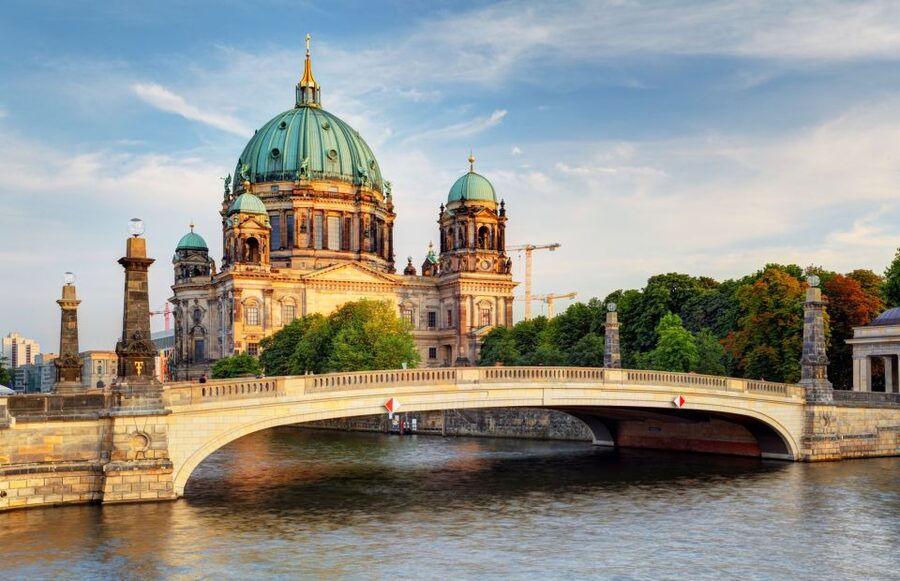
Berlin Cathedral is one of the city’s most recognizable buildings, with a large dome and a prominent position beside the Spree. The tour explains the setting and the cathedral’s place within the former royal district. The itinerary also includes the New City Palace, known today as the Humboldt Forum, which represents Berlin’s effort to reconstruct a major historic building while giving it a modern cultural purpose.
This part of the route is especially rewarding for architecture lovers. It also shows how Berlin keeps rebuilding and reinterpreting its past. You are not looking at a city frozen in one period. The buildings reflect monarchy, war damage, East German planning, reunification, and current cultural life.
Museum Island and the final walk to Friedrichsbrücke
Museum Island brings the tour to one of Berlin’s most important cultural areas. The complex includes several major museums, and the walk passes the Alte Nationalgalerie as well as other prominent buildings.
You should not expect admission to the museums during this walking tour. Instead, the guide gives you orientation, explains what you are seeing, and helps you decide where to return. That can save time later, especially if you have only a short stay in Berlin.
The tour finishes at Friedrichsbrücke. This is a practical ending near Museum Island, rather than an isolated drop-off point. You can continue exploring the museums, walk along the Spree, or use the central location to reach another part of the city.
What the three-hour pace feels like
Six kilometers is manageable for many people, but it is still a serious walk. One past participant described being worn out after three hours, and that is a fair warning. Comfortable shoes matter more than smart clothes, and you should bring water.
The tour runs in all weather. Berlin’s wind and rain can make the government quarter and open memorial spaces feel much tougher than they do on a mild day. Bring clothing suited to the forecast, and do not assume a sunny morning will last.
The pace is not meant to feel frantic. Guides can adapt to interests, and the private or small-group format gives you more room to ask questions. Still, you are covering a lot of ground. If you want long photo stops, café breaks, or detailed museum visits, this is not the right format.
The walk is listed as suitable for all ages and wheelchair accessible. Your own comfort will depend on how you handle a six-kilometer route and the weather, so it is sensible to discuss any mobility needs when booking.
Guide quality and the personal touch
The strongest part of this experience is the guide. Carlos and Carlo are both associated with especially personal tours, while Antonella and Max are also named as guides who have led the experience. The exact guide depends on the date and language you choose.
A good guide matters in Berlin because the city’s sites can be visually impressive but historically confusing. A person who can explain the connection between a Wall crossing, a memorial, a government building, and a royal square gives you a usable mental map.
The best guides also adjust. One account describes a private tour for only two people, which allowed plenty of time for photography. Another describes a rainy, windy day when the guide made time for a hot drink. Those details suggest that the experience can become more personal when the group is small, though you should not assume every tour will run over time or include an extra stop.
Languages offered are English, Spanish, and German. You can ask questions about Berlin neighborhoods, food, nightlife, and places to explore after the tour. That local advice may be as useful as the sightseeing itself.
Is $94 a fair price?
At $94 per person, this is not Berlin’s cheapest way to see the center. You can walk many of these streets on your own for almost nothing. The price makes more sense when you value a private or small-group setting, a certified local guide, historical explanation, and the chance to shape the conversation around your interests.
For a first visit, I think the value is solid if you want an overview before exploring museums on your own. You see the Brandenburg Gate, Reichstag, Holocaust Memorial, Potsdamer Platz, Checkpoint Charlie, Topography of Terror, Gendarmenmarkt, Bebelplatz, Berlin Cathedral, and Museum Island in one structured outing.
The value drops if you prefer slow sightseeing or already know central Berlin well. You may get more from a focused museum tour or a shorter walk centered on one period. Also remember that the experience is mainly outdoors, and the price does not turn the walk into a series of museum admissions.
Free cancellation up to 24 hours before the tour and a reserve-now, pay-later option make planning easier. Those are useful safeguards if your Berlin schedule is still moving around.
Who should book this Berlin walk?
I would choose this tour for a first-time visitor with only a few days in Berlin. It gives you a strong sense of direction and highlights the main areas you are likely to revisit.
It also suits couples, families, small groups, and curious local visitors who want a lively history lesson without spending three hours inside a museum. The humor and personal stories help soften what can otherwise be a heavy itinerary.
I would be cautious if you have limited walking ability, dislike all-weather activities, or want extensive time at each site. The route is dense by design. You see a lot, but you will need to return independently for a deeper look.
FAQ
How long does the Berlin sightseeing walking tour last?
The tour lasts three hours, or 180 minutes.
How much walking is involved?
The route covers approximately six kilometers, mainly on foot.
Where does the tour begin?
It begins in front of the main entrance of the Paul-Löbe-Haus, opposite the Federal Chancellery, at Konrad-Adenauer-Straße 1 in Berlin.
Where does the tour finish?
The tour finishes at Friedrichsbrücke near Museum Island.
What time does the tour start?
Tours are scheduled daily at 10:00 AM and 2:00 PM.
Which languages are available?
The live tour guide service is available in English, Spanish, and German.
Is this a private tour or a group tour?
Private and small-group options are available.
Is the tour wheelchair accessible?
Yes, the activity is listed as wheelchair accessible.
What happens if the weather is bad?
Tours operate in all weather conditions. Comfortable walking shoes, water, and suitable clothing are recommended.
Should you book it?
Book this tour if you want one well-organized introduction to Berlin’s major sights and difficult history. The route is long, but it is thoughtfully connected, and the guide can make the difference between seeing monuments and understanding them.
I would especially recommend it early in your stay. You can use the final stop at Museum Island to plan later visits, then follow the guide’s suggestions for food, nightlife, and neighborhoods. Skip it if you want a slow, specialized tour or if six kilometers sounds uncomfortable. For most first-time visitors who want a personal guide and a lot of Berlin in one morning or afternoon, $94 is a reasonable price for the time saved and the context gained.
Just added around Berlin
- Love and War in Berlin: Self-Guided Story Puzzle Walk★ 5.0 · 7 reviews
- Rickshaw Tours Berlin – Groups of up to 16 people with several rickshaws★ 4.0 · 97 reviews
- Walking on the Wall: 3-Hour Tour in Berlin★ 4.5 · 34 reviews
- eSIM for Germany and 34 European Countries★ 4.5 · 16 reviews
- Warnemuende Shore Excursion: Berlin Private Sightseeing Tour from Rostock★ 5.0 · 4 reviews
- Your ticket to The Wall Museum Berlin★ 3.0 · 60 reviews
- Warnemuende Shore Excursion: Private Berlin Tour★ 4.5 · 27 reviews
- Berlin’s Gay, Lesbian, and Queer Scene Small-Group Walking Tour★ 4.5 · 66 reviews
Walking Tours, compared.





Berlin’s Best: 2 Hour Walking Tour Third Reich and the Cold War
Read our review →

