

Reviewed · WALKING TOURS
Berlin: Schillerkiez and Rollberg Walking Tour
The best part of this walk is the sharp contrast between Schillerkiez, with its tree-lined streets and cafés, and nearby Rollberg, a district whose reputation has changed over time. The tour also gives you a useful Neukölln viewpoint across the broad expanse of Tempelhofer Feld.
I like the personal angle, especially because guide Reinhold Steinle lived in Schillerkiez for many years and can connect its past with its present. I also like the written summary at the end, a small but useful touch when you have heard many names and stories in a short time.
The main limitation is clear: the tour is conducted in German, and the walk is not suitable for people with mobility impairments. At 90 minutes, it offers a focused introduction rather than a full Neukölln exploration.
In This Review
- Key points at a glance
- Starting at Hermannstraße 221 in Neukölln
- How Schillerkiez began as a residential quarter
- Tempelhofer Feld and the airport effect
- Following the route into Rollberg
- The Captain of Köpenick story
- Reinhold Steinle’s local perspective
- What the private format means for value
- The written summary and follow-up tips
- Who should book this walk
- Should you book the Schillerkiez and Rollberg walk?
- FAQ
- Where does the tour begin?
- How long does the walking tour last?
- What language is the tour conducted in?
- Is the tour private?
- How much does the tour cost?
- What can I see during the walk?
- Is food or drink included?
- Is the tour suitable for people with mobility impairments?
Key points at a glance
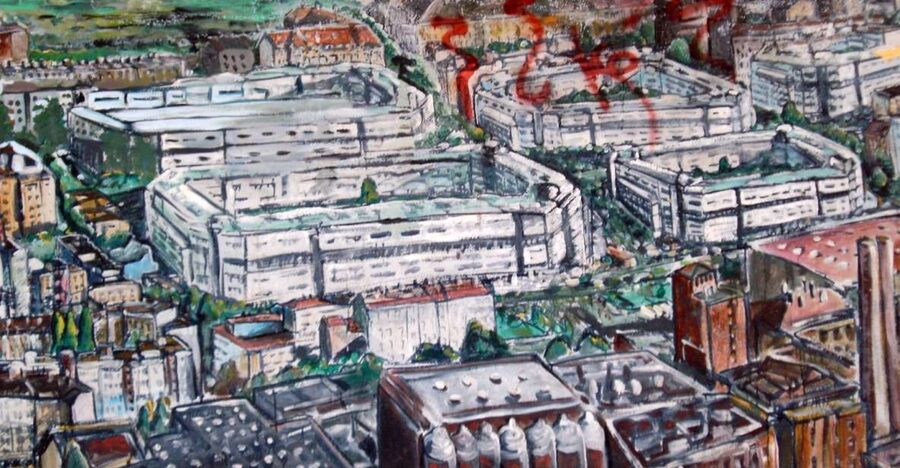
- Tempelhofer Feld from Neukölln: See the former airport grounds from the neighborhood’s southern perspective.
- Schillerkiez’s changing identity: Learn how a planned residential quarter was shaped by the opening and closure of the nearby airport.
- Rollberg’s shifting reputation: Hear how this adjoining district has been viewed and how that image has changed.
- The Captain of Köpenick connection: Explore the local link to one of Berlin’s best-known characters.
- A guide with local ties: Reinhold Steinle draws on years spent living in Schillerkiez.
- Private-group value: The $70 price covers up to six people, making the cost reasonable when shared by a small group.
Starting at Hermannstraße 221 in Neukölln
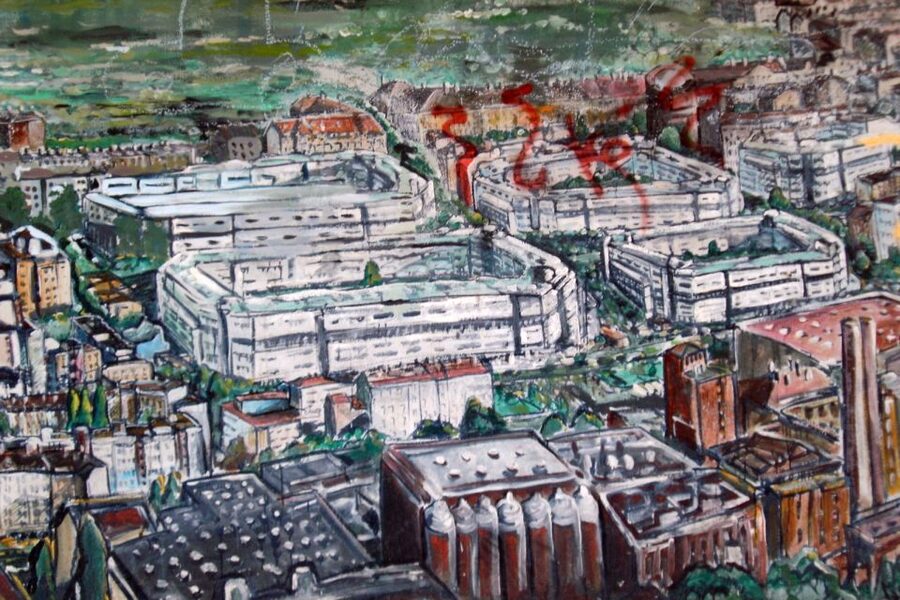
Your walk begins at Hermannstraße 221, in Berlin’s Neukölln district. This is not a grand central Berlin meeting point, and that is part of the appeal. You start in a neighborhood rather than at a famous monument, so the tour gets you into everyday Berlin from the first step.
The tour lasts 90 minutes. That is long enough to build a clear picture of Schillerkiez and Rollberg without taking up half your day. You can fit it between other Berlin plans, then use the guide’s suggestions for places worth seeing afterward.
Because this is a private group, the experience is designed for your party of up to six. You are not joining a large crowd being moved from one landmark to another. That format gives the guide room to explain local details and respond to your questions, though the amount of discussion will naturally depend on your group.
I would arrive ready for a neighborhood walk, not a formal indoor presentation. Food and drinks are not included, so plan to use one of the cafés or restaurants along the route separately. The tree-lined Schiller Promenade area is especially suited to a stop before or after the tour.
A few more Berlin trips to weigh up
- Discover Berlin Half-Day Walking Tour
★ 5.0 · 9,624 reviews - Berlin: Third Reich and Cold War 2 Hour Walking Tour
★ 4.9 · 6,830 reviews - Berlin: Discover Berlin Walking Tour
★ 4.9 · 5,998 reviews
How Schillerkiez began as a residential quarter
The first major theme is the original purpose of Schillerkiez. The neighborhood was built at the beginning of the 20th century as a residential area, and the walk helps you read its streets with that plan in mind.
Rather than treating the district as a collection of pretty façades, Reinhold Steinle explains how it developed and who lived along Schiller Promenade. This gives the streets a human scale. You are not simply looking at buildings. You are considering the people and social life that shaped this corner of Berlin.
The promenade itself is one of the more pleasant parts of the route. Its trees, cafés, and restaurants give the area a relaxed feel, while the surrounding streets show how a residential neighborhood can change as the city around it changes.
One valuable feature is the attention paid to famous residents of Schiller Promenade. The available information does not name every person you will discuss, so do not expect a fixed celebrity checklist. Instead, the value lies in learning why particular residents mattered and how their stories connect to the neighborhood.
If you have already seen central Berlin, this is a welcome change of pace. You are moving through a place where the story is carried by streets, buildings, and local memory rather than by a single headline monument.
Tempelhofer Feld and the airport effect
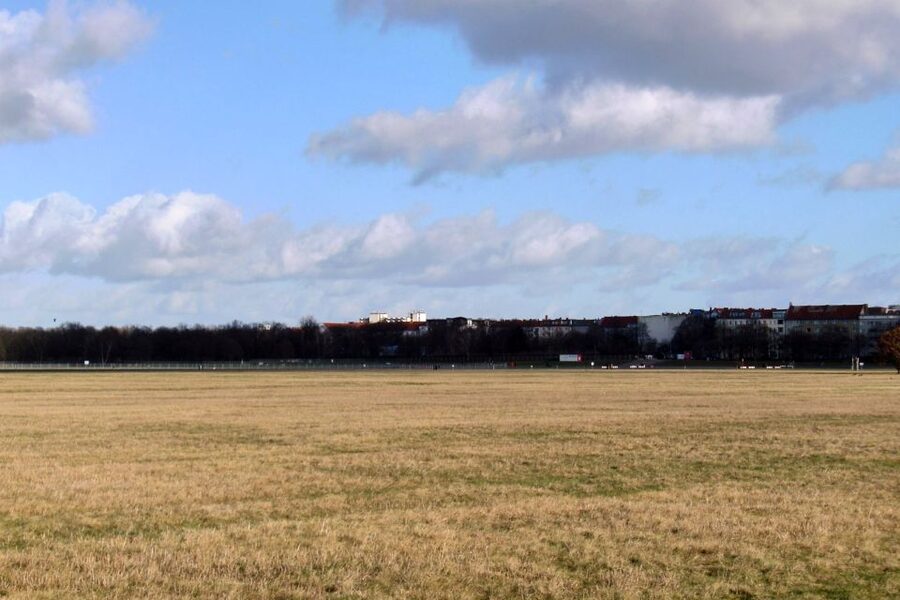
The nearby former airport is central to understanding Schillerkiez. The opening and later closure of Tempelhofer Feld airport changed the district, and the guide explains how those changes affected the neighborhood.
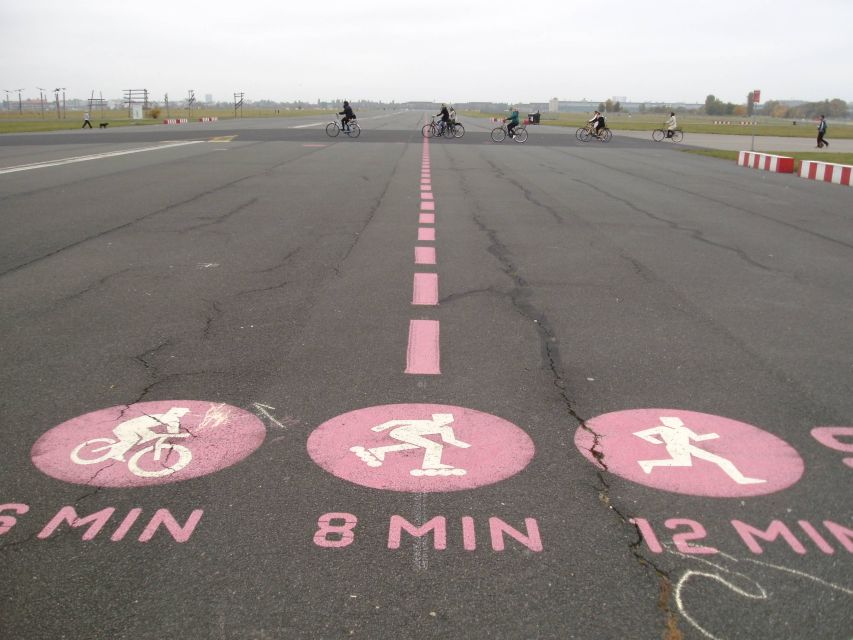
From the Neukölln side, you get a broad view of Tempelhofer Feld. The sight is important not only because it is large, but because it helps explain the relationship between open space and city life. The former airport is not just a separate attraction sitting beside Schillerkiez. Its presence influenced how the district functioned and how people understood it.
This is one of the tour’s strongest visual moments. You get a sense of scale that is difficult to grasp from a map or a quick visit to the field itself. The neighborhood sits beside an enormous open area, and the contrast between the dense streets and the former airfield gives the walk a clear geographic anchor.
The airport story also adds a useful time line. Schillerkiez began as a residential area, then experienced the effects of an operating airport nearby, and later faced new conditions after the airport closed. The tour presents the neighborhood as a place shaped by change rather than as a frozen historic quarter.
You should keep your expectations measured. This is a walking tour with a view of Tempelhofer Feld, not a dedicated airport tour. If your main goal is to spend time exploring the former runways or airport buildings, you will need a separate visit.
Following the route into Rollberg
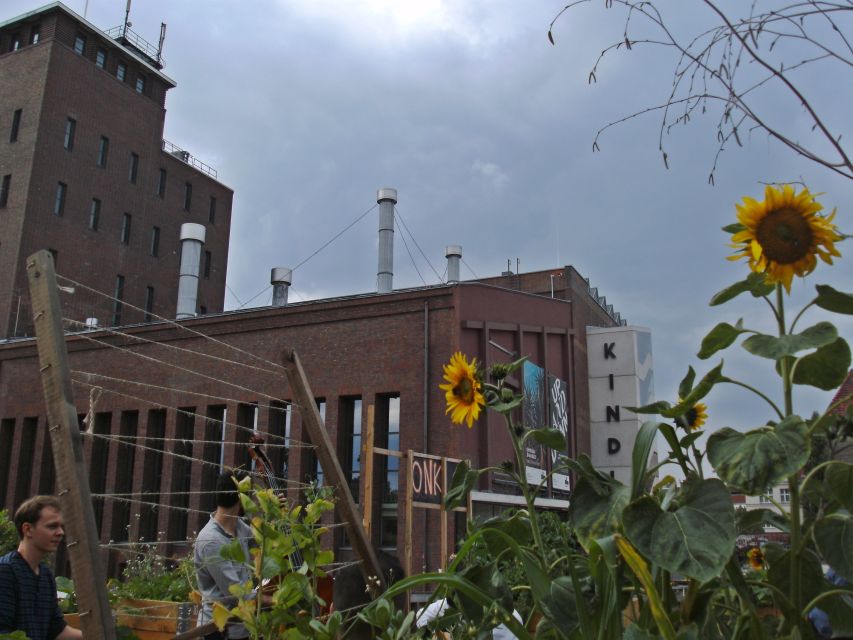
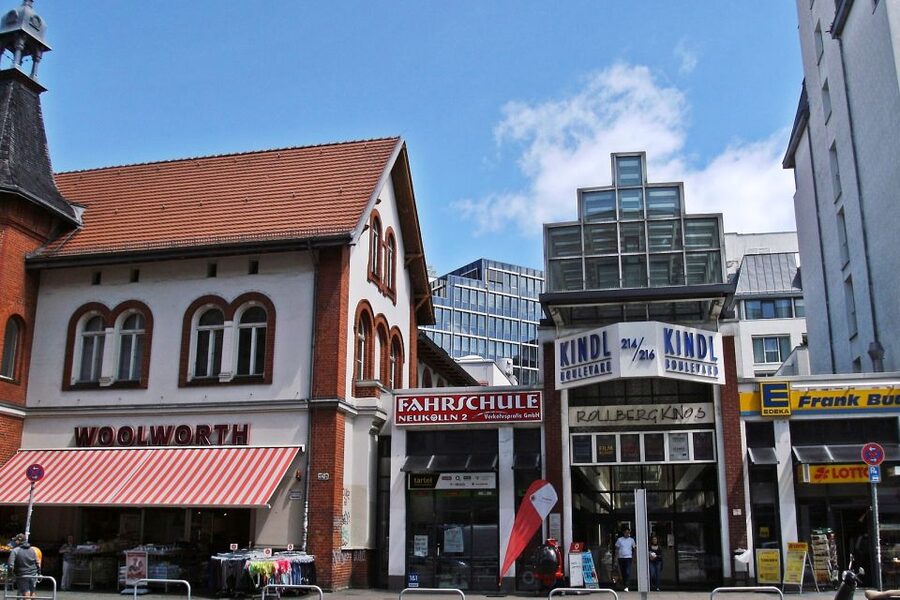
The walk continues into Rollberg, a neighboring district with a different feel and a complicated public image. This section gives the tour its strongest contrast.
Schillerkiez is introduced through residential planning, promenades, cafés, and local residents. Rollberg is presented through the way its reputation has shifted in recent years. That change is worth hearing about because it shows how a neighborhood can be described differently over time, depending on social conditions and public perception.
I appreciate that the route does not treat Rollberg as a simple good-versus-bad story. A changing reputation invites you to ask what has changed, who has shaped the image, and how outside impressions compare with daily life. The available information does not promise a list of specific redevelopment projects or institutions, so the focus is on the district’s history and reputation rather than on a standard sightseeing checklist.
This part may be especially useful if you want to understand Berlin beyond the postcard version. You are not merely checking off sights. You are hearing how two neighboring areas can carry different identities and how those identities can shift.
Rollberg may be less immediately picturesque than Schillerkiez, depending on what you expect from a Berlin walk. That is not a flaw, but it is worth knowing. The appeal here is context, not decorative scenery.
Same city, a completely different kind of day:
- Berlin: Reichstag, Dome and Government District Guided Tour
★ 4.7 · 18,288 reviews - Berlin: 1-Hour City Tour by Boat with Guaranteed Seating
★ 4.3 · 16,993 reviews - Berlin: Boat Tour Along the River Spree
★ 4.4 · 11,252 reviews - Berlin: Hop-on Hop-off Bus Tour with Live Commentary
★ 4.3 · 8,579 reviews
The Captain of Köpenick story
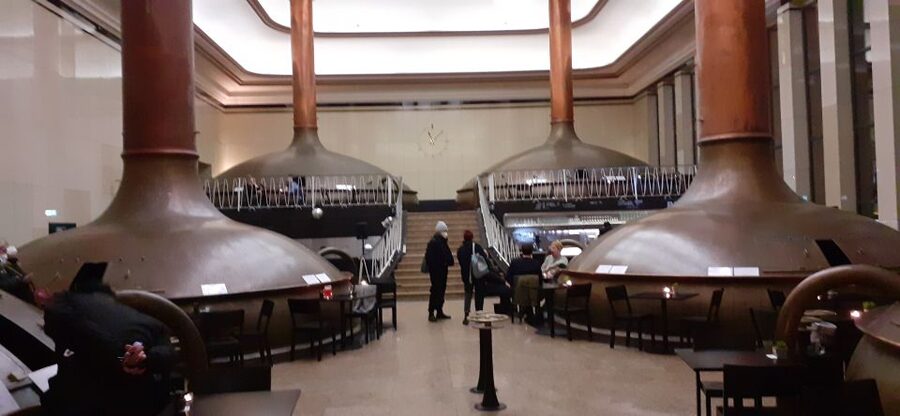
The tour also covers the Captain of Köpenick and his connection to Rollberg. This is the sort of local story that can give a short walk its character.
The Captain of Köpenick is one of Berlin’s famous historical figures, and the guide explains what he had to do with the Rollberg district. Since the tour is conducted in German and the story includes local context, this is a good place to listen closely rather than rely on a quick translation or a few names in a guidebook.
I like this element because it links a broad Berlin legend to a specific neighborhood. Instead of treating the Captain of Köpenick as a citywide anecdote with no location, the walk gives you a reason to connect the story with Rollberg.
The exact detail that will matter most to you depends on how much Berlin history you already know. If you are new to the city, the tale provides an entertaining entry point. If you already know the basics, Steinle’s local framing may add a useful layer.
Do not expect the tour to recreate the event or lead you through a museum display. This is a spoken neighborhood story, supported by the places around you.
Reinhold Steinle’s local perspective
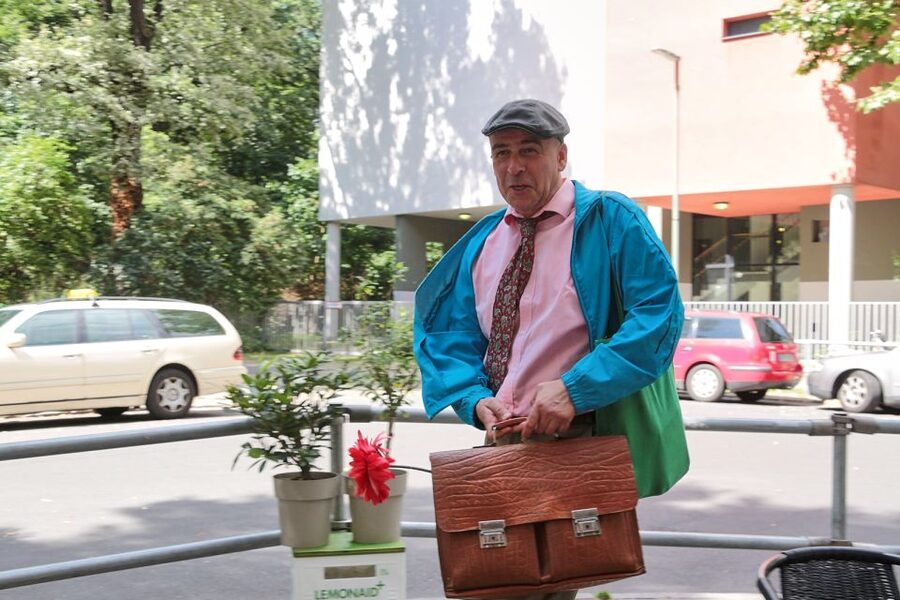
The guide is a major part of the experience. Reinhold Steinle is described as passionate, friendly, widely read, and deeply familiar with Schillerkiez after living there for many years. Those details matter because a local walk rises or falls on the quality of its explanations.
A guide who has lived in the area can do more than recite dates. Steinle can connect the neighborhood’s earlier role as a residential quarter with its current cafés, restaurants, and changing public image. The tour’s strongest promise is not a large number of stops. It is the quality of the stories attached to the stops.
His approach also appears to suit people who enjoy detail. The walk includes anecdotes, named residents, district history, the airport’s influence, and the Captain of Köpenick. If you prefer a fast route with only the biggest facts, 90 minutes of local explanation may feel more detailed than necessary.
The German-only format is important. You should book this tour if you are comfortable following a live tour in German. The written summary at the end may help you retain the main points, but it should not be treated as a substitute for understanding the guide during the walk.
What the private format means for value
The price is $70 per group of up to six people. For one person, that is a high price for a 90-minute walk. For six people, it works out to about $11.67 each, which is a fair rate for a private neighborhood tour with a local guide.
The value improves if your group wants a quieter, more personal experience. You are paying for access to Steinle’s interpretation of the districts, not for entry to a museum or a long list of included attractions. The written summary and follow-up tips add practical value, especially if you plan to keep exploring Neukölln afterward.
The private format also lets you set the pace within reason. You will not have to match the interests of a large mixed group. Still, the tour remains 90 minutes, so do not expect a custom full-day itinerary.
For couples or solo visitors, the price is harder to justify unless the local stories and German-language format are exactly what you want. For a family or group of friends, the cost becomes much more appealing.
The written summary and follow-up tips
At the end, you receive a written summary of the most important content. This is a thoughtful feature because neighborhood walks can involve many names, dates, and connections.
The summary can help you remember how Schillerkiez began, how the airport affected it, why Tempelhofer Feld matters, and how Rollberg’s reputation changed. It may also help you explain the Captain of Köpenick connection to someone who did not join you.
You also receive tips from the guide about further ventures and places worth seeing. These suggestions are useful because the tour covers two districts but cannot show you everything in either one. You can use the advice to turn the walk into a longer Neukölln outing.
I would keep the summary with your Berlin notes. It gives you a way to revisit the tour later, when the neighborhood names are no longer fresh.
Who should book this walk
I recommend the tour most strongly to visitors who:
- Want to see a side of Berlin outside the central sightseeing circuit
- Enjoy local history, anecdotes, and social change
- Are comfortable taking a tour in German
- Have a group of several people to share the $70 cost
- Want a private walk rather than a large scheduled group
- Plan to explore Neukölln or Tempelhofer Feld on their own afterward
It also suits returning visitors who have already seen Berlin’s major sights and want more neighborhood context. Schillerkiez and Rollberg offer a different kind of sightseeing, based on local identity rather than famous monuments.
I would choose another experience if you need an English-language tour, have mobility limitations, or want a route devoted mainly to the former airport. This walk is also not the best match if you want food tastings, since food and drinks are not included.
Free cancellation up to 24 hours before the start gives you some useful flexibility, and you can reserve now and pay later. Those policies do not change the nature of the walk, but they make it easier to fit into a busy Berlin schedule.
Should you book the Schillerkiez and Rollberg walk?
Book it if you want a thoughtful, local German-language introduction to two neighboring Neukölln districts and can share the cost with a small group. Reinhold Steinle’s long connection to Schillerkiez, the airport story, the Tempelhofer Feld view, and the Captain of Köpenick link give the 90-minute route a clear sense of place.
Skip it if you need English, step-free access, or a major-attraction tour. For the right audience, though, this is a compact way to see how Berlin’s neighborhoods change, remember, and explain themselves.
FAQ
Where does the tour begin?
The meeting point is Hermannstraße 221, 12049 Berlin, in Neukölln.
How long does the walking tour last?
The tour lasts 90 minutes.
What language is the tour conducted in?
The live tour guide speaks German. The activity information lists German as the available language.
Is the tour private?
Yes. It is offered as a private group experience for up to six people.
How much does the tour cost?
The price is $70 per group of up to six people.
What can I see during the walk?
You can see Tempelhofer Feld from the Neukölln side, walk through Schillerkiez and Schiller Promenade, and continue into Rollberg. The guide discusses the districts’ histories, famous residents, changing reputations, and the Captain of Köpenick.
Is food or drink included?
No. Food and drink are not included in the tour price.
Is the tour suitable for people with mobility impairments?
No. The activity is listed as unsuitable for people with mobility impairments.
Just added around Berlin
- Love and War in Berlin: Self-Guided Story Puzzle Walk★ 5.0 · 7 reviews
- Rickshaw Tours Berlin – Groups of up to 16 people with several rickshaws★ 4.0 · 97 reviews
- Walking on the Wall: 3-Hour Tour in Berlin★ 4.5 · 34 reviews
- eSIM for Germany and 34 European Countries★ 4.5 · 16 reviews
- Your ticket to The Wall Museum Berlin★ 3.0 · 60 reviews
- Warnemuende Shore Excursion: Private Berlin Tour★ 4.5 · 27 reviews
- Warnemuende Shore Excursion: Berlin Private Sightseeing Tour from Rostock★ 5.0 · 4 reviews
- Berlin’s Gay, Lesbian, and Queer Scene Small-Group Walking Tour★ 4.5 · 66 reviews
Walking Tours, compared.





Berlin’s Best: 2 Hour Walking Tour Third Reich and the Cold War
Read our review →

