
Reviewed · WALKING TOURS
Berlin: Hidden gems around the Gendarmenmarkt – Guided walking tour
Gendarmenmarkt looks like a polished postcard, but its best stories sit just beyond the usual photo stops. This two-hour walk connects the square’s German and French cathedrals with Berlin’s 1989 freedom-to-travel announcement, old fashion houses, the Mendelssohn bank, and the streets where artists and thinkers once met.
I like the small group of up to 15 people, which should make it easier to hear the guide and ask questions. I also like the range of subjects: architecture, fashion, music, banking, and political change all fit into one compact walk. The main consideration is that the tour is conducted in German, and the route is not suitable for people with visual or hearing impairments.
In This Review
- Key points to know before booking
- Why Gendarmenmarkt rewards a closer look
- The three buildings that define the square
- Stories of writers, performers, and musical families
- The 1989 place where freedom to travel was proclaimed
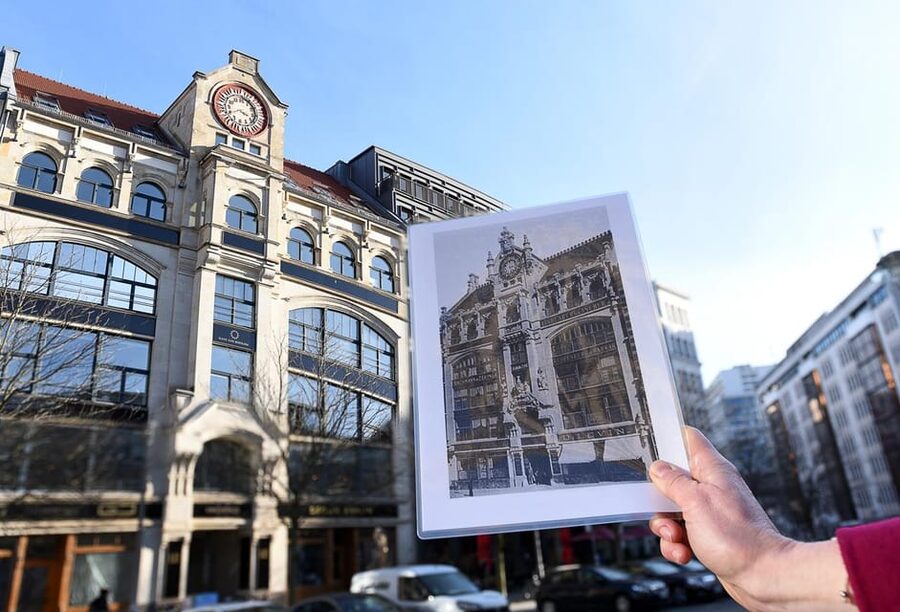
- Hausvogteiplatz and Berlin’s former fashion center
- Jägerstraße, banking, and the city of ideas
- How the two-hour format works
- What the guide adds to the experience
- Is $20 a fair price for this Berlin walk?
- Who should book this tour?
- My booking advice
- FAQ
- Where does the tour begin?
- Where does the tour end?
- How long does the walking tour last?
- What language is the tour conducted in?
- How large is the group?
- What buildings are covered at Gendarmenmarkt?
- Does the tour include the 1989 freedom-to-travel site?
- Does the walk cover Berlin’s fashion history?
- Is the tour wheelchair accessible?
- Can I cancel for a full refund?
Key points to know before booking
- Gendarmenmarkt is only the starting point: The route also reaches Mohrenstraße, Hausvogteiplatz, and Jägerstraße.
- The 1989 stop adds modern history: You visit the place connected with the proclamation of freedom to travel.
- Architecture gets context: The German Cathedral, French Cathedral, and Konzerthaus are explained as part of Berlin’s changing story.
- Fashion is a major theme: Hausvogteiplatz once sat at the center of Berlin’s fashion industry.
- Small groups help: A maximum of 15 people keeps this more personal than a large city walk.
- The tour costs $20: That is fair value if you want interpretation and local connections, not just landmark photos.
Why Gendarmenmarkt rewards a closer look
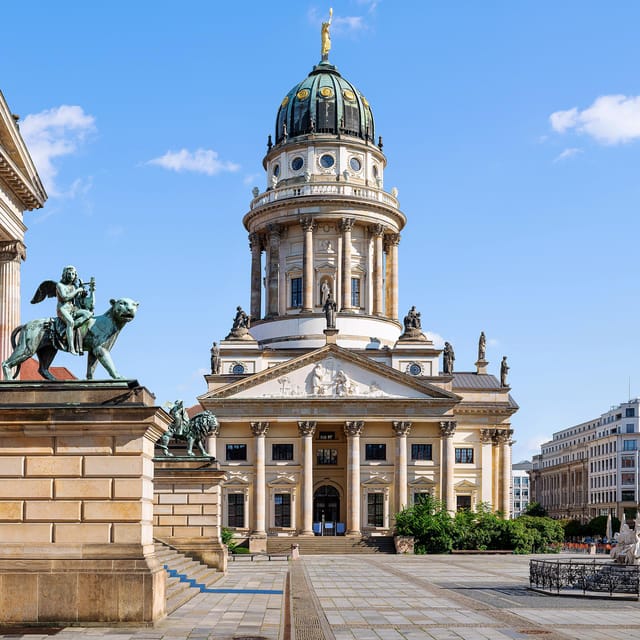
Gendarmenmarkt is one of Berlin’s grandest public spaces, framed by the German Cathedral, the French Cathedral, and the Konzerthaus. At first glance, it can feel finished and formal, a place to take a picture and move on.
This walk asks you to pause. The square becomes a record of changing power, taste, religion, culture, and public life. You will hear about past glories, difficult periods, and the reasons the area has continued to change.
That approach matters in Berlin. The city often presents several centuries in one block, but the clues are not always obvious. A decorated facade may point to a vanished institution. A quiet side street may have once been a center of commerce or political debate. The guide’s job is to connect those pieces.
The tour also explains why Gendarmenmarkt has been a major construction site since 2023. The supplied information does not specify the exact work or its effect on every stop, so you should expect some conditions to vary. If the square is partly restricted during your visit, the surrounding streets become even more important.
A few more Berlin trips to weigh up
- Discover Berlin Half-Day Walking Tour
★ 5.0 · 9,624 reviews - Berlin: Third Reich and Cold War 2 Hour Walking Tour
★ 4.9 · 6,830 reviews - Berlin: Discover Berlin Walking Tour
★ 4.9 · 5,998 reviews
The three buildings that define the square
The walk begins with the three famous buildings that give Gendarmenmarkt its shape.
The German Cathedral and French Cathedral face each other across the square, creating one of Berlin’s most recognizable architectural pairings. Their names tell part of the story, reflecting the presence of German and French religious communities in the city.
The Konzerthaus completes the composition. It gives the square a strong cultural identity, rather than making it only a religious or civic space. Your guide will point out architectural features and explain why these buildings matter to Berlin.
I appreciate this opening because it does more than identify the landmarks. You learn to read the square as a planned setting, where buildings communicate with one another. The guide also adds surprising facts, helping the place feel less like a frozen monument and more like a location shaped by many generations.
Do not expect a long interior visit based on the information provided. This is a walking tour focused on the buildings from the outside and on the stories connected with them. If you want extensive time inside the cathedrals or the concert hall, you would need to arrange that separately.
Stories of writers, performers, and musical families
The route brings in people who give the buildings and streets a human scale.
You hear about E.T.A. Hoffmann, known as a writer and composer, and about the Mendelssohn family, whose influence reaches into Berlin’s banking and cultural life. The tour also links the area with performers such as Josephine Baker, Marlene Dietrich, and Claire Waldoff.
These names are not simply a list of famous Berlin figures. They show how the district functioned as more than a ceremonial square. Music, theater, cabaret, literature, and social life all crossed paths here.
Josephine Baker and Marlene Dietrich bring the story toward performance and public image. Claire Waldoff adds Berlin cabaret to the picture. The Mendelssohn family points in another direction, toward finance, education, and cultural influence. E.T.A. Hoffmann helps connect artistic work with the city’s intellectual world.
I like this part of the route because it avoids treating history as only dates and rulers. You get people with careers, creative work, and personal connections to the city. The guide can make the setting feel more immediate, especially if you already know some of these names.
The tradeoff is that a two-hour tour can only offer a selection. You should expect concise stories rather than a full biography of each person.
The 1989 place where freedom to travel was proclaimed
One of the tour’s strongest stops concerns the place where freedom to travel was proclaimed in 1989. That moment was a turning point in German history and one of the clearest links between the Gendarmenmarkt area and the end of East Germany’s restrictions.
The value of this stop comes from its setting. Berlin’s major political memories are not limited to the Brandenburg Gate or the Berlin Wall memorials. Important announcements also happened in ordinary-looking urban spaces, where the meaning may be easy to miss without explanation.
Your guide will place the event in context and help you understand why the announcement mattered. The tour description does not name the exact building or provide a full account of the event, so you should think of this as a focused historical stop rather than a complete 1989 walking tour.
For me, this gives the route useful balance. The cathedrals and concert hall represent older Berlin, while the 1989 story brings the city’s recent past into the same walk. You move from architecture and cultural history to a political moment that changed daily life.
Same city, a completely different kind of day:
- Berlin: Reichstag, Dome and Government District Guided Tour
★ 4.7 · 18,288 reviews - Berlin: 1-Hour City Tour by Boat with Guaranteed Seating
★ 4.3 · 16,993 reviews - Berlin: Boat Tour Along the River Spree
★ 4.4 · 11,252 reviews - Berlin: Hop-on Hop-off Bus Tour with Live Commentary
★ 4.3 · 8,579 reviews
Hausvogteiplatz and Berlin’s former fashion center
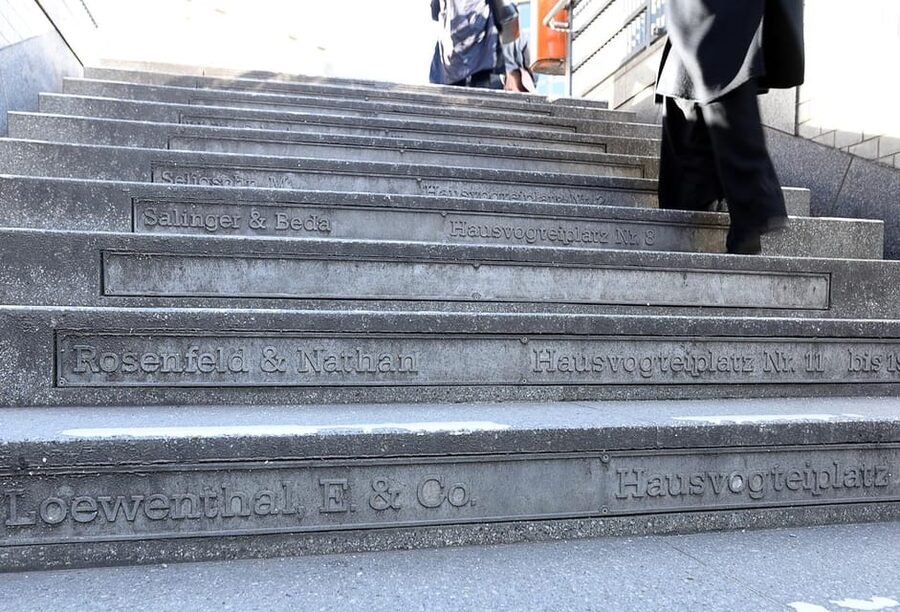
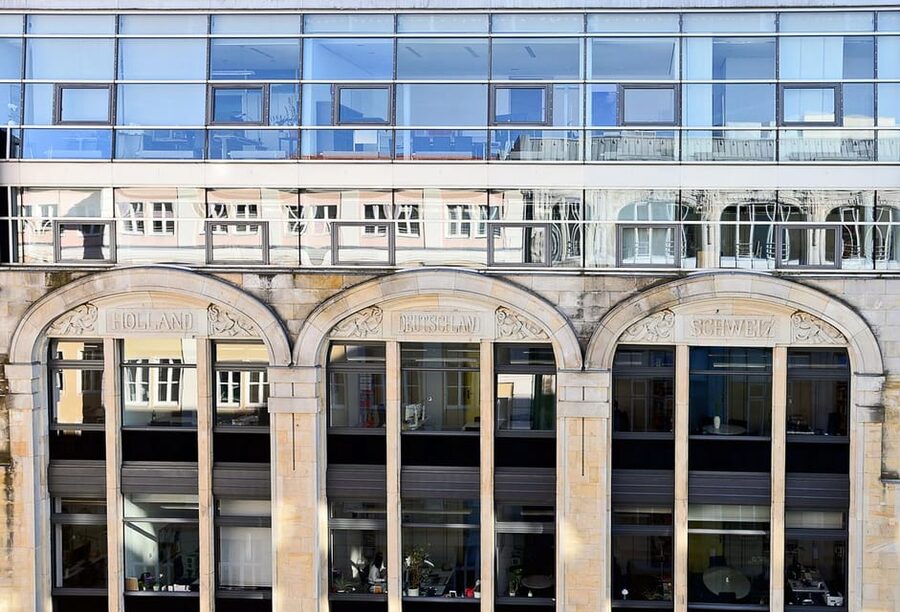
A few steps from Gendarmenmarkt, Hausvogteiplatz introduces a different Berlin story. The square was once at the center of the city’s fashion industry, helping Berlin develop into a fashion metropolis.
This may be the most unexpected part of the route for many people. Berlin is now associated with fashion and design, but the city’s role in clothing did not begin recently. The walk explains how the district developed, which creative minds shaped the industry, and how fashion became part of Berlin’s identity.
The subject also shows why side streets matter. A visitor who only photographs Gendarmenmarkt could easily miss this chapter. Hausvogteiplatz may not have the same immediate fame as the cathedrals, but its story expands your view of the neighborhood.
The information provided does not promise visits to former fashion interiors or working studios. The value is in the explanation and the connection between place and industry. If you enjoy design, clothing, urban change, or the history of everyday business, this stop should add a welcome change of pace.
It also makes the tour useful for repeat visitors. You do not need another basic introduction to central Berlin. You get a reason to look at familiar streets differently.
Jägerstraße, banking, and the city of ideas
The walk continues to Jägerstraße, once a center of Berlin’s financial world. The Mendelssohn Bank is a key part of that story, linking the street to one of the city’s influential families.
But Jägerstraße was not only about money. It was also a meeting place for intellectual and cultural life. The tour connects the street with Alexander von Humboldt, Rahel Varnhagen van Ense, and Moses Mendelssohn.
Those names help show how finance, scholarship, philosophy, and social exchange could overlap in the same neighborhood. The result is a fuller picture of Berlin’s development. A city is shaped not only by its rulers and monuments, but also by banks, salons, writers, scientists, and people who create new arguments and ideas.
This section should appeal to you if you like social history. It asks who had influence, where people met, and how a district gained importance. It also gives the tour a clear arc: the grand square leads into fashion, then finance, then the intellectual networks that shaped Berlin.
The streets themselves may not provide a dramatic visual payoff at every step. That is normal for this kind of walk. You are paying for the guide’s explanation of what happened there, not for a series of spectacular views.
How the two-hour format works
Two hours is a useful length for this route. It gives the guide enough time to move beyond the three main buildings, but it does not turn the outing into an exhausting half-day commitment.
The tour begins at Gendarmenmarkt, opposite Französische Straße 44, and ends at the same meeting point. That makes planning simple. You can pair it with another activity in central Berlin without needing to arrange a return journey from an unfamiliar neighborhood.
The maximum group size is 15 people. That is small enough for a more direct exchange with the guide, while still keeping the price at a reasonable $20 per person. At that rate, the tour offers good value if you want background, connections, and a human voice rather than a self-guided walk with a map.
The published duration does not include a meal break or a separate museum visit. Wear shoes suited to two hours of city walking, and check the square’s current construction conditions before setting out. The route is wheelchair accessible, but the experience is not suitable for people with visual or hearing impairments according to the activity information.
The tour is offered in German only. You should be comfortable following a live explanation in German, since the stories and historical links are the main reason to book.
What the guide adds to the experience
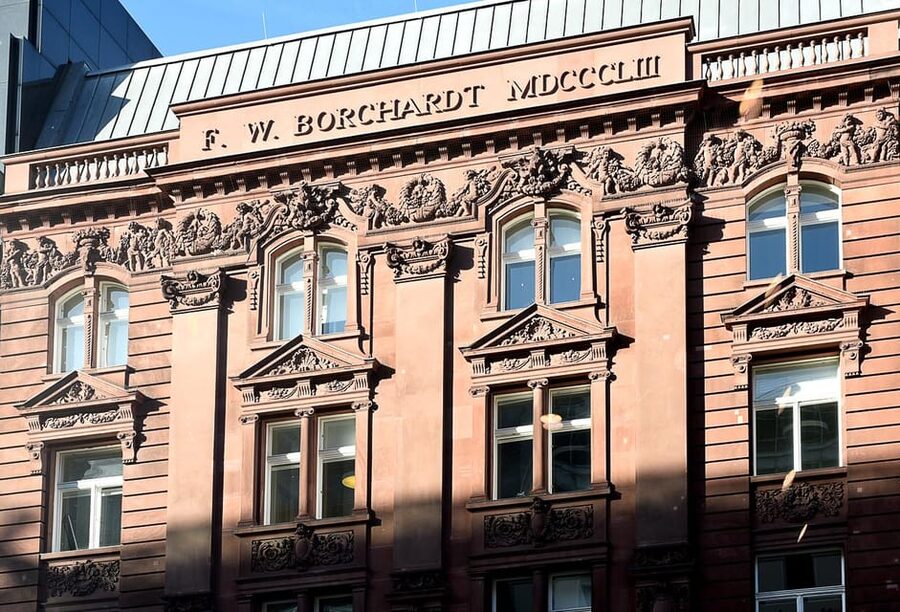
A strong guide can turn a familiar square into a sequence of discoveries. Here, the guide is expected to explain the buildings, identify the people connected with the district, and make sense of changes that are easy to overlook.
The positive feedback specifically singles out Susanne as friendly and competent, and describes the afternoon as informative even in rainy weather. That is a useful clue about the tone of the experience. You can expect a personal, story-led walk rather than a dry architectural lecture.
At the same time, individual guide assignments can change. Susanne may not lead every departure, so treat her name as a helpful detail, not a guarantee. The important point is the format: a live German-speaking guide leading a small group through connected locations.
Weather is worth considering. Much of the experience takes place outdoors, and rain will not cancel the historical content, but it can affect comfort and how long you want to linger at each stop. A waterproof layer and comfortable shoes are sensible choices.
Is $20 a fair price for this Berlin walk?
At $20 per person, this is a modestly priced guided experience for two hours in central Berlin. The cost makes sense when you want a focused introduction to one district and prefer asking questions rather than reading plaques or following an app.
The strongest value comes from the range of material. In one walk, you get architecture, religious communities, performance, literature, fashion, banking, intellectual life, and the political changes of 1989. That is a lot of ground in a short time, though the guide must keep each subject moving.
The price is less compelling if you want extended time inside the landmarks or a broad overview of all Berlin. This is not a citywide orientation tour, and it is not designed as a specialist museum visit. It works best as a close look at Berlin-Mitte, especially for someone who has already seen the major central sights.
The experience has a rating of 4.7 from 14 reviews, with praise focused on the guide’s friendly manner and informative storytelling. That is a small sample, but it fits the tour’s stated purpose and gives some support to the value of the format.
Who should book this tour?
I would choose this walk if you enjoy place-based stories. You will get the most from it if you like learning why a street mattered, who used a building, and how different parts of city life developed side by side.
It also suits repeat visitors to Berlin. The route goes beyond the most familiar monuments and gives you new reasons to explore Gendarmenmarkt and the surrounding streets.
History fans should appreciate the 1989 stop and the connections to the Mendelssohn family. People interested in fashion should pay close attention at Hausvogteiplatz. Architecture fans will enjoy the opening explanation of the German Cathedral, French Cathedral, and Konzerthaus.
You should think twice if German is not comfortable for you, since no other language is listed. The walk is also not suitable for people with visual or hearing impairments. Wheelchair users can book because the activity is listed as wheelchair accessible, though current construction around Gendarmenmarkt may affect the exact conditions on the day.
My booking advice
Book this tour if you want a compact, affordable walk that explains why Gendarmenmarkt matters beyond its handsome facade. The best reason to go is the route’s variety: one square leads to stories about fashion, cabaret, banking, philosophy, and the moment travel restrictions began to fall in 1989.
Skip it if your priority is entering every major building, taking a broad Berlin overview, or touring in English. For a German-speaking visitor who wants thoughtful local context and a small group, $20 is a sensible price for two hours. You can cancel up to 24 hours before the start for a full refund, and the reserve-now, pay-later option keeps your plans flexible.
FAQ
Where does the tour begin?
It begins at Gendarmenmarkt, opposite the house at Französische Straße 44.
Where does the tour end?
The activity ends back at the meeting point on Gendarmenmarkt.
How long does the walking tour last?
The tour lasts two hours.
What language is the tour conducted in?
The live tour guide speaks German, and German is the only language listed.
How large is the group?
The walking tour is limited to a maximum of 15 people.
What buildings are covered at Gendarmenmarkt?
The route introduces the German Cathedral, the French Cathedral, and the Konzerthaus.
Does the tour include the 1989 freedom-to-travel site?
Yes. The route visits the place where freedom to travel was proclaimed in 1989.
Does the walk cover Berlin’s fashion history?
Yes. At Hausvogteiplatz, the guide explains how the area became a center of Berlin’s fashion industry.
Is the tour wheelchair accessible?
Yes, the activity is listed as wheelchair accessible.
Can I cancel for a full refund?
Yes. You can cancel up to 24 hours in advance for a full refund.
Just added around Berlin
- Love and War in Berlin: Self-Guided Story Puzzle Walk★ 5.0 · 7 reviews
- Rickshaw Tours Berlin – Groups of up to 16 people with several rickshaws★ 4.0 · 97 reviews
- Walking on the Wall: 3-Hour Tour in Berlin★ 4.5 · 34 reviews
- eSIM for Germany and 34 European Countries★ 4.5 · 16 reviews
- Warnemuende Shore Excursion: Private Berlin Tour★ 4.5 · 27 reviews
- Warnemuende Shore Excursion: Berlin Private Sightseeing Tour from Rostock★ 5.0 · 4 reviews
- Your ticket to The Wall Museum Berlin★ 3.0 · 60 reviews
- Berlin’s Gay, Lesbian, and Queer Scene Small-Group Walking Tour★ 4.5 · 66 reviews
Walking Tours, compared.





Berlin’s Best: 2 Hour Walking Tour Third Reich and the Cold War
Read our review →

