
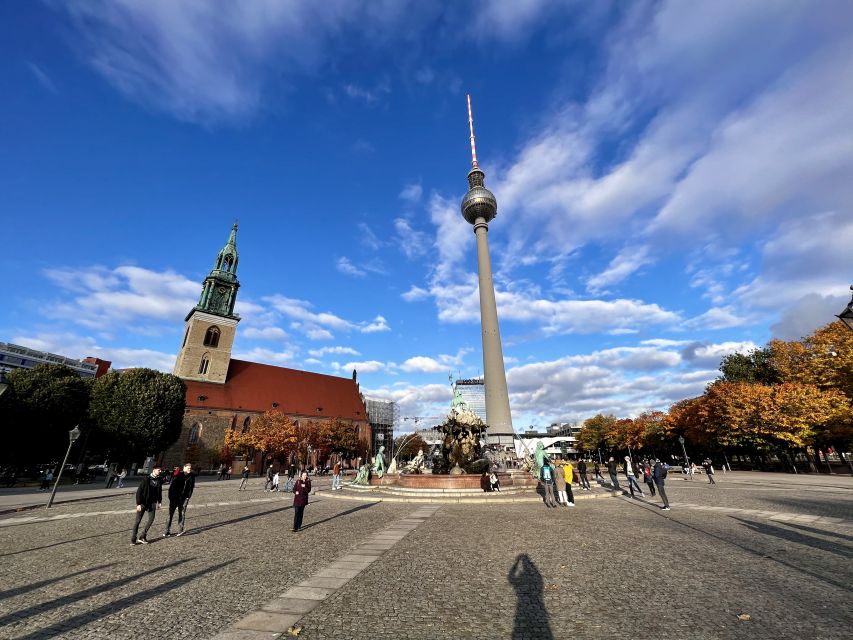
Reviewed · WALKING TOURS
Berlin: Guided Walking Tour in English
Berlin’s story unfolds in a clear line on this 2.5-hour walking tour, beginning at Alexanderplatz and ending beneath the Brandenburg Gate. You move from medieval Berlin to Prussian grandeur, Nazi terror, the Berlin Wall, and German reunification without constantly jumping between unrelated dates.
I like the route’s two strong ideas: it uses real places to explain the past, and it takes you through some of central Berlin’s best public spaces, especially Museum Island and Gendarmenmarkt. Guides including J.R., Jule, Ru, and Will have been singled out for lively, practical presentations. The main drawback is simple: this is a brisk city walk, not a museum tour, and no food, drink, or hotel pickup is included.
In This Review
- Key points of the Berlin walking tour
- Why this route works for a first look at Berlin
- Alexanderplatz and Berlin’s medieval beginnings
- The Royal Palace and Museum Island
- Humboldt University and the streets of old central Berlin
- Gendarmenmarkt, Berlin’s finest square
- Checkpoint Charlie and the Berlin Wall
- The former bunker site and Berlin’s darkest chapter
- Brandenburg Gate and a new era
- What the guides add to the experience
- Time, comfort, and practical value
- Who should book this Berlin walk
- Should you book this tour?
- FAQ
- How long is the Berlin walking tour?
- What language is the tour conducted in?
- Where does the tour meet?
- Where does the tour finish?
- What sights are included on the route?
- Is Museum Island entry included?
- Is hotel pickup provided?
- Is the tour wheelchair accessible?
- What should I bring?
- Can I cancel the booking?
Key points of the Berlin walking tour
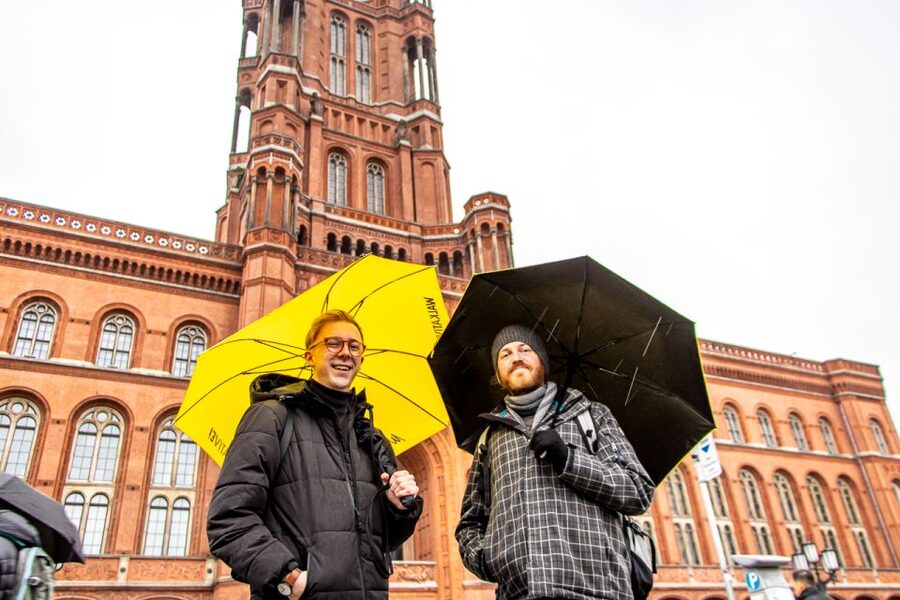
- Start at Red Town Hall: Meet near the TV Tower and Neptune Fountain in the heart of old Berlin.
- Follow history in order: The route moves from medieval Berlin through the Hohenzollern era, Nazism, the Wall, and reunification.
- See Museum Island outdoors: Enjoy views of Berlin Cathedral and the reconstructed former Royal Palace.
- Take in Gendarmenmarkt: Pause at one of Berlin’s most graceful squares.
- Face the difficult chapters: Visit Checkpoint Charlie and the former site of Hitler’s bunker.
- Finish at Brandenburg Gate: End at the classical gateway that now represents German and European unity.
Why this route works for a first look at Berlin
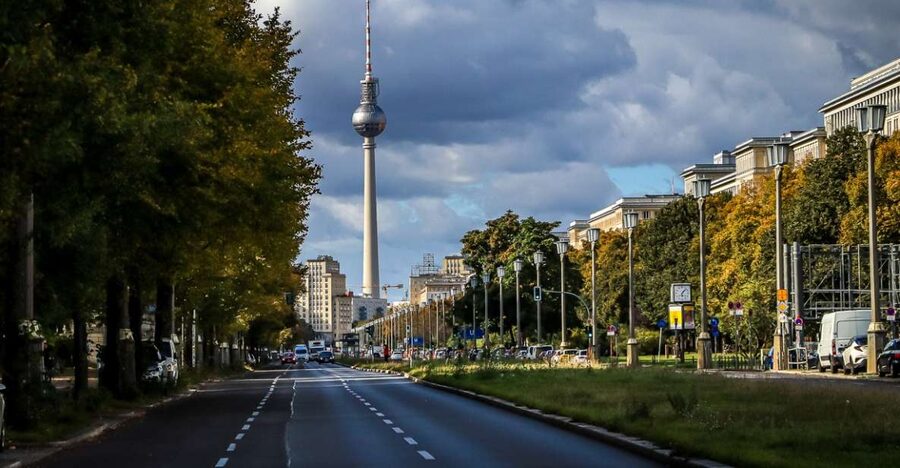
Berlin can be hard to read at street level. Important sights are spread across a wide central area, and the city’s past is not arranged like a neat museum display. A grand square may reflect Prussian power, a vacant lot may mark a Nazi-era site, and a section of pavement may carry the memory of a divided city.
This tour gives you a useful order for those pieces. You begin with Berlin as a small medieval settlement, move into the age of the Hohenzollern rulers, pass through the city’s Nazi period, and then confront the Berlin Wall and the reunified capital.
I find that approach especially helpful on a first day. You are not only collecting photographs. You are learning how the city changed, and that makes later visits to museums and memorials easier to understand.
The tour costs $31 per person. That is a fair price for a live, guided introduction to central Berlin, particularly if your guide gives the kind of practical advice that J.R. and Will are praised for giving. The booking information also describes this as a general pay-as-you-wish tour, with the listed amount covering the reservation fee and the guide’s payment. Read that wording carefully when booking so you understand how the payment works.
A few more Berlin trips to weigh up
- Discover Berlin Half-Day Walking Tour
★ 5.0 · 9,624 reviews - Berlin: Third Reich and Cold War 2 Hour Walking Tour
★ 4.9 · 6,830 reviews - Berlin: Discover Berlin Walking Tour
★ 4.9 · 5,998 reviews
Alexanderplatz and Berlin’s medieval beginnings
The meeting point is in front of the Red Town Hall, or Rotes Rathaus, close to the TV Tower and Neptune Fountain. Arrive about 10 minutes early. This is a busy central area, so a little extra time helps you find the group without beginning the walk in a rush.
Alexanderplatz gives the tour a useful starting point. The TV Tower is one of Berlin’s most recognizable modern markers, but the guide directs your attention back to the much older settlement nearby. You learn about the small medieval town that Berlin remained for much of its early history.
That contrast is one of the route’s best features. Berlin is often presented as a city of twentieth-century conflict, yet its roots are older and more modest. Beginning here helps you see that the modern capital grew out of a small town rather than appearing fully formed as a seat of power.
You should expect an outdoor explanation rather than a formal archaeological visit. The medieval remains are part of the city walk, and the guide’s story supplies the context. If you enjoy understanding why a city developed where it did, this opening gives you a useful base.
The Royal Palace and Museum Island
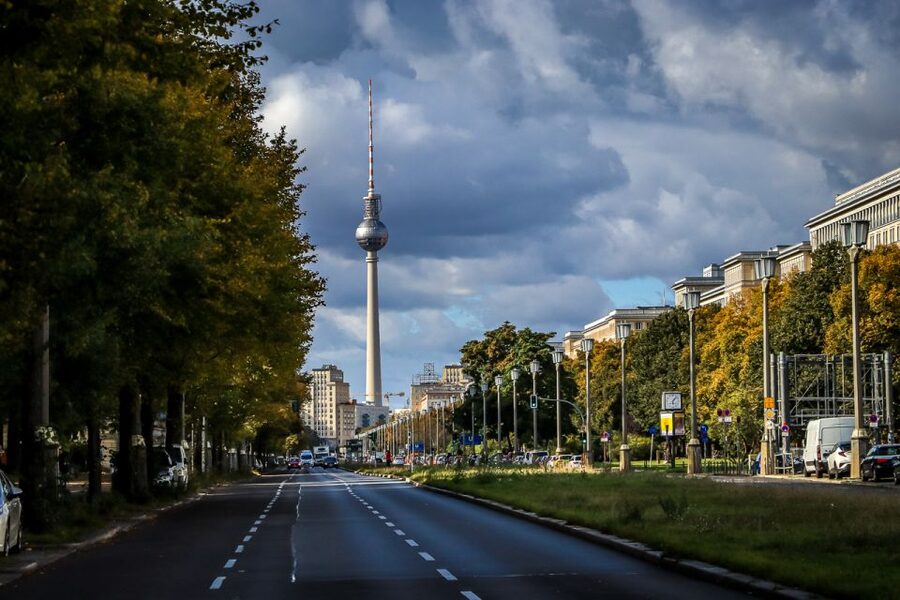
From the old center, the walk passes the controversial reconstructed former Royal Palace of the Hohenzollern. This is a good place to consider Berlin’s habit of rebuilding, restoring, and arguing over its own past.
The palace is not simply an attractive building on the way to the next stop. Its reconstruction raises questions about which version of history a city chooses to display. A guide can help you understand why the building matters, even if you do not enter it.
The route then reaches Museum Island, one of Berlin’s most memorable open spaces. You will have a view of Berlin Cathedral and time to enjoy the setting around the major museums. No museum admission is included, so this part is about the architecture, urban space, and historical setting rather than indoor collections.
I like this choice because it gives your legs a brief change of pace. After the dense streets around Alexanderplatz, Museum Island opens up. The cathedral provides an immediate visual landmark, while the surrounding cultural buildings show how Berlin presented itself as a major European capital.
Do not expect a full museum orientation. The tour is designed to keep moving through the city. If the Pergamon Museum or another collection is on your list, plan a separate visit and allow enough time for it.
Humboldt University and the streets of old central Berlin
After Museum Island, the route passes Humboldt University and continues through central streets toward Gendarmenmarkt. This section connects Berlin’s royal and intellectual life with the public squares that shaped the city.
A walking tour earns its price in stretches like this. From a vehicle, you would see buildings but lose the relationship between them. On foot, you can notice how one district changes into another, and the guide can point out details that would otherwise blur into the background.
The route is not a long stop at each building. It is a steady walk, so wear comfortable shoes and dress for the weather. The tour is listed as wheelchair accessible, though the experience still involves moving through city streets for two and a half hours.
There is no food or drink included. One past participant wished the booking details had made it clearer that a restroom and drink stop were not specifically promised. I would use the facilities and bring water before meeting the group, rather than assume a formal break will occur.
Same city, a completely different kind of day:
- Berlin: Reichstag, Dome and Government District Guided Tour
★ 4.7 · 18,288 reviews - Berlin: 1-Hour City Tour by Boat with Guaranteed Seating
★ 4.3 · 16,993 reviews - Berlin: Boat Tour Along the River Spree
★ 4.4 · 11,252 reviews - Berlin: Hop-on Hop-off Bus Tour with Live Commentary
★ 4.3 · 8,579 reviews
Gendarmenmarkt, Berlin’s finest square
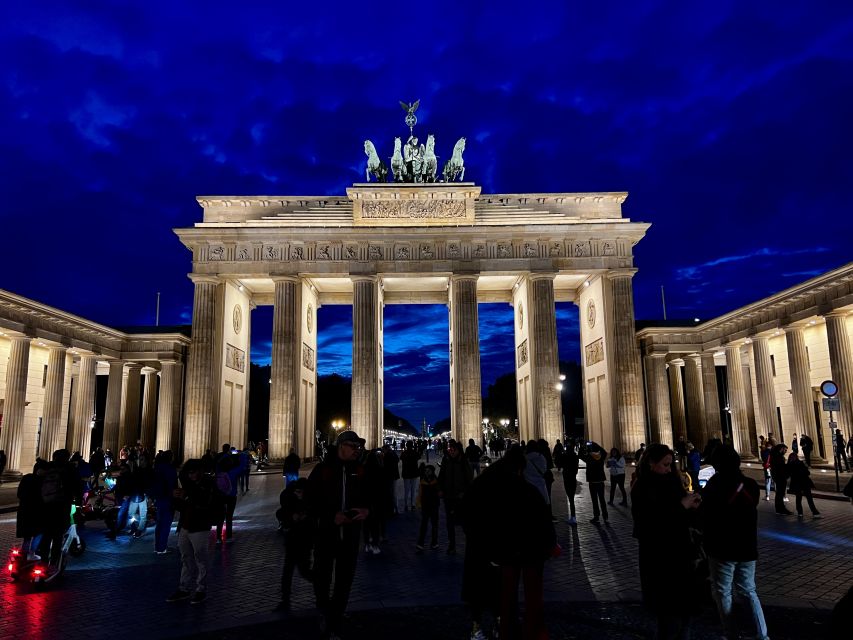
Gendarmenmarkt is one of the tour’s visual high points. Its broad space and carefully arranged buildings make it easy to understand why it is often regarded as Berlin’s prettiest square.
This is where the walk shifts from survival and settlement to ceremony and power. The square shows the capital in its polished, formal mode. It is a useful counterpoint to the harsher sites later in the route.
You will likely appreciate having a guide here because a beautiful square can otherwise become just another photo stop. The chronological structure gives it meaning. You can connect the square’s appearance with Berlin’s period as a Prussian and German capital, then carry that sense of official grandeur into the darker twentieth-century sections.
The tour does not promise a long pause or a café visit at Gendarmenmarkt. Think of it as part of the continuous walk. If you want time for photos, keep an eye on the group and listen for the guide’s signal to move on.
Checkpoint Charlie and the Berlin Wall
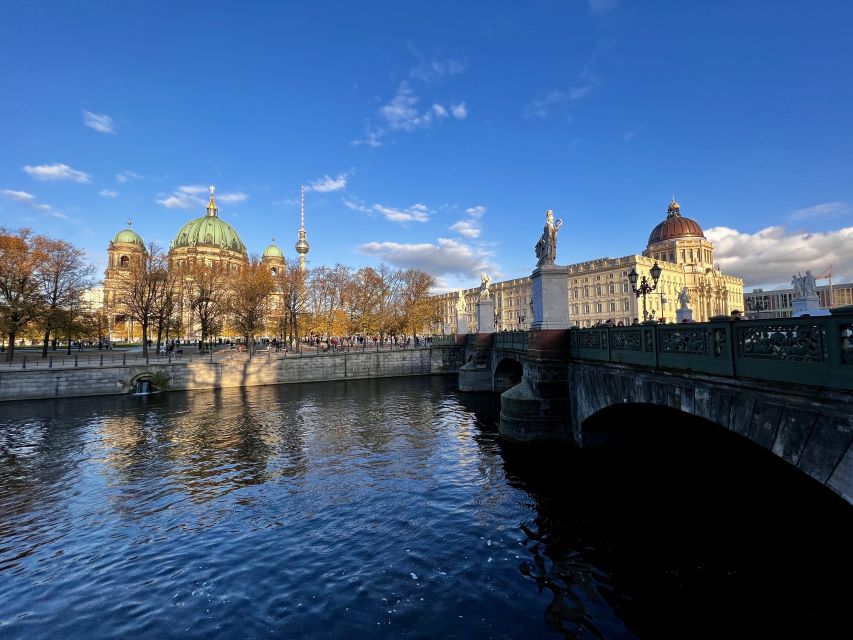
The route then turns to Checkpoint Charlie, the best-known crossing point associated with the former Berlin Wall. This stop brings the divided city into focus.
Checkpoint Charlie is highly visited and can feel crowded or theatrical. That is worth keeping in mind. The location has strong historical importance, but the modern presentation around it may not give you a complete sense of what the Wall meant across Berlin.
The value here comes from the explanation. Your guide can place the crossing point within the larger story of a city split between East and West. You learn why the Wall was built, how the border shaped daily life, and why Checkpoint Charlie became such a lasting symbol.
This is also a practical reason to take the tour early in your stay. Guides such as J.R. have provided useful hints for the days that follow, and the Wall section can help you decide which museums, memorials, or remaining Wall sites deserve more of your time.
The route includes seeing the Berlin Wall at Checkpoint Charlie, but do not book it expecting an extended Wall memorial visit. The stop is part of a wider central Berlin walk. If the Wall is your main interest, you will need a separate, more focused outing.
The former bunker site and Berlin’s darkest chapter
Passing the location where Hitler’s bunker formerly stood is a sober change in tone. There is no grand ruin to admire. The place matters because of what happened beneath it and because of the decisions made there during the final days of Nazi rule.
That absence is important. Berlin does not offer a dramatic monument at every difficult site, and the former bunker location makes you confront how ordinary a place can look after terrible events. A good guide keeps the focus on facts and consequences rather than turning the stop into spectacle.
The tour’s chronological design helps here. By the time you reach the bunker site, you have already seen the city’s earlier political and architectural ambitions. The contrast makes the Nazi period feel like a rupture in Berlin’s story, not just another date to memorize.
This part may be difficult for some visitors, especially if they are expecting a light sightseeing walk. You should choose the tour knowing that it addresses Nazi Germany directly. The treatment is part of the city’s history, and the guide’s role is to give you enough context to understand the location with care.
Brandenburg Gate and a new era
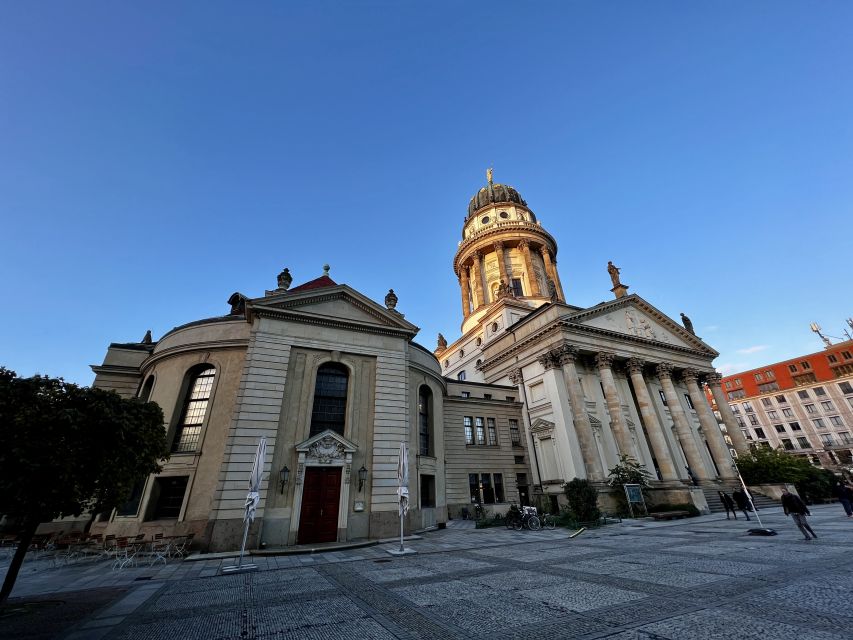
The final stop is Brandenburg Gate, with its open classical archways. It is one of Berlin’s clearest symbols of unity, not only for Germany but also for Europe.
Ending here gives the tour a satisfying shape. You start with a small medieval settlement and finish at a landmark associated with a reunited nation. The gate has carried different meanings over time, and that change is the point. Its symbolism is not fixed in stone.
The open space around the gate also lets the tour finish with a sense of possibility after the difficult material at Checkpoint Charlie and the bunker site. You have walked through several versions of Berlin, from royal capital to divided frontline city to reunited capital.
This is a good place to continue your day, since you finish in the historic center rather than returning to the starting point. The experience is not a circular route, so think about what you want to visit next before you set out.
What the guides add to the experience
The guide matters more than any single building on this route. Berlin’s sights need explanation, and the tour depends on someone who can keep the timeline clear while making each stop feel connected.
Recent guides have included J.R., Jule, Ru, and Will. J.R. has been praised for combining historical detail with entertaining stories and useful advice for the rest of a Berlin visit. Will has also been singled out for an informative, engaging approach.
Ru’s attention to cold weather is a useful reminder that this is an outdoor activity in every season. A winter walk can be rewarding, but you need warm, weather-appropriate clothing. Jule has also led well-received tours, including one on December 31, showing that the experience can work during a holiday visit if a departure is available.
The supplied rating is 4.9 from 18 reviews, with repeated praise for clear explanations, engaging delivery, and the value of learning Berlin by walking. That is a strong result, though the sample is small. Your experience will still depend on the guide assigned to your departure and on the pace of the group.
Time, comfort, and practical value
Two and a half hours is enough time to cover the main central sights, but not enough to linger at every one. You will be walking from Alexanderplatz to Brandenburg Gate, with several stops for explanation. Build in extra time afterward if you want photographs or an indoor visit.
Bring:
- Comfortable walking shoes
- Weather-appropriate clothing
- Water, since food and drinks are not included
- A plan for restroom use before the meeting time
Hotel pickup is not included, so you must reach Red Town Hall independently. The meeting point is near major landmarks, including the TV Tower and Neptune Fountain, which makes it fairly easy to identify once you are in the area.
The tour is wheelchair accessible. Since the experience takes place on city streets and covers a substantial distance, you may still want to confirm the route details for your particular needs before booking.
Flexible booking is another practical advantage. You can cancel up to 24 hours before the activity for a full refund, and the reserve-now, pay-later option lets you hold a place without paying immediately. Starting times vary, so check availability for your date.
Who should book this Berlin walk
I would choose this tour for a first visit, especially if you want a strong overview before spending time inside museums. It suits you if you like history explained through places, prefer walking to riding between sights, and want an English-speaking local guide to connect the dots.
It is also useful for visitors with only a short stay. In one morning or afternoon, you see many of the central landmarks that otherwise require careful planning. The route gives you a map in your head, which can save time later.
You may want a different experience if you dislike brisk walks, need long rest periods, or want to spend substantial time inside museums. It is not a food tour, a private tour, or a dedicated Berlin Wall tour. Its strength is the broad story told outdoors.
Should you book this tour?
Book it if you want Berlin’s history in chronological order and you are happy to cover the center on foot. The combination of Alexanderplatz, Museum Island, Gendarmenmarkt, Checkpoint Charlie, the former bunker site, and Brandenburg Gate gives you a strong first framework for the city.
I would especially recommend booking it near the start of your stay, when the guide’s practical tips can shape the rest of your sightseeing. Just arrive early, wear good shoes, bring water, and understand that the $31 payment covers this general pay-as-you-wish format rather than meals or hotel transport.
FAQ
How long is the Berlin walking tour?
The tour lasts 2.5 hours.
What language is the tour conducted in?
The tour is conducted in English by a live local guide.
Where does the tour meet?
The meeting point is in front of the Red Town Hall, or Rotes Rathaus, near the TV Tower and Neptune Fountain.
Where does the tour finish?
The tour finishes at the Brandenburg Gate.
What sights are included on the route?
The route includes Alexanderplatz, the TV Tower area, medieval remnants of Berlin, the reconstructed former Royal Palace of the Hohenzollerns, Museum Island, Berlin Cathedral, Humboldt University, Gendarmenmarkt, Checkpoint Charlie, the former site of Hitler’s bunker, and Brandenburg Gate.
Is Museum Island entry included?
No. The experience includes the outdoor setting and views around Museum Island, but food, drinks, and other personal expenses are not included.
Is hotel pickup provided?
No. You must make your own way to the meeting point at Red Town Hall.
Is the tour wheelchair accessible?
Yes, the activity is listed as wheelchair accessible.
What should I bring?
Bring weather-appropriate clothing. Comfortable shoes and water are also sensible for a 2.5-hour walk, though only weather-appropriate clothing is specifically required.
Can I cancel the booking?
Yes. You can cancel up to 24 hours before the activity for a full refund. You can also reserve now and pay later.
Just added around Berlin
- Love and War in Berlin: Self-Guided Story Puzzle Walk★ 5.0 · 7 reviews
- Rickshaw Tours Berlin – Groups of up to 16 people with several rickshaws★ 4.0 · 97 reviews
- Walking on the Wall: 3-Hour Tour in Berlin★ 4.5 · 34 reviews
- eSIM for Germany and 34 European Countries★ 4.5 · 16 reviews
- Warnemuende Shore Excursion: Berlin Private Sightseeing Tour from Rostock★ 5.0 · 4 reviews
- Your ticket to The Wall Museum Berlin★ 3.0 · 60 reviews
- Warnemuende Shore Excursion: Private Berlin Tour★ 4.5 · 27 reviews
- Berlin’s Gay, Lesbian, and Queer Scene Small-Group Walking Tour★ 4.5 · 66 reviews
Walking Tours, compared.





Berlin’s Best: 2 Hour Walking Tour Third Reich and the Cold War
Read our review →

