Reviewed · TICKETS
THE WALL: asisi Panorama Berlin Ticket
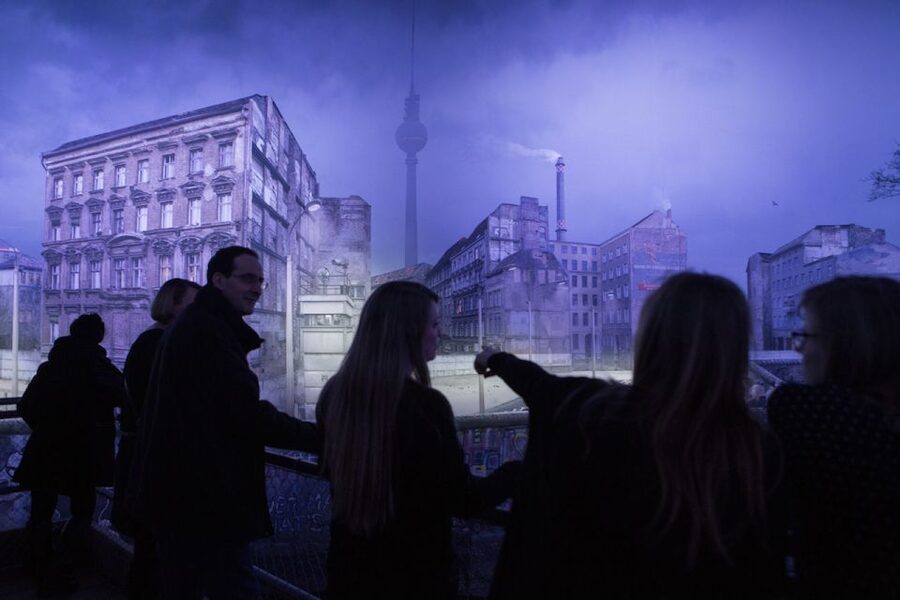
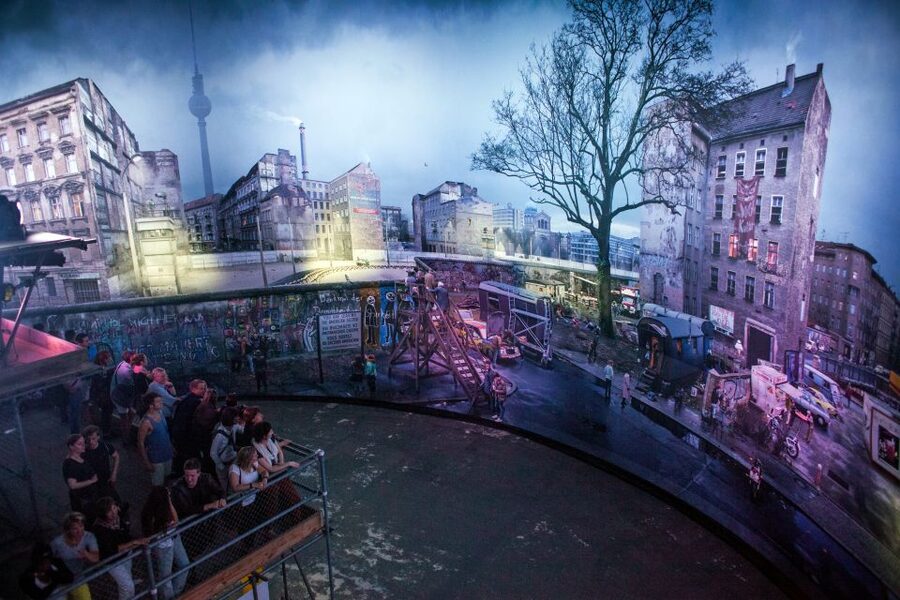
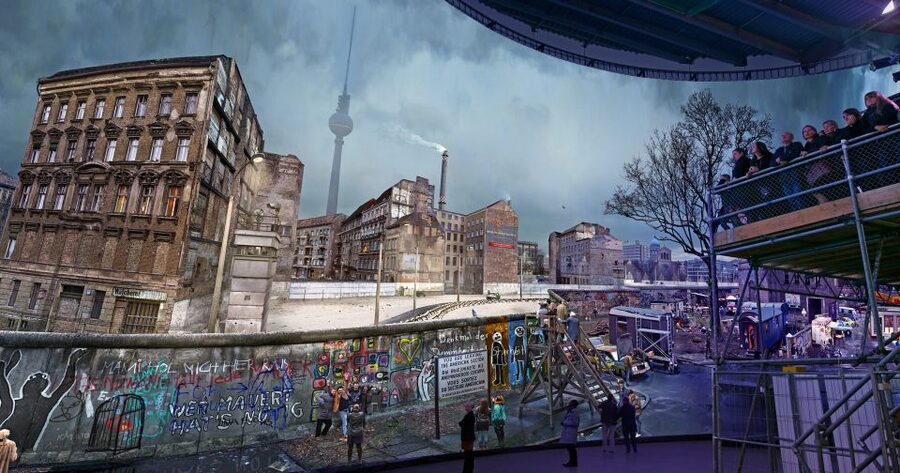
The most striking part of this experience is its scale. A huge artwork recreates an autumn day in 1980s Kreuzberg, placing you above the Berlin Wall on a 4-meter-high platform and looking into the ordinary, uneasy life beside it. The scene shows West Berlin’s SO 36, East Berlin just across the barrier, and the border zone between them.
I like the way the panorama joins everyday details with political history. I also like the personal photographs and stories, which keep the exhibition from becoming only a large wall painting. The main consideration is that this is a self-guided exhibition, so visitors wanting detailed explanations of German history may prefer a guided visit elsewhere.
In This Review
- Key points to know before you go
- A giant view into divided Berlin
- Seeing SO 36 from the West Berlin side
- The Death Strip and the border facilities
- Why the personal photographs matter
- A visit in three layers
- The first look
- The platform view
- The ground-floor details
- The artist documentary
- What the $16 ticket is worth
- How to fit it into a Berlin history day
- Who will get the most from this visit
- Practical details that shape the visit
- Should you book the asisi Panorama Berlin?
- FAQ
- Where is the asisi Panorama Berlin?
- How much does admission cost?
- How long is the ticket valid?
- Is a guided tour included?
- What does the exhibition show?
- Can I view the panorama from above?
- Is there information about the artist?
- Are translation options available for English speakers?
- Can I cancel my booking?
Key points to know before you go
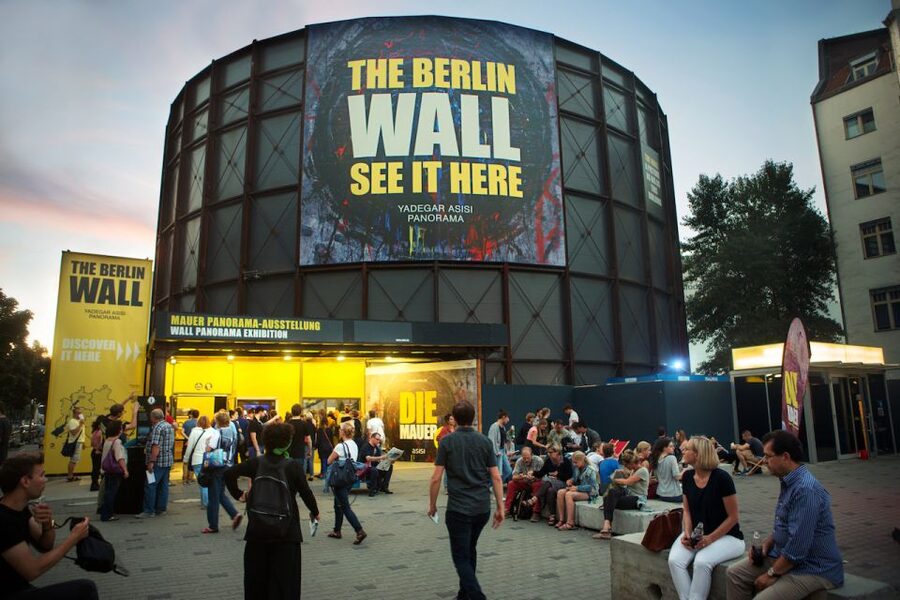
- A giant 1980s scene: See Kreuzberg on a fictional autumn day, viewed from ground level and from a 4-meter platform.
- The Wall is not the whole story: The display includes SO 36, East Berlin, the Death Strip, and border facilities.
- Personal details make it human: Photographs and private stories add faces and daily life to the political setting.
- Allow time for the film: A documentary near the exit follows artist Yadegar Asisi’s ideas and the creation of the panorama.
- A useful first stop in Berlin: The exhibition gives you context before visiting places such as Checkpoint Charlie or surviving sections of the Wall.
- Good value for a focused visit: The $16 ticket is valid for one day and includes a free information folder.
A giant view into divided Berlin
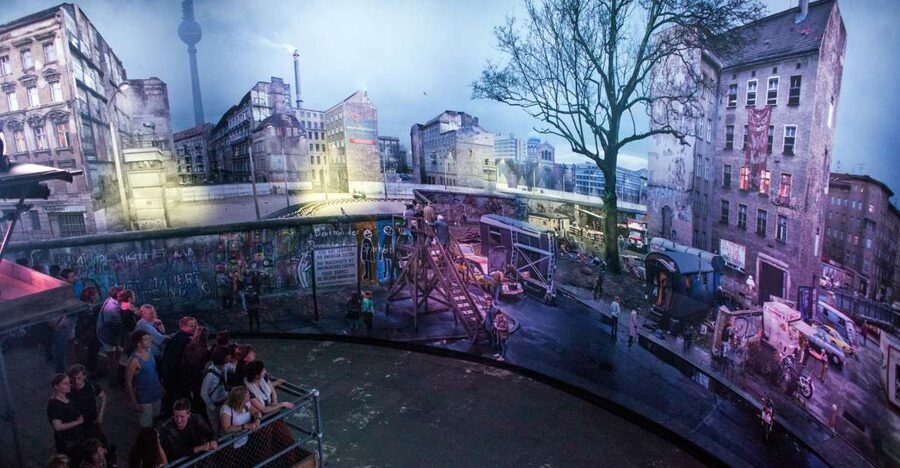
The asisi Panorama Berlin is not a preserved section of the Wall. It is an artistic reconstruction of what life felt like in its shadow, using a fictional autumn day in the 1980s as its setting.
That choice matters. Instead of giving you only dates, speeches, and political milestones, the exhibition asks you to look at a neighborhood where the Wall was part of the view. Washing, apartments, streets, people, border structures, and the barrier itself occupy the same scene. The Wall becomes a daily fact rather than a distant chapter in a textbook.
From the 4-meter-high visitor platform, I find the scene particularly effective. You look across the panorama and understand how close East and West Berlin were in physical distance, even as the border made them worlds apart. The height also lets you notice details that may be easy to miss from the ground floor.
The presentation is deliberately visual and atmospheric. It recreates the appearance of Kreuzberg on an autumn day, and the exhibition also uses sound to suggest the setting. That combination can make the scene feel startlingly immediate, especially if you have already visited Checkpoint Charlie or another Wall site.
A few more Berlin trips to weigh up
- Berlin: Berlin Story Bunker Entry Ticket
★ 4.6 · 6,759 reviews - Berlin: Illuseum Berlin Entrance Ticket
★ 4.1 · 3,970 reviews - Berlin: Madame Tussauds Admission Ticket
★ 4.6 · 3,941 reviews
Seeing SO 36 from the West Berlin side
A central part of the panorama is SO 36, the area of Kreuzberg associated with an alternative West Berlin life. The display presents this neighborhood as a place separated from East Berlin by the Wall, yet only a short distance away.
This is one of the exhibition’s strongest ideas. You see how an area could feel cut off while still sitting beside another part of the same city. The physical closeness is simple to understand, but seeing it represented at full scale gives that fact more weight.
Look beyond the Wall itself. The scene includes private homes, street life, and the small details of ordinary routines. Personal photographs and stories add another layer, showing that Berlin’s division affected people in their homes and communities, not only at official checkpoints.
I would take time here rather than treating the panorama as a quick photo stop. The artwork is large, and the point is to look around slowly. Start on the platform for the broad view, then return to the ground floor to study individual details.
The Death Strip and the border facilities
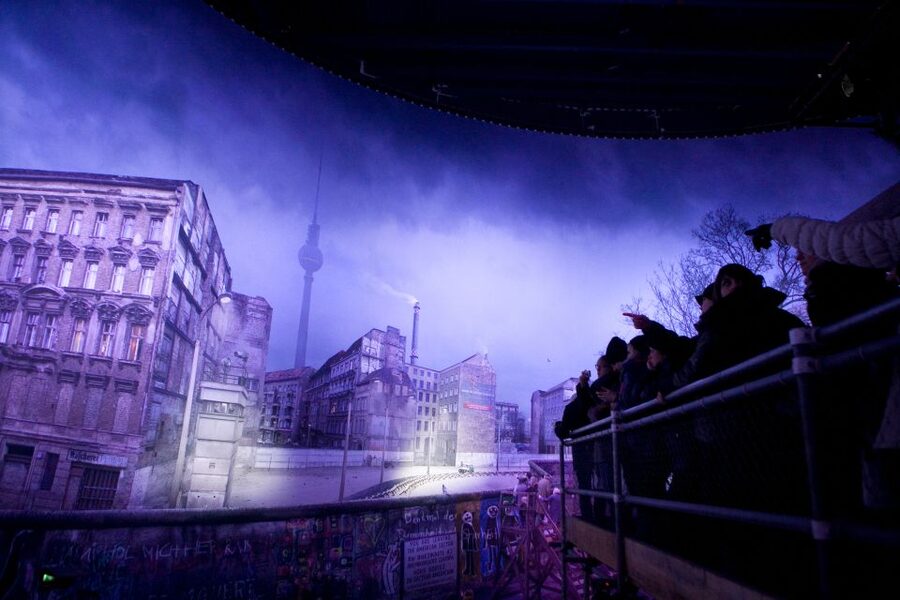
The exhibition also shows the so-called Death Strip and the border installations. These elements change the mood of the experience. From a distance, the Wall can seem like one solid object. The border zone reveals a more complicated and threatening system.
The contrast between normal neighborhood life and the controlled strip is important. On one side, you see the habits and clutter of a city. On the other, you see the structures that made crossing dangerous. The exhibition places these parts close together, helping you understand how people lived beside a border that could not simply be ignored.
The panorama does not ask you to admire the Wall as an object. It shows how its presence shaped the view, movement, and atmosphere of the neighborhood. That is why the visitor platform works so well: you can take in the whole arrangement at once, then examine the smaller scenes below.
If you know little about the Berlin Wall, this section gives you a useful starting point. If you already know the political story, the value is more personal. The artwork shifts your attention from official events to the physical setting in which people lived.
Why the personal photographs matter
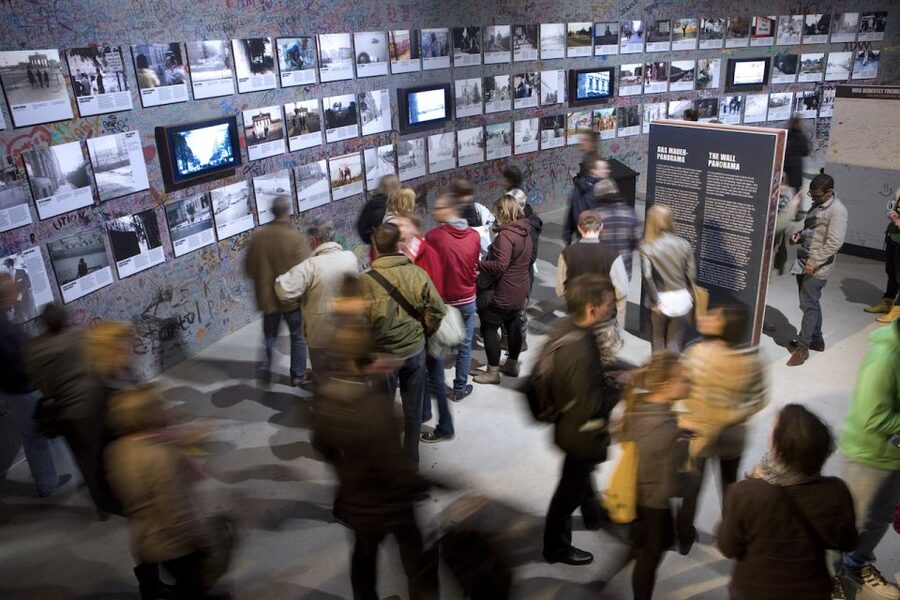
The private photographs and personal stories are among the most useful parts of the exhibition. The panorama gives you the large setting, while these smaller pieces bring individual lives into view.
I like this balance. A giant artwork can sometimes feel impressive but distant. The photos add ordinary human evidence and help connect the scene to real memories. English captions are available for the personal snapshot collection, which is helpful if you do not read German.
The photographs also give you a reason to look closely. Rather than seeing only a dramatic wall scene, you can pause over the people and places represented in the surrounding material. This makes the exhibition more accessible for younger visitors and for anyone who needs a clear visual introduction to Berlin’s divided past.
There is a limit, though. Since the visit is not guided, you will need to read the supplied material and make your own connections. The free information folder helps, but it cannot replace a specialist explaining every German reference or historical detail.
Same city, a completely different kind of day:
- Berlin: Reichstag, Dome and Government District Guided Tour
★ 4.7 · 18,288 reviews - Berlin: 1-Hour City Tour by Boat with Guaranteed Seating
★ 4.3 · 16,993 reviews - Berlin: Boat Tour Along the River Spree
★ 4.4 · 11,252 reviews - Discover Berlin Half-Day Walking Tour
★ 5.0 · 9,624 reviews
A visit in three layers
The exhibition is compact, with three rooms, but it does not feel like a single image hanging on a wall. You encounter the panorama from more than one level, then reach a documentary about the artist.
The first look
Begin by getting a general sense of the panorama. The scene is designed to represent Kreuzberg on an autumn day in the 1980s, so give your eyes time to adjust to its size and density.
You may first notice the Wall and the border zone. Then look into the West Berlin side and across toward East Berlin. The scene rewards a second look because the larger image is made up of many smaller moments.
The platform view
The 4-meter platform is the visual high point of the visit. From above, the geography becomes easier to read. You can see how the Wall, neighborhood, and border installations relate to one another.
This is also the best place to understand the exhibition’s central contrast: daily life continuing beside a system designed to divide a city. The view is broad, but not detached. You are looking down into streets and homes while also seeing the machinery of the border.
The ground-floor details
Return to the ground floor after seeing the panorama from above. This lower view lets you concentrate on specific parts of the artwork and notice details that disappear in the full scene.
The ground-level perspective may feel more intimate, while the platform gives you the clearest overview. Together, the two viewpoints prevent the artwork from becoming a one-angle display.
The artist documentary
Near the exit, a documentary follows Yadegar Asisi’s early ideas and the creation of the panorama. Do not rush past it. The film explains how the artist developed the project and adds useful context to what you have just seen.
This is especially worthwhile if you are interested in how large-scale panoramic art is made. It also helps explain why the exhibition feels different from a standard museum display. You are not simply looking at a historical object. You are entering an artist’s interpretation of a place and period.
What the $16 ticket is worth
At $16 per person, this is a reasonably priced cultural stop for a Berlin visit. The ticket is valid for one day, and it includes entry to the asisi Panorama plus a free information folder.
The value depends on what you want from a museum visit. If you want a long guided tour with extensive historical commentary, this ticket alone will not provide that. There is no guided tour included, and the visit is designed for you to explore at your own pace.
If you want a focused introduction to the Berlin Wall, the price makes sense. You receive a large-scale artwork, a platform view, personal material, and an artist documentary in one compact experience. It also fits easily into a day of sightseeing because you are not committed to a fixed tour lasting several hours.
Groups of 10 or more can ask about a group rate on site. For solo visitors, couples, and smaller parties, the listed individual price is the relevant figure.
How to fit it into a Berlin history day
The exhibition is at Friedrichstraße 205, 10117 Berlin. Its location makes it practical to pair with other central Berlin sights, though the supplied information does not specify travel times or transport arrangements.
One useful plan is to visit a Wall-related site before or after the panorama. A visit to Checkpoint Charlie can make the exhibition feel more pointed because you have already seen a famous crossing point. You can then compare the public story of the checkpoint with the panorama’s view of neighborhood life.
There is also a remaining section of the original Wall down the road from the installation. To reach it, walk straight down the road to the traffic lights, cross the road, and look for the surviving section. This is a useful follow-up because the panorama is an artistic representation, while the remaining Wall gives you a physical piece of the real barrier.
I would not treat the panorama as a replacement for Berlin’s other Wall memorials. It works best as a companion. The artwork helps you picture the emotional and visual setting, while original sites help you understand the surviving evidence.
Who will get the most from this visit
I would recommend this experience to first-time visitors who want an accessible introduction to the Berlin Wall. The visual format gives you an immediate sense of place, even if you do not know much about the political background.
It also suits people who enjoy art, photography, and exhibitions that ask you to inspect details. The platform and ground-floor views offer two different ways to read the scene, and the personal photographs give the subject a human scale.
Families may find the visual presentation easier to follow than a text-heavy museum, although adults may need to explain some of the history. The lack of a guide means you should be prepared to use the information folder and available translation options.
History specialists may find the exhibition too selective if they want a full account of the Wall, its construction, or its fall. This is a focused artistic view, not a complete historical survey. Its strength is atmosphere and everyday experience.
Practical details that shape the visit
The ticket is a one-day admission rather than a timed guided tour. Check the available starting times when booking, since the activity information asks you to select from available times.
Skip-the-ticket-line access is included, which can make the arrival simpler. Cancellation is free up to 24 hours in advance, and you can reserve now and pay later if you want to keep your plans flexible.
Pets are not allowed. English translation options are offered, and the personal photograph collection includes English captions. A guide is not included, so plan to spend a little time reading rather than expecting a spoken explanation.
The free key folder with extra information is worth collecting at the entrance. It can help you follow the exhibition and gives you something useful to refer to after leaving.
Should you book the asisi Panorama Berlin?
Book it if you want a compact, visual, and emotionally direct introduction to life beside the Berlin Wall. The large-scale panorama, 4-meter platform, personal stories, and artist documentary give you several ways into the subject, and the $16 price is fair for a focused cultural visit.
Skip it if you only want original Wall remains or a formal historical lecture. The panorama is an artistic interpretation, and its self-guided format will not answer every question.
For most first-time Berlin visitors, I would include it in a Wall history day, especially before or after Checkpoint Charlie and a surviving section of the Wall. Give yourself time to see the panorama from both levels, read the personal material, and watch the film at the exit. That is where the visit becomes more than a quick look at a large artwork.
FAQ
Where is the asisi Panorama Berlin?
The exhibition is located at Friedrichstraße 205, 10117 Berlin, Germany.
How much does admission cost?
The listed price is $16 per person.
How long is the ticket valid?
The ticket is valid for one day.
Is a guided tour included?
No. The admission ticket does not include a guided tour.
What does the exhibition show?
It presents an artistic representation of life beside the Berlin Wall in Kreuzberg on a fictional autumn day in the 1980s. It includes West Berlin’s SO 36, East Berlin, the Death Strip, and border facilities.
Can I view the panorama from above?
Yes. The exhibition includes a visitor platform that is 4 meters high.
Is there information about the artist?
Yes. A documentary near the exit follows Yadegar Asisi’s early ideas and the creation of the panorama.
Are translation options available for English speakers?
Yes. English translation options are offered, and the personal photograph collection includes English captions.
Can I cancel my booking?
Yes. You can cancel up to 24 hours in advance for a full refund. You can also reserve now and pay later.
Just added around Berlin
- Love and War in Berlin: Self-Guided Story Puzzle Walk★ 5.0 · 7 reviews
- Rickshaw Tours Berlin – Groups of up to 16 people with several rickshaws★ 4.0 · 97 reviews
- Walking on the Wall: 3-Hour Tour in Berlin★ 4.5 · 34 reviews
- eSIM for Germany and 34 European Countries★ 4.5 · 16 reviews
- Warnemuende Shore Excursion: Berlin Private Sightseeing Tour from Rostock★ 5.0 · 4 reviews
- Your ticket to The Wall Museum Berlin★ 3.0 · 60 reviews
- Warnemuende Shore Excursion: Private Berlin Tour★ 4.5 · 27 reviews
- Berlin’s Gay, Lesbian, and Queer Scene Small-Group Walking Tour★ 4.5 · 66 reviews
Tickets, compared.