
Reviewed · MUSEUM & GALLERY TICKETS
Munich: Deutsches Museum Entry Ticket
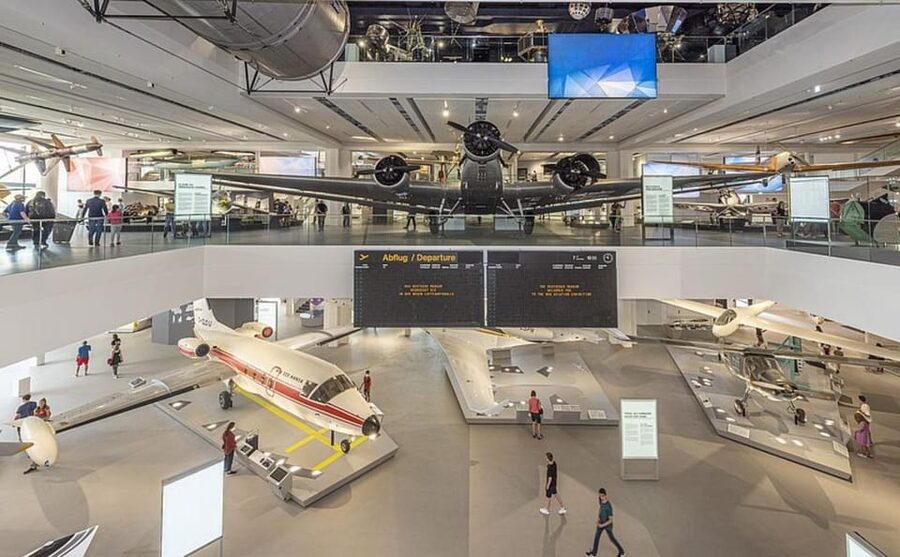
The Deutsches Museum turns science into something you can see, touch, and test. Across 20 permanent exhibitions, you’ll meet historic machines, airplanes, a lunar rover, printing presses, and experiments that explain how the modern world works. I like the hands-on stations and the unusual demonstrations, especially the model railway, microscopy theater, and chemistry displays.
I also like that one ticket opens the museum for the full day, giving you time to take breaks and return to sections you rushed through. The main drawback is its size: 20,000 square meters and 20 exhibitions can feel like too much if you arrive without a plan, and this is a science-and-technology museum first, not a general museum of Bavarian culture.
In This Review
- Key Things to Know Before You Go
- A Science Museum on Munich’s River Island
- What Your Ticket Includes
- Twenty Exhibitions, From Airplanes to Atomic Physics
- Hands-On Stations That Make the Difference
- Demonstrations Worth Timing Your Visit Around
- How to Plan a Visit Without Getting Lost
- Who Will Get the Most From This Museum?
- Accessibility and Practical Comfort
- Is $17 Good Value?
- Booking and Timing Tips
- Should You Book the Deutsches Museum?
- FAQ
- Where is the Deutsches Museum located?
- How long is the Deutsches Museum ticket valid?
- What are the museum’s opening hours?
- Does the ticket include all exhibitions?
- Is an audio guide included?
- Is the Deutsches Museum wheelchair accessible?
Key Things to Know Before You Go

- Twenty permanent exhibitions: Topics range from aviation and astronautics to chemistry, atomic physics, printing, and transportation.
- Hands-on learning: Interactive stations and experiments make difficult ideas easier to understand, especially for families and curious adults.
- Historic objects: See more than displays on a wall, including the first diesel engine, historic printing presses, a lunar rover, and iconic airplanes.
- Special demonstrations: The model railway, microscopy theater, and chemistry presentations give the museum a sense of motion and theater.
- A full-day ticket: Admission is valid for one day, so you can explore at your own pace instead of racing from room to room.
- Easy access: The museum is wheelchair accessible from the entrance to the restrooms, and a downloadable multilingual audio guide is included.
A Science Museum on Munich’s River Island

The Deutsches Museum occupies the main museum site on Museumsinsel 1, a small island in the Isar River close to central Munich. Its location makes it easy to pair with a city walk, though the museum itself deserves more than a quick hour squeezed between other sights.
Founded in 1903 by Oskar von Miller, the museum was created to explain science and technology to a broad public. That aim still shapes the experience. You are not simply looking at rare objects. You are asked to understand how things work, why they mattered, and what they changed.
The museum has about 20,000 square meters of exhibition space and receives around 1.5 million visitors each year. Those numbers tell you two useful things. First, the collection is serious and extensive. Second, you should not expect to see everything in one visit.
Your ticket costs about $17 per person and includes access to all exhibitions for one day. For a large museum with this range of subjects, that is a solid price, particularly if you spend several hours inside. It is less compelling if you only have time for a short visit, so check your schedule before booking.
More Museum & Gallery Tickets in Munich
- Munich: Beer and Food Tour with Dinner & Oktoberfest Museum
★ 4.7 · 1,086 reviews - Munich: FC Bayern Museum + Arena View
★ 4.5 · 944 reviews - Munich: FC Bayern Museum Entry Ticket
★ 4.6 · 193 reviews
What Your Ticket Includes
This is an admission experience rather than a guided tour. You enter at the main entrance at Museumsinsel 1 and explore independently. No guide name or scheduled tour leader is provided, so you control the pace and the subjects you want to follow.
The ticket includes access to the 20 permanent exhibitions. It also includes a downloadable multilingual audio guide through the Deutsches Museum app. I recommend downloading the app before you arrive if you want commentary without spending time dealing with a weak signal or a crowded entrance area.
The one-day validity is useful. You can spend the morning with the large machines, stop for a break, and return to the displays that deserve more attention. It also helps families, since children may want to linger at one interactive station while adults prefer a different subject.
The museum is open daily from 9:00 a.m. to 5:00 p.m. Last admission is at 4:30 p.m. That last entry time is firm enough to matter. Arriving at 4:15 p.m. may get you through the door, but it will not give you a meaningful visit.
Twenty Exhibitions, From Airplanes to Atomic Physics
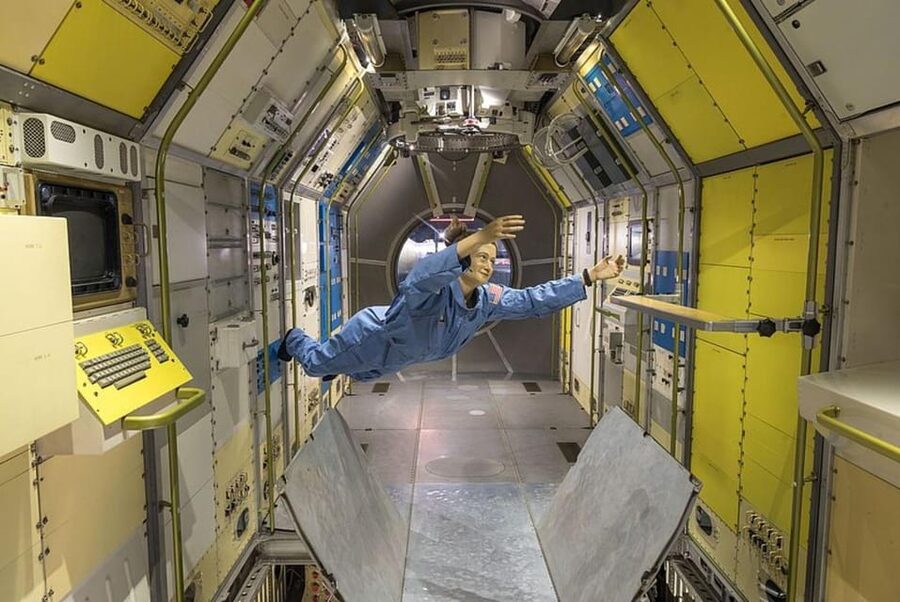
The central strength here is range. You can move from aviation and astronautics to chemistry, printing, and atomic physics without leaving the museum. That variety makes the Deutsches Museum useful for mixed-interest groups, though it can also make the day feel scattered.
If you like machines, start with the large historic objects. The first diesel engine gives you a direct link to industrial development. Historic printing presses show how ideas and information moved before digital technology. Iconic airplanes and astronautics displays place transport and exploration in a wider story of engineering.
The lunar rover is one of the most memorable objects named among the collection highlights. It gives space technology a physical presence. Instead of thinking only about distant missions, you can look at the kind of vehicle built to move across another world.
The museum’s collection contains more than 125,000 objects. You will not see all of them, and many are preserved in the institution’s wider holdings rather than presented in one continuous route. Still, that scale explains why the displays can move beyond the familiar headline objects and show the supporting tools, machines, and instruments behind scientific progress.
Atomic physics and chemistry may appeal most to adults and older children who enjoy concepts as much as objects. The museum’s goal is to make these subjects approachable through demonstrations and interactive displays. You should expect to spend more time at some stations than others, depending on how much explanation you want.
Hands-On Stations That Make the Difference
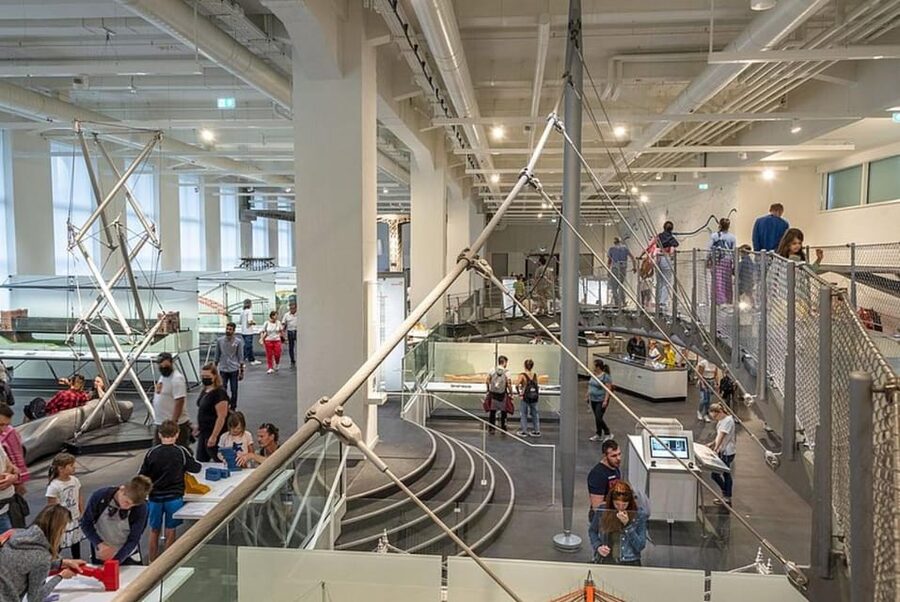
The interactive element is what keeps this from feeling like a warehouse of old machines. Hands-on stations let you test an idea rather than only read about it. That matters when the subject is invisible, technical, or difficult to picture from text alone.
I particularly like this approach for families. A child who may not read every label can still engage with a mechanical principle or experiment. An adult can then use the display as a starting point for a more detailed explanation.
You should not expect every station to hold your attention equally. The museum covers a broad field, and some exhibits may suit you more than others. Give yourself permission to move on. The one-day ticket means you do not need to force every section into your visit.
The museum works well for adults, too. Science museums sometimes aim only at children and leave grown-ups with little to do. Here, historic technology and major collection pieces give you a reason to keep going even when you pass on a playful experiment.
Same city, a completely different kind of day:
- From Munich: Neuschwanstein & Linderhof Castle Full-Day Trip
★ 4.5 · 12,494 reviews - Neuschwanstein & Linderhof Castle-Fairytale Day Tour from Munich
★ 4.5 · 7,275 reviews - Munich: Third Reich & WWII Walking Tour
★ 4.6 · 6,181 reviews - Dachau Concentration Camp Memorial Site Tour from Munich by Train
★ 4.5 · 5,637 reviews
Demonstrations Worth Timing Your Visit Around
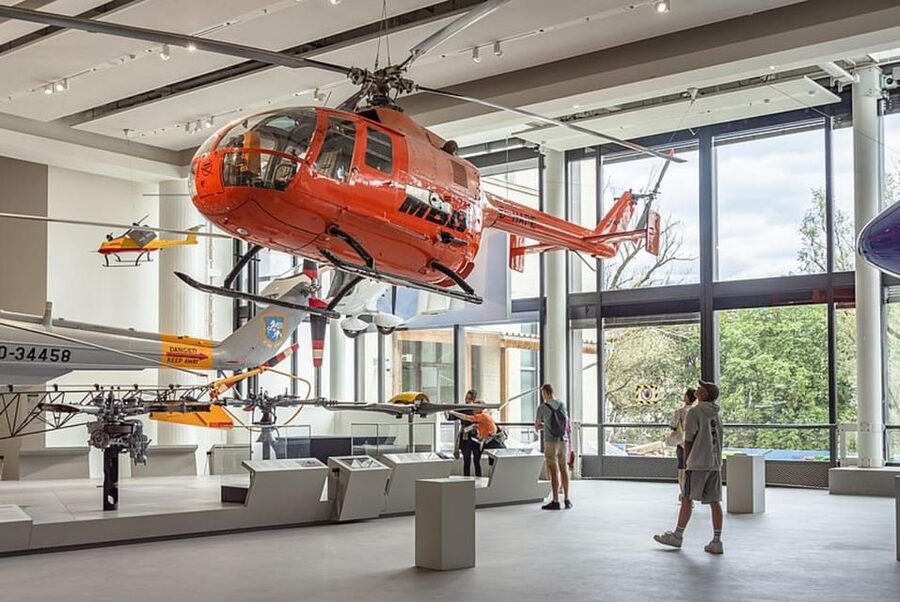
The Deutsches Museum includes special demonstrations and shows that add movement and sound to the exhibits. The model railway, microscopy theater, and chemistry presentations are specifically highlighted parts of the experience.
The model railway is a natural stop if you enjoy watching a system operate. It turns transport and engineering into a visible sequence, with movement that makes the subject easy to follow. It is also the kind of exhibit that can attract people who did not plan to spend much time in that section.
The microscopy theater offers a different experience. Microscopy can make the very small feel remote, but a theater-style presentation gives it a more direct, watchable format. You can expect this to provide a change of pace after large machines and aircraft.
The chemistry demonstration brings scientific principles into a live setting. Since demonstration schedules can matter, check the current timing when you arrive rather than assuming every show runs continuously. The supplied details confirm the demonstrations exist, but they do not give a fixed daily timetable.
These presentations are especially valuable if you are visiting with children. They create natural moments to sit, watch, and reset. They also make the museum feel less like a series of display rooms and more like an active place of learning.
How to Plan a Visit Without Getting Lost
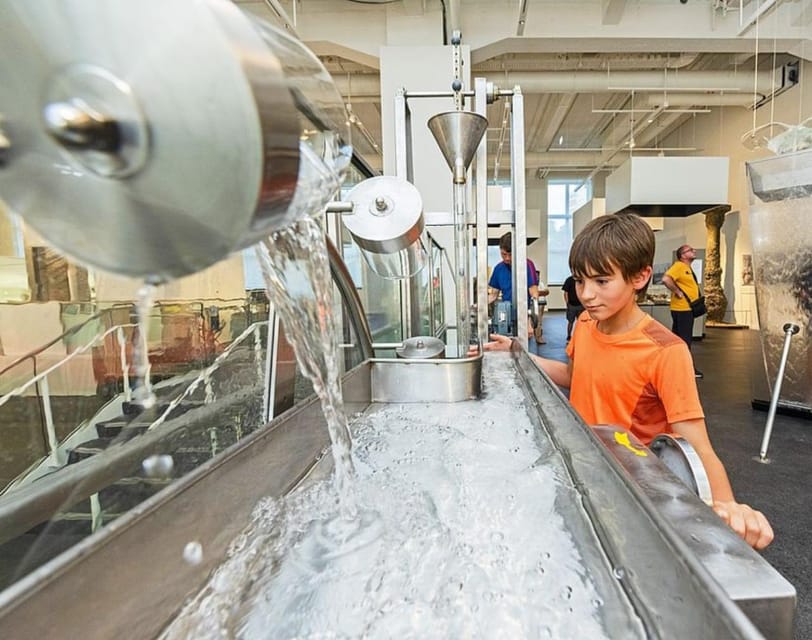
A little planning will make the museum feel much more manageable. Start by choosing two or three subjects you most want to see. Aviation, astronautics, chemistry, printing, and atomic physics can each pull you in a different direction, so a short priority list prevents the collection from setting your entire agenda.
Next, leave room for unexpected stops. The first diesel engine or a historic printing press may interest you more than you expect. The best visit is not a march through every gallery. It is a mix of planned highlights and time to follow your curiosity.
A practical approach is to spend the first part of the day with the exhibitions most important to you. Use the middle of the visit for interactive stations and demonstrations. Finish with sections you can browse more lightly.
The museum’s size can be tiring. A full-day ticket does not mean you must stay continuously from opening to closing. It means you have options. Take a break when attention starts to fade, then return to a favorite exhibition if your schedule allows.
The audio guide can help you choose where to focus. Since it is downloadable through the Deutsches Museum app and available in multiple languages, it is useful if you want more context than the signs provide. It also lets you explore without joining a group or following someone else’s route.
Who Will Get the Most From This Museum?

The Deutsches Museum suits anyone who enjoys understanding how things work. You do not need to be a specialist. Curiosity is enough, especially because the museum uses experiments and demonstrations to explain difficult ideas.
Families with school-age children can make good use of the hands-on stations. Children under 12 must be accompanied by an adult, so plan to stay with younger members of your group rather than sending them through the museum alone.
The museum also suits couples and solo visitors who like choosing their own subjects. Since there is no fixed tour route, you can spend ten minutes with an object or much longer with a technical display.
Students, pupils, trainees, and full-time students can select the youth admission option when booking. Severely disabled adults qualify for discounted admission, with an accompanying person admitted free. Severely disabled children and young people from 6 to 17 years can enter free, and an accompanying person for a severely disabled visitor with the registered B designation can also enter free under the stated conditions.
The museum may not be the best use of time if you want Munich’s art, royal history, or traditional Bavarian culture. This is a focused science and technology museum. One of the clearest practical lessons from the available feedback is that you should know what kind of museum you are choosing. If science and machines interest you, the focus is a strength. If not, the visit may feel narrow.
Accessibility and Practical Comfort
The Deutsches Museum is wheelchair accessible from the entrance through to the restrooms. That is an important advantage for anyone who needs a barrier-free route, since accessibility is not limited to the front door.
The supplied information does not specify details such as elevator locations, seating in individual galleries, or exhibit-by-exhibit access. If you need those details, contact the museum before your visit. The general accessibility statement confirms that the main route is designed to be accessible, but it does not answer every personal mobility question.
The address is Museumsinsel 1, 80538 Munich. Since the museum is on a river island near the center, it fits naturally into a day of central Munich sightseeing. Still, avoid treating it as a quick stop simply because it is centrally located.
Is $17 Good Value?
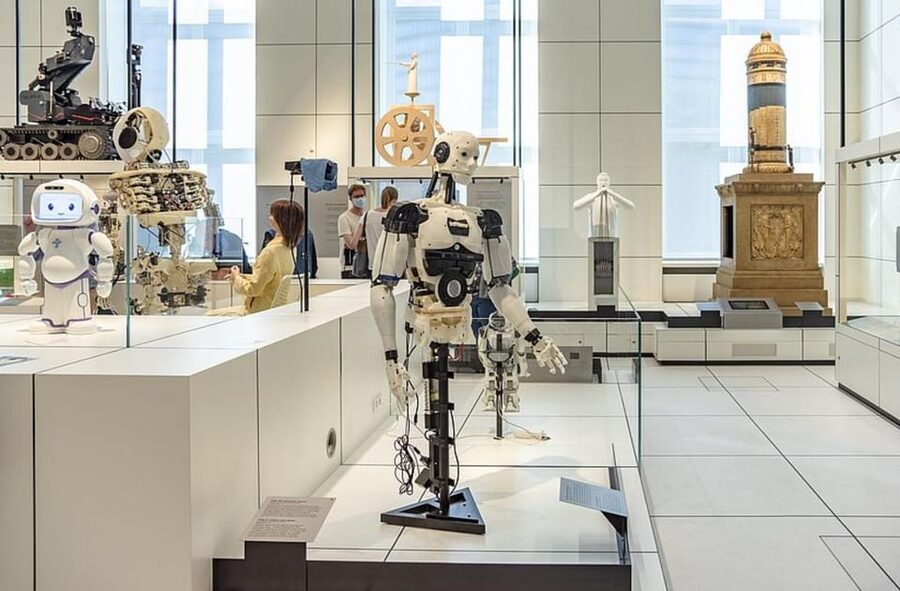
At $17, the ticket is good value for a visitor who can spare several hours. You get all 20 permanent exhibitions, interactive stations, demonstrations, and the audio guide without paying separate admission for each subject.
The value is strongest for families and science-minded adults. A family can spread its attention across many topics, while a solo visitor can choose a narrow theme and still have plenty to see. The one-day validity also reduces pressure to rush.
The value drops if your itinerary allows only a brief visit. The museum’s size is part of its appeal, but it also means a short stop may give you only a taste. If you have one free hour, choose another attraction or reserve the Deutsches Museum for a day when you can use the ticket properly.
The $17 price also compares well with the museum’s collection scale. More than 125,000 objects support the exhibitions, including major pieces that connect abstract science with real inventions. You are paying for access to an institution built around a large, serious collection rather than a small display of novelty gadgets.
Booking and Timing Tips
Admission is available with free cancellation up to 24 hours before the visit, and you can reserve now while paying later if that option suits your plans. Those terms are useful when your Munich schedule is still shifting.
The museum is open every day from 9:00 a.m. to 5:00 p.m. Last admission is at 4:30 p.m. I would aim for the morning if you want to see several exhibitions and catch demonstrations without watching the clock.
Check availability for the starting time connected with your booking. The ticket itself is valid for one day, but the booking system may display available entry times. Keep your plans flexible enough to arrive with real time left inside.
Download the audio guide before entering if possible. Bring a simple plan: one major object group, one science subject, and one demonstration. That is enough structure to keep the visit focused without turning it into homework.
Should You Book the Deutsches Museum?
Book this experience if you like science, engineering, historic machines, or hands-on learning. The museum gives you an unusually broad look at how technology developed, from printing presses and diesel engines to airplanes, space vehicles, chemistry, and atomic physics.
It is also a strong choice for families because the interactive stations and demonstrations give children something to do while adults explore the larger ideas. The wheelchair-accessible route from the entrance to the restrooms is another clear practical benefit.
Skip it if your Munich visit is short and your main interests are art, architecture, or Bavarian culture. The museum is large, focused, and best enjoyed with time. For $17, it is a worthwhile full or half-day choice, but only if you are ready to give science and technology your attention.
FAQ
Where is the Deutsches Museum located?
The museum is at Museumsinsel 1, 80538 Munich, on Museumsinsel in the center of Munich.
How long is the Deutsches Museum ticket valid?
The ticket is valid for one day.
What are the museum’s opening hours?
The Deutsches Museum is open daily from 9:00 a.m. to 5:00 p.m. Last admission is at 4:30 p.m.
Does the ticket include all exhibitions?
Yes. The entry ticket includes access to all 20 permanent exhibitions.
Is an audio guide included?
Yes. A downloadable multilingual audio guide is available through the Deutsches Museum app.
Is the Deutsches Museum wheelchair accessible?
Yes. The museum is wheelchair accessible from the entrance to the restrooms.
More Museums in Munich
- Munich: Magic Bavaria – Museum of Fun, Photos and Illusions
★ 4.3 · 133 reviews - Munich: Residenz Museum Tickets and 2,5-hour Guided Tour
★ 4.9 · 81 reviews - Munich Nymphenburg Palace Tickets and Tour, Carriage Museum
★ 4.9 · 22 reviews - Munich: Residenz Palace, Museum and Treasury Private Tour
★ 4.9 · 15 reviews
Just added around Munich
- Pub crawl incl. Oktoberfest museum guided tour with beer tasting (private)★ 5.0 · 5 reviews
- South Tyrolean specialties and wine tasting★ 5.0 · 5 reviews
- Size Matters Beer Tour Munich★ 4.6 · 105 reviews
- Short & sweet: Tasting the Viktualienmarkt★ 4.8 · 37 reviews
- Secret Food Tours Munich★ 4.8 · 5 reviews
- Munich: Romantic Wine Experience for Two at Viktualienmarkt★ 4.2 · 14 reviews
- Munich: Resistance against Hitler – Historical Walking Tour★ 5.0 · 5 reviews
- Residence of Munich private tour with skip the line ticket★ 5.0 · 4 reviews
Museum & Gallery Tickets, compared.



Skip-the-Line: Berlin Wall Museum at Checkpoint Charlie
Read our review →
Browse the lists this tour appears in