
Reviewed · WALKING TOURS
Hanover: Guided Walking Tour of the Linden-Limmer District
Linden-Limmer tells Hanover’s story in a compact, walkable stretch: royal garden becomes workers’ district, then creative neighborhood. You’ll see an 18th-century pavilion, old weavers’ houses, a former bed factory, bold postwar concrete, and the café-and-kiosk life of Limmerstraße.
I like the way this tour connects buildings to social change, and I like that it ends among ordinary local places rather than polished monuments. One consideration is language: the live tour is in German, so you’ll get the most from it if you understand German or are comfortable following visual details and place names.
In This Review
- Key points to know before you book
- Why Linden-Limmer makes a good walking tour
- Starting at TAK and entering Linden
- Küchengarten and the royal supply chain
- From Johann Egestorff to a workers’ quarter
- The Ihme center and the argument over brutalism
- Faust: a factory turned cultural center
- Nedderfeldstraße, graffiti, pubs, and Apollo cinema
- Limmerstraße and the local art of Limmern
- Who will get the most from this tour
- Price, timing, and booking flexibility
- Should you book the Linden-Limmer walk?
- FAQ
- Where does the tour meet?
- How will I recognize the guide?
- How long does the walking tour last?
- What language is the tour conducted in?
- How much does the tour cost?
- Is the tour wheelchair accessible?
- What is included in the price?
- Can I cancel for a full refund?
- Can I reserve now and pay later?
Key points to know before you book

- Royal roots at Küchengarten: See the former kitchen garden that supplied the Hanover court, along with a pavilion dating from 1749.
- Linden’s industrial turn: Learn how factories, including Johann Egestorff’s works, changed the area from a favored village into a workers’ quarter.
- Architecture with an edge: The Ihme center is widely disliked by some locals, yet its brutalist form attracts strong interest from younger people.
- Culture in a former factory: Faust now fills the old Werner and Ehlers bed factory with concerts, exhibitions, and readings.
- Street life on Limmerstraße: Finish around kiosks, cafés, restaurants, and the local custom known as Limmern.
- Practical format: The tour lasts two hours, costs $17 per person, is wheelchair accessible, and is conducted in German.
Why Linden-Limmer makes a good walking tour
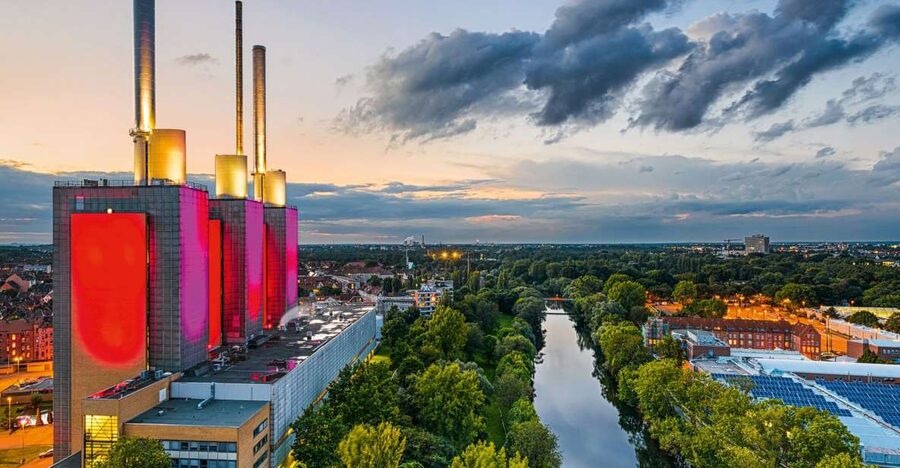
Hanover’s central sights can tell you about princes, gardens, and grand civic buildings. Linden-Limmer tells a different story. Here, you see how a settlement tied to the royal court changed through industry, railways, housing, migration, nightlife, and arts culture.
That change is the real subject of the walk. The buildings are useful evidence. A pavilion shows courtly planning. Factory sites explain employment and class. The Ihme center raises questions about postwar design. Limmerstraße shows how a neighborhood’s identity now lives in its daily routines.
I like tours that help you read a place instead of simply listing dates. This one has a clear thread, and the route gives you several different types of Hanover in just two hours. You move from formal garden history to working-class development, then into art spaces and casual street life.
The price also makes sense for a short city introduction. At $17, you are paying less than many large sightseeing activities for a focused local walk with a live guide. The value depends on your language ability and interest in urban history. If you want royal interiors or a long list of famous landmarks, this is not the right choice. If you want to understand one of Hanover’s most distinctive districts, it is a strong use of two hours.
A few more Hanover trips to weigh up
- Hannover: Guided Old Town Walking Tour
★ 4.5 · 338 reviews - Hanover: Crime Walking Tour
★ 4.5 · 243 reviews - Hanover: Flashlight Guided Walking Tour at Night
★ 4.7 · 52 reviews
Starting at TAK and entering Linden
Your meeting point is TAK, the cabaret theater. Look for the guide wearing a Hannover Marketing and Tourism GmbH card around the neck. That detail matters because the area has several cultural venues and busy streets, so recognizing the guide should make the start easier.
The tour begins in a setting that already hints at Linden’s character. TAK is not simply a transport hub or a major museum. It is a performance venue in a neighborhood known for theaters, music, pubs, street art, and independent culture.
Your guide speaks German, and the format is a live walking tour rather than an audio route. That allows the explanation to respond to what you are looking at, though the supplied information does not give a guide’s name or a fixed group size. One booking described a small, relaxed group, so a departure may feel personal, but you should not assume every departure will have the same number of people.
Wear comfortable shoes. The route is two hours long and includes several stops, so you will get more from it if you can walk at an easy pace and listen while standing outdoors.
Küchengarten and the royal supply chain
Küchengarten is one of the most useful stops because it makes royal life feel practical. This was not just a decorative garden. It supplied the royal family with food, linking the area to Hanover’s courtly period in a direct and understandable way.
The name itself points to its purpose: a kitchen garden, designed to support a household rather than merely impress visitors. That gives you a different way to think about royal power. Palaces needed farms, gardens, workshops, roads, and workers. Linden was part of that wider system.
The tour also covers the kitchen garden pavilion from 1749. The pavilion was moved to Lindener Berg in 1913, so its present location is part of the story too. You are not just looking at an old building. You are seeing how historic objects can be relocated and given a new setting as a district changes around them.
From here, the walk moves into older traces of work and housing. The weavers’ houses at Weberstraße 20 and 21 have survived from the earlier period. Their value is not only architectural. They show the small-scale craft life that existed before factories reshaped Linden.
These preserved houses help keep the tour grounded. You can compare the modest homes of weavers with later industrial buildings and larger housing areas. The result is a visible timeline, not an abstract lecture.
From Johann Egestorff to a workers’ quarter
The industrial story begins with Johann Egestorff and the founding of factories. The supplied information refers to lime production, a reminder that Linden’s growth was tied to basic materials and heavy work, not only to elegant trade.
Factories brought jobs and changed the social makeup of the district. With machine and textile production, Linden shifted from what had been called the most beautiful village in the Kingdom of Hanover into a predominantly workers’ quarter.
That transformation is one of the strongest reasons to take the tour. You see how an attractive rural or semi-rural settlement can be reshaped by industry. Streets, homes, workplaces, and public life all change when a district becomes a place where large numbers of people earn wages.
I would pay close attention to the guide’s explanation here, because this part gives meaning to the later stops. Without it, old houses, industrial remains, and newer apartment areas can seem like unrelated pieces. With it, you can follow the pressure of work, transport, housing, and class through the district.
The tour also reaches the period after Hanover was annexed by Prussia in 1866. That political change opened the former royal kitchen garden area for new uses. A freight station was built there, and a middle-class residential district developed around Lichtenbergplatz.
This is a useful contrast. Linden was not shaped by industry alone. Different parts of the area served different social groups and purposes. Freight infrastructure supported factories and trade, while the area around Lichtenbergplatz developed a more middle-class residential character.
Same city, a completely different kind of day:
- Hannover: 24-Hour Hop-On Hop-Off Sightseeing Bus Ticket
★ 4.2 · 298 reviews - SEA LIFE Hannover Ticket
★ 4.0 · 96 reviews - Hanover: Royal Gardens of Herrenhausen Guided Tour
★ 4.6 · 78 reviews - Hanover: Night tour with night watchman Melchior
★ 4.4 · 72 reviews
The Ihme center and the argument over brutalism
The Ihme center brings the tour into modern Hanover. Many locals see the complex as an eyesore, while many younger people are strongly interested in it, especially because of its brutalist design.
That split is worth taking seriously. Architecture is not only about whether a building looks pleasant. It also raises questions about scale, concrete, public space, age, memory, and the way a city judges its own recent past.
The Ihme center may appeal to you if you enjoy postwar architecture or buildings that provoke an argument. If you prefer historic façades, it may be the least attractive stop on the route. That tension is part of its value. A good city walk should not force every building into the category of beautiful.
The guide’s explanation can help you see the complex as part of Hanover’s changing identity. After royal and industrial history, the Ihme center represents a later vision of urban development. Its presence shows that Linden-Limmer is not frozen in one period.
Faust: a factory turned cultural center
Faust occupies the former Werner and Ehlers bed factory. This is one of the tour’s clearest examples of adaptive reuse, where an industrial site gains a second life through culture.
Today, Faust is used for concerts, exhibitions, readings, and other events. The building’s earlier purpose still matters. A factory designed for production now supports performances and public gatherings, so the site connects Linden’s working past with its current arts scene.
I like this stop because it avoids a simple old-versus-new story. The factory has not become irrelevant just because its original industry is gone. Its size and character help make cultural use possible.
You may also find Faust useful after the tour. Since the information provided confirms concerts, exhibitions, and readings, check its program if you have extra time in Hanover. The walking tour introduces the place, but a separate event would give you a longer look at how the former factory works today.
Nedderfeldstraße, graffiti, pubs, and Apollo cinema

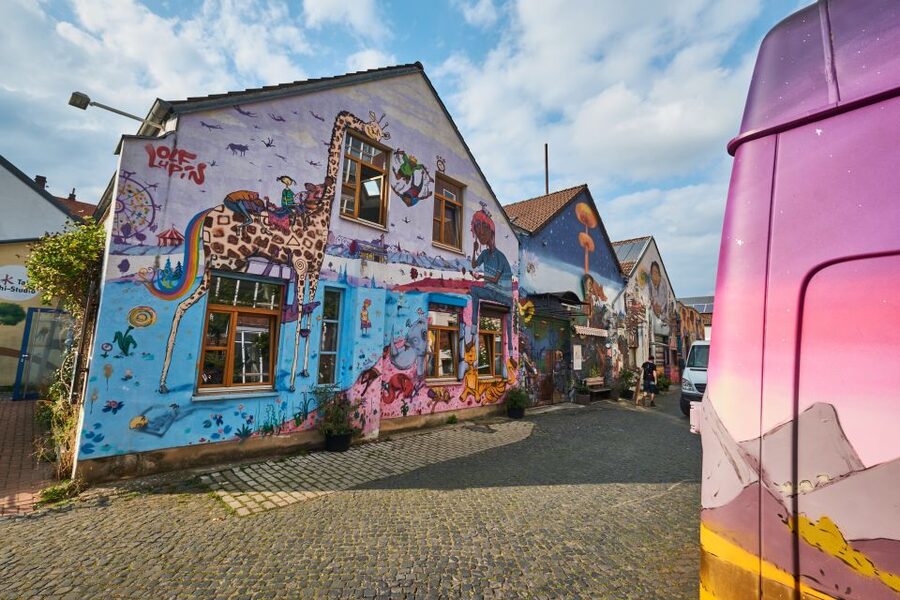
On Nedderfeldstraße, the mood shifts again. Graffiti art and numerous pubs create a more informal street scene. This is a good section for seeing how local identity can appear in small, changing details rather than official monuments.
The art is part of the public setting, while the pubs suggest a neighborhood used after work and after dark. The route does not present Linden-Limmer as a museum district. You are looking at a place where people live, meet, drink, eat, and make culture.
Nearby, the guide tells you about Apollo cinema, described as one of Germany’s first arthouse cinemas. That detail adds another layer to the district’s cultural history. Faust represents a former factory reused for many art forms, while Apollo points to a long-running interest in non-mainstream film.
The supplied information does not promise entry into the cinema, so expect an explanation from outside rather than a screening or backstage visit. Still, the stop helps you understand why the area attracts artists, performers, film fans, and younger residents.
Limmerstraße and the local art of Limmern
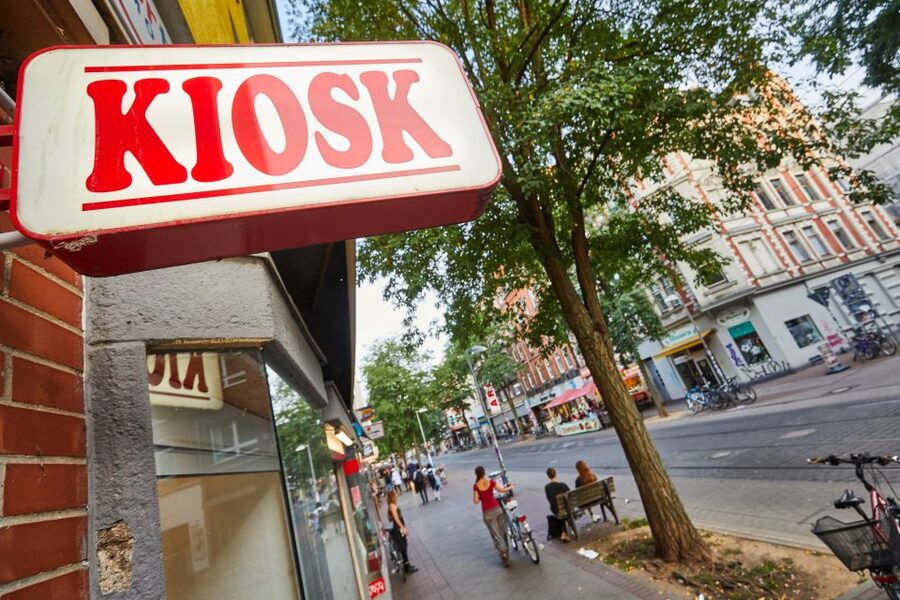
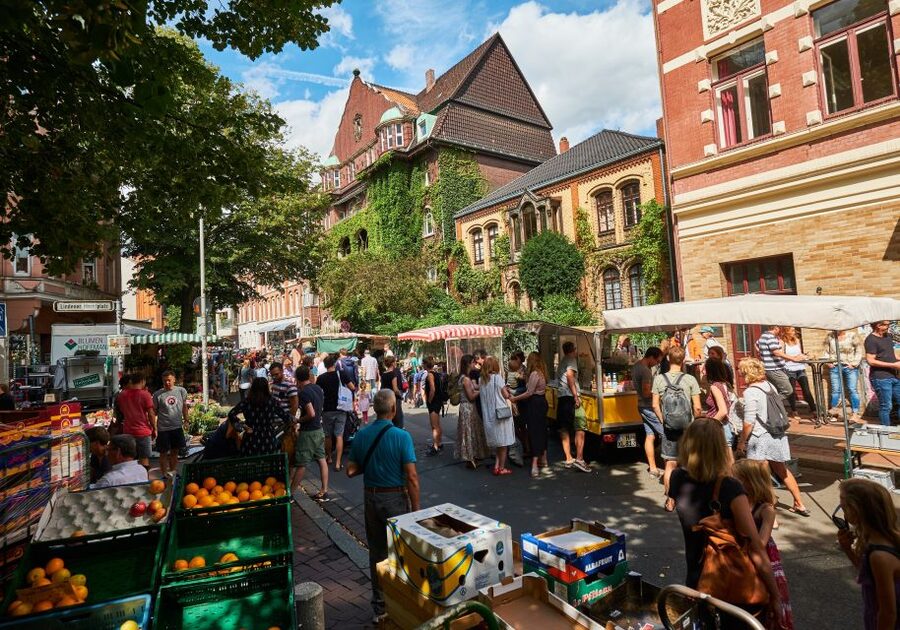
The final major section takes you to Limmerstraße, where the district’s everyday energy is easiest to see. The street has a high concentration of kiosks, restaurants, and cafés, making it a natural place to end a walking tour.
Here you encounter Limmern, a popular local pastime centered on spending time along Limmerstraße. The term is closely tied to the street’s social life. It suggests that the area is valued not only for individual businesses but also for the simple act of meeting friends and lingering in public.
This is an especially practical ending. After two hours of historical and architectural context, you finish somewhere you can continue on your own. You might choose a café, look for a kiosk, or have a meal at one of the restaurants. The tour gives you a sense of where to return later, even though it does not include food or drinks.
The area can also feel less formal than central Hanover. That is part of the appeal, but it may not suit someone seeking a quiet, carefully arranged sightseeing route. Limmerstraße is included for its local character, not for polished presentation.
Who will get the most from this tour
I recommend this walk to you if you like cities as working places, not just collections of monuments. It suits people interested in industrial change, architecture, neighborhood culture, and the reuse of old buildings.
It is also a good pick if you have already seen Hanover’s main center and want a more local side of the city. Linden-Limmer offers a sharper sense of how residents use streets and cultural spaces today.
German comprehension is important. The live guide speaks German, and much of the value lies in the explanations connecting royal history, factory growth, political change, architecture, and nightlife. If you understand only a little German, you can still follow the route visually, but you will miss much of the context.
The tour is wheelchair accessible, which is useful for people who need an accessible route. The supplied information does not specify the exact surface conditions, toilet access, or the accessibility of every stop, so you may want to confirm those details before booking if they matter to you.
Price, timing, and booking flexibility
The cost is $17 per person for two hours. I consider that fair value because the tour covers several periods and themes rather than focusing on one attraction. You get a local guide, a coherent route, and an introduction to places you might otherwise pass without understanding.
The tour includes the guided walk only. Entry fees, food, drinks, and any separate cultural events at Faust are not included in the information provided.
You can cancel up to 24 hours before the start for a full refund, and the reserve-now, pay-later option lets you hold a place without paying today. That flexibility is helpful when you are planning several activities around changing weather or train schedules.
The tour is offered at set starting times, so check availability for the date you want. Since the duration is exactly two hours, it can fit neatly into a morning or afternoon, but allow extra time if you plan to stop for food on Limmerstraße afterward.
Should you book the Linden-Limmer walk?
Book it if you want Hanover explained through one district’s changing identity. The combination of Küchengarten, the weavers’ houses, factory history, the Ihme center, Faust, Apollo cinema, graffiti, and Limmerstraße gives you a useful mix of old and new.
Skip it if you need an English-language tour or want entry into major museums and royal buildings. The German-only format is the main limitation, and this is a neighborhood history walk rather than a classic highlights tour.
For German speakers, the $17 price is attractive, especially if you enjoy small-scale urban stories. A relaxed departure can make the experience feel personal, and the enthusiastic response to the clear explanations suggests that the tour does its basic job well: it makes Linden-Limmer easier to understand and gives you good places to explore afterward.
FAQ
Where does the tour meet?
Your guide waits at TAK, Die Kabarett Bühne.
How will I recognize the guide?
The guide wears a Hannover Marketing and Tourism GmbH card around the neck.
How long does the walking tour last?
The tour lasts two hours.
What language is the tour conducted in?
The live tour guide speaks German.
How much does the tour cost?
The price is $17 per person.
Is the tour wheelchair accessible?
Yes, the activity is listed as wheelchair accessible.
What is included in the price?
The price includes the guided tour.
Can I cancel for a full refund?
Yes. You can cancel up to 24 hours in advance for a full refund.
Can I reserve now and pay later?
Yes. You can reserve your place and pay nothing at the time of booking.
Just added around Hanover
- Hanover: Old Town Historical Walking Tour by Geo Epoche★ 4.4 · 11 reviews
- Hanover: Flashlight Guided Walking Tour at Night★ 4.7 · 52 reviews
- Hanover Center: Outdoor Escape Game★ 4.7 · 13 reviews
- Hanover: Crime Tour by Bike★ 4.8 · 25 reviews
- Hanover: Royal Gardens of Herrenhausen Guided Tour★ 4.6 · 78 reviews
- Hanover: Linden-Limmer Krimi-Rätsel-Tour★ 4.5 · 15 reviews
- Hanover: Night tour with night watchman Melchior★ 4.4 · 72 reviews
- Hannover: New Town Hall exclusive Guided Walking Tour★ 4.6 · 49 reviews
Walking Tours, compared.





Berlin’s Best: 2 Hour Walking Tour Third Reich and the Cold War
Read our review →


Third Reich Berlin: Hitler and WWII Walking Tour
Read our review →Browse the lists this tour appears in