
Reviewed · OLD TOWN WALKING TOURS
Hanover: Old Town Historical Walking Tour by Geo Epoche
Hanover’s Market Church has one small detail that can stop you in your tracks: a pentagram on its western tower. This two-hour walk uses that striking symbol, the red-brick Old Town Hall, and the city’s surviving half-timbered buildings to explain how a medieval market town became a royal residence.
I like the way the tour links grand political history with ordinary city life. You follow merchants and craftspeople through the Old Town, then move into Calenberger Neustadt, where restaurants and snack bars help you see the area as a living part of Hanover. I also like the brochure of old illustrations, which gives you a useful before-and-after view.
The main drawback is clear: the tour is German only, and it is not suited to people with mobility impairments. At $29 per person, it offers good value if you want guided context rather than a quick photo walk, but less so if you cannot follow German or prefer to explore at your own pace.
In This Review
- Key points to know before you book
- Starting at the Beginenturm in Hanover’s Old Town
- From Am hoch Ufer to a city of kings
- Half-timbered buildings and the people behind them
- The 1410 Old Town Hall
- Reading the Market Church’s western tower
- Crossing into Calenberger Neustadt
- Neustädter Markt and the story of Leibniz
- What the $29 price gives you
- Who will get the most from this walk
- Should you book the Hanover Old Town Historical Walking Tour?
- FAQ
- How long is the Hanover Old Town Historical Walking Tour?
- What language is the tour conducted in?
- How much does the tour cost?
- Where is the meeting point?
- What is included in the tour?
- What should I bring?
- Does the tour run in bad weather?
- Are pets allowed?
- Can I cancel or pay later?
Key points to know before you book
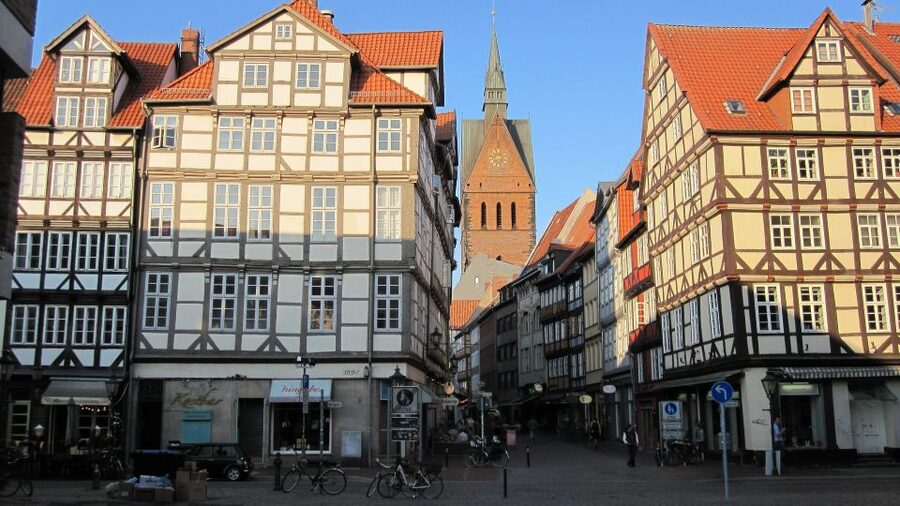
- The Market Church’s pentagram is one of the walk’s most memorable visual details, with its meaning explained by the guide.
- The Old Town Hall dates to 1410, giving you a strong starting point for understanding Hanover’s medieval civic life.
- The Guelph family links Hanover to England, adding royal history to the city walk.
- Calenberger Neustadt brings the tour into present-day Hanover, with shops, restaurants, and snack bars close to the historic center.
- A brochure with historical illustrations helps you picture how the city changed over time.
- Guide Simon has led a particularly small outing, answering questions in a friendly and clear way, though your guide may be someone else.
Starting at the Beginenturm in Hanover’s Old Town
The meeting point is the Beginenturm, a medieval tower at the edge of Hanover’s Old Town. Look for a guide carrying a pouch with the Meet the World logo. That detail matters because the tower sits among busy city streets, and a clear marker saves you from wandering around looking for a flag or desk.
The walk lasts two hours, so you should arrive ready to stay on your feet. Wear comfortable shoes and clothing suited to the weather. The tour runs in rain or shine, and there is no suggestion of indoor shelter being built into the route.
This is a walking tour in the proper sense. You move through the city center rather than sit in a vehicle or stop at a single museum. That lets the guide show you how buildings, streets, churches, and neighborhoods fit together, though it also means you need reasonable mobility.
The German-only format is the first decision point. If you understand German well enough to follow spoken explanation, you get access to details that are easy to miss on your own. If you do not, the brochure and buildings may still be useful, but the main value of the tour will be out of reach.
More old town walking tours in Hanover:
- Hannover: Guided Old Town Walking Tour
★ 4.5 · 338 reviews - Hannover: Culinary Walking Tour Old Town
★ 4.6 · 25 reviews - Dresden: Semperoper and Old Town Tour
★ 4.8 · 5,735 reviews
From Am hoch Ufer to a city of kings
The central story is Hanover’s growth. The medieval market town known as Am hoch Ufer developed over several centuries into the electoral residence city of Hanover, a place tied to kings and chancellors.
That broad shift gives the walk a useful shape. Instead of treating the Old Town as a row of attractive façades, the guide explains how power, trade, religion, and daily work changed the city. You learn about the people who lived in the center, including merchants and craftspeople, while also hearing how noble families shaped Hanover’s future.
I like this approach because it avoids a common problem with city walks: a long list of dates with no clear reason to care. Here, the dates help you track a change in the city’s role. Hanover was not always a royal center. It developed from a market town into a place with wider political importance.
The Guelphs are central to that story. The old noble family influenced Hanover and provided an English king, giving the city a direct connection to British royal history. The tour does not treat this as an isolated royal footnote. Instead, you see it as part of the way Hanover’s local rulers helped change its place in Europe.
For history-minded visitors, this is likely the strongest part of the experience. You receive political context, but the route remains grounded in actual streets and buildings. For families, the English connection can give younger visitors a simple thread to follow through the older material.
Half-timbered buildings and the people behind them
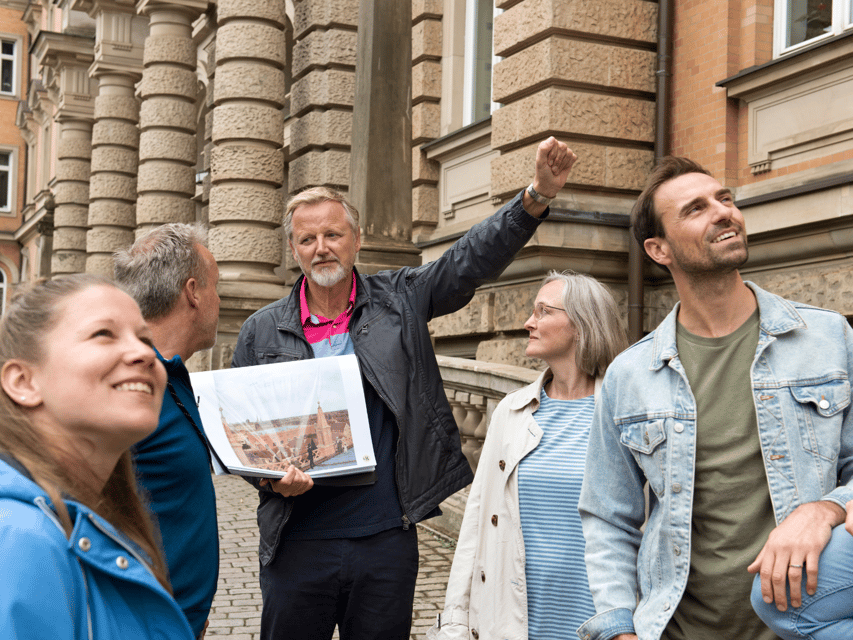
Hanover’s Old Town is the visual heart of the walk. You stroll past picturesque half-timbered buildings in the area where merchants and craftspeople once lived.
Half-timbered architecture can become a blur if you see too much of it without explanation. A guide gives the buildings a human setting. You can think about who worked in these streets, who sold goods, and how the old center functioned before Hanover became a residence city.
The route also helps you notice the difference between a building’s appearance and its role. A handsome façade may tell you about status, local construction, or the city’s changing fortunes. The tour’s purpose is not simply to point out attractive façades, but to connect them with the people and systems that made the town work.
The supplied brochure adds a useful layer here. It contains historical illustrations, so you can compare earlier views with what you see today. This is especially helpful in a city where war and rebuilding have affected the historic center. The material does not replace the guide, but it gives your eyes something specific to look for.
One practical point: the tour is designed around looking and listening as you walk. It is not a stop-heavy museum program with long periods to sit down. You will get more from it if you enjoy moving at a steady pace and paying attention to short explanations along the way.
The 1410 Old Town Hall
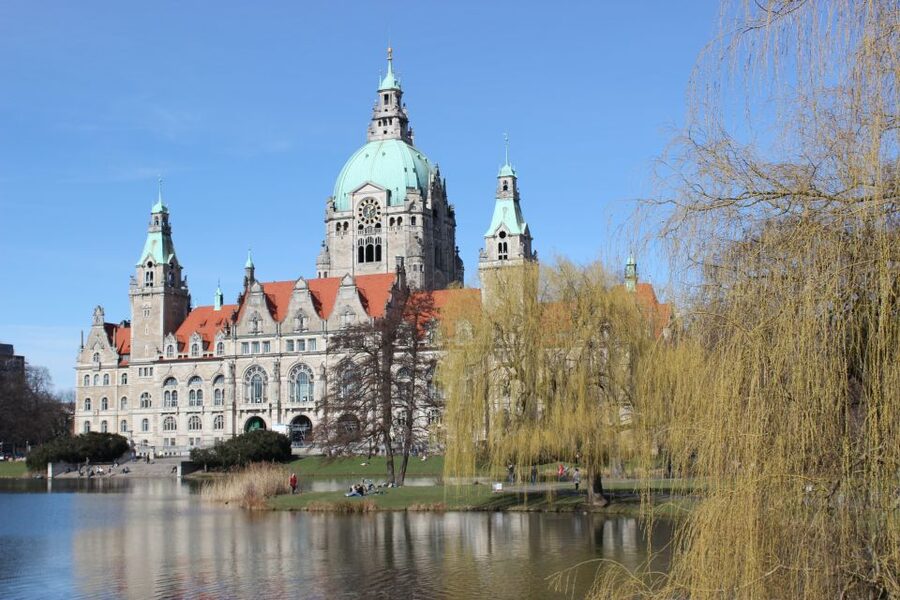
The Old Town Hall is one of the tour’s key stops. It dates to 1410 and has a red-brick Gothic façade, an impressive piece of evidence for Hanover’s medieval civic life.
The building matters for more than its age. A town hall shows that local government, trade, and civic authority had become important enough to need a formal center. The guide uses it to place Hanover’s market-town development in a physical setting.
Red brick also gives this part of the Old Town a distinct northern German character. You do not need to know architectural terms to appreciate the façade, but the guide’s explanation can help you see why it looks different from later residence buildings or church architecture.
I would pay close attention here to the contrast between the building’s solid Gothic presence and the smaller domestic structures nearby. Together, they help you picture a town with both public authority and private work. The Old Town Hall is not just an attractive photo stop. It anchors the story of how Hanover organized itself.
Because the walk covers several centuries, the guide cannot spend unlimited time at every building. If the Old Town Hall is your main interest, use the stop to ask a focused question. A recent tour led by Simon showed the value of that approach: he answered questions competently and kept the conversation lively for a very small group.
A few more Hanover trips to weigh up
- Leipzig: City History Canal Sightseeing Tour on a Motorboat
★ 4.7 · 6,232 reviews - Berlin: Natural History Museum Entrance Ticket
★ 4.6 · 3,382 reviews - Leipzig: 1.5-Hour Historical Walking Tour in German
★ 4.7 · 2,217 reviews - Berlin: World Heritage Cruise to Potsdam
★ 4.5 · 1,435 reviews
Reading the Market Church’s western tower

The Market Church is another major stop, dating from the 14th century. Its western tower holds the tour’s most unusual visual clue, the pentagram.
You will be asked to look closely at the tower rather than simply admire the church from a distance. The guide explains what the symbol means, so this is a good place to listen carefully and ask questions if the subject interests you.
The detail works well as a teaching tool. Religious buildings often contain symbols that pass unnoticed when you are focused on the overall façade. Here, one small mark opens a wider discussion about the beliefs and visual language of medieval Hanover.
The church also reinforces the difference between the city’s civic and religious centers. After the Old Town Hall, you see how faith shaped the town’s public appearance and identity. The two stops sit close together, making the sequence efficient without turning the walk into a rushed dash.
The information provided does not promise entry into the Market Church. You should therefore expect to examine the building from the route and hear the explanation outside, unless the guide tells you otherwise. That is worth knowing if you are hoping for a full interior visit.
Crossing into Calenberger Neustadt
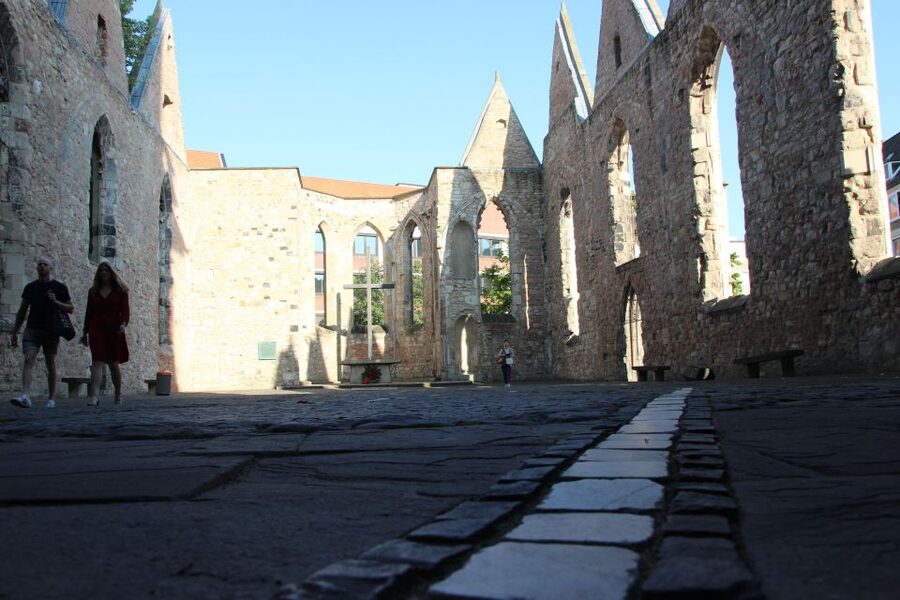
A short distance from the historic center, the tour reaches Calenberger Neustadt. This change of district is one of the best reasons to choose a walking route rather than stay among the postcard buildings.
Calenberger Neustadt has shops, restaurants, and snack bars. The area gives you a chance to see how Hanover’s historic core connects with everyday city life. You are not left with the impression that history belongs only to preserved façades and church towers.
The guide tells you about the great freedom of the 17th century in this part of the walk. The supplied details do not spell out the full story, so you should expect the guide to provide the key explanation on the day. What matters for your planning is that the route shifts from medieval origins and noble power toward a later period of social and civic change.
This section may appeal to food-minded visitors. The tour does not include tastings, but restaurants and snack bars are nearby, making Calenberger Neustadt a sensible place to continue your day after the walk. You can finish with a meal or a quick bite without having to cross the city.
I also like the neighborhood change because it prevents the experience from feeling too formal. You move from major monuments into a district with practical places to eat and shop. That mix gives the tour a more grounded feel.
Neustädter Markt and the story of Leibniz
The route reaches Neustädter Markt, where the guide shares more stories about people connected with Hanover. One of the most notable is Gottfried Wilhelm Leibniz, one of the greatest scholars of all time.
The key question is not only who Leibniz was, but what brought him to Hanover. The guide explains what drew him to the city, adding an intellectual chapter to the political and architectural story.
Leibniz gives the tour a welcome change of scale. You begin with town walls, markets, buildings, and noble families, then arrive at the life of a scholar whose work carried far beyond Hanover. It shows that the city’s importance was not limited to rulers and royal connections.
Neustädter Markt also works as a natural final stop. By this point, you have moved from medieval Hanover through the Guelph period and into a neighborhood associated with food, trade, and later civic life. The tour ends with a person and a place that encourage you to keep exploring rather than simply return to the starting point.
If you enjoy anecdotes, this may be one of the most rewarding parts. The experience is built around stories about Hanover’s people, and the guide can respond to questions as the walk unfolds. A German-speaking visitor who wants more than fixed monument descriptions should find that format useful.
What the $29 price gives you
At $29 per person, this is a moderate price for a two-hour guided city walk. The cost includes the walking tour, a live German-speaking guide, and the historical illustration brochure.
The value depends on what you want from Hanover. If you would otherwise wander past the Market Church, Old Town Hall, and half-timbered buildings without knowing how they connect, the guide adds clear value. The route covers several important areas and gives you a historical framework you can use for the rest of your visit.
It is less compelling if you only want a short orientation or prefer to read information at your own pace. You are paying for spoken interpretation and the chance to ask questions, not for admission to a major attraction, food, transport, or a long list of included extras.
The price also looks better for a small group. A two-person outing led by Simon went ahead and allowed plenty of room for questions. That does not guarantee every departure will be private or equally small, but it shows that the format can work well when the group is limited.
The reserve-now, pay-later option gives you flexibility when planning. You can reserve a place without paying immediately, and cancellation is allowed up to 24 hours before the tour for a full refund. Check the available starting times when booking, since the walk has a fixed two-hour duration.
Who will get the most from this walk
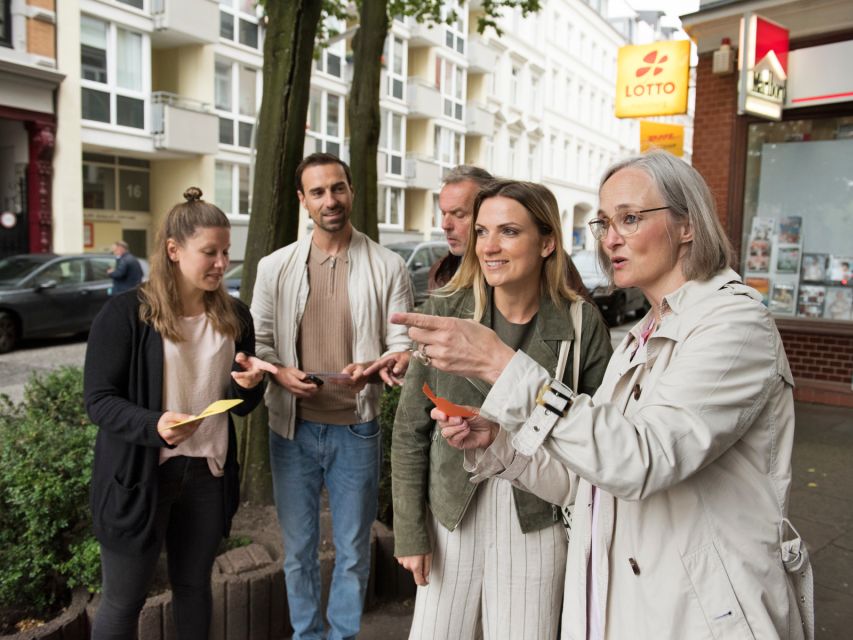
I would choose this tour if you want Hanover explained through its streets rather than through a single indoor attraction. It suits adults who enjoy urban history, families with older children, and anyone curious about the Guelphs, Hanover’s royal connections, or Leibniz.
The experience can also work well near the start of a stay. After two hours, you should have a clearer sense of the Old Town, Calenberger Neustadt, and Neustädter Markt. The nearby food options make it easy to continue exploring after the guide says goodbye.
The tour is a good fit for German speakers who like asking questions. Guide Simon’s recent work with a two-person group shows how a friendly guide can make the walk feel conversational rather than scripted. Still, guide assignments can vary, so do not book solely on the hope that Simon will lead your departure.
You should think twice if you need frequent seating, have mobility limitations, or dislike walking in poor weather. The route runs rain or shine, and pets are not allowed. Comfortable shoes are not a minor suggestion here. They are part of making the two-hour format enjoyable.
Families should note that the tour has worked for children aged 13 and 17, with an excellent guide helping make the history accessible. Younger children may find the political and religious material less engaging, especially if they do not understand German.
Should you book the Hanover Old Town Historical Walking Tour?
Book it if you want a story-led introduction to Hanover and can follow German. The strongest features are the close look at the Market Church’s pentagram, the 1410 Old Town Hall, the Guelph connection to an English king, and the shift into food-filled Calenberger Neustadt.
Skip it if you need English commentary, cannot manage a two-hour walk, or are mainly looking for interior access to the church and other buildings. At $29, the tour earns its price through explanation, questions, and historical connections, not through admissions or refreshments.
For the right visitor, it is a practical way to turn Hanover’s Old Town from a collection of buildings into a readable city story.
FAQ
How long is the Hanover Old Town Historical Walking Tour?
The tour lasts two hours.
What language is the tour conducted in?
The live tour guide speaks German, and the walking tour is offered in German only.
How much does the tour cost?
The listed price is $29 per person.
Where is the meeting point?
Meet your guide at the Beginenturm. The guide carries a pouch with the Meet the World logo.
What is included in the tour?
The price includes the walking tour, a live guide, and a brochure with historical illustrations.
What should I bring?
Bring comfortable shoes and clothing suitable for the weather.
Does the tour run in bad weather?
Yes. The tour takes place rain or shine.
Are pets allowed?
No. Pets are not allowed on the tour.
Can I cancel or pay later?
You can cancel up to 24 hours in advance for a full refund. You can also reserve your spot and pay later, with no payment required at the time of booking.
More Walking Tours in Hanover
- Hanover: Crime Walking Tour
★ 4.5 · 243 reviews - Hanover: Flashlight Guided Walking Tour at Night
★ 4.7 · 52 reviews - Hannover: New Town Hall exclusive Guided Walking Tour
★ 4.6 · 49 reviews - Hannover: Culinary walking tour district List/Oststadt
★ 4.6 · 28 reviews
Just added around Hanover
- Hanover: Flashlight Guided Walking Tour at Night★ 4.7 · 52 reviews
- Hanover Center: Outdoor Escape Game★ 4.7 · 13 reviews
- Hanover: Crime Tour by Bike★ 4.8 · 25 reviews
- Hanover: Royal Gardens of Herrenhausen Guided Tour★ 4.6 · 78 reviews
- Hanover: Linden-Limmer Krimi-Rätsel-Tour★ 4.5 · 15 reviews
- Hanover: Night tour with night watchman Melchior★ 4.4 · 72 reviews
- Hanover: Guided Walking Tour of the Linden-Limmer District★ 5.0 · 6 reviews
- Hannover: New Town Hall exclusive Guided Walking Tour★ 4.6 · 49 reviews
Old Town Walking Tours, compared.


Old Town & Viktualienmarkt City Walk in German
Read our review →

The Night Watchman Old Town Walking Tour in German
Read our review →
Browse the lists this tour appears in