

Reviewed · WALKING TOURS
Hanover: Crime Walking Tour
Hanover’s past gets far darker than its tidy streets suggest. This two-hour walk connects real crimes, old prisons, royal scandal, and local legends at the places where they belong, from Fritz Haarmann’s killings to the Hanebuth gang’s supposed camp.
I like the mix of crime stories and familiar city sights, and I like that the tour uses original locations instead of treating Hanover’s past as a string of detached anecdotes. The drawback is clear: the tour is in German and is not suitable for children under 16 or people with claustrophobia.
- Fritz Haarmann’s Hanover: Learn how the notorious murderer was linked to the city and its police.
- Hanebuth-Gang: Hear about Jasper Hanebuth’s robbery murders and the legend of his camp.
- Original locations: Visit Georgsplatz, Leibnizufer, Clevertor Prison, Kröpcke, and other central spots.
- More than murder: The route also covers fraud, a royal affair, a family killing, and an IRA attack.
- A two-hour city walk: The tour starts and ends at the Hannover Tourism information point.
- Practical format: It runs rain or shine, requires comfortable shoes, and has a German-speaking guide.
In This Review
- Hanover’s dark side begins in the city center
- Georgsplatz sets the scene
- The Königsmarck Affair adds royal scandal
- Leibnizufer and the city’s waterways
- Hanebuth-Gang and the legend of the old camp
- Clevertor Prison reveals the city’s justice system
- Kröpcke brings the stories into modern Hanover
- Haarmann, Hanover’s most infamous criminal
- Other cases broaden the route
- What the guide adds to the walk
- Is $19 a fair price?
- Who should book this Hanover walk?
- Final decision: book it for a darker view of Hanover
- FAQ
- Where does the Hanover Crime Walking Tour start?
- Where does the tour end?
- How long is the tour?
- What language is the tour in?
- How much does the tour cost?
- Which places does the tour visit?
- Which criminal cases are covered?
- Is the tour suitable for children?
- Is the tour wheelchair accessible?
- What should I bring?
- Can I cancel the tour?
Hanover’s dark side begins in the city center
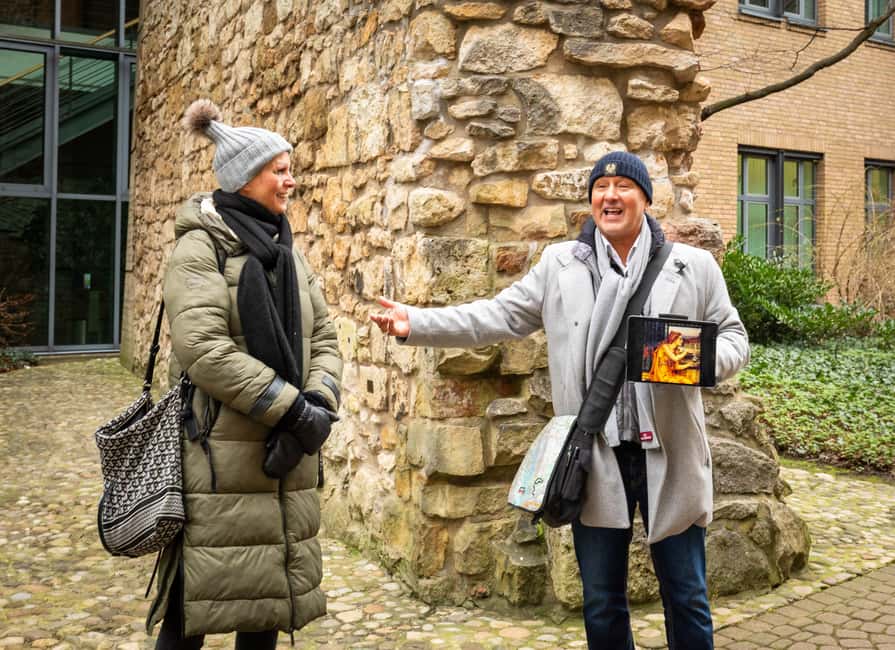
This is not a standard sightseeing walk with a few spooky remarks added at the end. The subject is criminal history, and the route is built around people and events connected to Hanover: murderers, robbery killers, fraud cases, a prison, an alleged hideout, and a bombing claimed by the IRA.
That focus gives the tour a useful shape. Instead of moving from one famous building to another with only dates and architectural labels, you get reasons to look more closely at ordinary streets and squares. A place that seems like a simple city landmark may also be tied to an investigation, a public scandal, or a story that has lingered in local memory.
The tone should suit adults and older teenagers who enjoy history with a grim edge. This is not designed as a playful children’s mystery walk. The minimum age is 16, and the subject matter includes murder and family killing.
Georgsplatz sets the scene

The walk passes Georgsplatz, one of the central points on the route. Here, the guide begins linking Hanover’s modern city center to the crimes and scandals that took place in earlier periods.
The value of a stop like this is not just the square itself. It helps you see that criminal history is rarely confined to a single dramatic building. Cases develop through streets, meeting points, public spaces, police work, and transport routes. As you move through Hanover, the guide can place each case within the city rather than leaving it as a name and a date.
The tour also includes information about well-known Hanover sights. That makes the walk useful if you are still getting your bearings, especially because the route covers both the city center and old town. You get sightseeing along with the darker material, though crime stories remain the main reason to book.
A few more Hanover trips to weigh up
- Hannover: Guided Old Town Walking Tour
★ 4.5 · 338 reviews - Hanover: Flashlight Guided Walking Tour at Night
★ 4.7 · 52 reviews - Hannover: New Town Hall exclusive Guided Walking Tour
★ 4.6 · 49 reviews
The Königsmarck Affair adds royal scandal
The Königsmarck Affair brings a different kind of crime story to the route. It is not simply another murder case. The name points to a notorious royal and aristocratic scandal, giving the walk a wider range than a lineup of ordinary criminal cases.
This part should appeal to you if you like the overlap between politics, private lives, and public rumor. Hanover’s history is not presented only through official monuments. Personal relationships and courtly drama also shaped how people understood the city and its powerful families.
The guide also raises questions rather than handing you a dry list of facts. One example asks what happened when a body was found in the Leine. That style gives the walk a sense of investigation, although you should expect the answers and explanations to come from the guide in German.
Leibnizufer and the city’s waterways

Leibnizufer is another important stop. The riverside setting brings a change of pace from the more built-up city center and provides the setting for one of the tour’s unsettling questions about a body found in the Leine.
A riverside stop also shows why location matters in a crime tour. The same waterway can function as a city landmark, a route through town, and part of a grim investigation. You are not only hearing what happened. You are being shown the physical setting connected with the story.
The walk takes place outdoors and continues in all weather. Bring comfortable shoes and dress for the forecast. Rain does not cancel the activity, so a wet day may make the riverside portions less comfortable, even though the tour continues.
Hanebuth-Gang and the legend of the old camp
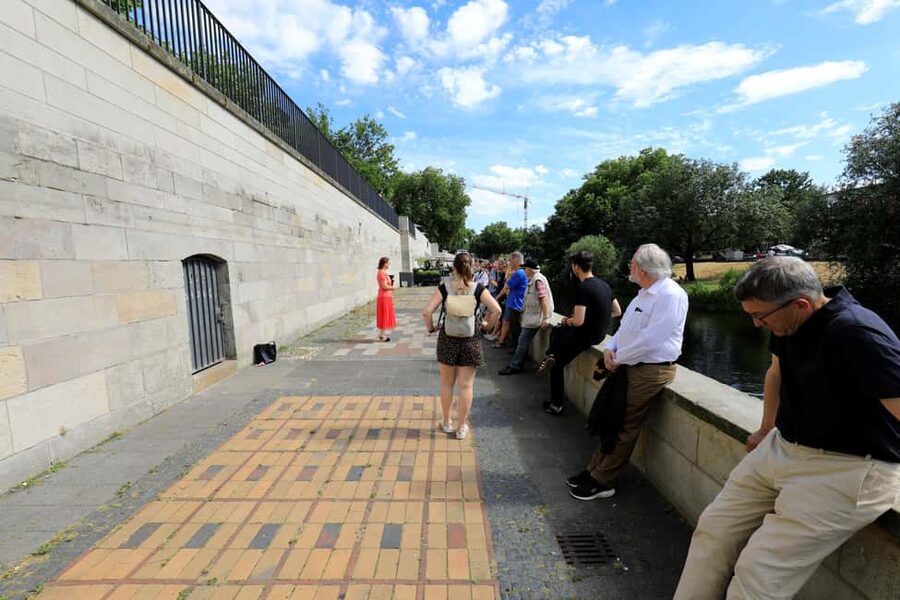
The Hanebuth-Gang stop focuses on Jasper Hanebuth, who is associated with robbery murders. The tour also asks where, according to legend, the Hanebuth camp was located.
That distinction between documented crime and local legend matters. A good historical walk should let you know when you are hearing established information and when you are hearing a story passed down through local memory. Here, the guide covers both, giving you a feel for how Hanover has remembered its criminals over time.
This is one of the more distinctive parts of the route because it connects a named criminal with a specific place and a legend about his followers. You will likely get more from it if you enjoy seeing how a city turns troubling figures into local stories, rather than expecting every detail to feel neat or fully settled.
Same city, a completely different kind of day:
- Hannover: 24-Hour Hop-On Hop-Off Sightseeing Bus Ticket
★ 4.2 · 298 reviews - SEA LIFE Hannover Ticket
★ 4.0 · 96 reviews - Hanover: Royal Gardens of Herrenhausen Guided Tour
★ 4.6 · 78 reviews - Hanover: Night tour with night watchman Melchior
★ 4.4 · 72 reviews
Clevertor Prison reveals the city’s justice system
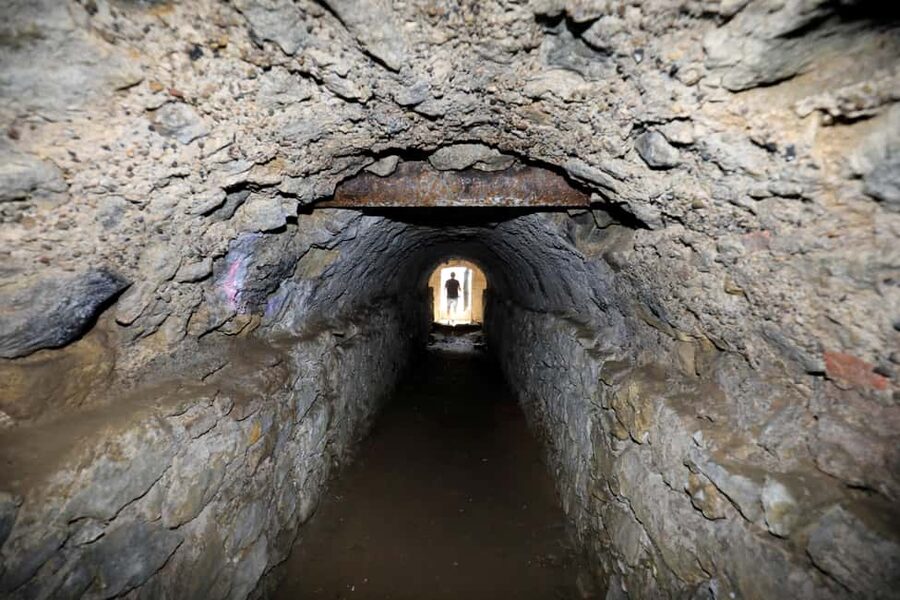
Clevertor Prison gives the tour a useful change in focus. The route is not only about what criminals did. It also points to the institutions that held and processed them.
A prison stop helps connect individual cases to Hanover’s older system of punishment and law enforcement. It gives the guide a chance to explain where prisoners were held and how the city dealt with serious crime. The supplied information does not specify whether you enter the prison or only view the location, so you should expect this to be an exterior stop unless your guide says otherwise.
The mention of claustrophobia in the practical information is worth noting. It may relate to the prison setting or another enclosed part of the route. If confined spaces make you uncomfortable, ask before booking, since the activity specifically says it is not suitable for people with claustrophobia.
Kröpcke brings the stories into modern Hanover
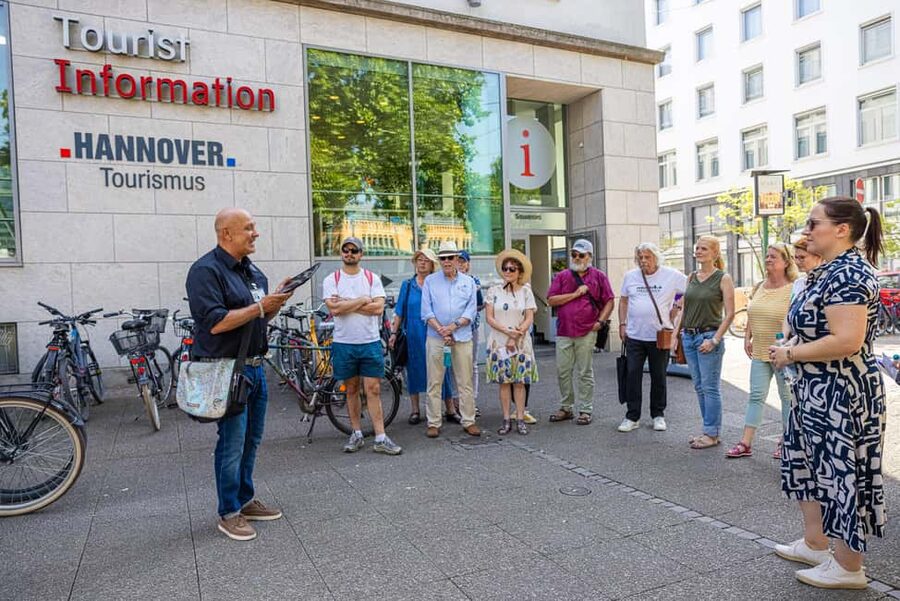
Kröpcke is among the well-known sights included on the walk. Its presence keeps the tour connected to present-day Hanover rather than turning the entire experience into a trip through obscure corners.
This is where the tour’s two purposes work well together. You can see a major city location while learning how crime stories unfolded across Hanover. If you are visiting for the first time, the route gives you useful orientation. If you already know the city, the criminal cases may give familiar places a new meaning.
The walk ends back at the Hannover Tourism information point. That makes the activity easy to fit into a day of sightseeing, since you do not need to arrange transport from a distant finishing point.
Haarmann, Hanover’s most infamous criminal
Fritz Haarmann is one of the central figures on the tour. He is presented as both a murderer and a police informer, an unsettling combination that shows how criminal cases can involve complicated relationships with law enforcement.
The tour asks where Haarmann carried out his activities and places those questions within the city itself. This local setting is important. You do not just hear about a notorious name from a history book. You connect that name with Hanover’s streets and public memory.
The Haarmann material is likely to be the most disturbing part for many people. The experience deals with murder directly, and the subject is not suitable for young children. If you prefer gentle folklore or light sightseeing, choose a different walking tour. If you want a serious look at one of Hanover’s best-known criminal figures, this is a major reason to go.
Other cases broaden the route

The tour covers several cases beyond Haarmann and Hanebuth. Christian Friedrich Lorenz is described as a family killer, while Christine Fricke is connected with the label husband killer. These cases add domestic crime to the route and show that the city’s criminal past was not limited to gang activity or public violence.
You also hear about jeweler Düe and the Mauss case, which brings fraud into the program. That helps keep the two hours from becoming a single repeated story about murder. The material ranges from theft and deception to domestic killings and organized robbery.
The route also includes the July 3, 1989 attack claimed by the IRA. This is the most modern event listed and broadens the time span considerably. It reminds you that criminal and political violence are not only matters from Hanover’s distant past.
Since the activity is guided in German, your ability to follow detailed case names and connections will shape the experience. If your German is limited, the stories may be harder to track, especially when the guide moves quickly between people, dates, and locations.
What the guide adds to the walk

The guide is the key to this experience. The tour promises background information at the original locations, along with explanations of major Hanover sights. The guide also actively involves the group, and the tour is described as having a comfortable group size.
That interaction can make a difference. Crime stories work best when the guide can explain a confusing connection, answer questions, or point out a detail that is easy to miss. You should expect a live walking tour rather than an audio guide or self-led route.
No individual guide names are provided, so you cannot choose a particular guide. The language is German, and that is the main communication format for the full two hours.
Is $19 a fair price?
At $19 per person, the tour offers a reasonable amount of guided time for the cost. You get two hours, a live guide, a central route, and several distinct historical cases. The value is strongest if you already plan to walk through Hanover’s center and want more than standard sightseeing commentary.
The price is less attractive if you speak little German or have no interest in crime history. The tour does include information about famous sights, but this is not a general introduction to every major Hanover attraction. Its main purpose is the criminal past.
The ability to reserve now and pay later also gives you some flexibility, while free cancellation is available up to 24 hours before the start time. Check the available departure times when booking, since the exact start time is not fixed in the information provided.
Who should book this Hanover walk?
I would choose this tour if you enjoy true crime, local history, old scandals, and city walks with an unusual theme. It also suits repeat visitors who have already seen Hanover’s main sights and want to look at familiar places from a different angle.
It is a practical choice for adults and older teenagers because the route stays in the city center and old town and finishes where it begins. Wheelchair access is listed, though the activity remains a walking tour, so you should consider your own comfort with a two-hour route and outdoor conditions.
I would skip it if you want an English-language tour, a relaxed architectural walk, or a family activity for younger children. I would also think twice if murder stories, enclosed spaces, or rain-or-shine walking are not for you.
Final decision: book it for a darker view of Hanover
Book the Crime Walking Tour if you want to connect Hanover’s streets with real cases involving Haarmann, Hanebuth, Königsmarck, Düe, and others. The combination of original locations, local legends, prison history, and familiar sights gives the walk more substance than a simple list of grim tales.
Before paying, confirm that you can follow German and are comfortable with mature subject matter. For the right audience, $19 is a sensible price for two hours of focused local history, especially if you want to see Hanover through stories that standard sightseeing rarely covers.
FAQ
Where does the Hanover Crime Walking Tour start?
The tour starts at the Hannover Tourism information point.
Where does the tour end?
The activity ends back at the meeting point, the Hannover Tourism information point.
How long is the tour?
The walking tour lasts two hours.
What language is the tour in?
The live tour guide conducts the experience in German.
How much does the tour cost?
The listed price is $19 per person.
Which places does the tour visit?
The route passes Georgsplatz, Leibnizufer, Hanebuth-Gang, Clevertor Prison, and Kröpcke, along with other locations in Hanover’s city center and old town.
Which criminal cases are covered?
The tour covers jeweler Düe and the Mauss case, Christine Fricke, the Königsmarck Affair, Jasper Hanebuth, Fritz Haarmann, Christian Friedrich Lorenz, and the July 3, 1989 IRA-claimed attack.
Is the tour suitable for children?
No. The activity is not suitable for children under 16.
Is the tour wheelchair accessible?
Yes, the activity is listed as wheelchair accessible.
What should I bring?
Bring comfortable shoes. The tour operates rain or shine, so weather-appropriate clothing is also sensible.
Can I cancel the tour?
Yes. You can cancel up to 24 hours in advance for a full refund. You can also reserve now and pay later.
Just added around Hanover
- Hanover: Old Town Historical Walking Tour by Geo Epoche★ 4.4 · 11 reviews
- Hanover: Flashlight Guided Walking Tour at Night★ 4.7 · 52 reviews
- Hanover Center: Outdoor Escape Game★ 4.7 · 13 reviews
- Hanover: Crime Tour by Bike★ 4.8 · 25 reviews
- Hanover: Royal Gardens of Herrenhausen Guided Tour★ 4.6 · 78 reviews
- Hanover: Night tour with night watchman Melchior★ 4.4 · 72 reviews
- Hanover: Linden-Limmer Krimi-Rätsel-Tour★ 4.5 · 15 reviews
- Hanover: Guided Walking Tour of the Linden-Limmer District★ 5.0 · 6 reviews
Walking Tours, compared.



Berlin’s Best: 2 Hour Walking Tour Third Reich and the Cold War
Read our review →

Third Reich Berlin: Hitler and WWII Walking Tour
Read our review →Browse the lists this tour appears in