
Reviewed · MUSEUM & GALLERY TICKETS
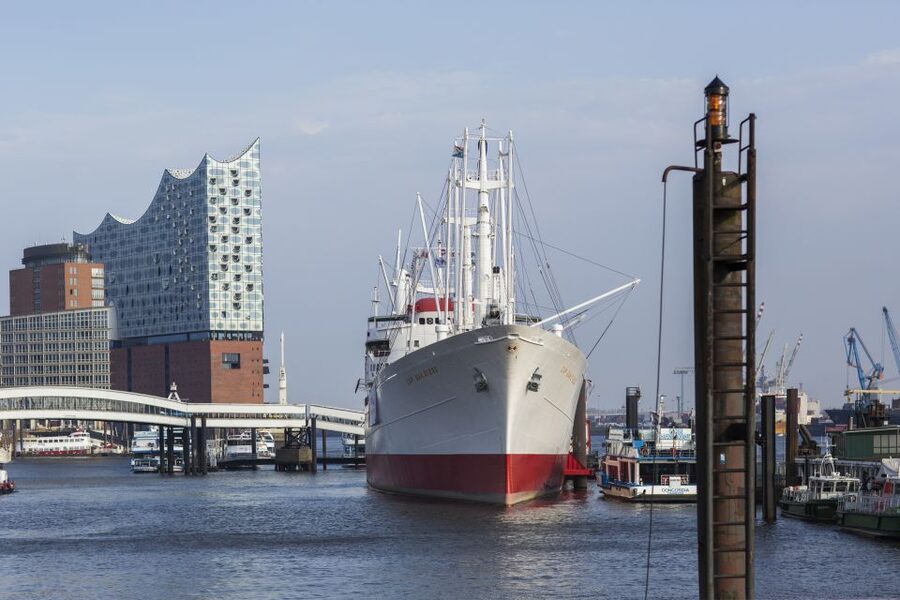
Hamburg: Entrance to the Museum Ship Cap San Diego
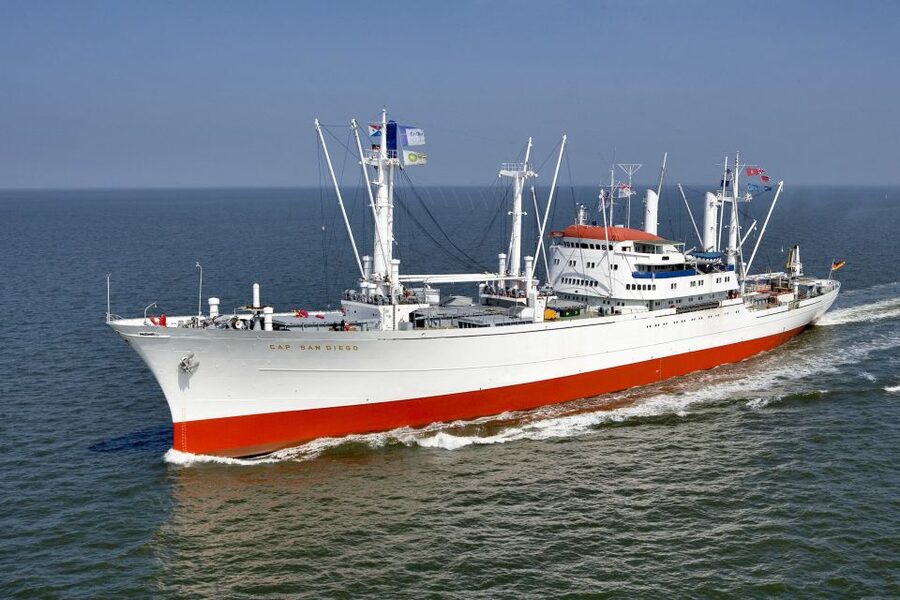
Cap San Diego is not a model behind glass. It is a full-size 1961 cargo ship that you can enter from bridge to hatch, including the engine room, crew areas, saloon, and working spaces. I like the chance to picture a real Hamburg to Rio de Janeiro and Buenos Aires run, and I like that the ship connects everyday cargo work with the human story of emigration. The main catch is simple: this is a self-guided visit, and the ship has many stairs, tight passages, and maze-like corners.
I especially like the ship’s working atmosphere. You can take the role of a lookout on the bridge, then head down toward the steady pulse of the machinery. The exhibits also give the visit more weight, with one film focused on emigrants leaving through Hamburg between 1850 and 1930 and another display tracing sea freight from general cargo to containers. The route could use clearer signs, so allow yourself time to get your bearings.
In This Review
- Key points to know before boarding
- Start at the end of Überseebrücke
- Picture a 1960s South America crossing
- Take the bridge for a lookout’s view
- Hear the engine room below deck
- Relax in the saloon with the passengers
- Hatch 2 explains the change in sea freight
- Watch the story of Hamburg’s emigrants
- How much time should you allow?
- Accessibility and comfort on board
- Is the audio guide worth choosing?
- Should you book Cap San Diego?
- FAQ
- Where is Cap San Diego located?
- How much does admission cost?
- How long is the ticket valid?
- What are the museum’s opening hours?
- Is this a guided tour?
- What can I see inside the ship?
- Is Cap San Diego wheelchair accessible?
- Can I cancel my booking?
Key points to know before boarding
- A real 1961 cargo ship: Cap San Diego carried general cargo between Hamburg and South America until the end of 1981.
- Explore from bridge to hatch: You can move through the bridge, saloon, cargo areas, and engine room at your own pace.
- Two useful historical displays: Learn about Hamburg emigration from 1850 to 1930 and the change from general cargo to container shipping.
- Self-guided and flexible: The ticket is valid for one day, and the museum is open daily from 10 AM to 6 PM.
- Stairs and narrow spaces matter: The ship is not wheelchair accessible and is not a good choice for people with limited mobility, claustrophobia, or mazeophobia.
Start at the end of Überseebrücke
You reach the ship at the end of Überseebrücke, one of Hamburg’s waterfront approaches. Go directly to the ship entrance. There is no coach transfer, meeting with a live guide, or fixed group departure to worry about.
The ticket costs $14 per person. I consider that a fair price if you enjoy ships, industrial history, or hands-on museums. You are paying for access to a large historic vessel rather than a short viewing platform, and the ship gives you several ways to spend your time. Someone who only wants a quick photograph may find the price less convincing, but anyone who explores the interior carefully should get good value.
The visit is valid for one day, with opening hours from 10 AM to 6 PM daily. The flexible timing works well if you are fitting the ship around other Hamburg sights. You can also reserve now and pay later, and cancellation is available up to 24 hours before the visit for a full refund.
More Museum & Gallery Tickets in Hamburg
- Hamburg: International Maritime Museum Entrance Ticket
★ 4.7 · 547 reviews - Hamburg: RICKMER RICKMERS Museum Entry Ticket
★ 4.6 · 269 reviews - Hamburg: Museum of Illusions Ticket
★ 4.2 · 122 reviews
Picture a 1960s South America crossing
The most enjoyable way to approach Cap San Diego is to treat it as a time capsule. The ship was built in 1961 and 1962 for the Hamburg South shipping company, part of a series of six fast general cargo ships. It carried goods across the Atlantic to South America until the end of 1981.
That setting gives the visit a clear storyline. Instead of looking at isolated objects, you can imagine how a long voyage worked: cargo handled in the hatches, officers watching from the bridge, passengers relaxing in the saloon, and engineers keeping the machinery running below.
The South America route is important because it makes the ship feel like a working link between places, not simply a local Hamburg attraction. You can picture the vessel leaving Germany, crossing the Atlantic, calling at Rio de Janeiro and Buenos Aires, then returning north. The voyage is imaginary, but the ship and its spaces are real.
Cap San Diego has been a museum ship since 1988. It is described as the largest civil museum ship in the world, and its size gives you room to move through several parts of shipboard life. You are not limited to one deck or one preserved cabin. You can follow the vessel from its upper working areas down into the machinery spaces.
Take the bridge for a lookout’s view
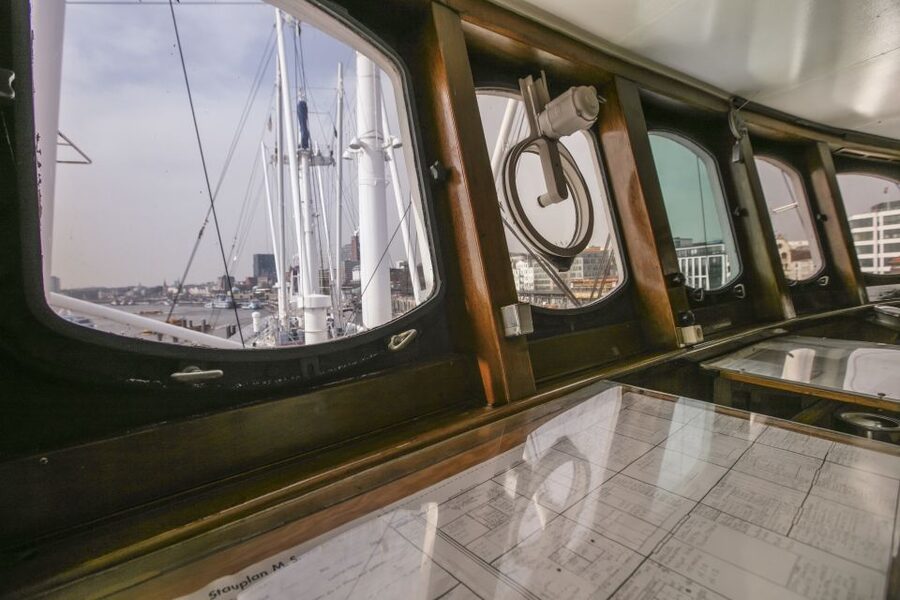
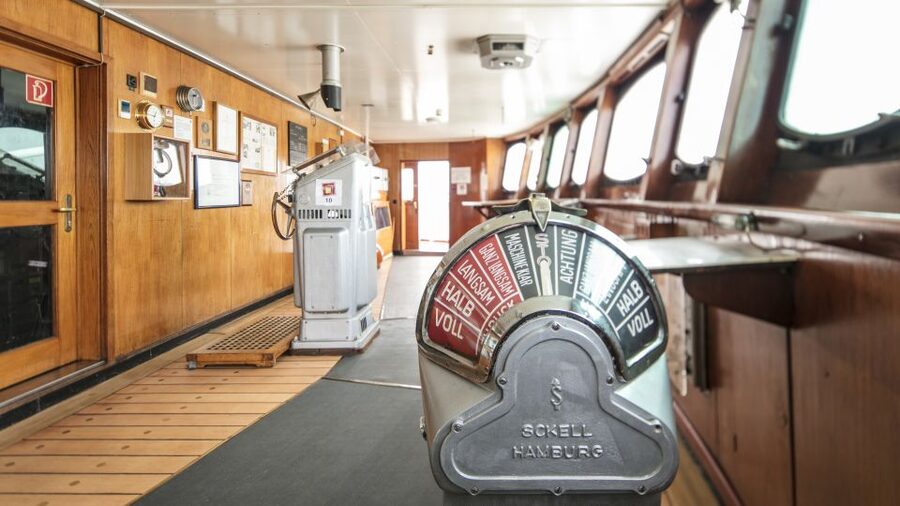
The bridge offers one of the clearest ways to understand the ship. Here, you can imagine the duties of a lookout and picture the vessel approaching a busy port or moving along the Atlantic route.
The appeal is less about a single spectacular object and more about position. From the bridge, you are looking at the ship as a tool of navigation and command. It helps you understand that a cargo ship needed constant coordination, not just powerful engines and large holds.
Because the visit is self-guided, you can linger where the ship makes sense to you. An audio guide is included if you select that option, but there is no live guide leading a set route. This gives you freedom, though it also means you should read the explanatory material and pay attention to the signs as you go.
One practical point: the route is not always perfectly obvious. It is easy to find your way after a short time, but do not expect the smooth, numbered path of a modern museum. The slightly confusing layout is part of the ship’s character, though it may frustrate anyone who prefers a tightly organized visit.
Hear the engine room below deck
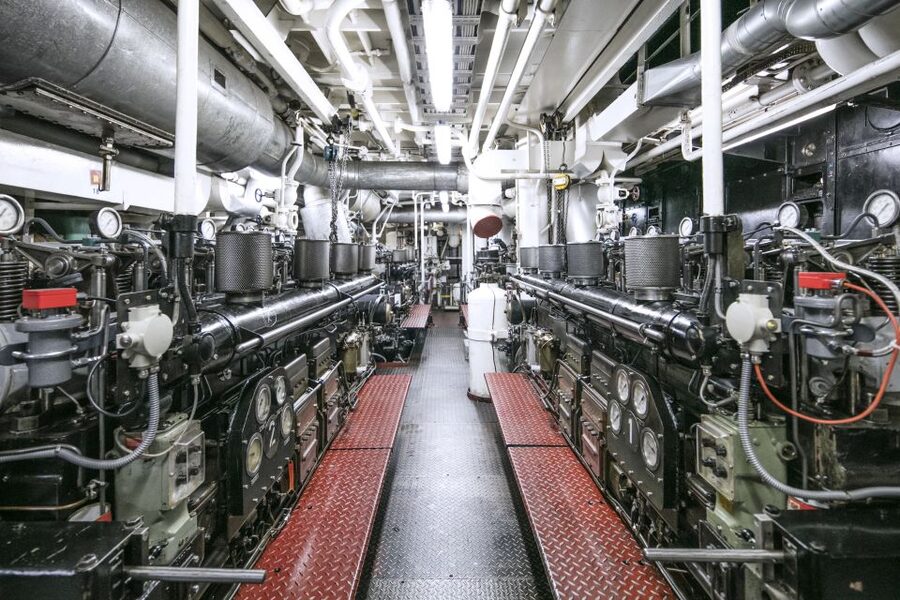
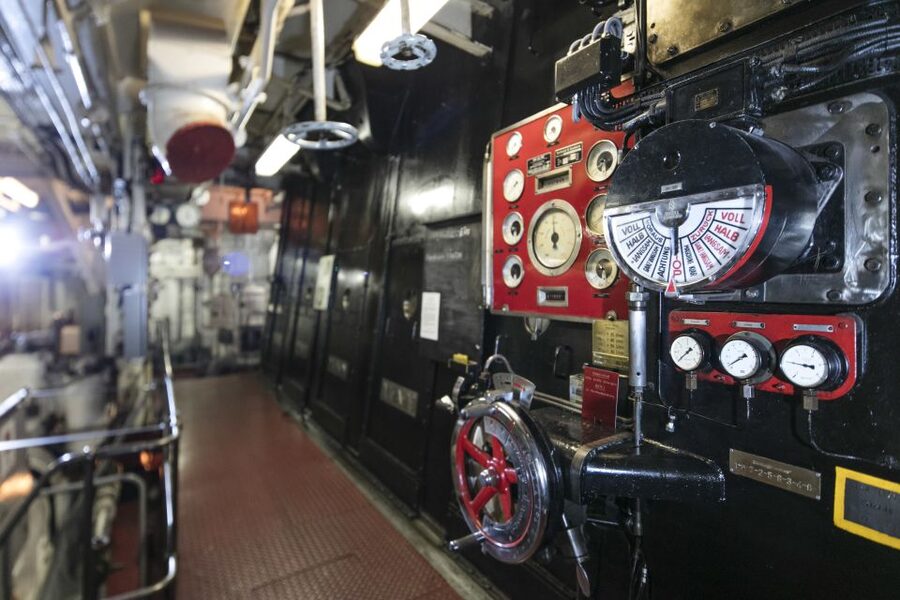
The engine room is likely to be the highlight for anyone interested in machinery. You can stand among the ship’s mechanical spaces and sense how much equipment was needed to keep a large cargo vessel moving across the Atlantic.
The attraction here is physical. A photograph of an engine cannot give you the same sense of scale as standing beside it. The ship’s machinery helps turn an abstract story about sea freight into something you can understand with your eyes and ears.
The engine room is also where the ship’s working purpose becomes most obvious. Above deck, you see navigation and cargo handling. Below deck, you find the power that made the whole operation possible. I would give this section extra time rather than rushing through it on the way to the next exhibit.
You should also know what the engine room is not. It is not a calm, open gallery with wide paths and polished floors. A ship has pipes, stairways, equipment, and confined spaces. If you dislike enclosed areas or maze-like interiors, this part may feel uncomfortable rather than exciting.
Same city, a completely different kind of day:
- Hamburg: Sex and Crime in St. Pauli Tour for Ages 18+
★ 4.7 · 15,447 reviews - Hamburg: 1.5-Hour Harbor and Speicherstadt Day Cruise
★ 4.6 · 14,200 reviews - Hamburg: 90-Minute Evening Lights Harbor Cruise
★ 4.5 · 7,728 reviews - Hamburg: 2-Hour XXL Port of Hamburg Cruise Tour
★ 4.7 · 6,979 reviews
Relax in the saloon with the passengers
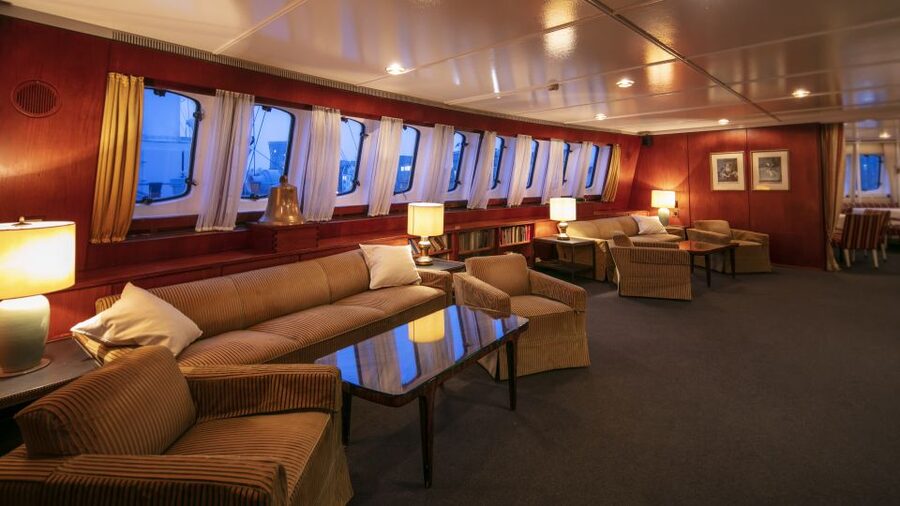
The saloon provides a useful change of pace. After the bridge and machinery spaces, you can picture passengers resting with light music during a voyage to South America.
This section helps balance the technical side of the ship. Cap San Diego was not only about cargo and engines. A long crossing also involved people spending days at sea, finding a place to sit, talk, and pass the time.
The saloon is worth seeing even if you are mainly interested in maritime equipment. It gives you a sense of the social side of a voyage and makes the imaginary 1960s journey more complete. I like that the ship lets you shift between the viewpoints of a lookout, an engineer, a cargo worker, and a passenger.
The overall experience is not presented as a live performance. You create the story yourself as you move through the ship. That works well for independent visitors, but you need to bring some patience and imagination. If you want a guide explaining every room as you enter it, this is not that kind of museum.
Hatch 2 explains the change in sea freight
In hatch 2, the permanent exhibition General Cargo and Container Handling traces sea freight from 1960 to today. Historical photographs and explanatory texts show how cargo transport changed over time.
This is one of the most useful parts of the visit because it places Cap San Diego in a wider change in shipping. The vessel belonged to the era of general cargo, when goods were handled in separate loads. Later, container shipping changed the speed, organization, and appearance of ports.
Seeing the exhibition inside an actual cargo ship makes the subject easier to grasp. You can look at the ship’s own spaces while learning why cargo handling developed in new ways. The display is especially worthwhile if you have seen modern container terminals and wondered how earlier shipping worked.
The exhibition also stops the visit from becoming a simple nostalgia trip. You are not only looking backward at a preserved ship. You are also following the transition from the vessel’s working era toward modern freight transport.
Watch the story of Hamburg’s emigrants
The documentary A Suitcase Full of Hope, about the Port of Hamburg and emigration from 1850 to 1930, adds a human layer to the maritime setting. It focuses on the fate of emigrants who passed through Hamburg on their way to new lives overseas.
This subject reaches beyond the ship’s 1960s and 1970s atmosphere. It reminds you that Hamburg’s port served people as well as goods. Before container shipping and modern passenger travel, leaving Europe by sea could mean a major break with family, work, and home.
The documentary is a valuable pause in the self-guided route. It gives you historical context that machinery alone cannot provide. I recommend making time for it rather than treating the film as an optional extra.
The connection to the ship is indirect, since the documentary covers an earlier period than Cap San Diego’s service years. Still, both parts belong in the same port story. One shows the movement of people, while the other explains the movement of cargo and the changing technology behind it.
How much time should you allow?
The ticket is valid for one day, but the supplied information does not set a fixed visit length. Your timing will depend on how closely you inspect the ship, watch the documentary, read the displays, and use the audio guide if selected.
I would avoid squeezing Cap San Diego into a rushed gap between other appointments. The ship has enough separate areas that a quick walk-through may leave you with only a vague impression. Give yourself time to explore the bridge, saloon, engine room, hatch 2, and the emigrant film.
The flexible opening hours help. You can arrive any time between 10 AM and 6 PM, subject to availability when booking. A morning visit may suit you if you want plenty of time, while a later visit can work if the ship is one stop on a broader Hamburg harbor day.
There is no live guide to keep you moving, so your pace is your own. That is good news for people who like to stop, read, and look closely. It also means you need to manage your own route and make sure you do not skip the parts that interest you most.
Accessibility and comfort on board
This is not a wheelchair-accessible attraction. The ship has multiple flights of stairs, and it is not recommended for people with limited mobility.
You should also avoid booking if enclosed spaces make you uncomfortable or if you have mazeophobia. The ship is large, but its interior is still a ship, with confined passages and a layout that may take time to understand.
Wear practical footwear and expect to climb. That advice follows directly from the ship’s design rather than from a formal walking route. You will be moving between different levels and working areas, so comfort matters more than dressing for a short museum visit.
Families with older children may find the ship engaging because it offers real machinery, bridges, hatches, and a clear imaginary voyage. Younger children may need close supervision around stairs and shipboard equipment. The activity details do not set a minimum age, so use your own judgment based on your child’s mobility and comfort in tight spaces.
Is the audio guide worth choosing?
An audio guide is available if you select that option with your ticket. Since there is no live guide, it can add structure to the visit and help explain what you are seeing.
I would choose it if you prefer context delivered as you walk. It may also help if the route feels unclear at first. On the other hand, visitors who enjoy reading displays and exploring freely may be satisfied with the written information in the exhibitions.
The best choice depends on how you normally visit museums. The ship itself supplies the atmosphere, while the guide can supply a stronger narrative. It does not turn the experience into a guided group tour, so you still keep control of your pace.
Should you book Cap San Diego?
Book this experience if you like working ships, port history, industrial technology, or museums where you can enter the object itself. The $14 price is reasonable for access to a large ship with a bridge, saloon, engine room, cargo spaces, a documentary, and a permanent freight exhibition.
Skip it if you need step-free access, dislike narrow interiors, or want a live guide to lead you from room to room. You should also allow more than a quick photo stop, since the ship rewards careful exploration and the route may take a little time to understand.
For the right visitor, Cap San Diego offers a strong Hamburg experience: part maritime museum, part imaginary Atlantic voyage, and part lesson in how people and goods crossed the sea. The friendly onboard staff can provide useful information, but the main pleasure comes from moving through the ship and letting each space explain its own role.
FAQ
Where is Cap San Diego located?
The ship entrance is at the end of Überseebrücke in Hamburg.
How much does admission cost?
Admission costs $14 per person.
How long is the ticket valid?
The ticket is valid for one day.
What are the museum’s opening hours?
Cap San Diego is open daily from 10 AM to 6 PM.
Is this a guided tour?
No. The visit is self-guided, and there is no live guide. An audio guide is available if you select that option.
What can I see inside the ship?
You can visit the bridge, saloon, engine room, cargo areas, and other parts of the ship. You can also watch the documentary about emigration from Hamburg and visit the hatch 2 exhibition on general cargo and container handling.
Is Cap San Diego wheelchair accessible?
No. The museum ship is not wheelchair accessible and is not recommended for people with limited mobility because there are multiple flights of stairs.
Can I cancel my booking?
Yes. You can cancel up to 24 hours in advance for a full refund. You can also reserve now and pay later.
More Museums in Hamburg
- Hamburg: Emigration Museum BallinStadt Entry Ticket
★ 4.4 · 63 reviews - Hamburg: 3-Day Art Exhibition & Gallery Ticket
★ 4.6 · 34 reviews - Hamburg: Museum für Kunst und Gewerbe Entrance Ticket
★ 4.5 · 20 reviews - Hamburg: FC ST. PAULI-MUSEUM Entrance Ticket
★ 4.5 · 19 reviews
Just added around Hamburg
- Hamburg: Historical Tour of the St. Pauli Sex Work District★ 4.4 · 215 reviews
- Hamburg: St. Pauli Food and Bier Tour★ 4.7 · 5 reviews
- Hamburg: Private Tour Red Light District Walking Tour★ 4.7 · 227 reviews
- St. Pauli Tour: Drag-Attack with Barbie Stupid & Lee Jackson★ 4.8 · 280 reviews
- St. Michael’s, Elbe Tunnel & Harbor 2-Hour Hamburg Tour★ 4.9 · 21 reviews
- Satt Pauli – der kulinarische Rundgang durch St. Pauli★ 4.8 · 12 reviews
- Hamburg: Safari tour in St. Pauli★ 4.9 · 11 reviews
- Hamburg: Reeperbahn Comedy Club★ 4.3 · 53 reviews
Museum & Gallery Tickets, compared.




Skip-the-Line: Berlin Wall Museum at Checkpoint Charlie
Read our review →
Browse the lists this tour appears in