
Reviewed · WALKING TOURS
Frankfurt Highlights English Walking Tour
Frankfurt’s past is packed into a surprisingly small area. On this English walking tour, you move from the cathedral where Holy Roman Emperors were elected and crowned to the rebuilt New Old Town, then across the Main for views of modern Frankfurt. The route also brings in Jewish history, market food, city planning, and a few curious details that are easy to miss on your own.
I like the clear historical storyline, which runs from Roman and medieval Frankfurt through wartime destruction and rebuilding to the present-day banking city. I also like the frequent pauses, including snack and bathroom breaks noted by several participants, so the walk is not a nonstop march.
The main consideration is time and pace. At about three hours, this is a full walking tour, and some intermittent steps may trouble visitors with back, knee, or mobility concerns. Sunday also changes the plan, since several interiors are unavailable and Kleinmarkthalle and the planning office are closed.
In This Review
- Key points to know before you book
- Why this Frankfurt walk works so well
- Starting at Frankfurt Cathedral
- Reading Römerberg, Frankfurt’s central square
- Old St. Nicholas Church and the medieval center
- Karmeliterkloster and the art inside old Frankfurt
- A food break at Kleinmarkthalle
- The Old Jewish Cemetery and Frankfurt’s Jewish past
- Seeing today’s city through the planning office
- Walking the New Old Town
- Eiserner Steg and the Main River view
- Staufenmauer and the final medieval layer
- What the $36.28 price gives you
- Pace, steps, weather, and meeting-point advice
- Who will get the most from this tour
- Should you book the Frankfurt Highlights Walking Tour?
- FAQ
- How long does the Frankfurt Highlights English Walking Tour last?
- What time does the tour start?
- Where does the tour meet?
- Where does the tour finish?
- Is the tour offered in English?
- What is the price?
- What is the maximum group size?
- Is the route suitable for strollers?
- Are the cathedral and Old St. Nicholas Church open during the Sunday tour?
- Is Kleinmarkthalle open on Sundays?
Key points to know before you book
- A compact route with wide historical range: Cover the cathedral, Römerberg, Jewish heritage sites, New Old Town, the Main River, and modern Frankfurt in one outing.
- Guides who explain rather than recite: Hannes, Jennifer, Anna, Anne, Anika, Philip, and other guides are praised for clear storytelling, humor, local advice, and thoughtful answers.
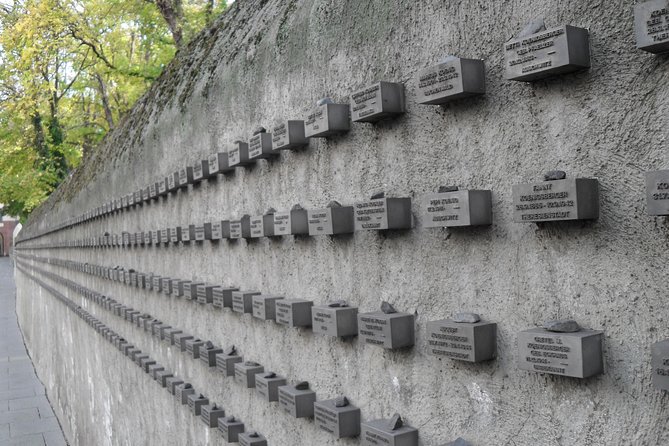
- A real look at Frankfurt’s difficult past: The Old Jewish Cemetery and Holocaust Remembrance Wall add serious depth beyond the usual postcard sights.
- A market stop with practical appeal: Kleinmarkthalle gives you a chance to see where locals shop for cheese, meats, pastries, chocolate, produce, and other foods.
- Small enough to stay personal: The maximum group size is 20, and some departures have been much smaller.
- Check the day and meeting point carefully: Sunday closures affect the route, and the meeting address is Braubachstraße 41, even though the map pointer has reportedly appeared a block away.
Why this Frankfurt walk works so well
Frankfurt can seem like a city of glass towers and business hotels, especially if you arrive near the main station. This tour gives you a different frame. Within a few blocks, you find imperial ceremonies, medieval trade, Jewish life, wartime memory, reconstructed streets, river views, and the modern European Central Bank district.
I like that the tour does not treat old Frankfurt as a sealed museum quarter. The New Old Town is part of today’s city, the planning office’s model shows how Frankfurt is being shaped now, and the walk across Eiserner Steg connects the historic center with Sachsenhausen and the museum riverbank.
The guide makes a big difference. Names associated with especially strong departures include Hannes, Jennifer, Anna, Anne, Anika, Philip, and Justin. The best descriptions of the experience point to guides who explain how the parts fit together, answer questions beyond a prepared script, and offer suggestions for food, drinks, free sights, and other places to visit.
The pace is generally described as easy to follow, with regular stops. Still, do not confuse easy walking with a short stroll. The route lasts two to three hours, and one participant found the full length tiring while another found the pace too quick for older members of the group. If you need a slow pace, say so early and take advantage of the pauses.
A few more Frankfurt trips to weigh up
- Frankfurt on Foot Daily Walking Tour in English
★ 4.9 · 323 reviews - Frankfurt: Private or Shared Walking Tour
★ 4.8 · 156 reviews - Frankfurt Self-Guided Historical Walking Tour
★ 4.0 · 58 reviews
Starting at Frankfurt Cathedral
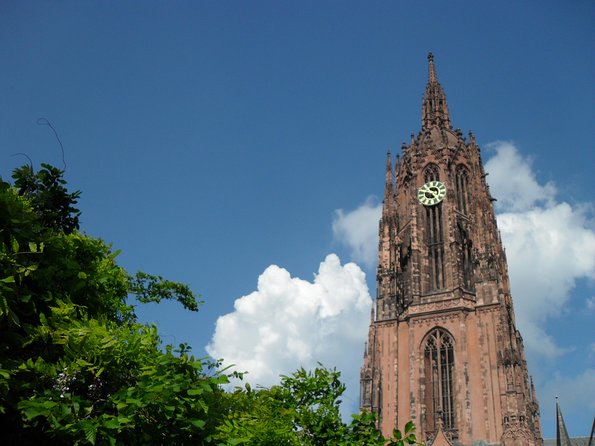
The walk begins at Braubachstraße 41 at 10:00 a.m., close to the historic center and public transportation. From there, the first major stop is Frankfurt Cathedral, or Kaiserdom St. Bartholomäus.
The cathedral’s importance is political as much as religious. It was the place where Holy Roman Emperors were elected and crowned, giving Frankfurt a central role in European power for centuries. Your guide explains that history from the exterior, with the building serving as a useful anchor for understanding the city’s imperial past.
On Sundays, the cathedral is viewed from outside only. That is not a deal breaker, but you should know it before booking. The same Sunday limitation applies to the exterior visit at Old St. Nicholas Church, so a weekday tour offers a fuller look at the route’s church stops.
Reading Römerberg, Frankfurt’s central square

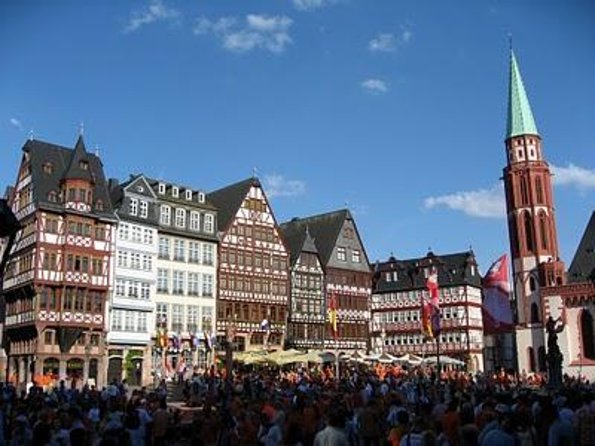
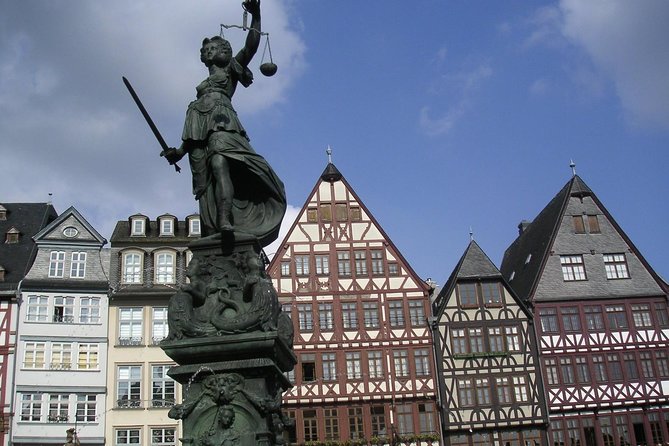
Römerberg is the visual heart of old Frankfurt. Here you see the Römer, the city hall complex, along with Justicia and the Book Burning Memorial.
The square gives your guide room to explain how Frankfurt functioned as a medieval city and how public power, trade, religion, and civic life met in the same small space. The stop is only about 15 minutes on the schedule, but it carries plenty of historical weight.
Justicia, the statue of justice, is one of the square’s familiar symbols. The Book Burning Memorial adds a darker layer. Rather than treating the plaza as a pretty backdrop, the guide connects it to the city’s political and cultural memory.
This is also where the tour’s storytelling style matters. A list of dates would make Römerberg feel flat. Good guides use the buildings and monuments to explain what happened here and why Frankfurt developed as it did.
Old St. Nicholas Church and the medieval center
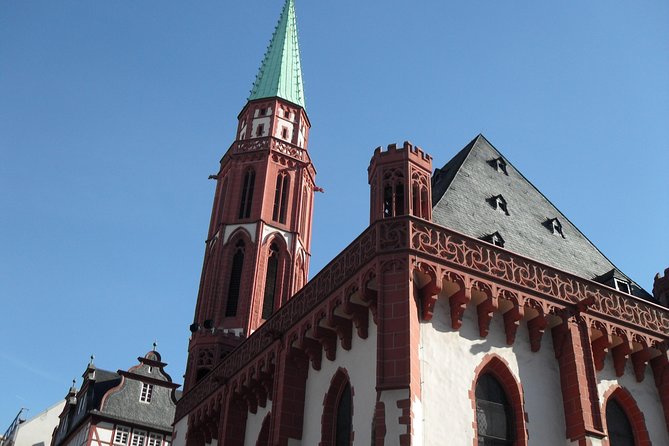
Old St. Nicholas Church, or Alte Nikolaikirche, is one of Frankfurt’s oldest churches. The stop lasts about 10 minutes and is exterior-only on Sundays.
Its location beside Römerberg makes it easy to combine with the city hall and square, but the church adds a different view of old Frankfurt. You get a sense of how closely civic and religious buildings stood together in the medieval center.
The tour does not require you to buy admission at each stop. The listed visits are free, with the value coming from the guide’s explanation and the way the sites are linked. That makes the experience a useful first look before you decide which museums or interiors deserve a separate visit.
Same city, a completely different kind of day:
- Frankfurt: River Main Sightseeing Cruise with Commentary
★ 4.3 · 5,127 reviews - Frankfurt: Hop-On, Hop-Off Grand or Express Bus Ticket
★ 3.9 · 2,088 reviews - Frankfurt: 1-Hour Panorama Boat Cruise on the river Main
★ 4.4 · 1,822 reviews - From Frankfurt: Rhine Valley Day Trip
★ 4.4 · 1,317 reviews
Karmeliterkloster and the art inside old Frankfurt
The Karmeliterkloster brings art into the route. Its wall paintings were created between 1513 and 1521, giving you a direct connection to Frankfurt’s early sixteenth-century culture.
This is a good example of why a walking guide can be useful. You might pass the former monastery while focusing on more famous buildings, but the wall paintings reward a closer look. The 15-minute stop is long enough for context without turning the tour into a formal art lecture.
The route’s mix of architecture, history, and daily life keeps the subject matter moving. One minute you are considering imperial ceremony, and soon after you are looking at medieval religious art or learning how a city neighborhood changed over time.
A food break at Kleinmarkthalle
Kleinmarkthalle is one of the most practical stops. This indoor market is filled with produce, chocolate, cheeses, meats, pastries, and more. It is not simply a sightseeing stop. It gives you a place to notice what Frankfurt’s food culture looks like in everyday use.
The scheduled visit is about 15 minutes, so do not expect a full meal break. You might find enough to sample or enough ideas for a later visit. Several participants appreciated snack and bathroom pauses during the route, and this is the natural point for that kind of short break.
Kleinmarkthalle is closed on Sundays and German holidays. If food markets are important to you, book a weekday or another operating day. When it is open, I consider this one of the tour’s best stops for connecting history with present-day city life.
The Old Jewish Cemetery and Frankfurt’s Jewish past
The Old Jewish Cemetery is the most serious stop on the route. Frankfurt’s Jewish community has been present since the 1100s, and the cemetery is tied to the medieval Jewish ghetto.
You view the cemetery through the gate. The medieval burial ground is surrounded by the Jewish Holocaust Remembrance Wall, which lists names and gives the site a quiet, powerful presence. The tour uses this place to explain both the long presence of Jewish life in Frankfurt and the destruction brought by the Holocaust.
This stop adds something that many basic city walks leave out. You are not only seeing attractive squares and restored buildings. You are also confronting the city’s responsibility to remember who lived here, who was forced into the ghetto, and who was lost.
The scheduled time is about 30 minutes, the longest stop on the route. That is appropriate. The site needs explanation and a little silence. I would not rush this part, and you should be prepared for a more reflective change of mood.
Seeing today’s city through the planning office
The Stadtplanungsamt, or City Planning Department, offers an unusual look at present-day Frankfurt. Inside is a large-scale model of the modern city.
This stop helps explain why Frankfurt looks the way it does today. Instead of viewing the skyline only from street level, you can consider the city as a whole and see how old neighborhoods, new construction, roads, and high-rise districts relate to one another.
The planning office is closed on weekends and German holidays. That makes the day of your booking important. If it is unavailable, the route can still cover plenty, but you will miss one of its more distinctive links between history and current urban life.
I especially like this stop for repeat visitors and people interested in architecture or city design. It moves the tour beyond medieval Frankfurt and explains that cities are always being revised, argued over, and rebuilt.
Walking the New Old Town
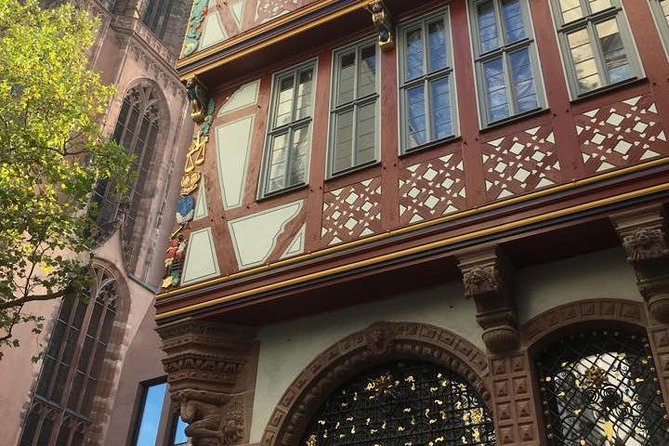
Frankfurt’s New Old Town is one of the most discussed parts of the city. This rebuilt quarter recreates portions of the historic Altstadt that were lost, while placing them into the modern city.
The walk follows part of the former coronation path used by Holy Roman Emperors. That detail ties the new streets back to the cathedral, Römerberg, and Frankfurt’s role in imperial ceremonies.
The New Old Town can raise questions about reconstruction. How much is historical recovery, and how much is a modern interpretation of the past? A good guide gives you room to think about that instead of presenting the area as untouched medieval Frankfurt.
For you, the practical benefit is simple: the tour explains what you are looking at. Without context, rebuilt façades can blur together. With a guide, the streets become part of a larger story about war, memory, design, and the city’s desire to recover its historic center.
Eiserner Steg and the Main River view
Eiserner Steg is also called the Love-lock Bridge. It crosses the Main and gives you views in both directions.
From the bridge, you can look toward the European Central Bank, the museum riverbank, and Sachsenhausen. This is the tour’s clearest visual connection between Frankfurt’s old center and its modern financial identity.
The scheduled stop is brief, about 10 minutes, but it is a useful change of pace. After several close-up streets and monuments, you get open views and a better sense of the city’s layout.
The bridge is also a good place for photos, though the tour’s value is more than a quick picture. Your guide can point out how the river shaped Frankfurt’s growth and how the districts on both sides relate to one another.
Staufenmauer and the final medieval layer
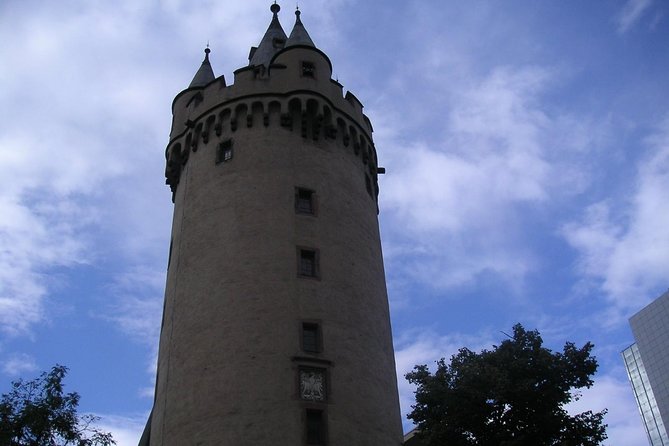
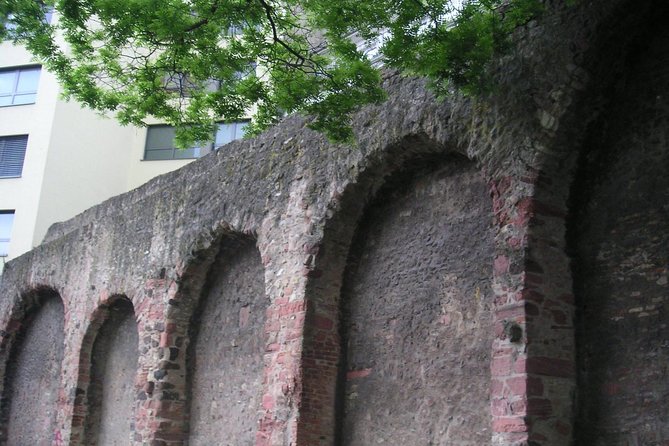
The Staufenmauer is a city wall dating from the 1100s and forms part of the medieval Jewish wall. It brings the walk back to the city’s defensive and Jewish history.
After the larger sights, this is the kind of structure that benefits from explanation. A surviving wall fragment can look modest, but it shows the scale and limits of medieval Frankfurt. Its connection to the medieval Jewish quarter also makes it a fitting companion to the cemetery stop.
The tour ends back at the meeting point. Since the route loops through the historic center, you finish with a better sense of where you are, rather than being left at an unfamiliar side street.
What the $36.28 price gives you
At $36.28 per person, the tour is priced as an affordable introduction rather than a full museum program. Admission to the listed stops is free, so you are paying mainly for the English-speaking guide, route planning, historical interpretation, and the convenience of covering many key sights in one morning.
I think the value is strongest if Frankfurt is your first stop in the city. In two to three hours, you can get your bearings, learn which areas deserve more time, and collect practical suggestions for food and drinks. A good guide can also point out free sights and places you might otherwise overlook.
The value is less certain if you prefer to wander alone or read every inscription at your own pace. You will spend much of the time in and around the old town, and one participant wanted more walking and more sites outside the central area. This is a city orientation tour, not a deep architectural study or a museum visit.
The maximum group size is 20. Some departures have been much smaller, including one group of nine, which makes it easier to hear the guide and ask questions. The booking average of 27 days in advance suggests that popular dates may fill early, especially during busy travel periods.
Pace, steps, weather, and meeting-point advice
The route is described as stroller-friendly, and most people can take part. Service animals are allowed, and the starting area is near public transportation.
There are intermittent steps. The information about the route also shows a slight tension in the practical experience: some people found the walk manageable, while another felt the pace was not suitable for elderly participants. If you have limited stamina, back pain, or difficulty with steps, treat the three-hour version as a real commitment.
Weather matters because much of the tour is outdoors. Participants have completed it in cold, rainy, drizzly, and snowy conditions, but that does not mean poor weather will feel comfortable for everyone. Wear shoes suited to city walking and bring protection from rain or cold.
Pay close attention to the meeting point. The address is Braubachstraße 41, 60311 Frankfurt am Main. A map pointer has reportedly shown a location about a block away from the printed address, so I would follow the written address and arrive early rather than rely only on the map pin.
You receive confirmation when booking, and free cancellation is available until 24 hours before the start time. Changes or cancellations inside that window are not accepted for a refund.
Who will get the most from this tour
I would choose this walk if you want a well-rounded first look at Frankfurt and prefer explanations to silent sightseeing. It suits visitors interested in history, architecture, city planning, Jewish heritage, food markets, and the contrast between old streets and modern towers.
It also works well for a short stay. If you have only a day or two, the route covers the central sights efficiently and leaves you with ideas for independent exploring afterward.
Families may appreciate the short stops and stroller-friendly route, though parents should note the intermittent steps and the full length. Older visitors should consider asking about pace and taking the route’s breaks seriously.
You may want another option if you dislike group walks, need a very slow pace, or hope to spend most of the time outside the historic center. Sunday departures also lose access to several interiors and the market hall, while weekend departures miss the planning office.
Should you book the Frankfurt Highlights Walking Tour?
Book it if you want Frankfurt’s sights to connect into one clear story. The strongest part is not any single building. It is the movement from imperial cathedral to medieval square, from Jewish memory to rebuilt streets, from the planning model to the river view.
The guide quality appears to be the key strength. Guides such as Hannes, Jennifer, Anna, Anne, Anika, Philip, and Justin are associated with clear explanations, humor, strong local knowledge, and useful recommendations. At $36.28, that is a fair price for an English tour covering this much ground.
Choose a weekday if Kleinmarkthalle, the cathedral interior, Old St. Nicholas Church interior, and the planning model matter to you. Check the written meeting address, allow three hours, and be realistic about steps and weather. If those details fit your plans, this is a practical and unusually thoughtful way to meet Frankfurt.
FAQ
How long does the Frankfurt Highlights English Walking Tour last?
The tour lasts approximately two to three hours.
What time does the tour start?
The stated start time is 10:00 a.m.
Where does the tour meet?
The meeting point is Braubachstraße 41, 60311 Frankfurt am Main, Germany.
Where does the tour finish?
The activity ends back at the meeting point.
Is the tour offered in English?
Yes. The tour is offered in English.
What is the price?
The listed price is $36.28 per person.
What is the maximum group size?
The maximum group size is 20 people.
Is the route suitable for strollers?
The route is described as stroller-friendly. It does include some intermittent steps.
Are the cathedral and Old St. Nicholas Church open during the Sunday tour?
On Sundays, both churches are viewed from the exterior only.
Is Kleinmarkthalle open on Sundays?
No. Kleinmarkthalle is not included on Sundays or German holidays. The City Planning Department is also not included on weekends or German holidays.
Just added around Frankfurt
- Day Trip to Rothenburg from Frankfurt★ 4.6 · 25 reviews
- Rhine Valley: Half Day Tour from Frankfurt★ 3.7 · 66 reviews
- Private Tour with Native English speaking Local★ 4.9 · 60 reviews
- Hohenzollern Castle: Full-Day Tour from Frankfurt★ 4.3 · 11 reviews
- From Frankfurt: Day Tour to Heidelberg with Local Guide★ 4.8 · 250 reviews
- Heidelberg and Rhine Combination Tour from Frankfurt★ 4.1 · 33 reviews
- Frankfurt: Guided walk between palm trees and skyline★ 4.8 · 9 reviews
- From Frankfurt: Heidelberg and Rothenburg Guided Day Trip★ 5.0 · 14 reviews
Walking Tours, compared.

Berlin’s Best: 2 Hour Walking Tour Third Reich and the Cold War
Read our review →
Third Reich Berlin: Hitler and WWII Walking Tour
Read our review →Browse the lists this tour appears in