
Reviewed · WALKING TOURS
Frankfurt: Guided walk between palm trees and skyline
Frankfurt’s city center has a good surprise up its sleeve: within a short walk, you can pass from medieval-looking streets to palm trees beside the Main, then on to skyscrapers and the grand Alte Oper. This tour links those contrasts with stories about Empress Sisi, Maria Sibylla Merian, and the city’s changing skyline.
I like the route for two reasons. First, it shows Frankfurt beyond the usual business district, using green paths and river gardens to give you breathing room. Second, the small-group feel can make the walk relaxed and personal. The main drawback is language: this is a German-speaking tour, and one rating found the city and its buildings under-explained.
In This Review
- Key points at a glance
- From the Römer into Frankfurt’s green side
- Palm trees beside the Main
- Stories that give the streets a human scale
- The Römer and the New Old Town
- Frankfurt’s skyline and the Euro-Sculpture
- Reaching the Alte Oper
- What the 1.5-hour format gives you
- Language, group feel, and practical fit
- Who will get the most from this walk
- Should you book the Frankfurt green-path walk?
- FAQ
- Where does the tour meet?
- How long does the guided walk last?
- What language is the tour conducted in?
- What sights are highlighted?
- Does the tour include the Römer?
- How much does the tour cost?
- Can I cancel the booking?
Key points at a glance
- Palm-lined river gardens: See a Mediterranean-style corner of Frankfurt beside the Main.
- Römer to Alte Oper: Follow a central route that connects the New Old Town, historic sights, and modern towers.
- Unexpected local stories: Hear why Sisi was stranded in Frankfurt and where Maria Sibylla Merian began collecting caterpillars.
- Skyline viewpoints: Get a clearer sense of how Frankfurt earned its Mainhattan nickname.
- Euro-Sculpture: Pause at one of the city’s more unusual public monuments.
- German-only guiding: Book this when you are comfortable following a live tour in German.
From the Römer into Frankfurt’s green side
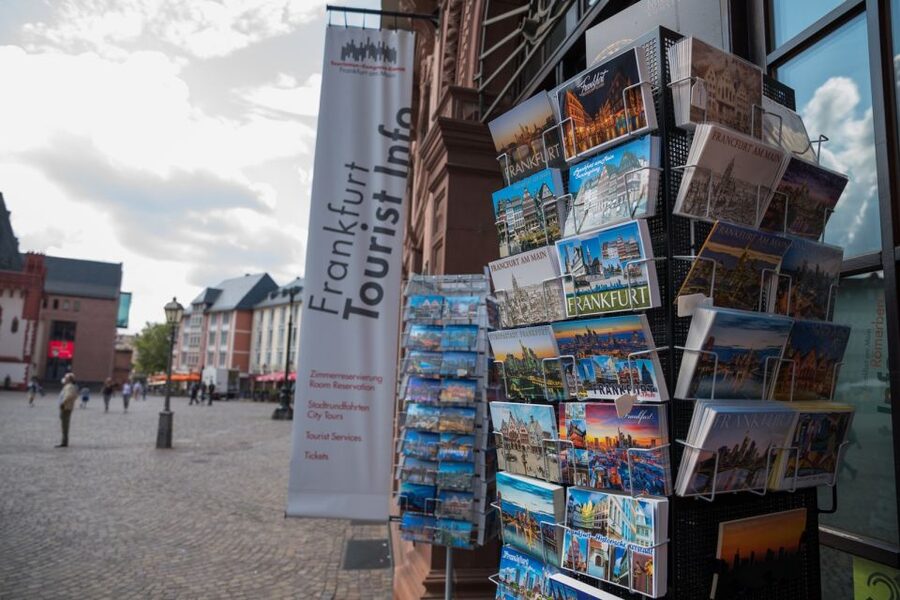
The walk begins in front of the Tourist Information Office at Römerberg 27, right in the heart of central Frankfurt. That makes the meeting point easy to pair with a visit to the Römer, the New Old Town, or a first look at the city’s historic center.
From here, the tour takes you along established paths toward the Alte Oper, using some of Frankfurt’s greener routes. The appeal is not a single grand sight. It is the way the city keeps changing around you. A street can feel old-world for a moment, then open toward modern towers or a patch of planted greenery.
You are not signing up for a long march across the city. The total time is 1.5 hours, which is enough for a guided introduction without taking over half your day. I see this as a useful first activity in Frankfurt, especially if you want to learn the shape of the center before exploring it alone.
The pace should suit people who want context while walking rather than a formal indoor lecture. Still, the walk is not described as a museum tour or a deep architectural study. If your main goal is detailed information about every important building, you may find the coverage too light.
A few more Frankfurt trips to weigh up
- Frankfurt Highlights English Walking Tour
★ 5.0 · 1,203 reviews - Frankfurt on Foot Daily Walking Tour in English
★ 4.9 · 323 reviews - Frankfurt: Private or Shared Walking Tour
★ 4.8 · 156 reviews
Palm trees beside the Main
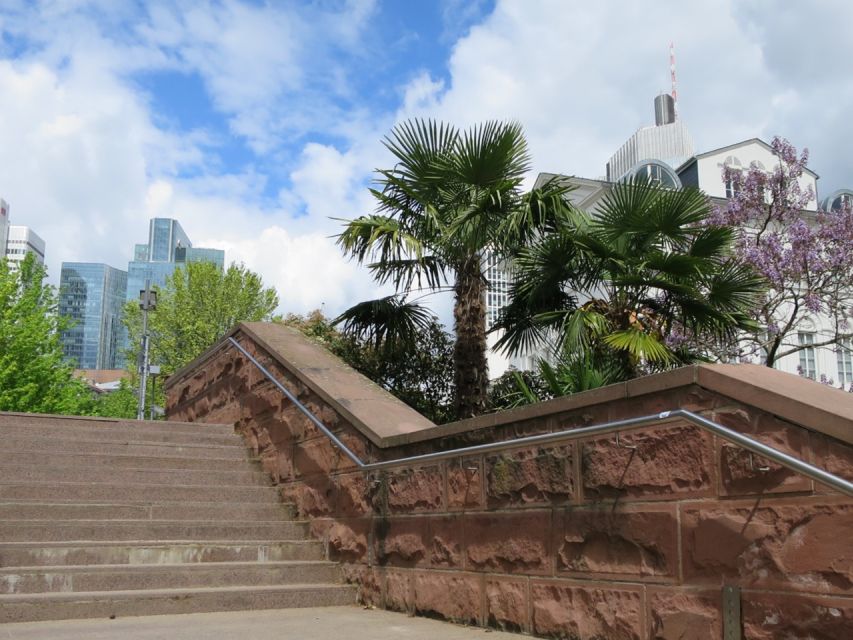
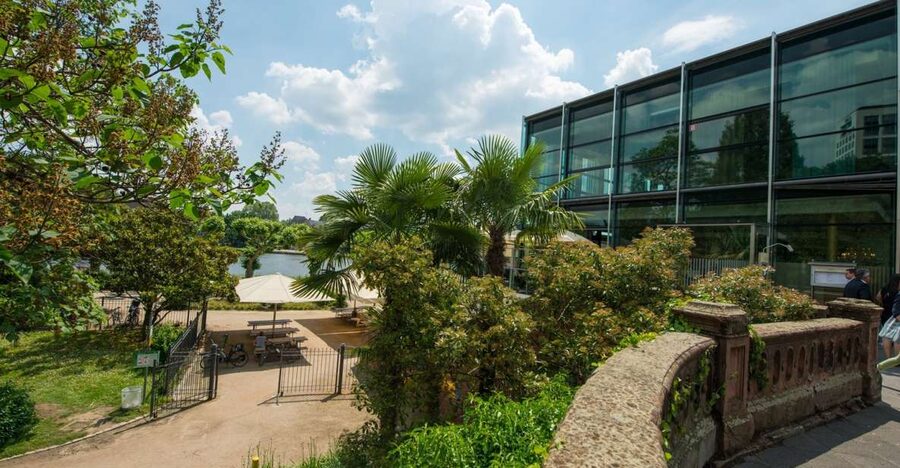
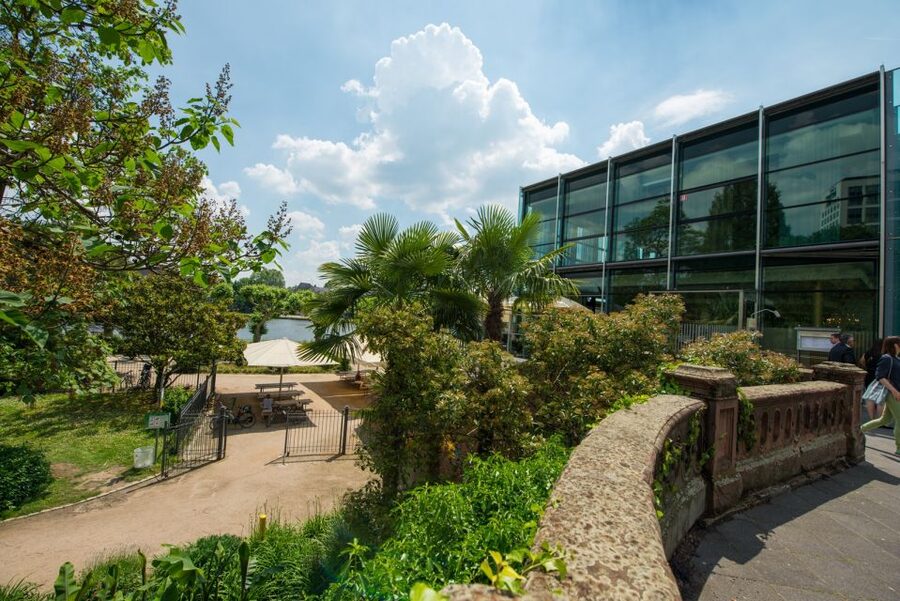
The most distinctive stop is the Mediterranean-style garden area along the river. Palm trees beside Frankfurt’s waterways create a funny and memorable contrast. You are still in the center of a major German city, yet the planting gives the route a touch of the Côte d’Azur.
That contrast is exactly why this part works. Frankfurt is often reduced to banks, trains, and office towers. A river walk lined with palms gives you another picture: a city that makes room for gardens, open views, and small changes in mood.
I would keep your camera ready here. The palm trees, river setting, and distant city forms offer a different kind of Frankfurt photograph than the standard Römer facade or skyline shot. The tour also points out less obvious corners, so you are not limited to the city’s most familiar postcard views.
Do not expect a full botanical tour. The garden is one part of a wider route, not the entire focus. Its value comes from the setting and the surprise of finding this atmosphere so close to the center.
Stories that give the streets a human scale
A good city walk needs more than names and dates. This one uses short stories to make Frankfurt’s past easier to remember.
You will hear why Empress Sisi of Austria once found herself stranded in Frankfurt. That episode gives the city a link to a famous royal figure, but the useful part is how it turns a street or stop into a place with a human story behind it.
The tour also introduces Maria Sibylla Merian, the explorer and naturalist who grew up in Frankfurt. Her early habit of collecting caterpillars before setting out into the wider world makes for a particularly vivid detail. It connects the city to curiosity, science, and travel rather than only to commerce and finance.
These stories are a strong reason to choose a live guide instead of walking with a map alone. You are more likely to remember a person and an odd incident than a list of dates. The guide also adds anecdotes about the city’s major sights and explains some of the background behind Frankfurt’s superlatives.
The tradeoff is that storytelling can come at the expense of building-by-building detail. One three-star rating specifically found too little information about the city itself and its buildings. If you want a strict architectural survey, check that the German narration style and tour description match your expectations before booking.
The Römer and the New Old Town
The route begins near Frankfurt’s best-known historic square, and the walk can include a short trip through the New Old Town. This area gives you a quick look at how Frankfurt presents its historic identity after major change and rebuilding.
A city walk is useful here because the surrounding streets can feel like a collection of separate attractions. A guide helps connect the Römer, the square, and the nearby lanes into a readable center. You get more than a photo stop. You get a sense of how the old and newly reconstructed parts relate to the modern city around them.
One detailed account of the walk also included the Kaisersaal in the Römer. That is an especially worthwhile addition because the hall gives the visit a more direct link to Frankfurt’s imperial past. However, the available information does not promise the Kaisersaal on every departure, so you should treat it as a possible part of the experience rather than the main reason to book.
The New Old Town section is brief rather than exhaustive. I like that balance for a first walk, since you can return later for closer looks at the buildings, squares, and shops that catch your eye.
Same city, a completely different kind of day:
- Frankfurt: River Main Sightseeing Cruise with Commentary
★ 4.3 · 5,127 reviews - Frankfurt: Hop-On, Hop-Off Grand or Express Bus Ticket
★ 3.9 · 2,088 reviews - Frankfurt: 1-Hour Panorama Boat Cruise on the river Main
★ 4.4 · 1,822 reviews - From Frankfurt: Rhine Valley Day Trip
★ 4.4 · 1,317 reviews
Frankfurt’s skyline and the Euro-Sculpture
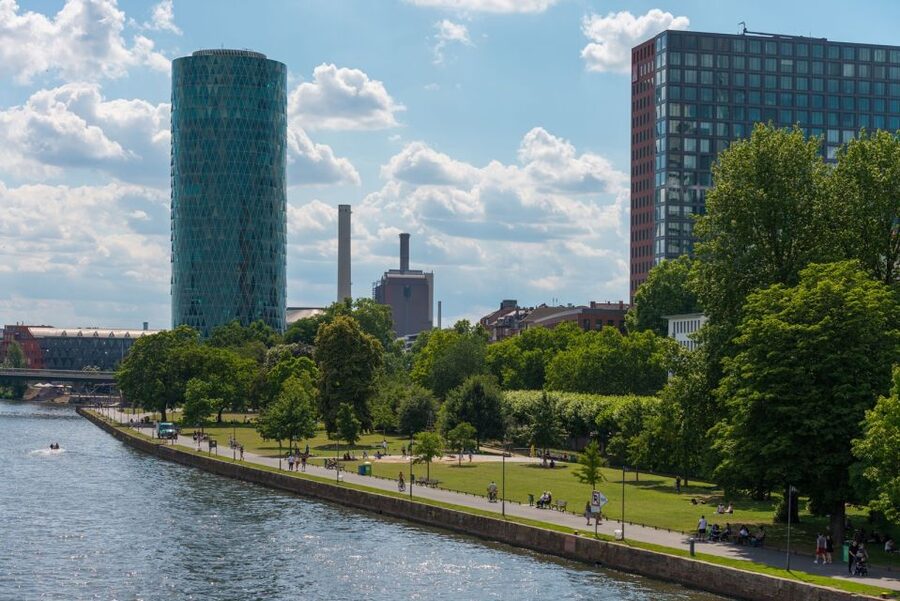
The route’s modern side comes into focus as you move toward the Alte Oper and the city’s high-rise district. Frankfurt is unusual in Germany for the way its tall buildings cluster close to the historic center. From the right angle, the skyline becomes part of the tour instead of a distant backdrop.
The guide explains the background behind Frankfurt’s skyline and its Mainhattan nickname. This matters because the towers are easy to photograph but harder to understand. A few well-timed explanations can show how the city’s identity is split between old civic buildings, postwar rebuilding, finance, and modern architecture.
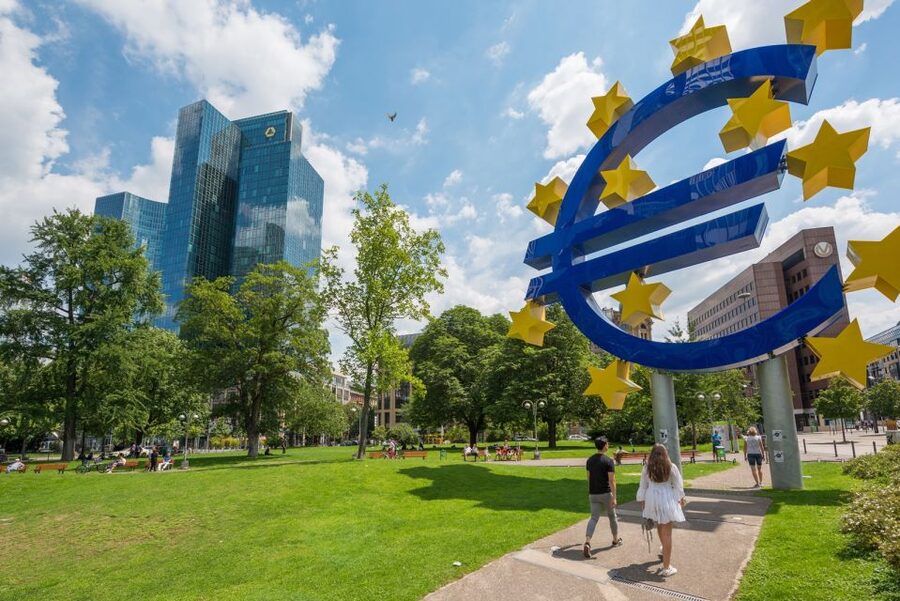
The Euro-Sculpture adds another piece to that modern picture. It is an unusual public monument and a useful pause on a route that might otherwise focus only on famous buildings. Public art often tells you how a city wants to see itself, and this sculpture gives the walk a more contemporary marker.
You will also get panorama views and new angles on the city. The wording promises breathtaking views, but the exact quality will depend on the route, weather, and where the guide pauses. Even so, this is a practical way to see Frankfurt’s towers without paying for a separate viewing platform.
Reaching the Alte Oper
The Alte Oper is the natural finish for the walk. The former opera house is one of Frankfurt’s grandest landmarks, and its formal facade makes a strong contrast with the palms, river paths, and modern towers earlier in the route.
Arriving here after the Römer helps you read the city as a series of connected zones. You begin with Frankfurt’s historic civic center, move through green spaces and open views, pass signs of the modern city, and finish at a major cultural building.
The tour does not include a performance or a detailed interior visit to the Alte Oper. Its role is as a landmark on the walking route and a point of orientation. That is still useful. Once you know where it sits, you can return for a concert or use it as a reference point while exploring the shopping and business areas nearby.
This ending also makes the tour easy to combine with the rest of your day. You can continue on foot after the guide finishes, return toward the Römer, or use the central location to plan your next stop.
What the 1.5-hour format gives you
Ninety minutes is a sensible length for this kind of introduction. You have time to hear stories, stop for views, and see several parts of central Frankfurt without committing to a half-day outing.
I would recommend it early in your stay. The walk can help you decide which places deserve a second visit. You may want to return to the Römer, spend more time along the river, study the skyline, or visit the Alte Oper after learning where everything fits.
The short format also works well if Frankfurt is one stop on a larger German trip. You get a focused look at the center without losing an entire afternoon. At $21 per person, the price is fair if you value a live guide and want more than a self-guided stroll.
The value is less clear if you already know central Frankfurt well or if you only want photographs. Much of the route uses public streets and open areas, so you are paying mainly for the guide’s route, explanations, and local stories. That can be good value for a first visit, but it is not an attraction ticket bundle.
Language, group feel, and practical fit
The guide is certified and the tour is conducted in German. That is the most important booking point. If you understand German comfortably, the format should feel natural and easy to follow. If you do not, the live commentary will be difficult to use, even if the route itself is visually enjoyable.
The tour has earned an overall rating of 4.8 from nine ratings, with most of the available feedback giving it the highest mark. The strongest praise centers on an informative, entertaining style, unusual city corners, good photo opportunities, skyline explanations, and a pleasant small-group atmosphere.
One especially positive assessment described the experience as feeling almost like a private outing with friends because the group was small. Group size can change from one date to another, so do not count on a private tour. Still, the format appears best suited to people who prefer conversation and stories over a large crowd moving from one fixed stop to the next.
You should wear comfortable walking shoes and arrive ready for an outdoor route. The provided information does not give a detailed accessibility description, so ask the operator if you need specific help with surfaces, steps, or mobility requirements.
Cancellation is flexible enough for normal trip planning: you can cancel up to 24 hours before the start for a full refund. You can also reserve now and pay later, which helps if your Frankfurt schedule is still shifting.
Who will get the most from this walk
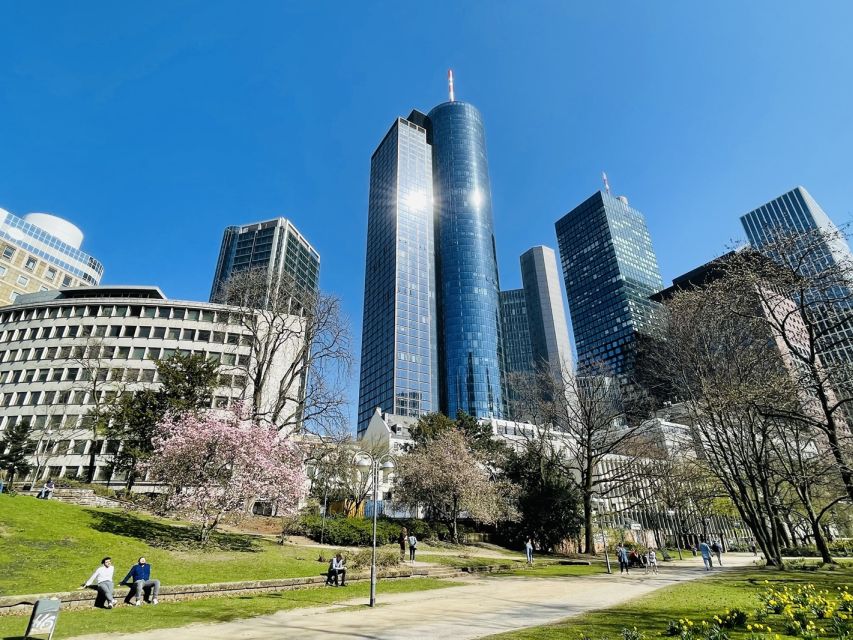
I would choose this tour if you are visiting Frankfurt for the first time and want a quick orientation with personality. It suits people who like history in small portions, city views, public art, and the odd contrast between palms and skyscrapers.
It is also a good fit for anyone who thinks Frankfurt might feel too businesslike. The river gardens, green paths, old squares, and personal stories show a softer side of the city without pretending that the towers are not there.
Families and mixed-age groups may appreciate the 1.5-hour length. The caterpillar story, the Sisi episode, the palms, and the Euro-Sculpture give the guide several kinds of material to work with. Still, the German-only format may limit its usefulness for groups who do not share the language.
I would skip it if you need English commentary, a full interior tour of major buildings, or a tightly documented architectural lecture. I would also think twice if your Frankfurt visit is already packed with guided sightseeing and you mainly want free time.
Should you book the Frankfurt green-path walk?
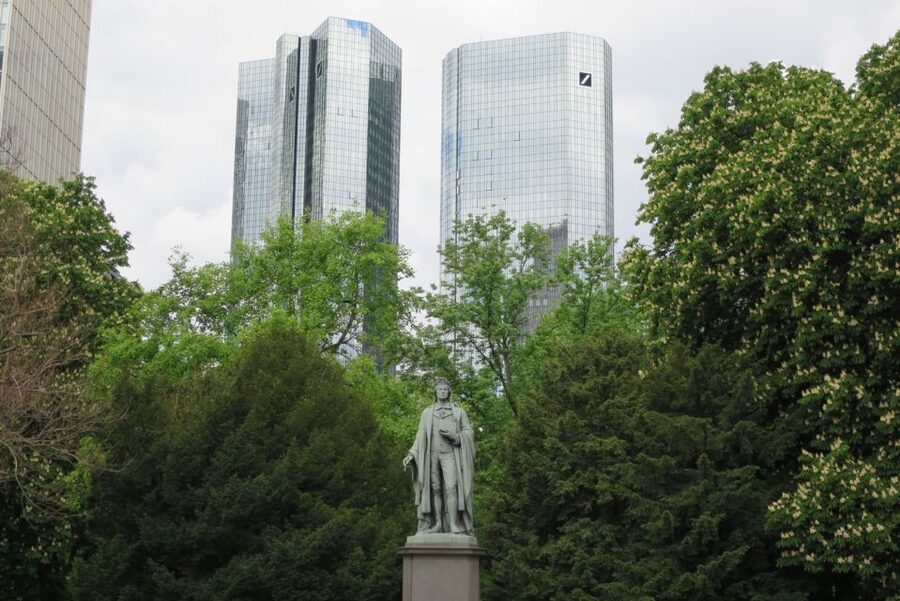
Book it if you want to see several sides of Frankfurt in one calm, central walk: the Römer, the New Old Town, river gardens with palms, skyline viewpoints, the Euro-Sculpture, and the Alte Oper. The best parts are the unusual contrasts and the stories that make the city easier to remember.
At $21, it offers solid value for a first visit, especially when the small-group setting gives the German-speaking guide room to tell anecdotes and answer questions. Just keep your expectations in line with the format. This is a lively city introduction, not a complete study of Frankfurt’s buildings.
If you understand German and want a route that mixes green spaces, history, and modern city views, I would book it. If you need English or want detailed information at every architectural stop, choose a different tour.
FAQ
Where does the tour meet?
The meeting point is in front of the Tourist Information Office Römer at Römerberg 27, 60311 Frankfurt am Main.
How long does the guided walk last?
The tour lasts 1.5 hours.
What language is the tour conducted in?
The live tour guide speaks German. The activity information lists German as the available language.
What sights are highlighted?
The main highlights are Mediterranean gardens beside the river with palm trees, the Alte Oper Frankfurt, and the Euro-Sculpture. The walk also goes between the Römer and Alte Oper and includes green paths, skyline views, and unusual city places.
Does the tour include the Römer?
The walk starts at the Römerberg area and explores the route toward the Alte Oper. One account of the experience also included the Kaisersaal in the Römer, but the provided details do not guarantee that this interior visit on every departure.
How much does the tour cost?
The listed price is $21 per person.
Can I cancel the booking?
Yes. You can cancel up to 24 hours before the activity for a full refund. You can also reserve your place and pay later.
Just added around Frankfurt
- Day Trip to Rothenburg from Frankfurt★ 4.6 · 25 reviews
- Rhine Valley: Half Day Tour from Frankfurt★ 3.7 · 66 reviews
- Private Tour with Native English speaking Local★ 4.9 · 60 reviews
- Hohenzollern Castle: Full-Day Tour from Frankfurt★ 4.3 · 11 reviews
- From Frankfurt: Day Tour to Heidelberg with Local Guide★ 4.8 · 250 reviews
- Heidelberg and Rhine Combination Tour from Frankfurt★ 4.1 · 33 reviews
- From Frankfurt: Heidelberg and Rothenburg Guided Day Trip★ 5.0 · 14 reviews
- From Frankfurt: Heidelberg & Rothenburg Full-Day Tour★ 4.5 · 72 reviews
Walking Tours, compared.





Berlin’s Best: 2 Hour Walking Tour Third Reich and the Cold War
Read our review →


Third Reich Berlin: Hitler and WWII Walking Tour
Read our review →Browse the lists this tour appears in