
Reviewed · WALKING TOURS
Cologne Walking Tour: The essential and unmissable one
Cologne’s best introduction may begin with a group of mischievous gnomes. This two-hour walk links the city’s cathedral quarter, old civic center, Rhine promenade, famous perfume house, and a sobering Gestapo site into one compact route. It gives you a useful first look without asking you to spend the day indoors.
I like the varied route, which moves from folklore and fountains to wartime history. I also like the relaxed guide-led format, with funny facts and questions that bring the group into the activity. The main consideration is the price structure: $3.39 covers the reservation only, and you are expected to tip the guide afterward.
In This Review
- Key points at a glance
- Starting at the cathedral stairs outside Cologne Central Station
- The Heinzelmännchenbrunnen and Cologne’s playful side
- Rathaus and the old civic center
- Rheingarten and Fischmarkt beside the Rhine
- Dufthaus 4711 and Cologne’s famous fragrance
- EL-DE Haus and the weightier part of the walk
- Römerbrunnen and the final city stories
- What the two-hour format gives you
- Price, tips, and the real cost
- Comfort, weather, and accessibility
- Who will get the most from this Cologne walk
- Should you book this walking tour?
- FAQ
- Where does the Cologne walking tour start?
- How long does the tour last?
- What language is the tour conducted in?
- Is the tour wheelchair accessible?
- Does the price include a tip for the guide?
- Are cathedral, museum, or building entrances included?
- Can I cancel the booking?
Key points at a glance
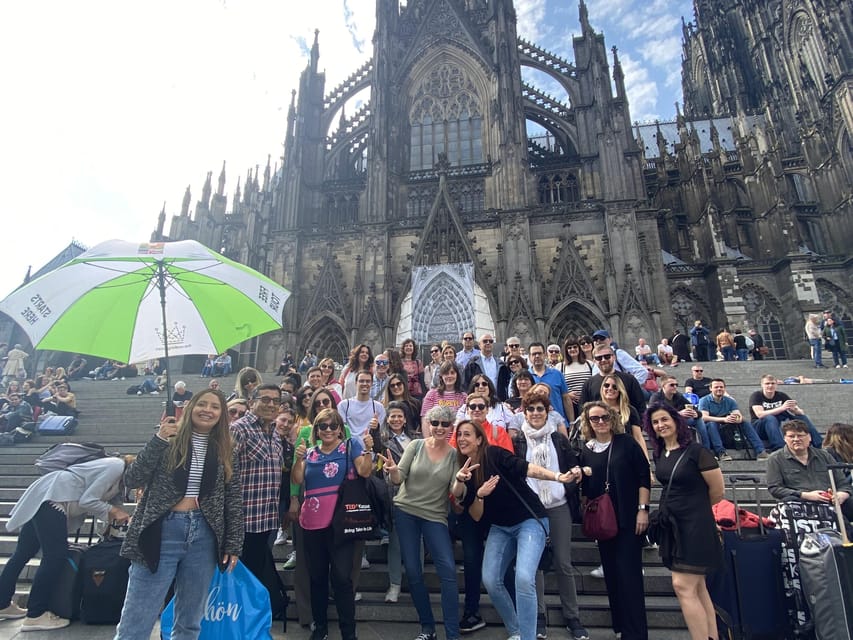
- Start beside Cologne Central Station: Meet at the Domtreppen, the cathedral stairs outside the station, under the green and white umbrella.
- A city story told through public places: See the Heinzelmännchenbrunnen, Rathaus, Rheingarten, Fischmarkt, and Römerbrunnen.
- A useful mix of light and serious history: Folklore and fragrance share the route with the former Gestapo headquarters at EL-DE Haus.
- Two hours on foot: The tour is short enough for a first afternoon in Cologne, but full enough to help you choose where to return.
- Low booking fee, tip-based payment: The listed $3.39 is a reservation charge, not the full guide payment.
- English and wheelchair accessible: Bring comfortable shoes, weather-ready clothing, and an umbrella.
Starting at the cathedral stairs outside Cologne Central Station
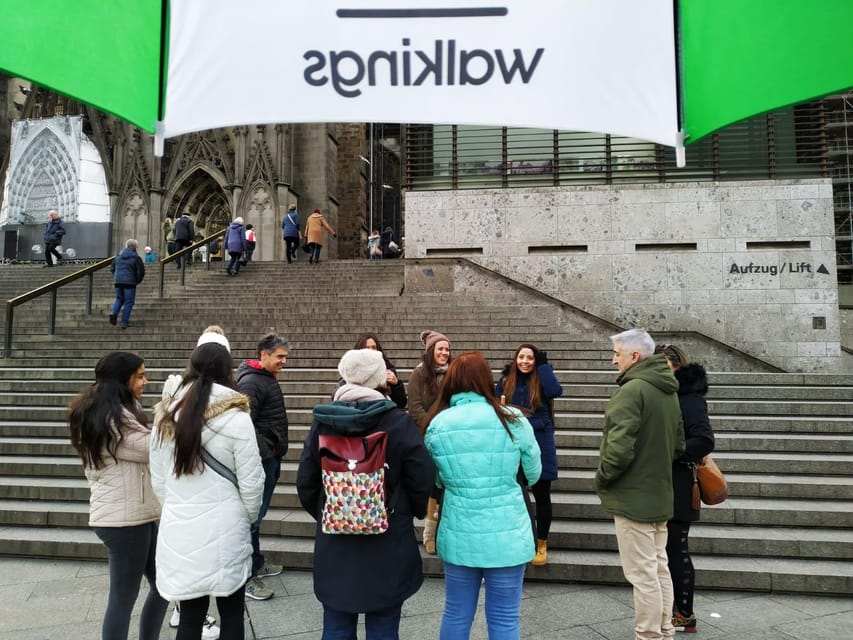
Your meeting point is easy to place, but it is worth reading the directions carefully. The Domtreppen are the steps next to Cologne Cathedral, directly outside Cologne Central Station. You are not looking for the cathedral’s main entrance.
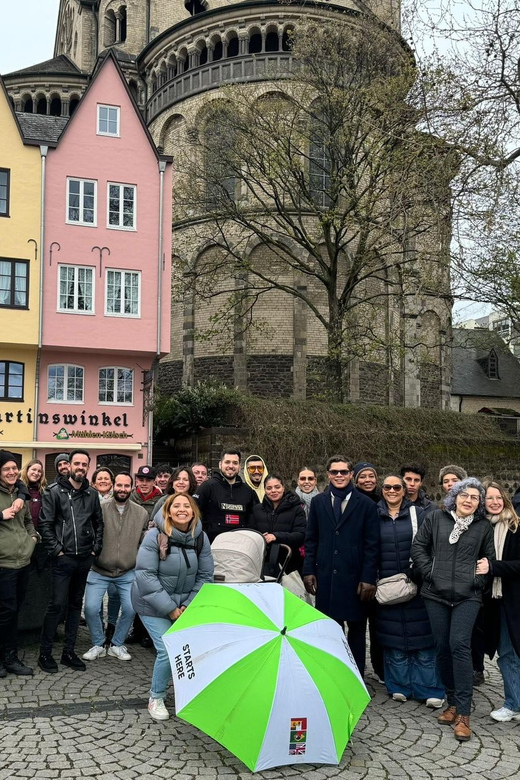
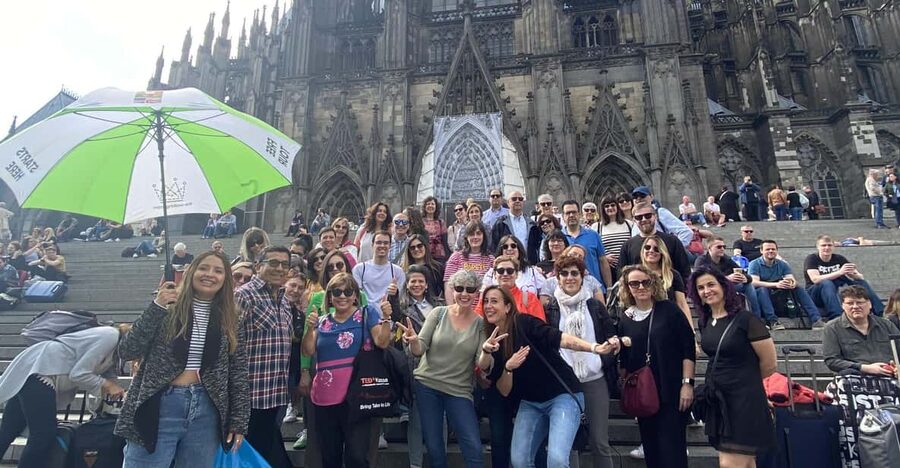
The green and white umbrella helps you find the guide among the foot traffic. Arrive with enough time to get your bearings, especially if you have just stepped out of the station and are facing the cathedral for the first time.
The start is practical for a city walk. Cologne Central Station is already a major arrival point, and the cathedral gives you a clear landmark. You do not need to arrange a separate transfer to reach the group.
The guide speaks English and specializes in Cologne’s history. The walk is built around stories rather than entrance visits, so you begin outdoors and stay there for the main part of the experience.
A few more Cologne trips to weigh up
- Cologne: The Night Watchman Old Town Walking Tour in German
★ 4.6 · 1,395 reviews - Cologne: Old Town Highlights Walking Tour
★ 4.6 · 1,093 reviews - Cologne: Südstadt Guided Foodie Walking Tour
★ 4.6 · 624 reviews
The Heinzelmännchenbrunnen and Cologne’s playful side
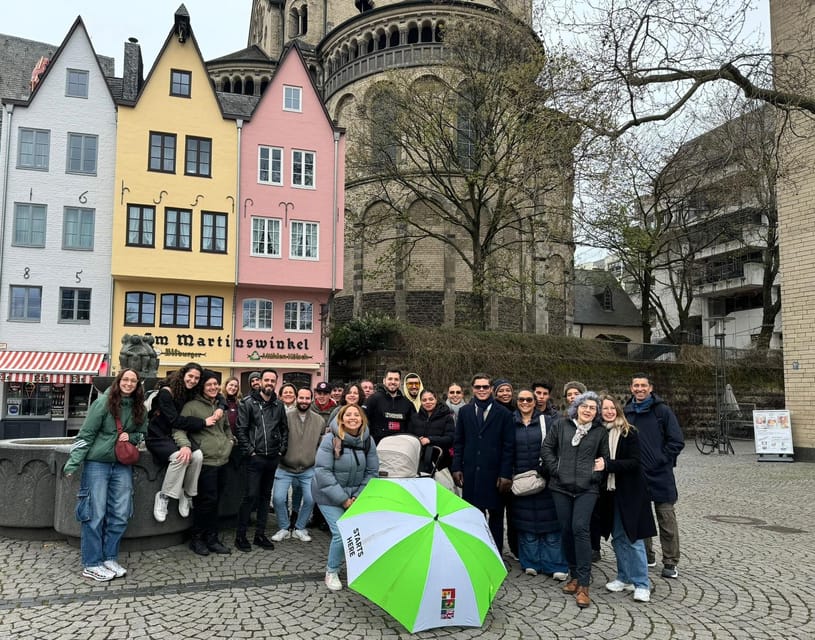
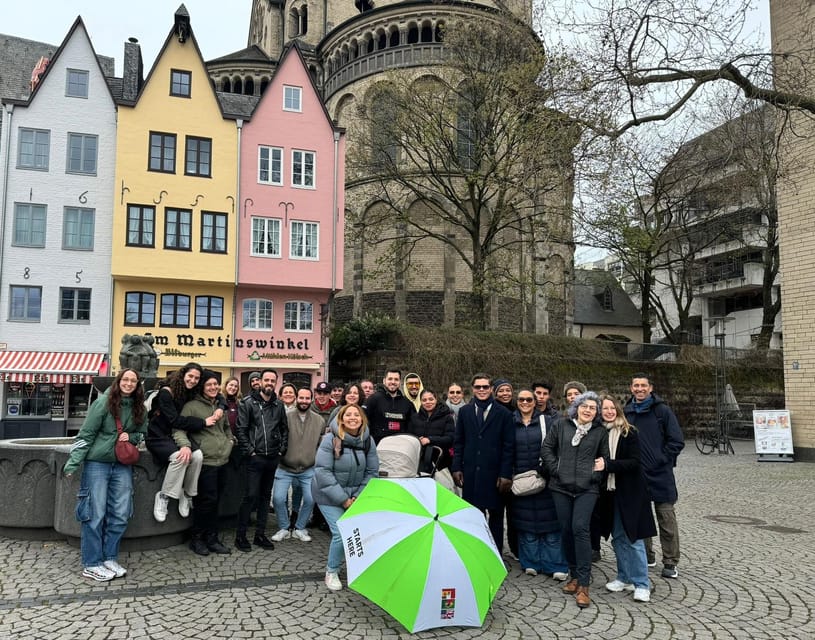
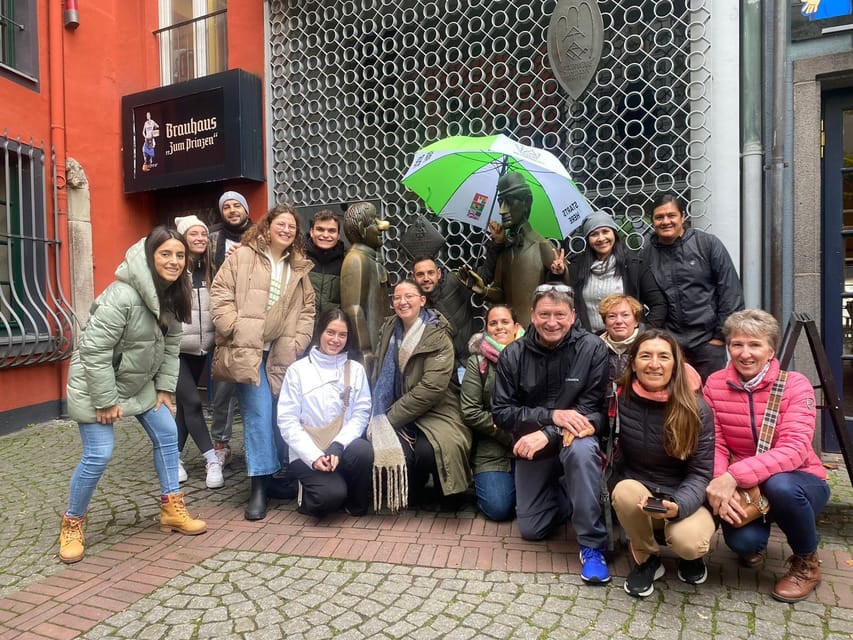
The first named stop is the Heinzelmännchenbrunnen, or gnomes fountain. Its name refers to curious gnomes connected with Cologne, giving the tour an immediate local flavor.
This is a good opening because it shows you that Cologne’s identity is not only about its cathedral or Roman past. The city also has legends, characters, and public art that make its streets feel personal. The guide uses the fountain to introduce one of those stories and invite the group into the city’s folklore.
You should expect a stop centered on explanation and observation, not a formal museum visit. The value is in understanding why this fountain matters to Cologne and how a local tale can become part of the city’s public face.
A previous tour experience described the guide as funny and good at involving the group. That matters here. Folklore works best when it is told with a bit of energy, and the relaxed atmosphere should make it easier to ask questions or join in.
Rathaus and the old civic center
From the fountain, the route continues to the Rathaus, Cologne’s historic city hall. This shifts the subject from legend to civic life.
A city hall is more than an attractive stop on a walking route. It points to the way Cologne has been governed and organized, and it gives you a place to connect the city’s past with its present public life. The guide’s job is to add that context while you look at the building and its surroundings.
You will not enter the city hall as part of this activity. That is important if you want a close architectural visit or an indoor history lesson. The tour only covers exterior sights, and entrances to the cathedral, museums, and buildings are not included.
Still, the stop works well for a first visit. You can see the building, hear the key story attached to it, and decide later if you want to return for more detailed sightseeing on your own.
Rheingarten and Fischmarkt beside the Rhine
The walk then heads toward the Rheingarten, a park beside the River Rhine. This part gives the route some breathing space after the tighter historic streets and plazas.
I like this change of pace. A walking tour should not make every stop a façade and a date. The riverside park lets you see how Cologne relates to the Rhine, the waterway that shapes the city’s setting and daily character.
The route also reaches Fischmarkt, or Fish Market Square. The name points to an older commercial purpose, while the square itself gives you another view of Cologne’s public spaces.
You should pay attention to how the guide links the places together. The strength of this tour is not any single monument. It is the short chain of clues: a local legend, city government, the river, a market square, perfume, and twentieth-century political violence.
Because the walk lasts two hours, these stops are likely introductions rather than long lectures. That is useful if you want orientation, but less useful if you prefer to spend twenty minutes at each site. Keep your expectations in line with the format.
Same city, a completely different kind of day:
- Cologne: Panoramic City Cruise
★ 4.3 · 5,698 reviews - Cologne: Brewery Tour with 3 Kölsch Beer Tastings
★ 4.7 · 3,108 reviews - Cologne: Top Sights Rhine River Cruise – Skyline Tour
★ 4.4 · 3,030 reviews - Cologne: Chocolate Museum Entrance Ticket
★ 4.4 · 2,790 reviews
Dufthaus 4711 and Cologne’s famous fragrance
One of the route’s most recognizable commercial stops is Dufthaus 4711, one of Cologne’s best-known perfumeries. Even if you have no interest in buying fragrance, the stop adds a distinctive local subject to the walk.
Cologne is closely linked with eau de cologne, so a perfume house belongs in a city tour in the same way a market belongs in a food-focused walk. It shows you how a product can become part of a city’s name and identity.
The tour does not include a building visit or a shopping experience. You stop at Dufthaus 4711 as part of the outdoor route, and the guide explains why the perfumery is famous.
That limitation is also a benefit. You get the story without losing a large portion of the two-hour schedule to browsing. If the brand interests you, you can decide afterward if you want to spend more time there.
EL-DE Haus and the weightier part of the walk
The mood changes at EL-DE Haus, the former headquarters of the Gestapo. This is the tour’s most serious stop.
A route that includes wartime history alongside fountains and perfume gives you a more honest picture of Cologne. Cities are not only their pleasant squares and famous views. The former Gestapo headquarters points to the violence and repression that shaped Germany in the twentieth century.
The experience stops in front of EL-DE Haus. Entrance is not included, so you should not expect the full museum or memorial visit during this tour. If you want to study the site in depth, plan a separate visit and allow time for an indoor experience.
The outdoor explanation still has value. It places the building into the city you are walking through and reminds you that major historical events happened in ordinary urban spaces. The guide’s tone matters here, and the mix of relaxed storytelling with a serious stop calls for attention and respect.
For families or groups with different interests, this moment may be especially useful because it adds substance without turning the entire activity into a war-history tour. For someone seeking only cheerful sightseeing, it is the part that may feel heavier.
Römerbrunnen and the final city stories
The published route describes a final stop near the Kölnisches Stadtmuseum and the Römerbrunnen fountain. The fountain has an intriguing history of its own, which the guide covers during the walk.
This ending brings the tour back to the small details that make a city memorable. A museum name may catch your eye, but the fountain gives the guide another chance to show how local stories live in streets and public spaces.
The tour information also says the activity ends back at the meeting point. Since the route description places the final sights near the museum and fountain, confirm the exact finish with your guide on the day. Either way, you will finish in central Cologne, close to the area where you began.
Do not count on entering the Kölnisches Stadtmuseum as part of this booking. Museum visits are excluded, and the experience is designed as a guided walk through the city rather than a ticketed attraction tour.
What the two-hour format gives you
Two hours is a sensible length for this route. You have enough time to cover several major areas, but you are unlikely to feel committed to a full-day program.
I would use this walk early in a Cologne visit. It can help you understand the central streets and decide which places deserve a return visit. The cathedral, museums, city hall, Rhine areas, perfume house, and historic fountains all appear in a single introduction.
The tradeoff is depth. You will hear useful stories at many stops, but you will not get a long architectural study of the cathedral or a full museum presentation. The tour works as a framework, not a replacement for every attraction on the route.
The guide’s relaxed style is another plus. One account describes fun historical facts, group participation, and dry, sunny weather. The weather part is luck, of course, but the guide’s humor and willingness to involve the group are qualities worth valuing on a walking tour.
Price, tips, and the real cost
The advertised price is $3.39 per person. That is unusually low because it covers the reservation cost on the booking platform, not the full guide service.
The guide operates on a satisfaction-based pay scheme, so you should plan to leave a generous tip at the end. Your real cost depends on what you think the walk was worth and on the size of your group.
This model can offer good value if you want a low-risk introduction to Cologne. You reserve a place without paying the full amount in advance, and the guide’s payment is tied to your satisfaction.
It also means you should not treat $3.39 as the final price. Budget for the tip, and decide before the walk what a fair payment means to you. The reservation fee gives you access to the experience, while the tip is the main payment for the guide’s time and work.
The booking terms also allow you to cancel up to 24 hours in advance for a full refund. You can reserve now and pay later, which helps if your plans are still changing.
Comfort, weather, and accessibility
Wear comfortable shoes. The tour lasts two hours and takes place on foot, so stiff footwear will make the experience less pleasant.
Bring an umbrella and dress for the weather. Cologne can change quickly, and the walk has no promise of indoor shelter because the main sights are viewed from outside.
The activity is wheelchair accessible. You may still want to confirm the exact route conditions with the provider if you have specific mobility needs, but the experience is presented as suitable for wheelchair users.
No cathedral, museum, or building entrance is included. If you want to go inside any of those places, treat this walk as a separate introduction and arrange those visits independently.
Who will get the most from this Cologne walk
I would recommend this tour to first-time visitors who want a clear introduction to central Cologne without committing to a long program. It also suits anyone who enjoys public stories, city legends, and historical context more than a list of photo stops.
The route should work well for a short stay because it covers several themes in two hours. It is also useful if you arrive by train, since the meeting point is directly by Cologne Central Station.
Families may appreciate the gnome fountain and the guide’s humor, though the EL-DE Haus stop introduces serious wartime material. Adults interested in Cologne’s darker past will value that balance.
You may want another option if your main goal is entering the cathedral, touring museums, or examining historic buildings in detail. None of those indoor visits is included, and the schedule leaves only limited time for long stops.
Should you book this walking tour?
Book it if you want a short, story-led orientation to Cologne with a useful mix of folklore, civic history, Rhine scenery, perfume, and twentieth-century memory.
The strongest reasons are the central meeting point, the English-speaking guide, the varied route, and the relaxed approach that includes funny facts and group participation. The main caution is financial: $3.39 is only the reservation fee, so plan on an additional tip.
This is not a substitute for visiting Cologne Cathedral, EL-DE Haus, or the city museums inside. It is a way to understand where those places fit into the city, then choose what deserves your own time afterward.
FAQ
Where does the Cologne walking tour start?
It starts at the Domtreppen, the cathedral steps next to Cologne Cathedral and directly outside Cologne Central Station. Look for the green and white umbrella, and do not confuse the meeting point with the cathedral’s main entrance.
How long does the tour last?
The walking tour lasts two hours. Starting times vary, so check availability when booking.
What language is the tour conducted in?
The tour is conducted in English by a live English-speaking guide specialized in Cologne’s history.
Is the tour wheelchair accessible?
Yes, the activity is wheelchair accessible.
Does the price include a tip for the guide?
No. The $3.39 fee covers the reservation cost on the booking platform. The guide works on a satisfaction-based pay scheme and is expected to receive a tip at the end.
Are cathedral, museum, or building entrances included?
No. The tour does not include visits or entrance tickets to Cologne Cathedral, museums, or other buildings.
Can I cancel the booking?
Yes. You can cancel up to 24 hours in advance for a full refund. You can also reserve now and pay later.
Just added around Cologne
- Aachen old town tour – GERMAN (public)★ 5.0 · 24 reviews
- Aachen Private Walking Tour With A Professional Guide★ 5.0 · 11 reviews
- Cologne Highlights: Exclusive Private Tour★ 5.0 · 5 reviews
- Explore Cologne’s best Street Art Quarter★ 4.5 · 4 reviews
- Aachen – Old town Guided tour★ 3.5 · 4 reviews
- The rather unknown Melaten★ 4.9 · 26 reviews
- Rickshaw Glühwein Ride★ 4.6 · 24 reviews
- Public brewhouse tour Cologne in English★ 4.9 · 154 reviews
Walking Tours, compared.





Berlin’s Best: 2 Hour Walking Tour Third Reich and the Cold War
Read our review →


Third Reich Berlin: Hitler and WWII Walking Tour
Read our review →Browse the lists this tour appears in