
Reviewed · WALKING TOURS
Cologne classic walking tour
Cologne’s story comes in layers: Roman colony, medieval church city, free merchant town, wartime ruin, and modern cultural center. This two-hour walk with Italian guide Sara links those layers across the cathedral square, old town, Rhine, and postwar districts.
I like the compact route and the use of historical images, which help you compare Cologne before and after the Second World War. I also like the mix of major sights, small lanes, local anecdotes, and perfume history rather than a walk focused only on the cathedral.
The main consideration is pace. There is a lot packed into two hours, and you will spend much of the time walking and listening rather than entering attractions. If you want long interior visits, this is not that kind of tour.
In This Review
- Key points at a glance
- Starting beneath Cologne Cathedral
- Cologne Cathedral and the city’s vertical center
- Alter Markt, Town Hall, and the medieval merchant city
- Groß Sankt Martin and Fischmarkt by the Rhine
- Salzgasse and Heumarkt: old streets with modern life
- Farina and the surprising story of Cologne perfume
- From wartime destruction to modern Cologne
- What makes Sara’s Italian-language guiding useful
- Is $23 a fair price for two hours?
- Who should book this Cologne walk?
- Should you book the Classic Walking Tour?
- FAQ
- Where does the Cologne Classic Walking Tour meet?
- How long does the walking tour last?
- What language is the tour conducted in?
- Which main sights are included?
- Is the tour wheelchair accessible?
- Can I cancel the booking?
Key points at a glance
- Roman beginnings: Start near the cathedral with Cologne’s ancient Roman origins and the surviving Roman Arch.
- Cologne Cathedral: Look up at the immense Gothic structure and learn why it dominates the city’s story.
- Medieval old town: Follow squares, alleys, breweries, merchant houses, and the Town Hall tower.
- Rhine and reconstruction: Walk from Fischmarkt to the river promenade while seeing colorful houses and wartime scars.
- Perfume heritage: Encounter both Eau de Cologne Farina and Eau de Cologne 4711.
- Italian-language guidance: Sara is a certified guide who adds anecdotes, trivia, photos, and practical tips in Italian.
Starting beneath Cologne Cathedral
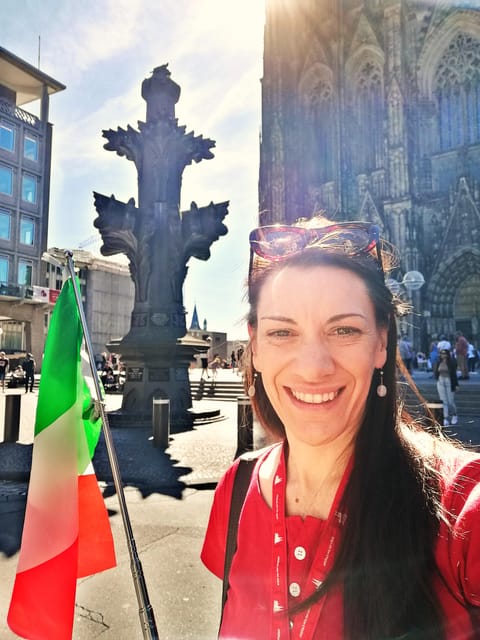
The meeting point is by the copy of the cathedral’s large pinnacle. That is a useful landmark in a busy square, though you should allow a little time to identify the exact spot before the walk begins.
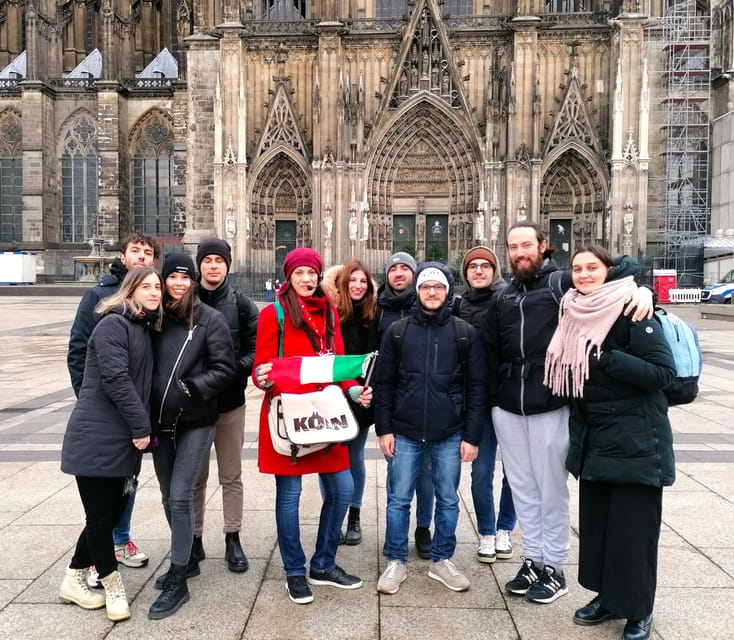
The cathedral square is the right place to begin. Cologne’s most famous building is not simply a photo stop here. It becomes the visual key to the city, linking religious power, medieval ambition, war damage, and modern Cologne.
The tour introduces the Roman origins of the ancient colony around this first area. That gives you an early sense of why Cologne developed where it did and why the city’s oldest story is still visible beneath its modern streets.
The Roman Arch is one of the small details that can easily be missed when your attention is fixed on the cathedral. A guide helps connect this modest surviving feature to the much larger Roman chapter.
A few more Cologne trips to weigh up
- Cologne: The Night Watchman Old Town Walking Tour in German
★ 4.6 · 1,395 reviews - Cologne: Old Town Highlights Walking Tour
★ 4.6 · 1,093 reviews - Cologne: Südstadt Guided Foodie Walking Tour
★ 4.6 · 624 reviews
Cologne Cathedral and the city’s vertical center
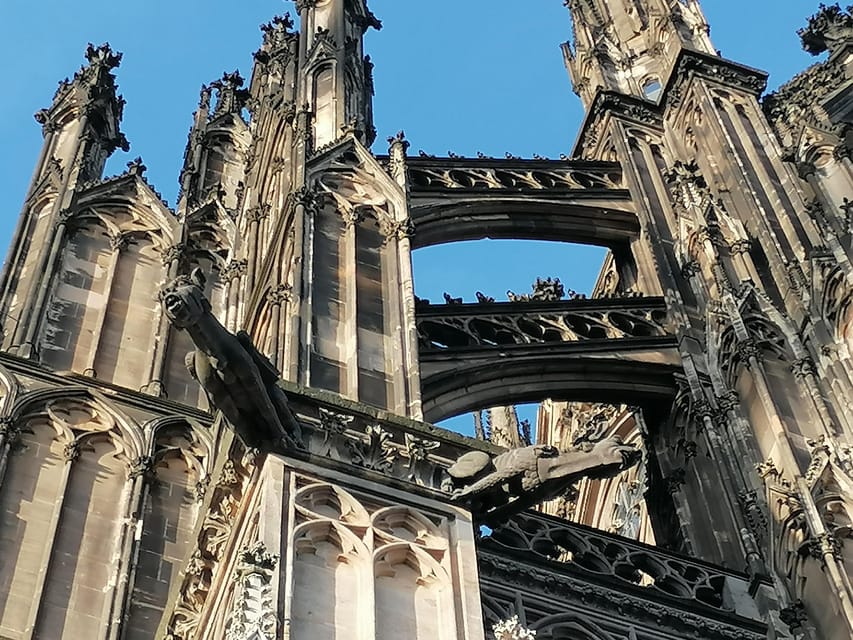
The cathedral is the visual heavyweight of the walk. Its height can make the nearby streets feel almost miniature, and the tour gives you time to appreciate that scale while placing the building within Cologne’s long religious history.
You should expect to view the cathedral from outside rather than take a full guided visit through its interior. That is an important distinction. The tour is designed as a city walk, so you will get context, exterior views, and historical explanation, but not an extended examination of chapels, stained glass, or the treasury.
For a first look at Cologne, this works well. You learn how the cathedral relates to the surrounding city instead of treating it as an isolated monument. If the cathedral interior is high on your list, plan separate time for it.
Alter Markt, Town Hall, and the medieval merchant city
From the cathedral area, the route moves into the old town and its squares. Alter Markt brings you into the medieval and civic side of Cologne, where the story shifts from archbishops and churches to merchants, trade, and city government.
The Town Hall tower is especially useful for understanding that change. Its decoration reflects the pride of a free city and its merchant class. You do not need to know every figure or architectural detail in advance. Sara’s explanations help turn the tower from a decorated façade into evidence of who held influence in medieval Cologne.
The old town streets also show why a walking tour is more useful than a quick sightseeing loop. Squares and alleys create a sequence of smaller scenes, and the guide can point out details that you might pass without noticing.
Historic breweries appear along the way. The tour does not promise a beer tasting, so do not book it expecting a pub stop. Instead, breweries form part of the old town’s character and the explanation of Cologne’s traditional urban life.
Groß Sankt Martin and Fischmarkt by the Rhine
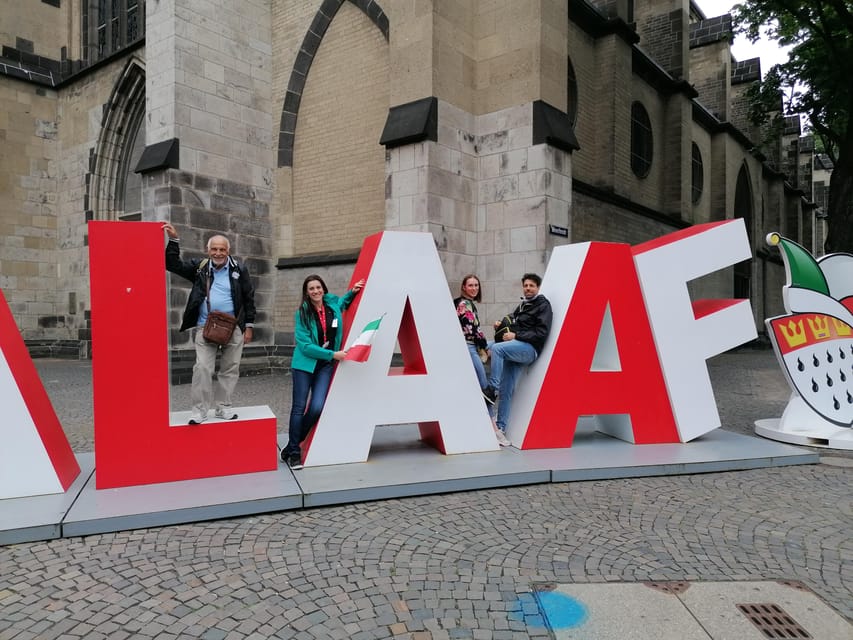
Groß Sankt Martin brings another strong architectural image to the route. Its distinctive form helps you see how the old town’s churches once shaped the riverfront skyline.
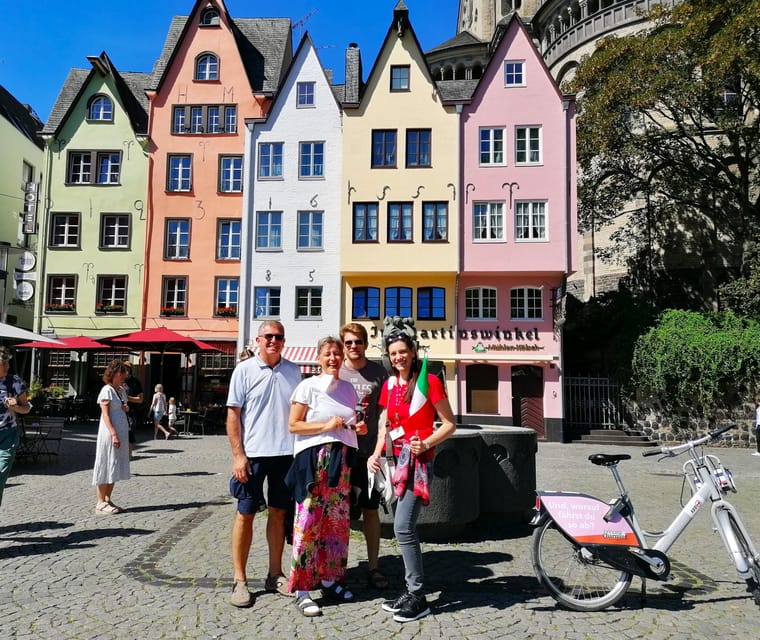
Nearby Fischmarkt is one of the walk’s most picturesque sections. Its colorful houses make a cheerful contrast with the heavier stone buildings around the cathedral and Town Hall. This is a good spot for photographs, but the real value is the connection between architecture, river trade, and the old city.
The Rhine promenade gives the tour some breathing room after the narrow streets. You can look across the river and understand Cologne from a wider angle. The route passes historic breweries and colorful buildings before moving on to the streets around Salzgasse and Heumarkt.
You will want comfortable shoes here. Two hours is not a long time, but the walk covers several districts and includes city streets, squares, and the riverfront. The route is listed as wheelchair accessible, though the practical ease of any historic street can depend on the exact conditions that day.
Same city, a completely different kind of day:
- Cologne: Panoramic City Cruise
★ 4.3 · 5,698 reviews - Cologne: Brewery Tour with 3 Kölsch Beer Tastings
★ 4.7 · 3,108 reviews - Cologne: Top Sights Rhine River Cruise – Skyline Tour
★ 4.4 · 3,030 reviews - Cologne: Chocolate Museum Entrance Ticket
★ 4.4 · 2,790 reviews
Salzgasse and Heumarkt: old streets with modern life
Salzgasse and Heumarkt continue the old town section, but they also show Cologne as a living city rather than a preserved museum. The tour’s historical approach is useful here because it lets you see how modern streets overlap with older patterns.
Heumarkt is another place where the city’s past as a trading and civic center becomes easier to picture. Sara’s anecdotes and trivia add human detail to the larger story. The strongest part of this kind of guiding is not memorizing dates. It is learning why a square, tower, church, or street mattered.
The supplied feedback about Sara is remarkably consistent on this point. Her preparation, friendliness, availability, and willingness to answer questions are repeatedly praised. That suggests you can expect an interactive walk rather than a speech delivered without pause.
Still, the quality of any walking tour depends partly on your own questions. If you have a special interest in Roman Cologne, wartime rebuilding, architecture, or perfume, ask Sara as the route develops. The tour is built to include curiosities, so questions should fit naturally.
Farina and the surprising story of Cologne perfume
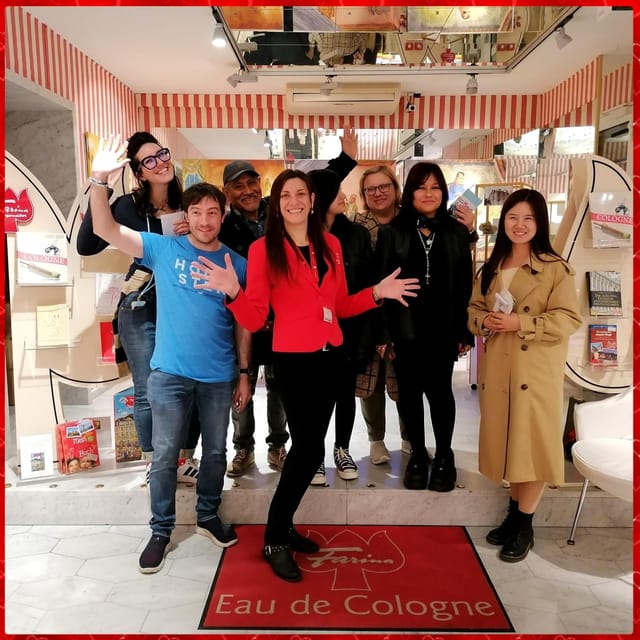
One of the more distinctive stops is Eau de Cologne Farina. Cologne’s name is closely tied to perfume, yet many visitors do not realize how central that product became to the city’s identity.
This part gives the tour a welcome change of subject. After Roman stones, Gothic architecture, medieval government, and wartime memory, perfume adds a commercial and sensory thread. You will learn about one of the city’s most famous waters rather than simply passing another historic façade.
The route also includes Eau de Cologne 4711. Seeing both names helps you understand that Cologne’s perfume tradition is not represented by one isolated shop or brand. It is part of the city’s wider cultural and commercial story.
The experience does not include a stated tasting, shopping session, or perfume workshop. Treat these stops as historical markers and opportunities to understand Cologne’s identity. If you want to buy perfume, you may need extra time after the tour.
From wartime destruction to modern Cologne
The walk becomes more reflective in the Opera and Kolumba districts. Historical images are used to show the difference between past and present, including the damage caused by the Second World War and the difficult work of rebuilding.
This is one of the tour’s most valuable features. Cologne can look polished and old at first glance, especially around the cathedral and restored old town. The photographs help you see that much of what appears historic has a far more complicated story.
The reconstruction section also introduces postwar memory and the growth of the modern metropolis. You are not left with a postcard version of Cologne. Instead, you see a city that had to decide what to restore, what to rebuild, and how to live with visible and remembered loss.
Kolumba gives this part a cultural focus, while the Opera district points toward modern urban development. The contrast is useful: one area raises questions about art, memory, and place, while the other shows how a city continues to change.
The tour cannot cover every detail of Cologne’s wartime experience in two hours. That is a fair limit. You get an introduction and visual comparisons, not a specialist military or memorial tour.
What makes Sara’s Italian-language guiding useful
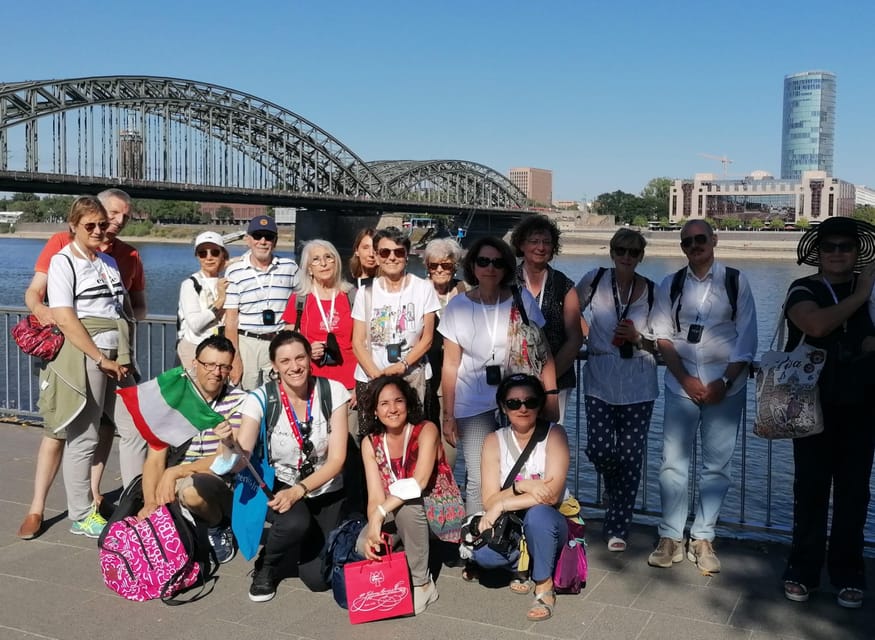
This is a tour for Italian speakers, with Sara leading in Italian. A native Italian-speaking guide can make a real difference when the subject includes wordplay, local references, architectural terms, and fast-moving historical connections.
Sara is described as certified by the tourist board, and the feedback points to three qualities that matter on a short walk: preparation, a friendly manner, and patience with questions. She also brings historical photos, which give the explanations a clear visual anchor.
I especially value the balance between famous sights and smaller curiosities. You will see the cathedral and Town Hall, but you will also hear stories about particular buildings, churches, squares, and the city’s perfume tradition.
The guide’s style appears to suit people who want an introduction with personality. If you prefer a silent stroll or a strictly academic lecture, this may not be your ideal format. The walk is social, conversational, and built around anecdotes.
Is $23 a fair price for two hours?
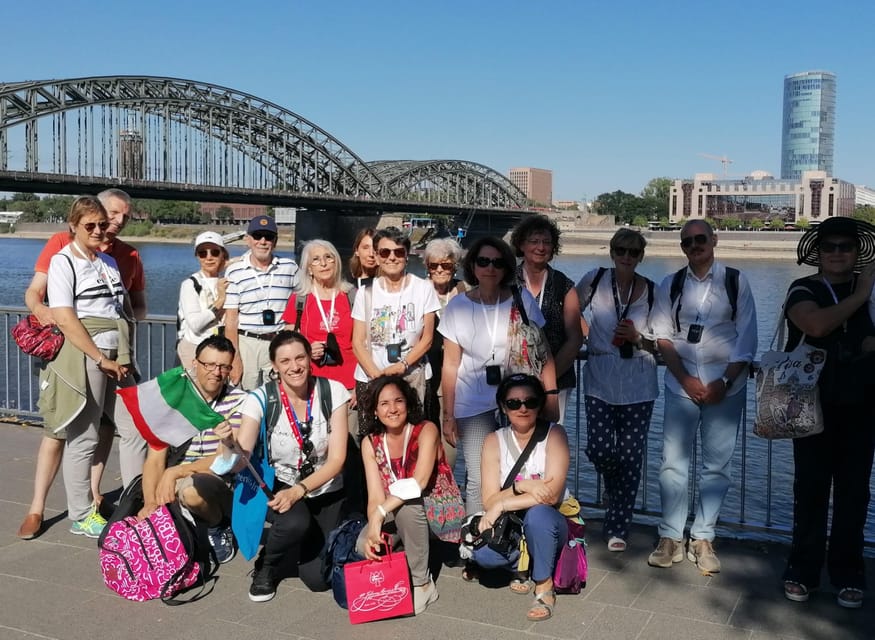
At $23 per person, the tour is priced as an accessible introduction rather than an all-day specialist experience. The value comes from orientation: in two hours, you cover the cathedral area, Roman beginnings, medieval streets, the Rhine, perfume history, and postwar reconstruction.
I would consider that good value if you are visiting Cologne for the first time or have limited time in the center. A guide can help you decide which places deserve a later return and give you the context needed to appreciate them.
The price is less compelling if you already know Cologne well or want admission to several monuments. No entrance tickets, meals, tastings, or transportation are included in the information provided. You are paying for the guided walk and the interpretation.
The ability to reserve now and pay later gives you some flexibility, and free cancellation is available up to 24 hours before the start for a full refund. Check the available start times when booking, since the duration is fixed at two hours but the departure time is not given here.
The tour is wheelchair accessible. You should still consider the practical demands of a historic-center walk, including the amount of time spent outdoors and moving between old streets, squares, and the river promenade.
Who should book this Cologne walk?
I would choose this experience if you want a first-day orientation in Cologne, especially if Italian is your preferred tour language. It gives you a clear route through the central sights without asking you to commit half a day.
It also suits history-minded visitors who want more than architectural labels. The Roman colony, medieval city, perfume trade, wartime destruction, and modern rebuilding create a useful framework for the rest of your stay.
Families and mixed-age groups may appreciate the variety. The cathedral supplies drama, the colorful Rhine houses provide easy photo stops, and the perfume story breaks up the heavier historical material.
You may want a different experience if your priority is entering the cathedral, sampling beer, shopping for perfume, or studying one period in detail. This walk passes those themes and explains them, but it does not replace dedicated visits.
The 4.9 rating from 25 bookings fits the experience’s clear strengths: Sara’s personal approach, preparation, historical photos, and readiness to answer questions. The praise is particularly strong for the way she makes the city feel approachable while still covering a great deal of ground.
Should you book the Classic Walking Tour?
Book it if you want an efficient Italian-language introduction to Cologne with a guide who combines major monuments, small details, anecdotes, and visual history. Sara’s route gives you both the city’s famous face and the less tidy story behind it.
Do not book it expecting a long cathedral interior visit or a food and beer experience. At $23, it is a sensible way to get your bearings, understand Cologne’s many eras, and collect ideas for what to explore next on your own.
FAQ
Where does the Cologne Classic Walking Tour meet?
The meeting point is by the copy of the big pinnacle of Cologne Cathedral.
How long does the walking tour last?
The tour lasts two hours. Starting times vary, so you should check availability when choosing a date.
What language is the tour conducted in?
The live tour guide speaks Italian. The guide is a native Italian speaker named Sara.
Which main sights are included?
The route includes the Roman Arch, Cologne Cathedral, Town Hall, Alter Markt, Groß Sankt Martin, Fischmarkt, the Rhine promenade, Salzgasse, Heumarkt, Eau de Cologne Farina, Kolumba, the Opera district, Eau de Cologne 4711, and Wallrafplatz.
Is the tour wheelchair accessible?
Yes, the activity is listed as wheelchair accessible.
Can I cancel the booking?
Yes. You can cancel up to 24 hours in advance for a full refund. You can also reserve now and pay later.
Just added around Cologne
- Aachen old town tour – GERMAN (public)★ 5.0 · 24 reviews
- Aachen Private Walking Tour With A Professional Guide★ 5.0 · 11 reviews
- Cologne Highlights: Exclusive Private Tour★ 5.0 · 5 reviews
- Explore Cologne’s best Street Art Quarter★ 4.5 · 4 reviews
- Aachen – Old town Guided tour★ 3.5 · 4 reviews
- The rather unknown Melaten★ 4.9 · 26 reviews
- Rickshaw Glühwein Ride★ 4.6 · 24 reviews
- Public brewhouse tour Cologne in English★ 4.9 · 154 reviews
Walking Tours, compared.





Berlin’s Best: 2 Hour Walking Tour Third Reich and the Cold War
Read our review →


Third Reich Berlin: Hitler and WWII Walking Tour
Read our review →Browse the lists this tour appears in