Reviewed · TICKETS
Berlin: Lighthouse of Digital Art Ticket
The main event here is The Grand Tour, a 27-minute trip through the solar system built from NASA images, James Webb Space Telescope material, and detailed maps of the Moon and Mars. Planets and galaxies fill the room with sound, color, and spoken narration. It is part science presentation, part digital art, and part quiet escape from Berlin’s busy streets.
I like two things right away: the strong sense of scale, which makes the planets feel startlingly close, and the extra access to the Space Gallery and Infinity Room. At $11, this is an easy activity to add to a Berlin day without eating up much time. The main drawback is that the visit is short, and the narration matters, so choosing the wrong start time could leave you listening in a language you do not understand.
In This Review
- Key points to know before you go
- A short trip through the solar system
- How the half-hour English show works
- What happens inside the Lighthouse
- Why the space presentation works
- Is $11 a fair price?
- Who will enjoy this most
- Timing, language, and practical planning
- How to get more from the visit
- Should you book the Lighthouse of Digital Art?
- FAQ
- How long does the Lighthouse of Digital Art experience last?
- What language is the show presented in?
- What is included with the ticket?
- How much does admission cost?
- Is the venue wheelchair accessible?
- Is the experience suitable for people with epilepsy?
- Can I cancel the booking?
Key points to know before you go
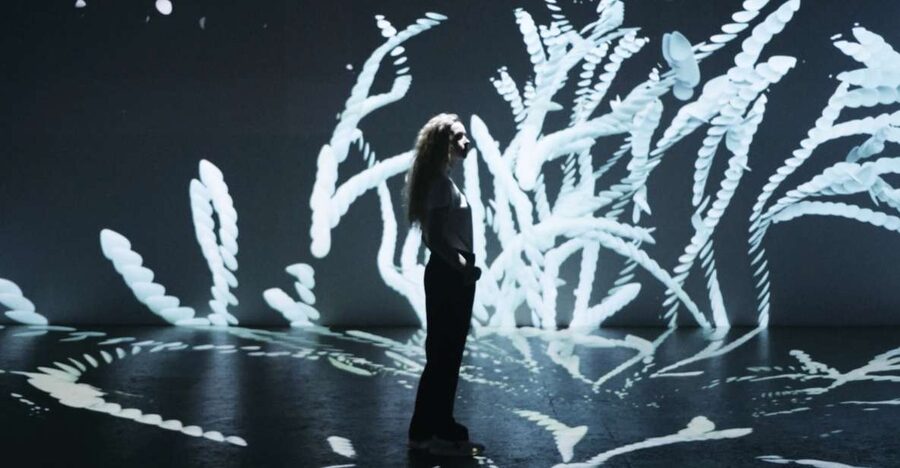
- The 27-minute Grand Tour uses imagery from NASA, the James Webb Space Telescope, and accurate maps of Mars and the Moon.
- English shows begin on the half hour, such as 2:30 p.m. German shows begin on the hour, such as 2 p.m.
- Your ticket includes three parts: the current exhibition, Space Gallery, and Infinity Room.
- The visit costs $11 per person, making it a low-cost indoor stop in Berlin.
- The full visit lasts about 30 minutes, so it fits neatly between larger sights or evening plans.
- People with epilepsy should not attend, and the venue is wheelchair accessible.
A short trip through the solar system
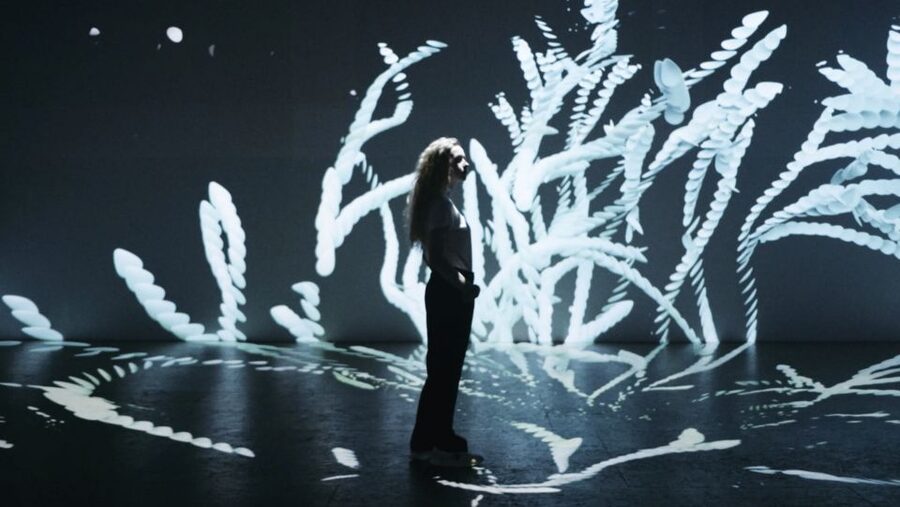
The Lighthouse of Digital Art is a museum devoted to digital and new media art. The visit centers on The Grand Tour, a timed audio-visual presentation that carries you from the nearby planets out toward the wider universe.
You are not simply looking at a screen with a few floating planets. The show uses moving imagery, color, sound, and narration to create the feeling of traveling through space. The effect depends on the room around you, so this is best treated as a presentation you watch from beginning to end rather than a gallery where you wander at your own speed.
The material has a useful scientific foundation. Images from NASA and the James Webb Space Telescope provide the source material, while detailed maps of the Moon and Mars help create a more faithful view of those worlds. You get the artistic effect without losing the sense that the planets shown are based on real observation.
That balance is one of the experience’s strongest points. Digital art can sometimes feel like a collection of attractive effects. Here, the subject gives the visuals a clear purpose. You are watching a stylized journey, but you are also seeing how much detail modern space imaging can reveal.
A few more Berlin trips to weigh up
- Berlin: Berlin Story Bunker Entry Ticket
★ 4.6 · 6,759 reviews - Berlin: Illuseum Berlin Entrance Ticket
★ 4.1 · 3,970 reviews - Berlin: Madame Tussauds Admission Ticket
★ 4.6 · 3,941 reviews
How the half-hour English show works
The language schedule is the most important practical detail. Shows beginning on the hour are in German. Shows beginning on the half hour are in English.
If you want English narration, book or select a half-hour start, such as 1:30 p.m. or 3:30 p.m. Arriving for a 2 p.m. show means hearing the German version. The visual material remains central, but the spoken presentation is part of the show, so the language choice changes how much information you take away.
The narration gives the images a sense of direction. Instead of watching planets appear with no context, you follow a guided route through the solar system and known galaxies. That makes the presentation easier to follow, especially if you are visiting with children or with someone who enjoys astronomy but does not usually seek out art museums.
The attraction does not provide a named guide. This is a timed audiovisual program rather than a walking tour with a person leading the group. That keeps the experience focused and consistent, but it also means you cannot stop to ask questions or request a different pace.
What happens inside the Lighthouse
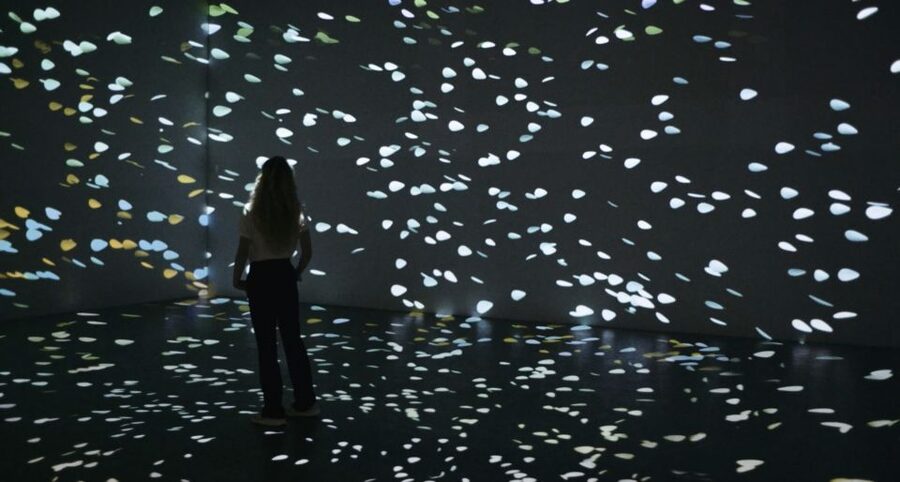
The visit includes the current exhibition, Space Gallery, and Infinity Room. The main show is the part with the clearest beginning and end, while the other spaces add more time with digital art after or around the presentation.
A useful tip is to make sure you find the exhibition area at the back. One visitor reached it only by accident because the route was not clearly pointed out. That is a small but practical warning: do not assume the first area you see is the whole museum. If staff directions are not obvious, ask where the back exhibition is before you leave.
The current exhibition gives you a broader look at digital and new media work. The exact contents can change, so you should not expect every visit to have the same displays. What remains consistent is the chance to see how projected images, sound, and digital movement can turn a room into an art space.
The Space Gallery keeps the focus on the relationship between science and visual design. It supports the ideas introduced in The Grand Tour, but it is not simply a repeat of the presentation. If you like astronomy, pay attention to the difference between scientific images used as source material and the artistic choices made to present them.
The Infinity Room is the most direct audience-focused part of the visit. Its changing light and image effects ask you to respond rather than simply stand outside a display case. You can let the room set the mood, watch how the projections change around you, and take a break from the usual museum routine.
Why the space presentation works
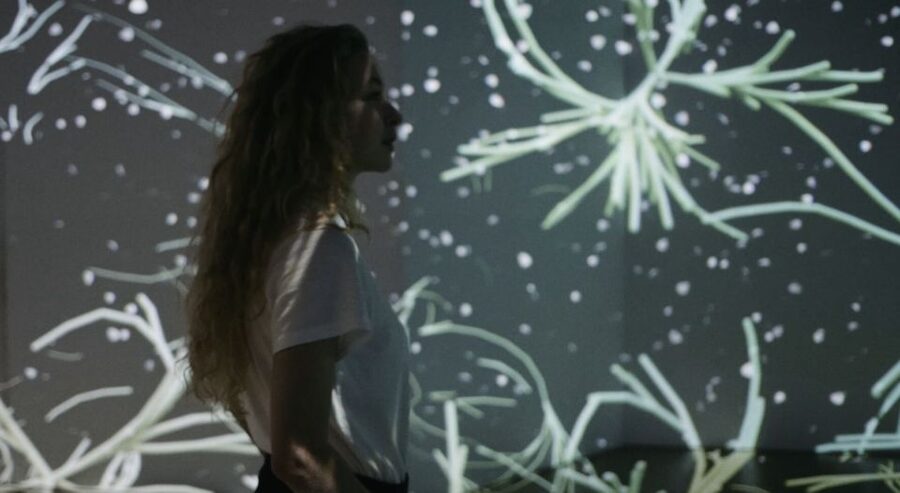
The appeal is less about learning a long list of facts and more about seeing familiar objects at an unfamiliar scale. You may know what Mars or the Moon looks like in photographs, but a large-scale digital presentation changes your sense of distance and surface detail.
The Moon and Mars receive special attention because the show uses highly accurate maps of both. That gives the images a stronger connection to the real worlds being shown. You are not looking at invented science fiction scenery. You are seeing an artistic presentation built from current knowledge and observation.
The James Webb Space Telescope material adds another layer. Its images are already striking as still photographs, but motion and sound change how you read them. Galaxies feel less like distant dots in a textbook and more like destinations on a route.
I also like that the show allows for a calmer response. One visitor described the experience as calming and almost outside ordinary life, and that matches the attraction’s purpose. There is no rushing from one historic room to the next. For half an hour, you can sit or stand with the changing images and let the narration guide your attention.
That calm quality will not suit everyone. If you want a hands-on museum, a detailed astronomy lecture, or a long afternoon of varied exhibits, this may feel too brief. The presentation is designed to create an emotional response as much as an intellectual one.
Same city, a completely different kind of day:
- Berlin: Reichstag, Dome and Government District Guided Tour
★ 4.7 · 18,288 reviews - Berlin: 1-Hour City Tour by Boat with Guaranteed Seating
★ 4.3 · 16,993 reviews - Berlin: Boat Tour Along the River Spree
★ 4.4 · 11,252 reviews - Discover Berlin Half-Day Walking Tour
★ 5.0 · 9,624 reviews
Is $11 a fair price?
At $11, the ticket is reasonably priced for a short Berlin attraction. You get the central show plus the Space Gallery and Infinity Room, not just a single projection presentation. The main question is not the cost, but whether a 30-minute art experience fits your interests.
I think the value is strongest when you plan it as a short stop between other activities. You do not need to give up half a day, and the indoor setting gives you a simple option when you want something different from Berlin’s streets and historic sights.
The value is also good for couples, families, and solo visitors who enjoy visual art but do not want a conventional museum visit. Children may respond well to the planetary journey, though the spoken narration means the English or German start time matters for them too.
For serious digital-art fans, the price makes it easy to sample the venue without a major commitment. The tradeoff is depth. You will see several spaces, but none is likely to receive the attention that a full-size art museum exhibition would allow.
Who will enjoy this most
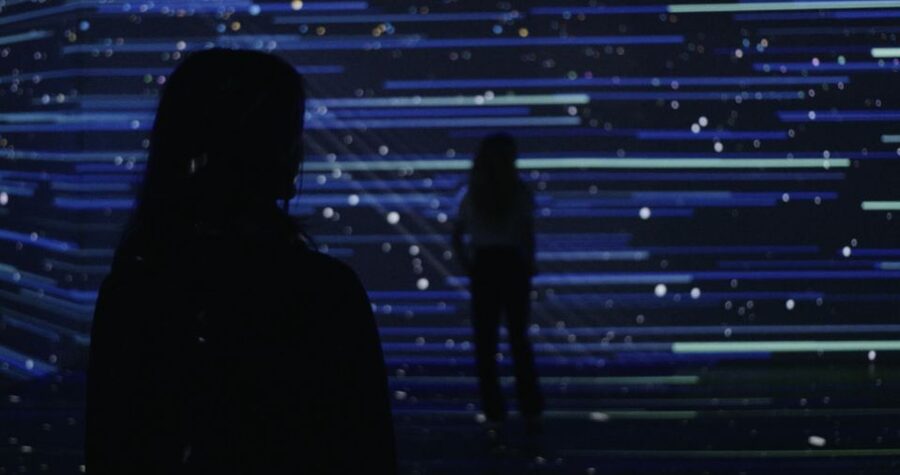
I would recommend the Lighthouse of Digital Art to you if you like:
- Space imagery and astronomy
- Digital projections, sound, and color
- Short cultural activities
- Art that creates a mood rather than explaining every detail
- Indoor stops in a trendy Berlin neighborhood
- Experiences that work for both adults and children
It is also a good choice if you are trying to add variety to a Berlin itinerary. After several hours of museums, churches, or historic sites, the format feels different. You are not being asked to read wall text or follow a strict historical sequence.
You may want to skip it if you dislike flashing or changing lights, if you need a long and detailed museum visit, or if you are looking for a guide who can answer questions. The experience is also not suitable for people with epilepsy.
The visual effects can demand a response. That is part of the point, but it can also feel intense for anyone sensitive to projected light, strong color changes, or a presentation that fills the room.
Timing, language, and practical planning
The listed duration is 30 minutes, with the main Grand Tour lasting 27 minutes. That makes the visit easy to fit into a packed schedule, but do not treat it as a full afternoon attraction. Allow time to enter, find the right area, and see the additional rooms.
The start time determines the narration language:
- On the hour: German narration
- On the half hour: English narration
This is simple once you know it, but easy to miss when planning quickly. If you are booking online, check the selected time rather than choosing the first available slot.
The venue is wheelchair accessible, which makes this a practical indoor activity for many visitors with mobility needs. No transport details are provided with the ticket information, so check the venue’s current directions before setting out.
You can cancel up to 24 hours before the activity for a full refund. The reserve-now, pay-later option also helps if your Berlin schedule is still shifting. These policies matter most for a short activity because a delayed train, late museum visit, or sudden weather change can otherwise make a prepaid ticket hard to use.
How to get more from the visit
Go in knowing that the show is built around feeling as much as facts. If you expect a standard planetarium presentation, you might find the artistic sections surprising. If you expect a pure art installation, the scientific source material gives the experience more structure.
Listen closely to the narration. The images are strong enough to hold your attention, but the spoken information helps connect the Moon, Mars, planets, and galaxies into one continuous journey.
After the main show, look for the Space Gallery and Infinity Room rather than assuming you have finished. The back exhibition is easy to overlook, and finding it can make the difference between a very short presentation and a fuller visit to the venue.
If you are taking photographs, remember that changing projections can be difficult to capture accurately. The real effect comes from being surrounded by the images and sound, not from a single phone picture.
Should you book the Lighthouse of Digital Art?
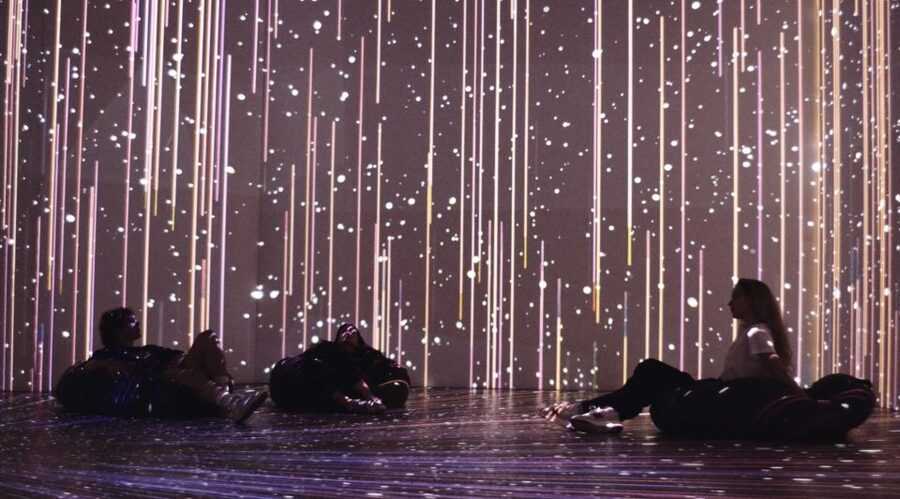
Book it if you want a short, atmospheric Berlin activity with a clear space theme and a low price. The combination of real astronomical imagery, room-sized digital art, and the extra gallery areas gives the ticket more substance than a single 27-minute film.
Choose an English half-hour show, allow about 30 minutes, and make a point of finding the exhibition at the back. I would especially recommend it for visitors who want a calm break from traditional sightseeing or who are curious about how modern technology can turn science into an emotional art experience.
Skip it if you need a long visit, personal guiding, or a conventional museum collection. At $11, the risk is modest, but the format is specific. You should book because you like sound, color, space, and digital art, not because you expect a full day of astronomy.
FAQ
How long does the Lighthouse of Digital Art experience last?
The listed duration is 30 minutes. The main audio-visual show, The Grand Tour, lasts 27 minutes.
What language is the show presented in?
Shows beginning on the hour are presented in German. Shows beginning on the half hour are presented in English.
What is included with the ticket?
Your ticket includes entry, The Grand Tour show, the Space Gallery, and the Infinity Room.
How much does admission cost?
The listed price is $11 per person.
Is the venue wheelchair accessible?
Yes, the activity is wheelchair accessible.
Is the experience suitable for people with epilepsy?
No. The activity is listed as unsuitable for people with epilepsy.
Can I cancel the booking?
Yes. You can cancel up to 24 hours in advance for a full refund. A reserve-now, pay-later option is also available.
Just added around Berlin
- Love and War in Berlin: Self-Guided Story Puzzle Walk★ 5.0 · 7 reviews
- Rickshaw Tours Berlin – Groups of up to 16 people with several rickshaws★ 4.0 · 97 reviews
- Walking on the Wall: 3-Hour Tour in Berlin★ 4.5 · 34 reviews
- eSIM for Germany and 34 European Countries★ 4.5 · 16 reviews
- Warnemuende Shore Excursion: Berlin Private Sightseeing Tour from Rostock★ 5.0 · 4 reviews
- Your ticket to The Wall Museum Berlin★ 3.0 · 60 reviews
- Warnemuende Shore Excursion: Private Berlin Tour★ 4.5 · 27 reviews
- Berlin’s Gay, Lesbian, and Queer Scene Small-Group Walking Tour★ 4.5 · 66 reviews
Tickets, compared.