
Reviewed · BIKE TOURS
Berlin (E)Bike Tour Historical Highlights in Small groups
Berlin’s great historic sights are spread across the center, often too far apart for a pleasant walk and too close together for an efficient bus ride. This small-group e-bike and rickshaw tour solves that problem neatly, carrying you from the TV Tower and Museum Island to Checkpoint Charlie, the Wall, Brandenburg Gate, and the Reichstag in about three and a half hours.
I like two things right away. First, the shared route lets a family or mixed-age group stay together even when not everyone can cycle. Second, the many photo stops and guide-led explanations give you a useful first look at Berlin’s complicated past. The main consideration is that the tour moves quickly, and one recent booking had an e-bike lose power during the ride. Ask about the bike’s charge before setting off.
In This Review
- Key points to know before booking
- Why an e-bike is useful in Berlin Mitte
- Starting at Rosenthaler Platz
- TV Tower and Museum Island: Berlin’s changing center
- Unter den Linden and the Nazi book-burning memorial
- Checkpoint Charlie and the former border
- Hitler’s bunker and the Holocaust Memorial
- The Berlin Wall and Topography of Terror
- Brandenburg Gate and the Reichstag
- How the guide shapes the experience
- Rickshaw comfort and practical limits
- Is $82 good value?
- Who should book this Berlin tour?
- FAQ
- Where does the tour begin and end?
- How long does the tour last?
- What languages are available?
- How many people are in the group?
- Can someone who does not cycle join the tour?
- How many people fit in one rickshaw?
- Are the major sights visited inside?
- Should you book it?
Key points to know before booking
- A mixed-transport tour: E-bike riders and rickshaw passengers follow the same historic route.
- A six-person maximum: The small group makes it easier to hear the guide and ask questions.
- A practical Berlin overview: You cover major sights that are awkward to connect on foot.
- A strong choice for mixed mobility: The rickshaw can carry up to two people, including young children and less-mobile family members.
- A photo-friendly outing: Stops include the Brandenburg Gate, Holocaust Memorial, Reichstag, Berlin Cathedral area, and more.
- Best early in your stay: The tour gives you a map in your head before you explore Berlin on your own.
Why an e-bike is useful in Berlin Mitte
Berlin Mitte is not a single compact sightseeing square. The city center stretches across broad avenues, open memorial spaces, former border zones, and the Spree river district. You can walk between some sights, but linking all of them in one day takes time and energy.
An e-bike makes the distances manageable without turning the outing into a hard workout. You ride between stops, then pause for a short explanation, a picture, or a closer look. The route is designed for comfort and easy movement rather than speed.
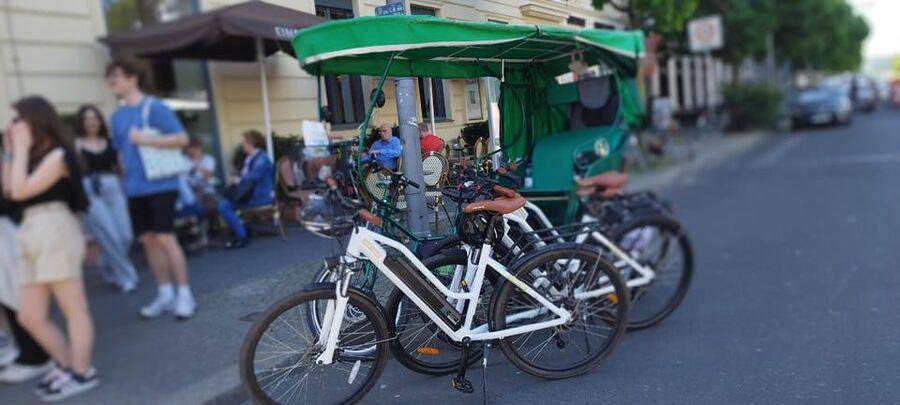
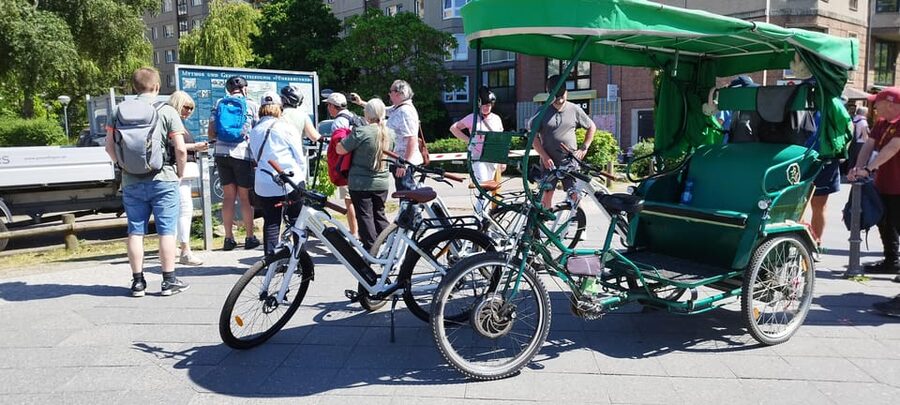
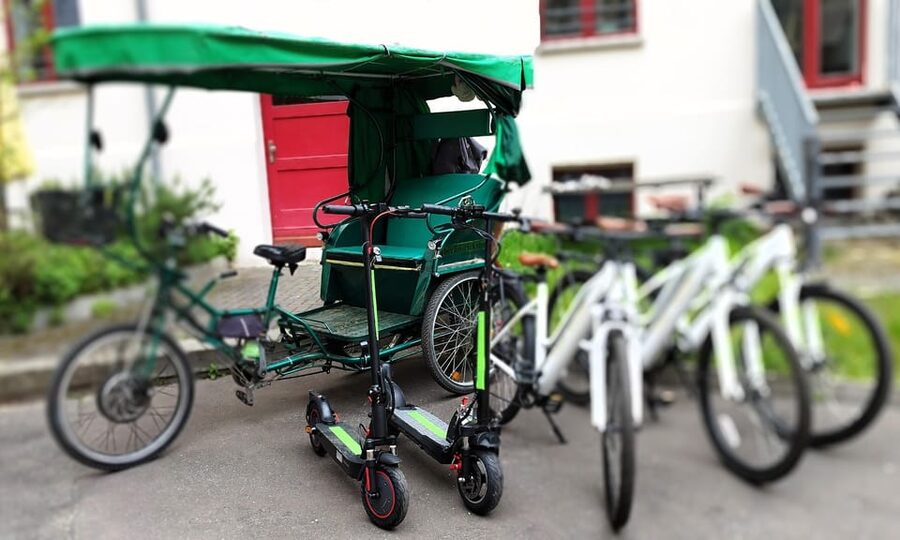
The rickshaw adds an unusual and useful option. It carries up to two people and is intended for grandparents, young children, non-bikers, or anyone who simply prefers to sit back. You still travel close to the monuments, and the open design gives you a clear view along the way.
This arrangement works especially well for families. Two people can ride in the rickshaw while other members use e-bikes, all with the same guide. It avoids the awkward split that often happens when one person cannot keep up on a standard cycling tour.
More Bike Tours in Berlin
- Berlin: Sights and Highlights Bike Tour with a Local Guide
★ 4.8 · 2,698 reviews - Berlin Highlights 3-Hour Bike Tour
★ 5.0 · 948 reviews - Berlin City Bike Tour with Beer Garden Stop
★ 5.0 · 917 reviews
Starting at Rosenthaler Platz
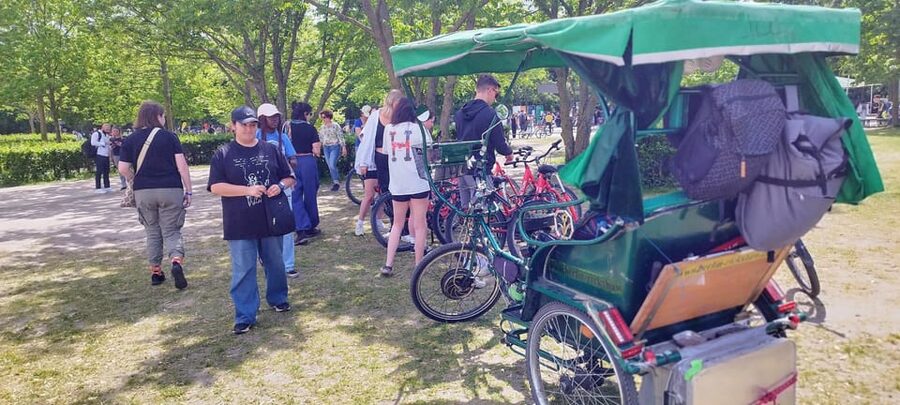
The meeting point is Weinbergsweg 6, near U-Bahn Rosenthaler Platz. This is a handy starting area in Mitte, with cafes, shops, restaurants, street art, and Weinbergspark close by.
Give yourself enough time to find the exact address. The meeting point is on Weinbergsweg rather than at a major monument, so checking the directions before you leave your hotel is sensible. The nearby U-Bahn makes the start accessible from other parts of Berlin.
The area also works well before or after the tour. Weinbergspark offers a quiet place to sit, while Rosenthaler Platz gives you plenty of choices for a snack or coffee. That makes the early start less stressful if you arrive ahead of schedule.
TV Tower and Museum Island: Berlin’s changing center
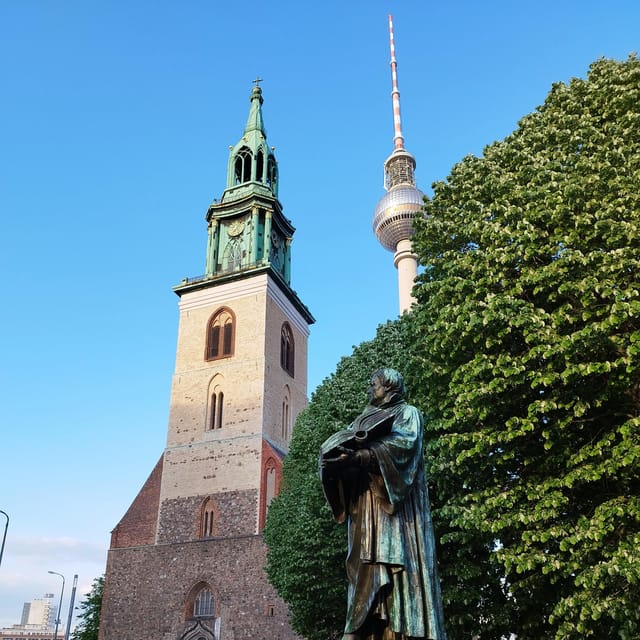
The first major sight is Berlin’s TV Tower, the tall symbol of the former East Berlin. From ground level, you get a strong sense of the old socialist city center and its broad public spaces. The stop is listed as a photo stop and guided sightseeing point, not a tower visit, so do not expect to go up.
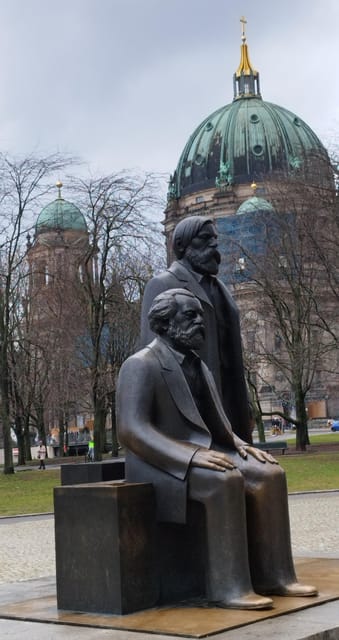
From here, the route heads toward Museum Island. This area brings together several major museums, the Berlin Cathedral, and some of the city’s most striking riverfront views. Even without entering a museum, the setting helps you understand how Berlin’s cultural center is arranged.
The guide’s role matters here. Berlin can present a confusing mix of Prussian buildings, postwar reconstruction, East German planning, and modern additions. A short explanation can make those layers easier to read as you pass them.
The stop also shows the advantage of a bicycle. Museum Island is close to several other central sights, but walking from the TV Tower, pausing for pictures, and continuing toward the boulevard can take longer than you might expect.
Unter den Linden and the Nazi book-burning memorial
Unter den Linden is Berlin’s grand central boulevard, running west toward the Brandenburg Gate. The route uses it as a visual link between Museum Island and the political heart of the city.
You will make a photo and sightseeing stop along the way. The boulevard is broad, formal, and lined with important buildings, so the guide can connect architecture with Berlin’s royal, imperial, wartime, divided, and modern eras.
The tour also visits the memorial marking the Nazi book burning of May 10, 1933. This is one of the city’s quieter memorials. Its meaning is easy to miss if you pass by quickly, which makes the guide’s explanation particularly helpful.
The stop offers a reminder that Berlin’s past is not limited to walls and checkpoints. The city also remembers censorship, propaganda, and the destruction of intellectual freedom. Expect a short visit rather than a long, museum-style presentation.
Same city, a completely different kind of day:
- Berlin: Reichstag, Dome and Government District Guided Tour
★ 4.7 · 18,288 reviews - Berlin: 1-Hour City Tour by Boat with Guaranteed Seating
★ 4.3 · 16,993 reviews - Berlin: Boat Tour Along the River Spree
★ 4.4 · 11,252 reviews - Discover Berlin Half-Day Walking Tour
★ 5.0 · 9,624 reviews
Checkpoint Charlie and the former border
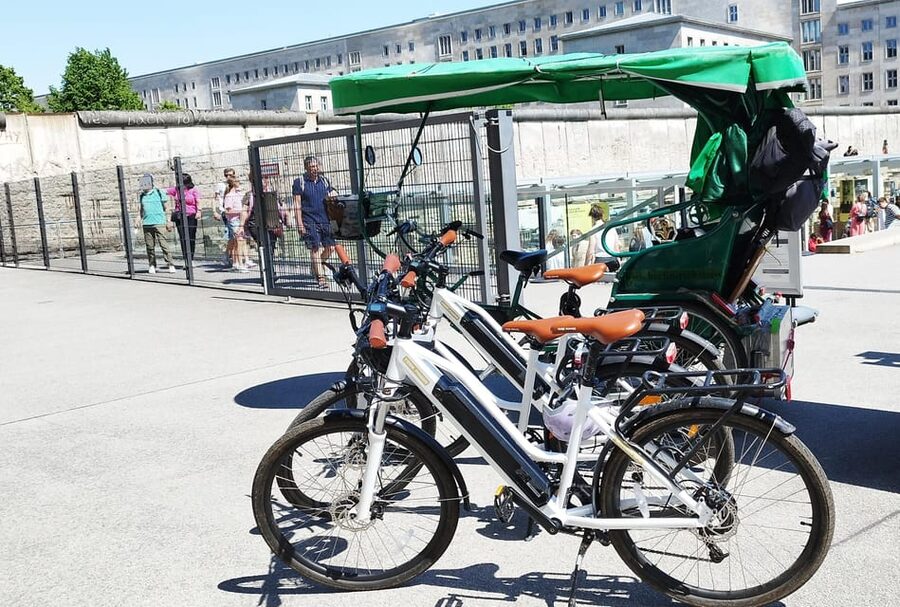
Checkpoint Charlie is one of Berlin’s best-known Cold War locations. The former crossing point once marked the boundary between the American and Soviet sectors, and it became a symbol of a divided city.
Today, the area is heavily visited and has a commercial feel. That is worth knowing before you arrive. The historic importance is real, but the current setting can feel more like a busy sightseeing stop than a preserved border crossing.
The tour’s advantage is context. You can hear how the checkpoint fitted into Berlin’s wider division while looking at the surrounding streets. The e-bike also lets you connect this point with other Cold War sites without spending much of the day on public transport.
The stop is mainly for guided sightseeing and photographs. Plan to listen, look around, and take in the location rather than expect a long interior visit.
Hitler’s bunker and the Holocaust Memorial
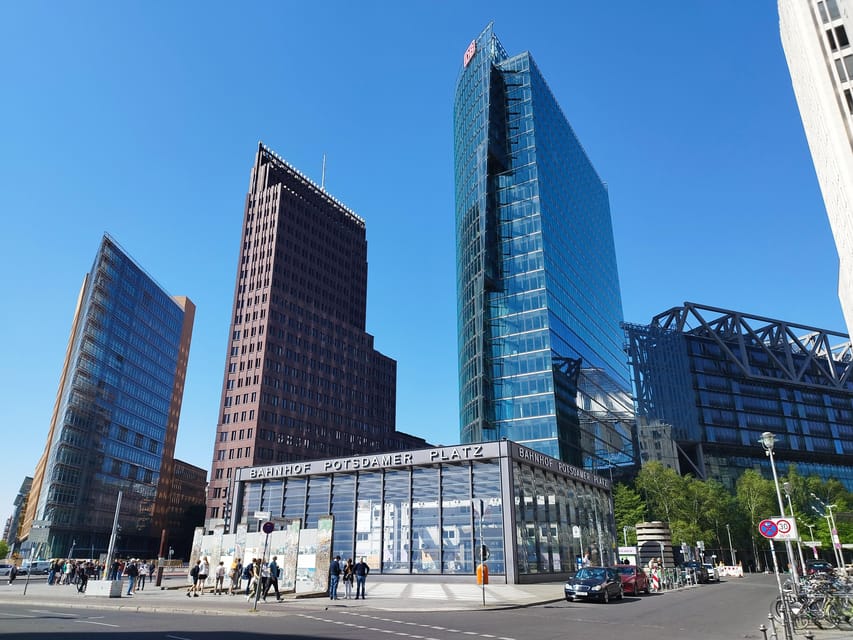
The former Führer Bunker site is another place where the physical setting can surprise you. The location is marked, but the bunker itself is not presented as an intact attraction. The point is to understand what happened there and how Berlin handles a difficult site without turning it into a shrine.
The guide can explain the final days of Hitler’s regime and the end of the war while you stand in the ordinary city setting above the former bunker. That contrast is part of the experience. The place is historically serious, but visually understated.
Nearby, the Holocaust Memorial provides one of Berlin’s most affecting public spaces. Its field of concrete slabs changes as you walk or look through it, creating a feeling of uncertainty and disorientation. The tour includes a stop and guided sightseeing, but the time is limited.
You should treat both locations with care. This is not a casual photo backdrop, even though photographs are part of the tour. The guide’s tone and timing matter, and the information is most useful when you allow the sites a quiet moment.
The Berlin Wall and Topography of Terror
The Berlin Wall stop shifts the focus from Nazi Germany to the Cold War. The Wall was not simply a line dividing two neighborhoods. It shaped daily life, separated families, and turned crossings into matters of great risk.
The tour gives you a chance to connect the remaining traces and memorial areas with the wider story of divided Berlin. Since the route includes sightseeing rather than a full museum visit, you will get an introduction rather than every detail of the Wall’s construction, fall, and aftermath.
At the Topography of Terror, the focus returns to the Nazi period. The site occupies the former headquarters of the SS and Gestapo. It is now a documentation center and memorial area, though the tour stop is listed primarily as a photo stop and bike tour point.
That distinction matters. If you want to study the exhibitions inside the documentation center, set aside separate time. The guided tour gives you the location and the historical frame, while a later visit would let you read the displays at your own pace.
Brandenburg Gate and the Reichstag
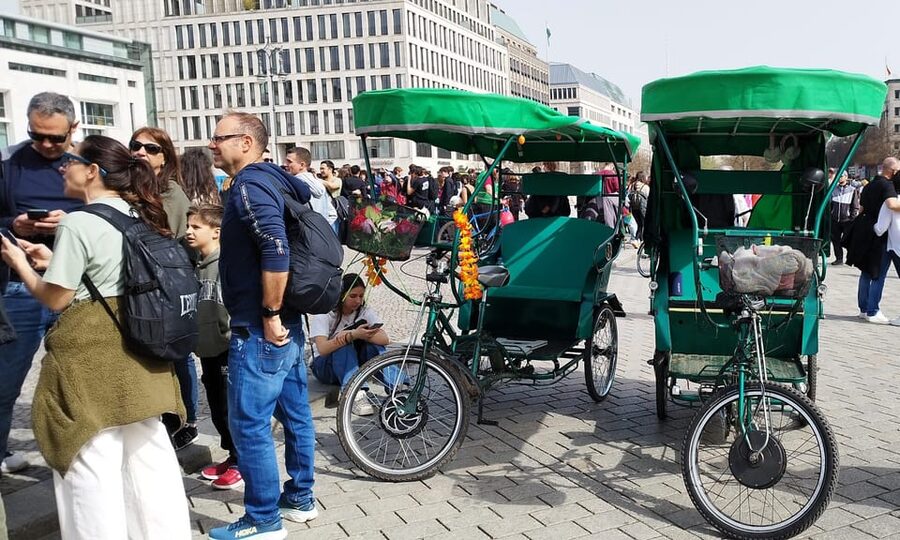
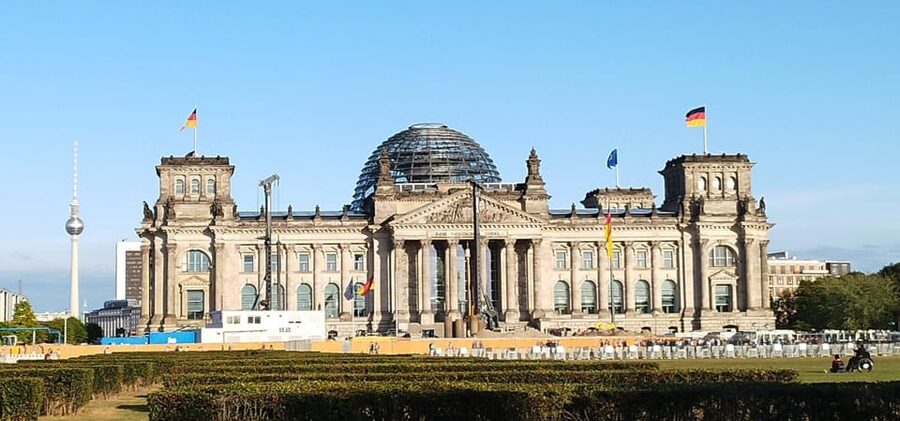
The Brandenburg Gate is the route’s grandest photograph. Once a city gate, it became a symbol of division during the Cold War and reunification after the Wall fell. It now sits at the center of Berlin’s political and ceremonial district.
The stop allows time for guided sightseeing and pictures. The gate is most useful when you hear how its meaning changed over time. A quick photograph alone cannot show why this monument carries such weight in German history.
The Reichstag, home of the German parliament, follows naturally. You will see the building from outside and hear about its role in modern Germany. The tour does not include a parliament or dome visit, so you should make a separate reservation if you want to go inside.
These final stops give the route a clear arc. You begin with the symbols of East Berlin and finish at the heart of the reunified republic. In between, the tour passes through Prussian power, Nazi terror, the Holocaust, the Cold War, and present-day Germany.
How the guide shapes the experience
The guide leads in English, and the group is limited to six participants. That size is a real advantage in a city where traffic, open spaces, and memorial sites can make large groups unwieldy.
You can expect explanations about history, art, architecture, culture, and ordinary city life. The guide also handles the route and the practical movement between stops, allowing you to focus on what you are seeing.
Guide quality can shape the day. Levent received especially warm feedback for his enthusiastic explanations and Dutch-language guiding. Jakob was also singled out for giving an excellent tour, although the bike-side organization was described as less smooth on one occasion.
There was also a serious complaint about an e-bike losing electrical assistance and about an unpleasant exchange with the person handling the bikes. One bad experience does not define every departure, but it is useful information. Before leaving, check the bike, ask how battery problems will be handled, and make sure the controls are clear.
The guides are also described as strong photographers. With frequent picture stops and help framing shots, you may leave with better group photos than you could manage alone. That is a small but valuable benefit for families and couples.
Rickshaw comfort and practical limits
The traditional rickshaws add charm and make this tour accessible to more people. Boarding takes only a few steps, and the open seating keeps the monuments close. A grandparent can ride with a child, or a non-cycling partner can stay with the group instead of waiting elsewhere.
The rickshaw is not simply a backup vehicle. It changes the pace of the outing. You can sit comfortably, watch the streets pass, and concentrate on the guide’s stories without managing handlebars or traffic.
Still, the arrangement requires clear expectations. The rickshaw holds up to two people, so larger families may need a mix of e-bikes and rickshaw seats. The description also presents it as suitable for people under 14, but the exact seating plan should be confirmed when booking if your group includes several children.
This is a sightseeing ride, not a free-roaming rental. You follow a set route and stop where the guide decides. That is helpful if you want to cover the essentials, but less suitable if you prefer to linger at every monument.
Is $82 good value?
At $82 per person, the tour costs more than simply buying a day ticket for public transport. The comparison is not quite fair, though. Your price includes a guide, an e-bike or rickshaw, a small group, bottled water, route planning, and a large number of historic stops.
The main value is time. In 210 minutes, you connect sites that could take much of a day to reach on foot. You also avoid the uncertainty of working out the best order for places such as Museum Island, Checkpoint Charlie, the Wall, and the Brandenburg Gate.
The price makes the most sense for first-time visitors, families, and groups with mixed mobility. If you already know Berlin well and want long visits inside museums or memorial centers, you may get better value from public transport and self-guided sightseeing.
I would also treat this as an orientation tour. A Dutch visitor found it especially useful early in a stay because it helped establish the city’s main areas, while taking it halfway through a visit meant some sights were already familiar. The same advice applies to you: schedule it near the beginning if possible.
Free cancellation up to 24 hours ahead and the option to reserve now and pay later reduce the financial risk. Comfortable shoes are still a good idea, even though the vehicles do much of the work.
Who should book this Berlin tour?
I would recommend it to:
- Families with grandparents or young children
- Couples where one person does not cycle
- Visitors who want a fast introduction to Berlin Mitte
- First-time visitors who prefer stories to a large coach tour
- People who want help taking group photographs
- Anyone who finds long city walks tiring
I would be more cautious if you want a slow, detailed museum tour. The route has many stops, but most are brief. You will see the setting and hear the key explanation, then move on.
Cyclists should also remember that the e-bike is a vehicle, not a private rental for the afternoon. You need to stay with the guide and accept the planned pace. A battery check before departure is sensible because one reported power failure affected half of a ride.
FAQ
Where does the tour begin and end?
The tour starts and returns at Weinbergsweg 6 near U-Bahn Rosenthaler Platz in Berlin Mitte.
How long does the tour last?
The experience lasts 210 minutes, or about three and a half hours.
What languages are available?
The listed tour language is English. Levent has also guided in Dutch.
How many people are in the group?
The group is limited to six participants.
Can someone who does not cycle join the tour?
Yes. Non-bikers and less-mobile participants can use a traditional rickshaw instead of an e-bike.
How many people fit in one rickshaw?
Each rickshaw accommodates up to two people.
Are the major sights visited inside?
The route includes guided sightseeing and photo stops at places such as the TV Tower, Museum Island, Checkpoint Charlie, the Holocaust Memorial, the Topography of Terror, Brandenburg Gate, and the Reichstag. Interior entry is not included in the stated experience.
Should you book it?
Book this tour if you want to cover Berlin’s major historical locations in one manageable outing, especially if your group includes a grandparent, child, or non-cyclist. The combination of e-bikes and rickshaws is the practical feature that makes it more flexible than a standard bike tour.
The strongest reason to choose it is the route. You get a clear first look at Berlin’s major eras, from Prussian power and Nazi crimes to the Wall, reunification, and today’s parliament. The small group and photo stops add personal attention.
I would book it early in your stay, confirm the vehicle arrangement, and ask for a quick e-bike check before departure. If you want a relaxed overview with plenty of context, $82 is a fair price. If your priority is spending extended time inside museums and memorial exhibitions, use this as an introduction, not your only day of sightseeing.
More Historical Tours in Berlin
- Berlin: Natural History Museum Entrance Ticket
★ 4.6 · 3,382 reviews - Berlin: World Heritage Cruise to Potsdam
★ 4.5 · 1,435 reviews - Berlin Historical Highlights Walking Tour
★ 4.9 · 657 reviews - Berlin Private Complete History All Day Walking Tour
★ 5.0 · 474 reviews
More Cycling Tours in Berlin
- Berlin Highlights: 3-Hour Bike Tour
★ 4.9 · 809 reviews - Berlin Highlights Sightseeing Bike Tour in Small Groups
★ 5.0 · 652 reviews - Berlin: Alternative Bike Tour of Kreuzberg & Friedrichshain
★ 4.7 · 548 reviews - Berlin: Guided Bike Tour of the Berlin Wall and Third Reich
★ 4.7 · 499 reviews
Just added around Berlin
- Love and War in Berlin: Self-Guided Story Puzzle Walk★ 5.0 · 7 reviews
- Rickshaw Tours Berlin – Groups of up to 16 people with several rickshaws★ 4.0 · 97 reviews
- Walking on the Wall: 3-Hour Tour in Berlin★ 4.5 · 34 reviews
- eSIM for Germany and 34 European Countries★ 4.5 · 16 reviews
- Warnemuende Shore Excursion: Berlin Private Sightseeing Tour from Rostock★ 5.0 · 4 reviews
- Your ticket to The Wall Museum Berlin★ 3.0 · 60 reviews
- Warnemuende Shore Excursion: Private Berlin Tour★ 4.5 · 27 reviews
- Berlin’s Gay, Lesbian, and Queer Scene Small-Group Walking Tour★ 4.5 · 66 reviews
Bike Tours, compared.
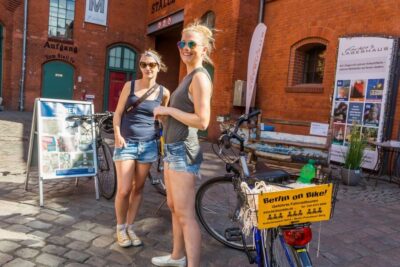
Sights and Highlights Bike Tour with a Local Guide
Read our review →
Classic Mike’s Bike Tour daily @ 11.30 incl Beer Garden & Surfers
Read our review →

Browse the lists this tour appears in