
Reviewed · CONCENTRATION CAMP MEMORIAL TOURS
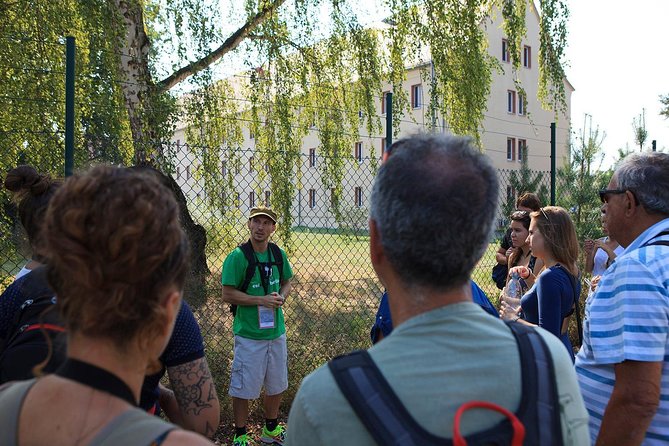
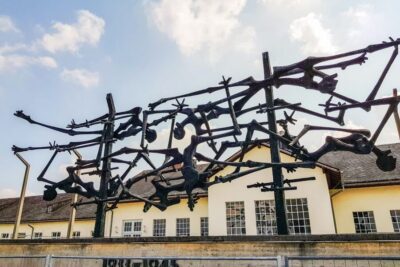
Sachsenhausen concentration camp.
Sachsenhausen is not a sightseeing stop in the usual sense. It is a place where the structure of Nazi persecution becomes painfully clear, and this six-hour tour from Berlin gives you time to understand both the camp and the people held there. The visit covers the camp’s operation, prisoners, daily conditions, and later use under Soviet control.
I like the Spanish-speaking guide, especially for a subject where careful explanation matters. I also like the practical help with transportation, since the guide travels back toward Berlin with you and can explain how to reach another part of the city. The main drawback is that you must buy your own ABC public transportation ticket, and the walk over the camp grounds is long.
In This Review
- Key points before you book
- Why Sachsenhausen deserves a full morning
- Meeting at the Berlin TV Tower
- The journey from Berlin to Oranienburg
- Three hours inside the Sachsenhausen Memorial
- Understanding the prisoners and daily life
- The postwar Soviet camp, through 1950
- What the guide adds to the visit
- Is $34.76 a fair price?
- Who should book this Sachsenhausen tour?
- Booking, cancellation, and practical details
- Should you book it?
- FAQ
- Where does the Sachsenhausen tour begin?
- What time does the tour start?
- How long does the full experience last?
- How long do you spend at Sachsenhausen Memorial?
- Is admission to Sachsenhausen included?
- Is public transportation included in the price?
- Is the tour conducted in Spanish?
- What happens at the end of the tour?
Key points before you book
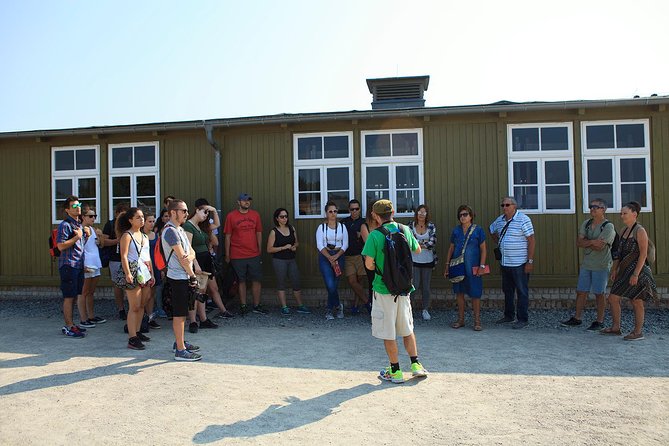
- Three hours at Sachsenhausen: The main visit gives you enough time to examine the memorial site without rushing through it.
- Spanish-language guidance: The tour is designed for Spanish speakers, with explanations of the camp’s history, prisoners, and daily life.
- Meeting at Berlin TV Tower: You meet at Panoramastraße 1A at 10:00 am, a central and easy-to-recognize starting point.
- Transportation costs extra: Your ABC ticket is not included, so budget for local public transportation separately.
- Respectful, well-prepared guiding: Juan is specifically praised for his serious, respectful manner and for helping with transfers.
- Free cancellation up to 24 hours ahead: You can receive a full refund if you cancel at least one full day before the start time.
Why Sachsenhausen deserves a full morning
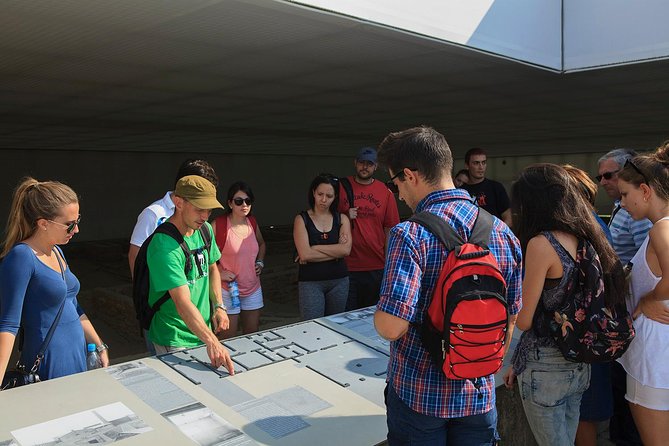
Sachsenhausen was a Nazi concentration camp in Oranienburg, north of Berlin, used mainly for political prisoners from 1936 until the end of the Third Reich in May 1945. The camp grounds and surviving buildings are now part of the Sachsenhausen Memorial and Museum.
The site also carries a second layer of history. After the war, when Oranienburg was in the Soviet Occupation Zone, the former camp was used by the NKVD as Special Camp Number 7 until 1950. That means your visit is not limited to the Nazi period. You are also confronting what happened to the site after Germany’s defeat.
I find that this makes a guided visit especially useful. On your own, you can walk through the grounds and read the memorial information, but it can be hard to connect the dates, institutions, prisoners, and changing uses of the buildings. A guide can give the visit a clear order and explain why each part matters.
This is a serious excursion, not a quick photo stop. The tone is respectful, and the subject calls for attention. If you want a lighter morning in Berlin, choose another activity. If you want to understand an important part of German history beyond the city center, this visit is worthwhile.
More Concentration Camp Memorial Tours in Berlin
- Berlin: Sachsenhausen Concentration Camp Tour in English
★ 5.0 · 5,711 reviews - Berlin: Sachsenhausen Concentration Camp Memorial Tour
★ 4.7 · 3,716 reviews - Sachsenhausen Concentration Camp Bus Tour in English from Berlin
★ 5.0 · 1,962 reviews
Meeting at the Berlin TV Tower
The tour begins at the Berlin TV Tower, Panoramastraße 1A, at 10:00 am. The location is in central Berlin and near public transportation, which makes it a practical meeting point for most visitors staying in Mitte or nearby districts.
Arrive early enough to locate the guide without a last-minute scramble. The information provided does not name a fixed café, ticket office, or indoor waiting area, so I would treat the TV Tower address as the precise place to organize yourself before departure.
Your ABC transportation ticket is not included. This matters because Sachsenhausen is in Oranienburg, outside central Berlin, and the necessary public transportation coverage must be handled separately. Ask the guide which ticket you need before setting off, especially if you are unfamiliar with Berlin’s fare zones.
The guide accompanies you toward Berlin after the visit and can explain how to get to another point in the city. The end is listed as Mitte, but there is no specific finishing point. That is useful if you plan to continue sightseeing, though it also means you should not expect to be dropped at one exact address.
The journey from Berlin to Oranienburg
The trip from the TV Tower to Sachsenhausen is part of the roughly six-hour schedule. Since the visit itself lasts about three hours, the remaining time covers the outward and return transportation, meeting arrangements, and movement between the station or city and the memorial grounds.
This shared journey has a real advantage. You can ask questions before reaching the memorial rather than trying to understand everything once you are already inside. The guide can also help with transfers, an area specifically praised in connection with Juan, one of the guides named in the feedback.
The trade-off is flexibility. You are traveling with a group of up to 30 people, so the pace is not fully your own. A larger group can make the explanations easier to hear if everyone stays together, but it may take longer to move between points.
Bring water and food for the day because neither is included. A small snack is sensible, though keep the memorial’s serious setting in mind. Comfortable shoes are essential. The grounds are spread out, and the tour advises a moderate level of physical fitness because you will be walking long distances.
Three hours inside the Sachsenhausen Memorial
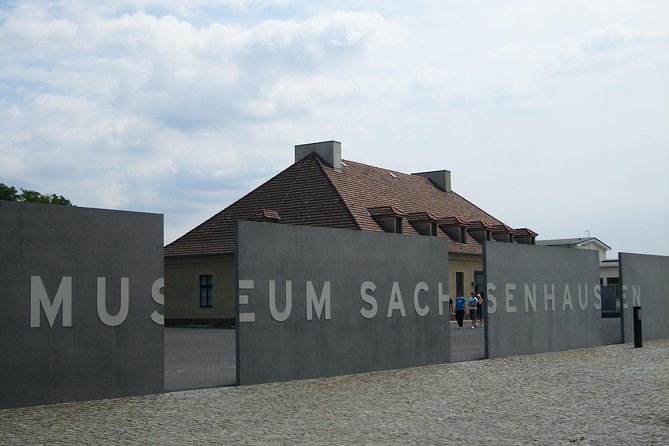
The central part of the tour lasts about three hours at Gedenkstätte und Museum Sachsenhausen. That is the amount of time you need to look carefully rather than simply pass through.
The guide presents the camp’s full period of Nazi use, from its opening in 1936 to the collapse of the Third Reich in May 1945. The focus includes the camp’s purpose, the daily life imposed on prisoners, and the identities and backgrounds of the people detained there.
The subject is not treated only as a list of dates. You are asked to consider who the prisoners were and how the camp functioned as a place of political imprisonment. The tour also addresses the profile of individual prisoners, which helps keep the history connected to real human lives rather than leaving it as an abstract account of the Nazi state.
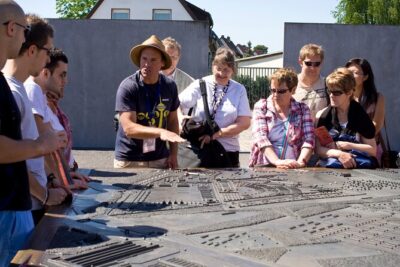
Because the camp is now a memorial and museum, you will encounter surviving buildings and the physical grounds where these events took place. The setting itself cannot tell you everything. That is why the guide’s explanation is important, particularly when the site’s remains do not immediately make their purpose clear.
Three hours may feel long for visitors who are not accustomed to memorial sites. In practice, the schedule is useful because it allows space for explanation and movement. Still, you should expect an emotionally demanding visit. Plan a quieter part of your evening rather than scheduling another major attraction immediately afterward.
Same city, a completely different kind of day:
- Berlin: Reichstag, Dome and Government District Guided Tour
★ 4.7 · 18,288 reviews - Berlin: 1-Hour City Tour by Boat with Guaranteed Seating
★ 4.3 · 16,993 reviews - Berlin: Boat Tour Along the River Spree
★ 4.4 · 11,252 reviews - Discover Berlin Half-Day Walking Tour
★ 5.0 · 9,624 reviews
Understanding the prisoners and daily life
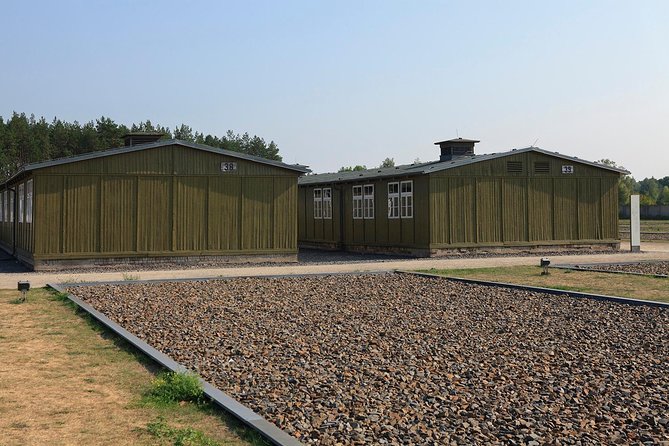
One of the strongest parts of this tour is its attention to the people held at Sachsenhausen. The camp was used primarily for political prisoners, and the visit examines their profiles as well as the conditions of everyday life.
That focus changes the way you look at the site. Instead of seeing only buildings and boundaries, you are encouraged to think about the people who lived under imprisonment, control, and persecution. The guide’s role is to provide the human and historical context as you move around the grounds.
The available information does not give a full list of prisoner groups, individual names, or every building included in the walking route. I would not book this expecting a precisely itemized stop-by-stop tour of every surviving structure. Book it for a guided account of the camp as a whole, including its prisoners and operation.
The guide’s tone matters here. Juan is singled out for seriousness, preparation, and respect when handling the subject. That is exactly what you want from this kind of visit. A guide who gives too little context leaves you lost. A guide who treats the place like an ordinary attraction misses the point.
The tour is offered in Spanish, which can make complex historical terms easier to follow. If Spanish is your strongest language, you will likely get more from the explanations than you would from reading short signs in another language while moving through the site alone.
The postwar Soviet camp, through 1950
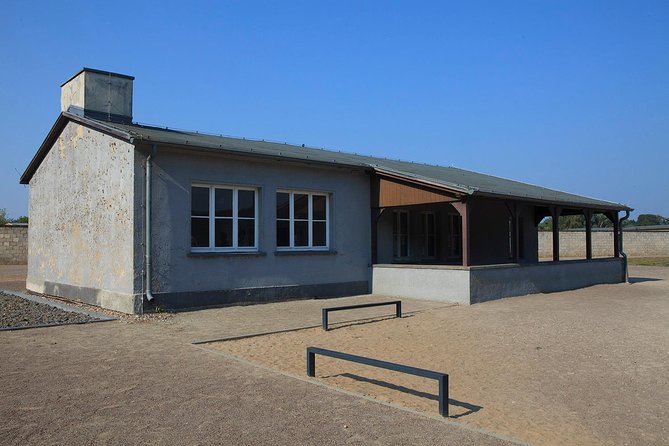
Sachsenhausen’s story does not end in May 1945. After the war, the former camp was in the Soviet Occupation Zone, and the NKVD used it as Special Camp Number 7 until 1950.
This later period is an important reason to visit with a guide. Without context, you might assume that the site represents only the Nazi concentration camp. The postwar use shows how the same place continued to be tied to imprisonment and state power after Germany’s defeat.
The tour’s stated aim is to cover the entire history of the camp, including this later chapter. That broader frame makes the visit more useful for anyone trying to understand twentieth-century Germany, not simply the history of the Third Reich.
You should also allow yourself time to take in the change in historical meaning. The memorial is not presenting one simple story with one closing date. It covers Nazi imprisonment, the end of the war, Soviet control, and the site’s present role as a museum and memorial.
What the guide adds to the visit
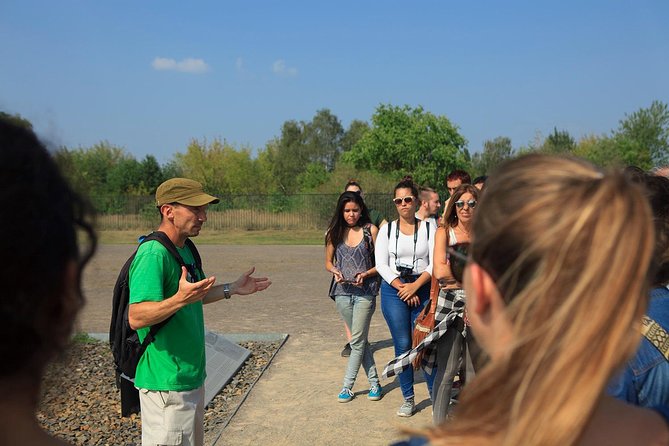
A good guide does three practical jobs here. First, the guide explains the historical sequence. Second, the guide helps you understand what you are seeing on the grounds. Third, the guide keeps the group moving through a large site without losing the thread of the visit.
This tour’s Spanish-speaking format is its clearest advantage. You are not left to translate difficult material while also keeping up with a group. The guide can explain the prisoners, daily life, Nazi use of the camp, and the NKVD period in one connected account.
The guide also travels back toward Berlin with you. Since the tour has no fixed end address, this is more helpful than it may sound. You can ask how to reach another part of the city, and the guide can explain the route before you continue your day.
The group may include as many as 30 people. That is not a private visit, so you will have less freedom to stop whenever you wish. On the positive side, the group size remains limited enough for a scheduled walking tour rather than a huge crowd.
The high rating of 4.9 from 1,189 reviews and the 99 percent recommendation figure point to strong satisfaction, particularly with the guide’s preparation and respectful handling of the subject. I would read those figures as a reason to feel confident about the format, not as a guarantee that every guide will have the same personal style.
Is $34.76 a fair price?
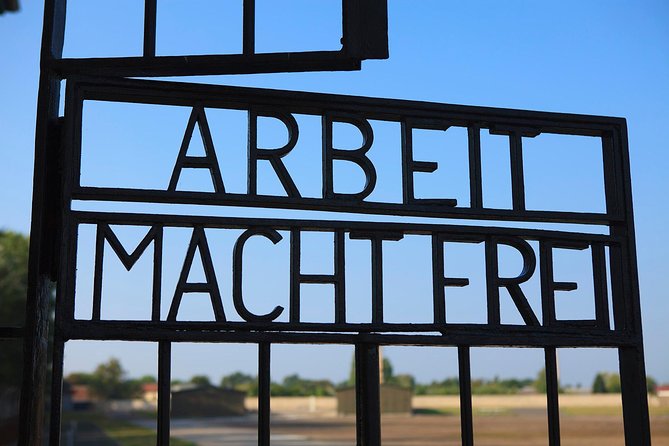
At $34.76 per person, this is a reasonable price for a six-hour guided outing from Berlin, provided you understand what is and is not included.
The price includes a local Spanish-speaking guide and admission to the memorial site. Those two items matter because the value of the tour is tied to explanation, not simply transportation to Oranienburg. You are paying for a structured visit with historical interpretation and group support.
Your ABC transportation ticket is extra, as are food and drinks. Add those costs before comparing this tour with other ways to visit. If you travel to Sachsenhausen independently, you may spend less on guiding, but you would also need to organize the route, admission, timing, and historical background yourself.
For me, the strongest value comes from the combination of the guide and the three-hour site visit. A short guided stop could feel too thin for a place of this importance. Here, the longer schedule gives the subject room to be explained properly.
The price is less attractive if you want complete independence or plan to spend only a brief time at the memorial. It is a better fit if you want Spanish-language guidance and prefer someone else to organize the outward journey and help with the return route.
Who should book this Sachsenhausen tour?
I would recommend this tour to Spanish-speaking visitors who want more than a quick look at a memorial. It suits adults, students, and anyone with a serious interest in Nazi Germany, political imprisonment, and the postwar history of the site.
It is also useful for first-time visitors to Berlin who are unsure how to reach Oranienburg or how to make sense of the memorial once there. The meeting point is central, the guide helps with transfers, and the return journey can be adapted to your plans in Berlin.
You should think twice if you dislike group tours, long walks, or fixed departure times. The start is at 10:00 am, the group can reach 30 people, and you need moderate physical fitness.
Families should judge the visit based on the age and maturity of the children. The supplied information does not give a minimum age or a child-specific format, so parents must decide if a three-hour concentration camp memorial visit is suitable for their children.
Wear comfortable shoes, carry water, and leave space in your schedule for the emotional weight of the site. These are simple preparations, but they make the day easier.
Booking, cancellation, and practical details
You receive booking confirmation at the time of purchase, and the activity is offered with a mobile ticket. The tour is near public transportation and begins at the Berlin TV Tower.
Free cancellation is available if you cancel at least 24 hours before the 10:00 am start time. Canceling inside that 24-hour window brings no refund, and changes made during the same period are not accepted. The cut-off follows local time, so check the clock carefully if you are changing plans.
The tour is usually booked about 17 days in advance. That does not mean you must book exactly that far ahead, but it is a useful signal for planning. If your Berlin dates are fixed, reserving early is sensible, especially if you need a Spanish-language tour on one particular morning.
Should you book it?
Book this tour if you want a carefully guided Spanish-language visit to Sachsenhausen, with time to examine the memorial and help with the transportation from Berlin. The combination of a three-hour site visit, a guide praised for respectful preparation, and support on the way back makes the $34.76 price a fair choice for many visitors.
Skip it if you want to wander alone, avoid a long day, or keep every transport cost inside the advertised price. You will need to buy the ABC ticket yourself, walk considerable distances, and give the subject your full attention.
For the right visitor, this is one of the more useful day trips from Berlin. It does not turn Sachsenhausen into entertainment. It gives you a clear way to approach a difficult place, understand its changing history, and return to the city with the context needed to think about what you have seen.
FAQ
Where does the Sachsenhausen tour begin?
The tour begins at the Berlin TV Tower, Panoramastraße 1A, 10178 Berlin, Germany.
What time does the tour start?
The start time is 10:00 am.
How long does the full experience last?
The full tour lasts approximately six hours.
How long do you spend at Sachsenhausen Memorial?
The scheduled visit at Gedenkstätte und Museum Sachsenhausen lasts about three hours.
Is admission to Sachsenhausen included?
Yes. The admission ticket for Sachsenhausen Memorial and Museum is included.
Is public transportation included in the price?
No. The ABC transportation ticket is not included.
Is the tour conducted in Spanish?
Yes. The included guide is a local Spanish-speaking guide.
What happens at the end of the tour?
The guide travels back toward Berlin and can explain how to reach another point in the city. The tour ends in Mitte, but it has no specific fixed finishing point.
Just added around Berlin
- Love and War in Berlin: Self-Guided Story Puzzle Walk★ 5.0 · 7 reviews
- Rickshaw Tours Berlin – Groups of up to 16 people with several rickshaws★ 4.0 · 97 reviews
- Walking on the Wall: 3-Hour Tour in Berlin★ 4.5 · 34 reviews
- eSIM for Germany and 34 European Countries★ 4.5 · 16 reviews
- Warnemuende Shore Excursion: Berlin Private Sightseeing Tour from Rostock★ 5.0 · 4 reviews
- Your ticket to The Wall Museum Berlin★ 3.0 · 60 reviews
- Warnemuende Shore Excursion: Private Berlin Tour★ 4.5 · 27 reviews
- Berlin’s Gay, Lesbian, and Queer Scene Small-Group Walking Tour★ 4.5 · 66 reviews
Concentration Camp Memorial Tours, compared.
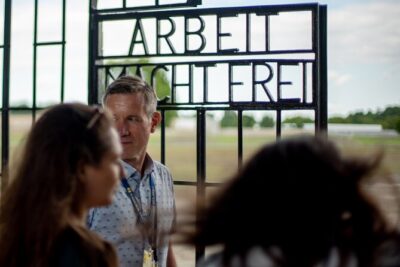
Sachsenhausen Concentration Camp Tour in English
Read our review →
Dachau Concentration Camp Memorial Site Tour from Munich by Train
Read our review →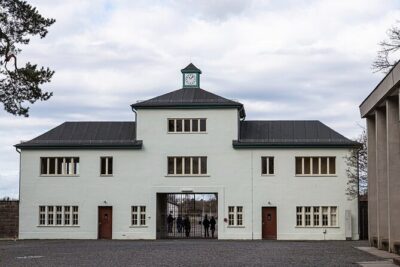
Sachsenhausen Concentration Camp Memorial Tour
Read our review →
Sachsenhausen Concentration Camp Bus Tour in English from Berlin
Read our review →Sachsenhausen Concentration Camp Tour in English
Read our review →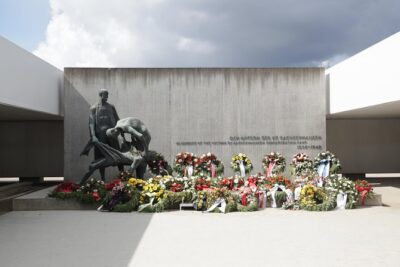
Sachsenhausen Concentration Camp Memorial Tour (Max. 15 Guests)
Read our review →Browse the lists this tour appears in