
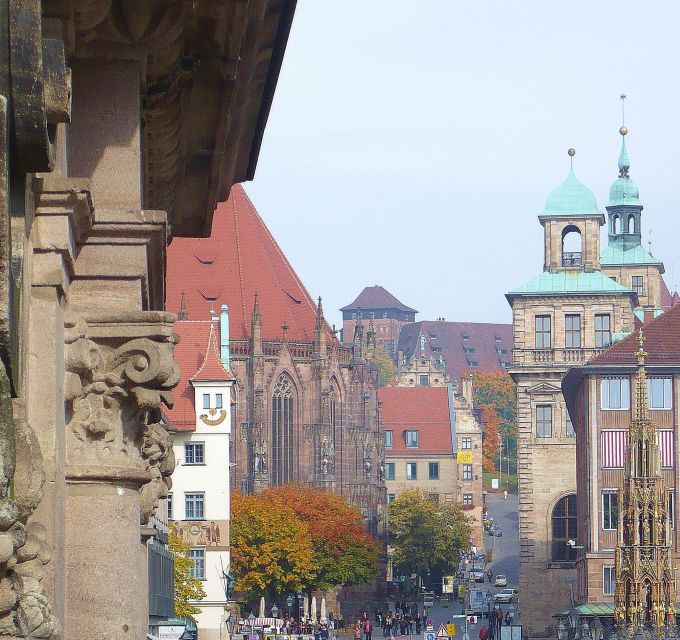
Reviewed · OLD TOWN WALKING TOURS
Nuremberg 2-Hour Old Town Highlights Walking Tour in English
Nuremberg’s old town packs a lot into two easy hours: medieval walls, half-timbered houses, grand churches, the Hauptmarkt, and castle courtyards all appear on one walk. I like the way the route mixes major sights with useful local advice, especially where to try Nuremberg sausages and amber lager. I also like the focus on both the Holy Roman Empire and the German Renaissance, rather than treating the city as a collection of pretty buildings.
The main consideration is pace. You cover many landmarks in a short time, and the tour takes place rain or shine. One recent guide, Hannes, handled wet weather with care, but you should still wear sound shoes and bring a rain layer. The tour is not suitable for people with mobility impairments.
In This Review
- Key points at a glance
- Starting beneath Nuremberg’s main station arch
- Handwerkerhof, where Nuremberg feels hand-sized
- St. Lorenz Church and the Pegnitz crossing
- Hauptmarkt and the Beautiful Fountain
- Old City Hall and St. Sebaldus Church
- Imperial Castle courtyards above the old town
- Albrecht Dürer-Platz and the artist’s house
- The city walls and the harder modern story
- A guide who adds facts and practical help
- Is $21 a fair price for two hours?
- Weather, pace, and what to bring
- Who should book this Nuremberg walk?
- Should you book it?
- FAQ
- Where does the Nuremberg walking tour begin?
- Where does the tour finish?
- How long is the tour?
- What language is the tour conducted in?
- What sights are included?
- Does the tour include Nuremberg’s Christmas Market?
- Does the tour run in bad weather?
- Is the tour suitable for people with mobility impairments?
- Can I cancel or pay later?
Key points at a glance
- Start at the red and white sign: Meet in front of the large central arched entrance at Nuremberg Hauptbahnhof.
- See the medieval center on foot: Most of the route runs through pedestrian streets, making the old town easy to explore without traffic.
- Visit the heart of market life: Hauptmarkt is home to the famous Christkindlesmarkt in December and other seasonal events throughout the year.
- Pair famous sights with local tips: Your guide can point out places for grilled Nuremberg sausages, amber lager, and more modern food.
- Expect history with personality: Guides explain imperial, medieval, Renaissance, and modern Nuremberg, with room for quirky details and questions.
- Plan for all weather: The walk runs rain or shine, and mobility is limited by the walking format.
Starting beneath Nuremberg’s main station arch
The meeting point is simple, but Nuremberg Hauptbahnhof is a busy place. Go to the front of the station and look for the large center arched entrance. Your guide will hold a red and white Nuremberg Tours in English sign.
Arrive a few minutes early. That gives you time to find the correct arch, check in, and avoid beginning the walk already flustered. Starting at the central station is useful if you have just arrived in Nuremberg by train or are using the tour to get your bearings at the start of a stay.
The walk ends at Hauptmarkt, not back at the station. That is a helpful arrangement. You finish in the middle of the old town, close to food, shops, churches, and more sightseeing. If you need to catch a train afterward, allow extra time to walk back to the station.
More Old Town Walking Tours in Nuremberg
- Nuremberg: Old Town Guided Walking Tour
★ 4.6 · 2,416 reviews - Nuremberg Old Town and Nazi Party Rally Grounds Walking Tour in English
★ 4.5 · 504 reviews - Nuremberg Old Town and Nazi Rally Grounds Walking Tour
★ 4.7 · 377 reviews
Handwerkerhof, where Nuremberg feels hand-sized
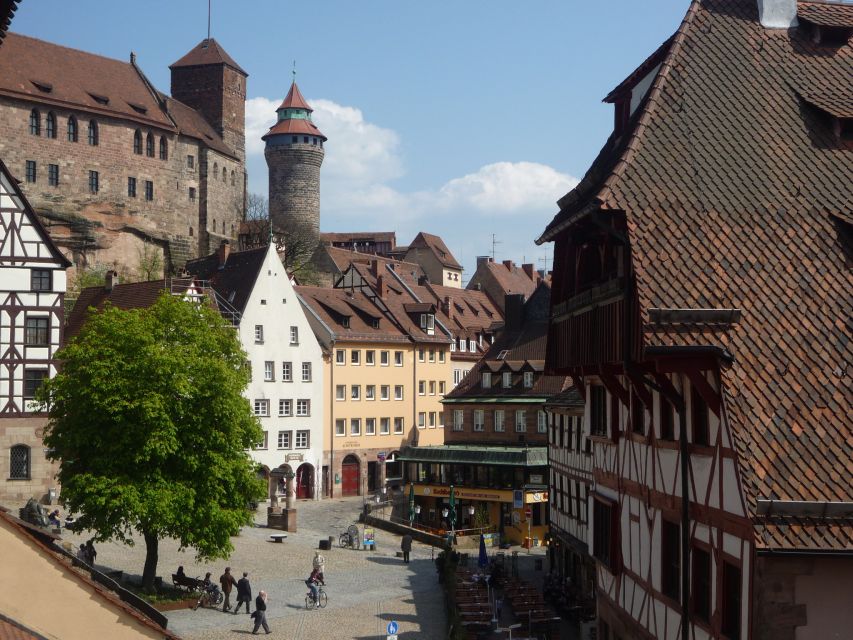
The first major stop is Handwerkerhof Nuremberg, also called Craftsmen’s Court. Set beside the city walls, this compact area gives you an immediate sense of old Nuremberg through colorful buildings and traditional craft shops.
It is a good opening stop because it is visual and easy to understand. You can take photographs, see the relationship between the walls and the old town, and begin to picture how the city’s central districts were arranged.
Handwerkerhof is also a reminder that Nuremberg is not only a museum of imperial buildings. The old town has a working, commercial side, and your guide can help connect the attractive facades with the city’s craft traditions.
The stop is relatively short, so do not expect a long shopping break. The value comes from learning where you are and why the city walls mattered before moving into the larger historic center.
St. Lorenz Church and the Pegnitz crossing
The walk passes St. Lorenz Church, one of the old town’s major landmarks. Even from outside, its scale gives you a feel for Nuremberg’s importance during the medieval and Renaissance periods.
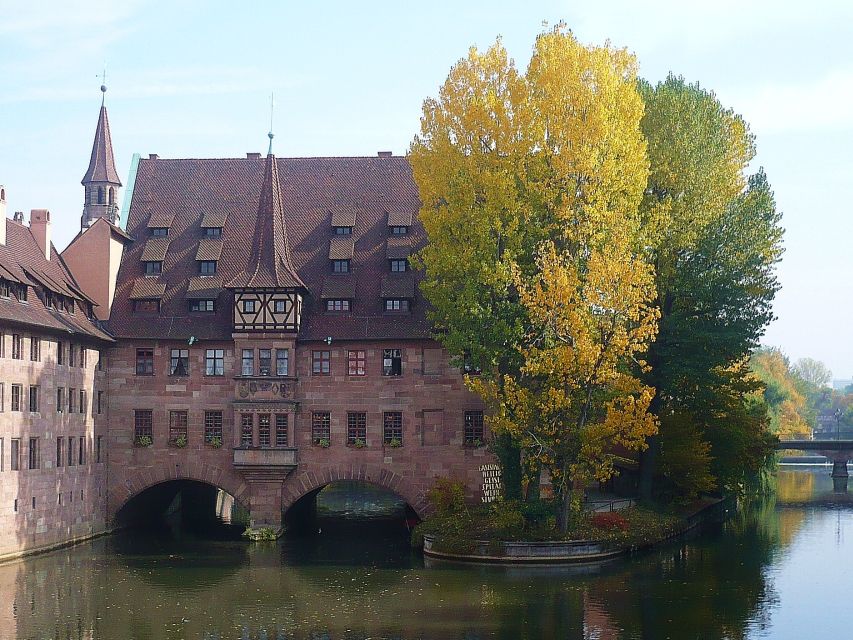
The route also follows the River Pegnitz. This is one of the more pleasant parts of the walk because water, bridges, old facades, and narrow streets come together in a small area. Your guide uses the river to explain how the city developed on both sides of the water.
Do not approach this tour expecting long interior visits at every church. St. Lorenz is listed as a pass-by stop, as is St. Sebaldus Church later in the route. If you want detailed interior time at either church, plan to return on your own.
That is not necessarily a weakness. A two-hour walk works best when it keeps moving, gives you the outside story, and leaves you with a list of places worth a second look.
Hauptmarkt and the Beautiful Fountain
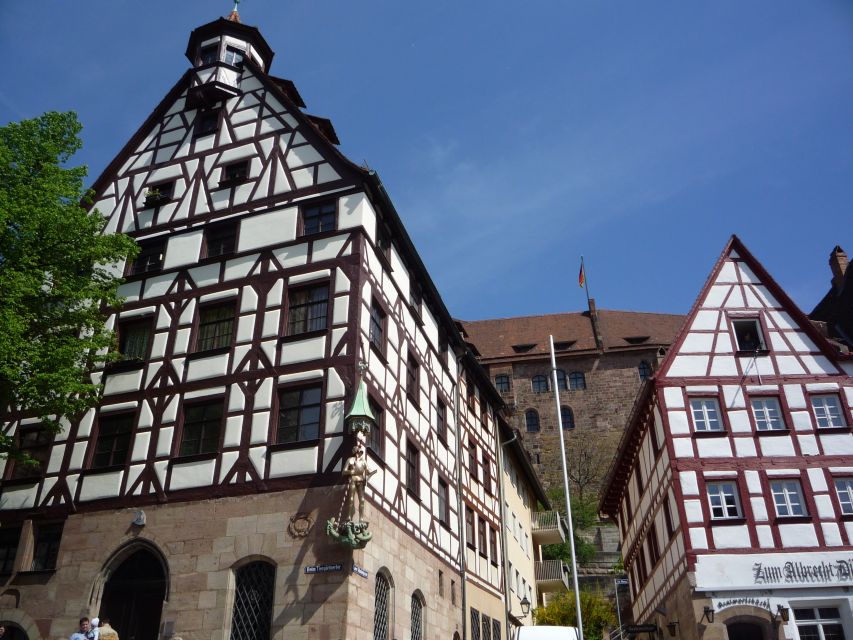
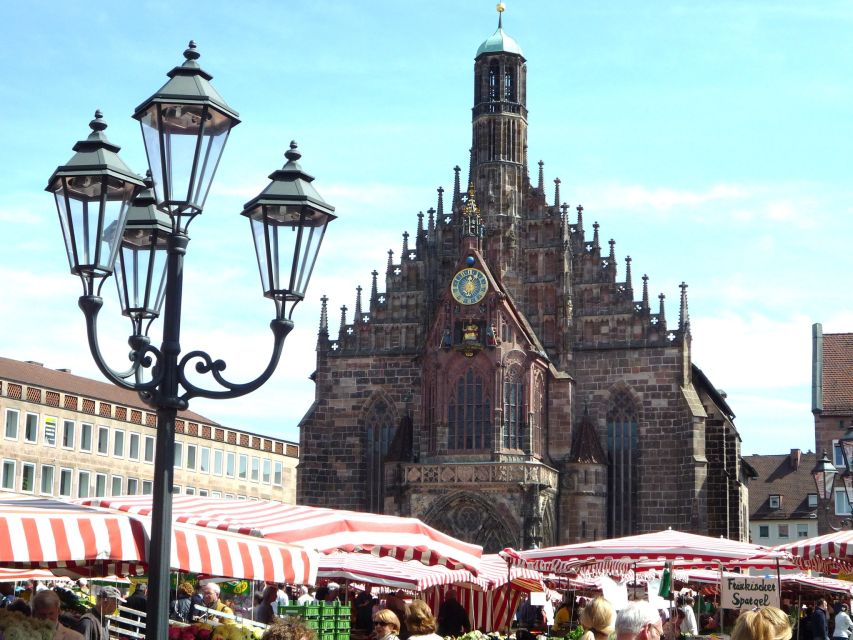
Hauptmarkt is the social center of the route and one of the places where Nuremberg’s past and present meet. The square hosts the city’s famous Christkindlesmarkt in December, but it is not only a Christmas destination. Seasonal markets and festivals take place here throughout the year.
The Beautiful Fountain is the square’s most recognizable feature. Its detailed Gothic design gives your guide plenty to point out, and it is an easy place for photographs. The guide can also explain how the square functioned as a public gathering and trading space.
This is a good place to ask practical questions. You can get advice about food, later sightseeing, and how to use the rest of your time in Nuremberg. The guide specifically points visitors toward the city’s famous grilled sausages and amber lager, while also offering suggestions for more modern food if traditional fare is not your thing.
At Christmas, Hauptmarkt can be very crowded, and the market changes the feel of the square. Outside December, you may find it easier to see the fountain, surrounding buildings, and Old City Hall without the same seasonal setup.
Same city, a completely different kind of day:
- Nuremberg: City Tour with the Bimmelbahn Train
★ 4.4 · 2,475 reviews - Nuremberg: Tunnels and Secret Passages in the City Wall Tour
★ 4.8 · 2,334 reviews - Nuremberg: Medieval Dungeons Guided Tour
★ 4.8 · 1,726 reviews - Nuremberg: Walking Tour of Former Nazi Party Rally Grounds
★ 4.7 · 1,665 reviews
Old City Hall and St. Sebaldus Church
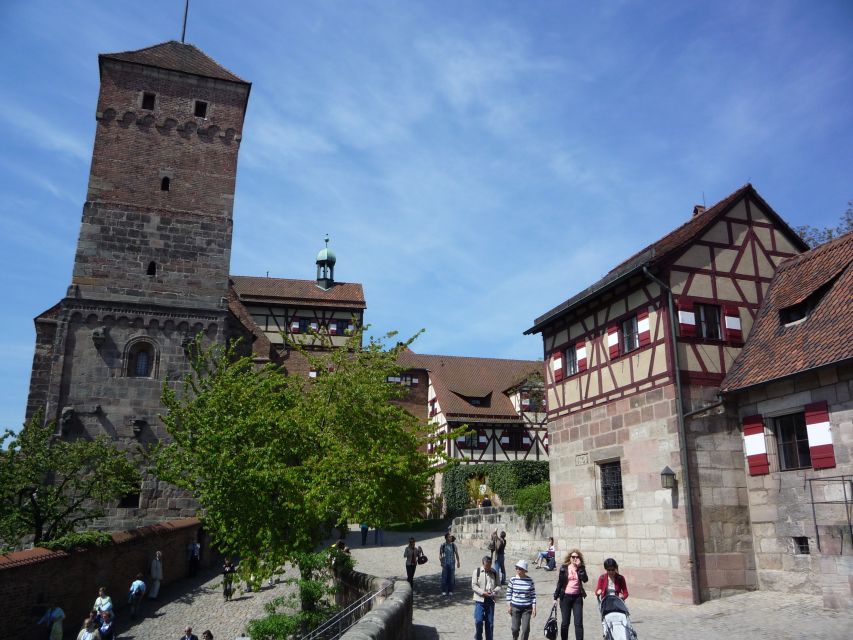
Old City Hall adds a civic chapter to the tour. After seeing churches and market space, you get a sense of how Nuremberg governed itself and presented its public authority.
The building is included as a guided stop, while St. Sebaldus Church is passed from the outside. Together, they help show how closely religion, trade, and city government were linked in the medieval center.
I find this kind of sequence useful because it prevents the walk from becoming a parade of unrelated facades. The guide can give you a basic map of power in old Nuremberg: church, town, market, castle, and merchant life all within a compact area.
The drawback is that two hours leaves little room for extended architectural study. If you are especially interested in Gothic details, church art, or the city’s municipal buildings, use the walk as an introduction and return later with more time.
Imperial Castle courtyards above the old town
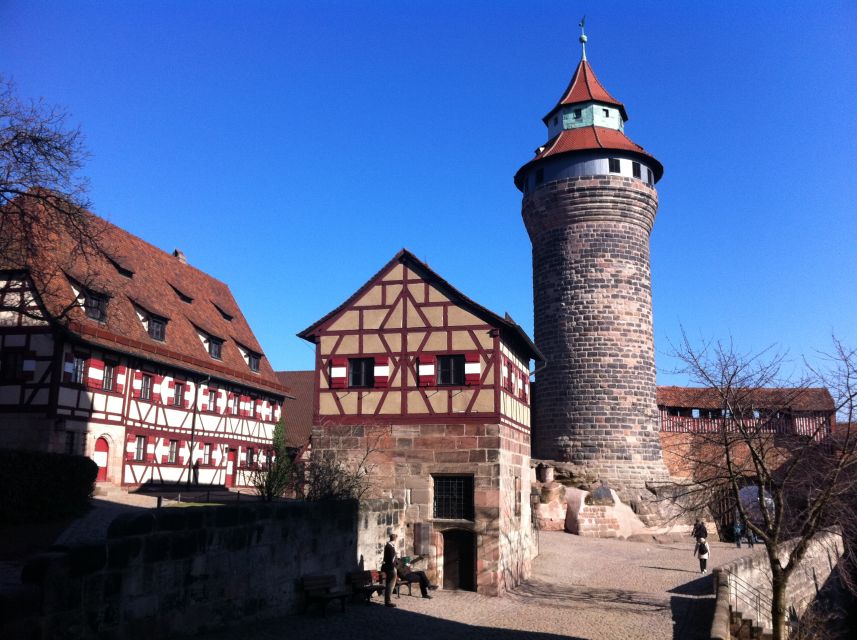
The Imperial Castle is the grandest stop on the route. Nuremberg’s connection to the Holy Roman Empire comes into clearer focus here, and the courtyards offer a strong sense of the city’s former political importance.
The experience includes the castle courtyards rather than a full museum visit. That distinction matters. You get the setting, the views, and the main historical explanation, but the two-hour walk does not provide time for every interior room or exhibition.
The climb and uneven historic surfaces may be tiring for some people. That is one reason the activity is not suitable for people with mobility impairments. Wear comfortable shoes and keep your pace steady.
The courtyards are also a good place to pause and connect the city below with the story your guide has been telling. Nuremberg was not simply a provincial town. Its imperial associations help explain the scale of its public buildings, churches, walls, and market life.
Albrecht Dürer-Platz and the artist’s house
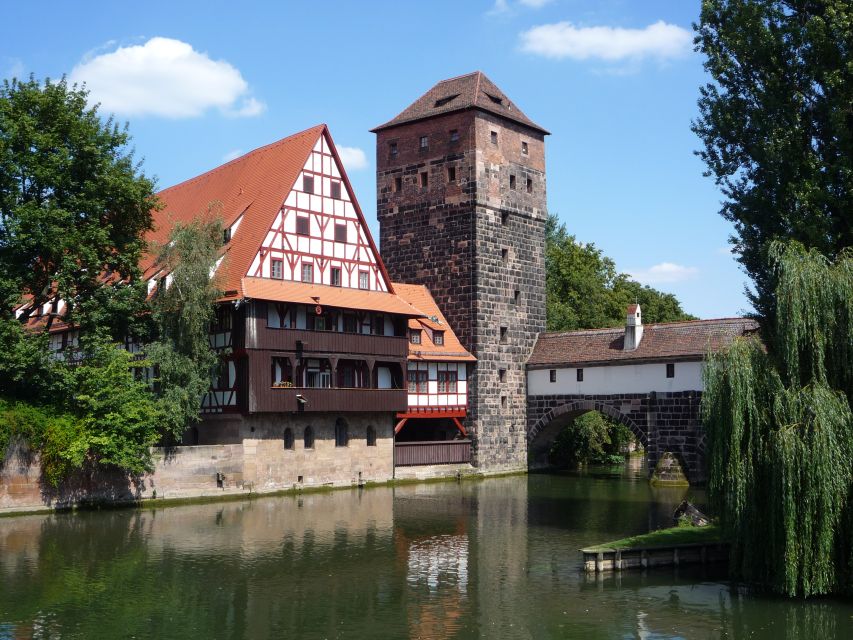
The route continues to Albrecht Dürer-Platz and Albrecht Dürer’s House. Dürer is one of the clearest links between Nuremberg and the German Renaissance, so this part of the walk adds an artistic dimension to the earlier medieval and imperial themes.
The house is included as a guided stop. The visit helps place Dürer within the city where he worked, rather than presenting him as an isolated name from an art textbook.
You should check what the guide plans to cover if you want a detailed museum visit. The experience is built around a walking tour and guided sightseeing, not an extended independent visit inside every attraction.
Albrecht Dürer-Platz is also a pleasant point for photographs and a useful marker for exploring the northern old town later. The narrow streets near the castle and Dürer’s house reward a slower return visit when you are not keeping up with a group.
The city walls and the harder modern story
The old walls and medieval streets make Nuremberg visually appealing, but this city cannot be understood through medieval history alone. The experience also includes references to the Congress Hall of the Nazi Party, Zeppelin Field, and Luitpold Arena.
These sites belong to a different part of Nuremberg’s story and carry a much heavier subject. Their inclusion gives the tour a wider frame, linking the medieval imperial city with the political events of the twentieth century.
A practical point is worth noting: the detailed walking route centers on the old town, from the central station to Hauptmarkt, while the Congress Hall, Zeppelin Field, and Luitpold Arena are associated with the former Nazi Party rally grounds. Ask your guide how these locations are handled during your departure time so you understand whether they are viewed as part of the walk, discussed from a distance, or better visited separately.
That clarification is especially useful if these sites are a main reason for your visit. The old town tour offers a broad introduction, but you may want a separate visit for a fuller look at the rally grounds and their documentation.
A guide who adds facts and practical help
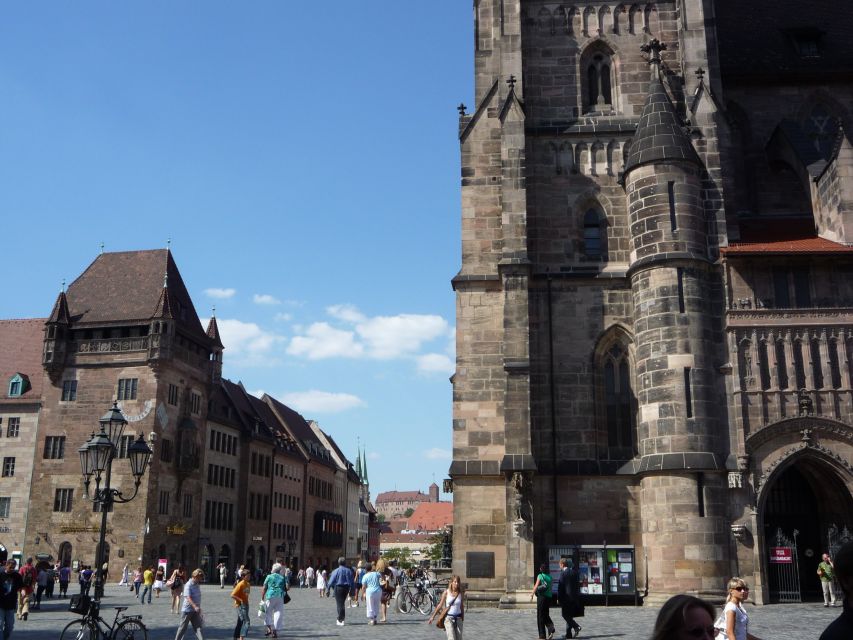
The guide is the heart of this experience. The tour is offered in English by fluent, experienced guides, and the best version of the walk will give you both historical explanation and time for questions.
Hannes received especially strong praise for combining clear facts with humor and for answering questions directly. His approach also included quirky details, which can make dates and dynasties easier to remember. You should not assume Hannes will lead every departure, but his example shows the tone the provider aims for.
One useful strength is the mix of old and new. You hear about the Holy Roman Empire, medieval Nuremberg, and the German Renaissance, but you also receive advice about current food and ways to use your time in the city.
There is one clear caution. A recent participant found the guide too fond of profanity and crude sexual references. That may not reflect every guide or departure, but families and visitors who prefer strictly polished commentary should keep it in mind. The overall rating is 4.4 from 107 reviews, which suggests a generally positive experience with some variation in guide style.
Is $21 a fair price for two hours?
At $21 per person, this is a reasonable way to get an organized introduction to Nuremberg. You are paying for a live English-speaking guide, a carefully chosen route, and the chance to ask questions while you walk.
The value is strongest if you have only a short stay or are visiting for the first time. In two hours, you cover the city walls, Craftsmen’s Court, market square, Old City Hall, the castle courtyards, Dürer’s area, and several important churches from the outside.
The price is less compelling if you want long interior visits, museum time, or a slow photographic walk. You are buying orientation and explanation, not admission to a full collection of attractions. Any entrance fees beyond the guided walk are not included in the stated inclusions.
For many visitors, the practical advice may be worth as much as the history. Knowing where to try local sausages, where to find beer, and what to revisit can save time during the rest of your stay.
Weather, pace, and what to bring
The tour runs rain or shine. Bring a waterproof layer in uncertain weather, and wear shoes that can handle a steady city walk and historic paving.
The route is mainly through pedestrian areas, which makes it pleasant and safer than a roadside tour. It does not mean the walk is effortless. The castle area and older streets may require more care, and the activity is not suitable for people with mobility impairments.
The tour lasts two hours, so keep large shopping plans for afterward. You will want your hands free for photographs and your attention available for the guide.
The booking terms are flexible: you can cancel up to 24 hours before the activity for a full refund, and you can reserve now and pay later. Availability depends on the selected starting time.
Who should book this Nuremberg walk?
I would choose this tour if you want a clear first look at Nuremberg and prefer learning the city through its streets rather than from a vehicle. It suits first-time visitors, rail arrivals, short city breaks, and anyone who wants a useful route before exploring alone.
It also works well for history-minded visitors who want the Holy Roman Empire, German Renaissance, and modern Nuremberg placed in one story. The guide’s local food suggestions are a nice bonus.
I would hesitate if you need step-free access, dislike walking in poor weather, or want a deep visit inside the castle, churches, or museums. I would also ask about the treatment of the Nazi rally-ground sites if that subject is central to your plans.
Should you book it?
Book this two-hour walk if you want broad coverage, local guidance, and a sensible introduction for $21. The route gives you the essential old town sights without requiring a full day, and the end point at Hauptmarkt leaves you well placed for lunch or more sightseeing.
Choose it with realistic expectations. You will see many important places, but some are outside-only stops, and the pace leaves limited time for lingering. With good shoes, weather protection, and a few follow-up hours of your own, this is a practical and fairly priced way to begin Nuremberg.
FAQ
Where does the Nuremberg walking tour begin?
Meet in front of the large central arched entrance at Nuremberg Hauptbahnhof, the city’s main train station. The guide will hold a red and white Nuremberg Tours in English sign.
Where does the tour finish?
The walk finishes at Hauptmarkt, at 90403 Nürnberg, Germany.
How long is the tour?
The walking tour lasts two hours.
What language is the tour conducted in?
The tour is conducted in English with a live English-speaking guide.
What sights are included?
The route includes Handwerkerhof, Hauptmarkt, Old City Hall, the Imperial Castle courtyards, Albrecht Dürer-Platz, and Albrecht Dürer’s House. It also passes St. Lorenz Church and St. Sebaldus Church.
Does the tour include Nuremberg’s Christmas Market?
The tour visits Hauptmarkt, where the Christkindlesmarkt is held in December. The Christmas market itself is seasonal and takes place in December only.
Does the tour run in bad weather?
Yes. The tour takes place rain or shine.
Is the tour suitable for people with mobility impairments?
No. The activity is not suitable for people with mobility impairments.
Can I cancel or pay later?
You can cancel up to 24 hours in advance for a full refund. You can also reserve your place and pay later, keeping your travel plans flexible.
More 2-Hour Experiences in Nuremberg
- Hamburg: 2-Hour XXL Port of Hamburg Cruise Tour
★ 4.7 · 6,979 reviews - Berlin’s Best: 2 Hour Walking Tour Third Reich and the Cold War
★ 5.0 · 5,486 reviews - Leipzig: 2-Hour Guided Walking Tour in German
★ 4.8 · 1,612 reviews - Hamburg: Speicherstadt and HafenCity 2-Hour Tour
★ 4.8 · 1,063 reviews
More Walking Tours in Nuremberg
- “Rotes Bier” and “Blaue Zipfel”. A historical-culinary walk
★ 4.4 · 190 reviews - Nuremberg: Private Guided Walking Tour
★ 4.5 · 9 reviews - Discover Berlin Half-Day Walking Tour
★ 5.0 · 9,624 reviews - Berlin: Third Reich and Cold War 2 Hour Walking Tour
★ 4.9 · 6,830 reviews
Just added around Nuremberg
- Tour en español al Campo Zeppelin★ 5.0 · 8 reviews
- Stein: Public guided tour of the “Old Mine” museum★ 4.5 · 18 reviews
- “Rotes Bier” and “Blaue Zipfel”. A historical-culinary walk★ 4.4 · 190 reviews
- Nuremberg: Old Town Guided Tour By Bus★ 4.4 · 198 reviews
- Nürnberg kennenlernen: Highlights in der Altstadt★ 4.7 · 189 reviews
- Nuremberg: Bar and Club Tour with Free Shots and Free Entry★ 3.8 · 23 reviews
- Nürnberg Bachelor(ette) Party with Night PubCrawl★ 4.2 · 5 reviews
- Nuremberg: WWII Tour, Courtroom 600 and 3rd Reich Sites★ 4.6 · 94 reviews
Old Town Walking Tours, compared.

Old Town & Viktualienmarkt City Walk in German
Read our review →
The Night Watchman Old Town Walking Tour in German
Read our review →
Browse the lists this tour appears in