
Reviewed · HISTORICAL TOURS
Lübeck: Hanseatic League History Walking Tour
Lübeck’s Hanseatic past comes alive on this compact walk through the old town. You’ll follow the route from the Holsten Gate to the Trave Harbour, St. Mary’s Church, Buddenbrook House, and the old guild hall where sailors once gathered. I like the clear story and the chance to see narrow lanes and quiet courtyards, not just grand façades.
I also like that this is a private group of up to six, so your guide can adjust the pace and answer your questions. Guides Bernd and Karin are especially good at responding to requests, including a wish to see Lübeck’s courtyards. The main drawback is the fixed 90-minute length: you see a lot, but this is an overview rather than a slow visit inside every landmark.
In This Review
- Key points
- From merchant ships to a city of brick
- Starting beneath the Holsten Gate
- Salt storehouses and the Trave Harbour
- Große Petersgrube and the old brick city
- St. Mary’s Church and the Hanseatic model
- Rathausmarkt and Lübeck’s civic power
- Buddenbrook House and the merchant city
- Schiffergesellschaft, where sailors gathered
- Ending at the Hospital of the Holy Spirit
- What the $259 price really means
- Timing, pace, and what to bring
- Who will get the most from this walk
- Should you book the Lübeck Hanseatic League walk?
- FAQ
- How long is the Lübeck Hanseatic League History Walking Tour?
- Where does the tour begin?
- Where does the tour end?
- What languages are available?
- How many people can join the private tour?
- Is food or transportation included?
- What is the cancellation policy?
Key points
- Follow the Hanseatic story: Learn how merchant connections grew into a network of about 300 Northern European cities.
- Start at the Holsten Gate: Begin beside Lübeck’s best-known fortification and trace the old route toward the harbor.
- See Lübeck’s brick Gothic core: Walk Große Petersgrube and view stepped-gable buildings, St. Mary’s Church, and the City Hall.
- Private and flexible: A group of up to six can ask for more courtyards, architecture, or trade history.
- Finish with medieval social history: End at the Hospital of the Holy Spirit, one of Lübeck’s oldest social institutions.
- Good value for a small group: The $259 group price works out to about $43 per person when six people share it.
From merchant ships to a city of brick
The Hanseatic League was not a single kingdom or one tightly run company. It grew from links among North German merchants who wanted safer sea routes, dependable trade, and stronger bargaining power in foreign ports.
Your guide explains how that loose merchant association became a confederation of cities. At its height, it connected about 300 maritime and inland cities across Northern Europe, stretching from Riga to Bruges. Lübeck was one of its key centers, and the old town still gives you a clear sense of how trade shaped daily life.
I like this theme because it gives every stop a purpose. The gates, harbor, churches, guild halls, and merchant houses are not isolated sights. They are pieces of the same story: goods arrived by water, merchants built wealth, religious institutions grew, and the city protected its routes and status.
The tour uses the city itself as the classroom. You are not sitting through a long lecture about medieval trade. You are moving through streets where the architecture explains the past in a more direct way.
A few more Lubeck trips to weigh up
- Lübeck: Private Historical and Architectural Walking Tour
★ 4.5 · 6 reviews - Leipzig: City History Canal Sightseeing Tour on a Motorboat
★ 4.7 · 6,232 reviews - Berlin: Natural History Museum Entrance Ticket
★ 4.6 · 3,382 reviews
Starting beneath the Holsten Gate
Meet your guide at the Holsten Gate, Lübeck’s most famous landmark. It was one of four city fortification gates at this wall passage alone, which gives you an immediate sense of how carefully the city guarded its approaches.
The gate is a useful starting point for another reason: it shows Lübeck as a working commercial city, not only as a pretty old town. From here, the walk connects the defensive side of the city with the trading world along the Trave.
Your guide may be Bernd, Chris, or Karin. The available information identifies all three as guides for this experience, and Bernd and Karin are noted for shaping the walk around the group’s interests. That flexibility matters in a private tour. You can ask for more attention to architecture, Hanseatic trade, or the courtyards if one subject catches your attention.
The Holsten Gate is also a practical meeting point. The route begins right in the historic center, with no transfer included, so plan to arrive on your own.
Salt storehouses and the Trave Harbour
After leaving the gate, the route passes Lübeck’s salt storehouses and continues toward the Trave Harbour. This part helps explain the city’s economic strength in concrete terms.
Salt was a vital trade product, used to preserve food before modern refrigeration. The storehouses connect the grand Hanseatic story to a simple question: what did merchants actually move, store, and sell? Along the harbor, you can picture Lübeck as a place where cargo, ships, and commercial agreements met.
I find harbor stops most useful when a guide ties scenery to business, and that is the point here. The Trave was not background decoration. It was a working route that linked Lübeck with the Baltic Sea and wider Northern European trade.
Do not expect a long harbor visit or a boat ride. This is a walking tour, and the harbor is one part of a broader route. Still, it gives the itinerary a welcome change from streets and churches.
Große Petersgrube and the old brick city
The walk continues through Große Petersgrube, one of Lübeck’s oldest streets. Here, the focus shifts from trade routes to the city’s built form.
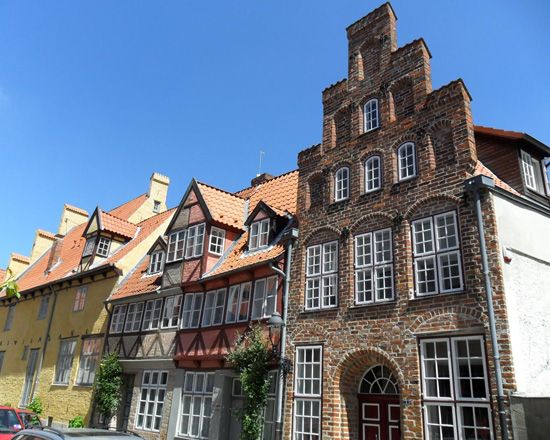
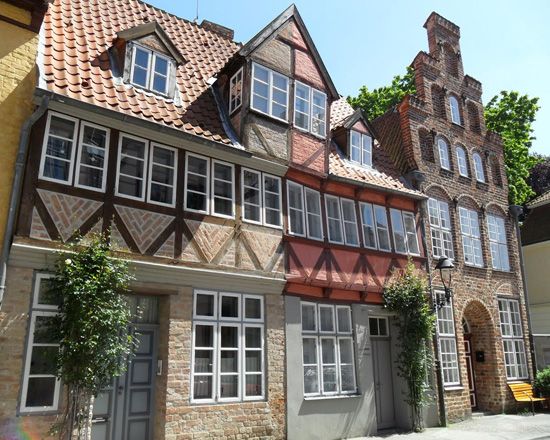
Look for traditional brick buildings and stepped gables. The façades point upward in a distinctive Northern European style, shaped by the materials and building traditions of the Hanseatic cities. Brick was practical, durable, and well suited to the region, but Lübeck’s old streets also show how merchants used architecture to signal prosperity.
The narrow lanes are a key part of the experience. A bus tour could show you the major monuments, but it would miss the smaller scale of Lübeck, where buildings press close together and side passages lead into quieter spaces.
This is also where a private guide can improve the walk. You might want to pause for details on a gable, doorway, or alley. You might prefer to keep moving toward the next major sight. With only your group, the pace is easier to adjust than on a large scheduled walk.
Same city, a completely different kind of day:
- Lübeck: 1-Hour Splash Bus City Tour
★ 4.0 · 2,626 reviews - Lübeck: entertaining guided tour to old town highlights
★ 4.7 · 594 reviews - Lübeck: Entertaining Tour Through Hidden Courtyards
★ 4.8 · 483 reviews - Lübeck: Electric Boat Rental – without driving licence
★ 4.8 · 174 reviews
St. Mary’s Church and the Hanseatic model
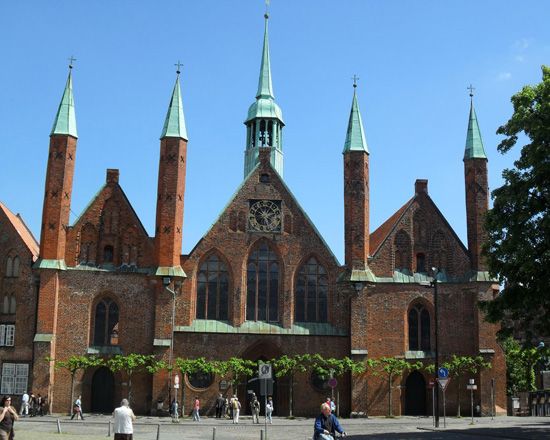
St. Mary’s Church is one of the major architectural stops. It served as a model for many churches in Hanseatic cities around the Baltic region, so the building is important beyond Lübeck itself.
Your guide places the church in the wider network of cities connected by trade. That makes the stop more meaningful than simply admiring a large church. You see how Lübeck’s wealth and influence traveled through the region, not only in cargo holds and merchant contracts but also in religious architecture.
The itinerary is not presented as a full church tour, and the 90-minute schedule limits how long you can linger. If you want an extended interior visit or detailed art commentary, you’ll need to set aside additional time on your own. The walk’s goal is to show how St. Mary’s fits into Lübeck’s city story.
Still, this is one of the strongest stops for first-time visitors. It links local architecture with the wider Hanseatic world in a single view.
Rathausmarkt and Lübeck’s civic power
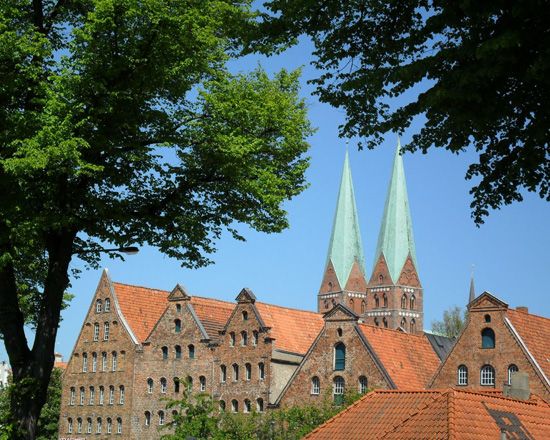
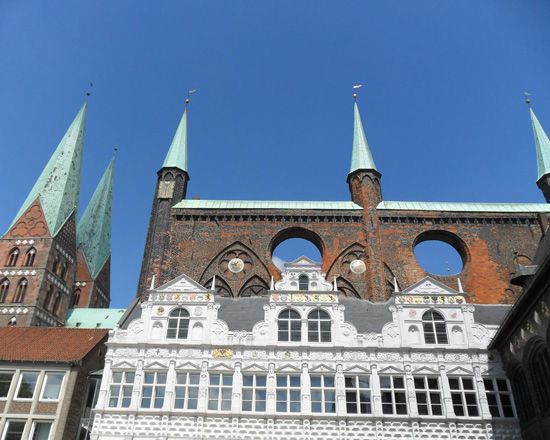
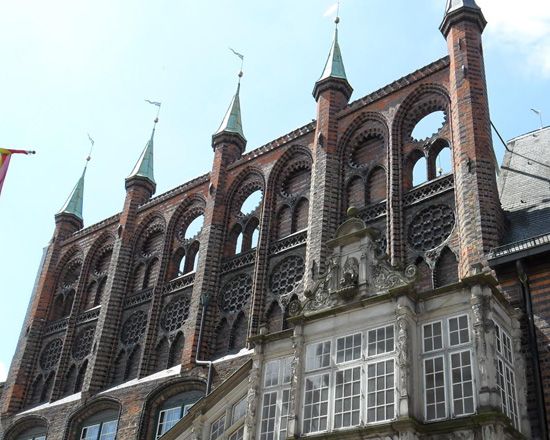
The route includes the City Hall and Rathausmarkt square, the civic heart of the old town. Here, the story moves from private merchants and ships to public power.
A successful trading city needed rules, political influence, and a place where civic business could be conducted. The Rathausmarkt helps you see that the Hanseatic League was not only about individual traders making money. Cities had to cooperate, protect commercial interests, and manage relationships with other ports and inland centers.
I appreciate this balance in the itinerary. The walk does not treat Lübeck as a collection of beautiful old buildings. It shows the connection between commerce, government, and urban design.
The square also breaks up the tighter streets. After narrow lanes and old houses, an open civic space helps you understand how the city organized its public life.
Buddenbrook House and the merchant city
Passing Buddenbrook House adds a later literary and family connection to the tour. The building is associated with the Mann family, and it gives you a glimpse of Lübeck through the world of merchants, family identity, and social status.
This stop is not the same as a Hanseatic warehouse or guild hall, but it fits the wider theme. Lübeck’s commercial culture continued to shape the city long after the Hanseatic League reached its height.
You should think of Buddenbrook House as a brief exterior stop within the walking route, not a full museum visit. No food, drinks, or attraction admissions are included, and the listed experience centers on the guide-led walk.
For readers who enjoy literature, this adds an extra layer. For those focused only on medieval trade, it may feel less essential than the harbor or St. Mary’s Church. That is one reason the private format helps: you can ask your guide to give this stop more or less attention.
Schiffergesellschaft, where sailors gathered
The route then reaches the Schiffergesellschaft guild hall. This is one of the most evocative stops because it connects directly with the people who worked on the Hanseatic trade routes.
The sailors of the Hanseatic League used to stop here, giving the building a strong link to maritime life. After hearing about merchants, cities, and trade networks, you get a place associated with the crews who moved goods across the water.
Guild halls also help explain how medieval and early modern working life was organized. A merchant association and a sailors’ gathering place were different parts of the same commercial system. One arranged deals and influence; the other depended on ships, skills, and hard travel.
The stop is especially useful if you want a human scale to the Hanseatic story. Instead of thinking only about city names from Riga to Bruges, you can picture the sailors who made those connections possible.
Ending at the Hospital of the Holy Spirit
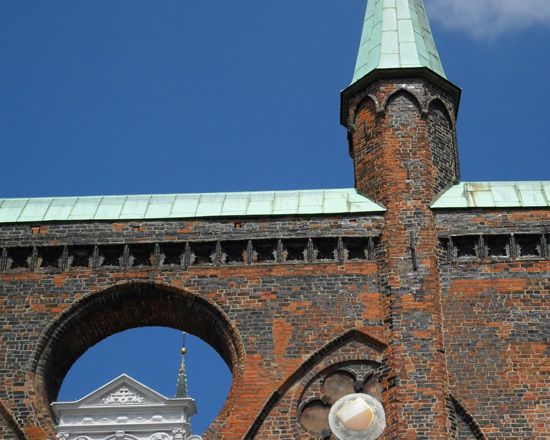
The walk ends at the Hospital of the Holy Spirit, one of Lübeck’s oldest social institutions. This is a thoughtful finish because it broadens the story beyond wealth and commerce.
Medieval cities needed institutions to care for people who could not support themselves. The hospital points to the social responsibilities, religious values, and civic structures that grew alongside Lübeck’s prosperity.
You may also get a look into one or two romantic backyards here. These smaller spaces are among the most appealing parts of the route, especially if you want to see how Lübeck’s old buildings work behind their main façades.
The courtyards are also where the private format can pay off. Karin and Bernd are specifically noted for responding to requests to see more courtyards. Ask early if that detail interests you, since the route has a set end point and only 90 minutes.
What the $259 price really means
The price is $259 per group of up to six people. That sounds high for a 90-minute walk if you are booking for one or two people. Shared by six, though, it comes to about $43 per person, which is more reasonable for a private guide in a major historic center.
The value rests on the private format, not on the number of minutes alone. You are paying for a guide who can respond to your questions and adapt the emphasis. A German or English tour for a large group would usually offer less personal attention, though no comparison price is provided here.
The tour includes a professional city guide. Transfers, food, and drinks are not included, so plan this as a self-contained walking experience beginning at Holsten Gate and ending at the Hospital of the Holy Spirit.
For a family, a small group of friends, or colleagues visiting Lübeck together, the group rate makes more sense. The tour also suited a business meeting group, since it can give a mixed German and international group a shared introduction to the city.
Timing, pace, and what to bring
Ninety minutes is enough to cover many major sights, but it is a brisk introduction. You’ll pass the Holsten Gate, salt storehouses, Trave Harbour, Große Petersgrube, St. Mary’s Church, Rathausmarkt, Buddenbrook House, Schiffergesellschaft, and the Hospital of the Holy Spirit in one compact route.
That schedule is a strength if you have limited time. It gives you a useful map of the old town and suggestions for what to explore after the official walk. Karin, in particular, is noted for offering ideas for continuing your time in Lübeck.
The tradeoff is that you may not have long at each stop. If you want to study every façade, enter every church, or spend time at a museum, treat this as your orientation walk and continue independently afterward.
Wear comfortable shoes and be ready for continuous walking through narrow historic streets. The experience is offered in German or English, so choose the language that lets you ask questions easily.
Who will get the most from this walk
I would recommend this tour to you if you want a clear introduction to Lübeck without committing to a half-day program. It suits first-time visitors, small groups, families with an interest in history, and colleagues looking for a shared activity near the city center.
It is also a good match if you enjoy architecture but want context. The stepped gables, brick buildings, church design, and courtyards mean more when you understand the trade network behind them.
You may want something else if you prefer museum interiors, food tasting, or a slow architectural study. Those are not included. The focus is the city streets and the Hanseatic story, presented in a short private walk.
The guide quality appears to be a major part of the experience. Bernd is described as lively and highly responsive to group wishes, Chris is praised for making Lübeck’s story clear, and Karin combines city history with useful suggestions for the rest of your visit. Since guide assignment can vary, you should not book expecting one specific person unless that can be confirmed.
Should you book the Lübeck Hanseatic League walk?
Book it if you want a private, efficient introduction to Lübeck and can share the $259 cost with several people. The route gives you the city’s key Hanseatic themes, from fortified gates and salt storage to harbor trade, civic power, sailors, churches, and social care.
I especially like it for a first afternoon in Lübeck. You’ll finish with a better sense of where the old town’s main sights fit together, plus ideas for exploring courtyards and other places afterward.
Skip it if you are traveling alone and watching every dollar, or if you want extended time inside individual attractions. For a small group that values a flexible guide and a strong historical thread, it is a sensible way to get oriented fast.
FAQ
How long is the Lübeck Hanseatic League History Walking Tour?
The tour lasts 90 minutes.
Where does the tour begin?
Meet your guide at the Holsten Gate in Lübeck.
Where does the tour end?
The walk ends at the Hospital of the Holy Spirit.
What languages are available?
The live guide is available in German and English.
How many people can join the private tour?
The price covers a private group of up to six people.
Is food or transportation included?
No. Transfers, food, and drinks are not included.
What is the cancellation policy?
You can cancel up to 24 hours in advance for a full refund. You can also reserve now and pay later.
Just added around Lubeck
- Lübeck zwischen Grusel und Geschichte Truecrime zu Halloween★ 4.9 · 35 reviews
- Lübeck: Private Historical and Architectural Walking Tour★ 4.5 · 6 reviews
- Lübeck: Old Town Highlights Private Walking Tour★ 4.8 · 8 reviews
- Lübeck Day Pass – Day ticket for Lübeck museums★ 4.0 · 15 reviews
- Lübeck: Express Walk with a Local★ 4.9 · 10 reviews
- Lübeck: Classic Tour of the Hanseatic City★ 4.8 · 64 reviews
- Lübeck: Backyards and Town Houses Private Guided Tour★ 4.9 · 23 reviews
- Lübeck: Architecture and Local Craft Private Guided Tour★ 4.0 · 6 reviews
Historical Tours, compared.

City History Canal Sightseeing Tour on a Motorboat
Read our review →






Browse the lists this tour appears in