
Reviewed · LUBECK TOURS
Lübeck: Architecture and Local Craft Private Guided Tour
Lübeck’s story is written in red brick. This private 90-minute walk takes you from the Holstentor through the old town, linking grand churches and merchant homes with the less polished details of city life: sagging houses, altered gables, tight passages, and courtyards built behind the street fronts. I like that the tour treats architecture as evidence of how Lübeck worked, not just as a backdrop for photographs. I also like the private format, which gives you room to ask questions and set a pace that suits your group.
The main consideration is time. Ninety minutes is enough for a focused introduction, but not enough for a full visit inside Lübeck’s churches or a long look at every lane. Church entry may cost an extra €2, and food, drinks, and other entrance fees are not included. The highly praised guides are described as engaging, competent, and ready to answer detailed questions, but no guide name is supplied in advance.
In This Review
- Key details of Lübeck’s architecture and craft walk
- Why Lübeck’s brick buildings make a good walking tour
- Meeting at the Holstentor
- The market, town hall, and St. Marien
- Buddenbrockhaus and the city’s literary side
- Glockengießerstraße and Lübeck’s passages
- A merchant’s house and the craft of brick-making
- The Holstentor as the final landmark
- What the private format adds
- What the guide quality means for your experience
- Who should book this Lübeck tour
- Practical advice before you reserve
- Should you book the Lübeck architecture tour?
- FAQ
- Where does the Lübeck tour begin?
- How long does the tour last?
- What is the price of the tour?
- How many people can join the private group?
- What languages are available?
- Can I choose the starting time?
- When will the tour time be confirmed?
- Is church admission included?
- Are food and drinks included?
- Can I cancel for a full refund?
- Is payment required at the time of booking?
Key details of Lübeck’s architecture and craft walk
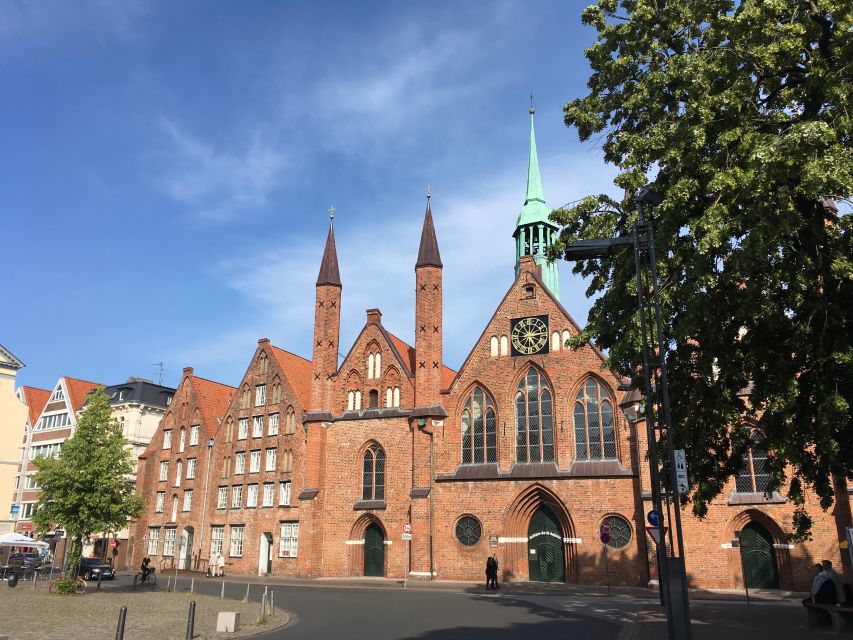
- Brick Gothic in context: Learn why fired brick became so important in a city shaped by Hanseatic trade and limited building materials.
- A route through major landmarks: Begin at the Holstentor, then see the market, town hall, St. Marien, Buddenbrockhaus, Glockengießerstraße, and a merchant’s house.
- Private attention: Your group can include up to eight people, with a guide speaking English or German.
- Small architectural clues: Look for sagging houses, changed gables, decorated townhouses, passages, and courtyards.
- Local craft with a practical purpose: Brick-making was not simply a trade. It affected construction, status, and daily life in Lübeck.
- Flexible start time: The walk can begin between 9 a.m. and 7 p.m., arranged with your guide after booking.
Why Lübeck’s brick buildings make a good walking tour
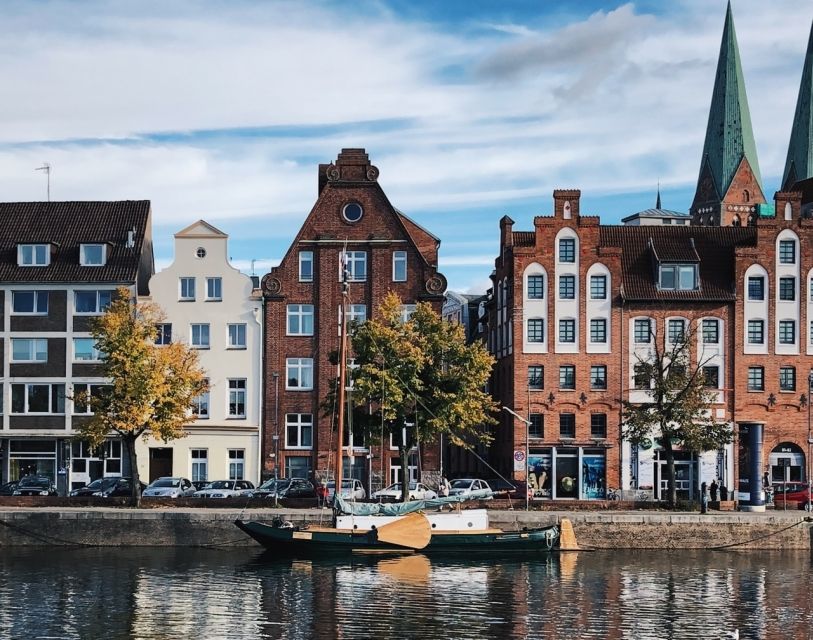
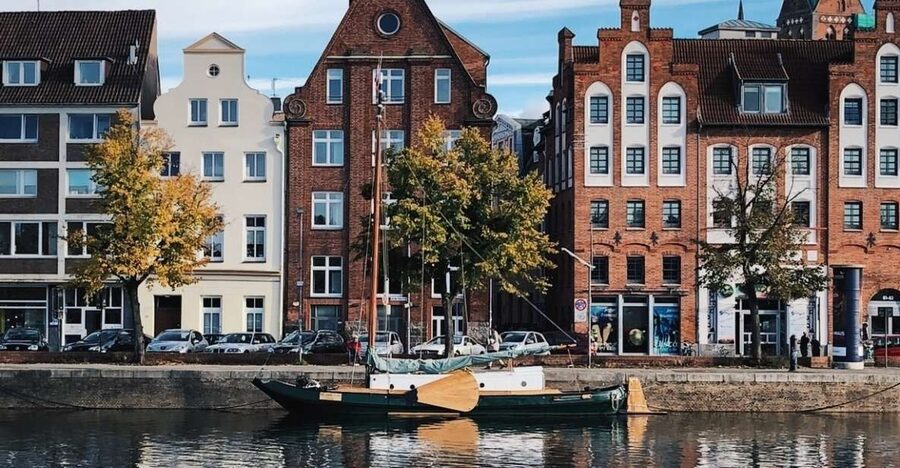
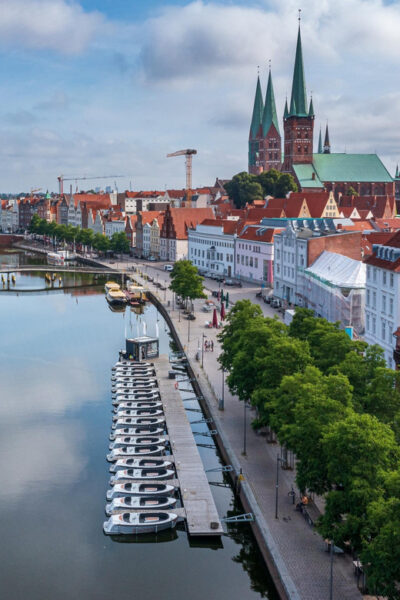
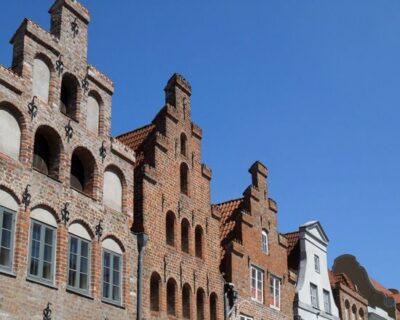
Lübeck is one of northern Germany’s best places to see Gothic brick architecture. Stone was not always easy to obtain in this part of Europe, so brick became a key building material for churches, civic buildings, merchant houses, and defensive structures. The result is a city with a strong visual character, but the important point is not just color or texture.
On this walk, you learn how brick shaped the city’s construction methods and its public image. A large church could show wealth and influence. A decorated townhouse could signal the position of its owner. A narrow passage or shared courtyard could reveal how crowded urban life was behind the handsome street fronts.
I like this approach because it gives you something to look for. Instead of walking past an old wall and hearing only a date, you can ask why it was built that way, who paid for it, and how people used the space. The tour also covers the original street system and the artificial expansion of construction areas during the Middle Ages, showing how Lübeck adapted as the city grew.
That material suits curious visitors who want more than a quick photo stop. It is also useful if you are visiting Lübeck for the first time and want a clear framework for understanding the old town.
A few more Lubeck trips to weigh up
- Lübeck: Backyards and Town Houses Private Guided Tour
★ 4.9 · 23 reviews - Lübeck: Old Town Highlights Private Walking Tour
★ 4.8 · 8 reviews - Lübeck: Private Historical and Architectural Walking Tour
★ 4.5 · 6 reviews
Meeting at the Holstentor
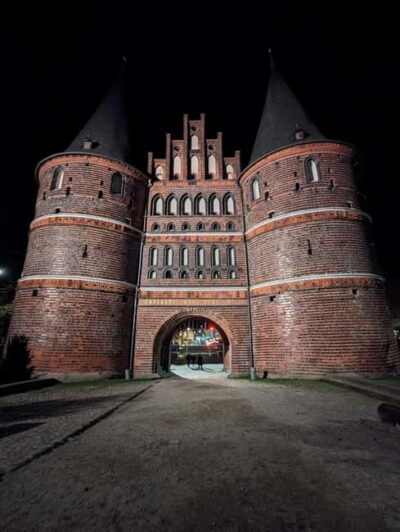
The tour begins at the Holstentor, Lübeck’s most recognizable landmark. Your guide meets you directly at the entrance, so you do not need to search for a separate office or gather at a distant transport stop.
Starting here makes sense. The gate introduces Lübeck as a fortified trading city, and its massive brick form immediately sets the tone for the walk. It is also a practical meeting point, easy to identify in the city.
The tour description includes the Holstentor at both the beginning and the end of the route. That suggests the walk uses the landmark as a starting reference before leading into the old town, then returns to it as a final point of orientation. Since the exact route can be arranged with your guide, ask at the start how the ninety minutes will be divided.
You should arrive ready to walk on city streets and stop often. The experience is not built around transport, meals, or long indoor visits. Its strength is the guide’s explanation as you move from one building to the next.
The market, town hall, and St. Marien
A central part of the walk is Lübeck’s market area, where you see the town hall and the famous Ratskirche St. Marien, also known as St. Mary’s Church. This is one of the clearest places to understand the connection between religion, trade, and civic power.
The town hall represents the city’s public authority. St. Marien represents the scale and confidence of Lübeck’s religious institutions. Together, they show how much planning, labor, and money went into the medieval center.
The guide explains Lübeck’s church buildings as part of the wider story of the city. You can expect attention to architectural features, building changes, and the role of the churches in local life. Church entrance is optional and may cost €2, so confirm with your guide if an interior visit is part of your plan.
That small fee matters less than the time question. If your group wants a quick architectural overview, viewing the church from the outside may be enough. If you care about church design and want to look inside, tell the guide early so the schedule can allow for it.
Buddenbrockhaus and the city’s literary side
The route passes through the Baroque Buddenbrockhaus before reaching Glockengießerstraße. Even without a full interior visit, this stop adds another layer to the city’s built environment.
The house is presented as part of the route through Lübeck’s streets and architecture, not as a separate museum program. You can expect the guide to use it as an example of how later styles and changes became part of the old town. The mention of modern gable alterations is especially useful here, since historic buildings are rarely frozen exactly as they first appeared.
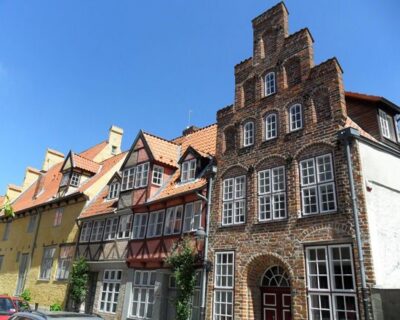
I appreciate that the tour includes altered buildings rather than presenting Lübeck as a perfectly preserved stage set. Old houses sag. Gables change. Owners adapt buildings to new needs. Those imperfections can tell you as much as the grand façades do.
The timing is tight, so you should not expect a long literary or museum-focused discussion at Buddenbrockhaus. Its value on this walk is as a stop within the larger architectural story.
Same city, a completely different kind of day:
- Lübeck: 1-Hour Splash Bus City Tour
★ 4.0 · 2,626 reviews - Lübeck: entertaining guided tour to old town highlights
★ 4.7 · 594 reviews - Lübeck: Entertaining Tour Through Hidden Courtyards
★ 4.8 · 483 reviews - Lübeck: Electric Boat Rental – without driving licence
★ 4.8 · 174 reviews
Glockengießerstraße and Lübeck’s passages
Glockengießerstraße is one of the more distinctive sections of the route. Here, you see several passages and courtyards, spaces that are easy to miss if you simply follow the main street.
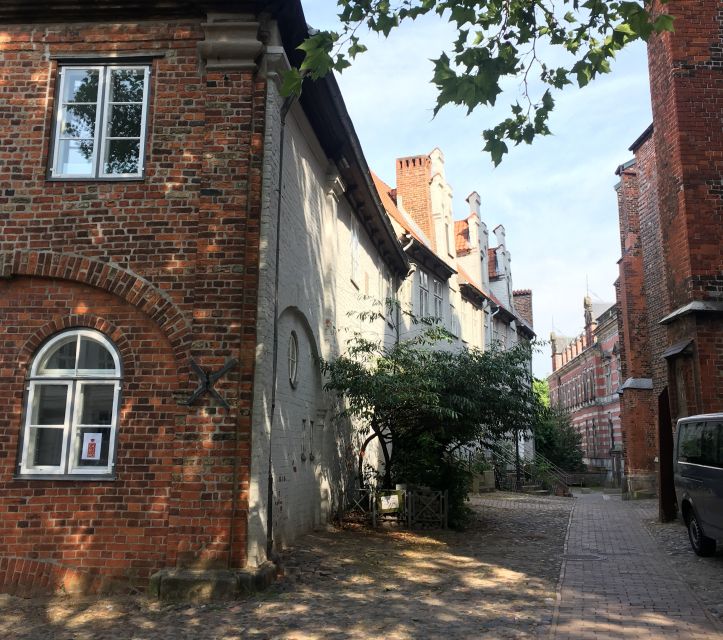
These small openings reveal how Lübeck’s residents used land behind the grand street façades. The guide explains their history and construction, helping you understand how houses, workshops, and living spaces were arranged.
For me, this is the most appealing part of the tour. Big churches and gates are easy to find on a map. Courtyards require someone to point out the entrance and explain why it matters. A private guide can pause when your group has questions instead of moving on with a large crowd.
The exact courtyards visited can depend on access and the guide’s chosen route. The supplied details promise several passages and courtyards, but they do not specify every entrance or whether all are open at every hour. Keep your expectations practical: this is a guided look at Lübeck’s urban spaces, not a guaranteed visit to every private interior.
A merchant’s house and the craft of brick-making
The walk also includes a local merchant’s house and a discussion of brick-making. This is where the tour moves from architecture to the people who paid for, built, and lived in these structures.
Brick-making required skill and control. The guide explains why mastering the craft mattered to Lübeck and its residents. That detail gives the buildings a human scale. You are not only looking at masonry. You are learning about the work behind it and the reasons a material became so central to the city.
Merchant houses are especially useful for understanding Hanseatic Lübeck. The city’s wealth came from trade, and prosperous merchants needed homes and business spaces that reflected their role. The guide can connect the house to the larger story of trade, construction, and social position.
This section should appeal to you if you enjoy practical history. It focuses on how a city was made, rather than only listing architectural labels. You may also find it more memorable than a string of dates because it links craft to everyday life.
The Holstentor as the final landmark
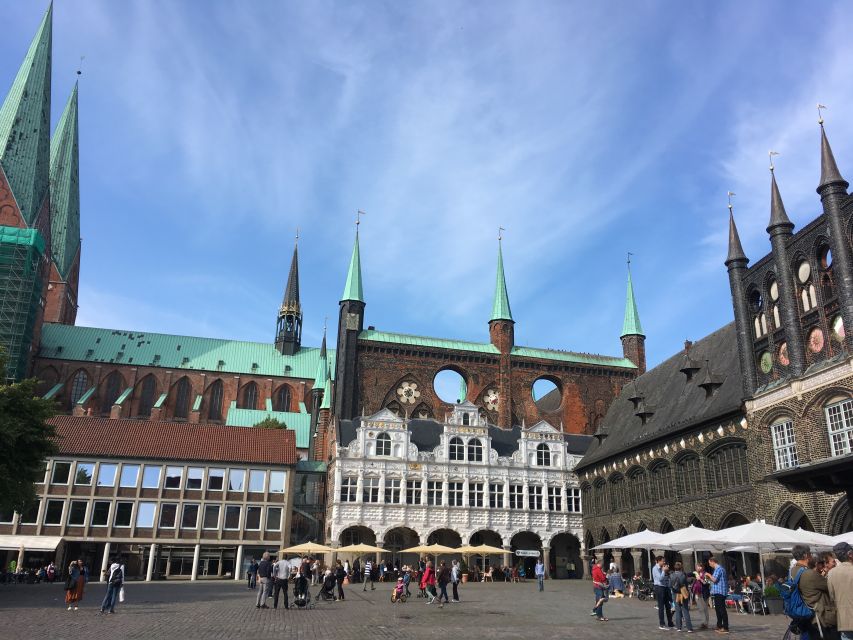
The Holstentor is more than a convenient meeting point. It is the tour’s visual anchor and one of Lübeck’s defining symbols.
Seeing it at the end gives you a chance to reconsider the building after learning about brick construction, city growth, defensive needs, and civic wealth. The gate may look familiar from photographs, but its place in Lübeck’s wider architecture becomes clearer once you have walked through the old town.
Because the walk ends at this major landmark, you can use the next part of your day easily. You might continue exploring on foot, arrange a meal, or visit another site. The tour does not include food or drinks, so plan those separately.
What the private format adds
The tour costs $277 per group of up to eight people. That is a substantial price for ninety minutes if you are traveling alone or as a couple. For a full group, the calculation becomes more favorable because the cost is shared rather than charged per person.
For eight people, the price works out to about $35 per person. For four people, it is about $69 per person. For two people, it is about $139 per person. Those figures help explain who gets the best value: families, friends, or small groups who want a guide to themselves.
The private setup gives you three practical advantages:
- You can arrange a start between 9 a.m. and 7 p.m.
- You can ask questions without competing with a large group.
- You can request more attention to churches, courtyards, architecture, or local craft.
The guide contacts you after booking to set the time. That flexibility is useful if your day in Lübeck includes a train arrival, another activity, or a meal reservation. It also means you should not assume a fixed departure time until the arrangement is confirmed.
The tour has English- and German-speaking guides. If precise language needs matter to your group, confirm your preferred language when scheduling.
What the guide quality means for your experience
The strongest praise focuses on the guides. The feedback describes them as very good with local history, highly competent, engaged, informative, and willing to answer questions in detail. One German-language assessment specifically highlights a friendly guide who offered a fascinating look at Lübeck’s past. A Danish assessment praises the guide’s command of the subject.
That consistency matters more here than it would on a simple sightseeing transfer. The buildings are already in the city, so the guide is the main reason to book this experience instead of walking around with a map.
A good guide can point out a changed gable, explain why a house sags, or show you a passage you might otherwise miss. The guide can also adjust the balance between big landmarks and small details. If your group has a special interest, ask about it at the beginning.
No individual guide names are provided, so you cannot request a particular person based on the available information. You can, however, expect the tour to be offered in English or German and to be led as a private walk.
Who should book this Lübeck tour
I would recommend this tour most strongly to:
- First-time visitors who want a clear introduction to Lübeck’s old town
- Architecture fans interested in Gothic brick buildings
- Families or friends who can share the private group price
- Visitors who prefer questions and conversation to a fixed large-group script
- People curious about building methods, merchant life, and urban growth
It may be less suitable if you want extensive church interiors, museum time, food tasting, or a full-day historical tour. The walk is short and focused. You will learn a lot about architecture and local craft, but you will not cover every part of Lübeck.
The tour also suits visitors who have already seen the main landmarks but want help noticing smaller details. Passages, courtyards, construction changes, and brick-making can give a second visit more purpose.
Practical advice before you reserve
Use the flexible timing to your advantage. A morning start can help you orient yourself before exploring alone, while an afternoon start can work well after you arrive in Lübeck. Since the available window runs from 9 a.m. to 7 p.m., coordinate the time directly with the guide rather than relying on a standard departure.
Wear comfortable walking shoes. The experience is a ninety-minute walk through streets and architectural sites, with repeated stops for explanation. You should also keep some room in your schedule if you hope to enter a church, since optional entrance fees and visit timing may affect the route.
If you are paying for a small group, compare the private cost with your priorities. The price is harder to justify for one or two people, but more reasonable when divided among several participants. Free cancellation up to 24 hours before the tour and the reserve-now, pay-later option also reduce the risk if your plans are still shifting.
Should you book the Lübeck architecture tour?
Book it if you want a focused private introduction to Lübeck’s brick Gothic identity, especially if your group enjoys asking questions and noticing details that a standard walk might skip. The strongest reason to choose it is the guide-led interpretation of churches, courtyards, merchant homes, and brick-making.
Skip it if you need a long tour, extensive interior access, meals, or a broad survey of every major attraction. Ninety minutes goes quickly, and the price makes the most sense for a group of several people.
For a small group that values personal attention, this is a useful way to understand why Lübeck looks the way it does. You leave with more than a list of landmarks. You learn to read the brick, the gables, the courtyards, and the odd little changes that make an old city feel lived in.
FAQ
Where does the Lübeck tour begin?
Your guide meets you directly at the entrance of the Holstentor.
How long does the tour last?
The private guided walk lasts 90 minutes.
What is the price of the tour?
The price is $277 for a private group of up to eight people.
How many people can join the private group?
The group can include up to eight people.
What languages are available?
The tour is available with a live guide speaking English or German.
Can I choose the starting time?
Yes. The tour can start at any time between 9 a.m. and 7 p.m., based on your preference and the arrangement with the guide.
When will the tour time be confirmed?
Your guide will contact you after booking to schedule the tour.
Is church admission included?
No. Church entrance is optional and may cost €2.
Are food and drinks included?
No. Food and drinks are not included in the tour price.
Can I cancel for a full refund?
Yes. You can cancel up to 24 hours in advance for a full refund.
Is payment required at the time of booking?
You can reserve now and pay later, so nothing is due today when you book.
Just added around Lubeck
- Lübeck zwischen Grusel und Geschichte Truecrime zu Halloween★ 4.9 · 35 reviews
- Lübeck: Private Historical and Architectural Walking Tour★ 4.5 · 6 reviews
- Lübeck: Old Town Highlights Private Walking Tour★ 4.8 · 8 reviews
- Lübeck Day Pass – Day ticket for Lübeck museums★ 4.0 · 15 reviews
- Lübeck: Express Walk with a Local★ 4.9 · 10 reviews
- Lübeck: Hanseatic League History Walking Tour★ 4.9 · 57 reviews
- Lübeck: Backyards and Town Houses Private Guided Tour★ 4.9 · 23 reviews
- Lübeck: Classic Tour of the Hanseatic City★ 4.8 · 64 reviews
Lubeck Tours, compared.
entertaining guided tour to old town highlights
Read our review →
Lübeck zwischen Grusel und Geschichte Truecrime zu Halloween
Read our review →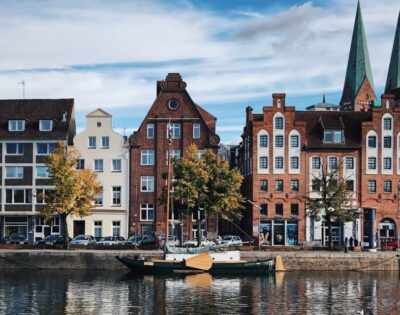
Browse the lists this tour appears in