
Reviewed · LUBECK TOURS
Lübeck: Entertaining Tour Through Hidden Courtyards
Lübeck’s best stories are often tucked behind its grand street fronts. This 1.5-hour walking tour leads you through narrow corridors, small courtyards, former workers’ stalls, and monastery yards where medieval residents lived close together. You get the famous Hanseatic city, but from the back door.
I like the small-group feel, which leaves room for questions, and I like the focus on daily life rather than only grand merchants and churches. The tour is also good value at $20, though you need enough German to follow it, since the live guide speaks German only.
In This Review
- Key points at a glance
- Why Lübeck’s courtyards tell a better story
- Meeting at the Burgtor outside the old town
- From Hanseatic success to crowded medieval housing
- Workers’ stalls behind the street fronts
- The courtyards: quiet spaces with a crowded past
- Monastery courtyards and homes for widows
- A lively guide makes the small spaces work
- What the 90-minute route feels like
- Is $20 a fair price?
- Who should book this Lübeck courtyard walk?
- Should you book the hidden courtyards tour?
- FAQ
- Where does the Lübeck courtyard tour begin?
- How long does the tour last?
- What language is the tour conducted in?
- What does the tour include?
- Can children join the tour?
- Can I cancel the booking?
Key points at a glance
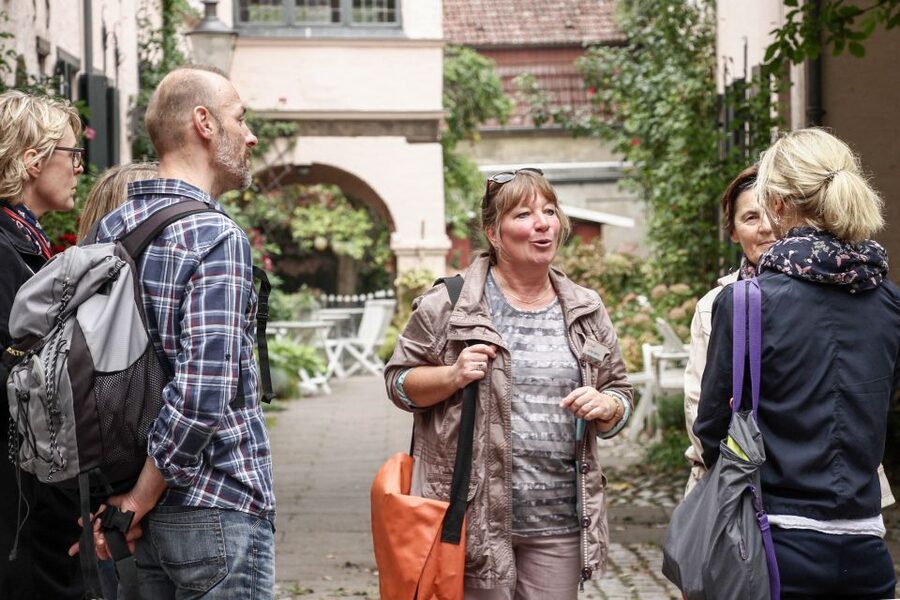
- Start at the Burgtor: Meet outside Lübeck’s old town at Burgtorbrücke 2, with the guide carrying an orange k3 bag.
- Follow the narrow corridors: See the cramped passages created when Lübeck’s population grew during the Middle Ages.
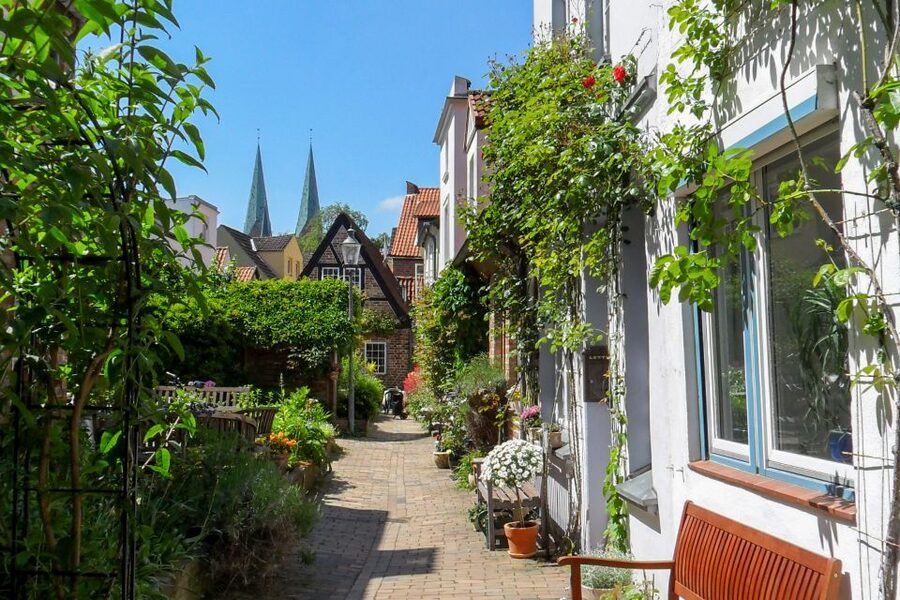
- Enter small courtyards: Visit picturesque inner spaces and former workers’ stalls tucked behind the main buildings.
- Connect Lübeck to the Hanseatic League: Learn how the city’s trade and growth affected ordinary housing.
- See monastery courtyards: Discover places linked to merchant and shipper widows.
- Plan for German: The tour is conducted in German and lasts 90 minutes, with free cancellation up to 24 hours before the start.
Why Lübeck’s courtyards tell a better story
Lübeck’s old town is famous for its brick churches, merchant houses, and Hanseatic trading past. Those sights matter, but the courtyards reveal another side of the city: how people actually found a place to live when the population rose sharply in the Middle Ages.
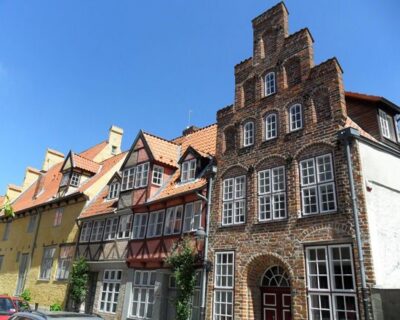
I find that setting more interesting than a simple march from one grand façade to another. The front buildings point to wealth and trade. The spaces behind them show the pressure that success placed on the city. As Lübeck grew, builders created narrow and often crooked corridors between the street-facing houses, leading to small yards and compact living quarters.
This tour gives you a close look at that pattern. You walk away from the broad streets and into spaces that can be easy to miss if you are sightseeing on your own. The route is built around what is tucked behind the main buildings, not just what is visible from the pavement.
That makes the experience useful early in your stay. You get an introduction to Lübeck’s old town, but you also learn how to read it. Afterward, a narrow opening beside a house will look less like a shortcut and more like a clue to the city’s past.
Other Lubeck days worth putting on the list:
- Lübeck: 1-Hour Splash Bus City Tour
★ 4.0 · 2,626 reviews - Lübeck: entertaining guided tour to old town highlights
★ 4.7 · 594 reviews - Lübeck: Electric Boat Rental – without driving licence
★ 4.8 · 174 reviews
Meeting at the Burgtor outside the old town
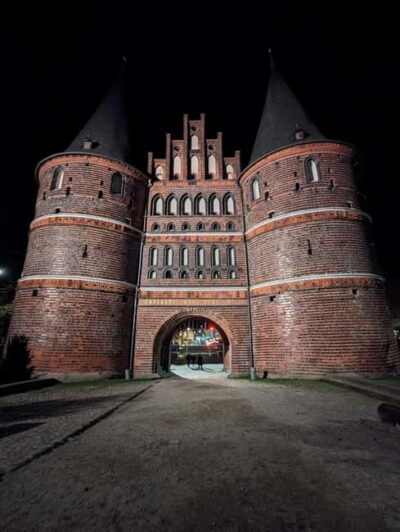
Your meeting point is in front of the Burgtor, at Burgtorbrücke 2, on the outside of the city. Look for the guide carrying an orange bag marked with the k3 logo.
This is a practical meeting point because it gives the walk a clear beginning at one of Lübeck’s historic entrances. You do not need to search through a busy square or guess which street corner is correct. Still, allow a little extra time to reach the Burgtor, especially if you are unfamiliar with Lübeck’s old town.
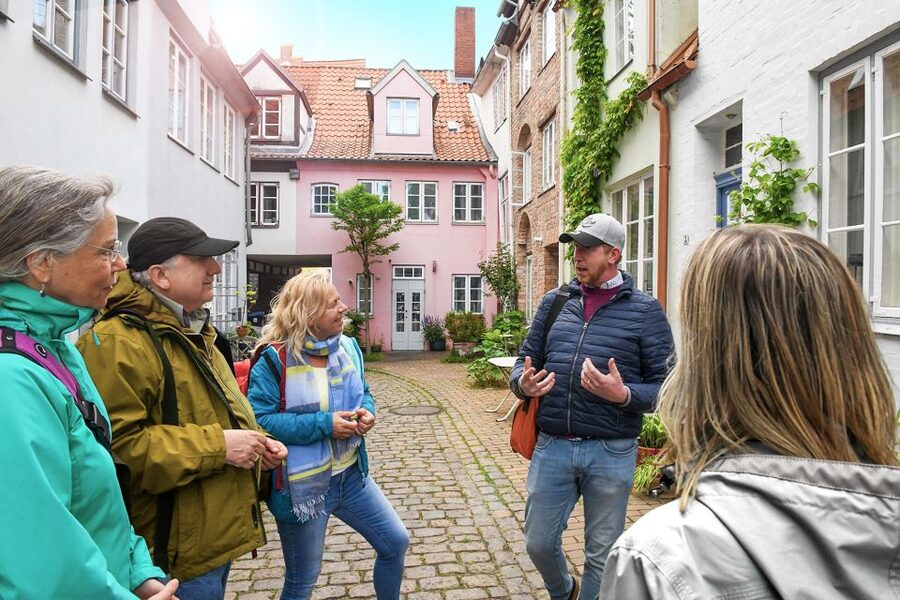
The guide leads a private group, and the experience is designed as a live walking tour rather than a self-guided audio route. That difference matters here. Courtyards and corridors are easy to pass without noticing, and the historical meaning of a small doorway is not always obvious from the street.
The orange k3 bag should make the guide easier to spot. Once the group is together, the tour moves into the old town’s narrow paths and inner spaces.
From Hanseatic success to crowded medieval housing
The Hanseatic League is one of the main historical threads. Lübeck’s role in this trading network helped the city grow, and the tour explains how that growth affected the people who needed somewhere to live.
I like this approach because it joins big history to everyday space. You do not hear about trade as an abstract subject and then move on. Instead, you see one consequence of urban growth in physical form: narrow passages, cramped courtyards, and small homes set behind the grand front buildings.
The sharp rise in population created a housing problem. Rather than spreading outward in the modern way, the city made use of the spaces behind existing buildings. Corridors became narrower and less straight, and the inner courtyards filled with small living areas.
You may notice that the route does not treat these passages as pretty decorations alone. Their shape reflects the limits of medieval building and the need to fit more homes into a valuable city center. The crooked layout is part of the story.
For me, this is the point where Lübeck becomes easier to understand. The city’s trade brought wealth, but it also brought density. The beautiful old town was not only a place for merchants and ships. It was a crowded home for workers, families, widows, and many other residents.
Workers’ stalls behind the street fronts
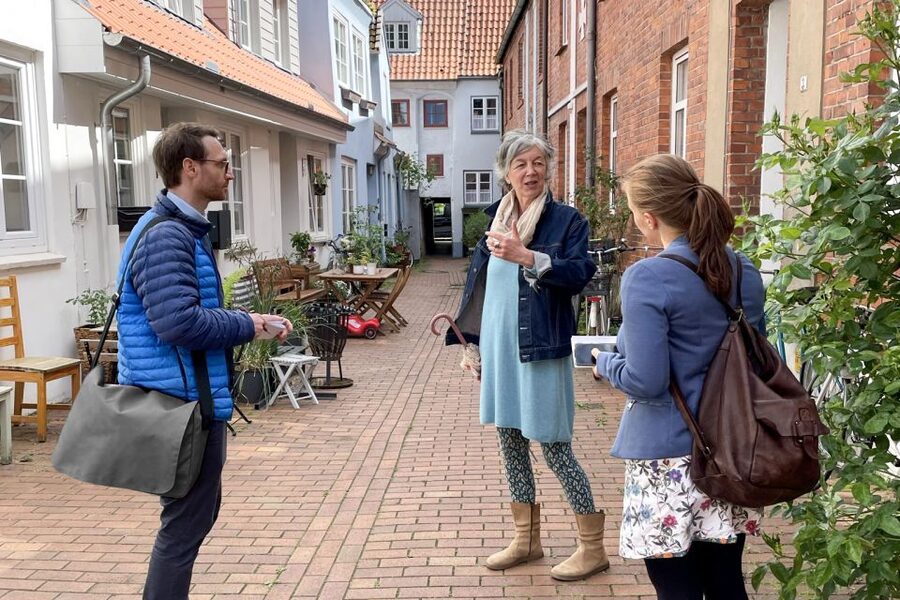
One of the most distinctive parts of the walk is the look at small stalls where workers once lived. These spaces help you picture the old town at a human scale.
The word stall can sound like a shop or market space, but on this tour it connects to the modest quarters behind the larger buildings. You see how the city used every available pocket of land. A grand street house could hide a much smaller and more humble world behind it.
I appreciate this contrast. Lübeck can sometimes feel like a city of impressive brick architecture and prosperous merchants. The workers’ quarters add the missing layer. They show that a historic city is not only made up of its finest buildings. It also depends on the people who worked, carried goods, maintained homes, and filled the streets with daily activity.
The spaces are small, so the guide’s explanation carries much of the value. You are not simply looking at an old wall or a low doorway. You are learning what kind of life could fit there and why such housing appeared in the first place.
Because the route uses narrow paths, comfortable shoes are a sensible choice. The supplied information does not specify accessibility details, so anyone who needs step-free access should confirm conditions before booking.
Same city, a completely different kind of day:
- Lübeck: Classic Tour of the Hanseatic City
★ 4.8 · 64 reviews - Lübeck: Hanseatic League History Walking Tour
★ 4.9 · 57 reviews - Lübeck zwischen Grusel und Geschichte Truecrime zu Halloween
★ 4.9 · 35 reviews - Lübeck: Backyards and Town Houses Private Guided Tour
★ 4.9 · 23 reviews
The courtyards: quiet spaces with a crowded past
The courtyards are the visual heart of the tour. They are picturesque, but the guide places their appearance in context rather than treating them as postcard scenery.
You follow narrow corridors from the main streets into small inner yards. The change can happen quickly. One moment you are looking at Lübeck’s public architecture, and the next you are in a quieter space surrounded by older residential structures.
I like the way this makes the city feel layered. The public face of Lübeck was built for trade, status, and movement. The courtyards were tied to housing and routine. They are less formal, more enclosed, and often more intimate.
The tour also explains that these courtyards and corridors were created in the Middle Ages as the city’s population increased. That historical detail gives the route a clear purpose. You are not collecting random pretty corners. You are tracing a response to urban pressure.
The courtyards may be especially rewarding for repeat visitors who have already seen Lübeck’s major churches and market streets. If this is your first visit, they still make a strong addition to the standard old-town walk because they show a side of the city that a broad sightseeing route can miss.
Monastery courtyards and homes for widows
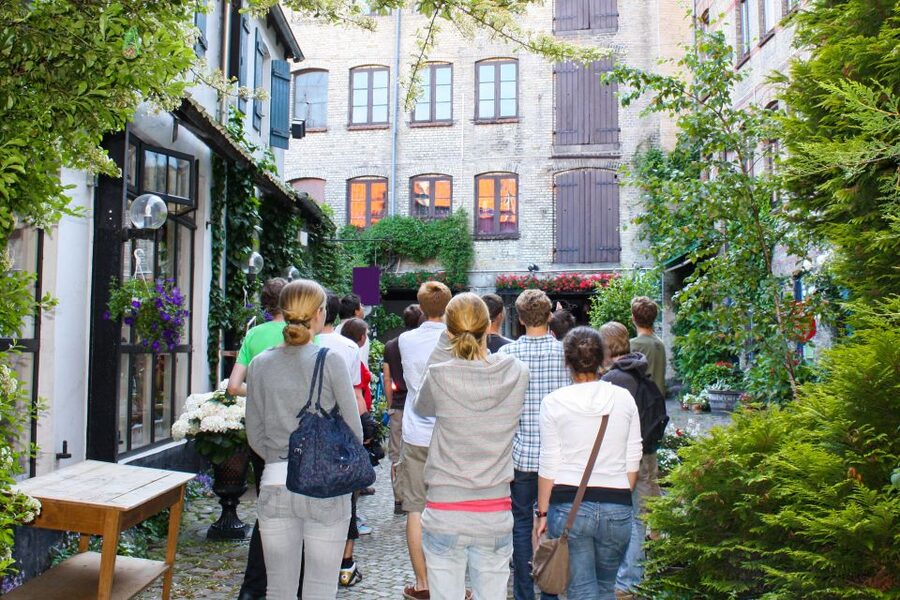
The route also includes monastery courtyards, which add a different social angle. Here you learn about the way merchant and shipper widows were housed.
That detail is unusually specific, and it gives the tour more depth. Lübeck’s maritime and trading wealth was tied to men whose work could take them away from home or expose them to serious risks. The story of widows brings attention to what happened to households when that working life ended abruptly.
The monastery courtyards were not just religious settings. They could also be linked to care, housing, and community arrangements. The tour uses these places to show how the city dealt with residents who needed support.
I find this part valuable because it widens the story beyond merchants at the height of their success. You see how social standing, work, family life, and housing could overlap. The courtyards become places of memory, not merely architectural details.
The information provided does not identify which individual monastery courtyards you will visit by name, so you should not book this expecting a fixed list of famous sites. The strength is the theme and the close look at these tucked-away spaces.
A lively guide makes the small spaces work
The tour includes a live guide in German. That is important here because the experience depends on explanation, not just scenery.
The strongest parts are the connections between what you see and why it exists. A guide can point out a narrow corridor, explain the population increase, and then show how the passage relates to the housing behind the front buildings. That turns a short walk into a lesson in how Lübeck developed.
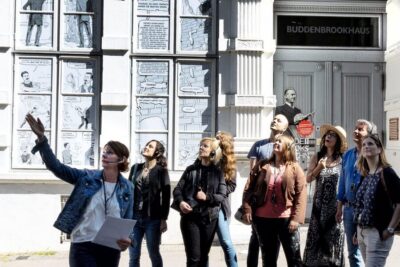
The tour is described as entertaining and informative, with plenty of background information and attention to unusual details. The private-group format also gives you a better chance to ask questions than you would have on a large city tour.
Recent booking feedback points to a notably personal feel. One group had only two people, which allowed many questions and detailed answers. Another small group appreciated that the walk went to corners outside the usual tourist route. Group size can vary, so I would not assume you will always have a private guide for just two people, but the private format is still a useful advantage.
No guide names are provided, so I cannot tell you to request a particular person. The important practical point is the language. If you do not understand German, this is not the right tour for you unless your companion can translate comfortably.
What the 90-minute route feels like
Ninety minutes is a good length for this subject. You have enough time to move through several courtyards and corridors without turning the experience into a half-day commitment.
The route begins with orientation near the Burgtor, then shifts toward the old town’s narrow paths and inner courtyards. Along the way, the guide ties together several themes:
- Lübeck’s growth during the Middle Ages
- The influence of the Hanseatic League
- The need to create more living space
- The construction of narrow and crooked corridors
- The small stalls used as workers’ housing
- Monastery courtyards
- Housing for merchant and shipper widows
The supplied information does not give a precise stop-by-stop schedule or a guaranteed list of courtyards. That is worth noting if you want a tightly mapped sightseeing route. You should expect a guided discovery walk rather than a checklist of named monuments.
I see that as a benefit for this particular subject. The best spaces are not necessarily the famous ones, and a route built around tucked-away corners needs some flexibility. The tradeoff is that you cannot plan the exact sequence in advance.
The tour is also short enough to fit before lunch, after arriving in Lübeck, or alongside visits to the city’s major sights. Since it begins outside the old town, check your route to the Burgtor before the start time.
Is $20 a fair price?
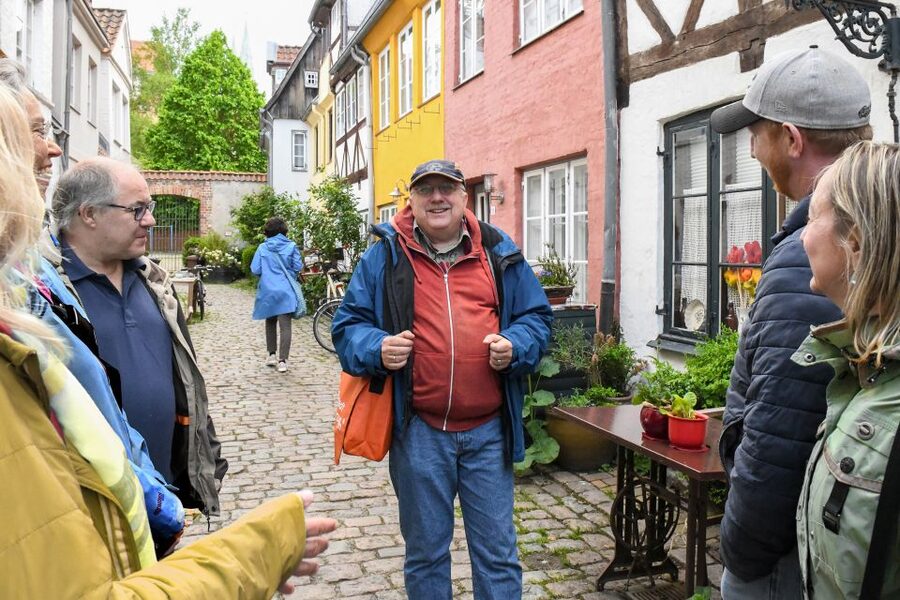
At $20 per person, this is a reasonable price for a 90-minute private-group walking tour with a live guide. You are paying for local explanation and access to places that are easy to overlook, not for transport, food, or entry tickets.
The value is strongest if you enjoy urban history and want more than the standard exterior view. A free walk can show you Lübeck’s streets, but it is less likely to explain why the courtyards were built, how population growth shaped them, or how widows were housed.
The price also compares well with the time commitment. You get a focused experience without giving up most of your day. If you have only a short stay in Lübeck, that balance is useful.
The main limitation is the German-only format. Do not treat the low price as a bargain if you will understand little of the commentary. The tour’s value lies in the stories and explanations, so language fit should come before cost.
You can reserve now and pay later, which keeps your plans flexible. Cancellation is free up to 24 hours before the tour for a full refund. Children up to age five can join free, making the activity easier to fit into a family schedule, though the narrow paths may not suit every young child or mobility need.
Who should book this Lübeck courtyard walk?
I would choose this tour if you like seeing how people lived, not just where important events happened. It suits you especially well if you have an interest in medieval cities, housing, trade, social history, or architecture.
It is also a smart choice for a second look at Lübeck. After visiting the major sights, you can use this walk to understand the spaces behind them. First-time visitors can book it too, particularly if they want a less standard introduction to the old town.
The experience is a good fit for:
- German-speaking visitors who enjoy detailed local stories
- Couples and small private groups
- Families with children who can manage a 90-minute walk
- Repeat visitors seeking courtyards beyond the main route
- Anyone curious about workers, widows, and ordinary housing
- Visitors who prefer a live guide to an audio app
I would skip it if you need an English-language tour, want a broad survey of every major Lübeck sight, or prefer a fully fixed route with named stops. This walk focuses on courtyards and corridors, so its appeal depends on your interest in the less obvious parts of the old town.
Should you book the hidden courtyards tour?
Yes, if you speak German and want Lübeck’s history explained through real streets and small living spaces. The combination of Hanseatic trade, population growth, workers’ housing, monastery courtyards, and widows’ homes gives the walk a clear purpose.
The best reason to book is that it takes you beyond the polished front of the old town. The main caution is simple: the tour is held in German, and the exact courtyard sequence is not specified. For the right audience, $20 buys a compact, personal look at how medieval Lübeck made room for its people.
FAQ
Where does the Lübeck courtyard tour begin?
Meet your guide in front of the Burgtor at Burgtorbrücke 2, outside the old town. Look for the orange bag with the k3 logo.
How long does the tour last?
The walking tour lasts 1.5 hours, or 90 minutes. Starting times depend on availability.
What language is the tour conducted in?
The live tour is conducted in German. No other tour language is listed.
What does the tour include?
The price includes a walking tour with a live guide.
Can children join the tour?
Yes. Children up to five years old can join free.
Can I cancel the booking?
You can cancel up to 24 hours before the tour for a full refund. You can also reserve now and pay later.
Just added around Lubeck
- Lübeck zwischen Grusel und Geschichte Truecrime zu Halloween★ 4.9 · 35 reviews
- Lübeck: Private Historical and Architectural Walking Tour★ 4.5 · 6 reviews
- Lübeck: Old Town Highlights Private Walking Tour★ 4.8 · 8 reviews
- Lübeck Day Pass – Day ticket for Lübeck museums★ 4.0 · 15 reviews
- Lübeck: Express Walk with a Local★ 4.9 · 10 reviews
- Lübeck: Hanseatic League History Walking Tour★ 4.9 · 57 reviews
- Lübeck: Classic Tour of the Hanseatic City★ 4.8 · 64 reviews
- Lübeck: Backyards and Town Houses Private Guided Tour★ 4.9 · 23 reviews
Lubeck Tours, compared.

entertaining guided tour to old town highlights
Read our review →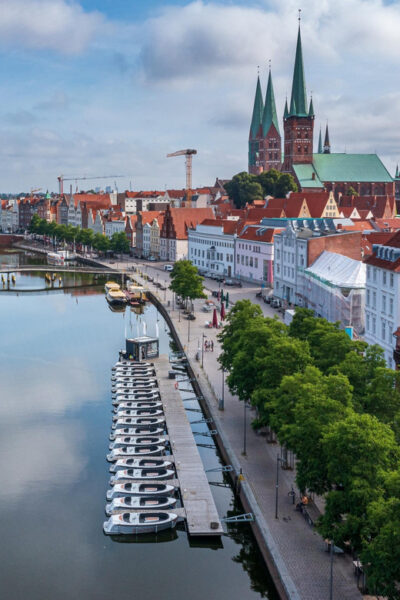
Lübeck zwischen Grusel und Geschichte Truecrime zu Halloween
Read our review →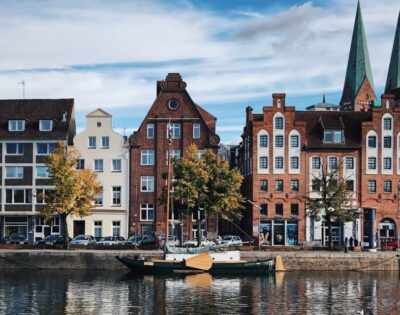
Browse the lists this tour appears in