
Reviewed · CONCENTRATION CAMP MEMORIAL TOURS
From Berlin: Guided Sachsenhausen Concentration Camp Tour
Sachsenhausen is not a casual sightseeing stop. It is a place of imprisonment, forced labor, and murder, and this six-hour guided visit gives you the context needed to face it with care. You travel by train from central Berlin to Oranienburg, then spend about three and a half hours walking through the memorial with an English-speaking guide.
I like two things here. First, the guide stays with you through the train journey, so the history begins before you reach the camp. Second, the tour enters important buildings, including the SS and Gestapo Prison Block, Station Z, the infirmary, and Tower A. The main consideration is the pace: this is a long, serious day on foot, and the $40 price does not include the ABC public transport ticket or food.
In This Review
- Key points to know
- Why Sachsenhausen Requires More Than a Quick Visit
- Meeting Near the Brandenburg Gate
- The Train to Oranienburg and the Story Before the Camp
- Walking Through Tower A and the Main Camp
- The SS and Gestapo Prison Block
- Station Z and the Camp’s Killing Facilities
- The Infirmary, Kitchen, and Barracks
- The Guides Make the Difference
- Is Six Hours a Good Use of Your Berlin Day?
- Is the $40 Price Fair?
- How to Prepare for Sachsenhausen
- Should You Book This Sachsenhausen Tour?
- FAQ
- Where does the Sachsenhausen tour meet in Berlin?
- How long does the full activity last?
- How long is the guided visit inside Sachsenhausen?
- Is public transport included in the price?
- Is entrance to Sachsenhausen Memorial included?
- What language is the tour conducted in?
- Is the activity wheelchair accessible?
- Can I bring luggage or a large bag?
- Can children join the tour?
Key points to know
- The trip begins beside the Brandenburg Gate, at Ebertstraße 24 outside Hopfingerbräu.
- The train ride is part of the lesson, with discussion of Hitler’s rise and the early concentration camp system.
- You get 3.5 hours inside Sachsenhausen Memorial, enough time for a substantial guided visit.
- Key areas include Station Z, the SS prison, camp kitchen, pathology building, mortuary, infirmary, barracks, and Tower A.
- Paul has earned especially warm praise for clear, respectful guiding, while Julian has also led well-received tours.
- Bring an ABC zones transport ticket, comfortable shoes, and weather-ready clothing. Large bags and luggage are not allowed.
Why Sachsenhausen Requires More Than a Quick Visit
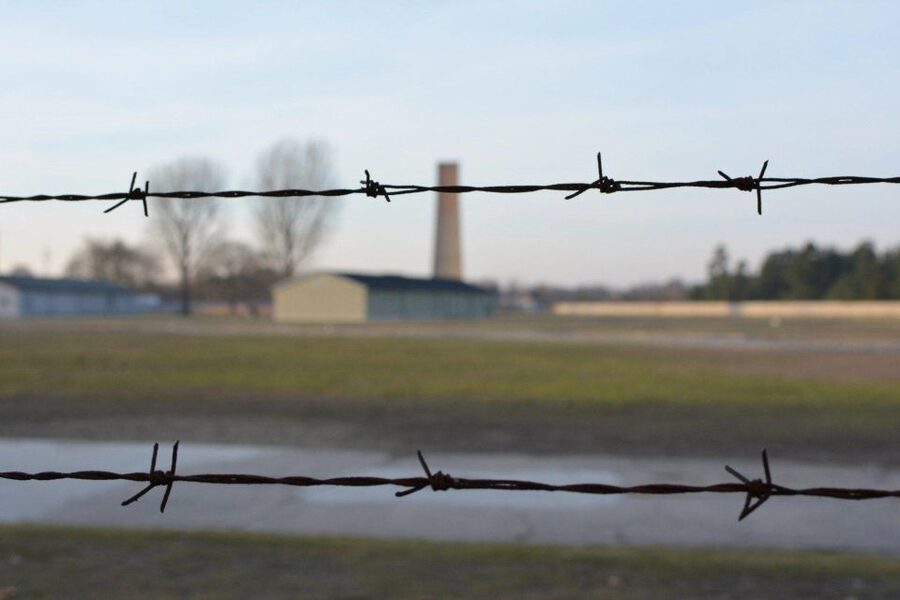
Sachsenhausen was the first purpose-built concentration camp within the Third Reich and one of the closest camps to Berlin. That location matters. The camp was not far from the center of Nazi power, and it became an important administrative point in the wider concentration camp system.
A visit here is difficult, but the setting also helps you understand how the system developed. The tour explains how concentration camps first served as tools for political repression, then expanded during the war as the Nazi regime imprisoned people from many groups and countries.
I appreciate that this experience does not treat Sachsenhausen as an isolated site. You learn how the camp changed over time, how the population of prisoners shifted, and how conditions became worse during the war. Those details help you understand that the camp was not fixed in one form. Its role and population changed as Nazi policy became more violent.
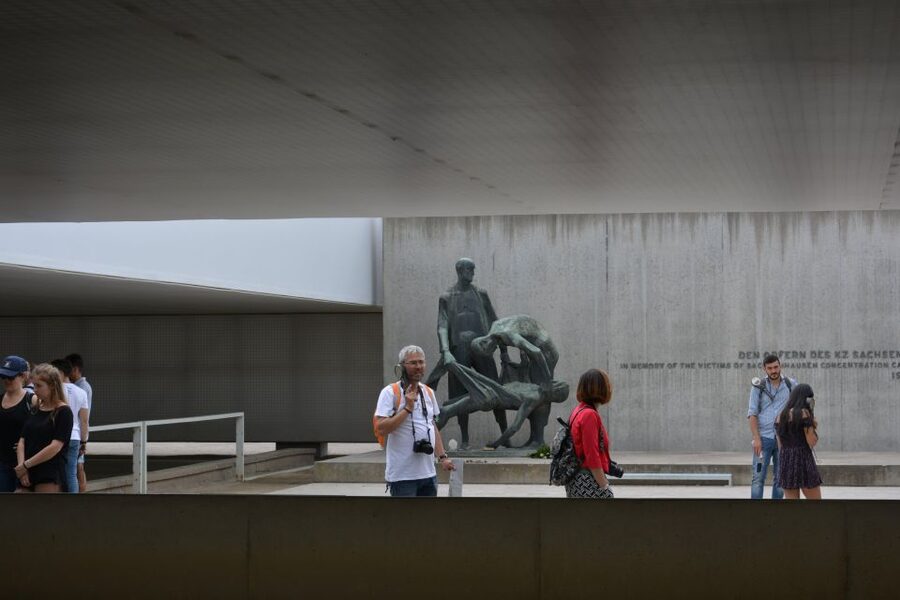
The memorial is also large enough that a guide makes a real difference. You could walk through parts of it alone, but the meaning of a prison block, barracks area, or execution site is easier to grasp when someone explains its purpose and place in the camp system.
More Concentration Camp Memorial Tours in Berlin
- Berlin: Sachsenhausen Concentration Camp Tour in English
★ 5.0 · 5,711 reviews - Berlin: Sachsenhausen Concentration Camp Memorial Tour
★ 4.7 · 3,716 reviews - Sachsenhausen Concentration Camp Bus Tour in English from Berlin
★ 5.0 · 1,962 reviews
Meeting Near the Brandenburg Gate
The meeting point is outside Hopfingerbräu at Ebertstraße 24, right beside the Brandenburg Gate. That is an easy central location, but give yourself enough time to find the exact spot and meet the guide before the group leaves.
The day begins with a short introduction, followed by the journey to Oranienburg. Your guide uses the ride to explain how Hitler achieved dictatorship and how early concentration camps helped suppress political opponents. This is a useful start because you are not dropped into the memorial without preparation.
The train ride to Oranienburg takes about 75 minutes. That is a fair amount of time, so the trip works best if you want historical explanation rather than a quick transfer. You can ask questions as the journey progresses, and recent departures led by Paul were especially praised for clear answers and calm, respectful presentation.
You need an ABC zones public transport ticket, and it is not included in the $40 tour price. Check the current ticket requirements before departure and allow for that extra cost when comparing this tour with other options.
The Train to Oranienburg and the Story Before the Camp
The outward journey has a practical benefit beyond getting you there. It gives your guide time to explain the political machinery behind the camp system.
You hear how the Nazis used concentration camps early on to isolate political opponents and enforce terror. From there, the discussion moves toward Sachsenhausen’s special role as a purpose-built camp and a central point in the network.
That background is valuable because the memorial contains many buildings and open areas, but not every feature explains itself. The guide connects the physical site to the decisions made by the Nazi government and the SS. I prefer this approach to a tour that simply moves from one building to another and lists dates.
The return journey takes about one hour. The advertised schedule allows for the train ride out, a 3.5-hour guided visit, and the trip back to Ebertstraße 24. Expect the whole experience to occupy six hours, not just the time spent inside the memorial.
Walking Through Tower A and the Main Camp
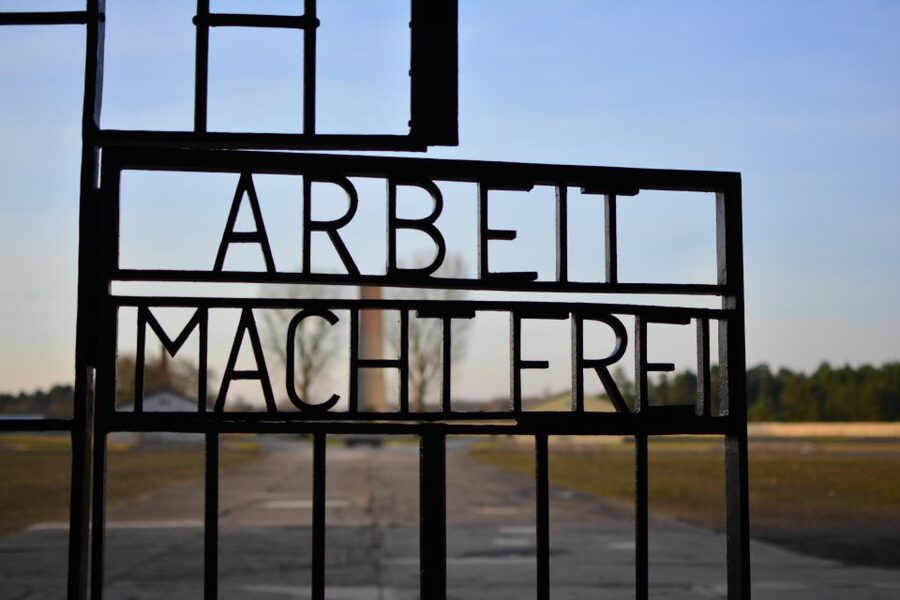
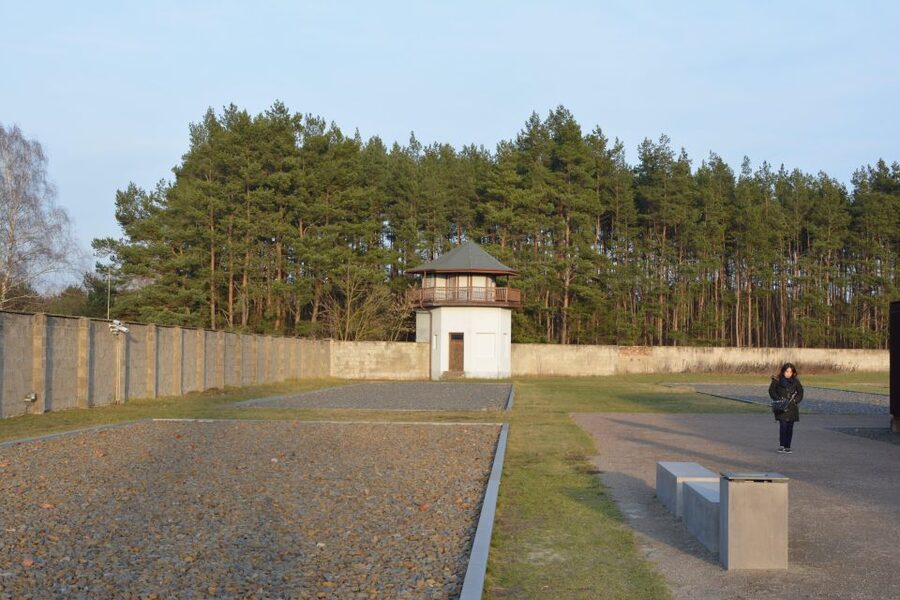
Tower A was the main entrance to Sachsenhausen. Entering through this area gives you a clear sense of how the camp was organized and controlled.
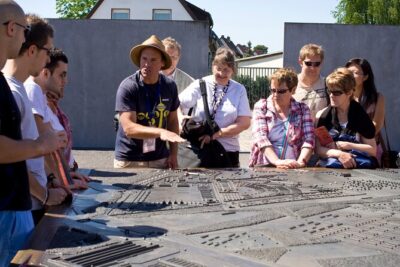
The guided walk then takes you through the main camp area and the barrack buildings. You learn about living conditions and how they deteriorated as the war continued. The difference between the camp’s original purpose and its later operation is one of the key points of the visit.
This is not a tour built around a single dramatic room. It is a sequence of places that explain how control worked: the entrance, barracks, prison facilities, medical buildings, work areas, and execution site. That can make the visit feel demanding, but it also prevents the history from being reduced to one image.
Wear proper walking shoes. The tour lasts several hours and takes place outdoors as well as inside buildings. Weather-appropriate clothing matters because parts of the memorial are exposed, and the experience continues in rain or cold unless conditions force changes.
Same city, a completely different kind of day:
- Berlin: Reichstag, Dome and Government District Guided Tour
★ 4.7 · 18,288 reviews - Berlin: 1-Hour City Tour by Boat with Guaranteed Seating
★ 4.3 · 16,993 reviews - Berlin: Boat Tour Along the River Spree
★ 4.4 · 11,252 reviews - Discover Berlin Half-Day Walking Tour
★ 5.0 · 9,624 reviews
The SS and Gestapo Prison Block
The SS and Gestapo Prison Block is one of the areas included in the full tour. It helps show that imprisonment within the camp was not limited to the general barracks.
Your guide explains the function of the prison and the people held there. This part of the tour gives a more focused look at punishment and interrogation within the camp system, adding detail to the broader story of mass imprisonment.
I find this type of stop especially useful for visitors who know the basic outline of Nazi persecution but want to understand how a camp operated day by day. The guide can place the building in the larger system and explain why it mattered.
The subject is heavy, so do not expect a light or entertainment-focused outing. The guides praised most warmly, including Paul, are described as respectful and careful while still keeping the information clear and approachable.
Station Z and the Camp’s Killing Facilities
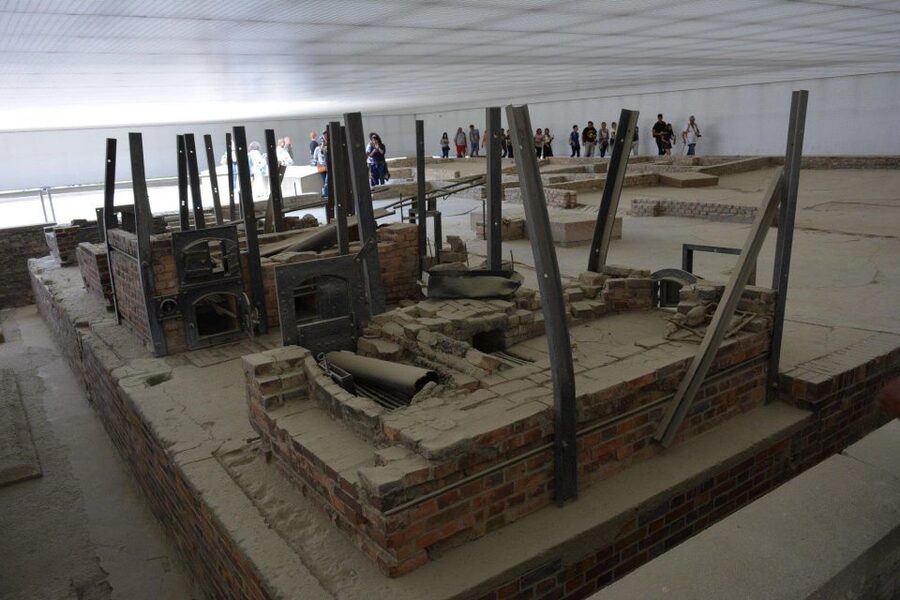
Station Z was the purpose-built execution facility at Sachsenhausen. It is one of the most sobering parts of the visit, and your guide explains its role rather than leaving you to interpret the site without context.
The inclusion of Station Z gives the tour a direct connection to the camp’s system of murder. It also shows why the visit cannot be treated as a general World War II history walk. You are seeing places tied to specific acts of persecution and killing.
The tour also includes the pathology building and mortuary cellar. These spaces add another layer to the history of the camp, showing how the SS documented, examined, and dealt with the bodies of prisoners.
I would not recommend rushing through these areas for the sake of taking in every stop. Listen to the guide, take the time you need, and remember that you can step back from the group if you need a quiet moment. The supplied details do not promise a particular amount of personal time at each building, so the exact pace can vary.
The Infirmary, Kitchen, and Barracks
The infirmary building, camp kitchen, and barracks help explain the everyday structure of Sachsenhausen. These are not side notes. They show how food, medical care, housing, and control shaped the lives of prisoners.
At the infirmary, you learn about the camp’s medical setting and the treatment of prisoners. The kitchen points to the organization of food and daily survival. The barracks help you understand the living conditions that worsened during the war.
The tour’s strength is the way these stops connect. The camp was not only a place of confinement. It was a managed system in which buildings, labor, punishment, administration, and death worked together.
You should also expect emotional weight to build gradually. The visit moves across several different sites, and the full three-and-a-half-hour camp tour leaves room for the scale and structure of Sachsenhausen to register. That length is useful for learning, though it may feel too intense for anyone hoping for a brief excursion.
The Guides Make the Difference
The experience is sold with a licensed guide, and the guide is central to its value. English is the stated tour language.
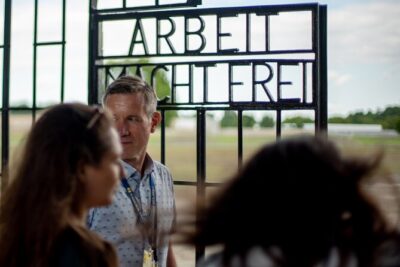
Paul has received particularly strong praise for being prompt, putting people at ease, explaining difficult facts clearly, and answering questions during both the train ride and the camp visit. One account also notes that he offered tailored suggestions for seeing Berlin after the tour, based on the group’s interests.
That extra help is not listed as a formal part of the activity, so you should not book on the assumption that it is guaranteed. Still, it gives you a useful idea of the kind of personal touch that may appear on a good departure.
Julian has also led a well-regarded visit, with clear information throughout the tour. You cannot necessarily request a particular guide unless the booking system allows it, but Paul and Julian are names worth noting when checking availability.
The strongest guiding style here is not theatrical. It is informed, respectful, and organized. On a site like Sachsenhausen, that matters more than jokes or flashy storytelling.
Is Six Hours a Good Use of Your Berlin Day?
For most visitors, yes, if Sachsenhausen is a priority. The tour handles the transport from central Berlin, provides entry to the memorial, and gives you a full guided visit rather than leaving you to find the key buildings on your own.
The day does take up a large portion of your schedule. The outward train ride is about 75 minutes, the guided memorial visit lasts 3.5 hours, and the return journey takes about one hour. Add meeting time and walking, and you should keep the rest of the day fairly open.
I would not pair this with another major timed attraction. Afterward, you may want a quiet meal or an unhurried evening rather than another packed museum schedule.
The tour is wheelchair accessible, which is useful for many visitors, though the information provided does not describe the exact surfaces, building access, or restroom arrangements. If you need detailed accessibility support, ask the provider before booking.
Children under 12 are not considered suitable for this activity. That restriction makes sense given the subject matter, long duration, and serious setting.
Is the $40 Price Fair?
At $40 per person, the tour offers reasonable value for a six-hour experience, especially because the memorial entrance and licensed guide are included. You are paying for structure, transport guidance, historical explanation, and access to key areas rather than simply joining a short walk.
The main extra expense is the ABC zones public transport ticket. Food and drinks are also not included, so bring water and plan when you will eat. Large bags and luggage are not allowed, and pets are prohibited except for assistance dogs.
The value depends on how much guidance you want. If you are comfortable navigating public transport, reading site information, and building your own historical framework, you could choose to visit independently. If you want a clear explanation of the camp’s role, a guide can save you from missing the connections between the buildings and events.
Free cancellation up to 24 hours before departure and the reserve-now, pay-later option also reduce the risk when your Berlin plans are still moving. Check the available starting times before you commit, since the activity runs for a full six hours.
How to Prepare for Sachsenhausen
Keep your preparation simple but practical:
- Wear comfortable shoes for a long, serious walking tour.
- Dress for the weather, including rain or cold.
- Buy the required ABC zones transport ticket before the trip.
- Carry water and a small permitted bag.
- Leave luggage and large bags elsewhere.
- Keep the rest of your day flexible.
- Consider the emotional weight before bringing anyone under 12.
There is no need to arrive with a detailed knowledge of Nazi Germany. The tour explains the political background, the camp’s place in the wider system, the changing prisoner population, and the worsening conditions during the war.
It does help to arrive ready to listen. Sachsenhausen is not a place for hurried photos or casual chatter, and the best experience comes from giving the site your full attention.
Should You Book This Sachsenhausen Tour?
Book it if you want a guided, serious visit with transport from central Berlin and enough time to see the major camp buildings. The combination of the train commentary, 3.5-hour memorial tour, and access to Station Z, the prison block, infirmary, kitchen, pathology building, mortuary, barracks, and Tower A gives you a well-rounded visit.
I would choose this tour over a shorter outing if you want historical context and the chance to ask questions. Paul has been especially praised for his care and clarity, and Julian has also provided strong guiding, though a specific guide is not guaranteed.
Skip it for now if you want a light half-day activity, dislike long train rides, or are not ready for a memorial centered on imprisonment and murder. For the right visitor, this is a thoughtful and useful way to understand one of the most important Nazi camp sites near Berlin.
FAQ
Where does the Sachsenhausen tour meet in Berlin?
The meeting point is outside Hopfingerbräu at Ebertstraße 24, 10117 Berlin, right next to the Brandenburg Gate.
How long does the full activity last?
The activity lasts six hours. The schedule includes about 75 minutes by train to Oranienburg, a 3.5-hour guided tour at Sachsenhausen Memorial, and about one hour for the return train.
How long is the guided visit inside Sachsenhausen?
The guided tour at the memorial lasts approximately 3.5 hours.
Is public transport included in the price?
No. You need to purchase an ABC zones public transport ticket separately.
Is entrance to Sachsenhausen Memorial included?
Yes. The price includes entrance to Sachsenhausen Concentration Camp Memorial and a full camp tour with a licensed guide.
What language is the tour conducted in?
The live guided tour is conducted in English.
Is the activity wheelchair accessible?
Yes. The activity is listed as wheelchair accessible.
Can I bring luggage or a large bag?
No. Luggage and large bags are not allowed on the activity.
Can children join the tour?
The activity is not suitable for children under 12.
Just added around Berlin
- Love and War in Berlin: Self-Guided Story Puzzle Walk★ 5.0 · 7 reviews
- Rickshaw Tours Berlin – Groups of up to 16 people with several rickshaws★ 4.0 · 97 reviews
- Walking on the Wall: 3-Hour Tour in Berlin★ 4.5 · 34 reviews
- eSIM for Germany and 34 European Countries★ 4.5 · 16 reviews
- Warnemuende Shore Excursion: Private Berlin Tour★ 4.5 · 27 reviews
- Warnemuende Shore Excursion: Berlin Private Sightseeing Tour from Rostock★ 5.0 · 4 reviews
- Your ticket to The Wall Museum Berlin★ 3.0 · 60 reviews
- Berlin’s Gay, Lesbian, and Queer Scene Small-Group Walking Tour★ 4.5 · 66 reviews
Concentration Camp Memorial Tours, compared.
Sachsenhausen Concentration Camp Tour in English
Read our review →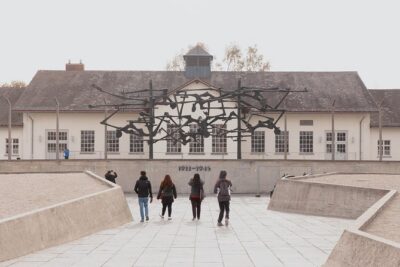
Dachau Concentration Camp Memorial Site Tour from Munich by Train
Read our review →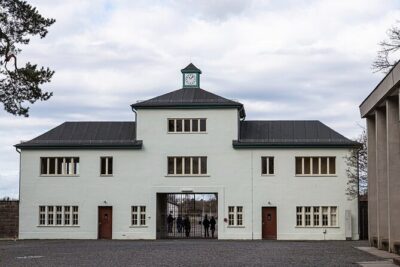
Sachsenhausen Concentration Camp Memorial Tour
Read our review →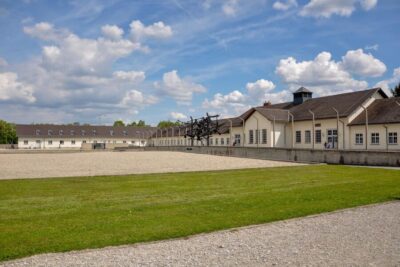
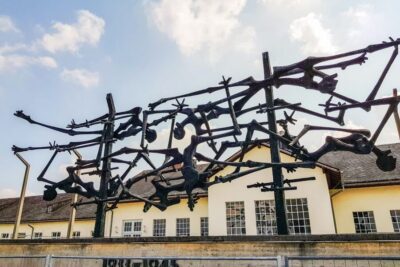
Sachsenhausen Concentration Camp Bus Tour in English from Berlin
Read our review →Sachsenhausen Concentration Camp Tour in English
Read our review →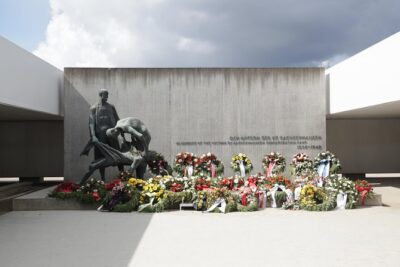
Sachsenhausen Concentration Camp Memorial Tour (Max. 15 Guests)
Read our review →Browse the lists this tour appears in