
Reviewed · CONCENTRATION CAMP MEMORIAL TOURS
Dachau Small-Group Half-Day Tour from Munich By Train
Dachau is not a sightseeing stop in the usual sense. It is a place for facing what happened, step by step, on the same grounds where the first Nazi concentration camp was established in 1933. This five-hour guided visit gives the setting the time and care it deserves, rather than leaving you to piece together the story from signs.
I especially like two things here: round-trip public transport is handled for you, and the guide stays with the group from Marienplatz through the train and bus connections. The main drawback is the subject itself. This is emotionally heavy, and the site includes a fair amount of walking outdoors in all weather.
In This Review
- Key points to know before you book
- Why a guided Dachau visit matters
- Meeting at Marienplatz at 8:45
- Arriving at Dachau Memorial Site
- The gatehouse and the camp’s early history
- Barracks, prisoner categories, and daily control
- The crematoria and the weight of the site
- Liberation, 1945, and what came after
- What makes the transport arrangement valuable
- The guides: James, Samuel, and the human side of the visit
- Who should take this tour?
- Practical advice for a respectful visit
- Should you book the Dachau half-day tour?
- FAQ
- Where does the Dachau tour begin?
- What time should I arrive?
- How long does the experience last?
- Is train travel included?
- Does the route include a bus?
- Is admission to Dachau included?
- Is food included?
- Can children join the guided tour?
- What should I wear?
- Can students use a youth price?
- How large is the group?
- Is cancellation free?
Key points to know before you book
- The tour begins at 9:00 a.m. from Marienplatz, with check-in required by 8:45.
- Train and bus travel are included, so you do not need to work out the route to the memorial alone.
- The visit covers the full public memorial site, including the gatehouse, exhibitions, prisoner registration, barracks area, crematoria, and religious memorials.
- James is frequently praised for guiding the transport and history, while Samuel is also named as a thoughtful and well-prepared guide.
- The group is limited to 20 people, a useful size for hearing explanations and asking questions.
- Children under 14 cannot join guided tours at the memorial site.
Why a guided Dachau visit matters
You can reach Dachau from Munich on your own, but getting there is only the easy part. The harder task is understanding what you are seeing and how each part fits into the larger Nazi system.
Dachau began as a concentration camp in 1933, soon after Adolf Hitler became Chancellor. It later served as a model and training ground for the SS, with its methods copied or adapted elsewhere. A guide can connect the physical site to the political steps that made it possible: the rise of the Nazi Party, the Reichstag fire, the creation of the camp system, the persecution of Jews and other targeted groups, and the later use of ghettos and extermination camps.
That context matters. Without it, the main gate and empty grounds can feel like isolated symbols. With it, you begin to understand how law, propaganda, bureaucracy, police power, and organized violence worked together.
The tour also covers the three major phases of the concentration camp system, prisoner categories, registration procedures, and the effect of Kristallnacht in 1938. It does not treat Dachau as a separate story disconnected from the Holocaust. Instead, it places the camp within the broader machinery of Nazi persecution.
More Concentration Camp Memorial Tours in Munich
- Dachau Concentration Camp Memorial Site Tour from Munich by Train
★ 4.5 · 5,637 reviews - From Munich: Dachau Memorial Site Day Tour
★ 4.8 · 2,723 reviews - From Munich: Dachau Memorial Site Half-Day Trip
★ 4.7 · 2,526 reviews
Meeting at Marienplatz at 8:45
The tour starts at Marienplatz 15 in central Munich. You should arrive by 8:45 a.m., fifteen minutes before departure. The train leaves at 9:00 sharp, and the group cannot wait for late arrivals.
That firm start is worth taking seriously. The route involves a train followed by a bus, so missing the group would create more than a simple delay. The guide leads the group through the public transport connections, which is especially useful if you are not familiar with Munich’s stations and platforms.
Several detailed accounts of the experience praise James for knowing where to position the group on the platform and for reducing wait times between the train and bus. He also uses short waits to explain the history of the Nazi Party and Dachau. That makes the transfer time useful rather than dead time.
The trip from Munich is part of the experience, not just a ride to the entrance. You move from the bright center of modern Munich toward a memorial site connected to one of Germany’s darkest periods. The return follows the same general route, and the activity ends back at the Marienplatz meeting point.
Arriving at Dachau Memorial Site
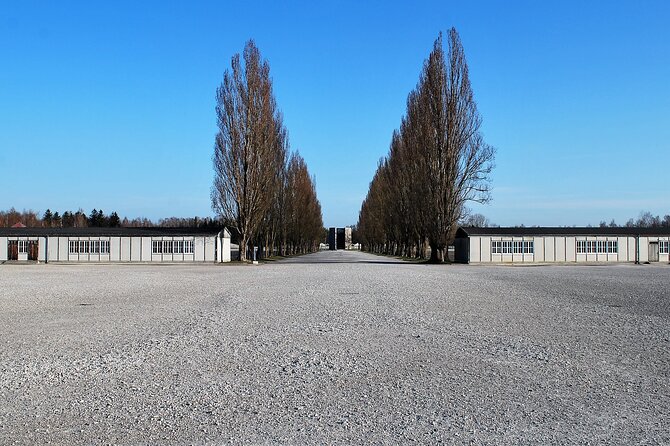
The memorial site includes both indoor and outdoor areas. You should check the weather and dress for it. Comfortable shoes are important because the visit involves walking on gravel and concrete, and the tour lasts about five hours from start to finish.
The site can become crowded, with several groups visiting at once. A skilled guide matters here. James is praised for adjusting the route when one section was busy, then bringing the group back without losing the thread of the visit. That sort of management sounds small, but it can make the difference between a calm, focused experience and one full of waiting.
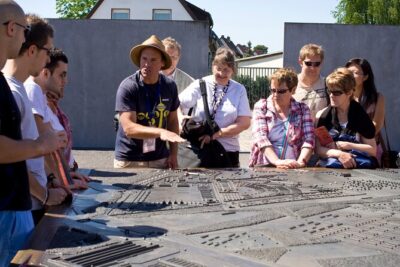
The group limit is 20 people. That is not an intimate private tour, but it is small enough for a guide to keep everyone together and answer questions. Several accounts also note that James spoke clearly enough to hear throughout the visit, even when the site was busy.
Expect the tone to remain respectful and restrained. This is a memorial, not a stage for dramatic storytelling. The best parts of the visit come from precise explanation and quiet attention to the place.
The gatehouse and the camp’s early history
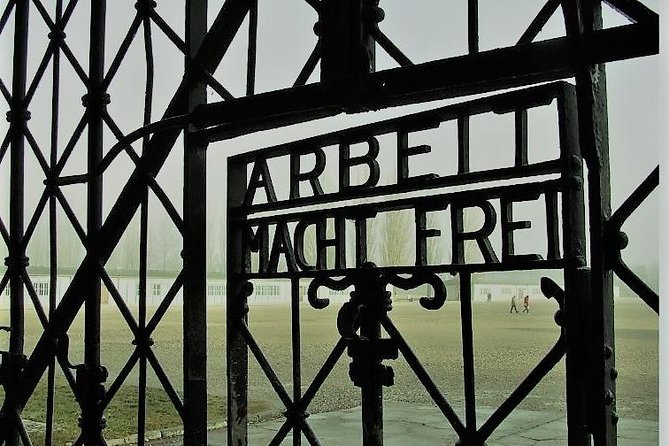
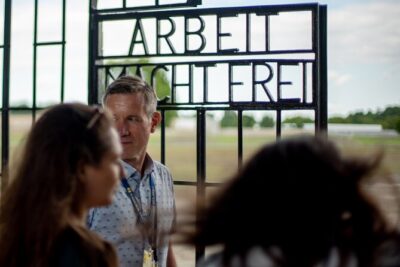
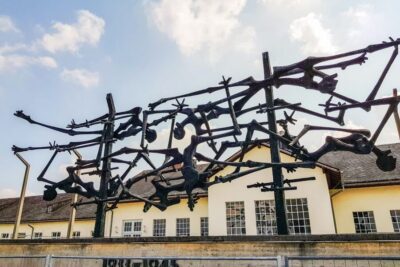
One of the first major stops is the Jourhaus, the former main gatehouse. The entrance carries the infamous phrase Arbeit Macht Frei, or Work Sets You Free.
The guide explains how the camp developed from its opening in 1933 and how Dachau became a model for other concentration camps. You will also learn about the SS training facility connected with the camp. This is an important distinction: Dachau was not only a place where prisoners were held. It also helped shape the personnel and procedures used across the camp network.
The tour traces the political rise of Hitler and the Nazi Party through the 1920s, Hitler’s appointment as Chancellor, and the Reichstag fire. These events are not presented as distant background. They show how quickly a government can dismantle rights, create enemies, and use emergency measures to build a system of terror.
For me, this early section gives the whole visit its structure. You are not simply shown a prison camp and told that terrible things happened there. You are shown how the system was built.
Same city, a completely different kind of day:
- From Munich: Neuschwanstein & Linderhof Castle Full-Day Trip
★ 4.5 · 12,494 reviews - Neuschwanstein & Linderhof Castle-Fairytale Day Tour from Munich
★ 4.5 · 7,275 reviews - Munich: Third Reich & WWII Walking Tour
★ 4.6 · 6,181 reviews - Neuschwanstein Castle Tour from Munich
★ 4.5 · 5,117 reviews
Barracks, prisoner categories, and daily control
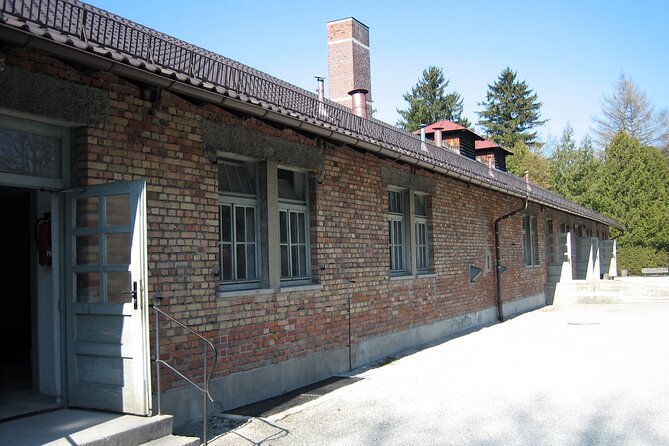
The memorial site includes the area where prisoners lived, along with exhibits explaining registration and classification. Prisoners were assigned categories, represented by different colored badges on their uniforms. The system reduced human beings to administrative labels, making it easier for the camp authorities to control, separate, and punish them.
The tour explains the daily life of prisoners and how the camp population changed over time. It also covers the first major influx of Jewish prisoners after Kristallnacht, the anti-Jewish pogrom of November 1938.
This is one of the sections where a guide adds real value. Labels and displays can give you facts, but a well-paced explanation helps you understand the relationship between paperwork and violence. Registration was not neutral record keeping. It was part of the system that decided how people would be treated.
You are given time to look at exhibits and, according to the tour details, some time to walk on your own. The balance is not unlimited. One person felt there could have been a little more time inside the museum, while other accounts describe the pace as steady and sufficient. If you like reading every panel, you may need to choose carefully.
The crematoria and the weight of the site
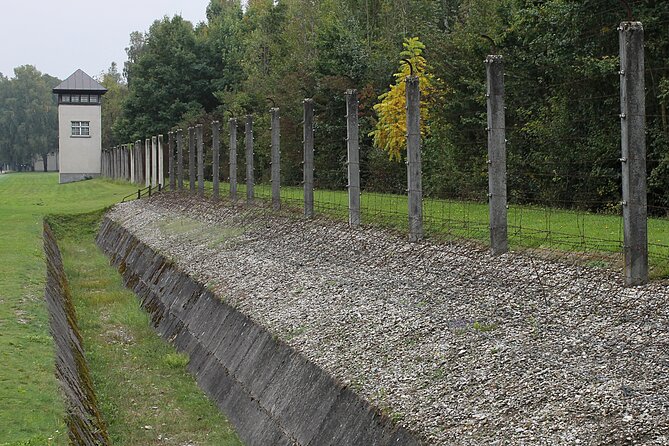
The crematoria area is among the most difficult parts of the visit. The tour covers the camp’s function, the fate of prisoners, and the broader concentration camp system, including the relationship between concentration camps, ghettos, and extermination camps.
This distinction is important. Nazi camps did not all serve the same purpose, and Dachau’s history needs to be understood accurately. The guide’s job is not merely to point out buildings. It is to explain the changing role of the camp and the way the wider system operated.
The atmosphere here can be intense. You may find the visit emotionally exhausting, particularly when the historical explanation meets the physical remains. The memorial has been designed with care, but thoughtful design does not make the subject easier.
Plan a little quiet time afterward if you can. The tour returns to Munich around the middle of the day, but you may not feel ready to rush directly into another major attraction.
Liberation, 1945, and what came after
Dachau’s story does not end with liberation. The tour explains the liberation of the camp, what happened in the years after 1945, and the long period before the Documentation Center opened in 1965.
That later history is valuable because memorials are not automatic. Someone had to preserve the site, argue over how it should be presented, and decide what future generations needed to understand. The years between the end of the war and the opening of the Documentation Center form part of the story.
The guide also addresses how the camp was remembered and interpreted after the war. This helps you see Dachau not only as a place of Nazi crimes, but also as a place where Germany and the wider world have had to confront memory, responsibility, and education.
The visit ends back at the original meeting point in Munich. Food and drinks are not included, and refreshments are not provided during the tour. You can buy snacks and drinks at several locations around the meeting area, so it is sensible to eat beforehand or carry something for afterward.
What makes the transport arrangement valuable
The cost is $60.46 per person. For a five-hour experience, that is a fair price if you want the guide to handle the public transport and interpret the memorial site for you.
You are not paying for an entrance ticket to Dachau, since admission is free. The value comes from the licensed guide, the transport costs, route management, and several hours of explanation. A self-guided visit can cost less, but you would need to arrange the train and bus yourself and decide how to organize a large, difficult subject.
The transport also removes uncertainty from the morning. Munich’s public transport is useful, but a connection involving both train and bus can be awkward when you are watching the clock. The guide keeps the group moving and helps avoid wasted time.
For a group of 20, the experience is not private. Still, it is far more personal than a large coach tour. You can ask questions, hear the guide clearly, and stay close to the route.
The guides: James, Samuel, and the human side of the visit
James receives especially strong praise for this experience. His strengths are described in practical terms: he keeps the group on the right train and bus, chooses sensible platform positions, adjusts the route around crowds, and maintains a pace that allows time at the exhibits.
Just as important, he treats the subject with respect. He explains the rise of the Third Reich, the camp system, the prisoners’ experience, and the postwar period without turning the visit into a performance. His ability to fill waiting time with relevant history is a useful bonus.
Samuel is also named as a guide who connects the history of Dachau with questions about injustice and government today. That kind of discussion can be valuable, but the central focus remains the memorial and its historical record.
Guide quality can vary on any scheduled tour, so I would not book solely on the promise of one individual. Still, the repeated attention to clear explanations, compassion, and careful organization is a strong reason to choose this format.
Who should take this tour?
I would choose this tour if you want a serious historical visit and prefer not to handle the transport alone. It suits adults, students, and older teenagers who can engage with difficult material.
Students may select the youth price category, but they must present valid identification on the day. Children under 14 are not allowed to join guided tours at the memorial site.
This is a good choice if you value structure. The guide introduces the political background before the memorial, explains the site in a logical order, and leads you back to Munich. It is less suitable if you want to wander independently for hours or read every exhibit at your own pace.
The tour is also a good fit for first-time visitors to Dachau. You leave with a clearer understanding of how Dachau fit into the Nazi system, not just a collection of disturbing images and isolated facts.
Practical advice for a respectful visit
Arrive early. The 8:45 check-in is not a suggestion, since the group leaves at 9:00 and cannot wait for late arrivals.
Wear comfortable shoes and clothing suited to the forecast. The tour combines indoor displays with outdoor walking, and gravel and concrete can make poor footwear uncomfortable.
Eat before departure or bring a small snack. Refreshments are not supplied during the visit, and food and drinks are not included in the price.
Prepare yourself emotionally. The experience is educational, but it is also somber and, at times, painful. Do not schedule it as a light morning activity before a celebratory event.
You can cancel free of charge up to 24 hours before the start time for a full refund. Changes or cancellations made less than 24 hours ahead are not accepted, and a minimum number of participants is required for the tour to operate.
Should you book the Dachau half-day tour?
Book it if you want a carefully guided, historically serious visit with transport from central Munich included. The $60.46 price is reasonable for the guide, public transport, and five hours of structured attention at a place that can be hard to understand alone.
I would especially recommend it for first-time visitors, students, and anyone who wants the broader political story explained alongside the physical memorial. The 4.9 rating from 811 ratings and 98 percent recommendation rate reflect the tour’s strongest qualities: clear organization, strong historical instruction, and respectful guiding.
Skip it only if you are not ready for the subject, need a completely self-directed visit, or want a short, light excursion. Dachau is difficult by nature. With a guide such as James or Samuel, the route becomes easier to manage and the history becomes much clearer, but the emotional weight remains, as it should.
FAQ
Where does the Dachau tour begin?
It begins at Marienplatz 15, 80331 München, Germany.
What time should I arrive?
You should arrive by 8:45 a.m. for check-in. The tour departs at 9:00 a.m. sharp and cannot wait for late arrivals.
How long does the experience last?
The tour lasts approximately five hours and ends back at the Marienplatz meeting point.
Is train travel included?
Yes. Public transport costs to and from the Dachau Memorial Site are included.
Does the route include a bus?
Yes. The journey involves travel by train and then bus between Munich and the memorial site.
Is admission to Dachau included?
Admission to the memorial site is free. The tour includes a licensed professional guide and public transport costs.
Is food included?
No. Food, drinks, refreshments, and snacks are not included. Refreshments can be purchased at several locations near the meeting point.
Can children join the guided tour?
Children under 14 cannot join guided tours at the memorial site.
What should I wear?
The tour includes indoor and outdoor areas. Check the weather beforehand and wear suitable clothing and comfortable shoes for walking on gravel and concrete.
Can students use a youth price?
Yes. Students can select the youth price category, but they must present a valid identification card on the day of the tour.
How large is the group?
The group can have a maximum of 20 people.
Is cancellation free?
Yes. You can cancel up to 24 hours before the start time for a full refund. Cancellations or changes made less than 24 hours before the start time are not accepted.
More Half-Day in Munich
- Early-Start Dachau Memorial Half-Day Tour from Munich
★ 5.0 · 942 reviews - Munich: Half-Day Skip-the-Line Neuschwanstein Castle Tour
★ 4.6 · 110 reviews - Discover Berlin Half-Day Walking Tour
★ 5.0 · 9,624 reviews - Berlin Third Reich Sites: Half-Day Walking Tour
★ 5.0 · 835 reviews
More Train Experiences in Munich
- Dachau Concentration Camp Memorial Tour with Train from Munich
★ 4.5 · 955 reviews - Guided Dachau Concentration Camp Memorial Site Tour with Train from Munich
★ 5.0 · 920 reviews - Nuremberg Guided Day Trip from Munich by Train
★ 4.5 · 546 reviews - From Munich: Nuremberg Day Trip by Train
★ 4.4 · 357 reviews
Just added around Munich
- Pub crawl incl. Oktoberfest museum guided tour with beer tasting (private)★ 5.0 · 5 reviews
- South Tyrolean specialties and wine tasting★ 5.0 · 5 reviews
- Size Matters Beer Tour Munich★ 4.6 · 105 reviews
- Short & sweet: Tasting the Viktualienmarkt★ 4.8 · 37 reviews
- Secret Food Tours Munich★ 4.8 · 5 reviews
- Munich: Romantic Wine Experience for Two at Viktualienmarkt★ 4.2 · 14 reviews
- Munich: Resistance against Hitler – Historical Walking Tour★ 5.0 · 5 reviews
- Residence of Munich private tour with skip the line ticket★ 5.0 · 4 reviews
Concentration Camp Memorial Tours, compared.
Sachsenhausen Concentration Camp Tour in English
Read our review →
Dachau Concentration Camp Memorial Site Tour from Munich by Train
Read our review →
Sachsenhausen Concentration Camp Memorial Tour
Read our review →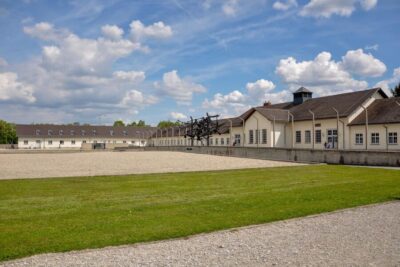
Sachsenhausen Concentration Camp Bus Tour in English from Berlin
Read our review →Sachsenhausen Concentration Camp Tour in English
Read our review →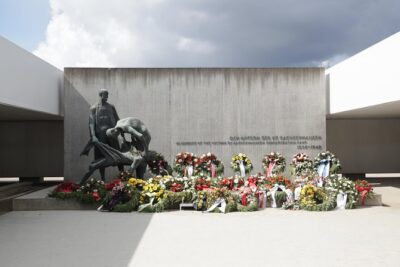
Sachsenhausen Concentration Camp Memorial Tour (Max. 15 Guests)
Read our review →Browse the lists this tour appears in