
Reviewed · BERLIN TOURS
Wall Tour Berlin – Fates, Heroes & Love Stories
Berlin’s Wall divided streets, homes, churches, railway lines, and families. This two-hour walk brings that division into focus at Bernauer Strasse, where escape attempts, forced evictions, tunnel schemes, and deaths took place within a few city blocks. You begin near Nordbahnhof and finish at Mauerpark.
I like the route’s real human stories, especially the accounts of people who fled through tunnels, jumped from windows, or died trying to cross. I also like the way it uses the Berlin Wall Memorial itself, including the viewing platform, preserved border zone, and chapel site, rather than treating the Wall as a few scattered scraps of concrete.
The main concern is reliability. The tour has received a mixed 4.1 rating from nine posted reviews, including two serious reports that no guide appeared at the meeting point. Confirm the meeting details carefully before setting out, and keep the booking confirmation on your phone.
In This Review
- Key details before you book
- Why Bernauer Strasse is the right place to study the Wall
- From a political lie to a fortified border
- The memorial window and the cost of escape
- The viewing platform and the missing Church of Reconciliation
- Passenger agreements and the use of young people
- Apartment windows, escape tunnels, and official propaganda
- Conrad Schumann and the risks faced by border guards
- Kidnappings and the loudspeaker war
- Reaching Mauerpark and the story of the Wall’s fall
- Price, group size, and practical value
- Who will get the most from this walk
- Should you book Wall Tour Berlin?
- FAQ
- How long does Wall Tour Berlin last?
- Where does the tour begin?
- Where does the tour end?
- What places are covered?
- Is admission to the stops included?
- How much does the tour cost?
- How many people can join the tour?
- Is the ticket available on a phone?
- Can I cancel for a refund?
Key details before you book
- Begin at Nordbahnhof: Meet at Elisabeth-Schwarzhaupt-Platz near the Nordbahnhof S-Bahn station in central Berlin.
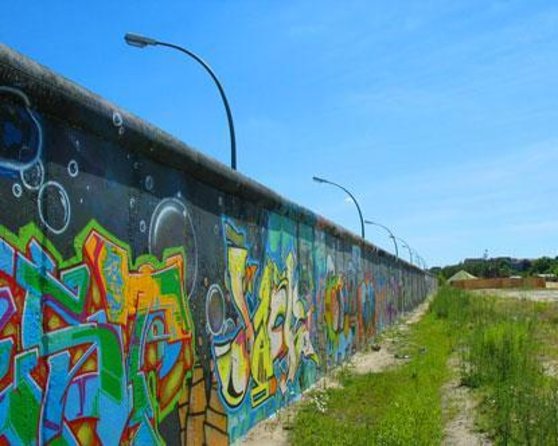
- Follow the Bernauer Strasse Wall Memorial: Most of the walk takes place in the area where the border strip once cut through homes and public spaces.
- Hear personal escape stories: The route covers window jumps, tunnel escapes, Conrad Schumann’s famous border jump, and people killed while seeking freedom.
- See the former border strip from above: A viewing platform helps you understand the depth and design of the fortified boundary.
- Finish at Mauerpark: The endpoint is near the corner of Bernauer Strasse and Oderberger Strasse, with an M10 tram connection toward Berlin Central Station.
- Allow two hours outdoors: Admission to each stop is free, but you will be walking between sites and need suitable weather.
Why Bernauer Strasse is the right place to study the Wall
Berlin has Wall remains in many places, but Bernauer Strasse gives you something more useful than an isolated slab of concrete. Here, the border once ran beside apartment buildings, a church, railway infrastructure, and ordinary city sidewalks. The setting makes the division easier to picture.
The tour opens with a striking detail: you jump over the Wall at the entrance to Nordbahnhof S-Bahn station on Gartenstrasse. It is a small physical gesture, but it introduces one of the route’s important subjects, the way the Wall disrupted public transport.
During the GDR period, some stations in the eastern part of Berlin were closed to passengers from the West. Trains passed through without stopping, creating the so-called ghost stations. Your guide explains how these stations were guarded and why a normal underground or S-Bahn journey could suddenly become part of the border system.
The first few stops are short, usually five minutes each. That keeps the tour moving, though it also means you should listen closely and ask questions when there is a natural pause.
Other Berlin days worth putting on the list:
- Berlin: Reichstag, Dome and Government District Guided Tour
★ 4.7 · 18,288 reviews - Berlin: 1-Hour City Tour by Boat with Guaranteed Seating
★ 4.3 · 16,993 reviews - Berlin: Boat Tour Along the River Spree
★ 4.4 · 11,252 reviews
From a political lie to a fortified border
At the beginning of the Berlin Wall Memorial, the guide sets out how the division became possible. This is useful context because the Wall did not appear as a finished concrete barrier overnight. Berlin’s postwar division, the growing separation between East and West Germany, and the steady movement of people from East to West all formed part of the story.
The key date here is August 13, 1961, when the border was sealed and construction began. The tour also addresses Walter Ulbricht’s claim on June 15 that nobody intended to build a wall, followed less than two months later by the closure of the border.
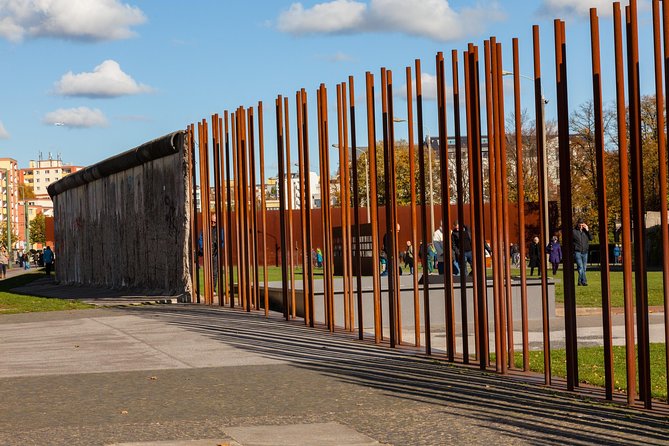
You then look at the structure of the border strip. The Wall was not simply one vertical barrier. It included controlled spaces, fences, patrol routes, watch facilities, and other obstacles designed to stop people from reaching the West. From the viewing platform, you can see how much land the system occupied and why crossing it was so dangerous.
I find this part particularly valuable for first-time visitors. Photos often reduce the Wall to a line. The viewing platform helps you grasp its width and its effect on the city.
The memorial window and the cost of escape
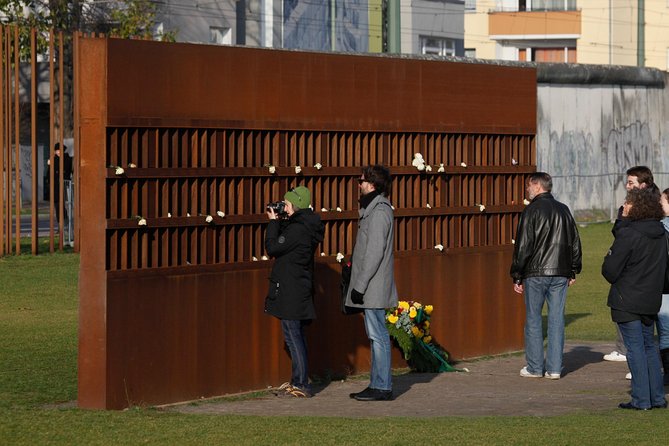
The memorial window is one of the tour’s most serious stops. At least 140 people died at the Berlin Wall between 1961 and 1989, although the exact number of victims remains uncertain. Your guide tells individual stories connected to those deaths rather than leaving the number as a cold statistic.
The personal accounts include people who tried to escape and paid with their lives. The tour also explains how fear and desperation led hundreds to jump from windows in the buildings along Bernauer Strasse. These homes stood in East Berlin, but their windows and exits faced the West. Once the border closed, ordinary apartment buildings became part of the escape story.
You have time to look at photographs and videos connected with these events. That pause matters. The subject is grim, and a fast spoken account can become hard to absorb. Use the available time to study the images and let the setting make sense around you.
This section may be difficult for children or anyone who prefers a lighter city walk. The tour deals directly with deaths, state control, forced separation, and despair. It does not soften the human cost of the Wall.
The viewing platform and the missing Church of Reconciliation
The viewing platform is one of the strongest practical features of the route. You get a clear overview of the former border strip on Bernauer Strasse, which helps connect the separate stories told at street level.
The walk continues toward Ackerstrasse and the Chapel of Reconciliation. The chapel occupies the site of the former Church of Reconciliation, which once stood inside the border strip. Before the Wall closed the frontier, people from East and West Berlin worshipped together there.
The church’s position made it especially awkward for the GDR border system. Your guide explains what happened to the building after the border was sealed. The story shows how the Wall did not merely separate political systems. It also cut through religious life and changed the purpose of buildings that had served the whole city.
This stop is brief, listed at about five minutes, so do not expect a long architectural visit. Its value is the location and the explanation of how a church ended up trapped between border barriers.
Same city, a completely different kind of day:
- Discover Berlin Half-Day Walking Tour
★ 5.0 · 9,624 reviews - Berlin: Hop-on Hop-off Bus Tour with Live Commentary
★ 4.3 · 8,579 reviews - Berlin: Government District around the Reichstag Guided Tour
★ 4.7 · 8,447 reviews - Berlin: Reichstag, Plenary Chamber, Cupola & Government Tour
★ 4.6 · 8,422 reviews
Passenger agreements and the use of young people
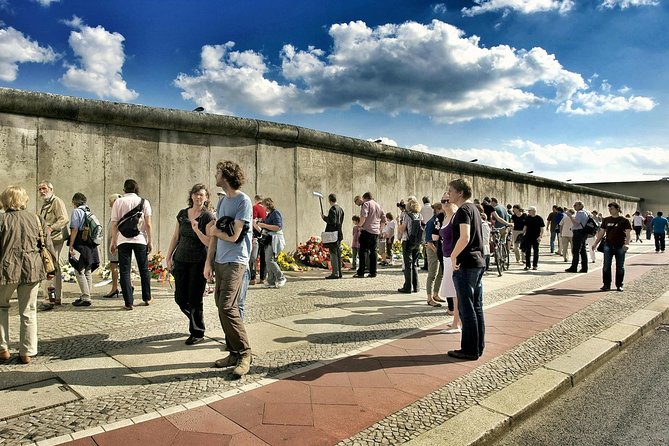
The tour also covers the passenger agreements between West Berlin’s Senate and the GDR. These arrangements made the border somewhat more permeable under controlled conditions. They offer a reminder that the Wall was not equally restrictive for everyone at all times, although movement remained heavily regulated.
A darker part of this stop concerns the use of children and young people for state propaganda. The guide explains how the GDR abused them for its own purposes. This gives the tour a wider social reach. You are not hearing only about guards, escapees, and politicians. You are also hearing about how a government shaped young lives and used them to defend its public story.
That contrast is one reason the route feels fuller than a simple account of the Wall’s construction and fall. It addresses the machinery of control as well as the people caught inside it.
Apartment windows, escape tunnels, and official propaganda
The former residential buildings along Bernauer Strasse provide some of the most unsettling details on the route. Before the Wall, people lived in buildings whose windows and exits opened toward West Berlin. After the border closed, those same buildings became hazards and escape points.
Many residents were forced to leave. Others considered desperate ways to get out. The window jumps are among the hardest stories to hear, but they explain why Bernauer Strasse became such a powerful symbol of the division.
The route then turns to the tunnel escapes of the 1960s. One famous tunnel lies close to the border house. Your guide explains how people planned and carried out escapes underground, and how the GDR presented one tunnel story for propaganda.
The important lesson is that the same event could be described in completely different ways depending on which side controlled the message. A successful escape could be framed as a criminal act, a foreign plot, or proof of Western interference. The tour shows how propaganda tried to change the meaning of real events.
Do not expect to enter a long underground passage. The stop is about the tunnel’s location and story, not an adventure attraction. That is a plus for visitors who want context rather than a staged recreation.
Conrad Schumann and the risks faced by border guards
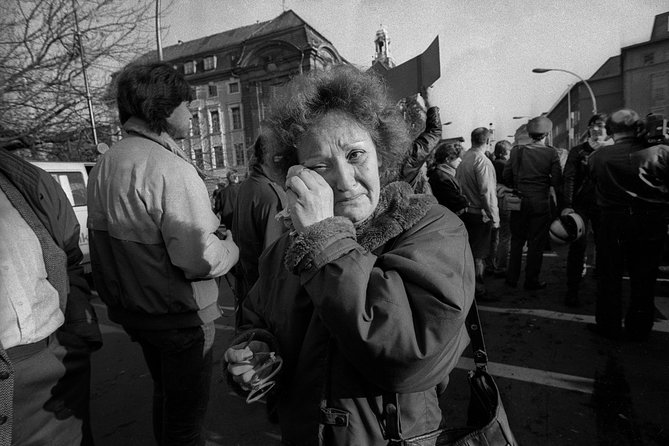
One of the route’s better-known escape stories concerns border guard Conrad Schumann. A photograph of Schumann jumping over barbed wire became one of the most recognizable images of the Berlin Wall.
Your guide follows the image with the rest of Schumann’s story. He was wanted until the fall of the GDR, which shows how a few seconds of escape could shape a person’s life for decades. The stop lasts about five minutes, but it gives you a clear example of how the Wall affected not only civilians seeking to leave, but also the guards ordered to enforce it.
The story works well in this location because the walk has already explained the physical border. Now you can consider the pressure placed on the people standing on each side of it.
Kidnappings and the loudspeaker war
The tour moves beyond escape attempts to discuss kidnappings ordered by the GDR. Former members of the National People’s Army and People’s Police were especially targeted by criminal groups acting on GDR orders, with some people taken from the West back into East Germany.
One kidnapping ended in death. This is another reminder that the conflict did not stop at the concrete barrier. Surveillance, intimidation, and forced returns reached beyond the Wall itself.
You also hear about Berlin’s loudspeaker war. East and West used loudspeakers to make life difficult for the other side, turning the border into a place of constant political noise. It is an unusual detail, and it helps you picture the Wall as an active conflict zone rather than a silent structure.
These two stops broaden the tour’s scope. If you only want photographs and famous escape images, they may feel like a detour. If you want to understand how the divided city functioned day after day, they add useful detail.
Reaching Mauerpark and the story of the Wall’s fall
The walk ends at Mauerpark, near Bernauer Strasse and Oderberger Strasse. The location is practical as well as symbolic. The former border area is now a public park, and the route closes by explaining how the Wall fell.
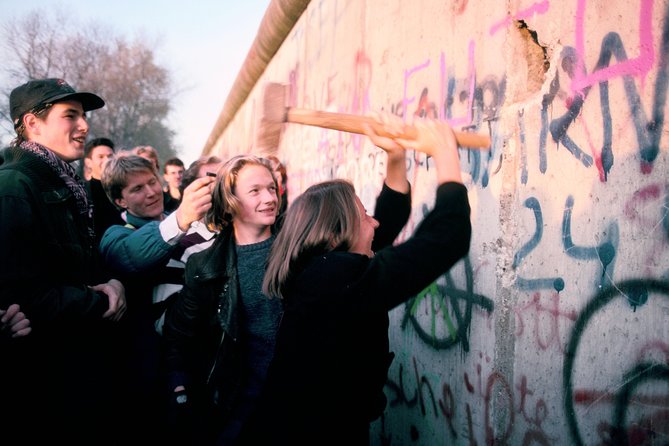
The end of the Wall had its own chain of events. Your guide connects the political changes, public pressure, and confusion surrounding the opening of the border. The exact balance between planned action and accidental announcement is part of why November 1989 remains such a memorable turning point.
Mauerpark is not the same kind of memorial space as the Bernauer Strasse exhibits. It gives you a more open ending after two hours of difficult stories. From the endpoint, you can take the M10 tram toward Berlin Central Station, making it fairly easy to continue sightseeing.
Price, group size, and practical value
At $19.66 per person, the price is modest for a two-hour guided walk. The sites themselves have no admission charge, so you are paying mainly for the guide’s explanations, route planning, and ability to connect separate memorial points into one story.
That is good value if you are new to Berlin’s Wall history or prefer a structured introduction. Without a guide, you can see the memorial grounds, but it is harder to understand why the former homes, ghost stations, church site, tunnel, and viewing platform belong to one larger story.
The group can include up to 25 people. That is not a tiny private walk, and the guide may need to project their voice at busy stops. Still, the route covers many short stops, so the group size should not prevent you from seeing the main places.
The experience uses a mobile ticket and confirmation is provided when you book. It is near public transport, and most people can take part. Since the walk requires good weather, bring sensible clothing and shoes. The tour can be moved or refunded if poor weather cancels it, and the same applies if the minimum number of participants is not reached.
You can cancel for a full refund up to 24 hours before the start. Inside that 24-hour window, refunds are not available and changes are not accepted.
One practical warning deserves attention. Two posted accounts describe arriving at the agreed meeting point and finding no guide, followed by poor communication. These reports do not prove that every departure has a problem, but they are serious enough to justify checking the exact start point, date, and time before you leave. Keep the provider’s contact details ready.
Who will get the most from this walk
I would choose this tour for a first visit to Berlin when you want a focused introduction to the Wall without spending half a day in a museum. The route gives you a clear sequence: transport restrictions, construction, deaths, escape attempts, state propaganda, and the Wall’s fall.
It is also a good fit for anyone interested in personal stories. Conrad Schumann, the tunnel escapees, the families in the Bernauer Strasse apartments, and the people killed at the border make the subject easier to understand than a timeline of political events alone.
You should think twice if you want a relaxed stroll, dislike heavy subjects, or need a fully private experience. The route discusses death, suicide, abduction, and political abuse in plain terms. The two-hour format also means some stops are brief, so you may want to return independently if a photograph, video, or memorial site deserves more time.
Should you book Wall Tour Berlin?
Book it if you want a compact, serious Wall introduction built around real locations and personal stories. The free memorial sites become far more meaningful when someone explains how the border strip worked and what happened to the people who lived beside it.
I would not book without taking the meeting-point complaints seriously. Recheck the details before departure and arrive prepared with your mobile confirmation. If the operator is reliable on your date, the low price and strong route make this a useful way to understand Berlin’s division in two hours. If you want a slower visit with more time at each exhibit, use the tour as an introduction and return to the Memorial of the Berlin Wall on your own.
FAQ
How long does Wall Tour Berlin last?
The tour lasts approximately two hours.
Where does the tour begin?
It begins at Elisabeth-Schwarzhaupt-Platz, 10115 Berlin, near the entrance to the Nordbahnhof S-Bahn station on Gartenstrasse.
Where does the tour end?
It ends at Bernauer Strasse near the corner of Oderberger Strasse, close to Mauerpark in Berlin’s Pankow district.
What places are covered?
The route includes the Berlin Wall Memorial, the former border strip on Bernauer Strasse, the viewing platform, the Chapel of Reconciliation, a former tunnel location, the Conrad Schumann escape site, and Mauerpark.
Is admission to the stops included?
All listed stops have free admission. The price covers the guided experience rather than entry tickets.
How much does the tour cost?
The listed price is $19.66 per person.
How many people can join the tour?
The maximum group size is 25 participants.
Is the ticket available on a phone?
Yes. The experience provides a mobile ticket, and booking confirmation is issued at the time of booking.
Can I cancel for a refund?
You can cancel up to 24 hours before the start time for a full refund. Cancellations or changes made less than 24 hours before the experience are not refunded or accepted. If poor weather or an insufficient number of participants causes cancellation, you are offered another date or experience, or a full refund.
Just added around Berlin
- Love and War in Berlin: Self-Guided Story Puzzle Walk★ 5.0 · 7 reviews
- Rickshaw Tours Berlin – Groups of up to 16 people with several rickshaws★ 4.0 · 97 reviews
- Walking on the Wall: 3-Hour Tour in Berlin★ 4.5 · 34 reviews
- eSIM for Germany and 34 European Countries★ 4.5 · 16 reviews
- Your ticket to The Wall Museum Berlin★ 3.0 · 60 reviews
- Warnemuende Shore Excursion: Private Berlin Tour★ 4.5 · 27 reviews
- Warnemuende Shore Excursion: Berlin Private Sightseeing Tour from Rostock★ 5.0 · 4 reviews
- Berlin’s Gay, Lesbian, and Queer Scene Small-Group Walking Tour★ 4.5 · 66 reviews
Berlin Tours, compared.

Reichstag, Dome and Government District Guided Tour
Read our review →
1-Hour City Tour by Boat with Guaranteed Seating
Read our review →


Reichstag, Plenary Chamber, Cupola & Government Tour
Read our review →

