
Reviewed · NUREMBERG TOURS
Tour del tercer Reich por Núremberg en español
Nuremberg was not chosen by Hitler at random. Its medieval links to the Holy Roman Empire made it useful as a stage for Nazi propaganda, and this three-hour Spanish tour explains how the city’s old prestige was turned into political theater. You’ll connect grand rallies, racist laws, wartime crimes, and the Nuremberg Trials in one walk.
I like the tour’s focus on Zeppelin Field and the Nazi Party congresses, where the scale of the regime’s public spectacle becomes easier to grasp. I also like that it includes the Nuremberg Trials and the Street of Human Rights, linking past crimes with the city’s later effort to defend human dignity.
The main consideration is its serious subject matter. This is an educational history walk, not a light sightseeing outing, and the three-hour length means you should wear comfortable shoes and be ready for a steady amount of information.
In This Review
- Key points to know before you book
- Why Nuremberg mattered so much to the Third Reich
- From Hauptmarkt to a city used as a stage
- Nazi Party congresses and the mechanics of mass spectacle
- Zeppelin Field and the visual power of propaganda
- The Nuremberg laws and the local machinery of anti-Semitism
- The Nuremberg Trials and the Street of Human Rights
- Flossenbürg and the wider system of Nazi persecution
- What makes the Spanish guide important
- Price, timing, and practical value
- Who will get the most from this three-hour walk
- Should you book the Tour del Tercer Reich por Núremberg?
- FAQ
- What language is the tour conducted in?
- How long does the tour last?
- Where does the tour begin?
- Where does the tour end?
- Is this a private tour?
- Is the tour wheelchair accessible?
- What should I bring?
- What is included in the price?
Key points to know before you book
- Nuremberg as Nazi propaganda center: Learn why Hitler treated the city as the heir to Germanic traditions and made it a symbolic headquarters for the regime.
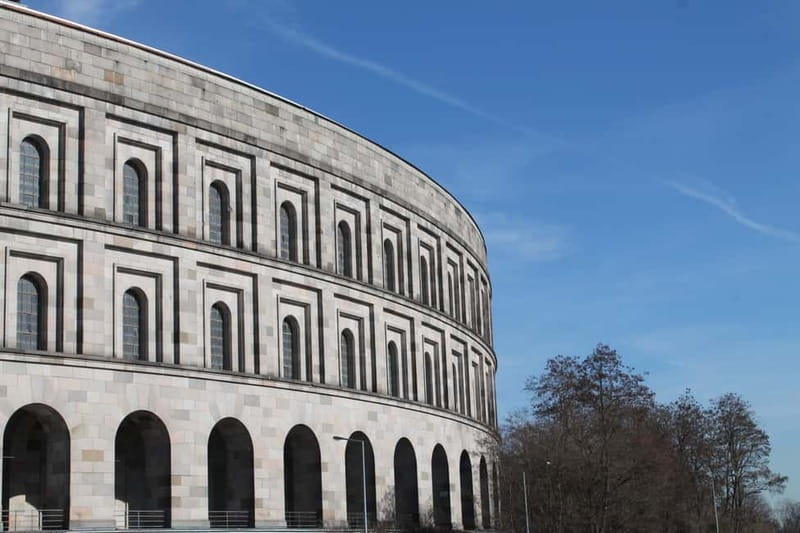
- Zeppelin Field and party congresses: See the setting connected with huge National Socialist demonstrations and the machinery of mass spectacle.
- The Nuremberg Trials: Understand the postwar trials and why Nuremberg became linked not only with Nazi power, but also with international justice.
- Spanish-speaking private guide: The tour is conducted in Spanish for a private group. Federico is praised for explaining difficult material clearly and using documentation to make the story easier to follow.
- A wider look at persecution: The route covers the Nuremberg laws, Julius Streicher, anti-Semitism, the Jewish quarter, and Flossenbürg concentration camp.
- Simple central meeting point: Meet in front of the main entrance of Frauenkirche at Hauptmarkt, under the white and red umbrellas, then return there at the end.
Why Nuremberg mattered so much to the Third Reich
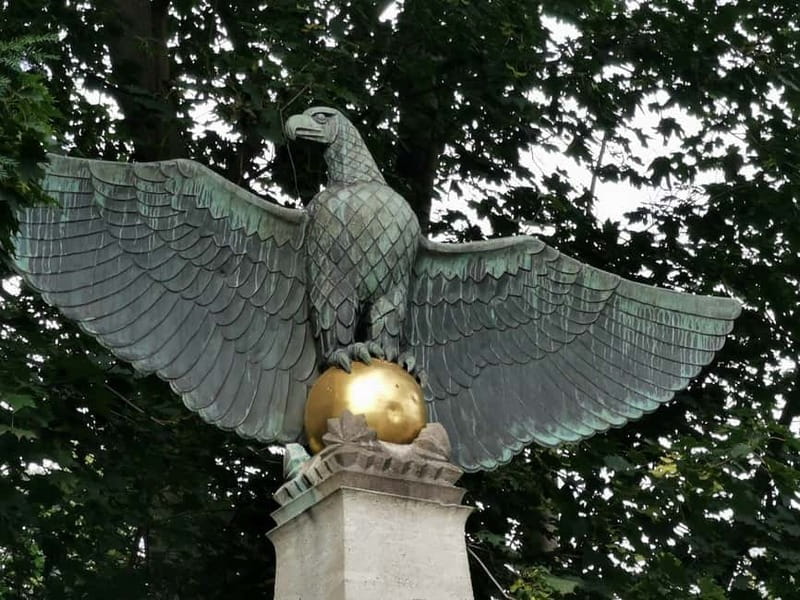
The most useful thing about this tour is that it explains why this city mattered. Nuremberg was already tied to German imperial memory long before the Nazis arrived. For centuries, it had been associated with the Holy Roman Empire, so Hitler could present it as a place where an older German power supposedly continued into the modern age.
That claim was propaganda, not neutral history. The Nazi regime selected pieces of the past that suited its message, then used architecture, ceremony, uniforms, flags, speeches, and enormous crowds to make the regime look permanent and legitimate.
You’ll see how Nuremberg was given the title of the German city par excellence, presented as especially loyal to the regime. That idea matters because it shows how dictatorship depends on more than laws and police. It also relies on carefully chosen places and stories that make political power seem natural.
A Spanish-speaking guide adds real value here. The subject includes political terms, legal changes, names, and events that can blur together if you simply read a plaque. A guide can put each part in order and explain how the city’s medieval identity was turned into a tool of twentieth-century extremism.
Other Nuremberg days worth putting on the list:
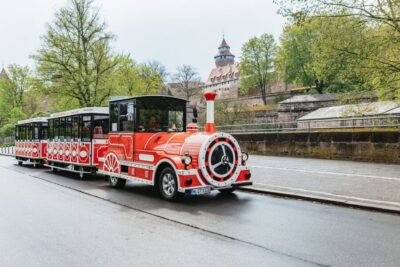
- Nuremberg: City Tour with the Bimmelbahn Train
★ 4.4 · 2,475 reviews - Nuremberg: Old Town Guided Walking Tour
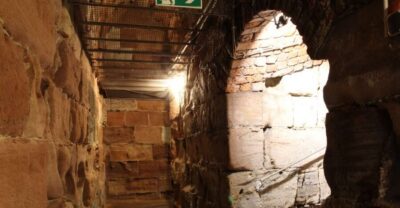
★ 4.6 · 2,416 reviews - Nuremberg: Tunnels and Secret Passages in the City Wall Tour
★ 4.8 · 2,334 reviews
From Hauptmarkt to a city used as a stage
The meeting point is easy to identify: stand in front of the main entrance of Frauenkirche in Hauptmarkt and look for the white and red umbrellas. This central location is practical if you are already visiting the old town, though the tour itself is about much more than medieval Nuremberg.
That contrast is part of the experience. In one city, you can see the attractive old center associated with imperial history, then learn how the Nazi regime used that same symbolic past for its own purposes. The tour’s strongest idea is not simply that terrible events happened here. It is that the city’s identity was actively shaped and exploited.
Expect the guide to frame the major locations rather than treat them as isolated stops. The story moves between ideology, public spectacle, legislation, persecution, and justice. That approach gives the tour a clear thread and helps you understand how cultural pride can be manipulated by a political regime.
Because the group is private, the format may feel more direct than a large public walk. You can focus on the explanation in Spanish and ask about points that need clarification. The supplied information does not specify the exact group size, so you should confirm the booking details if the size of your party matters.
Nazi Party congresses and the mechanics of mass spectacle
The Nazi Party congresses are central to the tour. These were not ordinary political meetings. They were carefully staged demonstrations designed to display unity, obedience, and power.
Nuremberg provided a setting that helped the regime connect itself with a heroic version of German history. The architecture and ceremonial style were meant to make the Nazi movement appear larger than everyday politics, almost as if it were continuing an ancient national mission.
This is where a guide’s interpretation matters most. A large rally site can look like an empty field or an imposing structure if you do not know what took place there. With context, you can think about the choreography: the crowds, the speeches, the symbols, and the deliberate use of space.
The tour does not present the rallies as mere curiosities. It places them within the larger system of propaganda and control. That makes the stop useful for you if you want to understand how the regime persuaded, intimidated, and organized people in public view.
Zeppelin Field and the visual power of propaganda
Zeppelin Field is one of the most important places on the route. It is tied to National Socialist demonstrations and the Nazi Party congresses, so it offers a physical way to understand the scale of the regime’s public image.
You should expect the site to raise difficult questions about monuments and memory. The place was designed to project confidence and permanence, but its meaning changed after the fall of the regime. The tour uses that setting to explain what the Nazis wanted people to feel when they gathered there.
The site’s value comes from the connection between location and message. You are not simply hearing that propaganda existed. You are considering how a place was built and used to make a political movement seem disciplined, historic, and unstoppable.
There is also a practical point. A three-hour tour that includes major sites requires comfortable footwear. Wear shoes suitable for a substantial walking route, and remember that the most useful parts of the experience may involve standing while the guide explains the location.
Same city, a completely different kind of day:
- Nuremberg: Medieval Dungeons Guided Tour
★ 4.8 · 1,726 reviews - Nuremberg: Walking Tour of Former Nazi Party Rally Grounds
★ 4.7 · 1,665 reviews - Medieval Tour in Nuremberg in Spanish
★ 5.0 · 1,374 reviews - Nuremberg: Historischer Kunstbunker WWII Art Bunker Tour
★ 4.8 · 921 reviews
The Nuremberg laws and the local machinery of anti-Semitism
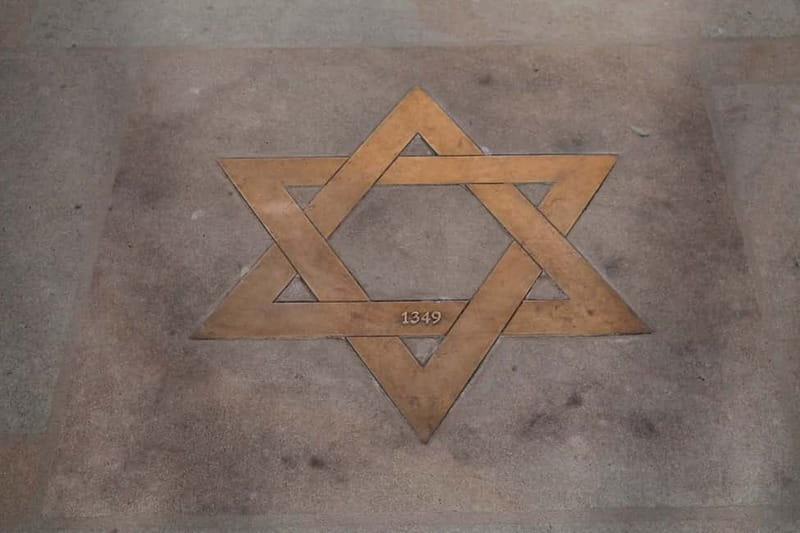
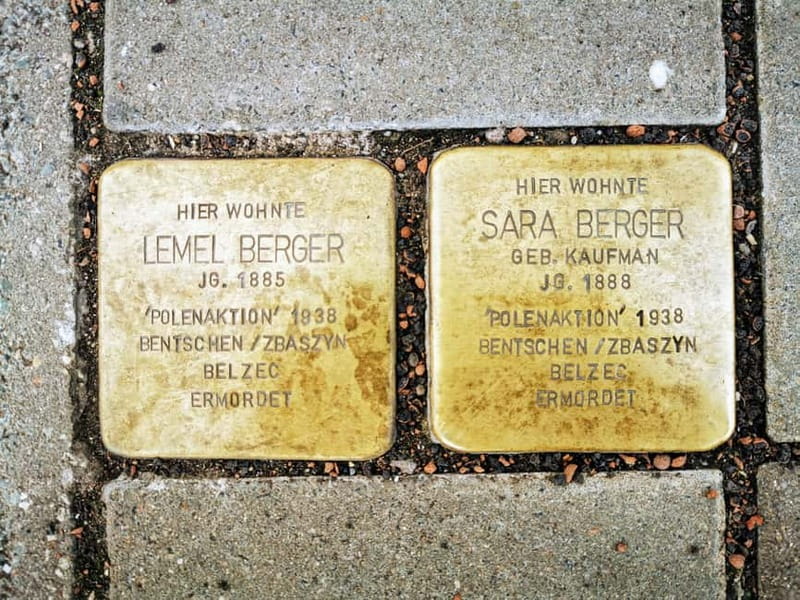
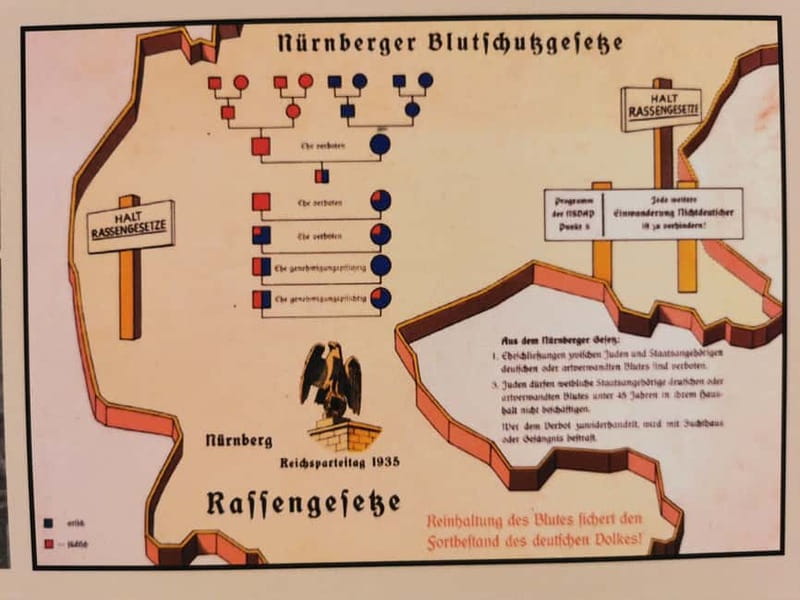
The tour also covers the Nuremberg laws, which were written in the city by Wilhelm Frick. These laws are a key part of the story because they show how anti-Semitism moved from hateful ideas and propaganda into official policy.
That legal step is important for understanding the Nazi system. Discrimination was not only shouted at rallies or printed in newspapers. It was built into rules that stripped Jewish people of rights and defined identity according to the regime’s racist beliefs.
The route also addresses Julius Streicher, a major promoter of anti-Semitism and the owner of the weekly newspaper Der Stürmer. His role helps show how newspapers and repeated hateful messages supported the broader Nazi program.
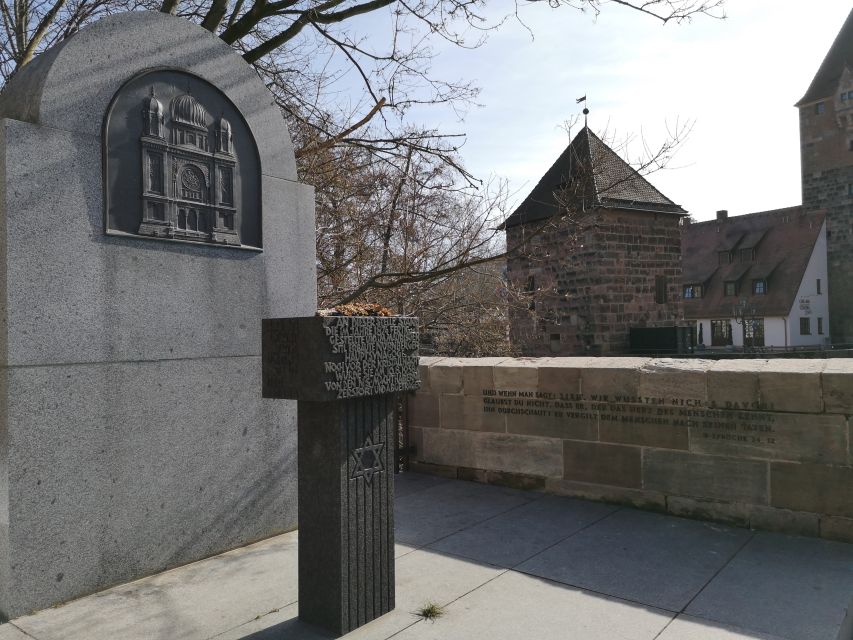
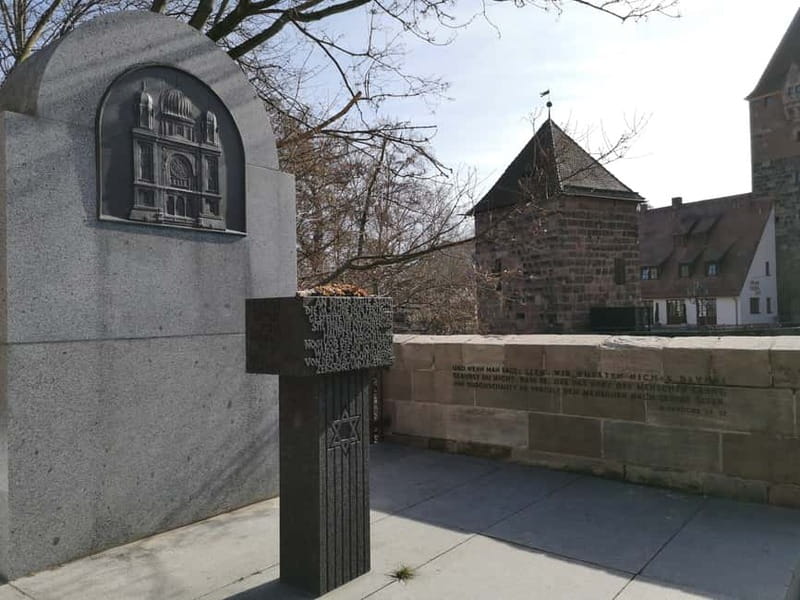
You’ll also hear about the Jewish quarter in Nuremberg and anti-Semitism in the city. The information provided does not set out the exact buildings or streets included in this part of the walk, so do not expect a fixed list of stops in advance. The important point is that the tour treats persecution as part of Nuremberg’s local story, not as an abstract subject that happened somewhere else.
This portion can be especially useful if you want more than military history. It explains how propaganda, law, local identity, and persecution worked together. The subject is grim, but leaving it out would give you a false picture of the city’s role.
The Nuremberg Trials and the Street of Human Rights
After showing how Nuremberg was used by the Nazi regime, the tour turns toward the Nuremberg Trials. This shift gives the city a second major meaning.
The trials are important because they addressed the crimes of leading Nazi figures after the war. They also helped shape the idea that individuals in government can be held responsible for crimes committed under a state’s authority.
You’ll learn about the trials as part of Nuremberg’s continuing story, not as a disconnected postscript. The same city that had been selected to display Nazi power became associated with legal judgment of that regime.
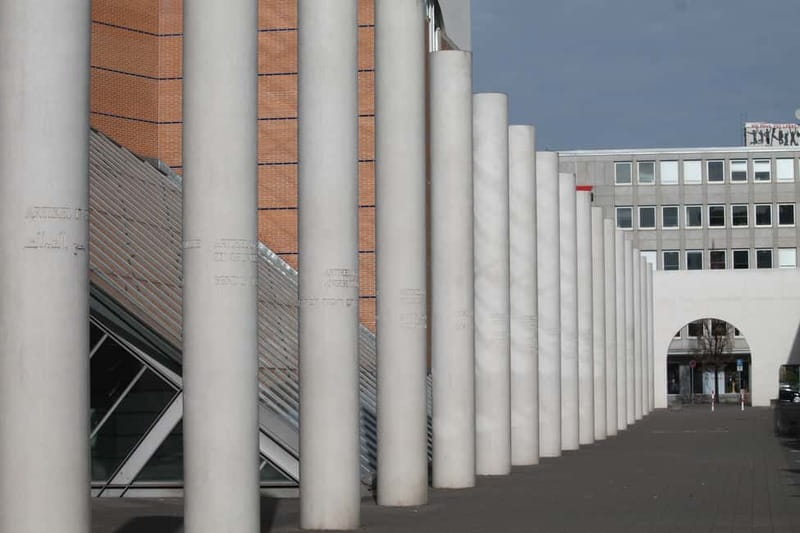
The Street of Human Rights adds a strong modern counterpoint. Its presence lets the guide connect the city’s past with the principle that human rights should apply to everyone. After several stops about exclusion, propaganda, and state violence, this part of the route offers a clear statement about the values Nuremberg wants to represent today.
If you prefer history that connects events to their consequences, this is one of the tour’s strongest sections. If you want a detailed visit inside the courtroom or museum exhibits, check the exact tour plan before booking, since the supplied details describe learning about the trials and walking the Street of Human Rights rather than promising a museum admission.
Flossenbürg and the wider system of Nazi persecution
Flossenbürg concentration camp is included among the subjects covered. The information does not say that this three-hour tour travels to the camp, so you should understand this as part of the historical discussion unless the guide confirms otherwise.
That distinction matters. Flossenbürg is not in central Nuremberg, and a three-hour walking tour beginning and ending at Frauenkirche cannot be treated as a separate camp visit based on the information available. The guide may place it within the wider network of Nazi persecution and explain its connection to the regime’s crimes.
Mentioning Flossenbürg broadens the tour beyond local landmarks. You’ll be encouraged to see Nuremberg as one piece of a much larger system that included concentration camps, political imprisonment, forced labor, racist law, and mass murder.
For a first visit to Nuremberg, that wider frame is useful. It keeps the city from becoming a self-contained story and shows how local propaganda and policy fit into the workings of the Third Reich across Germany.
What makes the Spanish guide important
This tour is offered in Spanish, with a live guide rather than an audio recording. That is more than a language preference for a subject this complex. You can ask for a name, date, or legal term to be explained again instead of trying to keep up with a recorded script.
Federico is specifically praised for explaining the history of Nuremberg and the Third Reich with substantial documentation, while keeping the presentation clear and approachable. He is also described as cultured, sympathetic, and didactic. Those qualities matter because a guide can either make this subject understandable or bury it under names and dates.
The best use of a guide here is interpretation. You need someone to explain the difference between medieval symbolism and Nazi invention, between a rally and a political institution, and between the Nuremberg Trials as an event and their longer meaning for international law.
The tone is serious, but it does not need to be cold. Federico’s approach is described as pleasant and easy to follow, which should help if you want solid history without a lecture that feels detached from the city around you.
Price, timing, and practical value
At $19 per person, the tour is priced modestly for a three-hour guided experience. The value depends on what you want. If your goal is to understand Nuremberg’s Nazi-era sites rather than simply photograph them, the price buys structure, explanation, and a route through several connected themes.
Food, drinks, and hotel pickup are not included. That keeps the cost simple, but you need to make your own way to Hauptmarkt and plan a meal separately. The activity ends back at the Frauenkirche meeting point, which makes it easier to continue sightseeing in the old town afterward.
Starting times vary, so check availability before you plan the rest of your day. The duration is fixed at three hours, but the start time is not given in the information provided.
The tour is wheelchair accessible, a useful detail for planning. You should still wear comfortable shoes, since accessibility does not remove the need to be prepared for a lengthy historical walk.
You can cancel up to 24 hours in advance for a full refund, and the reserve-now-pay-later option allows you to hold a place without paying immediately. Those policies are practical if your schedule in Bavaria is still shifting.
Who will get the most from this three-hour walk
I would choose this tour if you are visiting Nuremberg for the first time and want the Nazi-era story explained in Spanish. It suits history-minded visitors, families with older children who can manage serious material, and anyone who wants to understand why the city appears so often in accounts of the Third Reich.
It is also a good fit if you value a private group format. The information does not specify the exact party size, but a private tour generally gives you a more focused setting for questions and discussion. Confirm the group details if that is a deciding factor.
You may want a different plan if you only want cheerful old-town sightseeing, or if you need a full museum visit with long periods indoors. The route covers serious events and several subjects, so the experience is best approached with time and attention rather than squeezed between quick photo stops.
I also would not book it expecting a trip to Flossenbürg concentration camp. The camp is listed among the subjects, but the activity starts and ends in central Nuremberg and lasts three hours. Ask the provider if a physical visit is important to you.
Should you book the Tour del Tercer Reich por Núremberg?
Book it if you want a focused explanation of how Nuremberg became the Nazi regime’s propaganda center, how anti-Semitic policy was expressed through law and media, and how the city later became linked with justice and human rights.
The strongest reasons are the Spanish-speaking private guide, the three-hour route, and the combination of Zeppelin Field, Nazi Party congresses, the Nuremberg Trials, the Street of Human Rights, and local anti-Semitism. Federico’s clear, documented style is a particular advantage when he leads the experience.
Skip it if your visit is too short for a serious history walk, or if you are seeking only the medieval old town. For $19, though, it offers a useful and fairly priced way to understand the part of Nuremberg that is impossible to grasp from attractive streets and old buildings alone.
FAQ
What language is the tour conducted in?
The live tour guide speaks Spanish.
How long does the tour last?
The tour lasts three hours. Starting times vary, so check availability for the day you want.
Where does the tour begin?
It begins in front of the main entrance of Frauenkirche in Hauptmarkt. Look for the white and red umbrellas.
Where does the tour end?
The activity ends back at the meeting point at Frauenkirche.
Is this a private tour?
Yes. The group type is listed as a private group.
Is the tour wheelchair accessible?
Yes, the activity is listed as wheelchair accessible.
What should I bring?
Bring comfortable shoes, since the experience lasts three hours and involves a guided city route.
What is included in the price?
A professional guide and the guided tour are included. Hotel pickup and drop-off, food, and drinks are not included.
Just added around Nuremberg
- Tour en español al Campo Zeppelin★ 5.0 · 8 reviews
- Stein: Public guided tour of the “Old Mine” museum★ 4.5 · 18 reviews
- “Rotes Bier” and “Blaue Zipfel”. A historical-culinary walk★ 4.4 · 190 reviews
- Nuremberg: Old Town Guided Tour By Bus★ 4.4 · 198 reviews
- Nürnberg kennenlernen: Highlights in der Altstadt★ 4.7 · 189 reviews
- Nuremberg: Bar and Club Tour with Free Shots and Free Entry★ 3.8 · 23 reviews
- Nürnberg Bachelor(ette) Party with Night PubCrawl★ 4.2 · 5 reviews
- Nuremberg: WWII Tour, Courtroom 600 and 3rd Reich Sites★ 4.6 · 94 reviews
Nuremberg Tours, compared.
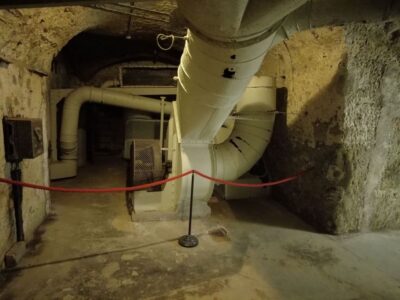
Tunnels and Secret Passages in the City Wall Tour
Read our review →
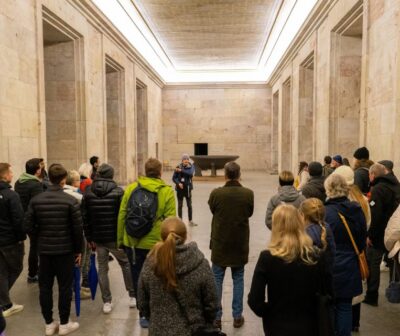
Walking Tour of Former Nazi Party Rally Grounds
Read our review →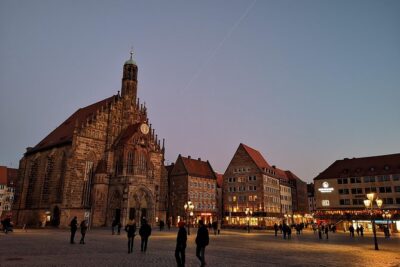
Browse the lists this tour appears in