
Reviewed · BERLIN TOURS
The Old Berlin Tour: Travel Through Time With a Historian
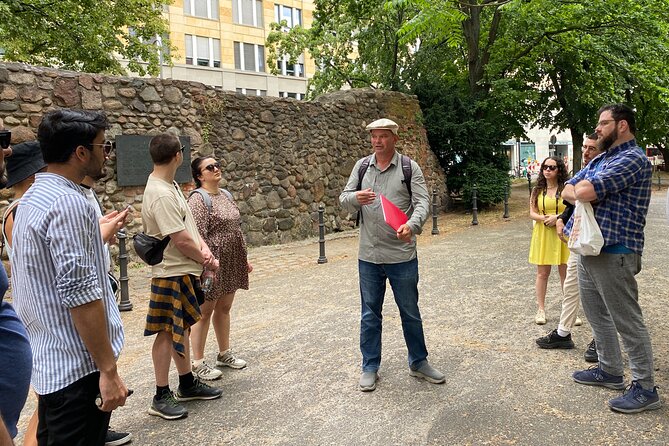
Berlin’s past is not tucked away in a museum here. It is under your feet, behind rebuilt façades, and sometimes missing altogether. This small-group walk with historian Sean Stewart connects medieval Berlin, imperial power, wartime destruction, division, and the Berlin Wall in one clear route.
I like the easy pace and the small maximum of eight people. I also like the focus on learning how to read the city rather than stopping to photograph every building without context. The main consideration is that this is a history-led walk, not a sightseeing sprint or a food tour.
In This Review
- Key points to know before booking
- Why this Berlin walk is different
- Alexanderplatz and the Berlin that vanished
- Franziskaner Klosterkirche, a medieval ruin in the city center
- St. Mary’s Church and Berlin’s medieval center
- Nikolaiviertel, old Berlin rebuilt in modern times
- From medieval Berlin to the Berlin Wall
- A small group makes the history easier to follow
- Is $23 good value for Berlin?
- Timing, meeting point, and the walk to Berlin Cathedral
- Who will get the most from this tour?
- Should you book The Old Berlin Tour?
- FAQ
- How long does The Old Berlin Tour last?
- Where does the tour begin?
- What time does the tour start?
- Where does the tour end?
- Which places are included on the route?
- How many people can join the tour?
- Can I cancel for a full refund?
Key points to know before booking
- Start at Alexanderplatz: Meet at Espresso House Alea 101 at 11:00 am, close to Alexanderplatz Station.
- Four central stops: The route visits Alexanderplatz, Franziskaner Klosterkirche, St. Mary’s Church, and Nikolaiviertel.
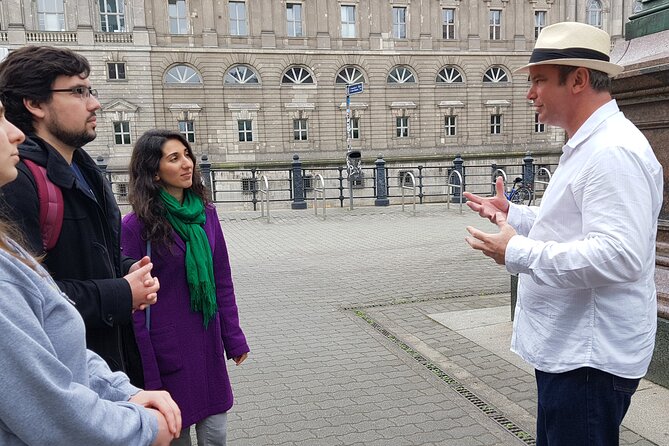
- A historian leads the walk: Sean Stewart brings a strong focus on European history, Berlin’s contradictions, and the forces that reshaped the city.
- Small group size: The tour accepts no more than eight people, which should make questions and conversation easier.
- Two hours on foot: You get a compact introduction to central Berlin at a manageable walking pace.
- Ends near Berlin Cathedral: The walk finishes at Am Lustgarten, a useful spot for continuing your day around Museum Island.
Why this Berlin walk is different
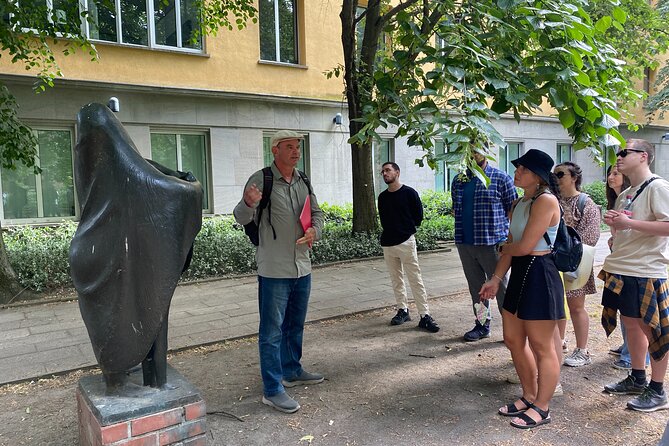
Many city walks gather around famous buildings and give you a list of dates. This one takes a more interpretive approach. The point is not just to see Berlin’s center, but to understand why its streets, empty spaces, ruins, and reconstructions look the way they do.
That matters in Berlin. The city has been reshaped by medieval growth, royal ambition, war, division, rebuilding, and political symbolism. A square may contain traces of several different Berlins at once. A rebuilt quarter may look old but tell a modern story. A church ruin may say as much about war and memory as it does about religion.
Sean Stewart’s role is central to the experience. The walk is built around his work as a professional historian and guide. His approach, based on the supplied information, is to explain what the city is saying instead of treating every stop as a backdrop for photographs.
I especially like that the route can work for someone who has already seen Berlin’s best-known sights. One person who had visited before asked for an alternative walk and found this approach useful. Another Berlin resident discovered courtyards and places that were new to them. That suggests the tour is not limited to first-time visitors, though first-time visitors can still use it as a strong introduction.
The tone also seems to include irony and contradiction. That is useful in Berlin, where official stories, reconstructed streets, vanished buildings, and political symbols often sit close together. You should expect a thoughtful walk rather than a string of simple answers.
Other Berlin days worth putting on the list:
- Berlin: Reichstag, Dome and Government District Guided Tour
★ 4.7 · 18,288 reviews - Berlin: 1-Hour City Tour by Boat with Guaranteed Seating
★ 4.3 · 16,993 reviews - Berlin: Boat Tour Along the River Spree
★ 4.4 · 11,252 reviews
Alexanderplatz and the Berlin that vanished
The tour begins at Alexanderplatz, meeting at Espresso House Alea 101, Rathausstraße 6, at 11:00 am. Alexanderplatz is a practical starting point because it is easy to reach by public transport and sits close to Berlin’s oldest central areas.
The first stop focuses on vanished streets and buildings. That may sound less dramatic than a grand monument, but it is one of the best ways to begin understanding Berlin. Missing structures force you to think about what was removed, why it disappeared, and how the present city was arranged around the absence.
You will spend about 15 minutes here, with no admission ticket required. The short stop should leave room for explanation without turning the opening into a long lecture. Since the tour lasts about two hours, the guide can connect this first area to the later stops instead of treating Alexanderplatz as an isolated sight.
I would pay close attention to the contrast between what you can see and what you are asked to imagine. Berlin’s center has changed so often that the current streets do not tell the whole story. This is where a historian can add real value, especially if you want more than a quick orientation.
Franziskaner Klosterkirche, a medieval ruin in the city center
The next stop is Franziskaner Klosterkirche, described as Berlin’s only medieval romantic ruin. You spend about 15 minutes here, again without an admission fee.
A ruin in a major capital can be more revealing than a fully restored building. It shows damage, survival, and the decision not to make everything look new. The word romantic here refers to the architectural period, not simply a pleasant atmosphere. That distinction is worth noting, since the site is tied to medieval Berlin and its later treatment as a historic remnant.
This stop gives the walk a physical link to the Middle Ages. You are not only hearing that Berlin has medieval roots. You are seeing a surviving fragment of that period within the modern city.
The limitation is simple: the supplied details do not indicate that you enter the church or receive an interior visit. Plan on an outdoor historical stop, with the guide providing the interpretation. If you want long visits inside major churches, this tour may feel brief. If you like ruins and questions about what survives, it should be rewarding.
St. Mary’s Church and Berlin’s medieval center
St. Mary’s Church is the third stop. It is an important church from medieval times, and the visit lasts around 15 minutes.
This stop adds another layer to the story. After seeing a vanished urban setting and a medieval ruin, you get a church that helps explain the importance of religion and civic life in early Berlin. The route is not simply moving from one attractive building to another. It is building a sequence: absence, ruin, and a surviving institution.
The church also helps keep the medieval period from becoming a vague opening chapter. Berlin’s early identity was tied to places of worship, trade, civic power, and the growth of the city. The guide’s job is to show how those pieces fit together and why the medieval center still matters to Berlin today.
The visit is short, so I would not book this expecting an extended architectural tour. The value comes from the connection between St. Mary’s and the other stops. If you already know the city’s famous museums and avenues, this kind of smaller-scale history can give your day more shape.
Same city, a completely different kind of day:
- Discover Berlin Half-Day Walking Tour
★ 5.0 · 9,624 reviews - Berlin: Hop-on Hop-off Bus Tour with Live Commentary
★ 4.3 · 8,579 reviews - Berlin: Government District around the Reichstag Guided Tour
★ 4.7 · 8,447 reviews - Berlin: Reichstag, Plenary Chamber, Cupola & Government Tour
★ 4.6 · 8,422 reviews
Nikolaiviertel, old Berlin rebuilt in modern times
The route then reaches Nikolaiviertel, often described as Berlin’s reconstructed medieval Disneyland. That sharp description is useful because it points to the quarter’s central question: how old is old when an area has been rebuilt?
Nikolaiviertel presents an image of medieval Berlin, but reconstruction gives that image a modern history of its own. The quarter can look like a preserved old town, yet its story involves decisions about memory, appearance, identity, and urban design. That tension makes it one of the more interesting stops on the walk.
I like the chance to discuss a place that is neither simply original nor simply fake. You can ask what reconstruction achieves, what it leaves out, and how a city chooses the version of its past that people see. Berlin is full of such choices, and Nikolaiviertel makes the issue easy to grasp.
The stop lasts about 15 minutes. Since the area is attractive and easy to photograph, you may be tempted to move on your own. Stay with the guide for the explanation, then return later if you want more time for pictures or a closer look. The tour is designed to teach you how to interpret the place, not to provide an extended free period.
From medieval Berlin to the Berlin Wall
The stated scope reaches from the Middle Ages to modern times, including the Berlin Wall. The four named stops are concentrated in the old central area, so the walk does not appear to be a long route along surviving Wall sections. Instead, the guide uses the center to explain how Berlin moved from medieval settlement to imperial capital, divided city, and modern German capital.
That wider scope is one of the tour’s strongest features. You get a timeline rather than four disconnected points. Medieval institutions, royal and imperial ambitions, destruction, reconstruction, and division become part of one story.
You should also understand the limits. Two hours is enough for a strong overview, but not for a full study of every era. The tour will introduce major developments and show you where to look. It cannot replace dedicated visits to Berlin’s Wall memorials, museums, or former Nazi sites.
For many people, that is exactly the right role for a first walk. You finish with a framework, then choose which parts of Berlin deserve more time. If you are already familiar with the central sights, Sean’s alternative focus may help you connect places you have previously seen without understanding.
A small group makes the history easier to follow
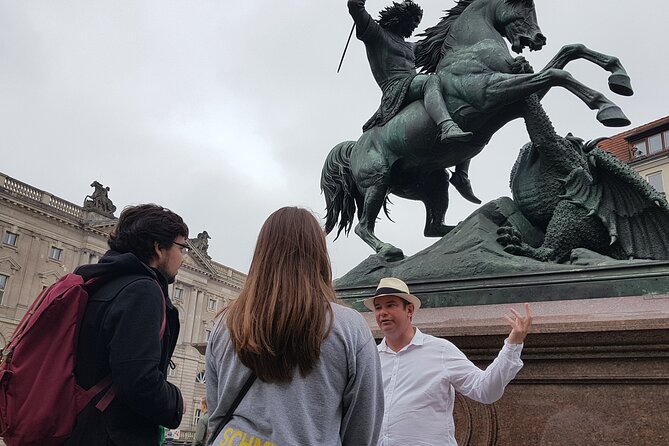
The maximum group size is eight people. That is a major practical advantage for a history walk. In a large crowd, it is harder to hear, ask questions, or pause when a detail catches your interest. A group this small should make the experience more personal and flexible, even though no specific promise of a private tour is given.
The English-speaking guide is a professional historian. The strongest praise attached to this experience concerns Sean’s ability to explain Berlin rather than merely point at it. His knowledge of courtyards and less obvious parts of the city also suggests that the walk may reward people who want details beyond the standard postcard route.
The reviews include one particularly useful clue for repeat visitors: Sean first asked about a person’s previous visit and interests, then shaped an alternative walk around that background. You should still expect the published central route, but it is sensible to tell him at the start what you already know and what you hope to understand better.
The walk is suitable for most people, and service animals are allowed. You should be comfortable walking for roughly two hours. Food and drinks are not included, so bring water or plan a stop after the tour.
Is $23 good value for Berlin?
At $23, this is a modestly priced way to spend two hours with a specialist guide. The value depends less on the number of buildings and more on how much context you want.
If you walk around Alexanderplatz and Nikolaiviertel alone, you can see the public spaces for free. What you cannot easily supply for yourself is the connected explanation of vanished buildings, medieval remains, reconstruction, and Berlin’s later political changes. For a first visit, that context can save you from seeing the center as a collection of unrelated sights.
The price is also helped by the small group limit. You are not paying for food, entry tickets, transport, or a long excursion. You are paying for the historian’s time and interpretation. That makes the tour a good fit for someone who would rather spend $23 on understanding Berlin than on a quick sightseeing loop.
It is less useful if you want a full day of landmark visits, interior admissions, or a broad tour across many neighborhoods. The route is compact, and the experience is built around explanation. Consider it a foundation for the rest of your Berlin stay.
Timing, meeting point, and the walk to Berlin Cathedral
The tour begins at 11:00 am at Espresso House Alea 101, Rathausstraße 6, near Alexanderplatz Station. The station makes the starting point convenient for anyone already in central Berlin or arriving by public transport.
The walk ends at Berlin Cathedral, Am Lustgarten, 10178 Berlin. This is a practical finish because you can continue exploring the central area after the guide leaves. The end point also gives the route a satisfying geographic arc, from Alexanderplatz toward the cathedral and the major sights around Lustgarten.
The advertised duration is approximately two hours. Each named stop receives about 15 minutes, leaving the rest of the time for walking, transitions, and the guide’s explanations. Wear comfortable shoes and allow a little extra time if you plan to continue elsewhere afterward.
The activity requires good weather. If poor weather forces cancellation, you are offered another date or a full refund. The tour also requires a minimum number of participants, so a cancellation for that reason brings the same choice of another date or experience, or a full refund.
You can cancel for a full refund up to 24 hours before the start time. Inside that window, cancellations and changes are not accepted and the payment is not refunded. The cut-off uses Berlin local time, so check the timing carefully if you are booking from abroad.
Who will get the most from this tour?
I would choose this walk if you like history, urban change, and questions without easy answers. It should suit first-time visitors who want a framework for Berlin, as well as repeat visitors who have already covered the main sights and want a different reading of the center.
It is also a good match for people who prefer a small group and a guide-led conversation. Sean’s interest in courtyards, contradictions, and irony suggests that the best moments may come from details you would otherwise walk past.
You may want another kind of tour if your main goal is food, nightlife, shopping, or a fast list of famous landmarks. The experience includes no food or drinks and does not list museum entry. It is also not designed as a full survey of every Berlin district.
The route should work for most participants, but the information does not provide a precise distance or accessibility description beyond saying that most people can take part. If you have specific mobility needs, ask before booking rather than assuming that every surface or stop will suit you.
Should you book The Old Berlin Tour?
Book it if you want Berlin explained, not just displayed. The combination of a professional historian, a group capped at eight, a central meeting point, and a $23 price gives the walk strong value for history-minded visitors.
I would especially recommend it early in your stay. The route can help you understand why Berlin’s center feels layered and sometimes strange, then guide your choices for later visits. Repeat visitors should also consider it, since the focus on overlooked courtyards and an alternative reading of familiar places may add something new.
Skip it if you want long interior visits, a broad citywide route, or entertainment with little historical detail. For everyone else, this is a compact, thoughtful way to see Berlin’s old center and learn why its missing streets, medieval remains, and reconstructed quarters still matter.
FAQ
How long does The Old Berlin Tour last?
The tour lasts approximately two hours.
Where does the tour begin?
It begins at Espresso House Alea 101, Rathausstraße 6, 10178 Berlin, Germany, near Alexanderplatz Station.
What time does the tour start?
The scheduled start time is 11:00 am.
Where does the tour end?
The walk ends at Berlin Cathedral, Am Lustgarten, 10178 Berlin, Germany.
Which places are included on the route?
The route includes Alexanderplatz, Franziskaner Klosterkirche, St. Mary’s Church, and Nikolaiviertel. The tour also covers Berlin’s history from the Middle Ages through modern times, including the Berlin Wall.
How many people can join the tour?
The tour has a maximum of eight participants.
Can I cancel for a full refund?
Yes. You can cancel at least 24 hours before the experience starts for a full refund. Cancellations or changes made less than 24 hours before the start time are not refunded or accepted.
Just added around Berlin
- Love and War in Berlin: Self-Guided Story Puzzle Walk★ 5.0 · 7 reviews
- Rickshaw Tours Berlin – Groups of up to 16 people with several rickshaws★ 4.0 · 97 reviews
- eSIM for Germany and 34 European Countries★ 4.5 · 16 reviews
- Walking on the Wall: 3-Hour Tour in Berlin★ 4.5 · 34 reviews
- Warnemuende Shore Excursion: Berlin Private Sightseeing Tour from Rostock★ 5.0 · 4 reviews
- Your ticket to The Wall Museum Berlin★ 3.0 · 60 reviews
- Warnemuende Shore Excursion: Private Berlin Tour★ 4.5 · 27 reviews
- Berlin’s Gay, Lesbian, and Queer Scene Small-Group Walking Tour★ 4.5 · 66 reviews
Berlin Tours, compared.

Reichstag, Dome and Government District Guided Tour
Read our review →
1-Hour City Tour by Boat with Guaranteed Seating
Read our review →


Reichstag, Plenary Chamber, Cupola & Government Tour
Read our review →

